


In this guide15 sections
- Key Points
- What Is a Compression Garment After Liposuction?
- Why Do You Have to Wear a Compression Garment After Liposuction?
- How Long Do You Wear a Compression Garment After Liposuction?
- How Do You Choose a Compression Garment After Liposuction?
- What Is the Best Compression Garment After Liposuction?
- Which Compression Garment Do You Need for Each Area?
- Can You Wear a Waist Trainer or Shapewear Instead?
- How Do You Wear, Wash and Look After a Compression Garment?
- Can a Compression Garment Be Too Tight After Liposuction?
- Does a Compression Garment Improve Liposuction Results?
- What Happens at a Liposuction Consultation About Aftercare?
- Frequently Asked Questions
- Liposuction and Aftercare in London
- References
Key Points
- Do you need a compression garment after liposuction? Yes. At Centre for Surgery you wear a fitted garment continuously for six weeks, taking it off only briefly to shower. It controls swelling, supports the treated tissue and helps the skin settle evenly.
- What to look for in a lipo compression garment: firm, even pressure that is never painful, breathable stretch fabric, closures you can reach easily, a size that suits each treated area and a second garment so one can be washed.
- Fit matters more than the label. Numbness, tingling, a colour change in your skin, pain or breathlessness mean the garment is too tight and your team should hear about it.
- The evidence is mixed. Reviews of post-surgical compression find few high-quality trials, with the clearest gains for swelling and pain rather than fluid collections, so your surgeon’s instructions matter more than generic internet advice.
- Waist trainers and shapewear are not a substitute. A medical garment spreads even pressure over healing tissue, while a waist trainer concentrates it at the waist.
- Each area needs a different shape: abdomen and waist, thighs, arms, back and chin or neck all use different garments, confirmed at consultation and bought separately before surgery.
Wearing a compression garment after liposuction is one of the few things in your recovery that you control every day, and it is also one of the things patients find most confusing before surgery. Which garment do you need, how tight should it be, how long do you wear it, and does a cheap online lipo garment do the same job as a medical one? This guide answers those questions in the order patients ask them.
Compression is part of aftercare for every liposuction procedure, whether you are having the abdomen, thighs, arms or 360 liposuction of the whole waist. Our liposuction recovery guide covers the full timeline, and our wider article on the benefits of wearing a compression garment after cosmetic surgery looks at every procedure. Here we focus on choosing, fitting, wearing and caring for a garment after lipo, with the research behind it.
What Is a Compression Garment After Liposuction?
A compression garment after liposuction, also called a lipo garment, post-lipo garment or liposuction compression garment, is a close-fitting elasticated garment that presses steadily on the areas where fat has been removed. Many people know it as a faja, the Spanish word for girdle. Medical garments are made in different shapes for different areas: a high-waisted girdle or bodysuit for the abdomen and flanks, leggings or shorts for the thighs and hips, sleeves for the arms and a strap or neck band for the chin.
A surgical garment is not the same as everyday shapewear. It is cut to give firm, even pressure across the whole treated area, with flat seams and closures placed away from the small incisions. At Centre for Surgery your garment is confirmed with you before surgery, purchased separately, and fitted before you leave the hospital after your day-case procedure.
Why Do You Have to Wear a Compression Garment After Liposuction?
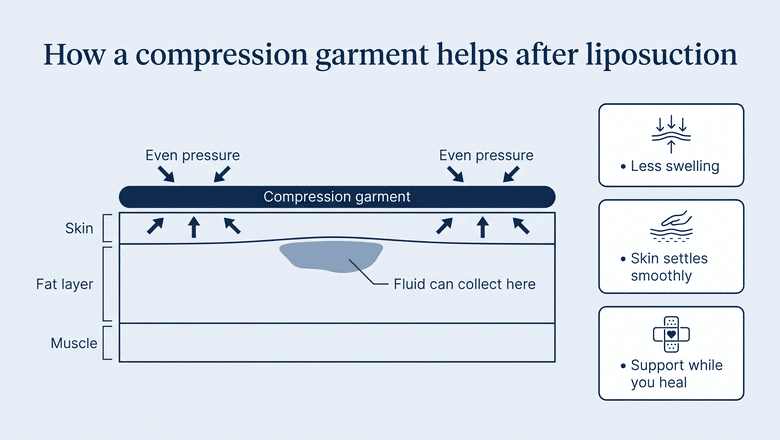
Liposuction removes fat from the layer between the skin and the muscle. The space left behind fills with fluid and blood as the tissue heals, and the treated area swells and bruises. A garment applies steady pressure from outside, which is meant to do three jobs:
- Limit swelling and fluid build-up in the space where the fat was removed.
- Support the skin as it settles onto the new contour, helping it retract evenly rather than in ridges.
- Steady the tissue so that everyday movements are more comfortable, especially in the first two weeks.
A garment does not burn fat or replace the surgeon’s technique. Our guide to lymphatic drainage massage after liposuction explains another way swelling is managed alongside compression.
Does a compression garment really work after liposuction?
Honestly, the evidence is thinner than most patients expect. A 2023 practical review in Plastic and Reconstructive Surgery Global Open ↗ examined the research on compression garments across aesthetic operations. It found the most strongly supported uses were reducing swelling and bruising after rhinoplasty and reducing pain after breast and abdominal surgery, with no effect on fluid collections (seroma) shown, and it warned that benefits must be weighed against discomfort, increased venous stasis and skin problems[1]. A 2024 systematic review in JPRAS Open ↗ pooled just five trials and 130 patients after tummy tuck and found only a non-significant tendency towards less seroma and swelling, calling the evidence weak[2].
Almost none of this research is on liposuction alone, so surgeons also rely on experience and on the way fat removal leaves a large potential space under the skin. Where garments have been tested as part of a routine, the results are encouraging rather than conclusive. In a 2021 randomised trial of 43 women after lipoabdominoplasty ↗, everyone wore a garment around the clock for four weeks, and those who also had intermittent pneumatic compression sessions finished with a smaller abdominal circumference and higher satisfaction than those wearing the garment alone[4].
The practical conclusion is balanced: compression is a low-risk way of supporting recovery and is standard instruction after lipo, but a garment worn too tight can do more harm than good.
How Long Do You Wear a Compression Garment After Liposuction?
At Centre for Surgery the standard instruction is to wear your compression garment continuously for six weeks, removing it only briefly to shower. You then have your six-week surgeon review, and most people are able to stop wearing it full time at that point if healing is on track. Your surgeon will tell you if you need to wear it for longer, for example after larger-volume treatment or lipo of the abdomen.
Other clinics and online sources quote anything from two weeks to three months, usually split into a first-stage garment worn around the clock and a lighter second-stage garment worn for part of the day. Those timetables are not wrong, but they belong to the surgeon who sets them. Follow the plan you were given at consultation rather than a number from a forum. The swimsuit-ready guide explains when the result is visible.
How Do You Choose a Compression Garment After Liposuction?
Your consultation tells you the type of garment you need for the areas being treated. Within that advice, check the following.
How tight should a compression garment be after lipo?
Snug and firm, like a well-fitted sports bra or cycling shorts, with the pressure spread evenly across the whole area. You should feel supported rather than squeezed. It should not leave deep dents, roll down at the top or bunch behind the knees or under the arms. Tingling, numbness, pain, a bluish or very pale skin colour, swelling of the hands or feet below the garment or difficulty taking a deep breath all mean it is too tight. Loosen it and contact the team on your discharge number.
What fabric should a lipo compression garment be made of?
Look for a breathable stretch fabric that wicks moisture, typically nylon or polyamide with elastane or spandex, and a soft lining against the skin. Cotton on its own holds sweat. Avoid latex or rubber if you are allergic, and choose flat seams, because ridges press into healing skin.
What colour should you buy?
Expect some pinkish tumescent fluid to leak from the small incisions during the first 24 to 48 hours (our guide to pain after liposuction covers what else to expect in those first days). A skin-tone garment shows staining, so many patients wear loose, dark clothing over it. Pick a colour you are happy to see marked.
Zips, hooks and closures
Hooks and eyes or a front zip are easier than pulling a garment over sore hips. A lower-body garment needs an opening so you can use the toilet without taking it off, and no clip should sit directly on an incision.
Should you buy more than one?
Yes. You wear the garment day and night, so a second one lets you wash the first. Ask your team about sizing before you order, as a loose garment does not give the pressure it is meant to and a very tight one causes problems.

What Is the Best Compression Garment After Liposuction?
There is no single ideal garment, because the right one depends on where you have had lipo, how much was treated and your body shape. Brand matters less than fit, fabric and design. Medical-grade garments from specialist suppliers are cut for post-operative use, with the pressure, seams and closures planned for healing skin. Fashion shapewear and cheap marketplace products vary widely, and some compress in bands that can dig in. Ask your team to confirm your choice before you buy, and try it on before surgery.
Lipo foam, boards and binders: are they necessary?
Foam sheets or firm boards are sometimes tucked under a garment to press harder on a flat or hollow area, and searches for lipo foam are common. Evidence that they improve results is limited, and misplaced foam can leave ridges or pressure marks, so only use foam if your surgeon asks you to. An abdominal binder is a wide elasticated band for the abdomen only. Stage 1 and stage 2 garments are covered in the questions below.
Which Compression Garment Do You Need for Each Area?
The shape follows the treatment area:
- Abdomen, waist and flanks: a high-waisted girdle or full bodysuit that supports the whole trunk. Lipo of the love handles and muffin top and of the back uses a garment that reaches high enough to cover the treated area, often with shoulder straps so it does not roll down.
- 360 liposuction: a garment covering the abdomen, flanks and lower back together, because the whole circumference is treated.
- Thighs and hips: compression shorts or leggings, with length chosen to cover the treated area, so thigh lipo or calf work may need a longer garment than hip lipo.
- Arms: compression sleeves that cover the full length of treatment, as described in our arm liposuction guide.
- Chin and neck: a soft chin strap or neck band, usually worn for a shorter time. See our guide to chin liposuction recovery.
- Male chest: a front-fastening vest, covered in our guide to a gynaecomastia compression vest.
If you are combining procedures, your garment needs to suit all of them. After a tummy tuck you will wear a binder or garment designed to protect the long incision, so read our guide to the compression garments after a tummy tuck. In a retrospective 2023 study of 232 abdominoplasty patients in Aesthetic Plastic Surgery ↗, seromas were less frequent with internal progressive tension sutures than with drains plus garments, and adding small-volume liposuction elsewhere did not raise the risk[3]. Our article on tummy tuck seroma explains what that means in practice.
Can You Wear a Waist Trainer or Shapewear Instead?
No. A waist trainer is built to concentrate pressure at the waist, which can create ridges and uneven pressure over healing tissue. Our guide on whether waist trainers work sets out the side effects. One published case report described a woman who developed a blocked artery in her leg a few days after liposuction while wearing a waist training corset, and her doctors concluded the corset had very likely contributed[7]. That is a single rare case, but it is a clear reason to wear the garment your surgeon recommends and nothing tighter. Ordinary shapewear is a different matter: it is not designed for post-operative use, so ask your team before wearing it over or instead of your garment.
How Do You Wear, Wash and Look After a Compression Garment?
A few habits make six weeks easier:
- Put it on in stages. Many people find lying down and easing the garment up gradually gentler on swollen tissue than standing and pulling.
- Smooth out wrinkles. Folds and rolls press into the skin and can mark it. Check the garment after sitting for long periods.
- Keep the skin clean and dry. Change into the clean garment after showering, and look for blisters, rubbing or redness every day.
- Wash it gently. Follow the care label, usually a gentle wash at low temperature, and air dry flat rather than tumble drying, which weakens the elastic.
- Keep it on at night. Your instructions apply day and night. Sleeping with your torso slightly raised on pillows can ease the pressure.
- Keep walking. Short walks from day one help circulation and are part of the instructions you will be given.
Our guide to diet after liposuction covers eating and hydration. If you have any sudden pain, spreading redness, fever or a hard, swollen area, call the number on your discharge summary and do not wait for your next review.
Can a Compression Garment Be Too Tight After Liposuction?
Yes, and it is the main risk of the garment itself. Pressure that is too high or uneven can cause skin marks and blisters, nerve irritation with tingling or numbness, swelling beyond the garment edge and difficulty breathing with abdominal garments. The 2023 review noted that possible downsides of compression include discomfort, venous stasis and skin defects[1].
Put this beside the safety of the operation itself. In a large US cohort of 31,010 liposuction procedures ↗, of which 11,490 were liposuction alone, major complications within 30 days affected 0.7% of those having liposuction alone, with haematoma, lung complications, infection and blood clots being the most common[5]. Our guides to liposuction risks and liposuction side effects cover what to expect. Seek urgent help (call 999) for chest pain, sudden breathlessness or a painful, swollen calf, and call your surgeon’s number for any of the fit warning signs above.
Does a Compression Garment Improve Liposuction Results?
Compression contributes to a smoother recovery, but results depend mainly on the surgery, your healing and what you do afterwards. The final contour appears gradually as swelling resolves, usually over three to six months. Wearing the garment as instructed, walking daily, avoiding strenuous exercise until you are cleared and keeping a stable weight give your result a good chance. Our guides to preventing weight gain after liposuction and loose skin after liposuction explain the long-term side.
Some surgeons also recommend lymphatic drainage massage after the first couple of weeks. In a 2021 randomised trial of 30 women with cellulite after liposuction ↗, both manual lymphatic drainage and shockwave therapy were used and skinfold thickness fell in both groups, by about 15% and 24% respectively[6]. It is an optional extra, not a replacement for the garment, and your surgeon will say when it is safe to start.
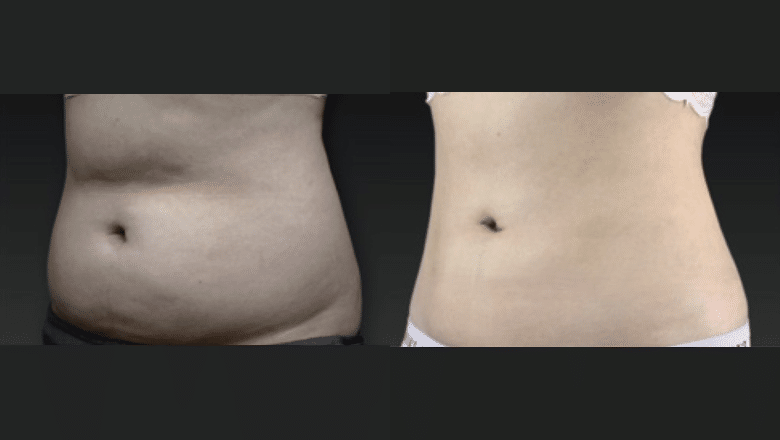
Browse our liposuction before and after photos to see settled results. Every patient heals differently and individual results vary.

What Happens at a Liposuction Consultation About Aftercare?
Aftercare is planned before surgery, not after it. At your consultation your surgeon assesses which areas to treat, whether power-assisted liposuction or VASER liposuction suits each one, and which garment you will need. Our guide to preparing for liposuction lists what to buy and arrange in advance, including your garment and a recovery space at home.
Our surgeons are GMC-registered, and the surgeon who assesses you is the surgeon who operates. Surgery is carried out at our CQC-regulated hospital on Baker Street, usually as a day case under TIVA or, for small areas, local anaesthetic with sedation. You leave wearing your garment with written aftercare instructions and your surgeon’s direct number for the first 24 hours, followed by a wound check at 7 to 10 days and your six-week review. Costs are confirmed in writing after consultation, and finance options are available, as explained on our liposuction cost page.
Frequently Asked Questions
What happens if I don’t wear a compression garment after liposuction?
You may have more swelling for longer and a less even contour as the skin settles. It is not usually dangerous, but compression is part of your surgeon’s aftercare plan, so wear it as instructed unless it hurts, in which case call your team.
How many hours a day should you wear a compression garment?
After liposuction at Centre for Surgery, you wear it continuously, day and night, for six weeks, taking it off only briefly to shower. Your surgeon confirms at your six-week review whether you can stop wearing it full time.
Can I stop wearing a compression garment after 2 weeks?
Not unless your surgeon tells you to. Two weeks is early, as swelling and bruising are still settling and the skin is still adapting to the new contour. If the garment is uncomfortable, ask your team about adjusting the fit rather than stopping.
Can I take my compression garment off at night?
No. The instruction is continuous wear for six weeks, including overnight, and sleeping in it is expected. If it is digging in or stopping you sleeping, tell your team, because a poorly fitted garment may need changing.
What is the difference between stage 1 and stage 2 compression garments?
A stage 1 garment is firmer and worn around the clock early on. A stage 2 garment is lighter and may be worn for part of the day later. Many surgeons use one garment throughout, so check which your surgeon advises.
What is the difference between a tummy tuck binder and a compression garment?
A binder is a wide elasticated band wrapped around the abdomen, mainly used after tummy tuck. A compression garment is a shaped garment such as a girdle, bodysuit, shorts or sleeves that covers the specific treated areas. Your surgeon will say which one you need.
How long does it take for lipo incisions to heal?
The incisions are only 3 to 5 mm and are closed with dissolvable stitches. They usually close within about two weeks, though the scars continue to mature and fade over around 12 months.
What should I wear after liposuction?
Wear your compression garment next to the skin, with loose, dark, soft clothing over it, such as a baggy top and joggers. Choose clothes that do not rub the garment or press on the incisions, and that will not show any fluid leaking in the first two days.
Liposuction and Aftercare in London
If you are considering liposuction and want to know exactly what aftercare involves, a consultation will cover your garment, your recovery timeline and what results are realistic for you. Find out more about body contouring at Centre for Surgery.
Phone: 020 7993 4849 | Address: 95–97 Baker Street, Marylebone, London W1U 6RN
Contact us to schedule a consultation
References
- Ormseth BH, Livermore NR, Schoenbrunner AR, Janis JE. The use of postoperative compression garments in plastic surgery: necessary or not? A practical review. Plastic and Reconstructive Surgery Global Open 2023;11(9):e5293. doi:10.1097/GOX.0000000000005293 ↗
- Arkoubi AY. Effect of compression garments on post-abdominoplasty outcomes: a systematic review of the current evidence. JPRAS Open 2024;41:128–137. doi:10.1016/j.jpra.2024.05.014 ↗
- Brown T, Murphy K, Murphy T. The effect of drains and compressive garments versus progressive tensioning sutures on seroma formation in abdominoplasty. Aesthetic Plastic Surgery 2023;47(5):1905–1910. doi:10.1007/s00266-022-03244-4 ↗
- Abdelhalim NM, Samhan AF. Influences of intermittent pneumatic compression therapy on edema and postoperative patient’s satisfaction after lipoabdominoplasty. Aesthetic Plastic Surgery 2021;45(4):1667–1674. doi:10.1007/s00266-021-02272-w ↗
- Kaoutzanis C, Gupta V, Winocour J, et al. Cosmetic liposuction: preoperative risk factors, major complication rates, and safety of combined procedures. Aesthetic Surgery Journal 2017;37(6):680–694. doi:10.1093/asj/sjw243 ↗
- Allam NM, Elshorbagy RT, Eid MM, et al. Comparison of extracorporeal shock wave therapy versus manual lymphatic drainage on cellulite after liposuction: a randomized clinical trial. Evidence-Based Complementary and Alternative Medicine 2021;2021:9956879. doi:10.1155/2021/9956879 ↗
- Ramcharan MM, Hanandeh A, Donaldson B, Safavi A. Waist training corset: an unusual cause of acute lower limb ischemia. Cureus 2020;12(9):e10465. doi:10.7759/cureus.10465 ↗







