


Real neck lift results from patients treated at our Baker Street day surgery facility, covering isolated neck lift surgery and combined facelift and neck lift procedures. Jump to Neck Lift (Isolated) or Combined Facelift & Neck Lift.
Results vary from patient to patient. All photos are published with written patient consent and are examples of outcomes achieved at Centre for Surgery, not guaranteed results. After photos were taken at least six months after surgery unless the caption says otherwise. No photograph has been retouched or filtered; some are cropped or masked only to protect patient privacy. Full disclaimer below, and how to read these photos — the neck is the easiest area on the body to photograph dishonestly.
Neck lift before and after — isolated neck lift and mini neck lift
6 photographs
An isolated neck lift addresses the neck without touching the face — loose skin, platysmal bands, and fat beneath the chin. Where the problem is mainly fat rather than skin, neck liposuction alone may be enough; where it is early laxity in a younger patient, a mini neck lift through shorter incisions may suit. Read more about how to get rid of turkey neck and what each option can and cannot do.
An isolated neck lift — sometimes called a necklift, or turkey neck surgery — targets the neck alone: tightening the platysma muscle (platysmaplasty), removing excess skin, and restoring a defined chin-neck angle. It is the procedure of choice for patients whose main concern is a sagging neck, turkey neck, or loss of jawline definition, without significant ageing in the mid-face. Learn more about the operation on our neck lift surgery page.


Combined facelift and neck lift before and after
12 photographs
Where jowls and neck laxity coexist, treating both in one operation gives a coherent result. For men, the aim is a defined jawline without a tightened look — read more about male neck lift surgery.
The neck and lower face age together, and many patients achieve a more balanced result by addressing both in a single operation. A combined facelift and neck lift lifts the mid-face and jawline while tightening the platysma, avoiding the mismatch that can follow when only one area is treated. Compare these against our facelift before and after photos.
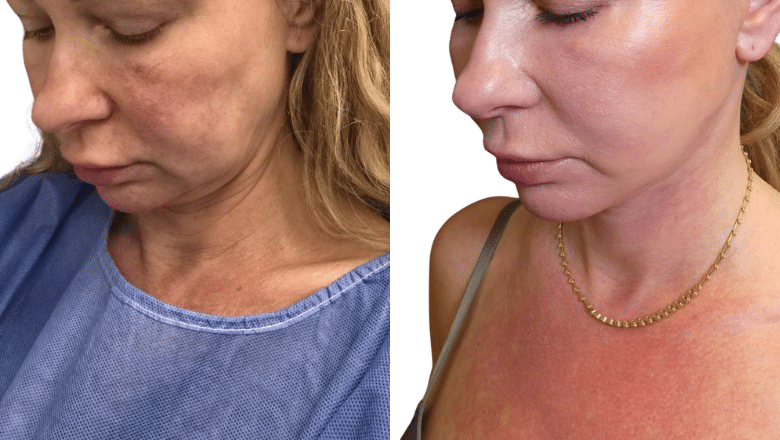
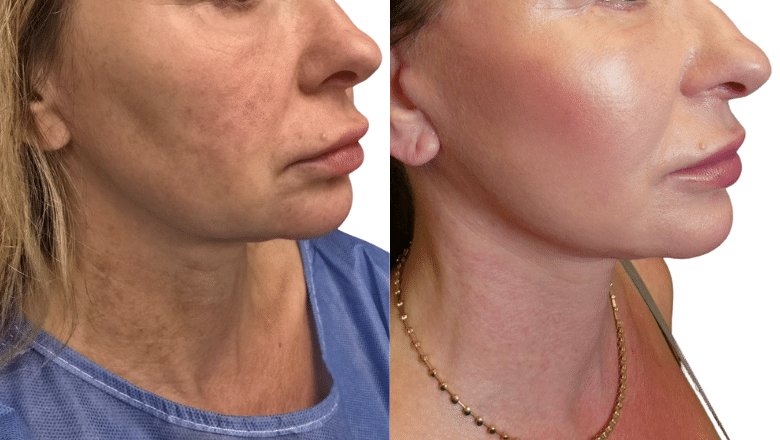


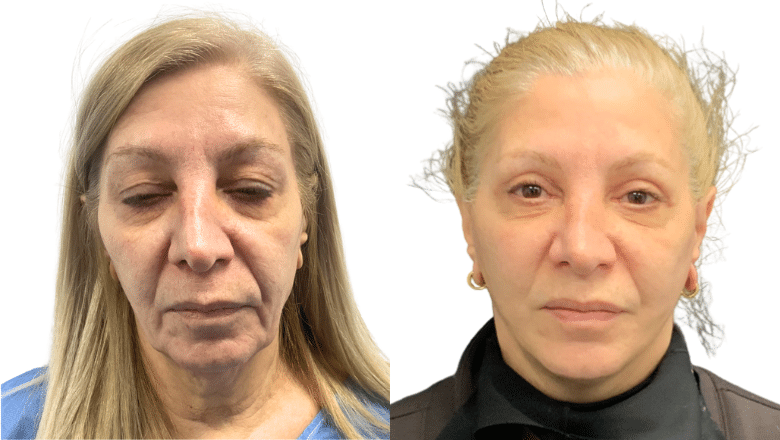


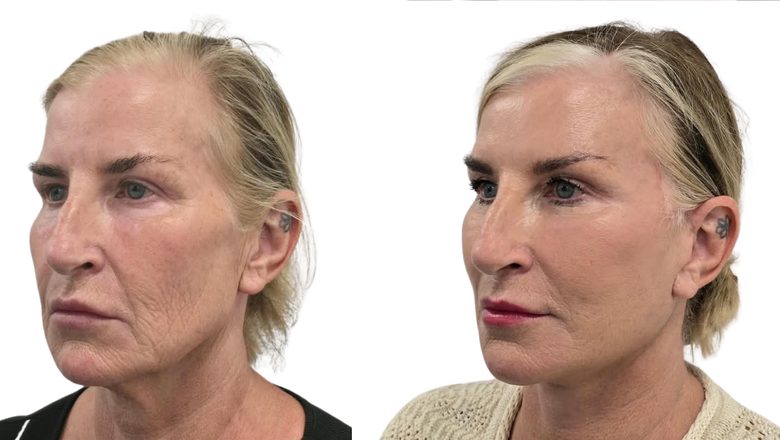
About These Neck Lift Before and After Photos
The neck lift before and after photos above are presented for educational purposes only and should be interpreted subjectively. They do not represent the opinion or view of any patient regarding their result, and they are not intended to suggest the result that any other patient may achieve. No two patients are alike, and no two results are necessarily alike. Only a personal consultation with your surgeon can provide you with a reasonable expectation of the results you may achieve from any specific procedure.
How to Read Neck Lift Before and After Photos
Of every cosmetic result, the neck is the one most easily faked with a camera. Everything a neck lift changes — the chin-neck angle, submental fullness, platysmal bands, loose skin — can be altered by how the patient holds their head. Before you judge any gallery, ours included, learn what to control for.
The head position is everything
Extend the neck and lift the chin, and skin under the jaw pulls taut. The chin-neck angle sharpens. Jowls lift. Bands vanish. Tuck the chin toward the chest and the same neck sags. This is not a subtle effect — it is the difference between a slack neck and a sculpted one, achieved in a second, at no cost, without surgery.
In an honest before-and-after, the head is in the same position in both frames. Check the ear, the shoulders and how much of the neck is visible below the jaw. If the “before” is chin-down and the “after” is chin-up, you are looking at a posture.
Watch the camera height
A camera below eye level foreshortens the neck and stacks the soft tissue under the chin, producing submental fullness in someone who has none. A camera above eye level does the opposite. Both frames should be shot from the same height, ideally level with the face.
Look for tensed muscle
Platysmal bands — the vertical cords running down the front of the neck — become prominent when the muscle is contracted, as it is when someone grimaces, clenches the jaw, or holds a forced expression. A “before” photographed with a tensed platysma and an “after” photographed relaxed will show bands appearing to have been surgically corrected when nothing has changed.
Check the weight, and check the collar
Submental fullness is often fat rather than skin. Several kilograms lost between photographs sharpens the neck independently of any operation. So does a different collar: an open neckline reveals the jawline, a high or buttoned one conceals what sits beneath it. Look at the whole frame, not just the jaw.
Ask which operation it was
A sharp chin-neck angle can be produced by liposuction of submental fat, by tightening the platysma, by removing skin, or by all three. These are different operations with different recoveries, different scars and different candidates. A photograph does not distinguish them, and a gallery that labels everything simply “neck lift” is not telling you which one you would be having.
What Stage of Healing You’re Looking At
Neck results settle in stages, and photographs taken at different points along that curve tell very different stories.
Swelling and bruising through the neck and under the jaw are most obvious in the first week or two, then subside over the following weeks. As with a facelift, the early phase can flatter: swollen tissue holds the contour crisply, and the neck softens somewhat as it resolves. Numbness under the chin and around the ears is common and improves gradually over months.
Scars are the part that photographs never quite catch. A neck lift typically involves incisions behind and around the ear, and often a small one hidden under the chin. They pass through a firm, pink phase before softening and fading over months. None of them appears in a standard front or profile photograph.
And there is a longer arc. The platysma is a muscle, and the skin over it continues to age. A neck photographed at three months has been given the best possible chance to impress; a neck photographed at three years tells you how the operation actually holds. Nearly every gallery on the internet shows the first. The after photographs in this gallery were taken at least six months after surgery, unless the caption says otherwise, and you are entitled to ask any surgeon which stage you are looking at. For what to expect at each stage before then, see our neck lift recovery guide.
What These Photographs Cannot Show You
There is a limit to what any gallery can tell you, and a clinic that pretends otherwise is selling rather than informing.
- The neck in motion. Necks swallow, turn and speak. A still photograph of a neck at rest cannot show whether bands reappear when the patient talks, or whether the skin moves naturally when they turn their head.
- What the problem actually was. Submental fullness can be fat, lax skin, a low-sitting salivary gland, a weak chin, or muscle laxity — and the right operation for one is the wrong operation for another. Somebody else’s photograph cannot diagnose you. A weak chin, in particular, can make a perfectly normal neck look heavy, and no amount of tightening will fix it.
- The scars. They sit behind the ear, in the hairline and beneath the chin — precisely the places a front or profile photograph does not show. Their absence from these images is not evidence of their absence from the patient.
- Sensation. Numbness, tightness and a strange awareness of the skin under the jaw are normal for months after surgery. Photographs record necks, not how they feel.
- Skin quality. A neck lift repositions and removes skin. It does not resurface it. Sun damage, crepiness and horizontal neck lines are largely unchanged by the operation, and their disappearance in an after photograph is usually a matter of lighting.
None of this is a reason to distrust before and after photographs. It is a reason to treat them as the beginning of a conversation with a surgeon rather than the end of one.
Neck Lift Results: Common Questions
How many years does a neck lift last?
Results usually last many years, often ten or more, because tightened muscle and removed skin do not return to their original state. The neck still ages, and weight change, sun damage and skin quality all affect how the result holds over time.
How long does it take to look normal after a neck lift?
Most bruising and swelling settles within two to three weeks, and many people feel comfortable being seen at that point. The neck continues to soften and settle for around three months, and the scars behind the ears and under the chin take longer to fade.
Is 60 too old for a neck lift?
No. Many neck lift patients are in their sixties or older. Suitability depends on general health, skin quality and what is causing the changes in the neck, rather than on age itself. Your surgeon will assess whether a neck lift alone, a combined face and neck lift or a smaller procedure suits you.
What can you do instead of a neck lift?
For mild laxity or fat under the chin, options include chin liposuction, radiofrequency skin tightening such as FaceTite, and anti-wrinkle injections for neck bands. These help selected patients but cannot remove loose skin, so where there is significant excess skin or banding, surgery gives a more reliable result.
Neck Lift (Necklift) Surgery at Centre for Surgery
Centre for Surgery, located in Marylebone, London, is a private hospital for plastic and cosmetic surgery registered with and independently inspected by the Care Quality Commission. Neck lift surgery — also searched for as necklift or turkey neck surgery — is one of our most requested treatments for addressing a sagging neck, turkey neck, jowls, and loss of jawline definition.
Specialist Neck and Facial Surgeons
Our plastic surgeons are GMC-registered and independently verifiable on the General Medical Council register, and perform the full range of neck rejuvenation procedures, from isolated necklift surgery through to combined facelift and neck lift operations. Many patients benefit from combining their neck lift with chin liposuction or a mini facelift for a more complete facial rejuvenation.
Personalised Consultations
Every neck lift at Centre for Surgery begins with a thorough face-to-face consultation. Your surgeon will assess your anatomy, discuss your concerns, and explain the most appropriate surgical approach to achieve a naturally younger, more defined neck and jawline.
Aftercare and Follow-Up
You have your surgeon’s direct number for the first 24 hours after surgery. You will be seen by your surgeon at regular follow-up appointments, and our full scar management programme is included as standard.
Verified Patient Reviews
We invite you to read what our neck lift patients say on independent, verified review platforms. Every review is publicly verifiable, dated, and linked to a real named patient.
- Google Reviews: Read our Google reviews ↗ — rated 4.6 stars based on hundreds of verified patient reviews.
- Patient reviews page: Read patient reviews by procedure — Google and Trustpilot reviews brought together on our own site.
As a CQC-regulated provider, every surgeon on our team is GMC-registered and independently verifiable. View our CQC rating.
Related Reading
- Face and Neck Lift Surgery After Weight Loss
- How to Get Rid of Neck Lines
- Facial Skin Ageing Over Time: What to Expect at 30, 40, 50
Explore More Before and After Galleries
View our full collection of plastic surgery before and after photos, or browse related facial procedure galleries: Facelift Before and After Photos | Blepharoplasty Before and After Photos | Otoplasty Before and After Photos
Subject to status, we offer finance options with Chrysalis Finance. For a full price breakdown, see our neck lift cost guide. Learn more on our About Us page, browse our Plastic Surgery Blog, or find answers in our Clinic FAQs.
To book a face-to-face consultation with a specialist neck lift surgeon, call us on 020 7993 4849 or complete the contact form below.







