

On this page16 sections
- Key Points
- How much does gynecomastia surgery cost in London and the UK?
- Gynecomastia surgery cost by grade
- What’s included in the price of gyno surgery?
- What affects the cost of gynaecomastia surgery?
- True gynaecomastia vs pseudogynaecomastia — why it changes the price
- What gynaecomastia surgery involves
- Does VASER cost more for gynaecomastia?
- What anaesthetic is used for gynecomastia surgery?
- Is gyno surgery free on the NHS or covered by insurance?
- Cheapest gyno surgery in the UK: why the lowest quote is a red flag
- Can you pay for gynaecomastia surgery in instalments?
- Which cosmetic surgery for men is right for you?
- Frequently Asked Questions
- Why choose Centre for Surgery for gynaecomastia surgery?
- References
Key Points
- Gynaecomastia surgery at Centre for Surgery in London starts from £4,500 for a one-sided, lower-grade case under local anaesthetic.
- Liposuction only for a fatty chest is from £5,000; gland excision plus liposuction under TIVA, the most common operation, is from £6,000.
- Grade 3–4 surgery with skin removal is from £7,500, and breast amputation with free nipple grafting for severe grade 4 is from £10,500.
- The price is set by the grade, how much is gland rather than fat, whether skin needs removing, and whether one or both sides are treated.
- VASER costs no more than standard liposuction, and areola reduction is included in grade 3–4 surgery.
- The NHS and private insurers almost never fund it, so finance is available. Very cheap quotes often leave out gland excision.
Gynaecomastia surgery (male breast reduction, often searched simply as “gyno surgery”) at Centre for Surgery in London costs from £4,500, with the final figure depending on the grade of the condition and the technique needed. The entry price applies to one-sided (unilateral) correction suitable for local anaesthetic; bilateral liposuction alone for a fatty chest, performed under local anaesthetic, is from £5,000; combined gland excision and liposuction is mid-range; and grade 3–4 cases that need skin removal are at the upper end. Severe grade 4 cases requiring breast amputation with free nipple grafting — usually after major weight loss — are priced separately from £10,500. This 2026 guide breaks down exactly what you’d pay, what drives the price, and what’s included — so you can compare quotes properly and avoid the false economy of an unusually cheap operation.
You will see the condition spelled both ways. Gynecomastia surgery cost and gynaecomastia surgery cost refer to the same operation — the first is the American spelling, the second the British one — and gynecomastia cost UK figures quoted elsewhere describe the same procedure again. Men also search this as male breast reduction cost, gyno surgery cost, moob reduction cost, or simply man boob surgery cost. All of them mean surgical correction of an enlarged male chest.
All gynaecomastia surgery here is performed by GMC-registered plastic surgeons — members of BAPRAS and ISAPS — under TIVA as a day case at our CQC-regulated Baker Street facility.
How much does gynecomastia surgery cost in London and the UK?
Gynaecomastia varies so much between men — from a little glandular tissue behind the nipple to a full female-pattern chest with loose skin — that there’s no single price. Cost tracks the grade and the technique required. Here’s the indicative pricing for 2026:
| Type of correction | Who it’s for | Indicative cost |
|---|---|---|
| Unilateral, under local anaesthetic | One-sided gynaecomastia, lower grade | from £4,500 |
| Liposuction only, both sides, under local anaesthetic | Pseudogynaecomastia (fatty chest, no gland) | from £5,000 |
| Unilateral, under TIVA | One-sided cases needing gland excision or higher grade | from £5,000 |
| Liposuction only, both sides, under TIVA | Pseudogynaecomastia, if you prefer to be asleep | from £5,500 |
| Gland excision + liposuction, under TIVA | True gynaecomastia — the most common case | from £6,000 |
| Grade 3–4 with skin excision, under TIVA | Marked enlargement with loose skin — liposuction, gland excision and concentric areola reduction combined | from £7,500 |
| Breast amputation with free nipple grafting, under TIVA | Severe grade 4, usually after major weight loss | from £10,500 |
Pay in full or spread the cost, subject to status. See finance options
These are indicative starting prices. Your exact price is confirmed in writing after a face-to-face consultation and physical examination, with no hidden additions. The £100 consultation fee is redeemable in full against your procedure cost if you go ahead.
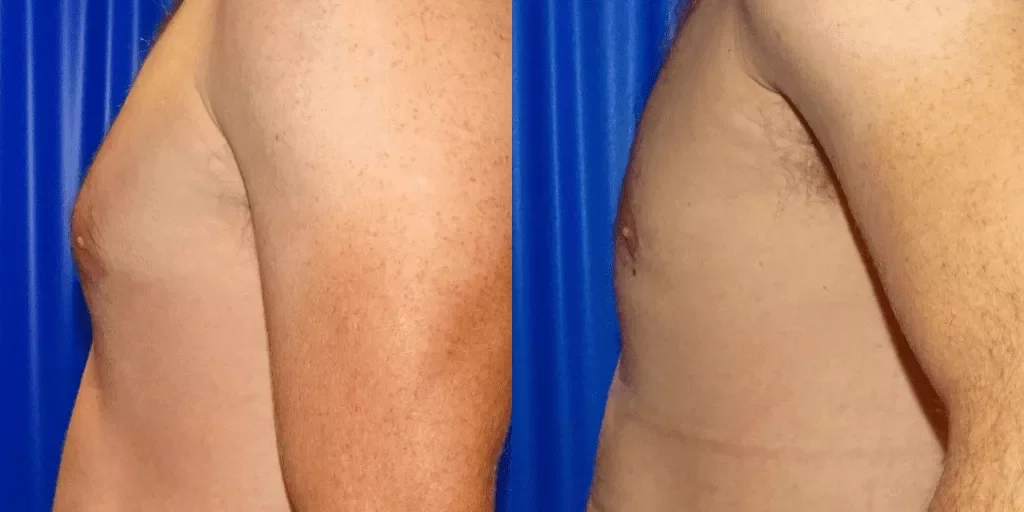
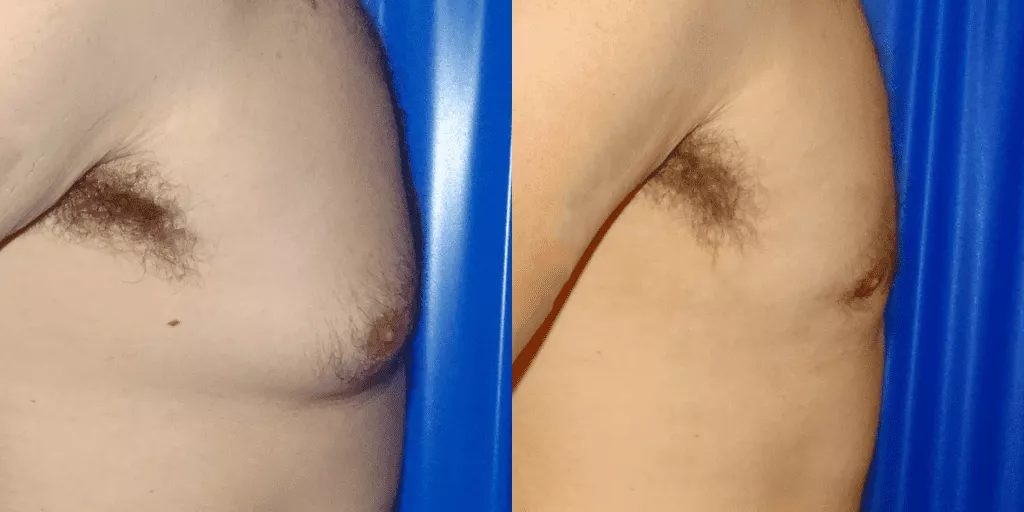
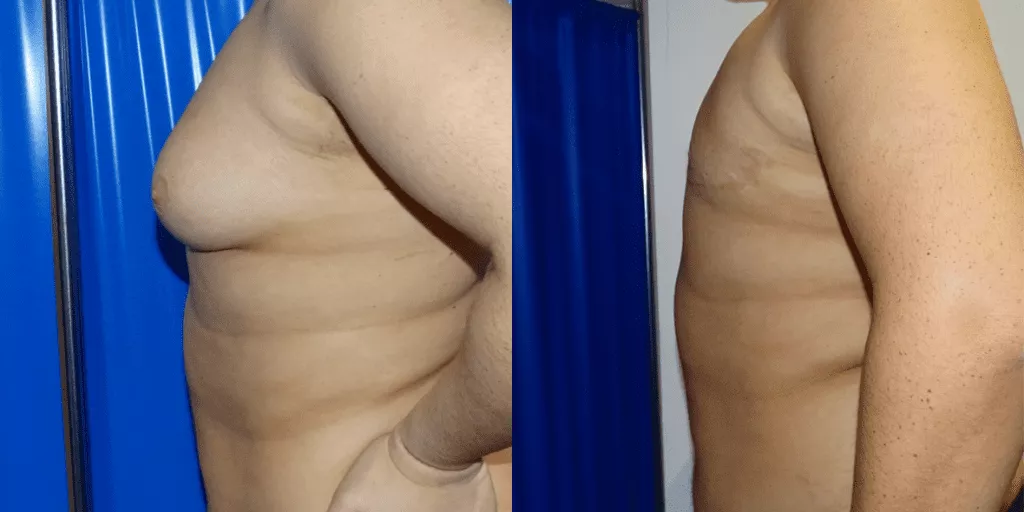
A quote tells you what the operation costs, not what your chest will look like. See our gynaecomastia before and after photos, and read how to read these photos before comparing surgeons on a gallery, ours included. If you are still deciding whether to go ahead at all, our guide on whether gynecomastia surgery is worth it weighs up the results, the risks and how many men regret it.
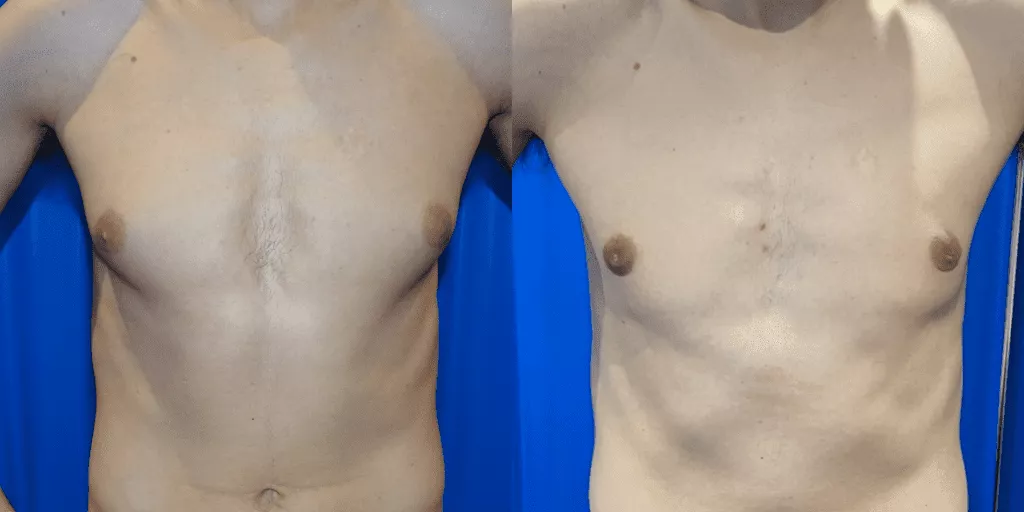
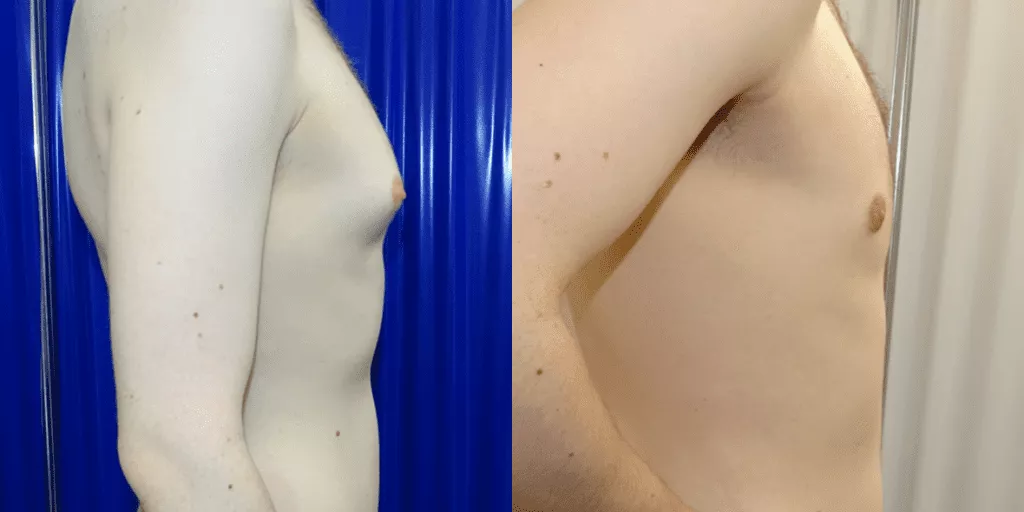
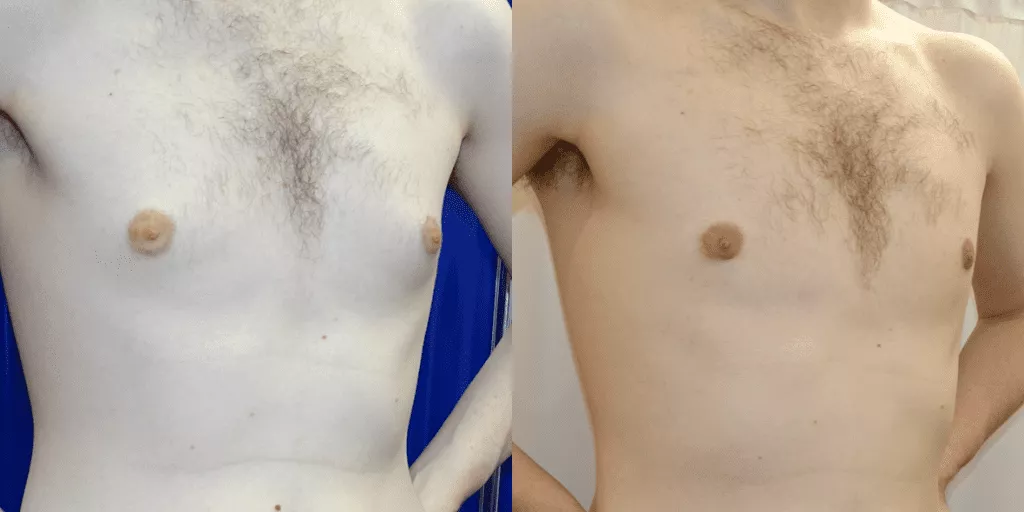
Gynecomastia surgery cost by grade
Surgeons grade gynaecomastia from 1 to 4 by how large the chest is and whether there is loose skin, following a scale first set out by Simon in 1973.[1] The grade largely decides which operation you need, and the operation is what sets the price. Our guide to the four grades of gynecomastia explains how each one is identified.
| Grade | What it usually needs | Indicative cost |
|---|---|---|
| Grade 1: mild | Liposuction alone for a fatty chest, or a small gland excision for a firm button behind the nipple | from £4,500 one side (local anaesthetic); from £5,000 both sides, liposuction only; from £6,000 with gland excision |
| Grade 2: moderate | Gland excision plus liposuction under TIVA | from £6,000 |
| Grade 3: severe with mild sagging | Liposuction, gland excision and concentric skin and areola reduction | from £7,500 |
| Grade 4: severe with significant sagging | As grade 3, or breast amputation with free nipple grafting when the nipple sits well below the chest muscle | from £7,500; from £10,500 with free nipple grafting |
How much does grade 1 gyno surgery cost?
Grade 1 is the least expensive grade to treat. A one-sided case under local anaesthetic starts from £4,500, liposuction alone for both sides from £5,000, and a firm glandular button that has to be cut out moves the case to the combined gland excision and liposuction price, from £6,000.
How much does grade 2 gyno surgery cost?
Most grade 2 chests contain a glandular disc as well as fat, so the usual operation is gland excision plus liposuction under TIVA, from £6,000. In grade 2b there is a little loose skin. Your surgeon will tell you at consultation whether it will tighten once the tissue is removed, or whether it needs reducing, which places the case in the skin-excision band.
How much does grade 3 gyno surgery cost?
Grade 3 surgery starts from £7,500. The chest is heavy enough to have started sagging, so liposuction and gland excision are combined with a concentric skin reduction around the areola, which also makes the areola smaller in the same step.
Grade 4 gyno surgery cost: breast amputation with free nipple grafting
At the severe end of grade 4 — most often in men who have lost a very large amount of weight, whether through bariatric surgery or sustained diet and exercise — the chest carries so much redundant skin and tissue that the standard periareolar techniques cannot produce an acceptable result.[2] The nipple-areola complex has usually descended well below the level of the pectoral muscle, is stretched and enlarged, and cannot simply be repositioned on its blood supply. The operation required is a breast amputation with free nipple grafting, priced from £10,500.
This is a genuinely different operation, not a larger version of the same one. The nipple and areola are removed entirely as a full-thickness skin graft, resized, and grafted back onto the chest in the correct anatomical position once the underlying breast tissue and excess skin have been excised. It takes substantially longer than a standard correction, usually requires drains, and involves an inframammary or horizontal chest scar considerably longer than a periareolar one.
What you are trading for the result
The reason this procedure needs discussing carefully rather than simply booking is that the trade-offs are permanent, and they are not obvious from before-and-after photographs:
- Nipple sensation is permanently lost. The nipple is detached completely from its nerve supply, so sensation does not return. This is expected, not a complication.
- The graft must take. A free graft survives by taking up a new blood supply from the chest wall over the first week. Partial graft failure occurs in a minority of cases and can result in patchy pigment loss, requiring medical tattooing later to even out the colour.
- The scar is longer. A horizontal chest scar is unavoidable — this is not a hidden-scar operation.
- Recovery takes longer. A bolster dressing protects the graft for the first five to seven days, drains are usually required, and return to work is typically two weeks rather than one.
In exchange, it is the only technique that reliably produces a flat, masculine chest contour where the tissue burden is this severe. Attempting a lesser operation in these cases generally means accepting a poor contour, a nipple sitting too low, or a revision later.
Should you wait, or have surgery now?
If you are still actively losing weight, it is usually worth waiting until your weight has been stable for around six months. Further significant loss after surgery creates new skin laxity and can undo the contour you have paid for. Where weight is stable and the tissue burden is severe, there is no advantage in delaying — the skin will not retract on its own at this stage.
Some men are candidates for a staged approach instead: liposuction and gland excision first, then a skin-reduction procedure several months later once the chest has settled. This can occasionally preserve nipple sensation where the complex has not descended too far, though it means two operations and two recoveries. Your surgeon will tell you at consultation whether the nipple position makes that realistic in your case, or whether free nipple grafting is the only technique that will work.
What’s included in the price of gyno surgery?
A gynaecomastia quote at Centre for Surgery is a single package price — not a surgeon’s fee with extras bolted on afterwards. It covers:
- In-depth consultation with your surgeon
- Pre-operative medical assessment
- The surgeon’s fee, the anaesthetist’s fee, and TIVA
- Day-case theatre time at our CQC-regulated Baker Street facility
- Dissolvable sutures — no return visit for removal
- Your surgeon’s direct number for the first 24 hours
- Wound check at 7–10 days, surgeon review at 6 weeks, and a 3-month assessment
- A dedicated patient coordinator throughout
Your post-operative compression vest and any prescribed medications are purchased separately and confirmed in advance, so you know the full outlay before you commit.
What affects the cost of gynaecomastia surgery?
Fat or gland — the biggest single factor
A fatty chest (pseudogynaecomastia) can often be corrected with liposuction alone, which sits at the lower end of the range. True gynaecomastia involves a firm glandular disc behind the nipple that liposuction cannot remove — it has to be cut out through a small incision at the areola border. That added surgical step is why combined cases cost more.
The grade of your gynaecomastia
Gynaecomastia is graded 1 to 4. Higher grades mean more tissue to remove and more operating time, which increases the cost. Grade determines technique, and technique determines price.
Whether skin needs removing
In grade 3–4, the skin has been stretched and won’t shrink back on its own. Removing and tightening that excess skin is additional surgery, placing these cases at the top of the standard range. Where the tissue burden is severe enough that the nipple has descended below the pectoral muscle — typically after major weight loss — breast amputation with free nipple grafting is required, which is priced above the standard grades.
Unilateral vs bilateral
Some men have gynaecomastia affecting only one side, and this is where our entry price sits. A lower-grade unilateral case suitable for local anaesthetic starts from £4,500 — the least expensive gynaecomastia correction we perform, because only one side is treated and no anaesthetist or TIVA is required. Where a one-sided case needs gland excision or falls into a higher grade, TIVA is used and pricing starts from £5,000. Unilateral surgery is never simply half the bilateral price, because theatre time, aftercare and the fixed costs of the day case are broadly similar regardless of how many sides are treated — and one-sided correction carries an additional technical demand, since the treated side must be matched to the untreated one rather than both being shaped to a single plan. Our guide to unilateral gynecomastia explains why gyno appears on one side only, which features warrant seeing a GP first, and why one-sided surgery is technically more demanding than treating both sides.
Primary or revision surgery
Correcting a previous gynaecomastia operation that’s left a problem — over-resection producing a crater deformity, residual gland, loose skin, or asymmetry — is more complex than first-time surgery and is quoted individually after assessment. Our guides to gynaecomastia revision surgery and the four grades of gynaecomastia cover what can realistically be corrected and when to operate.
True gynaecomastia vs pseudogynaecomastia — why it changes the price
This distinction is the single most useful thing to understand before comparing quotes. True gynaecomastia is glandular: a firm, rubbery disc of breast tissue sitting directly behind the nipple, caused by a hormonal imbalance between testosterone and oestrogen. It does not respond to diet, exercise, or fat-loss, and non-surgical treatments for gynecomastia rarely shift established gland. It cannot be removed by liposuction either. It needs surgical excision.[3]
Pseudogynaecomastia is fatty: soft, more diffuse chest fullness with no glandular disc, usually linked to weight. It can improve with weight loss and responds well to liposuction alone. Many men have a mix of both. A consultant plastic surgeon confirms the composition by examination at consultation — and that finding is what places you in the liposuction-only band or the combined-surgery band. A quote given without a physical examination should be treated with caution.
What gynaecomastia surgery involves
The technique is matched to your grade and tissue type:
- Power-assisted liposuction (PAL) — removes the fatty component through small 3–5 mm incisions at the side of the chest. Used alone for pseudogynaecomastia, or as the first stage of a combined procedure.
- VASER ultrasound-assisted liposuction — emulsifies dense, fibrous chest tissue before removal, and is used to feather the chest border so the correction blends into the surrounding tissue. Used alone or alongside PAL, at no additional cost.
- Periareolar gland excision — a semicircular incision at the lower border of the areola allows the firm glandular disc to be removed precisely. This is the step liposuction can’t replicate.
- Combined liposuction and gland excision — the standard approach for most men, addressing both fat and gland in one operation.
- Concentric skin reduction with areola reduction — for grade 3–4, excess skin is removed through a concentric periareolar pattern: two circles are marked around the areola, the ring between them is de-epithelialised, and the closure is drawn together with a purse-string suture. This tightens the skin envelope and reduces the areola diameter in the same step, which matters because the areola is usually stretched and enlarged by the tissue sitting behind it. Areola reduction is therefore part of the grade 3–4 price, not an addition to it. Occasionally staged as a second procedure once the chest has settled.
- Breast amputation with free nipple grafting — for severe grade 4, where the nipple has descended too far to be repositioned on its own blood supply. The nipple-areola complex is removed as a full-thickness graft, resized, and grafted back once the tissue and excess skin are excised.
Where a haematoma (blood collection) is a risk, a small wound drain may be placed temporarily to prevent it. Surgery takes one to three hours depending on grade, and you go home the same day.
Combining the two techniques is safer as well as more thorough. A 2022 systematic review of 7,294 patients in Aesthetic Plastic Surgery ↗ recorded complications in 11.8% of combined liposuction and excision procedures, compared with 30.6% for excision alone and 14.9% for liposuction-type techniques alone.[4]
Does VASER cost more for gynaecomastia?
No. VASER (ultrasound-assisted liposuction) sits within the same pricing bands above rather than carrying a supplement, exactly as it does for liposuction generally. Your surgeon selects PAL, VASER, or a combination of the two on clinical grounds — the density of the tissue and the result being aimed for — not according to which one costs more.
This matters more in gynaecomastia than in most body areas. Male chest tissue is characteristically dense and fibrous, particularly around the glandular disc, and VASER’s ultrasound energy emulsifies fibrous fat that a mechanical cannula alone struggles with.[5] That makes it genuinely useful here — often used to treat the fatty component and define the chest border before the gland is excised, and to feather the edges so the correction blends into the surrounding chest rather than leaving a visible step. An evidence review of liposuction techniques in Annals of Plastic Surgery ↗ found gynaecomastia was one of the few areas where ultrasound-assisted liposuction had a clear advantage over standard suction.[6]
What VASER does not do is remove the glandular disc. No liposuction technique can, whatever the marketing says — true gynaecomastia needs surgical excision through a periareolar incision. If you are quoted for “VASER gynaecomastia” as a standalone solution to a firm lump behind the nipple, that is worth questioning closely.
What anaesthetic is used for gynecomastia surgery?
Most gynaecomastia surgery at Centre for Surgery is performed under TIVA (Total Intravenous Anaesthesia), administered by a consultant anaesthetist. You’re fully asleep throughout. TIVA produces less post-operative nausea, a smoother wake-up, and faster discharge than anaesthesia maintained with inhaled gases — which is why it’s our standard for day-case surgery. There’s no overnight stay. Smaller cases — typically lower-grade unilateral gynaecomastia — are suitable for local anaesthetic instead, which is why those start from £4,500 rather than the bilateral TIVA prices above. Our guide to anaesthesia options for gynaecomastia surgery compares the approaches and explains when each is appropriate.
Is gyno surgery free on the NHS or covered by insurance?
In almost all cases, no — and it is worth being clear about this early, because it differs from female breast reduction, where NHS funding is at least possible for symptomatic patients. Our guide to gynaecomastia surgery on the NHS covers the criteria and the steps to take with your GP.
Surgery for gynaecomastia is not normally funded under most Integrated Care Board (ICB) commissioning policies. It is explicitly listed as an intervention not routinely commissioned, and that position is near-uniform across regions rather than varying the way breast reduction criteria do. The exceptions are narrow: gynaecomastia caused by cancer or by cancer treatment is generally outside the exclusion, and there are rare cases where a significant underlying medical cause requires treatment in its own right.
Where a policy does allow an application, it is normally through an Individual Funding Request — a case-by-case route requiring evidence that your circumstances are exceptional compared with other men with the same condition. That bar is deliberately high, and the great majority of requests for gynaecomastia are declined.
Private medical insurance does not cover it either, for the same reason: policies exclude procedures classed as cosmetic.
What this means practically. Unlike breast reduction, there is usually little to gain from pursuing the NHS route first unless you have an identifiable underlying medical cause — in which case see your GP, because that cause may need investigating regardless of whether you have surgery. Persistent gynaecomastia that has been present for more than a year, is one-sided, or is associated with a firm or fixed lump, breast pain, or nipple discharge should be assessed by a GP before any cosmetic surgery is considered. Gynaecomastia surgery is therefore a self-funded treatment for the overwhelming majority of men — which is why finance is worth knowing about.
Cheapest gyno surgery in the UK: why the lowest quote is a red flag
Gland excision is technically demanding, and it’s where cost-cutting shows up later. Remove too much tissue directly under the nipple and you get a crater deformity — a visibly sunken nipple that is difficult and expensive to correct, sometimes impossible to fully reverse. Other risks of under-trained surgery include nipple distortion and asymmetry. These complications are the reason an unusually low price deserves scrutiny rather than celebration: very cheap gynaecomastia surgery is commonly performed by non-specialists in unregulated settings, and revision surgery to fix a poor result often costs far more than doing it properly once. Leftover gland is a real risk even in specialist hands: in a Boston Children’s Hospital study of 145 young men ↗, residual tissue was the most common complication, affecting 12.6% of treated breasts.[7]
This applies with particular force when comparing UK prices against gyno surgery packages advertised abroad. Gynecomastia Turkey packages are by far the most searched of these, typically advertised from around £2,000 including flights and hotel, with Poland and parts of Asia also promoted as lower-cost alternatives. A lower headline price abroad rarely accounts for flights, accommodation, time off work, or the practical difficulty of accessing follow-up care from a surgeon overseas if a complication develops after you’re home. If a result needs correcting, revision surgery in the UK typically costs more than having it done properly here in the first place.
Before booking anywhere, confirm:
- The surgeon is a consultant plastic surgeon on the GMC Specialist Register — verify it yourself on the GMC website
- Membership of BAPRAS or BAAPS
- Specific experience across all grades, including gland excision (not just liposuction)
- A portfolio of before-and-after photographs you can review at consultation
- A CQC-regulated facility
- A clear, written aftercare package — including who to call after surgery, and when
Can you pay for gynaecomastia surgery in instalments?
You can pay in full or spread the cost with finance through Chrysalis Finance, subject to status. Plans and a representative example are on our finance options page, and a patient coordinator can talk you through them on 020 7993 4849.
Your written quote comes first, and your patient coordinator can talk you through the plans at your consultation.
See finance optionsCall 020 7993 4849
M Sarwar Limited, trading as Centre for Surgery, is a credit broker, not a lender.
Which cosmetic surgery for men is right for you?
A few short questions, including a simple pinch test if stomach fat is your concern. You will get a suggested procedure, realistic recovery times, and an honest answer if surgery is not what you need.
Frequently Asked Questions
How much does gynaecomastia surgery cost in the UK in 2026?
At Centre for Surgery in London, gynaecomastia surgery starts from £4,500. The entry price is for one-sided (unilateral) correction of a lower-grade case under local anaesthetic. Bilateral liposuction only (for a fatty chest) under local anaesthetic is from £5,000; combined gland excision and liposuction is from £6,000; grade 3–4 surgery with skin removal starts from £7,500; and breast amputation with free nipple grafting, for severe grade 4 cases, starts from £10,500. Your exact price is confirmed after examination at consultation.
What is the male breast reduction cost in the UK?
Male breast reduction cost UK-wide typically runs from around £3,000 to £8,000, with the figure driven by the grade of the condition rather than by the clinic. Male breast reduction and gynecomastia surgery are the same operation under two names — the first descriptive, the second clinical. At Centre for Surgery it starts from £4,500 for a one-sided lower-grade case under local anaesthetic.
What is the cheapest gynecomastia surgery in the UK?
We are not the cheapest gynecomastia surgery option in the UK, and for this operation that is worth thinking about carefully. The lowest UK quotes sit around £2,500–£3,000, and gynecomastia Turkey packages advertise from roughly £2,000.
The specific risk here is over-resection. Removing too much tissue directly beneath the nipple produces a crater deformity — a visibly sunken nipple — and it is one of the harder complications in cosmetic surgery to correct, sometimes impossible to reverse fully. Under-resection is the opposite failure and leaves residual gland that needs revising. Both are judgement calls made during the operation by the surgeon holding the instrument.
So before comparing a cheap gyno surgery cost with ours, establish four things: is the surgeon a plastic surgeon on the GMC Specialist Register, does the quote include gland excision or only liposuction, is the facility CQC-registered for surgery, and what is covered if you need revision. A lower price is not automatically a worse operation. A lower price that excludes gland excision is not a cheaper version of the same operation — it is a different one that will not treat true gynaecomastia.
How much does gyno surgery cost?
“Gyno surgery” is the common shorthand for gynaecomastia surgery (male breast reduction) — the pricing is identical. At Centre for Surgery it starts from £4,500 for a one-sided case under local anaesthetic, with the final figure depending on whether the chest is fatty, glandular, or both, how many sides are affected, and whether skin removal is needed.
Why is gynaecomastia surgery cheaper for some men than others?
It comes down to how many sides are affected, whether the chest is fatty or glandular, the grade, and whether skin needs removing. A lower-grade one-sided case treatable under local anaesthetic is the lowest-cost option; a bilateral fatty chest treated by liposuction alone under local anaesthetic is from £5,000 — the same figure whether power-assisted liposuction (PAL) or VASER (ultrasound-assisted) is used, since technique is selected on clinical grounds rather than priced as an upgrade. A firm glandular disc has to be surgically excised, and loose skin in higher grades has to be removed — both add surgical time and cost.
How much does unilateral (one-sided) gyno surgery cost?
Unilateral surgery is our lowest-priced gynaecomastia correction. A lower-grade one-sided case suitable for local anaesthetic starts from £4,500, since only one side is treated and no anaesthetist or TIVA is needed. Where the case needs gland excision or falls into a higher grade, TIVA is used and the price starts from £5,000 — less than treating both sides, but not simply half price, since theatre time and aftercare costs are broadly similar regardless of how many sides are treated. Your surgeon confirms the exact figure at consultation once your specific case is assessed.
How much does breast amputation with free nipple grafting cost?
Breast amputation with free nipple grafting starts from £10,500 at Centre for Surgery. It is the most extensive gynaecomastia correction, used for severe grade 4 cases — most commonly after major weight loss — where the nipple-areola complex has descended well below the pectoral muscle and cannot be repositioned on its own blood supply. The nipple and areola are removed as a full-thickness graft, resized, and grafted back in the correct position once the breast tissue and excess skin have been excised. The price reflects substantially longer operating time, the need for drains, and a longer aftercare pathway. Nipple sensation is permanently lost with this technique, and the chest scar is longer than with periareolar surgery — both are discussed in detail at consultation before you decide.
Will I lose nipple sensation after gynaecomastia surgery?
Not with standard techniques. Liposuction, gland excision, and most grade 3–4 skin reductions preserve the nipple on its own blood and nerve supply, so sensation is usually retained — temporary numbness or hypersensitivity during healing is common but settles. The exception is breast amputation with free nipple grafting, where the nipple is detached completely and grafted back: sensation is permanently lost with that technique. That is an expected outcome of the operation rather than a complication, and it is one of the main reasons your surgeon will discuss whether a staged, sensation-preserving approach is realistic in your case first.
Is gynecomastia surgery covered by insurance or the NHS?
In almost all cases no. Surgery for gynaecomastia is not normally funded under most Integrated Care Board commissioning policies — it is listed as an intervention not routinely commissioned, and unlike female breast reduction that position is near-uniform across regions rather than varying by criteria. The exceptions are narrow: gynaecomastia caused by cancer or cancer treatment generally falls outside the exclusion, and rare cases with a significant underlying medical cause may be considered through an Individual Funding Request, which requires evidence that your circumstances are exceptional compared with other men with the same condition. That bar is high and most requests are declined. Private medical insurance does not cover it either. It is therefore a self-funded procedure for nearly all men, which is why finance is available. That said, if your gynaecomastia is one-sided, has appeared recently, or involves a firm lump, breast pain or nipple discharge, see your GP before considering cosmetic surgery — those features warrant assessment in their own right.
Is areola reduction charged on top of gynaecomastia surgery?
No. In grade 3–4 surgery the skin is reduced through a concentric periareolar pattern — two circles marked around the areola, with the ring between them removed and the closure drawn together with a purse-string suture. That technique tightens the skin envelope and reduces the areola diameter in the same step, so areola reduction is included in the grade 3–4 price rather than added to it. This matters because the areola is usually stretched and enlarged by the glandular tissue sitting behind it, so resizing it is part of achieving a masculine chest contour rather than a separate cosmetic extra. The standalone areola reduction prices published elsewhere on this site apply only when the procedure is performed on its own, not as part of gynaecomastia correction.
Will liposuction alone get rid of my gynaecomastia?
Only if it’s pseudogynaecomastia (fat). True gynaecomastia involves a firm glandular disc behind the nipple that liposuction cannot remove — it needs surgical excision. Most men have a combination, which is why the combined procedure is the most common. A physical examination at consultation determines which applies to you.
How much is gynaecomastia surgery per month on finance?
You can pay in full or spread the cost with finance through Chrysalis Finance, subject to status. Plans and a representative example are on our finance options page, and a patient coordinator can talk you through them on 020 7993 4849.
Does the price include the compression vest and follow-ups?
Follow-ups yes, the vest no. The quoted price includes dissolvable sutures, your surgeon’s direct number for the first 24 hours, the 7–10 day wound check, the 6-week surgeon review, and the 3-month assessment. Your post-operative compression vest and any prescribed medications are purchased separately and confirmed in advance, so the figure you are quoted is the surgical cost and the additional items are known to you before you commit.
Can gynaecomastia come back after surgery?
The glandular tissue that’s surgically removed does not grow back. However, if the underlying cause continues — anabolic steroids, cannabis use, or an untreated hormonal condition — new tissue can develop, and significant weight gain can add new chest fat. Addressing the cause beforehand keeps the result durable. Cannabis in particular should be stopped for at least 4–6 months before surgery. Our guide on whether gynecomastia can come back after surgery explains how to tell swelling or new fat from true regrowth.
Why choose Centre for Surgery for gynaecomastia surgery?
- GMC-registered plastic surgeons — members of BAPRAS and ISAPS — performing all grades, from liposuction-only to skin-reduction and revision surgery.
- Power-assisted (PAL) or VASER liposuction for the fatty component.
- TIVA, day case — administered by a consultant anaesthetist, with same-day discharge.
- CQC-regulated hospital at 95–97 Baker Street, rated “Good” by the Care Quality Commission, with structured aftercare: your surgeon’s direct number for the first 24 hours, a wound check at 7–10 days, a surgeon review at 6 weeks, and a 3-month assessment.
- Transparent package pricing — the compression vest and prescribed medications are purchased separately and confirmed in advance, not added as a surprise afterwards.
- Recommended two-week cooling-off period before any surgery is booked — protected time to decide, with no pressure.
Book your gynaecomastia consultation
- Phone: 020 7993 4849
- Email: contact@centreforsurgery.com
- Address: 95-97 Baker Street, Marylebone, London W1U 6RN
- Contact us to schedule your consultation
Your initial in-person consultation is £100, redeemable against the cost of treatment if you proceed.
References
- Simon BE, Hoffman S, Kahn S. Classification and surgical correction of gynecomastia. Plastic and Reconstructive Surgery 1973;51(1):48–52. doi:10.1097/00006534-197301000-00009 ↗
- Tashkandi M, Al-Qattan MM, Hassanain JM, Hawary MB, Sultan M. The surgical management of high-grade gynecomastia. Annals of Plastic Surgery 2004;53(1):17–20. doi:10.1097/01.sap.0000112347.30612.f4 ↗
- Kanakis GA, Nordkap L, Bang AK, et al. EAA clinical practice guidelines: gynecomastia evaluation and management. Andrology 2019;7(6):778–793. doi:10.1111/andr.12636 ↗
- Innocenti A, Melita D, Dreassi E. Incidence of complications for different approaches in gynecomastia correction: a systematic review of the literature. Aesthetic Plastic Surgery 2022;46(3):1025–1041. doi:10.1007/s00266-022-02782-1 ↗
- Rohrich RJ, Ha RY, Kenkel JM, Adams WP. Classification and management of gynecomastia: defining the role of ultrasound-assisted liposuction. Plastic and Reconstructive Surgery 2003;111(2):909–923. doi:10.1097/01.PRS.0000042146.40379.25 ↗
- Collins PS, Moyer KE. Evidence-based practice in liposuction. Annals of Plastic Surgery 2018;80(6S Suppl 6):S403–S405. doi:10.1097/SAP.0000000000001325 ↗
- McNamara CT, Nuzzi LC, Firriolo JM, et al. Complications and quality of life following gynecomastia correction in adolescents and young men. Plastic and Reconstructive Surgery 2022;149(6):1062e–1070e. doi:10.1097/PRS.0000000000009089 ↗