

In this guide9 sections
- There are several different types of tummy tucks.
- A tummy tuck can get rid of love handles.
- Tummy tuck scars fade with time.
- Initial recovery from an abdominoplasty takes between 2 and 4 weeks.
- Abdominoplasty, or a tummy tuck, should not be considered a treatment for weight loss.
- Men can also have abdominoplasty surgery.
- Tummy tucks can be performed under TIVA or local anaesthesia.
- FAQs
- Choosing Centre for Surgery for tummy tuck and abdominoplasty surgery
Many people may notice a loss of skin elasticity, with the abdominal skin becoming loose and wrinkled. Common causes include significant weight loss, previous pregnancies, or hereditary factors. A resultant loss of self-confidence may develop. Fortunately, these issues can be corrected with a tummy tuck (abdominoplasty).
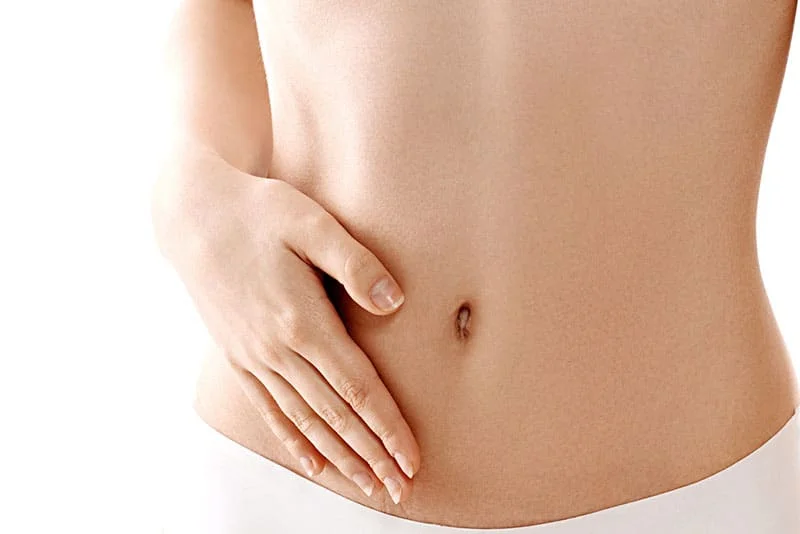
A tummy tuck, also known as abdominoplasty, is designed to remove excess abdominal skin and fat and tighten the abdominal muscles to achieve a flat, contoured stomach. Here, we discuss key facts about tummy tuck surgery and the different types available in the UK.
There are several different types of tummy tucks.
Tummy tuck surgery is customised for the individual patient. This depends on the amount of excess fat and skin that needs to be removed and whether the abdominal muscles need to be tightened due to pregnancy.
Full tummy tuck
The full tummy tuck is most appropriate for patients with significant excess skin in the upper and lower abdomen and excessive fat deposits in the waist area. This procedure removes excess skin and fat and reconstructs the weakened abdominal muscles.
Mini tummy tuck
The mini tummy tuck is ideal for patients with localised excess skin in the lower abdomen, between the mons pubis and the umbilicus, where the skin tends to have a wrinkly appearance. A mini tummy tuck cannot correct weakened muscles; a full tummy tuck is required for that.
360 Lipo and abdominoplasty
360 lipo and tummy tuck consists of circumferential liposuction to contour the midsection, followed by an abdominoplasty to tighten abdominal skin. Rectus muscle repair may be undertaken if required.
Brazilian tummy tuck
This procedure combines liposuction and abdominoplasty to contour the abdomen, waist, and flanks, achieving a sculpted look. Recovery time after a Brazilian abdominoplasty is generally shorter than after a traditional full tummy tuck.
Centre for Surgery specialises in Brazilian tummy tucks, combining liposuction and abdominoplasty. This approach provides better shape and contour, especially in the flanks, alongside a reduced risk profile and shortened recovery period.


A tummy tuck can get rid of love handles.
A full tummy tuck does not explicitly target the love handles located between the hips and the lower rib cage on each side of the abdomen. An extended abdominoplasty is a better procedure for removing love handles. If you have good skin elasticity, you may be able to remove love handles with liposuction alone.
Tummy tuck scars fade with time.
Most patients are understandably keen to improve the appearance of tummy tuck scars. Abdominoplasty scars gradually fade over the first 6 months and can take up to a year to fully mature — for full detail on scar types by technique, healing timeline, and how to minimise scarring, see our dedicated guide.
Initial recovery from an abdominoplasty takes between 2 and 4 weeks.
Recovery is approximately 3 to 4 weeks after a tummy tuck. Once the procedure is complete, you’ll be discharged a few hours later to recover in the comfort of your own home. During the first couple of weeks, prescription painkillers can control any discomfort. It’s helpful to keep the stomach area straight or slightly bent forward to support good wound healing. It’s essential to wear an abdominal compression garment for the first four weeks to reduce swelling and discomfort.
Abdominoplasty, or a tummy tuck, should not be considered a treatment for weight loss.
Tummy tuck surgery is a specialised body contouring procedure, designed to remove excess skin in patients who have been pregnant or have lost significant amounts of weight. In some cases, abdominoplasty may be performed for people unhappy with the appearance of their abdomen due to the ageing process, who would like a firmer, flatter stomach. Patients considering a tummy tuck should aim to reach their ideal body weight beforehand, as future fluctuations in weight can affect results and may require revision surgery. If you’re considering becoming pregnant after a tummy tuck, be aware that the abdominal skin may stretch significantly, leading to loose skin — this may require a revision of the abdominoplasty to restore the original result.
Men can also have abdominoplasty surgery.
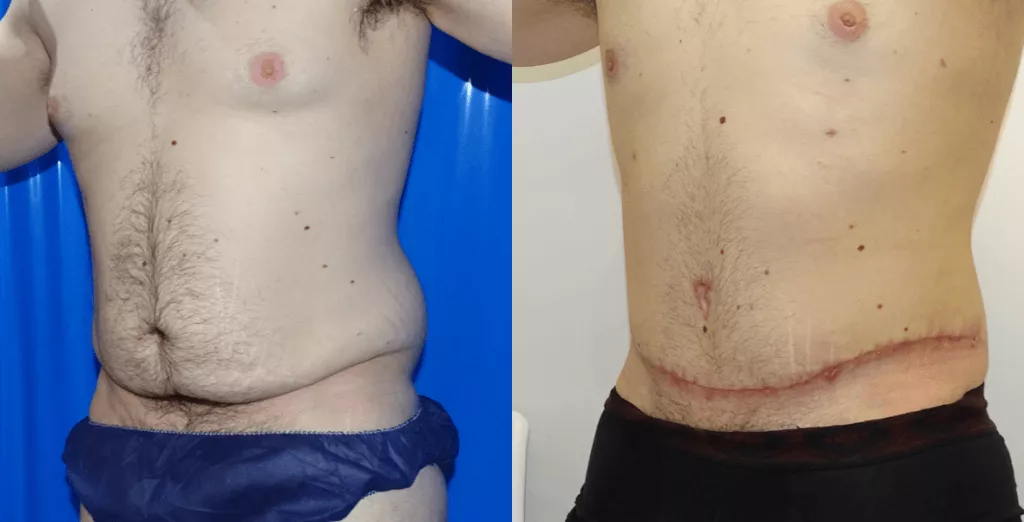
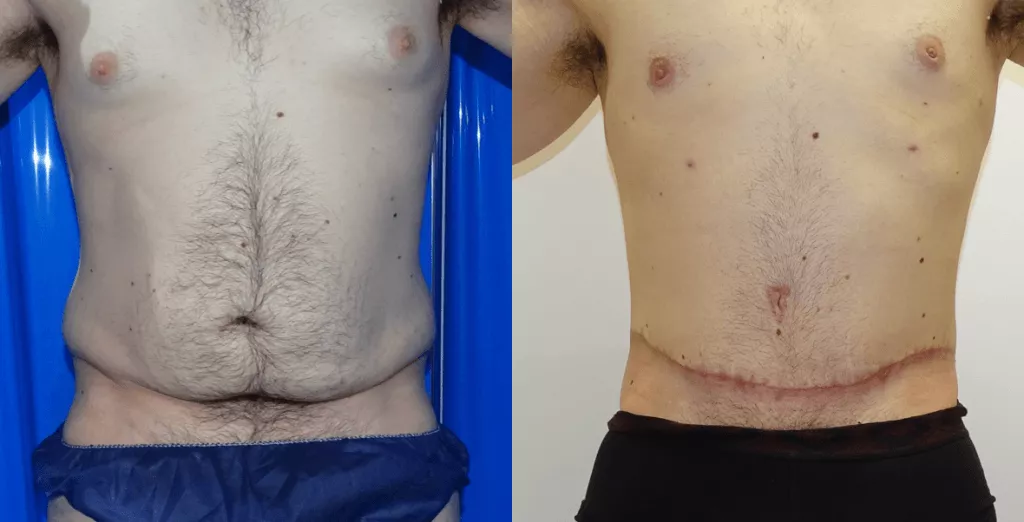
Although tummy tuck surgery is most commonly performed on women who have previously been pregnant, an increasing number of men each year choose to undergo a male tummy tuck to get rid of excess skin, most commonly developed as a result of significant weight loss. Some men may also require repair of the abdominal muscles for rectus diastasis.
Tummy tucks can be performed under TIVA or local anaesthesia.
Most tummy tuck surgery at Centre for Surgery is performed under TIVA — total intravenous anaesthesia — as a day case, an intravenous technique that avoids inhaled anaesthetic gases. In a small number of cases, a mini tummy tuck can be safely carried out under local anaesthetic with mild sedation. Your surgeon will determine whether you’re suitable for local anaesthetic based on your individual case. You can learn more by booking a face-to-face consultation with one of our expert tummy tuck surgeons in London.
FAQs
What Is Involved in a Brazilian Tummy Tuck?
A Brazilian tummy tuck is a more refined surgical technique than a standard abdominoplasty. The procedure first involves liposuction of the flanks and upper abdomen, followed by skin removal and repair of the rectus muscles. This enhanced technique tends to result in less discomfort and a more contoured shape than a traditional tummy tuck without liposuction, which can leave a more ‘square’ appearance.
Our surgeons are specially trained in the Brazilian tummy tuck technique and have performed hundreds of these procedures. Due to its less invasive nature, a Brazilian tummy tuck can be performed as a day case, often using power-assisted liposuction.
Can a tummy tuck be carried out at the same time as a C-section?
The combination of a tummy tuck with a C-section is sometimes called a “C-tuck”. We don’t recommend this to our patients, as the recovery period can be significantly prolonged and may affect your ability to look after your newborn baby, and the risk of complications is also higher. Abdominal muscles commonly stretch after pregnancy, and a full tummy tuck is well suited to tightening them — but we recommend waiting at least 12 months after a C-section before having a tummy tuck, to ensure you’re in the best possible condition for abdominoplasty surgery.
What is tummy tuck recovery like?
Average abdominoplasty recovery requires approximately 4 to 6 weeks for initial healing. Following your post-operative instructions carefully helps ensure proper healing:
- Take your pain medication and antibiotics as prescribed for one week after surgery.
- Wear an abdominal compression garment for at least 4 weeks.
- Cold packs can help with localised swelling, if needed — check with one of our post-operative nurses before doing this.
Complying fully with your surgeon’s post-operative instructions minimises the risk of complications after tummy tuck surgery. We recommend attending all your scheduled post-operative appointments with our nurses and your surgeon.
Choosing Centre for Surgery for tummy tuck and abdominoplasty surgery
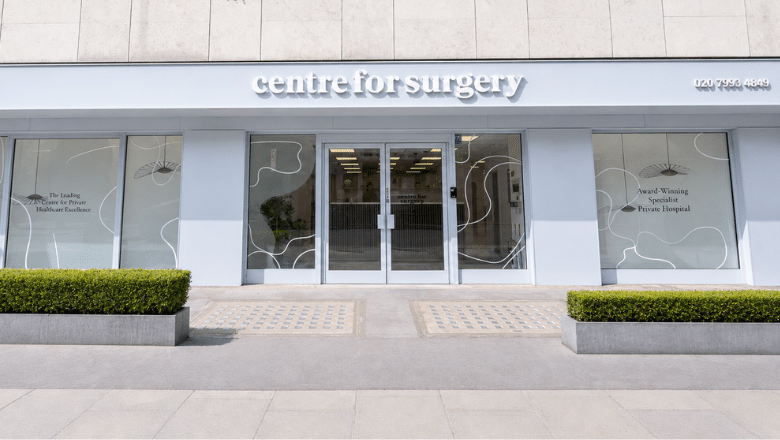
Centre for Surgery is a CQC-regulated cosmetic surgery clinic on Baker Street, London, with surgeons experienced across all types of tummy tuck surgery, including the Brazilian tummy tuck. From your first consultation to your final post-operative appointment, we aim to make your patient journey as comfortable and stress-free as possible.
If you would like to learn more about tummy tuck surgery or book an abdominoplasty consultation, please call us on (020) 7993 4849 to speak to one of our patient coordinators.
Related Articles
- What Does a Tummy Tuck Involve?
- How Much Does a Tummy Tuck Cost in London? (2026 Prices)
- Can I Get a Tummy Tuck on the NHS?