


In this guide15 sections
- What Causes Heavy Breasts?
- “Why Do My Breasts Feel Heavy?” — Common Variations of This Question
- Common Myths About Heavy Breasts
- Can I Lose Weight From My Breasts?
- Symptoms Linked to Heavy Breasts
- Can the Symptoms of Heavy Breasts Be Treated Without Surgery?
- Am I a Good Candidate for Breast Reduction?
- Can Heavy Breasts Be Treated With Surgery?
- When to See Your GP
- The Emotional Impact of Heavy Breasts
- What Are the Benefits of Breast Reduction Surgery?
- How Much Does Breast Reduction Cost?
- Choosing a Surgeon for Breast Reduction
- Frequently Asked Questions
- Breast Reduction at Centre for Surgery
If your breasts feel heavy, achy, or full — whether that’s a constant sensation or something that comes and goes — you’re far from alone. Heavy breasts are extremely common, and in the vast majority of cases, they’re completely normal and nothing to worry about. But “why do my breasts feel heavy?” is a genuinely common question, and the causes range from simple genetics through to hormonal fluid retention, and — rarely — an underlying condition worth having checked. Some women barely notice it; for others, it’s a daily source of real physical discomfort that affects everything from exercise to sleep to how they feel in their own clothes. This guide covers the full picture: the common causes, when heaviness is linked to other symptoms like soreness or fullness, what you can do about it, and when breast reduction surgery might be the right long-term solution.
If size rather than weight is your main concern, our companion guide explains what causes large breasts, including gigantomastia.
What Causes Heavy Breasts?

Heavy breasts are most commonly caused by genetics, and this is completely normal — breast shape and size are individual, and some women simply have naturally denser or heavier breast tissue than others, in exactly the same way some people naturally have a heavier or lighter build elsewhere in the body. Beyond genetics, several other factors — some common, some much rarer — can cause breasts to feel heavy:
Fibrocystic breast changes are a very common cause. This involves fluid accumulating within the breast tissue, causing the breasts to swell and feel heavier, fuller, and sometimes tender or lumpy — particularly in the days before a period.
Hormonal medications, including the combined contraceptive pill and hormone replacement therapy (HRT) for menopause, are well known to cause breasts to feel heavier. Fluctuations in oestrogen and progesterone lead to fluid retention in breast tissue — this is also commonly linked to heavy, sore breasts during perimenopause and menopause.
Mastitis, a breast infection common among breastfeeding women, causes breast pain, swelling, heaviness, and often a fever alongside other flu-like symptoms.
Periods, pregnancy, and breastfeeding are all common, entirely normal causes of temporary breast heaviness, driven by the same underlying hormonal fluid shifts.
Very rarely, a feeling of breast heaviness can be a symptom of inflammatory breast cancer — an aggressive but uncommon form of breast cancer that tends to come on suddenly, alongside other symptoms like skin redness, dimpling, or warmth. This is genuinely rare, and in the overwhelming majority of cases heavy breasts are nothing to be concerned about — but any sudden, persistent, or unusual change is always worth having checked by your GP.
“Why Do My Breasts Feel Heavy?” — Common Variations of This Question
We hear this question phrased in a lot of different ways, and the underlying causes are usually similar regardless of the exact wording:
“My breasts feel heavy and fuller.” This pattern is often linked to the menstrual cycle, pregnancy, or starting a new hormonal medication — fluid retention causes both sensations together.
“My breasts feel heavy but I’m not pregnant.” A very common concern, but heaviness has plenty of non-pregnancy causes — fibrocystic changes, hormonal medication, perimenopause, or simply your normal cycle. A pregnancy test can rule this out quickly if you’re unsure, but it’s rarely the only possible explanation.
“My breasts feel heavy and sensitive.” Sensitivity alongside heaviness is a classic combination linked to hormonal fluid retention, most often tied to your menstrual cycle or a change in hormonal medication.
“My breasts hurt and feel heavy.” Pain combined with heaviness is usually cyclical (linked to your period) or related to fibrocystic changes, though if it’s persistent, one-sided, or accompanied by other symptoms, it’s worth a GP check.
“My breasts are suddenly getting bigger and sore.” A sudden change is more noticeable than a gradual one, and while it’s most often hormonal — puberty, pregnancy, a new medication — any rapid or unexplained change is always worth mentioning to your doctor.
Common Myths About Heavy Breasts
There’s a lot of confusing or inaccurate information circulating about heavy breasts. A few of the most common myths, and the facts:
“Heavy breasts always mean you’re pregnant.” Myth. While pregnancy is a common cause of breast heaviness, hormonal medication, your menstrual cycle, fibrocystic changes, and perimenopause are all equally common explanations that have nothing to do with pregnancy.
“If your breasts feel heavy, something is wrong.” Myth. In the vast majority of cases, breast heaviness is a normal, benign response to hormonal fluctuation — it’s extremely common and, on its own, rarely a sign of anything concerning.
“A supportive bra is a long-term fix for heavy breasts.” Partly myth. A well-fitted bra genuinely helps manage day-to-day discomfort, but it doesn’t reduce the underlying weight or size of the breast tissue — it manages the symptom rather than addressing the cause.
“Heavy breasts and large breasts are exactly the same thing.” Not quite. They overlap significantly, but “heavy” often describes the sensation — which can be driven by fluid retention and hormonal changes even in breasts that aren’t necessarily large — while “large” more often refers to overall size and volume. Many women experience both together.
Can I Lose Weight From My Breasts?
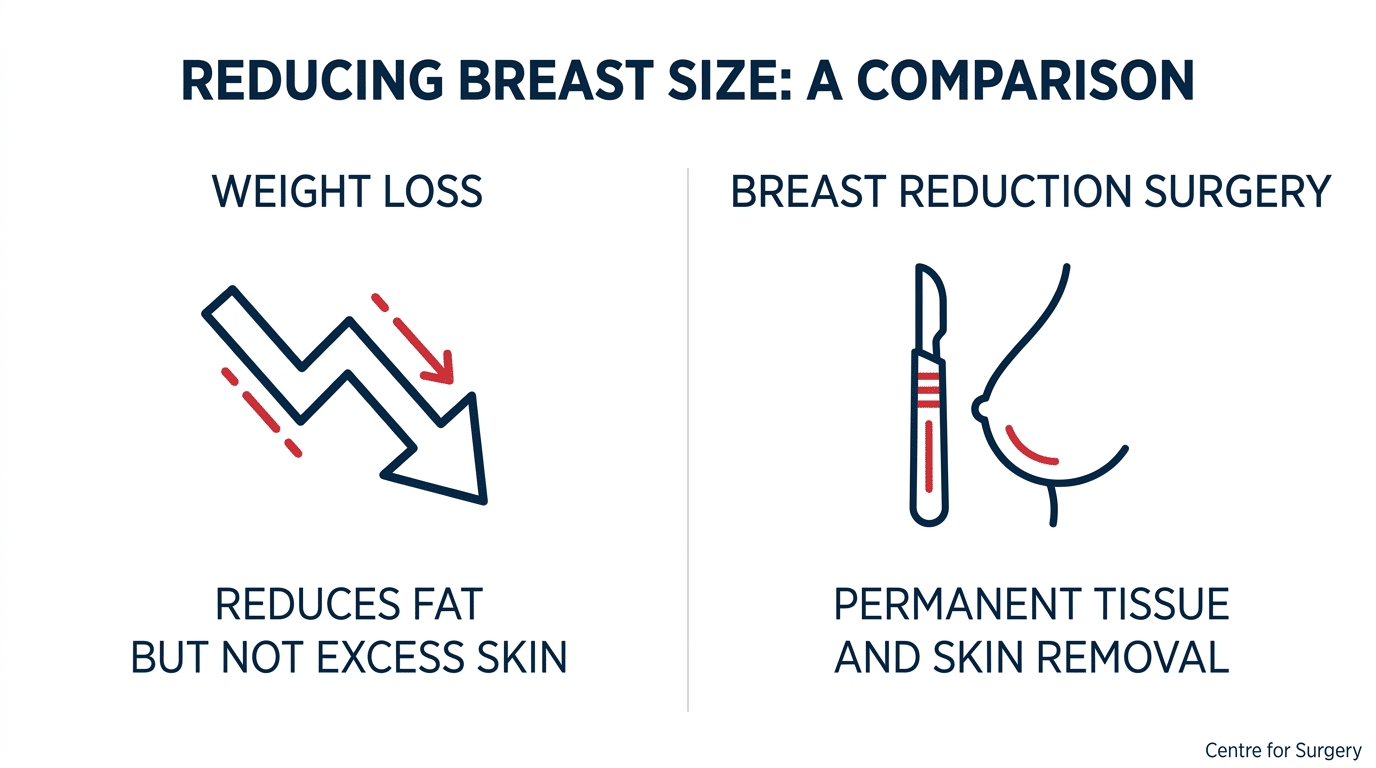
If your breasts feel heavy and you’re looking for relief, exercise can genuinely help to some degree, since breast tissue does contain a meaningful proportion of fat. Cardiovascular and higher-intensity exercise tends to be the most effective way to reduce fat from problem areas generally, and aerobic exercise supports overall body fat loss by boosting metabolism. A healthy, balanced diet supports this too.
It’s worth being realistic, though — exercise can’t reliably target fat loss from one specific area of the body, including the breasts specifically. You may see some reduction in breast heaviness as part of overall weight loss, but it’s rarely dramatic or entirely predictable. For women with genuinely excessive breast size or weight, or whose heaviness is driven by glandular tissue and skin rather than fat, breast reduction surgery remains the most reliable way to permanently reduce breast size and weight.
Find out how breast reduction can relieve neck, shoulder and back pain caused by heavy breasts.
Symptoms Linked to Heavy Breasts
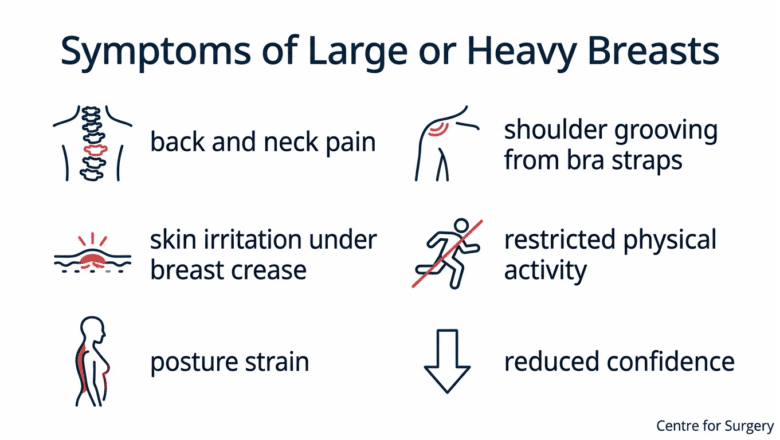
Beyond the sensation of heaviness itself, breasts that are persistently heavy — whether due to genuine size, fibrocystic changes, or hormonal fluid retention — can cause a broader range of physical symptoms:
- Backache, neck, and shoulder pain — from the continuous weight and strain on the upper spine.
- Shoulder grooving — grooves or indentations from bra straps under sustained weight.
- Skin irritation and rashes beneath and between the breasts, and in the bra strap grooves.
- Headaches, sometimes linked to postural strain from carrying additional weight.
- Chest wall pain and general discomfort during physical activity.
- Sleep disturbance from difficulty finding a comfortable position.
- Low exercise tolerance and reduced willingness to participate in sport or physical activity.
- Psychological impact — including reduced self-esteem and, for some women, more significant emotional distress.
When these symptoms are persistent and significantly affect daily life, they’re often what prompts women to explore breast reduction rather than continuing to manage symptoms day to day.
Can the Symptoms of Heavy Breasts Be Treated Without Surgery?
Mild, occasional symptoms — particularly those linked to your menstrual cycle — can often be helped by anti-inflammatory medication, heat packs, gentle massage, or physiotherapy. A well-fitting, properly supportive bra can also meaningfully reduce discomfort in the short term.
For women with more severe or persistent symptoms, though, these measures rarely provide lasting relief. The underlying weight of the breast tissue continues to place strain on the back, neck, and shoulders regardless of how well-supported the breasts are day to day — a supportive bra manages the symptom, but doesn’t address the underlying cause.
Am I a Good Candidate for Breast Reduction?
Good candidates for breast reduction are women who are in good general health, at or near a stable weight, and experiencing genuine physical symptoms — persistent heaviness, back or shoulder pain, skin irritation, or restricted activity — that are affecting daily life. Non-smokers, or those willing to stop for several weeks before and after surgery, tend to heal more predictably and with fewer complications.
It’s worth being at a stable weight before proceeding, since significant weight changes afterwards can affect your results, and worth discussing any future pregnancy plans with your surgeon at consultation, since pregnancy and breastfeeding after a reduction can affect how long your results last. Your surgeon will assess your individual anatomy, symptoms, and goals in detail before recommending the most suitable approach for you.
Can Heavy Breasts Be Treated With Surgery?
Yes — relief for heavy breasts can be effectively and permanently achieved with breast reduction surgery, also known as reduction mammoplasty. The procedure removes excess breast tissue, fat, and skin to reduce both the weight and prominence of the breast, and the nipple and areola are typically repositioned as part of the same procedure to create a firmer, more proportionate shape.
At Centre for Surgery, we frequently combine breast reduction with a breast lift (mastopexy) to restore optimal positioning as well as reducing overall size and weight, giving a more comprehensive result in a single procedure and recovery period.
Not sure which you need? Our comparison of breast reduction vs breast lift explains the difference.
What Happens During Breast Reduction Surgery?
Step 1 — Assessment and marking. Your surgeon marks the planned incision pattern and new nipple position while you’re standing, based on your anatomy and goals.
Step 2 — Incisions and tissue removal. Under TIVA anaesthesia, excess breast tissue, fat, and skin are removed to achieve the agreed reduction in weight and size.
Step 3 — Reshaping and nipple repositioning. The remaining tissue is reshaped, and the nipple-areola complex is repositioned to a higher, more central position.
Step 4 — Closure. Incisions are closed with dissolvable sutures, and a supportive surgical bra is fitted before you leave theatre.
Will Breast Reduction Affect My Ability to Breastfeed?
Some women are understandably concerned about future breastfeeding ability following breast reduction. Our surgeons use meticulous technique to preserve the connection between the remaining breast tissue, ducts, and nerve supply as much as possible, which helps protect breastfeeding capacity. If this is a priority for you, it’s important to raise it directly at your consultation, so your surgeon can factor it into the technique and approach used for your specific surgery.
When to See Your GP

Most causes of breast heaviness are entirely benign, and the vast majority of women who experience it never need to worry. That said, it’s worth arranging a GP appointment if you notice:
- Sudden, rapid, or one-sided breast enlargement
- Skin dimpling, redness, or a texture change over the breast
- A new lump or area of thickening
- Nipple changes, including inversion, discharge, or a rash
- Heaviness that’s persistent, worsening, and unexplained by your cycle, medication, or pregnancy
These red flags are uncommon, and in almost every case there’s a straightforward, benign explanation — but it’s always worth having anything unusual checked promptly for peace of mind.
The Emotional Impact of Heavy Breasts
It’s worth naming something that often goes unsaid: living with persistently heavy, uncomfortable breasts affects more than the body. Many women describe adapting their whole wardrobe around discomfort, avoiding certain activities or sports they’d otherwise enjoy, or feeling self-conscious in ways that go well beyond appearance. This emotional dimension is a completely legitimate reason to seek treatment, alongside the physical symptoms — you don’t need to justify wanting relief purely on medical grounds. Many women tell us that the improvement in confidence and freedom after breast reduction is just as significant to them as the physical relief.
What Are the Benefits of Breast Reduction Surgery?
Breast reduction reduces the volume of the breast, making it feel significantly lighter and directly addressing heavy, sore, or achy breasts at their source. For many women living with these symptoms, the improvement to daily comfort and quality of life is substantial. Reported benefits include:
- Reduced back, neck, and shoulder pain
- Fewer skin irritation issues and rashes beneath the breast crease
- Easier participation in sport and exercise
- Improved sleep quality and comfort
- A reduction in bra-strap grooving and associated discomfort
- Improved self-confidence and reduced self-consciousness
Recovery from breast reduction is typically complete within six weeks, though your surgeon will give you specific aftercare instructions covering activity restrictions and wound care to follow closely during this period. Your surgeon will also explain what scarring to expect from your specific technique at consultation, so you know exactly what to anticipate.
How Much Does Breast Reduction Cost?
The cost of breast reduction depends on the surgical technique required, the amount of tissue to be removed, and whether it’s combined with a breast lift. Cost shouldn’t be the deciding factor in your decision — choosing a properly qualified, experienced plastic surgeon at a regulated facility matters far more than price alone. For a full, personalised breakdown, book a consultation for an itemised quote, or see our breast reduction service page for further detail. Finance is available through Chrysalis Finance, subject to status; see our finance options page.
Choosing a Surgeon for Breast Reduction
Breast reduction can have such a substantial impact on day-to-day comfort that choosing the right surgeon matters. Look for a plastic surgeon on the GMC Specialist Register with genuine, specific experience performing breast reduction — not simply breast surgery more broadly. Ask to see relevant before-and-after results at consultation, read independent patient reviews, and confirm the facility itself is properly CQC-regulated. The skill and experience of your surgeon has more bearing on your eventual outcome than almost any other factor.
Frequently Asked Questions
Why do my breasts feel heavy but I’m not pregnant?
Breast heaviness has many non-pregnancy causes, including your normal menstrual cycle, fibrocystic changes, hormonal medications like the contraceptive pill or HRT, and perimenopause. It’s a very common experience and usually nothing to worry about, though a pregnancy test can help rule this out if you’re uncertain.
Why do my breasts feel heavy and sensitive at the same time?
Heaviness and sensitivity together are usually driven by hormonal fluid retention — most commonly linked to your menstrual cycle, a new hormonal medication, or perimenopause. This combination is extremely common and rarely a cause for concern.
Is it normal for one breast to feel heavier than the other?
Yes, mild asymmetry in size, weight, and sensation between the two breasts is entirely normal. If the difference is significant, has changed noticeably, or bothers you, it’s worth discussing with your GP or a specialist surgeon.
How long does breast heaviness from hormonal causes usually last?
Cyclical heaviness linked to your period typically resolves within a few days once your period starts. Heaviness linked to starting a new hormonal medication often settles within the first few months as your body adjusts, though if it persists or worsens, it’s worth discussing with your GP.
What’s the difference between heavy breasts and large breasts?
The terms overlap considerably, but “heavy” tends to describe the sensation of weight and fullness — which can be driven by fluid retention, hormones, or genuine tissue volume — while “large” more often describes overall size. Many women experience both together, and the underlying causes are closely related.
Does tracking my symptoms help at my consultation?
Yes — if you can, it’s genuinely useful to note when heaviness occurs (in relation to your cycle, for example), how long it lasts, and any accompanying symptoms before your consultation. This helps your surgeon build a clearer picture of your pattern and identify whether it’s cyclical, hormonal, or something worth investigating further.
Breast Reduction at Centre for Surgery
At Centre for Surgery, breast reduction is performed by GMC-registered plastic surgeons, at our CQC-regulated Baker Street facility, under TIVA (Total Intravenous Anaesthesia) as a day case. If persistent heaviness, discomfort, or pain is affecting your daily life, get in touch with one of our patient coordinators to book a face-to-face consultation.
Book Your Consultation
Phone: 020 7993 4849
95–97 Baker Street, Marylebone, London W1U 6RN
Contact us to schedule your consultation







