



In this guide12 sections
- Key Points
- What Is a Camel Toe?
- Why Do I Have a Camel Toe?
- How to Get Rid of a Camel Toe Without Surgery
- Is There a Surgery to Help Camel Toe?
- Can Labiaplasty Get Rid of Camel Toe?
- Combining Procedures to Reduce a Camel Toe
- Recovery After Camel Toe Surgery
- Camel Toe Treatment at Centre for Surgery
- Frequently Asked Questions
- Camel Toe Surgery in London
- References
Key Points
- Can labiaplasty get rid of camel toe? Usually not on its own. Labiaplasty reduces the inner lips (labia minora), but a camel toe is mostly caused by the outer lips (labia majora) and the mons pubis above them.
- Why do I have a camel toe? Tight or thin clothing pulled into the crotch is the main cause. A fuller mons pubis, prominent or loose labia majora and, less often, protruding labia minora make it more noticeable.
- How to get rid of a camel toe without surgery: choose the right size and rise, look for a gusset, wear thicker or darker fabrics and seamless underwear, or use a liner or concealer pad.
- Is there a surgery to help camel toe? Yes, if the anatomy is the cause. A mons lift or mons liposuction treats fullness above the pubic bone, labia majora reduction treats prominent or loose outer lips, and labiaplasty treats inner lips that protrude.
- Camel toe surgery is chosen by cause. A surgeon examines you standing and lying down to work out which area contributes, and many women need only one targeted procedure or none at all.
- A camel toe is normal. It is a shape created by clothing over normal anatomy, not a medical problem, and treatment is only worth considering if it causes you discomfort or real distress.
“Camel toe” is the slang term for the outline of the vulva showing through tight clothing, most often leggings, gym wear, swimwear or close-fitting trousers. It is extremely common and completely normal, but some women find it embarrassing or uncomfortable, and many search for camel toe surgery or ask whether labiaplasty can get rid of it.
The answer depends on what is creating the shape. In most women it is the fabric, the mons pubis (the fatty mound above the pubic bone) and the outer lips, rather than the inner lips that labiaplasty treats. This guide explains the causes of a camel toe, the simple fixes that work for most people, and which operation, if any, addresses each cause: a mons lift, labia majora reduction or labiaplasty.
What Is a Camel Toe?
A camel toe is the visible outline of the labia majora and the cleft between them through tight clothing. When fabric is pulled up into the crotch, it sinks into the natural groove between the outer lips, and the two sides show as separate curves, said to resemble a camel’s foot.
It is important to say clearly that this is a normal part of female anatomy. Every vulva has a mons pubis, outer lips and a central cleft, and their size and shape vary widely between women. Measurement studies of women with no concerns about their genitals show a very wide normal range in every dimension[1]. A camel toe says more about the clothing than about the body underneath it.
Why Do I Have a Camel Toe?
Several factors, often working together, make a camel toe more visible:
- Clothing. Leggings, gym shorts, swimwear and trousers that are too small, too high in the rise or made from thin, stretchy fabric are the most common cause. Seams that run down the centre of the crotch make it worse.
- A fuller mons pubis. Fat stored over the pubic bone pushes the area forward, so fabric dips more sharply into the groove below. This fullness is sometimes called a FUPA, and it can persist even at a healthy weight.
- A drooping mons. After pregnancy, weight loss or a tummy tuck, loose skin can let the mons sag downwards, increasing fullness over the outer lips.
- Prominent or loose labia majora. Larger outer lips, or outer lips that have become loose and wrinkled with age or weight change, are often the main anatomical contributor.
- Protruding labia minora. Less often, inner lips that extend beyond the outer lips add bulk that shows through thin fabric.
How to Get Rid of a Camel Toe Without Surgery
For most women, clothing changes are all that is needed:
- Choose the right size, and avoid pulling leggings or shorts up too high.
- Look for garments with a crotch gusset, a triangular or diamond-shaped panel that spreads tension instead of pulling fabric into the centre.
- Pick thicker, double-layered or structured fabrics, and darker colours or busy prints, which hide shadows and lines.
- Wear seamless underwear or a slightly thicker liner, or use a reusable camel toe concealer or pad designed for leggings and swimwear.
- Layer a longer top or a pair of light shorts over leggings when you want extra cover.
If extra fat is the main cause, losing weight can make the mons pubis smaller, although many women find that this area is stubborn and changes little with diet and exercise. Our guide to how to get rid of a FUPA covers what does and does not work.
Is There a Surgery to Help Camel Toe?
Yes, but there is no single “camel toe surgery”. Reducing a camel toe surgically means treating whichever part of the vulva is responsible. At consultation your surgeon will look at three areas, from top to bottom:
- The mons pubis: is there excess fat, loose skin, or both?
- The labia majora: are the outer lips large, full or loose and wrinkled?
- The labia minora: do the inner lips protrude beyond the outer lips?
Most women seeking camel toe surgery have one main contributor. Treating the right one gives the most natural result with the smallest operation.
Mons pubis reduction for a prominent pubic mound
Where the main cause is fullness above the pubic bone, mons pubis reduction is usually the most effective option. Liposuction alone removes fat where the skin has good elasticity. Where there is loose skin as well, a mons lift (monsplasty) removes excess skin through a low incision hidden by underwear and lifts the area, often combined with liposuction.
A 2024 report of more than 1,200 monsplasty patients ↗ described a grading system for mons ptosis (drooping) that guides which technique to use, and reported very high aesthetic and functional satisfaction with no complications attributed to the monsplasty[2]. In a smaller prospective study of 23 women after massive weight loss, every patient was satisfied or very satisfied with the effect of monsplasty on clothing, hygiene, physical activity and appearance, and self-esteem scores rose significantly[3]. These are single-centre series rather than trials, so the results represent experienced surgeons in selected patients.
At Centre for Surgery a standalone mons lift is a day case taking one to two hours, under local anaesthetic or TIVA depending on the extent of surgery, and most people return to desk work after about a week. Our guide to the difference between labiaplasty and monsplasty explains how the two procedures compare, and the mons pubis reduction cost guide covers pricing.
Labia majora reduction for prominent outer lips
Where the outer lips are large, full or loose, labia majora reduction (labia majoraplasty) is the procedure most directly aimed at a camel toe. Depending on the cause, the surgeon removes a strip of excess skin from the inner edge of each outer lip, where the scar sits in the natural fold, reduces excess fat with liposuction, or combines the two.
The evidence base is smaller than for labia minora surgery. A 2026 series of 24 women treated for sagging, wrinkled labia majora with skin excision and deep tissue tightening reported no complications, improved appearance and comfort, and preserved sensation, although the authors called for larger studies with longer follow-up[4]. Our guide to labia majora reduction explains the procedure in detail. At Centre for Surgery, straightforward cases are done under local anaesthetic with sedation, and complex or combined cases under TIVA.
If the outer lips look empty and wrinkled because they have lost volume, rather than being too large, the answer is different: our article on deflated labia explains when restoring volume is the better option.
Can Labiaplasty Get Rid of Camel Toe?
Labiaplasty reduces the inner lips, the labia minora. It can make a camel toe less noticeable only when protruding inner lips are part of the problem, for example when they bunch up in tight clothing or show as a ridge through thin fabric. When the camel toe comes from the mons pubis or the outer lips, which is most often the case, labiaplasty alone will make little difference to how clothing sits.
Where labiaplasty is appropriate, the evidence is reassuring. A 2022 meta-analysis of 46 studies including 3,804 women ↗ found a pooled satisfaction rate of 99% after labia minora reduction, with wound separation the most common complication[5]. Like any operation, it carries risks, including bleeding, infection, scarring, asymmetry and changes in sensation, which your surgeon will discuss with you.
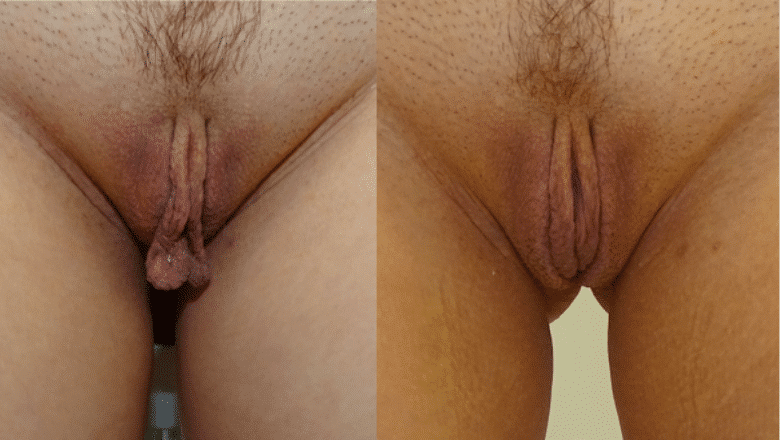
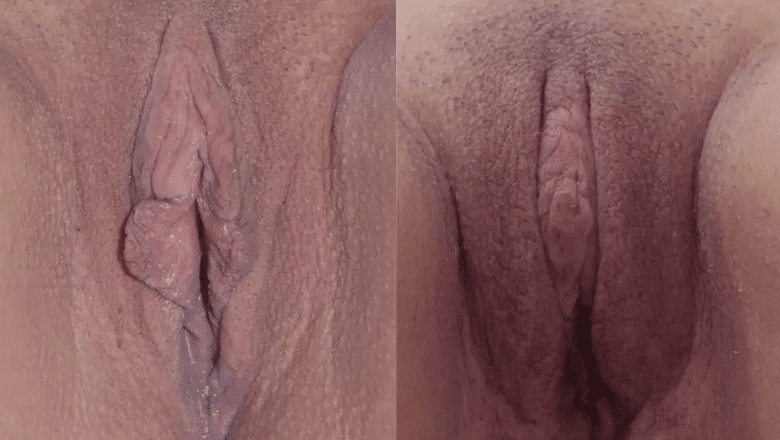
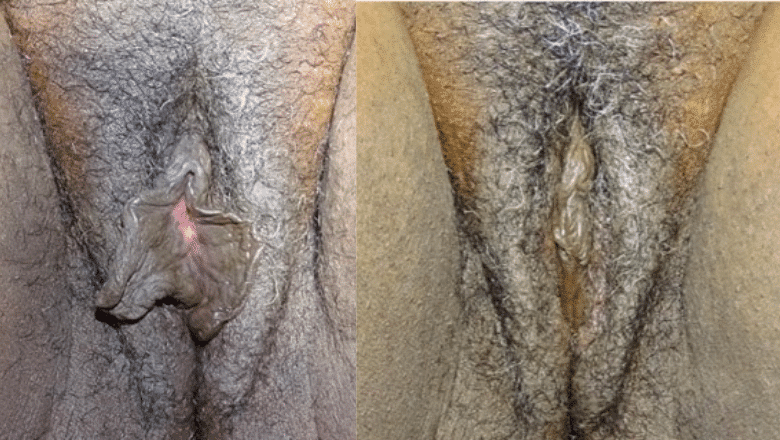
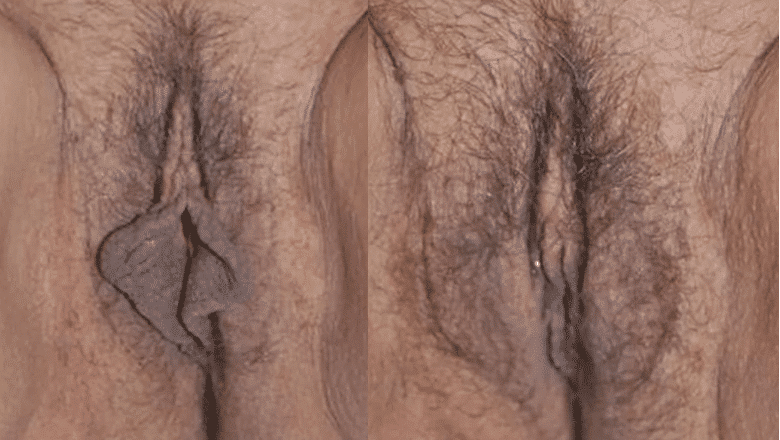
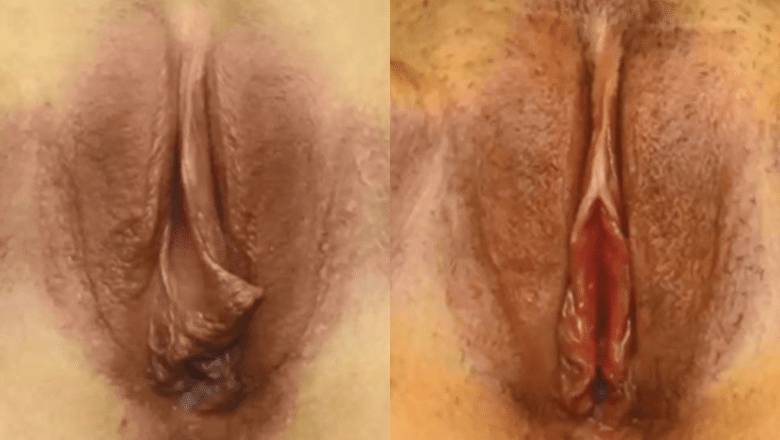
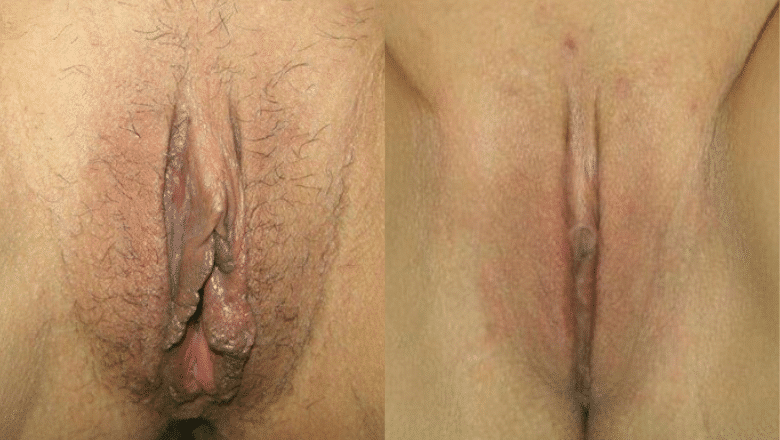
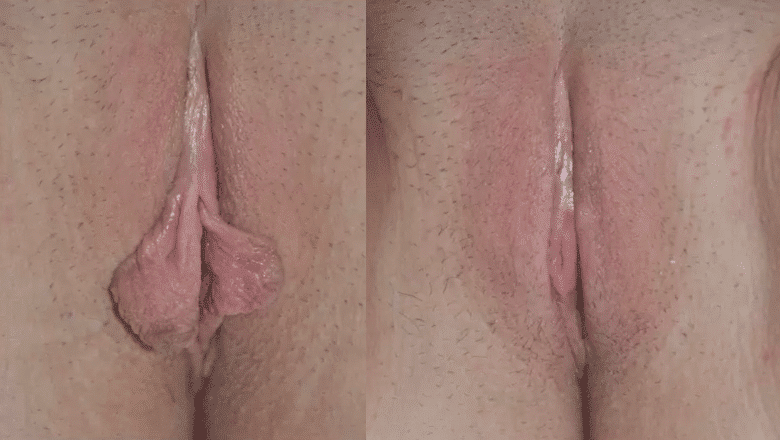
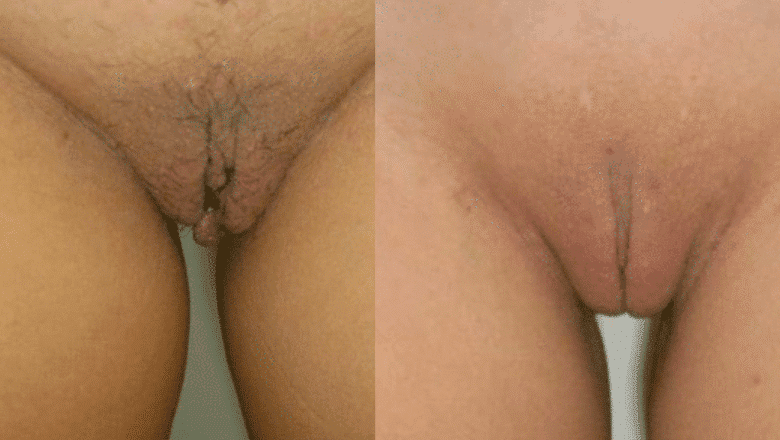
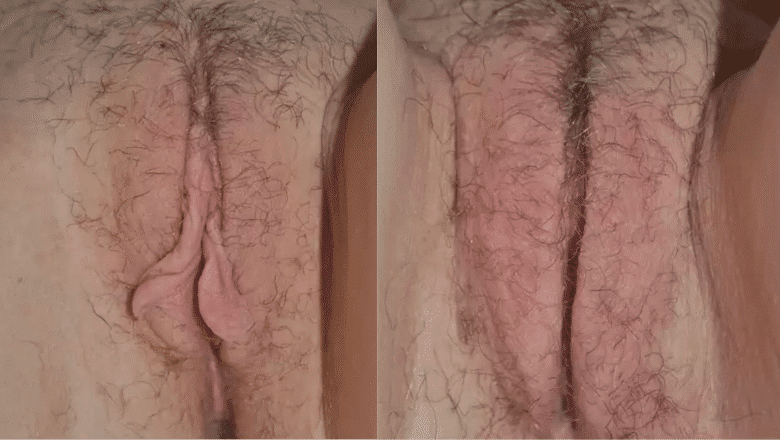
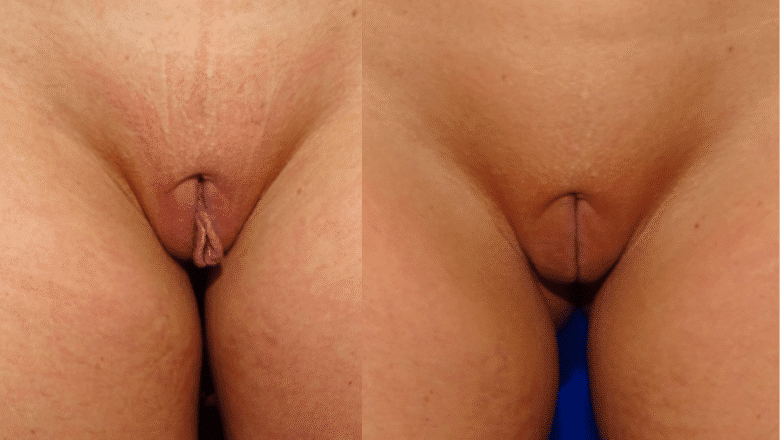
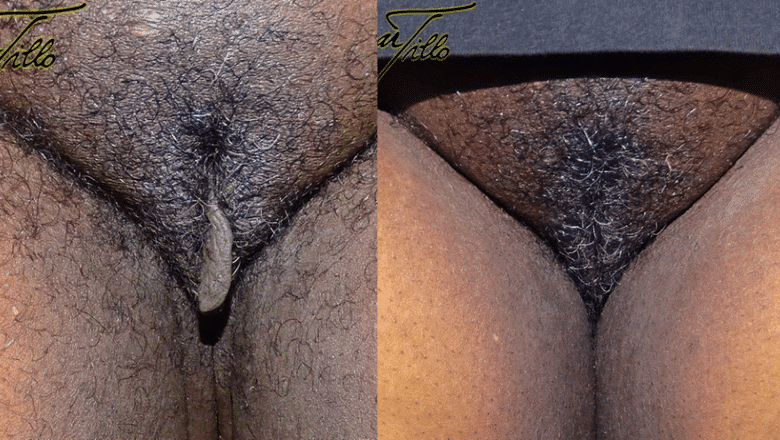
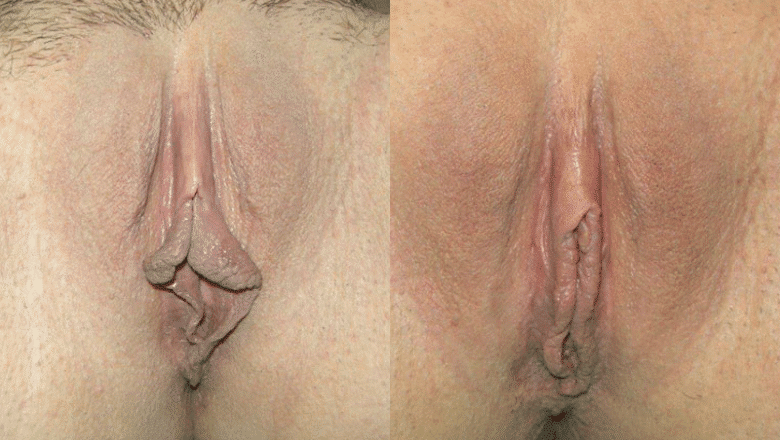
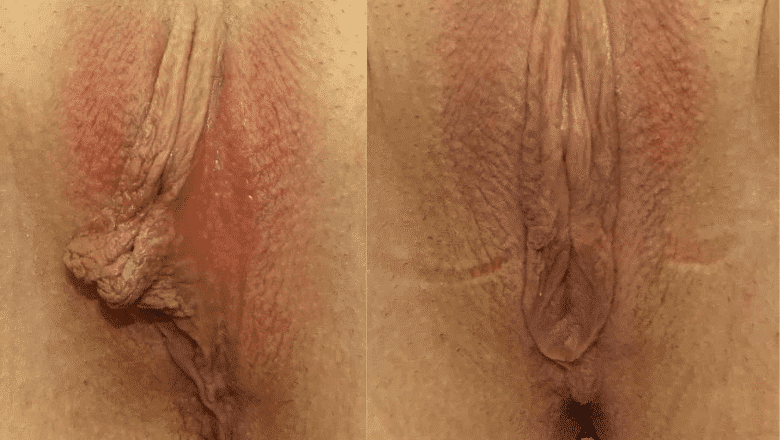
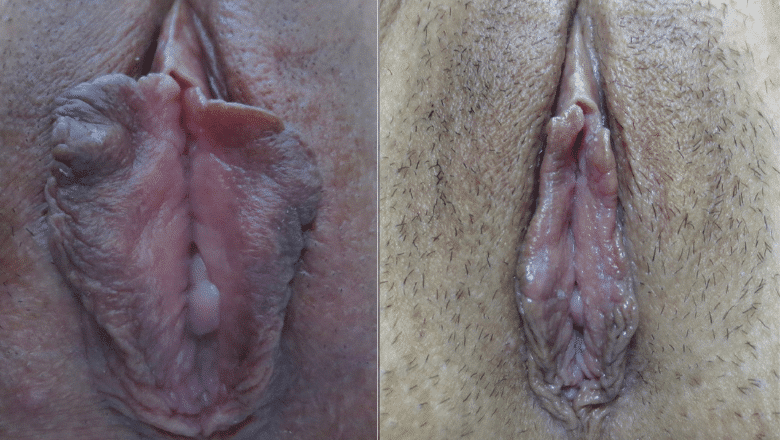
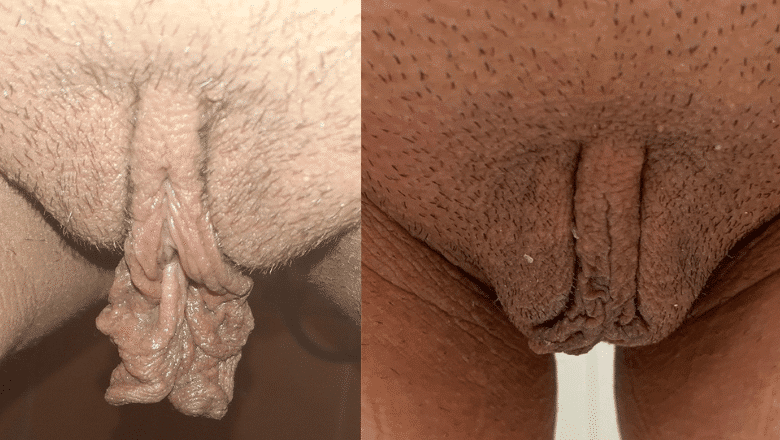
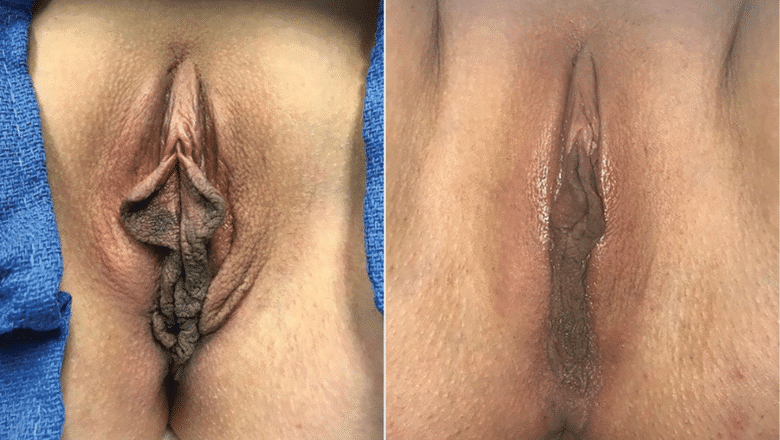
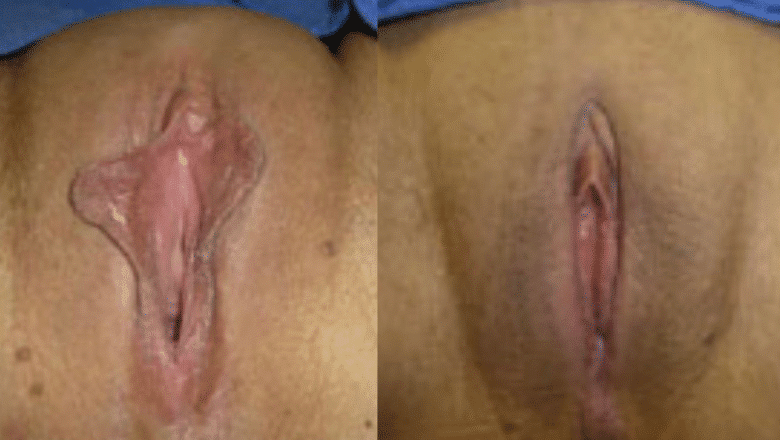
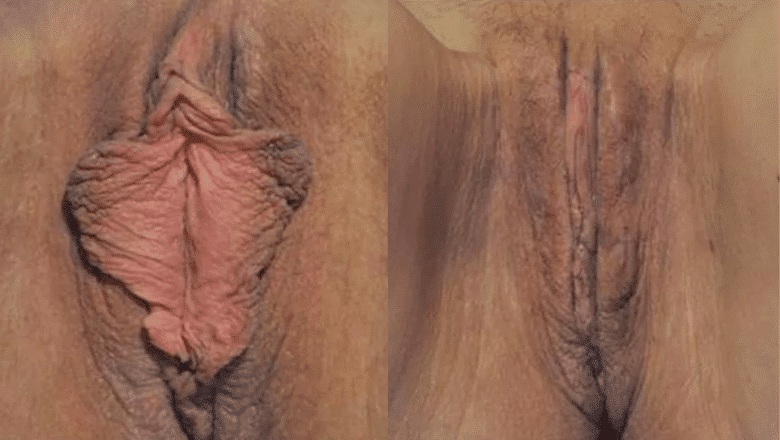
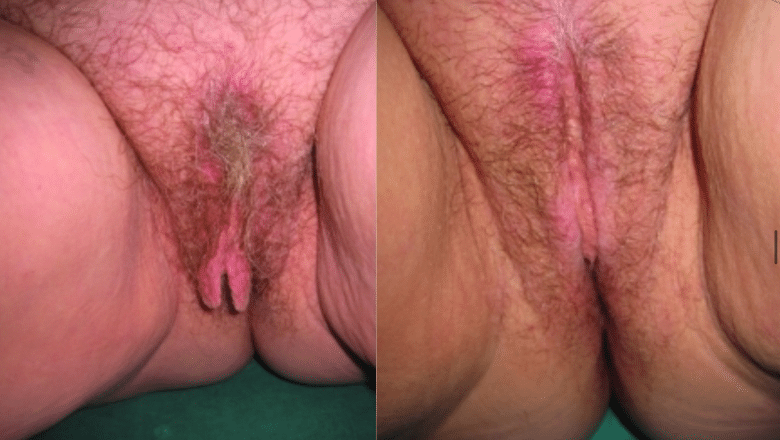
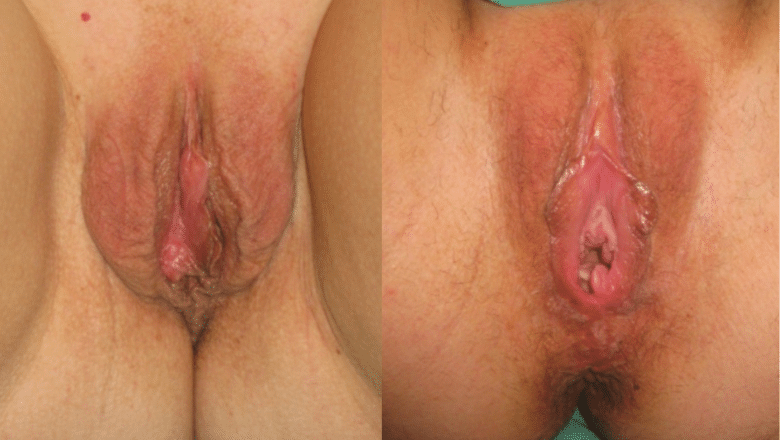
Tap to reveal
Labiaplasty and labia majora reduction before and after photographs of Centre for Surgery patients, taken at least six months after surgery. Tap to reveal, then scroll sideways to see more. See our full labiaplasty before and after gallery.
Combining Procedures to Reduce a Camel Toe
Sometimes more than one area contributes, and the procedures can be combined in one operation, for example labia majora reduction with labia minora reduction, or a mons lift with a tummy tuck. After a tummy tuck the mons can look relatively more prominent against a flatter abdomen, which is why the two are often planned together. A cosmetic gynaecology systematic review found that labia minora reduction, labia majora procedures and mons pubis reduction or suspension all had generally low complication rates, although outcome reporting varied widely between studies[6].
Combining is not always best. Your surgeon will only recommend it where the extra operating time and recovery are justified for your anatomy and health. If you are also considering abdominal surgery, our guide to having a tummy tuck and labiaplasty at the same time explains the trade-offs.
Recovery After Camel Toe Surgery
Recovery depends on the procedure:
- Mons liposuction or mons lift: a day case, with about a week off desk work for a standalone procedure. Swelling of the mons and outer lips is common for several weeks and gradually settles.
- Labia majora reduction or labiaplasty: a day case, usually with three to five days off desk work. Sex, tampons, swimming and strenuous exercise wait for six weeks until healing is confirmed. Our guide to labiaplasty recovery covers each stage.
For all of these, loose, soft clothing is essential for the first few weeks, and the final result is judged once swelling has fully settled, which can take a few months.
Camel Toe Treatment at Centre for Surgery
At consultation, your surgeon will listen to what bothers you, examine the mons pubis, outer lips and inner lips, and explain which, if any, is responsible. Sometimes the most useful advice is that clothing changes will solve the problem, and we will say so.
- All procedures are performed by GMC-registered surgeons at our CQC-regulated hospital on Baker Street, and the surgeon who assesses you performs your surgery.
- Labiaplasty, labia majora reduction and mons lift are day-case procedures, under local anaesthetic, local anaesthetic with sedation or TIVA depending on the extent of surgery.
- Our labiaplasty nursing team is all-female.
- We treat adults aged 18 and over, and recommend a two-week cooling-off period before surgery.
- The consultation fee is redeemable against treatment, and finance is available, subject to status.
Frequently Asked Questions
Why do I have a camel toe?
Mostly because of clothing: tight, thin or high-rise garments pull fabric into the groove between the outer lips. A fuller mons pubis, prominent or loose outer lips, and sometimes protruding inner lips make the outline more visible. It is a normal effect of clothing on normal anatomy.
How to get rid of a camel toe?
Start with clothing: the right size and rise, a crotch gusset, thicker or darker fabrics, seamless underwear and a liner or concealer pad. If a persistent pubic bulge or prominent outer lips are the cause and it bothers you, a surgeon can advise whether a mons lift or labia majora reduction would help.
Is there a surgery to help camel toe?
Yes, but the right operation depends on the cause. Mons pubis liposuction or a mons lift treats fullness above the pubic bone, labia majora reduction treats large or loose outer lips, and labiaplasty treats protruding inner lips. Many women need only one of these, and some need none.
Can labiaplasty get rid of camel toe?
Only if protruding inner lips are part of the problem. Labiaplasty reduces the labia minora, but most camel toes are caused by the mons pubis and outer lips, so labiaplasty on its own often makes little difference.
Does losing weight reduce a camel toe?
It can, if excess fat over the mons pubis is the main cause. However, this area often holds on to fat despite weight loss, and losing a lot of weight can leave loose skin that makes the mons droop. In those cases a mons lift may be more effective.
Can liposuction reduce a camel toe?
Liposuction of the mons pubis can reduce a camel toe when the cause is fat and the skin is firm enough to tighten afterwards. If there is loose skin as well, liposuction alone may leave the area looking deflated, and a mons lift that removes skin is usually better.
Is a camel toe normal?
Yes. Everyone with a vulva has outer lips and a central cleft, and their size and shape vary widely. A camel toe is simply how tight fabric sits over that anatomy. It is not a medical problem and does not need treatment unless it causes you discomfort or distress.
Is camel toe surgery painful?
The procedures are done under local anaesthetic, sedation or TIVA, so you should not feel pain during surgery. Afterwards most women have soreness, swelling and bruising for one to two weeks, managed with simple painkillers, cold packs and loose clothing.
Camel Toe Surgery in London
If a camel toe causes you discomfort or distress despite clothing changes, a consultation at our Baker Street hospital will identify which area is responsible and whether a mons lift, labia majora reduction or labiaplasty would help. Find out more about the mons lift and labiaplasty at Centre for Surgery.
Phone: 020 7993 4849 | Address: 95–97 Baker Street, Marylebone, London W1U 6RN
Contact us to schedule a consultation
References
- Hayes JA, Temple-Smith MJ. What is the anatomical basis of labiaplasty? A review of normative datasets for female genital anatomy. Australian and New Zealand Journal of Obstetrics and Gynaecology 2021;61(3):331–338. doi:10.1111/ajo.13298 ↗
- Pelosi M, Pelosi M, Pelosi M. The cosmetic management of mons pubis ptosis. Surgical Technology International 2024;44:189–194. doi:10.52198/24.STI.44.GY1797 ↗
- Pechevy L, Gourari A, Carloni R, Sauvaget F, Bertheuil N, Goga D. Monsplasty after massive weight loss: assessment of its aesthetic and functional impact. Annales de Chirurgie Plastique Esthétique 2016;61(1):e21–e35. doi:10.1016/j.anplas.2014.12.002 ↗
- Kurt A, Ozturk S. Labia majoraplasty: deep contouring with a multivector modification. Aesthetic Plastic Surgery 2026;50(18):7688–7694. doi:10.1007/s00266-026-06149-8 ↗
- Escandón JM, Duarte-Bateman D, Bustos VP, et al. Maximizing safety and optimizing outcomes of labiaplasty: a systematic review and meta-analysis. Plastic and Reconstructive Surgery 2022;150(4):776e–788e. doi:10.1097/PRS.0000000000009552 ↗
- Garcia B, Scheib S, Hallner B, Thompson N, Schiavo J, Peacock L. Cosmetic gynecology: a systematic review and call for standardized outcome measures. International Urogynecology Journal 2020;31(10):1979–1995. doi:10.1007/s00192-020-04294-5 ↗







