


In this guide17 sections
- Key Points
- What Should I Eat After Liposuction?
- What Can I Eat Straight After Liposuction?
- What Should I Eat in the First Week After Liposuction?
- What Are the Best Foods to Eat After Liposuction?
- What Foods Should I Avoid After Liposuction?
- How Much Water Should I Drink After Liposuction?
- Can I Take Supplements, Vitamins or Pineapple After Liposuction?
- Does Diet Help Reduce Swelling After Liposuction?
- Can I Lose Weight After Liposuction?
- How Do I Avoid Gaining Weight After Liposuction?
- Should I Lose Weight Before Liposuction?
- Diet After Liposuction With Fat Transfer or BBL
- When Should I Speak to My Surgeon About Eating After Liposuction?
- Frequently Asked Questions
- Liposuction in London
- References
Key Points
- What is the best diet after liposuction? A balanced, protein-rich diet with plenty of vegetables, fruit, wholegrains and fluids. There is no special “lipo diet”: good everyday nutrition supports healing and protects your result.
- What to eat straight after liposuction: light, plain food such as toast, crackers, soup, yoghurt or fruit, with sips of water, then back to normal meals as the nausea settles, usually within a day.
- Protein matters most. Eggs, fish, poultry, dairy, pulses and tofu supply the building blocks your tissues need to repair.
- Foods to avoid after liposuction include very salty and ultra-processed food, which encourages swelling, sugary snacks and drinks, greasy fast food and alcohol in the first week or so.
- Liposuction is not a weight-loss treatment. The fat cells removed do not return, but the rest of your fat cells can enlarge if you gain weight, so a stable weight protects your shape.
- Check supplements with your surgeon. Some herbal products affect bleeding, and the evidence for pineapple extract (bromelain) and arnica is mixed.
Most people want to know two things about diet after liposuction: what to eat while they heal, and how to stop the fat coming back somewhere else. The reassuring answer to both is the same. You do not need a special plan, only a sensible, balanced way of eating that gives your body the protein, fluid and nutrients it needs while the swelling settles, then keeps your weight steady once it has.
This guide sets out what to eat and drink after liposuction, from the first hours to the long term, which foods to limit, whether supplements help, and how your eating habits affect the result. It sits alongside our full liposuction recovery guide, which covers compression, exercise and the week-by-week timeline, and our guide to how to maintain your liposuction results. Everything here is general advice: your own surgeon’s aftercare instructions always take priority, particularly if you have diabetes, a digestive condition or other medical needs.
What Should I Eat After Liposuction?
The right diet after lipo is the one the NHS recommends for everybody, tuned slightly for healing. The NHS Eatwell Guide ↗ is a good template: plenty of fruit and vegetables, starchy wholegrain carbohydrates, some dairy or alternatives, beans, pulses, fish, eggs and lean meat, and small amounts of unsaturated oils and spreads. For recovery, put the emphasis on three things: enough protein, enough fluid and enough fibre.
You do not need to eat less to “help” the result. Cutting calories sharply while you are healing is counterproductive, because your body is using energy and protein to repair tissue. Eat regular, moderate meals, and save any weight-loss plans for after your surgeon has cleared you to return to normal activity.
It also helps to know what the guidance on eating around surgery says more broadly. The 2025 ESPEN guideline on clinical nutrition in surgery ↗ advises avoiding long periods of fasting before an operation and restarting normal oral eating as early as possible afterwards[1]. It was written mainly for larger operations, but the principle applies equally to day-case procedures: eat and drink again as soon as you feel able.
What Can I Eat Straight After Liposuction?
Liposuction at Centre for Surgery is a day case, usually under TIVA (total intravenous anaesthesia), so you go home the same day once you are eating, drinking and walking. Our guide to anaesthesia for cosmetic surgery explains why TIVA tends to cause less sickness than a gas anaesthetic.
Can I eat normally after lipo?
Not straight away. Anaesthetic and anti-sickness medication can leave your stomach unsettled for a few hours, so start with light, plain food and small sips of water. Good first choices are:
- dry toast, plain crackers or a plain sandwich
- soup or clear broth
- yoghurt, porridge or rice pudding
- a banana or other soft fruit
- a fizzy drink or ginger biscuit if you feel queasy
Once you feel comfortable, move on to a simple meal such as scrambled eggs on toast or chicken soup, and avoid anything heavy, greasy or very spicy while the anaesthetic clears. Most people are back to a normal appetite by the next day. Keep food and drink within easy reach before you go in, as bending and reaching hurts at first.
What Should I Eat in the First Week After Liposuction?
The first two or three days are usually the most uncomfortable, with swelling and tenderness at their peak, so you are unlikely to want to cook. Prepare ahead if you can: batch-cooked soups, a freezer of simple meals, and a stock of easy snacks. Our guide on how to prepare for liposuction surgery includes the practical arrangements worth making in advance.
Small, regular meals
Smaller meals every three to four hours are often more comfortable than three large ones, especially after abdominal or 360 liposuction, when the tummy is tender and tight in a compression garment.
Protein at every meal
Aim for a source of protein at each meal and snack. Good options are eggs, fish, chicken, turkey, lean meat, Greek yoghurt, cottage cheese, milk, lentils, beans, chickpeas, tofu and nuts. Protein is the raw material for repairing the tissue that has been treated, so this is where a deliberate effort pays off most.
Fibre to keep things moving
Reduced activity and some painkillers can slow the bowel, so include fibre from porridge, wholemeal bread, fruit, vegetables, beans and lentils. The NHS has practical advice on getting more fibre into your diet ↗ and on constipation ↗. Gentle walking helps too.
What Are the Best Foods to Eat After Liposuction?
There is no single recovery superfood. A varied plate that covers the groups below does the job.
Lean protein
Fish (including oily fish such as salmon, mackerel and sardines), eggs, poultry, lean red meat in moderation, dairy and plant proteins such as tofu, tempeh, beans and lentils.
Fruit and vegetables
These supply vitamin C, vitamin A, potassium and fibre, along with plenty of fluid. Aim for a wide range of colours across the day, and include leafy greens, berries, citrus fruit, peppers, tomatoes and carrots.
Wholegrains and starchy foods
Oats, wholemeal bread, brown rice, quinoa, potatoes with their skins and wholewheat pasta give steady energy and fibre. You do not need to cut carbohydrates, and eating enough of them helps your body use the protein you eat for repair rather than for energy.
Fluids and healthy fats
Water, milk, herbal tea and soup all count towards your fluids, and we cover how much to drink below. Add olive oil, avocado, nuts and oily fish for unsaturated fats, in modest portions.
A simple way to put this into practice is the recovery plate in the diagram below: half your plate vegetables and fruit, a quarter protein and a quarter wholegrains, with water alongside.

What Foods Should I Avoid After Liposuction?
Nothing is strictly banned for the rest of your life, but some choices make recovery less comfortable, and several are worth limiting while you heal.
Very salty and processed food
Salt makes the body hold on to water, and swelling is already part of recovery. Ready meals, crisps, processed meats, instant noodles, takeaways and salty sauces are the main culprits. The NHS advises adults to eat no more than 6g of salt a day ↗, and that is a sensible ceiling while you heal. Season with herbs, spices, lemon and pepper instead.
Sugary snacks and drinks
Sweets, biscuits, pastries, fizzy drinks, juice and sweetened coffees add calories without protein or fibre. You are moving less for a few weeks, so it is easy to eat more than you burn. Keep these as occasional treats.
Greasy, fried and fast food
Heavy, fatty meals sit in the stomach for longer and can leave you bloated or nauseous, which is unwelcome with a tender tummy. Our guide to bloating after cosmetic surgery explains why the gut can slow down after an operation and what helps.
Alcohol
Avoid alcohol for the first week or so, and for as long as you are taking prescribed painkillers. It can increase swelling and bleeding, interacts with some medicines and adds empty calories. Our guide on when you can drink alcohol after cosmetic surgery goes through the timings. Once you are back to normal, the NHS low-risk limit of 14 units a week ↗ is a useful guide.
Smoking and nicotine
Not a food, but it belongs on this list. Smoking restricts blood flow and slows healing, and we ask you to stop for at least four weeks before and four weeks after surgery. A 2021 systematic review and meta-analysis in EClinicalMedicine ↗ found that people who stopped smoking at least four weeks before surgery had a lower rate of postoperative wound infection than people who carried on[2].
How Much Water Should I Drink After Liposuction?
Drink enough that your urine stays pale yellow. For most adults that means roughly six to eight glasses of fluid a day, which is the NHS guidance, and a little more in hot weather or if you are exercising again. Good hydration supports circulation and digestion and can ease constipation. It does not flush swelling out faster, and drinking far more than you need adds nothing, so there is no benefit in forcing down litres of water.
Can I Take Supplements, Vitamins or Pineapple After Liposuction?
This is where the internet is full of confident claims and the evidence is much thinner.
Does pineapple or bromelain reduce swelling after lipo?
Bromelain is an enzyme found in pineapple, usually sold as a capsule. A 2016 systematic review in Dermatologic Surgery ↗ looked at trials of arnica and bromelain for bruising and swelling after cosmetic and surgical procedures. Results were mixed, with about five of seven oral bromelain trials reporting an improvement, and the authors concluded that there was insufficient data to support routine use[3]. A newer 2026 randomised, placebo-controlled trial of 46 patients ↗ found that two weeks of oral bromelain reduced swelling after upper eyelid surgery, but the authors called for larger trials[4]. That was eyelid surgery, not liposuction, and used capsules rather than fruit. We are not aware of trial evidence that eating fresh pineapple reduces swelling after liposuction, although it is a perfectly healthy fruit.
Are vitamin C and zinc worth taking?
Vitamin C and zinc are involved in wound healing, so they are often promoted for recovery. A 2026 narrative review of nutrition before and after surgery noted that although these micronutrients may support recovery, mixed results in the current evidence mean routine supplementation cannot be recommended[5]. If you eat a varied diet with fruit and vegetables, you are very likely getting enough already.
Which supplements should I avoid?
Tell your surgical team about every supplement and herbal product you take, well before surgery. A 2001 review of herbal medicines in JAMA ↗ identified garlic, ginkgo and ginseng as causing bleeding concerns around surgery, and St John’s wort, kava and valerian as interacting with anaesthetic and other drugs[6]. You will also be told to stop aspirin and aspirin-containing medicines two weeks before surgery, and to avoid anti-inflammatory painkillers unless your surgeon advises them. Do not start any new supplement, protein powder or detox product in the weeks around surgery without checking first.
Does Diet Help Reduce Swelling After Liposuction?
To a limited degree. Swelling after liposuction is mainly a response to the operation itself and settles over weeks, with a small amount lingering for three to six months. What you eat cannot speed this up dramatically, but a few habits stop you making it worse:
- Keep salt low, as above, because excess salt encourages fluid retention.
- Avoid alcohol in the early weeks.
- Eat fibre and drink enough to avoid constipation and straining.
- Stay mobile with regular short walks, which help circulation and drainage.
The things that make the biggest difference to swelling are wearing your compression garment as instructed, which is usually around six weeks (see our guide to choosing a compression garment for liposuction), and time. Some patients also choose lymphatic drainage massage after liposuction, which is optional and worth discussing with your surgeon first.
Can I Lose Weight After Liposuction?
You can, and many people do find liposuction motivates healthier habits. The timing matters, though. During the first few weeks you are healing, so this is not the time for a crash diet, detox or very low-calorie plan. Your body needs enough energy and protein to repair, and sudden weight loss can also change the way your skin settles around the treated areas.
Once you have been cleared to return to normal activity, usually at around six weeks, a gradual, balanced approach is fine. Aim for slow, steady loss and keep up your protein. Our guide to how much weight you can lose with liposuction explains why the number on the scales barely changes after surgery. Up to five litres of fat can be removed in one session, but liposuction reshapes the body rather than reducing weight, and it is not a substitute for diet and exercise.
How Do I Avoid Gaining Weight After Liposuction?
The fat cells removed during liposuction do not grow back, so the treated area keeps its new shape. The fat cells that remain, in treated and untreated areas, can still enlarge if you gain weight. Research suggests the body is surprisingly good at defending its fat stores. In a 2011 randomised controlled trial published in Obesity ↗, 32 women had small-volume liposuction or no surgery. A year later their treated thighs were still slimmer, but overall body fat had returned to its starting level, with the regain stored mainly around the abdomen[7].
Exercise appears to be the protective factor. In a 2012 randomised trial in the Journal of Clinical Endocrinology and Metabolism ↗ of 36 women after small-volume abdominal liposuction, those who did not exercise had a 10% increase in deep abdominal (visceral) fat by six months, while a four-month exercise programme starting two months after surgery prevented it[8]. You can read more about visceral fat in our guide to visceral vs subcutaneous fat.
So the long-term plan is not about dieting, it is about steadiness:
- Keep your weight within a few kilograms of where it was at your surgery, and weigh yourself regularly so that small gains are caught early.
- Build meals around protein and vegetables, which keeps you full for longer.
- Move regularly. Walking from day one, then a gradual return to full exercise at around six weeks. See exercising after cosmetic surgery.
- Plan for life events. Pregnancy, menopause, medication and stress can all shift weight and fat distribution, so talk to your GP if your weight changes without explanation.
Our guides on how to prevent weight gain after liposuction, whether fat can come back after liposuction and whether liposuction is permanent go into more detail. The timeline below shows how eating changes from the first hours to the long term.

These before and after photographs show liposuction results at Centre for Surgery. Individual results vary, and how long a result lasts depends partly on keeping a steady weight.

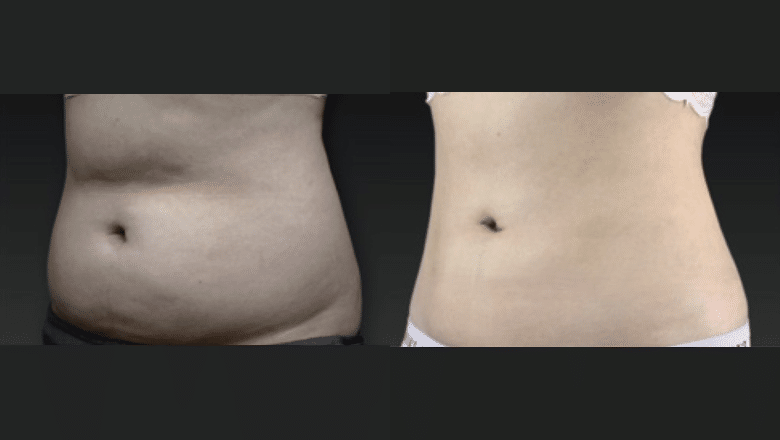
You can see more in our liposuction before and after photos, and our guide to loose skin after liposuction explains how skin quality affects the final contour.
Should I Lose Weight Before Liposuction?
Ideally you are already close to a stable, healthy weight: stable for at least three months, with pockets of fat that diet and exercise have not shifted. A BMI above 30 may mean liposuction is not suitable. Avoid crash dieting beforehand, because weight lost quickly tends to return. Our guide to how to lose weight before cosmetic surgery explains how to do it safely.
Diet After Liposuction With Fat Transfer or BBL
If your liposuction is combined with fat transfer or a Brazilian butt lift, the eating advice above still applies, and steady weight matters even more. The transferred fat cells that survive behave like fat anywhere else, so a significant weight gain can enlarge the new volume as well as the donor areas. The same principles apply after a tummy tuck, where small, protein-rich, high-fibre meals are the most comfortable while the abdomen is tight. Likewise for VASER liposuction, stomach liposuction and male liposuction: the nutrition principles do not change, only how long the tenderness lasts.
When Should I Speak to My Surgeon About Eating After Liposuction?
Contact your surgical team if you:
- cannot keep food or fluid down beyond the first day
- have severe or worsening abdominal pain or swelling
- feel dizzy or faint, or notice very dark urine, which can signal dehydration
- have diabetes and your blood sugar is difficult to control after surgery
- are unsure whether a supplement or medicine is safe
For the first 24 hours, use the direct number on your discharge summary. After that, call the clinic on 020 7993 4849. For chest pain or difficulty breathing, call 999. Our guide to liposuction side effects lists what is normal and what is not.
Frequently Asked Questions
What should I eat after liposuction and a tummy tuck?
Choose small, soft, protein-rich meals and plenty of fibre and fluids, such as eggs, fish, yoghurt, soup, porridge, fruit and vegetables. Your abdomen will feel tight, so large heavy meals are uncomfortable, and constipation is common. Avoid salty, greasy and sugary food and alcohol early on, and follow your surgeon’s specific instructions.
Can I continue to lose weight after liposuction?
Yes, once you have healed. Avoid crash diets in the first few weeks, then aim for gradual, balanced weight loss from around six weeks, when your surgeon clears you for full activity. Liposuction itself is not a weight-loss treatment, so the number on the scales changes little straight after surgery.
What should I not eat after liposuction?
Limit very salty and processed food, sugary snacks and drinks, greasy fast food and alcohol while you heal. Salt encourages swelling, and alcohol can increase bleeding and interact with painkillers. Nothing is permanently forbidden, but a balanced diet protects both your recovery and your result.
Can I eat eggs after liposuction?
Yes. Eggs are an excellent, easily digested source of protein and a good early choice, scrambled, boiled or poached. Unless you have an allergy or have been told otherwise, there is no reason to avoid them.
Can I eat rice and bread after liposuction?
Yes. Plain rice and toast are often the first foods people tolerate after the anaesthetic, and wholegrain versions give steady energy and fibre afterwards. You do not need to cut carbohydrates.
Can I drink alcohol after liposuction?
Avoid it for the first week or so, and for as long as you are taking prescribed painkillers. Alcohol can increase swelling and bleeding and interact with medicines. Afterwards, keep within the NHS low-risk limit of 14 units a week.
What should I eat after 360 liposuction?
The principles are the same as for any liposuction, but because 360 liposuction treats the abdomen, flanks and back together, recovery is usually longer and the tummy can stay tender. Small, regular, high-protein meals with plenty of fibre and fluids are usually the most comfortable. Our guide to liposuction pain explains what to expect.
Liposuction in London
If you are considering liposuction, or have had it and want advice on keeping your result, a consultation will cover what is realistic for your body, how to prepare and what to expect afterwards. Our GMC-registered surgeons operate at our CQC-regulated Baker Street hospital, and the surgeon who assesses you is the surgeon who performs your operation. Costs are confirmed in writing after your consultation, and finance options are available, subject to status. You can explore more on body contouring at Centre for Surgery.
Phone: 020 7993 4849 | Address: 95–97 Baker Street, Marylebone, London W1U 6RN
Contact us to schedule a consultation
References
- Weimann A, Bezmarevic M, Braga M, et al. ESPEN guideline on clinical nutrition in surgery – update 2025. Clinical Nutrition 2025;53:222–261. doi:10.1016/j.clnu.2025.08.029 ↗
- Xu B, Anderson DB, Park ES, Chen L, Lee JH. The influence of smoking and alcohol on bone healing: systematic review and meta-analysis of non-pathological fractures. EClinicalMedicine 2021;42:101179. doi:10.1016/j.eclinm.2021.101179 ↗
- Ho D, Jagdeo J, Waldorf HA. Is there a role for arnica and bromelain in prevention of post-procedure ecchymosis or edema? A systematic review of the literature. Dermatologic Surgery 2016;42(4):445–463. doi:10.1097/DSS.0000000000000701 ↗
- Shamloo M, Rafiei M, Esmaeili A, et al. Oral bromelain reduces postoperative edema following upper blepharoplasty: a randomized triple-blind placebo-controlled trial. Aesthetic Surgery Journal 2026. doi:10.1093/asj/sjag195 ↗
- Estrada-Moya F, Ortiz-Gutiérrez S, Guevara-Cruz M, et al. Preoperative nutrition in colorectal cancer surgery: mini review. Frontiers in Nutrition 2026;13:1922189. doi:10.3389/fnut.2026.1922189 ↗
- Ang-Lee MK, Moss J, Yuan CS. Herbal medicines and perioperative care. JAMA 2001;286(2):208–216. doi:10.1001/jama.286.2.208 ↗
- Hernandez TL, Kittelson JM, Law CK, et al. Fat redistribution following suction lipectomy: defense of body fat and patterns of restoration. Obesity 2011;19(7):1388–1395. doi:10.1038/oby.2011.64 ↗
- Benatti F, Solis M, Artioli G, et al. Liposuction induces a compensatory increase of visceral fat which is effectively counteracted by physical activity: a randomized trial. Journal of Clinical Endocrinology and Metabolism 2012;97(7):2388–2395. doi:10.1210/jc.2012-1012 ↗







