

In this guide12 sections
- Key Points
- Can You Get a Labiaplasty on the NHS?
- NHS Labiaplasty Criteria
- Is There a Waiting List for Labiaplasty on the NHS?
- How to Get a Labiaplasty on the NHS: Step by Step
- NHS Labiaplasty Risks and Recovery
- Is Labiaplasty Covered by Insurance?
- NHS vs Private Labiaplasty: What Is the Difference?
- Private Labiaplasty at Centre for Surgery
- Frequently Asked Questions
- Labiaplasty in London
- References
Key Points
- Can you get a labiaplasty on the NHS? Rarely. The NHS does not usually fund labiaplasty, and it is not offered to change the appearance of healthy labia or to relieve the everyday discomfort of naturally larger labia.
- NHS labiaplasty criteria are set locally by integrated care boards (ICBs). Funding is usually limited to vulval cancer or pre-cancerous disease, congenital differences, and injury or significant birth trauma.
- Is there a labiaplasty NHS waiting list? There is no separate list. If you meet the criteria, your GP refers you to a hospital gynaecology or plastic surgery team, and you join that team’s waiting list. The NHS maximum wait for non-urgent consultant-led treatment is 18 weeks from referral, although real waits vary by hospital.
- How to get a labiaplasty on the NHS: start with your GP. If your case falls outside local policy, a specialist can make an individual funding request, but these are rarely approved for labiaplasty.
- Labial hypertrophy on the NHS: larger labia minora are a normal variation, and in a London NHS study every woman referred for labial reduction had labia within normal measurements.
- Is labiaplasty covered by insurance? Cosmetic surgery is usually excluded from private medical insurance, so check your policy with your insurer before you book.
- Private labiaplasty is for adults aged 18 and over. At Centre for Surgery it is a day case, usually under local anaesthetic with sedation.
“Can I get a labiaplasty on the NHS?” is one of the questions we are asked most often about labiaplasty, and it is a fair one to ask. Larger or uneven labia minora can rub in tight clothing, hurt during cycling or sex, and leave some women feeling self-conscious. When something affects daily life, it is natural to wonder whether the NHS will treat it.
The honest answer is that labiaplasty on the NHS is rarely available. NHS commissioners treat surgery to change the size or shape of healthy labia as cosmetic, and they fund labia surgery only in a narrow set of medical situations. This guide explains the NHS labiaplasty criteria, how GP referral and the waiting list work, what an individual funding request involves, and what your options are if you do not qualify. If your worry is mainly about how your labia look, our guides to different types of labia shapes and labial hypertrophy show how wide the range of normal really is.
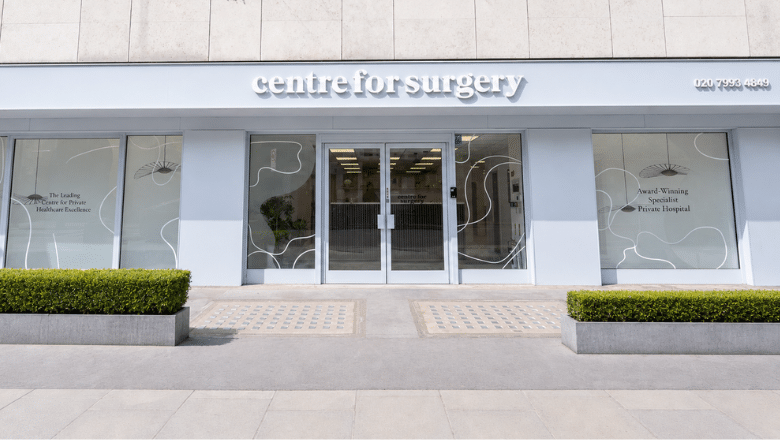
Centre for Surgery is a private hospital and does not treat NHS-funded patients at Baker Street. The NHS information below is here to help you understand the route through your GP, so you can decide which path suits you.
Can You Get a Labiaplasty on the NHS?
Not usually. The NHS website’s own labiaplasty page ↗ states that a labiaplasty is not usually available on the NHS. It may be offered in some circumstances, such as abnormal vaginal lips, repairing tears after childbirth, or removing cancerous tissue in vulval cancer. The same page reminds readers that it is completely normal to have noticeable skin folds around the opening of the vagina, and that in most cases these cause no problems.
Labiaplasty, like most cosmetic surgery, is classed by NHS commissioners as a procedure of low clinical priority. In practice that means NHS labiaplasty for appearance, for protrusion beyond the outer lips, or for discomfort in clothing and exercise is not funded, however genuine those concerns are. Searches for “labia reduction NHS”, “labia surgery NHS” and “can I get labia surgery on the NHS” all lead to the same answer: funding depends on a medical reason, not on the size of the labia.
Why the NHS does not fund cosmetic labiaplasty
The main reason is that larger labia minora are a normal variation rather than a disease. In a 2011 prospective study at a central London NHS teaching hospital ↗, every woman referred by her GP for labial reduction had labia minora within published normal limits, and most of their complaints concerned appearance or discomfort[1]. Earlier work from the same London unit found a wide range of values for every measurement of the external genitalia in women with no concerns about them[2], and a later review of ten measurement studies reported labia minora lengths from 5 to 100 mm and widths from 1 to 60 mm, with protruding inner lips more common than not[3].
NHS gynaecology guidance in Scotland notes that the Royal College of Obstetricians and Gynaecologists (RCOG) recommends female genital cosmetic surgery should not be undertaken within the NHS unless it is medically indicated, and that psychology referral should be considered in primary care before referral to gynaecology (NHS Greater Glasgow and Clyde guideline ↗).
NHS Labiaplasty Criteria
There is no single national rule. Each integrated care board in England publishes its own commissioning policy, and many are based on NHS England’s 2013 interim clinical commissioning policy for labiaplasty, vaginoplasty and hymenorrhaphy. The wording varies, but the direction is the same everywhere:
- NHS Cheshire and Merseyside ICB (policy CMICB_Clin077, March 2024) states that labiaplasty is not routinely commissioned unless the patient is aged 18 or over and birth trauma is present, and that cosmetic treatments are regarded as low clinical priority (read the policy ↗).
- Bath and North East Somerset, Swindon and Wiltshire ICB (policy CP046, March 2023) states that labiaplasty is not normally supported or funded, and that the common consequences of childbirth are not sufficient reason to apply for funding (read the policy ↗).
- NHS Greater Glasgow and Clyde does not offer female genital cosmetic surgery as a cosmetic-only procedure.
Your own ICB’s policy is usually published on its website under “clinical policies” or “procedures of limited clinical value”, and your GP can check it for you.
When NHS labia surgery may be funded
NHS labiaplasty criteria generally cover these situations:
- Vulval cancer or pre-cancerous disease. Removing abnormal tissue is treatment for disease rather than cosmetic surgery, and it is managed through gynaecology or gynae-oncology pathways. The NHS has more on vulval cancer ↗.
- Congenital differences. Some girls and women are born with differences in genital development that need assessment by specialist NHS teams.
- Injury or significant birth trauma. Repair of damage from an injury or a tear during childbirth may be funded in some areas.
- Recurrent disease or infection. Some NHS policies also allow surgery where recurrent disease or infection is clearly linked to the labia, or after trauma.
What does not usually qualify
Concerns about appearance, labia minora that extend beyond the outer lips, asymmetry, rubbing in clothing or during sport, changes after pregnancy, and “labial hypertrophy” on its own are not usually funded. This is the reason most women who ask about NHS labiaplasty are told it is not available, even when their symptoms are real. Our guides to labia asymmetry and elongated labia explain why these changes happen.
Is There a Waiting List for Labiaplasty on the NHS?
There is no dedicated labiaplasty NHS waiting list. If your GP refers you and you meet the local criteria, you join the waiting list of the hospital department that sees you, usually gynaecology and sometimes plastic surgery. In England you have the right to start consultant-led treatment within a maximum of 18 weeks from referral for non-urgent conditions, with some exceptions, and you can check current waits for your hospital through the NHS My Planned Care service (NHS guide to waiting times ↗).
Two points are worth knowing before you go down this route:
- A referral is not a promise of surgery. The specialist will first decide whether there is a medical reason to operate. Many women are seen, examined, reassured that their anatomy is normal and discharged.
- Funding decisions add time. Where a case falls outside the policy, waiting for an individual funding request decision can add weeks or months before you even reach the surgical list.
Private labiaplasty does not involve a waiting list in the same sense. At Centre for Surgery, surgery can usually be arranged within a few weeks of your consultation, depending on availability and after the two-week cooling-off period we recommend before any operation.
How to Get a Labiaplasty on the NHS: Step by Step
If you have a symptom that you think might meet your local criteria, this is the usual route:
- Book a GP appointment. Describe your symptoms specifically: splitting or bleeding of the labia, recurrent infections, difficulty keeping the area clean, or pain. You can ask for a female GP or a chaperone.
- Examination and first-line treatment. Your GP will examine you and look for skin conditions or infections that need treating in their own right, and may offer practical advice on underwear, clothing and skin care.
- Checking the local policy. Your GP compares your situation with the ICB’s commissioning policy and decides whether a referral is appropriate.
- Specialist assessment. A gynaecologist examines you, explains what is normal, and decides whether surgery is clinically indicated. Some services offer psychological support first if the main concern is distress about appearance.
- Funding approval. If surgery is indicated but outside routine policy, the specialist may apply for funding on your behalf.
What is an individual funding request?
An individual funding request (IFR) asks the ICB to fund a treatment that it does not normally commission. The clinician has to make a robust case that your circumstances are clinically exceptional compared with other people in the same situation. Wanting labiaplasty because of appearance or ordinary discomfort does not meet that test, and IFRs for labiaplasty are rarely successful.
Labial hypertrophy and the NHS
“Labial hypertrophy” simply means larger labia minora. There is no agreed measurement at which normal labia become abnormal, which is one reason the NHS does not fund surgery for it. If larger labia are causing you problems, our guide to labial hypertrophy covers causes, symptoms and treatment, and our article on labiaplasty and urinary tract infections looks at what the evidence says about infections.
NHS Labiaplasty Risks and Recovery
The NHS lists the main risks of labiaplasty as bleeding, infection, scarring of the tissue and reduced genital sensitivity, together with the small risks that come with any operation, such as a blood clot in a vein or an allergic reaction to the anaesthetic. The NHS guidance on recovery says you may need up to two weeks off work, that soreness, bruising and swelling can last up to two weeks, that the skin can take a couple of months to heal fully, and that sex should be avoided for at least four weeks and physical activity for four to six weeks.
The research is broadly reassuring when surgery is done for the right reasons. A 2022 meta-analysis of 46 studies including 3,804 women ↗ found a pooled satisfaction rate of 99% after labia minora reduction, with wound separation (dehiscence) and aesthetic concerns the most common reasons for revision surgery[4]. A 2024 meta-analysis of 86 studies reported an overall satisfaction rate of 94% across techniques, with complications generally rare[5]. Complications do still happen, so the choice of surgeon matters.
At Centre for Surgery we ask patients to avoid sex, tampons, swimming and strenuous exercise for six weeks, until healing is confirmed at review. Our guides to labiaplasty recovery and whether labiaplasty is painful go through each stage.
Is Labiaplasty Covered by Insurance?
Usually not. Private medical insurance is designed for illness and injury, and most policies exclude cosmetic surgery, including labiaplasty. If surgery is needed as part of treating a disease, such as removing abnormal vulval tissue, cover may apply under the relevant condition. The only reliable way to know is to check with your insurer and get confirmation in writing before you book anything.
If you are paying yourself, our labiaplasty cost guide explains what affects the price, and finance is available, subject to status, through our finance options.
NHS vs Private Labiaplasty: What Is the Difference?
- Who qualifies. The NHS funds labia surgery only for medical reasons set out in local policy. Privately, any adult aged 18 or over can be assessed, and the surgeon decides whether surgery is appropriate for them.
- Waiting. NHS treatment follows referral, assessment, any funding decision and the hospital waiting list. Private treatment follows a consultation and a recommended cooling-off period.
- The aim of surgery. NHS surgery treats a defined medical problem. Private labiaplasty can also address comfort and appearance, such as reducing protrusion or improving asymmetry.
- Technique and extras. Privately, you and your surgeon can discuss the trim or wedge technique and whether a clitoral hood reduction is needed at the same time.
Whichever route you consider, a good outcome depends on realistic expectations. A 2016 prospective controlled study ↗ found that labiaplasty greatly reduced dissatisfaction with genital appearance, but did not change general psychological wellbeing or relationship quality, and women with higher levels of distress before surgery were less satisfied afterwards[6]. If worry about your body is affecting your life more broadly, the NHS page on body dysmorphic disorder ↗ and our article on body dysmorphia and cosmetic surgery are a good place to start.
Private Labiaplasty at Centre for Surgery
If you do not meet NHS criteria but your labia are causing discomfort or distress, a private consultation lets you get an honest specialist opinion without a referral. At Centre for Surgery:
- Labiaplasty is performed by GMC-registered surgeons at our CQC-regulated hospital at 95–97 Baker Street, and the surgeon who assesses you is the surgeon who performs your operation.
- Straightforward labiaplasty is a day case under local anaesthetic with sedation, so you are relaxed and the area is completely numb. TIVA (total intravenous anaesthesia) is used for complex and combined procedures. Our guide to local anaesthetic labiaplasty explains what to expect.
- Our labiaplasty nursing team is all-female.
- We treat adults aged 18 and over only. Our article on the minimum age for labiaplasty explains why.
- Consultations cost £100, which is redeemable against treatment, and we recommend a two-week cooling-off period before surgery.
- We will tell you if we do not think surgery is in your interest.

Labiaplasty with clitoral hood reduction at Centre for Surgery. Photographed at least six months after surgery.

Labia minora reduction at Centre for Surgery. Photographed at least six months after surgery.
You can see more results in our labiaplasty before and after photos.
Frequently Asked Questions
Can I get a labiaplasty on the NHS for medical reasons?
Sometimes, but the medical reasons are narrow. NHS funding is generally limited to vulval cancer or pre-cancerous disease, congenital differences, and injury or significant birth trauma, with some policies also covering recurrent infection clearly caused by the labia. Discomfort in clothing or during exercise is not usually enough on its own.
How to qualify for NHS labiaplasty?
You need a medical problem that meets your integrated care board’s policy, and a GP referral to a hospital specialist who agrees that surgery is clinically needed. If your situation falls outside the policy, the specialist can apply for individual funding, but approval for labiaplasty is rare.
Is there a waiting list for labiaplasty on the NHS?
There is no separate list. If you are referred and meet the criteria, you join the waiting list of the gynaecology or plastic surgery team that sees you. The NHS standard is a maximum of 18 weeks from referral to treatment for non-urgent care, but waits vary between hospitals, and a funding decision can add more time.
Can my GP refer me for a labiaplasty?
Your GP can refer you for a specialist opinion if your symptoms meet local criteria or need assessment. Many GPs will first examine you, treat any infection or skin condition, and explain what is normal. A referral does not guarantee surgery.
Can you get a labiaplasty for free?
Only on the NHS, and only when local medical criteria are met. Labiaplasty for appearance or for the discomfort of naturally larger labia is not free on the NHS, and private medical insurance rarely covers it.
Why do some girls’ labias hang out?
Inner lips that extend beyond the outer lips are a normal variation, and studies show they are more common than not. Labia also differ in length, colour, texture and symmetry, and they develop through puberty into early adulthood. Protrusion on its own is not a medical problem.
How risky is labiaplasty surgery?
Labiaplasty is generally safe, and large reviews report high satisfaction. The most common problem is the wound edges separating, and other risks include bleeding, infection, scarring, asymmetry and changes in sensation. Choosing an experienced surgeon and following aftercare advice lowers these risks.
What age is best for labiaplasty?
There is no single best age, but there is a firm minimum: the labia keep developing beyond puberty, so labiaplasty should not be done before 18. Many women also prefer to wait until they have finished having children. Our guide to labiaplasty before or after pregnancy covers timing.
What can I do instead of a labiaplasty?
Seamless or cotton underwear, looser clothing, padded cycling shorts and gentle skin care can reduce rubbing. If infections are the problem, your GP can investigate and treat them. Reassurance that your anatomy is normal is often the most helpful step, and some women find talking therapy useful if the worry is persistent.
Labiaplasty in London
If you have been told you do not qualify for NHS labiaplasty, or you would rather not wait, a consultation at our Baker Street hospital gives you a clear, honest assessment of whether surgery would help and what it would involve. Read more about labiaplasty at Centre for Surgery.
Phone: 020 7993 4849 | Address: 95–97 Baker Street, Marylebone, London W1U 6RN
Contact us to schedule a consultation
References
- Crouch NS, Deans R, Michala L, Liao LM, Creighton SM. Clinical characteristics of well women seeking labial reduction surgery: a prospective study. BJOG 2011;118(12):1507–1510. doi:10.1111/j.1471-0528.2011.03088.x ↗
- Lloyd J, Crouch NS, Minto CL, Liao LM, Creighton SM. Female genital appearance: “normality” unfolds. BJOG 2005;112(5):643–646. doi:10.1111/j.1471-0528.2004.00517.x ↗
- Hayes JA, Temple-Smith MJ. What is the anatomical basis of labiaplasty? A review of normative datasets for female genital anatomy. Australian and New Zealand Journal of Obstetrics and Gynaecology 2021;61(3):331–338. doi:10.1111/ajo.13298 ↗
- Escandón JM, Duarte-Bateman D, Bustos VP, et al. Maximizing safety and optimizing outcomes of labiaplasty: a systematic review and meta-analysis. Plastic and Reconstructive Surgery 2022;150(4):776e–788e. doi:10.1097/PRS.0000000000009552 ↗
- Géczi AM, Varga T, Vajna R, et al. Comprehensive assessment of labiaplasty techniques and tools, satisfaction rates, and risk factors: a systematic review and meta-analysis. Aesthetic Surgery Journal 2024;44(11):NP798–NP808. doi:10.1093/asj/sjae143 ↗
- Sharp G, Tiggemann M, Mattiske J. Psychological outcomes of labiaplasty: a prospective study. Plastic and Reconstructive Surgery 2016;138(6):1202–1209. doi:10.1097/PRS.0000000000002751 ↗