

In this guide12 sections
- How Long Do Breast Implants Last?
- Common Myths About Breast Implant Problems
- What Are the Common Breast Implant Problems?
- What Increases the Risk of Developing a Problem?
- How Do I Recognise a Breast Implant Problem?
- Breast Implant Pain or Hardening After 10 Years — What Does It Mean?
- Ageing, Sagging, and Wanting a Change
- Does Implant Placement Affect the Risk of Problems?
- What Happens Next? From Problem to Treatment
- How Much Does Treatment Cost?
- Frequently Asked Questions
- Breast Implant Problem Assessment at Centre for Surgery
Breast augmentation with implants remains one of the most popular cosmetic procedures in the UK, and for most women the results last many years. But implants are not lifetime devices, and over time certain problems can develop — up to one in five women needs breast implant removal or replacement within ten years of their first procedure. Whether you’re searching because something feels different, you’ve read about breast implants “going wrong,” or you’re simply doing your research before surgery, this guide explains the common breast implant problems to be aware of, how to recognise the warning signs, and when they mean it’s time to see a surgeon. Recognising a problem is the first step; our companion guide on what breast revision surgery involves covers how each is corrected.
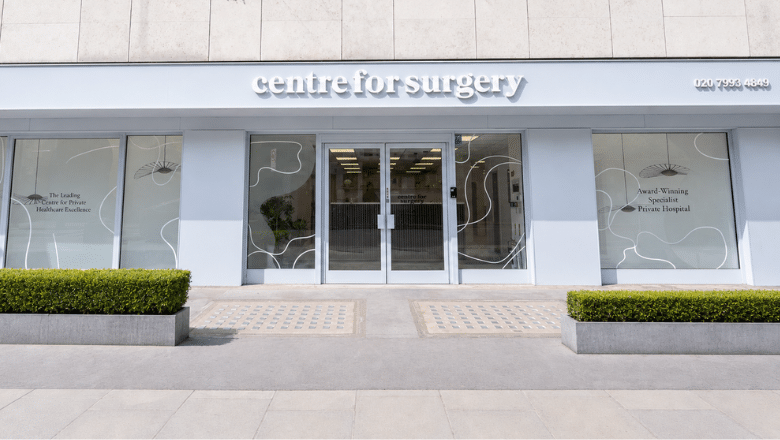
It’s important to keep this in perspective: implants changing over time is expected, not a failure of the original operation. Choosing an experienced breast surgeon and having any problem assessed early are what lead to the best outcomes. At Centre for Surgery in London, our GMC-registered plastic surgeons diagnose and treat all breast implant problems at our CQC-regulated Baker Street clinic. As a general rule of thumb, we recommend a professional implant check roughly every three years, regardless of whether anything feels different — this is the most reliable way to catch a developing problem early, well before it becomes noticeable day to day.
How Long Do Breast Implants Last?
Modern fifth-generation breast implants are durable, and many last well over ten years — sometimes twenty or more — provided there are no problems. That said, most women can expect an average implant lifespan of between ten and twenty years. Implants are not designed to last forever, so at some point you may consider replacing or removing them, whether because of a developing problem or simply a change in what you want. Our guide on how long breast implants last covers this in detail, including what your implant warranty does and doesn’t cover.
Common Myths About Breast Implant Problems
There’s a lot of anxiety-driven misinformation about what can go wrong with breast implants. A few of the most common myths, and the facts:
“If nothing feels wrong, nothing is wrong.” Myth for silicone implants specifically — silent rupture, by definition, produces no obvious symptoms, which is exactly why periodic scanning matters even when everything feels fine.
“Needing revision surgery means my original surgery failed.” Myth. Implants ageing, developing capsular contracture, or simply not matching your evolving preferences over 10–20 years is a normal, expected part of having implants — not a sign anything was done wrong the first time.
“Rippling and malposition are rare, serious complications.” Myth. Both are relatively common, cosmetically-driven concerns rather than dangerous medical emergencies, and both are very correctable with revision surgery.
“All implant problems need emergency treatment.” Myth. Most of what’s covered in this guide — rippling, gradual malposition, ageing, cosmetic dissatisfaction — can be assessed and planned for at a routine consultation rather than urgently. Genuine emergencies (infection, severe pain, significant rupture with symptoms) are the exception, not the rule.
What Are the Common Breast Implant Problems?
Breast implant problems fall into a few main categories. Some are medical complications; others are simply changes over time that lead women to choose revision surgery. Having implant surgery performed by an experienced UK surgeon minimises the risk of complications — women who travel abroad for cheaper surgery, particularly to Turkey, face a considerably higher risk of serious problems including implant-related infection, many of which are difficult to correct.
Capsular Contracture
Capsular contracture is the most common long-term complication — the scar tissue capsule that naturally forms around an implant thickens and tightens, causing firmness, pain, and distortion of breast shape. It is the single most frequent reason for corrective breast surgery.
Implant Rupture
An implant shell can eventually fail, causing a rupture. How this presents depends entirely on the implant type (explained in the next section). Rupture is one of the clearest indications for implant removal or replacement.
Ageing Implants
Even implants that have caused no problems may reach the end of their useful life. Where implants are 15–20 years old, replacing or removing them is often recommended proactively, to prevent complications developing.
Implant Rippling
Rippling occurs when the edges or surface texture of the implant become visible or palpable through the skin, most often at the upper or inner edge of the breast. It’s more common with saline implants, and with implants placed above rather than below the muscle, since there’s less soft tissue coverage to disguise the implant’s contours. Thinner patients, and those with less natural breast tissue to begin with, are somewhat more prone to it. Rippling isn’t dangerous, but many women find it cosmetically bothersome enough to seek correction — options include switching to a more cohesive gel implant, changing the plane of placement, or adding fat grafting over the affected area for extra soft-tissue coverage. See our full guide to breast implant rippling for more detail.
Implant Malposition, Bottoming Out and Symmastia
Implants can occasionally shift from their original position over time, particularly as the surrounding breast pocket gradually stretches or expands. This tends to happen in one of two directions. Downward migration below the natural breast fold is known as bottoming out, where the lower breast appears disproportionately full and the nipple can point upward as a result. Migration towards the centre of the chest, in more pronounced cases, is called symmastia, sometimes referred to as “uniboob” — where the two breast pockets effectively merge into one. Both are usually corrected with revision surgery to reshape or reinforce the breast pocket, sometimes referred to as an “internal bra” technique, alongside implant repositioning or replacement.
PIP Implants
The PIP breast implant scandal left many thousands of women with substandard implants containing industrial-grade silicone, which carry a high risk of rupture compared with medically-approved implants. Many affected women choose removal or replacement to avoid complications.
Cosmetic Change
Not every reason is medical. Many women simply no longer like how their breasts look — whether because of ageing, a change in preference, or dissatisfaction with the original result — and choose revision surgery to change or remove their implants.
What Increases the Risk of Developing a Problem?
While any woman with implants can, in principle, develop any of the problems above, some factors genuinely increase the likelihood:
- Implant age — risk of both rupture and contracture rises gradually the longer an implant has been in place.
- Smoking — measurably impairs wound healing and is associated with a higher complication rate across most types of revision surgery.
- Previous capsular contracture — having had it once meaningfully raises the likelihood of it recurring after treatment.
- Implant placement and size — larger implants and subglandular (above-muscle) placement are associated with a somewhat higher rippling risk in thinner patients.
- Surgery performed abroad or by an inexperienced provider — technique matters significantly for long-term outcomes, and complications are more frequent and harder to correct when the original surgery wasn’t performed to a high standard.
- Significant weight or hormonal changes — pregnancy, breastfeeding, or substantial weight fluctuation can all affect how implants sit and appear over time, independent of any implant fault.
None of these factors make a problem inevitable, but they’re worth being aware of, particularly if more than one applies to you.
How Do I Recognise a Breast Implant Problem?

Being able to recognise the signs of a developing problem means you can seek assessment earlier — and in our experience, early recognition of implant complications leads to better treatment. Many implant problems can be accurately detected with high-resolution ultrasound scanning. The main warning signs are firmness or hardness, pain or tenderness, a change in breast shape, and a change in breast size. The specific pattern depends on the underlying problem.
Signs of Capsular Contracture
Pain in one or both breasts, a feeling of tightness, localised tenderness, or an abnormal breast shape as the tightening capsule deforms the implant beneath.
Signs of Implant Rupture

Silicone implant rupture is often “silent.” Modern silicone is a cohesive gel, so the material stays contained within the capsule rather than leaking out, and many women have no obvious symptoms as a result. Where symptoms do occur, they may include localised tenderness, a swollen appearance, breast pain, a reduction in size, or a burning sensation or numbness. It can be silent, so periodic scanning is the reliable way to detect it.
Saline implant rupture is far more obvious — the sterile saltwater solution is safely absorbed by the body, causing a clear and often sudden reduction in the size and change in shape of the affected breast. Saline implants are uncommon in the UK now, having been largely superseded by silicone for their more natural feel.
Changes in Nipple or Breast Sensation
Some temporary change in nipple or breast sensation is common after any breast augmentation, typically resolving within a few weeks as swelling settles and nerves recover. In a smaller number of women, sensation changes are longer-lasting or occasionally permanent, and are more closely linked to the incision site and implant placement chosen at the original surgery than to any subsequent implant problem. If sensation changes appear or worsen years after your original surgery, rather than settling in the early recovery period, it’s worth mentioning at a follow-up appointment, since this pattern is less typical and worth assessing.
Breast Implant Pain or Hardening After 10 Years — What Does It Mean?
Breast implant pain or hardening that develops around or after the ten-year mark is one of the most common reasons women contact us for an assessment, and it’s a genuinely useful pattern to recognise. In most cases, pain or hardening appearing at this stage points to one of two things: capsular contracture developing (or worsening) as the scar capsule naturally continues to mature over many years, or the implant itself simply reaching the end of its expected working life, with early shell fatigue contributing to discomfort even before a full rupture occurs. Less commonly, new pain at this stage can be linked to a change in position, weight, or hormonal status unrelated to the implant itself.
None of this means something has necessarily “gone wrong” with your original surgery — implants ageing and needing attention after a decade or more is an expected part of having them, not a sign of a botched procedure. That said, new or worsening pain at any point is always worth a proper assessment, ideally including high-resolution ultrasound, rather than waiting to see if it resolves on its own.
Ageing, Sagging, and Wanting a Change
One of the most common non-urgent reasons for revision is breast sagging with age. The skin’s elasticity naturally decreases over time, and the weight of implants can accentuate sagging. Where this happens, the most effective treatment is usually a breast implant replacement combined with a breast uplift to restore a higher, more youthful position. Breast asymmetry that develops gradually over time is treated the same way. Our guide on breast implant lifespan and replacement covers this in more detail, including how to change implant type or placement if your preferences have shifted.
Does Implant Placement Affect the Risk of Problems?
Where your implant is placed — above the muscle (subglandular) or below it (submuscular, sometimes called dual-plane) — has a genuine bearing on which problems are more or less likely. Submuscular placement generally gives more natural-looking results with a lower visible risk of rippling, since the muscle provides an additional layer of soft-tissue coverage over the implant, though it typically means a somewhat longer initial recovery. Subglandular placement suits women with more natural breast tissue of their own to begin with, since less coverage is needed, but can carry a slightly higher visible rippling risk in women with thinner tissue. Your surgeon will discuss which placement suits your anatomy and goals at consultation — there’s no single “correct” answer for everyone.
What Happens Next? From Problem to Treatment
Once a problem is identified, the corrective procedure depends on what it is — ranging from a straightforward implant exchange to capsulectomy with replacement and uplift. Implant exchange surgery typically takes 1–2 hours under TIVA as a day case, using your existing scar so there is no additional scarring; surgery for capsular contracture may take longer, particularly if an en-bloc removal of implant and capsule is performed. For a full explanation of each corrective option, see our companion guide: What Is Breast Revision Surgery?
How Much Does Treatment Cost?
The cost depends on the procedure needed — implant removal, replacement, or a combined procedure with capsulectomy or uplift — and its complexity. An accurate price is confirmed in writing after your consultation; see our breast implant removal cost guide for indicative pricing. Finance options are available through our partner Chrysalis Finance for procedures over £1,500 — visit our Finance Options page for details.
Frequently Asked Questions
Can breast implants “go wrong” without any warning?
Genuinely symptom-free problems are uncommon but not impossible — silent silicone rupture is the clearest example, which is exactly why periodic scanning matters even when everything feels normal. Most other problems, including capsular contracture and malposition, tend to develop gradually enough that regular self-awareness and check-ups catch them early.
Is breast implant pain after 10 years normal?
New pain around or after the ten-year mark is common enough to be worth taking seriously rather than alarming — it usually reflects either developing capsular contracture or the implant simply reaching the end of its expected lifespan, both of which are manageable with assessment and, where needed, revision surgery.
What are the most common “boob job problems” women experience?
In our experience, capsular contracture and implant ageing are by far the most common reasons women return for revision surgery, followed by rippling and cosmetic dissatisfaction. Genuine emergencies — infection, significant rupture with symptoms — are comparatively rare.
Can breast implant problems be prevented altogether?
Not entirely — some risk is inherent to having any implanted medical device. But choosing an experienced UK-based surgeon, following aftercare guidance closely, attending regular check-ups, and not smoking all measurably reduce your overall risk of complications.
How often should I have my breast implants checked?
As a general guide, roughly every three years is a reasonable interval for a professional check-up, alongside being attentive to your own body in between. This applies regardless of implant age — even implants that feel completely fine benefit from periodic professional review, since some problems, like silent silicone rupture, don’t produce noticeable symptoms on their own.
Breast Implant Problem Assessment at Centre for Surgery
If you think you may have a breast implant problem, the next step is a consultation with a breast surgeon. Centre for Surgery is an experienced provider of cosmetic breast surgery in the UK, with expertise in both breast implant removal and replacement, performed by GMC-registered plastic surgeons at our CQC-regulated Baker Street clinic. We use high-resolution ultrasound scanning to assess implants accurately and advise honestly on whether treatment is needed.
Finance options are available through our partner Chrysalis Finance — visit our Finance Options page for details.
Phone: 020 7993 4849 | Email: contact@centreforsurgery.com | Address: 95-97 Baker Street, London W1U 6RN