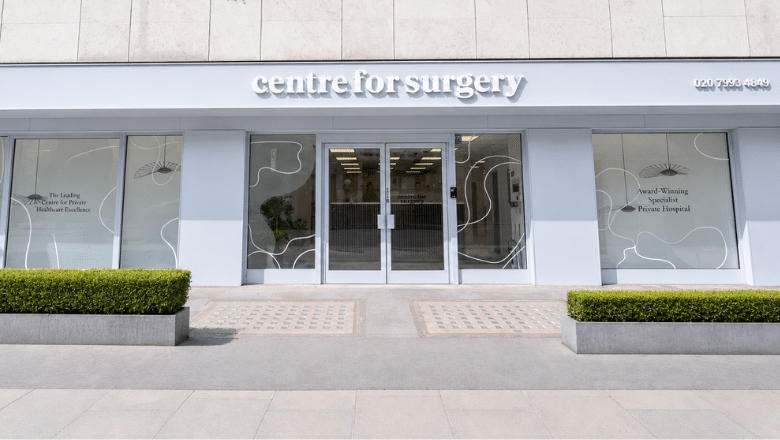


Real labiaplasty (labia reduction) results from patients treated at our Baker Street day surgery facility. All photographs were taken with full written patient consent, under consistent clinical conditions. Jump to Labia Minora Reduction, Wedge Excision or Labia Majora Reduction.
Results vary from patient to patient. These are examples of outcomes achieved at Centre for Surgery, not guaranteed results. After photos were taken at least six months after surgery unless the caption says otherwise. No photograph has been retouched or filtered; some are cropped or masked only to protect patient privacy. Full disclaimer below, and how to read these photos — beginning with the fact that labial size and shape vary enormously, and that a labia photographed here as a “before” is, in almost every case, entirely normal anatomy.
Labia Minora Reduction — Before & After
15 photographs
Labiaplasty — also called labia reduction — reduces the size of the labia minora, the inner lips. Women seek it for different reasons: some for discomfort — rubbing against clothing, pain when cycling, running or during sex — and some because they are unhappy with the appearance. Those are not the same reason, and they do not carry the same weight. Where the labia cause no physical symptoms, surgery is being asked to solve a problem of how a normal body looks, and that is worth thinking about carefully before any photograph on this page persuades you of anything.


Wedge Excision — Before & After
1 photograph
The trim technique removes the free edge of the labia, and with it the naturally darker, slightly irregular border. The wedge technique removes a triangle of tissue from the middle of the labia and rejoins the edges, preserving that natural border. Neither is the better operation in the abstract. They leave scars in different places, they suit different anatomy, and the wedge carries a small risk of the repair separating. Which one is right for you is a conversation with a surgeon who has examined you.

Labia Majora Reduction — Before & After
2 photographs
The labia majora are the outer lips. They can be reduced where there is excess skin, or filled with fat where volume has been lost with age or weight loss. This is a different operation from labia minora reduction, addresses a different structure, and where both are performed together the photograph shows two procedures, not one.


About These Labiaplasty Photos
The labiaplasty photos above are presented for educational purposes only and should be interpreted subjectively. They do not represent the opinion or view of any patient regarding their result, and they are not intended to suggest the result that any other patient may achieve. No two patients are alike, and no two results are necessarily alike. Only a personal consultation with your surgeon can provide you with a reasonable expectation of the results you may achieve from any specific procedure. Every photograph on this page is published with the full written consent of the patient.
How to Read Labiaplasty Before and After Photos
There is no normal, and the “before” is not abnormal
Labial length, thickness, colour and symmetry vary enormously between women, and almost the entire range is anatomically normal. Studies measuring labia minora in unselected women find lengths spanning several centimetres, with asymmetry between the two sides being the rule rather than the exception. Very few women who seek labiaplasty have anatomy that lies outside the normal range at all.
This matters, because a gallery of before and after photographs implies that the “before” is a condition and the “after” is its cure. On this page — and on every page like it — the before photographs are, in almost every case, photographs of normal bodies. Some of those women had genuine physical symptoms. Some did not. The photographs cannot tell you which, and the internet has spent fifteen years teaching women to compare themselves to images that are unrepresentative in every direction: pornography, cosmetic surgery galleries, and the small minority of women who chose surgery.
If you are here because you think you look abnormal, the most useful thing on this page is this paragraph, not the photographs above it.
Symptoms are a better reason than appearance
Where the labia are caught by clothing, hurt during cycling, running or sex, or make hygiene difficult, surgery addresses a functional problem and the benefit is measurable — the pain either goes or it does not. Where the concern is entirely about appearance, the operation is being asked to change how you feel about a part of your body, and there is a great deal of evidence that dissatisfaction with a body part is not reliably fixed by altering it. A good surgeon will ask you which of these you are, and will not operate on some of the women who ask.
The two techniques leave different edges
Trim removes the free edge, including the naturally darker border. Wedge removes tissue from the middle and rejoins the edges, keeping that border. If an after photograph shows a pale, straight labial edge, that is a trim. If it shows a preserved natural border, that is likely a wedge. Neither is superior; they simply produce different-looking results, and a woman who wanted her natural edge kept and did not know to ask will not get it back.
Position, traction and light
More than in any other gallery on this site, the position of the patient and the handling of the tissue determine what the photograph shows. Labia photographed lying down look different from labia photographed standing. Tissue gently held apart looks different from tissue at rest. In a trustworthy pair, the position and the handling are identical in both frames.
Too much cannot be undone
The complication that matters most in this operation is over-resection: removing too much. Tissue that has been excised cannot be replaced, and an over-reduced labia can be uncomfortable, can leave the vestibule exposed, and is very difficult to correct. Under-reduction can be revised. Over-reduction largely cannot. This is why an experienced surgeon will often remove less than a patient asks for, and it is the single most important thing a before and after photograph will never show you.
What Stage of Healing You’re Looking At
Labiaplasty is a day case, performed under local anaesthetic with or without sedation, or under TIVA (total intravenous anaesthesia).
Swelling and bruising in the first fortnight are considerable and can look alarming — the labia may appear larger than before surgery. This is normal and it resolves. Sutures are dissolvable and do not need removing, though they can be uncomfortable as they break down over two to four weeks. Most women return to desk-based work within a few days. Sex, exercise, cycling, swimming and tampon use are avoided for four to six weeks.
The tissue continues to settle for months. The appearance at six weeks is not the final appearance; scars soften, residual swelling resolves, and the shape at three to six months is a fairer representation than anything before it. A photograph taken early shows a swollen result and a firm scar.
The after photographs in this gallery were taken at least six months after surgery, unless the caption says otherwise, when the shape is a fair representation of the result. For what to expect at each stage before then, see our labiaplasty recovery guide.
What These Photographs Cannot Show You
There is a limit to what any gallery can tell you, and a clinic that pretends otherwise is selling rather than informing.
- Whether the symptoms resolved. If the reason for surgery was chafing, pain when cycling, or discomfort during sex, then a photograph of a smaller labia does not tell you whether any of that stopped. This is the outcome that matters, and it is invisible.
- Sensation. The labia are richly innervated. Altered sensation after surgery is possible, and it is not something a photograph addresses.
- Scar tenderness and pain during sex. A scar along the labial edge can remain sensitive. Persistent discomfort during intercourse is a recognised outcome of this operation.
- Over-resection. The photographs show results the clinic is content to publish. Removing too much tissue is largely irreversible, and those cases are not in anybody’s gallery.
- Wound separation. The area is moist and mobile; wounds sometimes separate and heal secondarily, particularly after wedge excision.
- Whether the clitoral hood was addressed. Reduction of the labia minora without addressing prominent hood tissue can leave the hood looking more prominent than before. Some galleries quietly include hood reduction; the photograph will not say so.
- Perfect symmetry, before or after. The two sides were not identical before surgery and will not be identical afterwards. No woman’s are.
- Whether the woman needed the operation at all.
None of this is a reason to distrust before and after photographs. It is a reason to treat them as the beginning of a conversation with a surgeon rather than the end of one.
Common Questions About Labiaplasty
Is labiaplasty painful?
The procedure itself is not painful, because it is performed under local anaesthetic, with or without sedation, or under TIVA. Afterwards there is soreness and swelling, usually described as manageable rather than severe, and it settles over the first days and weeks. Dissolvable stitches can be uncomfortable as they break down.
How long is the recovery?
Most women return to desk-based work within a few days. Sex, exercise, cycling, swimming and tampon use are avoided for four to six weeks. Swelling in the first two weeks is considerable and the labia can look larger than before. The tissue continues to settle for several months.
Will I have visible scars?
There will be a scar. In the trim technique it runs along the labial edge; in the wedge technique it runs across the labia where the tissue was rejoined. Scars in this area generally fade and soften well, but they can remain tender, and in some women they remain palpable. Your surgeon will tell you where yours will be before you agree to surgery.
Is it purely cosmetic?
For some women it is entirely about appearance. For others, enlarged or asymmetrical labia rub against clothing, cause discomfort when cycling or running, or interfere with sex. Where there are physical symptoms, surgery addresses a functional problem. Where there are not, it is worth exploring why the appearance troubles you before deciding that surgery is the answer, and a surgeon may suggest you speak to somebody before proceeding.
Can I have labiaplasty if I have had children, or plan to have more?
Yes. Some women seek labiaplasty after childbirth, and future pregnancy is not unsafe after the operation. Childbirth and ageing may alter the result over time.
Are the results permanent?
The tissue that is removed does not grow back. The appearance may change with age, weight change and childbirth, as the rest of the body does.
Can it be done under local anaesthetic?
Often, yes. Local anaesthetic labiaplasty avoids the need for TIVA and can shorten recovery. It is not right for everybody, and the choice depends on the extent of the surgery and on you.
Do you lose sensation after labiaplasty?
Most women do not notice a lasting loss of sensation. The labia are richly supplied with nerves, so temporary numbness or increased sensitivity is common while swelling settles, and the scar can be tender for a while. Permanent changes in sensation are possible but uncommon, and your surgeon will discuss this risk with you before you decide.
What are the risks?
Bleeding, infection, wound separation, altered sensation, scar tenderness, pain during sex, asymmetry, dissatisfaction with the appearance, and over-resection, which is difficult to correct. Complications are uncommon, but no surgeon and no setting eliminates them. Your surgeon will discuss each of these with you before you consent.
Is there a minimum age?
Yes. Labial appearance continues to develop through adolescence, and cosmetic labial surgery is not appropriate in girls under 18 in the UK. See the minimum age for labiaplasty in the UK.
Labiaplasty (Labia Reduction) at Centre for Surgery
Centre for Surgery is a private hospital for plastic and cosmetic surgery on Baker Street in Marylebone, London, registered with and independently inspected by the Care Quality Commission. Labiaplasty, also known as labia reduction surgery, is performed as a day case at our Baker Street facility, using trim or wedge techniques, and where appropriate with reduction of the labia majora.
Consultation
Every labiaplasty begins with a face-to-face consultation and examination. Your surgeon will discuss whether your concern is symptomatic or aesthetic, explain what each technique removes and where the scar will sit, and tell you when the answer is that surgery is not indicated. Not every woman who enquires about labiaplasty should have one, and we would rather say so at consultation than afterwards.
Privacy and Discretion
Consultations, surgery and follow-up take place at our Baker Street facility. Photographs are taken only with your written consent, and are published only where that consent explicitly permits it.
Aftercare and Follow-Up
You have your surgeon’s direct number for the first 24 hours after surgery, and your surgeon will review you at follow-up appointments during your recovery. Every surgeon on our team is GMC-registered and independently verifiable on the General Medical Council register.
Verified Patient Reviews
We invite you to read what our patients say on independent, verified review platforms. Every review is publicly verifiable, dated, and linked to a real named patient.
- Google Reviews: Read our Google reviews — rated 4.6 stars based on hundreds of verified patient reviews.
- Patient reviews page: Read patient reviews by procedure — Google and Trustpilot reviews brought together on our own site.
As a CQC-regulated provider, every surgeon on our team is GMC-registered and independently verifiable. View our CQC rating.
Related Reading
- Labiaplasty FAQs — Q&A About Labia Reduction
- Local Anaesthetic Labiaplasty: What You Need to Know Before You Decide
- What Is The Minimum Age For Labiaplasty In The UK?
- When Can I Wear Tight Clothing Or Swimwear After Labiaplasty?
- How Much Does Labiaplasty Cost?
Explore More Before and After Galleries
View our full collection of plastic surgery before and after photos, or browse related procedure galleries: Mummy Makeover Before and After Photos | Tummy Tuck Before and After Photos | FTM Top Surgery Before and After Photos
Subject to status, we offer finance options with Chrysalis Finance. For a full price breakdown, see our labiaplasty cost guide. Learn more about our ethos and team on our About Us page, browse our Plastic Surgery Blog, or visit our Clinic FAQs.
To book a consultation, call us on 020 7993 4849, email contact@centreforsurgery.com, or visit us at 95–97 Baker Street, London W1U 6RN.