


In this guide6 sections
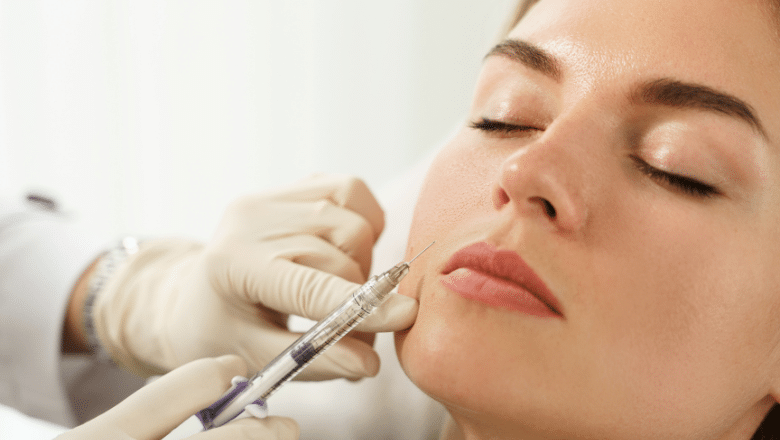
Yes — dermal fillers can treat acne scars, but the result depends on the scar type. Fillers work best on rolling and shallow boxcar scars, where lifting the floor of the scar from below produces a visible improvement. They are less effective for narrow, deep ice-pick scars, which respond better to TCA CROSS or laser resurfacing.
In most cases, the injection is preceded by subcision — a small needle is used to release the fibrous bands tethering the scar to the deeper tissue. Once the scar is freed, filler is placed underneath to keep it elevated.
For broader context on which acne scar responds to which treatment, see how to get rid of acne scars (hub) and best skin treatments for acne scars.
Can dermal fillers fix scars that are not from acne?
Yes, if the scar is sunken. The same principle applies to any atrophic (indented) scar: chickenpox marks, a dent left after a mole or cyst was removed, or a scar that has tethered down after surgery or an injury. Filler lifts the floor of the dip so it sits level with the skin around it. The strongest evidence is for rolling scars: in a 2022 split-face randomised trial in the Journal of Cosmetic Dermatology ↗, 13 of 14 people preferred the side treated with hyaluronic acid filler over the side injected with saline, with no serious side effects[1]. A 2023 evidence review in Archives of Dermatological Research ↗ lists hyaluronic acid filler among the better-supported treatments for atrophic scars, alongside lasers, chemical peels and microneedling[2].
Fillers do not help raised scars. A hypertrophic scar or keloid already has too much tissue and needs steroid injections, silicone, laser or, occasionally, surgery instead. A tight scar that pulls when you move often does better with subcision or scar revision than with filler alone, and a large hollow after an injury may suit fat transfer, which adds lasting volume. At Centre for Surgery, filler for scars is given by a surgeon once the scar has fully matured.
Should silicone be used for acne scars?
No. Liquid silicone has been used historically for permanent scar correction, but the risks are significant — granuloma formation, late-onset inflammation, migration, and disfigurement that can take multiple operations to correct. Once silicone is in the tissue, removing it is difficult and often leaves further scarring.
Hyaluronic acid fillers and laser-based treatments offer the same correction without the long-term risk. HA fillers can also be dissolved with hyaluronidase if the result needs adjusting — silicone offers no such reversibility.
How long do dermal fillers for acne scars last?
A single treatment with hyaluronic acid filler typically lasts 12 months or longer. The duration is better than the same filler injected for lip or cheek augmentation because the injection sites for scar correction are static — they don’t get repeatedly compressed by facial movement, which is what breaks filler down faster.
Repeat sessions tend to require less product than the first, because each round of subcision releases more of the underlying tethering and stimulates some collagen formation in the treated area. Many patients find their treatment intervals lengthen over time.
Dermal fillers vs Morpheus8 for acne scars

The two work differently and are often used together rather than as alternatives.
Morpheus8 combines microneedling with radiofrequency energy, stimulating collagen remodelling across a wide treatment area. It works best for diffuse, shallow scarring affecting larger zones — for example, scarring across both cheeks. Results build gradually over a series of three to four sessions.
Fillers work on individual, larger, well-defined scars. The improvement is visible immediately, which makes filler the better choice when only a few prominent scars are bothering the patient. For mixed scarring patterns — a few deep scars set against diffuse texture damage — combining Morpheus8 with targeted filler injection often produces the best result.
For dedicated discussion see does Morpheus8 help treat acne scars?
Frequently asked questions
Can hyaluronic acid remove acne scars?
Injected hyaluronic acid filler can lift rolling and shallow boxcar scars, often enough that they are hard to see, but it does not remove them. The scar tissue is still there and the filler slowly breaks down, so treatment is repeated. Skincare serums containing hyaluronic acid only hydrate the surface and do not change how deep a scar is. Deep, narrow ice-pick scars need a different approach.
What happens if you inject filler into scar tissue?
Scar tissue is firmer and less elastic than normal skin, so filler placed straight into it can sit unevenly or form a visible lump. That is why the scar is usually released first with subcision, a needle that cuts the fibrous bands tethering it down, and the filler is then placed in the softer layer underneath. If the result is uneven, hyaluronic acid filler can be dissolved with hyaluronidase.
What are the hardest scars to treat?
Keloids are usually the hardest. They grow beyond the original wound and often come back after removal, so treatment combines steroid injections with other measures, including surgery in selected cases. Deep ice-pick acne scars, wide stretched scars and burn scars that restrict movement are also difficult, and normally need several treatments combined rather than one.
References
- Siperstein R, Nestor E, Meran S, Grunebaum L. A split-face, blind, randomized placebo-controlled clinical trial investigating the efficacy and safety of hyaluronic acid filler for the correction of atrophic facial scars. Journal of Cosmetic Dermatology 2022;21(9):3768–3778. doi:10.1111/jocd.15153 ↗
- Kim EY, Wong JH, Hussain A, Khachemoune A. Evidence-based management of cutaneous scarring in dermatology part 2: atrophic acne scarring. Archives of Dermatological Research 2023;316(1):19. doi:10.1007/s00403-023-02737-9 ↗
Acne scar treatment at Centre for Surgery
Centre for Surgery is a CQC-regulated plastic surgery clinic at 95–97 Baker Street, Marylebone. Our acne scar removal service combines subcision, dermal fillers, Morpheus8 radiofrequency microneedling, TCA CROSS, fractional laser resurfacing, and other treatments calibrated to your specific scarring pattern. All performed by GMC-registered plastic surgeons. No GP referral required.
For related guides, see how to get rid of acne scars (hub), best skin treatments for acne scars, how laser acne scar removal works, TCA CROSS for acne scars, does Morpheus8 help treat acne scars?, and laser scar removal cost.
Centre for Surgery · CQC-regulated · GMC-registered surgeons · 95–97 Baker Street, Marylebone, London W1U 6RN · 020 7993 4849 · Book a consultation · Finance available, subject to status





