


In this guide15 sections
- Key Points
- Otoplasty Headband: How Long Do You Need to Wear It?
- What Is Otoplasty?
- Should You Wear an Otoplasty Headband Day and Night?
- How to Wear a Headband After Otoplasty
- What Size and Type of Otoplasty Headband Should You Choose?
- What Happens If You Stop Wearing the Headband Too Early?
- How to Sleep With an Otoplasty Headband
- Can You Exercise or Play Sport in an Otoplasty Headband?
- Otoplasty Headband for Children vs Adults
- When to Call Your Surgical Team About Your Headband
- Essential Tips for a Smooth Recovery After Otoplasty
- Frequently Asked Questions
- Otoplasty at Centre for Surgery
- References
Key Points
- How long to wear a headband after otoplasty: a common pattern is day and night for the first one to two weeks, then at night for several more weeks, often up to about six weeks in total. Follow the schedule you are given.
- The evidence for long bandaging is limited. In a 2006 randomised trial of 80 children, a head bandage worn for 24 hours gave the same ear position and satisfaction as one worn for 10 days[1].
- Comfort matters as much as fit. A headband should hold the ears gently against the head, never squash them. Pressure sores have been reported with an unsuitable garment[8].
- Stopping early does not guarantee a poor result, but about 5% of patients in a pooled review had recurrence or needed revision[6].
- Call your surgical team for worsening pain, a dark or cold-looking ear, discharge or fever.
If you are about to have, or have just had, otoplasty (ear pinning), the headband is probably the part of recovery you will think about most. It looks simple, yet people are often unsure how tight it should be, whether it is needed in the daytime, what happens if it slips off at night and when it can finally come off.
This guide covers how long an otoplasty headband is usually worn, what the research shows, how to wear it, sizing, sleep, sport, children versus adults and when to call your surgical team. It sits alongside our full otoplasty recovery timeline, which covers the other weeks of healing.
Otoplasty Headband: How Long Do You Need to Wear It?
There is no single national standard for how long to wear a headband after ear pinning, and surgeons’ protocols differ. What patients are most commonly asked to do is wear the headband continuously, day and night, for the first one to two weeks, and then wear it at night only for a further few weeks. Added together, that usually comes to somewhere between four and six weeks, and some protocols run to two months[5].
How Long Do I Need to Wear a Headband After Otoplasty?
A typical schedule looks like this, although your own instructions always take priority:
- First 24 to 48 hours: the surgical dressing or bandage applied in theatre stays in place until your first check.
- Weeks 1 to 2: the headband is worn all the time except when you are washing, and the ears are protected from knocks.
- Weeks 2 to 6: the headband is usually worn at night, and sometimes in the daytime when you are somewhere busy or likely to be bumped.
- After the final review: your surgeon tells you when the headband can stop, often alongside permission to return to sport.
“At least two weeks, day and night” is a common rule of thumb, but it has not been tested in trials. Healing rate, technique, the springiness of your cartilage and your age all influence what your surgeon recommends, so the instructions you leave with are the answer for you.
Is a Headband After Otoplasty Necessary? What the Research Says
The honest answer is that research supports a short period of firm bandaging and says little about how long a soft headband should be worn afterwards. Several studies have questioned the traditional 10-day head bandage:
- A 2006 randomised controlled trial in 80 children ↗ published in the Journal of Plastic, Reconstructive & Aesthetic Surgery compared a head bandage worn for 24 hours with the standard 10 days. Ear projection and satisfaction at 10 days and 2 months were not significantly different, and the authors concluded that a formal bandage was safe for just 24 hours[1].
- A prospective quasi-randomised study of 84 patients found no significant difference in complication rates or long-term satisfaction between people who had a head bandage and those who did not[2].
- An earlier audit of 52 patients who wore a head bandage for only 24 hours reported minor complications in two people, and noted that bandages are often displaced and uncomfortable, with itching, muffled hearing and odour among the complaints[3].
- Some units have moved away from bulky dressings altogether. A 2010 report described gluing the ear to the skin behind it, which may remove the need for a head bandage[10], and a small pilot study of 17 ears used light wire braces instead, noting that conventional bandages are cumbersome and often lost, although the long-term effect of bandaging remained unknown[11].
That is why you may hear very different advice from different clinics, and why the question is still being debated in the literature[4]. Two points are worth bearing in mind. First, those trials looked at the large head bandage applied at surgery, not at the soft headband many surgeons recommend for nights in the following weeks. Second, no trial has tested how long that later headband should be worn, so surgeons rely on experience and on the biology of healing: the cartilage has been reshaped and held with stitches, and it takes time for the new shape to settle. If your surgeon asks you to wear a headband, wear it as asked, and if you are unsure why, ask.
What Is Otoplasty?
Otoplasty, also called ear pinning or pinnaplasty, is surgery to reshape the ear cartilage and move the ear closer to the head. Through a small cut in the crease behind the ear, the surgeon creates or strengthens the natural fold and reduces extra depth in the central bowl, then holds the new shape with stitches. Our guide to otoplasty scars explains what to expect as they mature. More than 200 techniques have been described, and reviews have concluded that hybrid approaches combining stitches with cartilage scoring may have lower rates of recurrence, although good long-term randomised trials are still lacking[7].
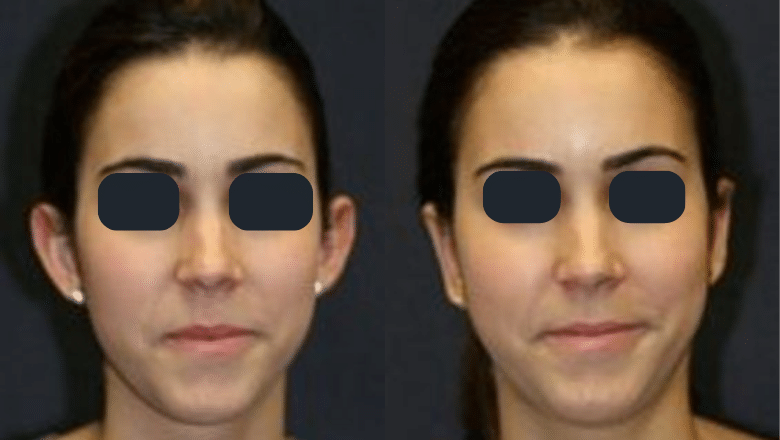
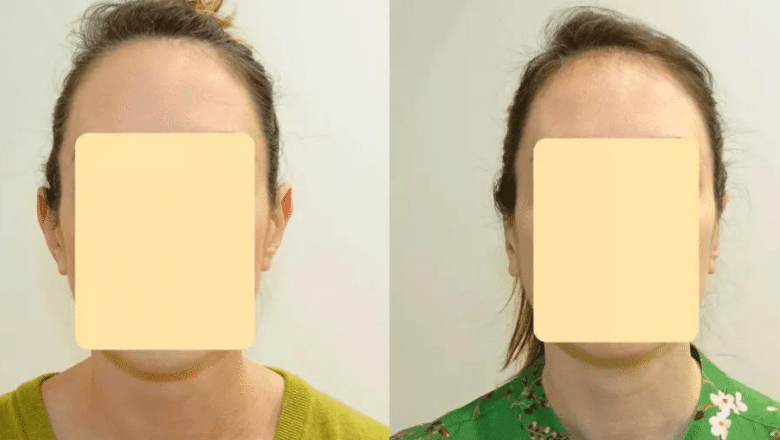
If you are still comparing ear shapes and wondering which one you have, our guide to the different types of ear shapes is a useful starting point, and you can see real otoplasty before and after photos from our patients.
Should You Wear an Otoplasty Headband Day and Night?
Most people are asked to wear the headband round the clock at first, and then to keep it for sleeping. The reasons differ between the two.
Wearing the headband during the day
In the first week or two the ears are swollen, tender and held by fresh stitches. A daytime headband stops hair, hats, collars or a resting hand bending them forward, shields them from knocks and gives light support while swelling settles. Daytime wear is usually relaxed first, although many people keep it on in crowds or around children and pets for longer.
Wearing an otoplasty headband at night
Night-time is the part most surgeons care about. While you sleep you cannot control your head position, and an ear folded forward under your own weight for hours can stress the repair. The band holds the ears flat so that turning over does not bend them, which is why it is usually the last part of the schedule to be dropped. Our separate guide to sleeping after otoplasty covers pillows, positions and what to do if you are a side sleeper.
How to Wear a Headband After Otoplasty
Wearing the headband correctly matters as much as the number of hours. A badly placed band can press on the wrong part of the ear, and one that has ridden up leaves the ears uncovered.
- Position: the band should sit across the middle of the ears so that the whole ear lies flat against the head, from the top of the ear to the lobe. It should not fold the top of the ear down or push the lobe out.
- Tension: firm enough that it does not slide, but loose enough that you can slip a finger underneath. An otoplasty headband that is too tight is not more protective. It is more likely to cause pain, swelling and skin damage.
- Check regularly: look in a mirror a few times a day and again on waking, to see whether the band has moved. In young children, a parent should check it.
- Keep it clean: have a spare band so one can be washed, and ask your team when you may remove the band to wash your hair.
How tight should an otoplasty headband be?
Snug, not squeezing. You should feel the ears held in place without throbbing, numbness, a burning sensation or a feeling of tight pulling over the front of the ear. Some mild pressure is normal in the first days. If the pain increases when the band is on and eases when it is off, loosen it and tell your team. This matters: in one case series of children who developed sloughs over the front edge of the ear’s fold under compression bandages, the authors stressed explaining the purpose of the band to parents and checking its position often[5].
What Size and Type of Otoplasty Headband Should You Choose?
The band should be wide enough to cover both ears completely and fit without being pulled tight. Measure around your head at the level where the band will sit, over the middle of the ears, and compare it with the manufacturer’s size chart. Children usually need a different size from adults.
- Width: wide enough to cover the whole ear from top to lobe, without folding the helix (the outer rim).
- Material: soft, breathable and gently elastic. Avoid thin or very stretchy bands that roll, and anything with seams or fastenings that could press on the incisions.
- Fastening: an adjustable band lets you change tension as swelling goes down.
Many people use a plain, wide, soft sports headband, and some are given a purpose-made band by their clinic. Whichever you use, check with your surgical team that it is suitable. A 2026 case report described a stage 4 pressure ulcer over the antihelix in a 7-year-old girl who went home with a compression garment that was not the one recommended, and the authors pointed out that the benefit of postoperative compression after otoplasty has not been demonstrated in the literature, so the choice of device and the monitoring of it deserve care[8].
Where to Buy an Otoplasty Recovery Headband
You can ask your surgical team whether they supply a recovery headband or recommend one, which avoids guesswork about size and material. Otherwise, specialist medical suppliers and high-street sports shops sell wide, soft bands. Buy it before surgery so it is ready when you get home, and only use padding or foam if your surgeon has told you to.
What Happens If You Stop Wearing the Headband Too Early?
Missing the headband for a night will not necessarily undo your result. The ears are held mainly by the internal stitches, and the headband protects them while the tissues heal around those stitches. Nothing in the research shows exactly how much a day or two of missed wear matters.
Even so, there are good reasons to follow the plan:
- Knocks and folds: in the early weeks an ear that is pulled or folded forward can loosen the repair or bleed under the skin.
- Recurrence: a pooled review of 28 studies and 3,493 patients, published in 2017, found revision surgery or recurrence in about 5% of patients (95% confidence interval 2.9 to 7.7%), haematoma or bleeding in 2.5% and infection in 0.8%[6]. The review did not separate out the effect of the headband, so it cannot tell you how many of those were avoidable.
Some drift is normal. In a comparison of two techniques, the distance between the ear and the head increased gradually over the first year in both groups, which is one reason a small amount of movement as cartilage settles is not unusual[9]. Our guide to whether your ears will go back after otoplasty explains the causes of recurrence in more detail, and revision otoplasty is the option if an ear does move out.
If you stop early, tell your surgical team, who can check how the ears are healing and advise whether to resume the band.
How to Sleep With an Otoplasty Headband
Sleep is where most people struggle. Lie on your back with your head slightly raised on two pillows if you can, which reduces swelling and keeps pressure off the ears. If you usually sleep on your side, a travel pillow or a pillow with a gap for the ear can help, and some people find a ring-shaped support useful. The headband should stay in place as you sleep, and you should check it on waking in case it has slipped. If it keeps coming off, do not tighten it; try a wider band or ask your team for advice.
Can You Exercise or Play Sport in an Otoplasty Headband?
Not at first. Most surgeons ask patients to avoid anything strenuous for the first couple of weeks, and contact sports, swimming and anything risking a blow to the head for longer, depending on the surgeon. Walking is usually fine from the start, and a sports headband is not a substitute for waiting until you are cleared. Our otoplasty recovery guide sets out a typical activity timeline.
Headgear is a separate question. Helmets and swimming caps can press the ears forward, so check with your surgeon before returning to cycling, climbing, rugby or swimming. Earrings and glasses also put pressure on the ears: glasses can be worn once your surgeon agrees, and if you are thinking about earlobe piercings, our guides to earlobe repair and to whether you can repair and repierce earlobes in the same procedure explain the usual waiting times.
Otoplasty Headband for Children vs Adults
Otoplasty is performed in children, teenagers and adults, and the headband is managed a little differently in each.
Children
Young children cannot always say when a band is too tight, and may pull it off, so a parent should check the position and skin regularly. Pressure sores in children have been reported, which is why the band should be snug, not tight, and why the front edge of the ear fold is worth checking each time you adjust it[5][8].
Teenagers and adults
Adults and older teenagers can usually manage the band themselves and report problems earlier, though they may worry about how it looks at work or school. A wide neutral band and planning the early weeks around time off help. The length of time the band is worn is set by your surgeon, not by your age alone. If you are an adult considering surgery, our otoplasty service page explains what to expect from a consultation.
When to Call Your Surgical Team About Your Headband
Mild soreness, itching and a feeling of tightness are all common. Contact your surgical team promptly if you notice:
- pain that is getting worse rather than better, or throbbing pain in one ear
- an ear that looks swollen, dark, blue or very pale, or that feels cold
- a sore, blister or broken skin where the band rests, especially at the front edge of the fold
- bleeding that soaks through the dressing, or a sudden swelling behind the ear
- discharge, a bad smell, spreading redness or a temperature
- a headband that no longer fits, or an ear that has clearly moved forward
If you cannot reach your team and are worried about severe pain, heavy bleeding or infection, seek urgent medical advice.
Essential Tips for a Smooth Recovery After Otoplasty
Recovering from otoplasty involves more than wearing a headband. A few simple habits make healing easier:
- Avoid pressure and trauma: be careful with hair brushing, pulling tops over your head, and resting your head on a hand or a phone.
- Follow your discharge instructions: wound care, medication and when to wash your hair differ between clinics, and your instructions take priority over any general guide.
- Be patient: swelling can hide the final shape for weeks, and ears are rarely perfectly symmetrical. They also change over a lifetime, as our article on why ears keep growing explains.
- Keep your follow-up appointments: this is when stitches and dressings are checked and the headband plan is adjusted.
Frequently Asked Questions
How long do you have to wear a headband after otoplasty?
A common schedule is day and night for the first one to two weeks, then at night for several more weeks, often up to about six weeks in total, although some surgeons advise longer or shorter periods. Your surgeon will tell you what suits your technique and healing.
Do you have to wear a headband after otoplasty?
Most surgeons ask for one, but the evidence is limited. Trials suggest a formal head bandage is not needed beyond about 24 hours[1][2]; the soft night-time headband is mainly a precaution.
Why do you wear a headband after otoplasty?
It keeps the ears against the head, protects them from pulls and knocks, gives light support while swelling settles and stops the ears being bent forward in your sleep.
Can you wear an otoplasty headband at night only?
Many surgeons move to night-only wear after the first one to two weeks. Do not switch earlier than advised, because your ears are most vulnerable in the first days.
How tight should the otoplasty headband be?
Snug enough to stay put, loose enough to slide a finger underneath. If the ears throb, go numb, look dark, or the skin is sore under the band, loosen it and contact your team, because tight bands can damage the skin[8].
What kind of headband should you wear after otoplasty?
A wide, soft, breathable band that covers the whole ear without folding it, in a size that fits without needing to be pulled tight. Ask your surgical team whether they supply one or have a preference.
What happens if I take the headband off too early after otoplasty?
A short lapse does not automatically spoil the result, because the stitches hold the shape, but a knock or fold in the early weeks can disturb the repair. Tell your team and follow their advice.
Otoplasty at Centre for Surgery
If you are considering ear pinning and want to understand the recovery before you decide, a consultation will cover your ear shape, the technique that suits you, the headband schedule your surgeon uses and the aftercare you will be given. Find out more about otoplasty at Centre for Surgery.
Phone: 020 7993 4849 | Address: 95–97 Baker Street, Marylebone, London W1U 6RN
Contact us to arrange a consultation
References
- Ramkumar S, Narayanan V, Laing JHE. Twenty-four hours or 10 days? A prospective randomised controlled trial in children comparing head bandages following pinnaplasty. Journal of Plastic, Reconstructive & Aesthetic Surgery 2006;59(9):969–974. doi:10.1016/j.bjps.2006.01.011 ↗
- Orabi AA, Chintamani BH, Timms MS. Is a head bandage useful after otoplasty? A quasi-randomized controlled study of complications and patient satisfaction. Ear, Nose & Throat Journal 2009;88(10):E17–E22. PubMed 19826986 ↗
- Bartley J. How long should ears be bandaged after otoplasty? Journal of Laryngology & Otology 1998;112(6):531–532. doi:10.1017/s0022215100141015 ↗
- Rauso R, Califano L, Iorio B, Rugge L, Chirico F, Tartaro G. Head bandage after otoplasty: how long should it be worn? Journal of Plastic, Reconstructive & Aesthetic Surgery 2019;72(7):1219–1243. doi:10.1016/j.bjps.2019.02.010 ↗
- González-Álvarez G, Fernández-Rico L, Pisón-Chacón J, et al. Scarring after Mustardé otoplasty: importance of cures and post-operative follow-up of the patients. Cirugía Pediátrica 2010;23(3):193–195. PubMed 23155669 ↗
- Sadhra SS, Motahariasl S, Hardwicke JT. Complications after prominent ear correction: a systematic review of the literature. Journal of Plastic, Reconstructive & Aesthetic Surgery 2017;70(8):1083–1090. doi:10.1016/j.bjps.2017.05.033 ↗
- Thomson H, Gosden J, Mandal A. Otoplasty for prominent ear: a systematic review of surgical techniques. JPRAS Open 2026;49:221–233. doi:10.1016/j.jpra.2026.02.013 ↗
- Goron R, Balkoula A, Pujol P, Leclere F, Alexandre J. Pressure ulcer following compression otoplasty garment: a rare but severe case report. Annales de Chirurgie Plastique Esthétique 2026;71(5):524–528. doi:10.1016/j.anplas.2026.01.008 ↗
- Ozturan O, Dogan R, Eren SB, Aksoy F, Veyseller B. Cartilage-sparing techniques versus percutaneous adjustable closed otoplasty for prominent ear deformity. Journal of Craniofacial Surgery 2014;25(3):752–757. doi:10.1097/SCS.0000000000000828 ↗
- Patel AJK, Price RD. The use of tissue glue in prominent ear correction surgery. Aesthetic Plastic Surgery 2011;35(2):245–247. doi:10.1007/s00266-010-9634-3 ↗
- Jemec BIE, Jemec GBE. Braces for postoperative bandage after otoplasty. Aesthetic Plastic Surgery 2002;26(2):156–158. doi:10.1007/s00266-002-1481-4 ↗