

In this guide18 sections
- Key Points
- What Is Septorhinoplasty?
- Rhinoplasty vs Septoplasty
- What is Functional Rhinoplasty?
- Combining Functional and Aesthetic Nasal Surgery: Understanding the Benefits of Septorhinoplasty
- How Is Septorhinoplasty Done?
- Can Septorhinoplasty Change the Shape of Your Nose?
- Who Makes a Good Candidate for Combined Rhinoplasty and Septoplasty?
- Is Septorhinoplasty Worth It? What the Evidence Shows
- Who Can Do Both Operations at the Same Time?
- Recovery after Rhinoplasty and Septoplasty
- What Are the Risks of Septorhinoplasty?
- How Much Does Septorhinoplasty Cost?
- Does the NHS Cover Septorhinoplasty?
- Why Choose Centre for Surgery for Your Nasal Surgery?
- Frequently Asked Questions
- Septorhinoplasty in London
- References
Key Points
- Can rhinoplasty and septoplasty be done together? Yes. The combined operation is called septorhinoplasty. It straightens the septum inside the nose to help breathing and reshapes the outside of the nose in a single operation, under one anaesthetic, with one recovery.
- It suits people who have both concerns: a blocked nose caused by a deviated septum and a nose shape they would like to change.
- The research on breathing is encouraging. In a 567-patient cohort, nasal obstruction scores improved and stayed improved for at least 24 months after functional septorhinoplasty[1], and a 306-patient study found that obstruction, appearance and quality-of-life scores all improved at six months[2].
- Turbinate reduction is often added when swollen turbinates are part of the blockage, which may improve the feeling of obstruction further but carries its own risks[3].
- Recovery: expect a splint for about a week, bruising and swelling for the first couple of weeks, and a final result that continues to evolve over about 12 months.
- The cosmetic part is self-funded. The NHS does not fund nose reshaping for appearance, although it may fund the septum part where your symptoms meet local criteria.
If you have a blocked nose and also want to change the shape of your nose, you do not have to choose between operations. A combined procedure known as septorhinoplasty treats both in one sitting, which is why so many people searching for septoplasty and rhinoplasty together end up asking about it. A deviated septum is corrected for function, and the outer nose is reshaped for appearance.
At Centre for Surgery, nose reshaping surgery is carried out by GMC-registered surgeons with ENT (ear, nose and throat) training, and the assessment looks at breathing and appearance together. This guide explains what septorhinoplasty involves, who it suits, how it is done, what the research says about results and risks, and how recovery and funding work. If you are still deciding between the operations, our guide to whether you should get rhinoplasty or septoplasty may help first.
What Is Septorhinoplasty?
Septorhinoplasty, sometimes written septo rhinoplasty, is surgery on the septum and on the shape of the nose in the same operation. The septum is the wall of cartilage and bone that divides the two nostrils. When it is bent, one airway is narrower than the other. The surgeon straightens the septum and then reshapes the bone, cartilage and tip that make up the outside of the nose. It is the operation most people mean when they ask whether a nose job can also fix breathing.
Rhinoplasty vs Septoplasty
Rhinoplasty
Rhinoplasty involves carefully adjusting the nasal bone, cartilage, and soft tissues so that a patient’s facial features appear more balanced and aesthetically pleasing. Many people who turn to rhinoplasty do so because they feel their nose draws unwanted attention or doesn’t harmonise well with the rest of their facial features. Rhinoplasty can address a wide range of aesthetic concerns, including reducing the size of the nose, correcting a nasal hump, refining the nasal tip, or improving the nose’s overall shape and proportion.
Septoplasty
Septoplasty concentrates primarily on correcting the nasal septum — the vital strip of cartilage and bone that divides the nostrils. When the septum is deviated, meaning it’s shifted to one side rather than positioned centrally, it can cause breathing difficulties that significantly affect daily life. Symptoms of a deviated septum include chronic nasal congestion, frequent nosebleeds, facial pain, or noisy breathing during sleep. Septoplasty aims to straighten the septum, thereby improving the airflow through the nasal passages and alleviating these symptoms. Our guide to the pros and cons of deviated septum surgery covers it in more depth.
Turbinate Reduction

Turbinate reduction often goes hand-in-hand with septoplasty, as both procedures target structural issues within the nose that may be contributing to breathing difficulties. The turbinates are bony structures inside the nose covered with mucous membranes. They help warm, humidify, and filter the air we breathe. However, when turbinates become enlarged — often due to allergies, infections, or environmental irritants — they can obstruct airflow and worsen nasal congestion. Turbinate reduction surgery aims to reduce the size of these enlarged turbinates, thereby improving nasal airflow.
The evidence on adding it is mixed but useful. A 2022 systematic review of randomised trials in the journal Rhinology ↗ found that septoplasty with turbinate reduction gave better subjective relief of obstruction than septoplasty alone, although complications were more frequent when the turbinates were treated[3]. In a retrospective review of 2,168 septoplasty patients in Aberdeen, revision surgery was needed in 2.2% of those who had turbinate reduction at the same time and 5.1% of those who did not, although the design cannot prove cause and effect[4]. Our guides to the pros and cons of turbinate reduction with septoplasty and to breathing better after septoplasty and turbinate reduction weigh up the trade-off.
What is Functional Rhinoplasty?
Functional rhinoplasty is a surgical solution designed to address structural abnormalities and medical conditions affecting a person’s ability to breathe easily. It goes beyond the realms of cosmetic surgery, targeting specific structural issues that impede normal nasal function. Although its primary objective is to enhance nasal performance, functional rhinoplasty can also have aesthetic benefits.
The procedure can involve adjusting the nasal septum to correct a deviated septum, reducing the size of the turbinates to improve airflow, supporting a weak nasal valve, or restructuring the outer part of the nose to correct structural deformities that may be obstructing the nasal passages. Patients seeking a more balanced nasal shape may discover that addressing functional defects in tandem with the external adjustment brings about a noticeable improvement, both in terms of breathing efficiency and overall facial aesthetics.
Combining Functional and Aesthetic Nasal Surgery: Understanding the Benefits of Septorhinoplasty

Septorhinoplasty is an integrated approach that combines internal structural corrections with external cosmetic enhancements in a single surgical session. This combined procedure offers a holistic solution for patients who are looking to address both functional and aesthetic nasal concerns. Combining both procedures into a single operation has several practical advantages:
- One surgeon plans the whole nose. The surgeon can consider the internal structure and the external appearance together when making decisions.
- One recovery period. You recover once rather than twice, which reduces the time away from work and daily life.
- One anaesthetic. You avoid a second anaesthetic and a second set of facility and theatre costs.
- Septal cartilage can be reused. Straightening the septum can free up cartilage that the surgeon may be able to use as grafts to support or reshape the nose. If the septum is operated on first and the nose later, that cartilage may already have been used or removed.
The aim is a nose that works and looks right together, and results vary from person to person. A rhinoplasty planned without checking the airway can leave a nose that looks different but still feels blocked, which is why the internal examination matters as much as the external one. For a comparison of how the operations differ, see our guide to choosing between rhinoplasty and septoplasty.
How Is Septorhinoplasty Done?
Septorhinoplasty is usually carried out as a day-case operation under TIVA (total intravenous anaesthesia), and our guide to anaesthesia for cosmetic surgery explains what TIVA involves. It typically takes around two to three hours, although the time varies with how much work is needed. In outline:
- Access. The surgeon reaches the nose either through the nostrils only (closed approach) or with a small additional incision across the columella, the strip of skin between the nostrils (open approach). Our guide to the difference between open and closed rhinoplasty explains how the choice is made.
- Septum. The lining is lifted off the septum, and the bent cartilage and bone are straightened, repositioned or trimmed. Enough support is left in place to keep the nose stable.
- Turbinates, if needed. Enlarged turbinates may be reduced at the same time.
- Reshaping. The bridge, hump, tip or width of the nose is reshaped, and grafts may be used for support. Cartilage often comes from the septum.
- Closure and support. The incisions are closed and the nose is supported with an external splint, with soft internal splints used in some cases.
Surgeons also take steps to limit bleeding in the operating theatre. A 2026 meta-analysis of 16 randomised trials in rhinoplasty and septorhinoplasty found that tranexamic acid, steroids and head-up positioning reduced intraoperative bleeding, though the trials were small and varied[5].
Can Septorhinoplasty Change the Shape of Your Nose?
Yes. The septum part of the operation is for breathing, but the rhinoplasty part can change the size, profile, tip and width of the nose. If your main concern is a bend rather than a bump, our guide to fixing a crooked nose explains how crookedness is corrected, and you can look through our rhinoplasty before and after photos to see examples.


Who Makes a Good Candidate for Combined Rhinoplasty and Septoplasty?
The ideal candidate for a combined rhinoplasty and septoplasty (septorhinoplasty) procedure is someone who has both aesthetic concerns about their nose and functional issues related to nasal breathing. Common indicators that you could benefit from this combined approach include:
- a deviated septum causing breathing difficulties that haven’t improved with non-surgical treatments such as steroid sprays or allergy treatment
- dissatisfaction with the appearance of your nose, whether it’s the overall size, shape, or symmetry
- a crooked nose due to injury (see our guide to a broken nose) or hereditary factors that is affecting both appearance and breathing
- chronic nasal congestion that is hampering daily life
Prospective patients should be in good general health, non-smokers or willing to stop smoking well before the procedure, and have realistic expectations about the outcomes of the surgery. Expectations matter: a 2024 questionnaire study of 86 septorhinoplasty patients found that people with certain psychological traits, such as alexithymia, scored their results lower on the Rhinoplasty Outcome Evaluation, which is one reason a good consultation explores motivation and expectations as well as anatomy[6]. At Centre for Surgery, our team assesses each patient individually before recommending this combined procedure, and our guide to realistic rhinoplasty expectations is a useful read beforehand.
Is Septorhinoplasty Worth It? What the Evidence Shows
The question researchers have studied most is whether the breathing improves. In a prospective cohort of 567 patients published in The Laryngoscope in 2019 ↗, functional septorhinoplasty, with or without turbinate reduction, produced a significant fall in Nasal Obstruction Symptom Evaluation (NOSE) scores and a rise in general health-related quality of life that was still present at 24 months[1]. The NOSE scale is a short questionnaire that asks how much nasal blockage bothers you, with higher scores meaning worse symptoms.
The appearance side is measured too. A 2025 prospective study of 306 patients having open septorhinoplasty ↗ gave patients the NOSE, Rhinoplasty Outcome Evaluation (ROE) and Rhinoplasty Health Inventory and Nasal Outcomes (RHINO) questionnaires before surgery and six months afterwards, and all three sets of scores improved significantly[2]. The ROE questionnaire asks about how you feel about the appearance and function of your nose. In a smaller case series of 90 patients who had septorhinoplasty with alar rim grafts, a technique to support the nostril edge, the average NOSE score fell from 70.4 before surgery to 25.1 afterwards[7].
For the septum on its own, the evidence comes from a randomised trial. In the 2019 Lancet trial of 203 adults ↗, septoplasty, with or without turbinate surgery, improved quality of life more than non-surgical management at 12 months, with the benefit still present at 24 months[8]. Snoring-related quality of life also improved after functional nasal surgery in patients who snored, in a cohort of 625 patients[9], and a systematic review found that lung function measures improved after surgery for a deviated septum, although the authors rated the evidence as low because the studies varied so much[10].
These are averages, and most of the studies have no untreated comparison group. Not everyone improves, and the benefit is greatest when your symptoms genuinely come from the septum, turbinates or nasal valve. This is why the examination before surgery is so important.
Who Can Do Both Operations at the Same Time?
Both operations are performed by a surgeon with training in nasal surgery, and in the UK these surgeons are usually ENT or plastic surgeons who are registered with the GMC. At Centre for Surgery, the surgeon who assesses you at consultation is the surgeon who performs your operation. Not every case should be combined: if the septum is straight and the only concern is shape, or the other way around, a single operation is the sensible plan. Your surgeon will tell you honestly which applies to you.
Recovery after Rhinoplasty and Septoplasty
Septoplasty alone usually represents the shortest road to recovery — many people find themselves comfortable enough to return to their everyday work routine after around five days. Rhinoplasty tends to be more involved, so combining the two adds some complexity, though also means a single recovery period rather than two.
Under normal circumstances, patients can generally return home on the same day as surgery. There will be swelling and bruising in the days that follow, and the nose will be protected with a splint for the first week. Planning to stay away from regular work for about two weeks is often a wise precaution.
Gentle nasal saline rinses can help keep the nasal passages clear as they heal, and patients should avoid blowing their nose for several weeks. Strenuous activity should be avoided for at least six weeks post-surgery, and contact sports for three months. A significant portion of the swelling subsides by the three-month point, with final results continuing to evolve over a full year as residual swelling resolves and the tissues settle.
Your nose may feel more blocked at first, not less, because of swelling inside. Our guides to rhinoplasty recovery and rhinoplasty swelling go week by week, and if you still feel blocked once the swelling has settled, read about a blocked nose after rhinoplasty.
What Are the Risks of Septorhinoplasty?
Septorhinoplasty carries the general risks of any operation under anaesthetic, such as bleeding, infection and a reaction to the anaesthetic, plus risks specific to the nose. These include asymmetry or a shape you are not happy with, which may need revision surgery, temporary numbness of the tip, persistent congestion, and a small hole in the septum called a perforation, which is more likely in smokers. Our guide to rhinoplasty risks separates what is expected from what is uncommon and what is rare.
For the septum part, a study of 5,639 septoplasty patients found that 3.4% had any complication, with excessive bleeding the most frequent, and that septal haematoma, a reduced sense of smell, infection and adhesions were more common when turbinate surgery was combined with septoplasty[11]. Sense of smell is worth a specific mention. A 2026 systematic review and meta-analysis of 102 studies ↗ covering 16,072 patients having septoplasty, septorhinoplasty or turbinate surgery found surgery-induced loss of smell in 2.7% of cases, although overall scores for smell improved in the group as a whole[12].
Stopping smoking and nicotine at least four weeks before and four weeks after surgery lowers the risk of poor healing and perforation. Your surgeon will go through the risks that apply to you before you consent, and we recommend a two-week cooling-off period after consent.
How Much Does Septorhinoplasty Cost?
The cost of a combined rhinoplasty and septoplasty varies depending on the complexity of the work required, the experience of the surgeon, the anaesthetic and the specific techniques employed, including whether turbinate reduction is added. Having both done in one operation may avoid paying for a second anaesthetic and theatre session, compared with two separate operations. For detailed pricing information and a personalised quote, we recommend booking a consultation. Visit our rhinoplasty cost guide for a general overview of what affects it.
Does the NHS Cover Septorhinoplasty?
Not the cosmetic part. The NHS does not fund nose reshaping for appearance, so the rhinoplasty element is self-funded. It may offer septoplasty where your symptoms and examination meet local referral criteria, although waiting times vary and some commissioners restrict access, so ask your GP what applies where you live. Our guide to getting a nose job on the NHS explains the rules. Some private medical insurers may cover the functional part of a septorhinoplasty, but the cosmetic part is almost never covered, so check your policy and get written confirmation before you book.
Why Choose Centre for Surgery for Your Nasal Surgery?
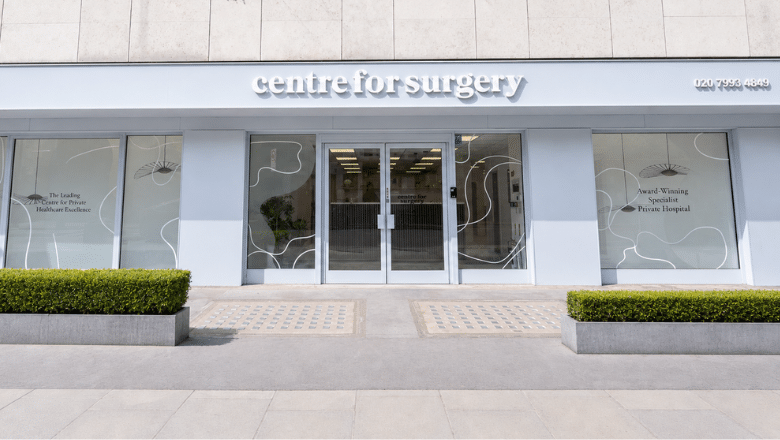
Centre for Surgery is a CQC-regulated private hospital on Baker Street, and nose surgery is carried out by GMC-registered surgeons with experience of both ENT and plastic surgery procedures. The consultation includes an examination inside both nostrils, usually with an endoscope, to find out whether the septum, the turbinates or the nasal valve is responsible for any blockage, and a discussion of the outside shape of your nose. You will hear an honest view of what is realistic and what the risks are, and you can read more about our team on the About Us page. If an earlier nose operation has not given the result you hoped for, revision rhinoplasty is a separate assessment.
Call us on 020 7993 4849, email us at contact@centreforsurgery.com, or visit our Contact Us page to get started.
Frequently Asked Questions
Can septorhinoplasty change nose shape?
Yes. The septum correction improves breathing, while the rhinoplasty part can reshape the bridge, tip and width of the nose. Your surgeon will discuss which changes are realistic for your anatomy.
How is septorhinoplasty done?
The surgeon works through the nostrils, or through the nostrils plus a small incision across the columella in the open approach. The septum is straightened, turbinates are reduced if needed, and the outer nose is reshaped. A splint supports the nose afterwards. It is usually a day-case operation under TIVA.
How long does a septorhinoplasty take?
Usually around two to three hours, depending on how much work is needed on the septum, turbinates and the outer shape of the nose.
Is septorhinoplasty painful?
Most people describe pressure, congestion and a heavy, blocked feeling rather than sharp pain, and simple painkillers are often enough. Swelling and bruising are most noticeable in the first week or two, and your surgeon will prescribe pain relief to suit you.
How risky is septorhinoplasty?
It is a well-established operation, but it carries risks of bleeding, infection, asymmetry, persistent blockage, a change in the sense of smell and, rarely, a septal perforation. One large study of septoplasty found a complication rate of 3.4%. Your surgeon will go through the risks that apply to you.
Does the NHS cover septorhinoplasty?
Not the cosmetic part. The NHS may fund septoplasty where your symptoms meet local criteria, but it does not fund nose reshaping for appearance. Some private insurers cover the functional part only.
What is the best age to fix a deviated septum?
There is no single best age. Surgeons generally wait until the nose has finished growing, which is usually in the mid to late teens, and there is no fixed upper age limit if you are fit for surgery and anaesthetic. The deciding factor is how much the deviation is affecting your breathing.
Do 80% of people have a deviated septum?
A slight bend in the septum is very common, and few noses are perfectly straight. It only needs surgery when it causes symptoms such as persistent blockage, nosebleeds or noisy breathing at night and non-surgical treatment has not helped.
What is the recovery time for septorhinoplasty?
Most people return to desk work after about one to two weeks. The splint comes off at about one week, strenuous exercise waits for at least six weeks, and the nose continues to settle for up to a year.
Septorhinoplasty in London
If you are weighing up septoplasty and rhinoplasty together, a consultation will show whether breathing, shape or both need to change. Find out more about septorhinoplasty, septoplasty and rhinoplasty at Centre for Surgery.
Phone: 020 7993 4849 | Address: 95–97 Baker Street, Marylebone, London W1U 6RN
Contact us to schedule a consultation
References
- Yamasaki A, Levesque PA, Bleier BS, et al. Improvement in nasal obstruction and quality of life after septorhinoplasty and turbinate surgery. Laryngoscope 2019;129(7):1554–1560. doi:10.1002/lary.27859 ↗
- Ozturk Yilmaz G, Yilmaz G. Evaluation of functional and aesthetic outcomes following open technique septorhinoplasty: assessing the utility and correlation of the RHINO, ROE and NOSE questionnaires. Acta Oto-Laryngologica 2025;145(5):443–449. doi:10.1080/00016489.2025.2477210 ↗
- Bin Lajdam G, Alaryani K, Ghaddaf AA, et al. Septoplasty versus septoplasty with turbinate reduction for nasal obstruction due to deviated nasal septum: a systematic review and meta-analysis. Rhinology 2022;60(6):411–420. doi:10.4193/Rhin22.157 ↗
- Karlsson TR, Shakeel M, Supriya M, Ram B, Ah-See KW. Septoplasty with concomitant inferior turbinate reduction reduces the need for revision procedure. Rhinology 2015;53(1):59–65. doi:10.4193/Rhino12.059 ↗
- Zamani MR, Imani B, Abbasi R, Karimi A, Moslehi S. Effectiveness of bleeding control methods in rhinoplasty: a systematic review and meta-analysis. Archives of Plastic Surgery 2026;53(1):3–14. doi:10.1055/a-2706-1208 ↗
- Yagci T, Gunay Yagci Z. Investigation of body perception, alexithymic characteristics, and self-esteem in patients who underwent septorhinoplasty. Ear, Nose & Throat Journal 2024;103(3 suppl):161S–167S. doi:10.1177/01455613241292734 ↗
- Calloway HE, Heilbronn CM, Gu JT, Pham TT, Barnes CH, Wong BJ. Functional outcomes, quantitative morphometry, and aesthetic analysis of articulated alar rim grafts in septorhinoplasty. JAMA Facial Plastic Surgery 2019;21(6):558–565. doi:10.1001/jamafacial.2019.1130 ↗
- van Egmond MMHT, Rovers MM, Hannink G, Hendriks CTM, van Heerbeek N. Septoplasty with or without concurrent turbinate surgery versus non-surgical management for nasal obstruction in adults with a deviated septum: a pragmatic, randomised controlled trial. Lancet 2019;394(10195):314–321. doi:10.1016/S0140-6736(19)30354-X ↗
- Yamasaki A, Levesque PA, Lindsay RW. Improvement in snoring-related quality-of-life outcomes after functional nasal surgery. Facial Plastic Surgery & Aesthetic Medicine 2020;22(1):25–35. doi:10.1089/fpsam.2019.29002.lin ↗
- Baharmand I, Sheikh-Oleslami S, Pascual Rodríguez A, Hernaiz-Leonardo JC, Alim BM, Javer AR. The effects of nasal surgery on pulmonary function: a systematic review and meta-analysis. Laryngoscope 2023;133(11):2837–2845. doi:10.1002/lary.30651 ↗
- Dąbrowska-Bień J, Skarżyński PH, Gwizdalska I, et al. Complications in septoplasty based on a large group of 5639 patients. European Archives of Oto-Rhino-Laryngology 2018;275(7):1789–1794. doi:10.1007/s00405-018-4990-8 ↗
- Favreau A, Favier V, Carsuzaa F, et al. Olfactory sequelae of nasal surgeries: a systematic review with meta-analysis. Journal of Otolaryngology – Head & Neck Surgery 2026;55. doi:10.1177/19160216261416371 ↗