

In this guide11 sections
- Key Points
- What Are FaceTite and AccuTite?
- FaceTite vs AccuTite: Which Areas Do They Treat?
- Who Is a Good Candidate for FaceTite or AccuTite?
- Does FaceTite Work? The Evidence
- FaceTite and AccuTite Risks and Side Effects
- FaceTite and AccuTite Recovery
- FaceTite vs Morpheus8 vs a Facelift
- Frequently Asked Questions About FaceTite and AccuTite
- References
- FaceTite and AccuTite at Centre for Surgery
Key Points
- FaceTite and AccuTite are the same technology in two sizes. Both use radiofrequency energy delivered under the skin to melt small amounts of fat and tighten the skin from inside (radiofrequency-assisted lipolysis).
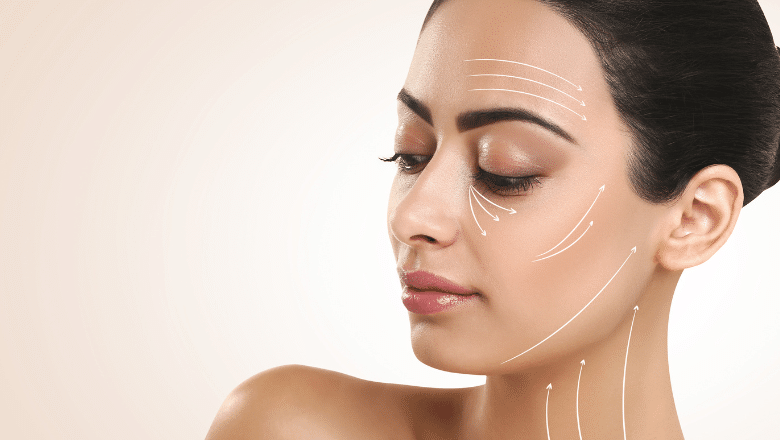
- FaceTite treats larger areas: the jowls, jawline, under the chin and the neck.
- AccuTite treats small, delicate areas: under the eyes, around the mouth, the brow, and small pockets on the body such as above the knees or around the bra line.
- Both are minimally invasive, done through 2 to 3 mm entry points, usually under local anaesthetic with sedation as a day case.
- They suit mild to moderate laxity. In one study, FaceTite with neck liposuction shortened the under-chin contour by an average of 23 mm at six months. Heavy, hanging skin still needs surgery.
- Risks are uncommon but real: swelling, firmness, small burns at entry points and, rarely, temporary nerve weakness.
FaceTite and AccuTite are radiofrequency skin-tightening treatments from the same family of devices. They sit between non-surgical treatments such as Morpheus8 and surgery such as a mini facelift or neck lift. This guide explains how they work, which areas each treats, who is a good candidate, the evidence, the risks and recovery.
What Are FaceTite and AccuTite?
Both treatments use radiofrequency-assisted lipolysis (RFAL). A thin probe is passed under the skin through a tiny entry point, with a matching electrode moving on the skin surface above it. Radiofrequency energy flows between the two, heating the fat and the fibrous network beneath the skin to a controlled temperature, while sensors switch the energy off if the skin surface becomes too hot.
The heat does two things:
- Melts small amounts of fat, which is removed with fine liposuction or absorbed by the body.
- Contracts the connective tissue under the skin, so the skin tightens and continues to firm as new collagen forms over the following months.
The difference between the two is size. FaceTite uses a larger probe suited to the jawline and neck; AccuTite uses a much smaller probe for areas where precision matters, such as the lower eyelids.
FaceTite vs AccuTite: Which Areas Do They Treat?
FaceTite
- Jowls and a blurred jawline.
- Fullness and loose skin under the chin (double chin).
- Mild neck laxity.
- Lower cheeks.
AccuTite
- Lower eyelid and under-eye laxity.
- The brow and upper eyelid area.
- Lines around the mouth and marionette lines.
- Small body areas, such as above the knees, the inner arms or bra-line fat.
The two are often used together in one session: FaceTite along the jaw and neck, AccuTite around the eyes or mouth.
Who Is a Good Candidate for FaceTite or AccuTite?
The best results are in people with:
- Mild to moderate skin laxity, often in their late thirties to fifties.
- Small to moderate fat deposits under the chin or along the jaw.
- Reasonable skin quality and elasticity.
- A wish to avoid the longer scars and recovery of a facelift.
They are less suitable if you have heavy, hanging skin on the neck or deep jowls, prominent vertical neck bands, or very thin, sun-damaged skin. In those cases a neck lift or facelift will usually give a much better and longer-lasting result. Your surgeon will tell you honestly which is likely to work for you.
If fullness under the chin is mainly fat with good skin, chin and neck liposuction alone may be enough; see treatments for a double chin.
Does FaceTite Work? The Evidence
Studies are mostly case series from individual surgeons, so the evidence is encouraging rather than definitive:
- In a 2024 prospective study of 80 patients in Aesthetic Plastic Surgery ↗, neck liposuction combined with FaceTite reduced the length of the under-chin contour by an average of 23 mm at six months, with consistently high satisfaction[1].
- In a small study of patients whose jowls and neck had loosened again one to five years after a facelift, treatment with AccuTite and Morpheus8 was rated as markedly improved by blinded investigators in 55% at six months, with no adverse events[2].
A 2026 review of non-surgical neck and jawline treatments found that radiofrequency and the other options reviewed generally had low complication rates, and stressed that careful patient selection and realistic expectations are key[3]. How long results last depends on age and skin quality; see how long FaceTite lasts.
FaceTite and AccuTite Risks and Side Effects
Expected effects include swelling, bruising, tenderness and a feeling of firmness or lumpiness under the skin, which softens over weeks. Less common risks include:
- Small burns or darker marks at the entry points or over the treated skin.
- Temporary weakness of the lower lip if the marginal mandibular branch of the facial nerve, which runs along the jaw, is irritated by heat. This usually recovers over weeks.
- Fluid collections (seroma) under the chin, usually drained in clinic.
- Irregularities or asymmetry in the contour.
- Persistent firmness or tight bands under the skin, which usually soften with massage and time.
Similar minor problems, mainly seromas, contour irregularities and visible neck bands, are the most common reported complications of under-chin liposuction generally[4].
Tell your surgeon if you have a pacemaker or other implanted electronic device, metal implants in the face, a bleeding disorder, active skin infection, or if you are pregnant. Contact the clinic promptly if you notice increasing pain, spreading redness, blistering, discharge or a fever after treatment.
FaceTite and AccuTite Recovery
- The procedure: usually under local anaesthetic with sedation, as a day case. A small session can take under an hour; combined treatments take longer.
- First week: swelling and bruising peak around days 2 to 3. A chin strap or compression garment is often worn after FaceTite under the chin.
- Back to work: many people return after about a week, sooner after a small AccuTite treatment.
- Results: some tightening is visible early, but the skin continues to firm for six months or more as collagen remodels.
FaceTite vs Morpheus8 vs a Facelift
- Morpheus8 is radiofrequency microneedling delivered through the skin surface. It improves skin texture and mild laxity with less downtime but does not remove fat. See Morpheus8 or FaceTite?
- FaceTite and AccuTite work beneath the skin, so they can remove small fat deposits and give a stronger tightening effect.
- A mini facelift, facelift or neck lift removes excess skin and lifts the deeper tissues. It is the right choice when laxity is more than moderate.
Frequently Asked Questions About FaceTite and AccuTite
What is the difference between FaceTite and AccuTite?
They use the same radiofrequency technology, but AccuTite has a much smaller probe. FaceTite treats larger areas such as the jawline and neck; AccuTite treats small, delicate areas such as under the eyes, around the mouth and small body areas.
Is FaceTite better than a facelift?
Not better, but different. FaceTite suits mild to moderate laxity with less downtime and smaller scars. A facelift removes excess skin and lifts deeper tissue, so it gives a stronger, longer-lasting result when laxity is significant.
Is FaceTite painful?
It is done under local anaesthetic, usually with sedation, so the treatment itself should not be painful. Afterwards most people feel sore and tight for a few days, managed with simple painkillers.
Can AccuTite treat under-eye bags?
AccuTite can tighten mild lower-eyelid laxity and small amounts of fat. Larger bags caused by fat bulging through the eyelid usually need eyelid surgery.
How long do FaceTite results last?
The fat removed does not return, and the tightening can last several years, but the skin continues to age. Some people choose maintenance treatments such as Morpheus8.
Can FaceTite be combined with other treatments?
Yes. It is often combined with neck liposuction, AccuTite, buccal fat removal or Morpheus8, depending on your face.
References
- Tettamanzi M, Muratore G, Arrica G, et al. Advancements in face and neck contouring: integrating radiofrequency-assisted liposuction with FaceTite and buccal fat pad excision for facial slimming. Aesthetic Plastic Surgery 2024;48(22):4667–4674. doi:10.1007/s00266-024-04245-1 ↗
- Demesh D, Cristel RT, Gandhi ND, Kola E, Dayan SH. The use of radiofrequency-assisted lipolysis with radiofrequency microneedling in premature jowl and neck laxity following facialplasty. Journal of Cosmetic Dermatology 2021;20(1):93–98. doi:10.1111/jocd.13824 ↗
- Nadir U, Bao-Loc-Trung M, Jeha GM, et al. A dermatologist’s guide to nonsurgical rejuvenation of the neck and jawline. Journal of Clinical and Aesthetic Dermatology 2026;19(8):50–56. PubMed 42877852 ↗
- Girão YRG, Soares AC, Costa FWG, et al. Adverse events related to submental aesthetic liposuction: a systematic review. Journal of Oral and Maxillofacial Surgery 2026. doi:10.1016/j.joms.2026.05.061 ↗
FaceTite and AccuTite at Centre for Surgery
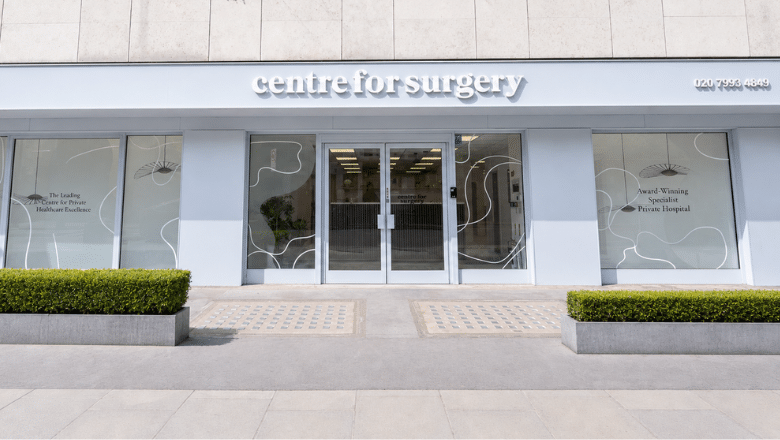
At Centre for Surgery, FaceTite and AccuTite are performed by our surgeons at our private hospital at 95–97 Baker Street, Marylebone, usually under local anaesthetic with sedation as a day case. The consultant who assesses you is the consultant who performs your treatment, and every surgeon is registered with the General Medical Council.
At consultation your surgeon will assess your skin, fat and the underlying structure of your face and neck, and tell you honestly whether FaceTite, AccuTite or surgery is likely to give the result you want. Prices are on our FaceTite cost guide.
To arrange a consultation, contact us or call 020 7993 4849.