


In this guide13 sections
- Key Points
- Fotona 4D Before and After: Women
- Fotona 4D Before and After: Men
- About These Fotona 4D Photos
- How to Read Fotona 4D Before and After Photos
- What Fotona 4D Results Can and Cannot Change
- Fotona 4D Results Timeline
- Fotona 4D Reviews: What Patients Say
- Fotona 4D Side Effects and Safety
- Fotona 4D or Something Else?
- Frequently Asked Questions About Fotona 4D Results
- Fotona 4D at Centre for Surgery
- References
Key Points
- What Fotona 4D before and after photos show: smoother skin texture, finer pores, softer lines around the mouth and eyes, and a modest firming of the lower face. They do not show a surgical lift.
- Results build slowly. New collagen forms over the three to six months after a course, so the most honest after photos are taken months later, not the day after a session.
- The measured lift is small. In a 2026 study using 3D imaging, the outer eye area lifted by roughly half a millimetre and nasolabial folds improved by about one grade, with part of the effect fading by six months.
- Most people need two or three sessions about a month apart, then maintenance to keep the result.
- Read photos critically: check that lighting, angle, expression and make-up match, and look for texture rather than skin colour, which changes with light and recent treatment.
- Fotona 4D suits mild to moderate laxity. Heavier jowls and neck laxity respond better to a facelift.
These Fotona 4D before and after photos show what the Fotona 4D laser facelift can and cannot change. Fotona 4D, sometimes written Fotona4D or called the 4D laser facelift, combines two laser wavelengths in four steps during a single visit, including one step inside the mouth, to heat the skin and deeper tissues and prompt them to make new collagen. Below you will find results for women and men, followed by a guide to reading Fotona laser before and after photos honestly, what the research measures, and the questions people ask most.
If you are still deciding between energy-based treatments, our comparisons of Fotona 4D vs Morpheus8 and Fotona 4D vs traditional laser resurfacing set out the differences. Jump to Fotona 4D results for women, Fotona 4D results for men or how to read these photos.
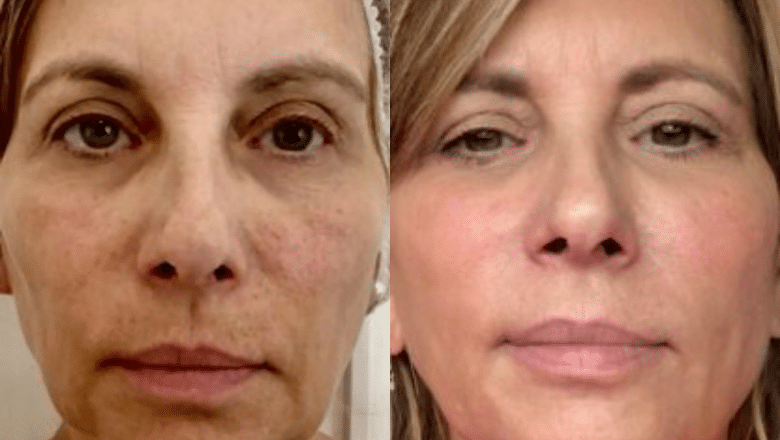
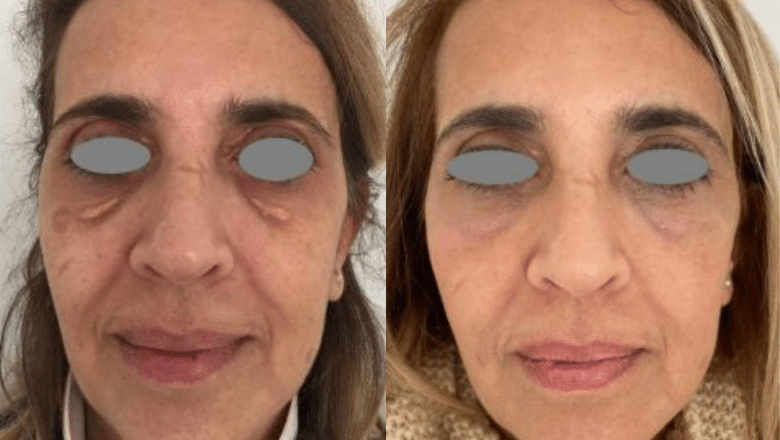
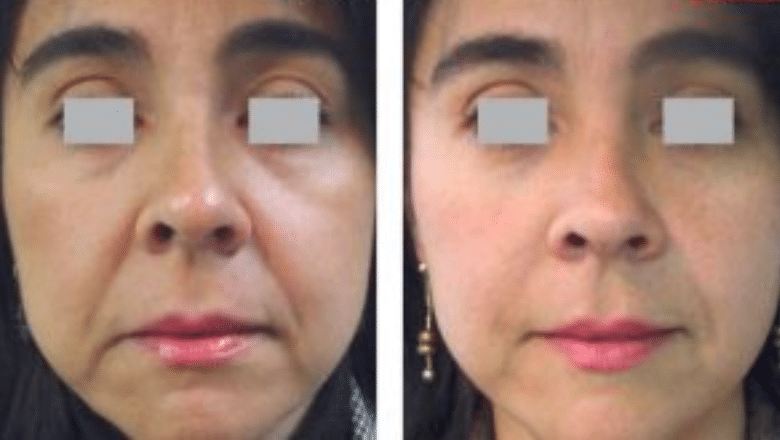
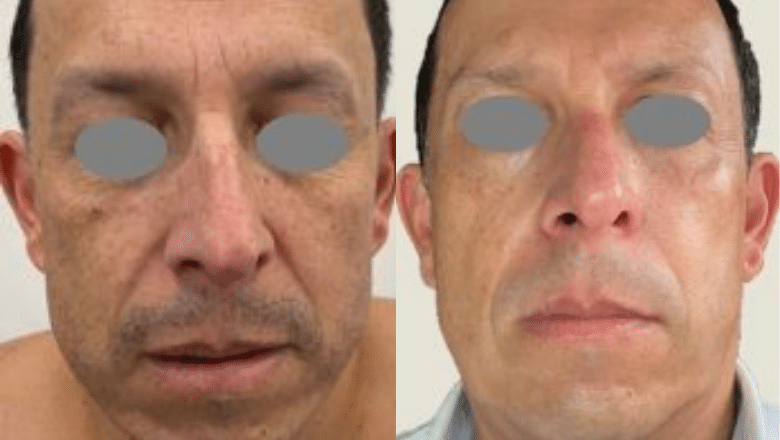
Results vary from person to person. Photos are published with written patient consent and are examples of outcomes, not guaranteed results. Eyes are masked to protect patient privacy. More about these photos below.
Fotona 4D Before and After: Women
The changes in these photos are mainly in the skin itself: texture, fine lines and evenness of tone, with some softening of the folds around the nose and mouth.
Fotona 4D Before and After: Men
Men tend to have thicker skin and a heavier beard area, so the change usually shows as more even texture and fewer fine lines rather than visible tightening.
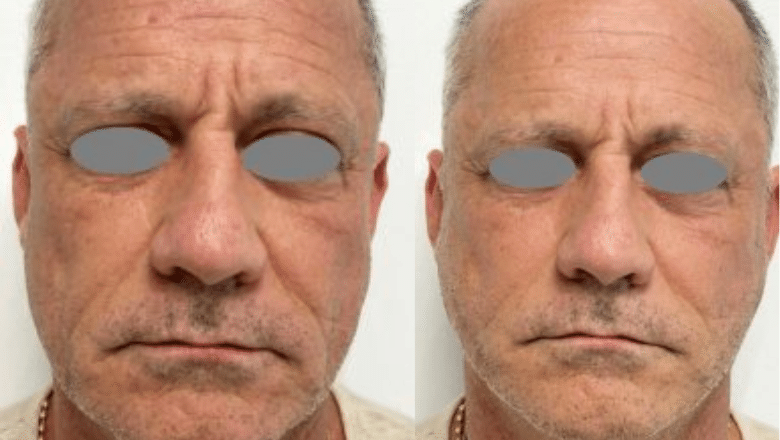
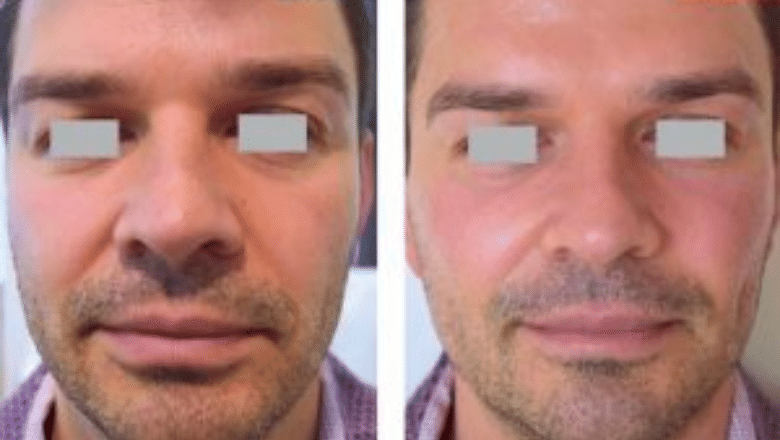
More results from across the clinic are in our before and after photo galleries.
About These Fotona 4D Photos
Every photo on this page is shared with the patient’s written consent. Eyes are covered to protect privacy, and some photos are cropped. Lighting, camera distance and expression are never perfectly identical between two appointments months apart, so some pairs show differences in brightness or colour that have nothing to do with the treatment. Where that is obvious, the caption says so.
The photos show what was achieved for these individuals. They are not a promise of what Fotona 4D will do for you. Your skin type, age, the amount of laxity you start with, sun damage, smoking and how many sessions you have all change the result.
How to Read Fotona 4D Before and After Photos
A laser result is subtle by design, which makes it easy for a small change in lighting to look like a dramatic improvement, or for a genuine improvement to be missed. Our general guide on how to read before and after photos covers surgery too; these are the points that matter most for Fotona laser before and after photos.
Lighting, angle and make-up
Overhead or harsh side lighting deepens lines and shadows; soft front lighting hides them. Check that both photos have the same light, the same head position and no make-up. If the after photo is noticeably brighter, look at the shape of the lines and pores rather than how glowing the skin looks.
Texture, not colour
The most reliable change after Fotona 4D is in skin texture: finer pores, smoother surface, softer fine lines. Skin colour is unreliable. It changes with light, temperature and how recently the skin was treated, and the skin is often pink for a few hours to a couple of days after a session.
When the after photo was taken
An after photo taken within days of treatment can show swelling that temporarily smooths lines. Collagen remodelling, the change that lasts, takes months. The most honest comparison is three to six months after the final session.
The number of sessions
A photo after one treatment and a photo after a full course of three are different things. People searching for Fotona 4D before and after 1 treatment will usually see a fresher look and better texture, with firming building over the following sessions.
Compare like with like
Look for patients with a similar age, skin type and starting point to your own. A woman in her early forties with mild laxity and a man in his sixties with heavy jowls will not have the same Fotona 4D results, however well each is treated.
What Fotona 4D Results Can and Cannot Change
Fotona 4D uses two laser wavelengths. The Er:YAG laser works on the surface and inside the mouth; the Nd:YAG laser heats deeper layers without breaking the skin. The four steps are usually described as SmoothLiftin (inside the mouth, behind the nasolabial folds and marionette lines), FRAC3 (deeper fractional heating for texture and pigment), PIANO (gentle bulk heating of the deeper layers) and SupErficial (a light surface peel). Our guide to whether Fotona 4D can tighten skin without surgery explains the mechanism in more detail.
What that combination can realistically improve:
- skin texture and pore size
- fine lines around the eyes and mouth
- mild to moderate softening of nasolabial folds and marionette lines
- a modest firming of early laxity along the cheek and jawline
What it does not do is reposition heavy tissue. Pronounced sagging jowls, a loose neck band or deep folds caused by descended cheek fat need a surgical lift, and no laser photo should suggest otherwise.
What the research measures
The best objective data come from a 2026 prospective study in Lasers in Surgery and Medicine ↗ that used 3D facial scanning in 13 women who had four Fotona 4D sessions a month apart. The outer eye area lifted by around 0.5 to 0.6 mm, nasolabial folds improved by about one grade on a wrinkle scale, and pore scores improved; part of the lift had faded by six months, and the only side effects were temporary redness and swelling[1]. That is a real but small change, which is exactly what good before and after photos should look like.
A 2021 biopsy study in the Journal of Cosmetic Dermatology ↗ of 14 patients aged 38 to 59 found structural changes in the epidermis and dermis after the four-step protocol, consistent with new collagen forming[2]. Smaller studies of the intraoral step alone found that treating from inside the mouth improved nasolabial fold scores at six months[3], and increased dermal thickness compared with treating the same fold from the outside[4].
These are small, short-term studies, several of them without a control group. They support modest firming and better skin quality; they do not support claims of a non-surgical facelift equivalent.
Fotona 4D Results Timeline
- Straight after a session: the skin feels warm and tight and looks pink. Any instant smoothing is mostly swelling.
- The first few days: redness settles, usually within a day or two, and a light peel can follow the surface step.
- Four to six weeks: texture and brightness improve. This is when the next session is usually booked.
- Three to six months after the course: collagen remodelling reaches its peak. This is the fairest time for an after photo.
- Beyond six months: the ageing process carries on, so some of the firming fades without maintenance.
Most people have two sessions about a month apart, with a third added for more pronounced laxity. Maintenance sessions every four to six months keep the result going; your practitioner will set a plan based on your skin.
Fotona 4D Reviews: What Patients Say
Many people searching for Fotona 4D reviews are really asking whether the result was worth it. Satisfaction tends to be highest when people expect a fresher, firmer version of their own face rather than a lift, and lowest when the laxity is more than a laser can treat and surgery would have been the better choice.
You can read verified reviews of the clinic on our patient reviews page, which brings together reviews from Google and Trustpilot.
Fotona 4D Side Effects and Safety
Expected effects are warmth, redness and mild swelling for a few hours to a couple of days, and sometimes light flaking after the surface step. Less common problems include breakouts, milia, prolonged redness, cold sore reactivation in people prone to them, and changes in pigmentation[5]. The Nd:YAG wavelength used for the deeper steps is generally considered suitable across a wide range of skin tones, but settings matter more in darker skin; our guide to whether Fotona 4D is safe for all skin types covers this in detail.
Fotona 4D is not suitable during pregnancy, over active skin infection or a cold sore, or on recently tanned skin. Tell your practitioner about medications that increase light sensitivity.
Fotona 4D or Something Else?
Matching the treatment to the problem matters more than the device. As a guide:
- Texture, pores, fine lines and early laxity: Fotona 4D, or Morpheus8 where deeper tightening of thicker skin is the priority.
- Crepey eyelid skin and crow’s feet: SmoothEye, the Fotona treatment for the eye area.
- Deeper lines, sun damage and scarring: erbium laser resurfacing, with more downtime but a stronger effect on the surface.
- Moderate to heavy jowls and neck laxity: a facelift, which repositions the deeper tissues a laser cannot move.
Our overview of non-surgical facelift procedures compares the options side by side.
Frequently Asked Questions About Fotona 4D Results
How long does a Fotona 4D facelift last?
The collagen built during a course lasts, but the face keeps ageing around it. Most people find the firming starts to soften after six to twelve months, which is why maintenance sessions are recommended.
Can you see Fotona 4D results after one treatment?
Usually yes, as a fresher look and better texture within a few weeks. Firming builds over a course of two or three sessions and keeps improving for months afterwards.
How many Fotona 4D sessions do you need?
Most people need two sessions about a month apart, and a third for more pronounced laxity, followed by maintenance every few months.
Does Fotona 4D work on jowls?
It can soften early jowling by firming the skin along the jawline. It cannot lift heavy jowls; those need a facelift or a lower face and neck lift.
Does Fotona 4D work on the neck?
The neck can be treated alongside the face, and some improvement in texture and fine lines is common. Loose neck bands and significant skin excess are surgical problems.
Is Fotona 4D painful?
Most people describe warmth and a snapping sensation rather than pain, and the step inside the mouth feels warm. Settings can be adjusted during the session if an area feels too hot.
Is there downtime after Fotona 4D?
Very little. Redness and mild swelling usually settle within a day or two, and most people return to work the same or next day.
Is Fotona 4D worth it?
It is worth it if your concerns are texture, fine lines and early laxity and you want a modest, natural improvement with little downtime. It is not worth it if you are hoping to avoid surgery for moderate to heavy sagging.
Fotona 4D at Centre for Surgery
At Centre for Surgery, Fotona 4D is carried out by experienced aesthetic practitioners at our CQC-regulated hospital on Baker Street, alongside the wider range of skin and aesthetic treatments. Every plan starts with an assessment of your skin and your goals, with progress photos taken under the same lighting at each visit so you can judge your own before and after fairly. If a laser is not the right answer for you, we will say so.
For treatment prices, see our Fotona laser cost guide.
Phone: 020 7993 4849 | Address: 95–97 Baker Street, Marylebone, London W1U 6RN
Contact us to book an assessment
References
- Qi J, Wang Q, Huang L, et al. Three-dimensional imaging of dynamic changes after Nd:YAG/Er:YAG laser skin tightening: a prospective study. Lasers in Surgery and Medicine 2026;58(2):113–119. doi:10.1002/lsm.70095 ↗
- Shanina NA, Patrushev AV, Zorman A. Histological and immunohistochemical changes in facial skin treated with combined ablative and non-ablative laser therapy. Journal of Cosmetic Dermatology 2021;20(11):3509–3516. doi:10.1111/jocd.14023 ↗
- Ebrahim HM, Gharib K. Correction of nasolabial folds wrinkle using intraoral non-ablative Er:YAG laser. Journal of Cosmetic and Laser Therapy 2018;20(6):364–368. doi:10.1080/14764172.2018.1439964 ↗
- Moftah N, Samy N, Allam RSHM, et al. Optical coherence tomographic (OCT) evaluation of intraoral non-ablative erbium:YAG laser (SMOOTH mode) in rejuvenation of nasolabial folds: a prospective randomized split face comparative pilot study. Skin Research and Technology 2020;26(3):405–412. doi:10.1111/srt.12816 ↗
- Balighi K, Abedini R, Ghanadan A, et al. Self-limited acne agminate-like granulomatous reaction to facial laser rejuvenation in a patient with comedonal acne vulgaris. Journal of Cosmetic and Laser Therapy 2021. doi:10.1080/14764172.2021.1921810 ↗







