



In this guide13 sections
- Key Points
- Can a Labiaplasty Reduce UTIs?
- What Causes Urinary Tract Infections in Women?
- Can Large Labia Cause UTIs?
- When Can Labiaplasty Help With Infections and Irritation?
- Can Labiaplasty and Clitoral Hood Reduction Reduce Yeast Infections?
- What to Try First for Recurrent UTIs
- Can You Get a UTI After Labiaplasty?
- Is Labiaplasty Right for You?
- Labiaplasty at Centre for Surgery
- Frequently Asked Questions
- Labiaplasty for Discomfort and Irritation in London
- References
Key Points
- Can a labiaplasty reduce UTIs? There is very little evidence that it does. No clinical trial has shown that labiaplasty prevents urinary tract infections, and most UTIs in women are not caused by the shape of the labia.
- Can long labia cause a UTI? One 2020 study found a particular labial shape more often in women with recurrent UTIs, together with a less acidic vagina. That is an association, not proof that the labia caused the infections.
- What causes most UTIs? Bacteria from the bowel reaching the urethra. Sex, spermicides, previous UTIs and the menopause are much better established risk factors than labial size.
- When labiaplasty can help: where excess labial tissue genuinely causes rubbing, soreness, difficulty keeping the area clean, or, in rare cases, difficulty using a catheter.
- Labiaplasty and yeast infections: there is no good evidence that labiaplasty or clitoral hood reduction prevents thrush or bacterial vaginosis.
- Recurrent UTIs need investigating first. See your GP before considering surgery, as there are effective, evidence-based ways to reduce repeat infections.
Urinary tract infections (UTIs) are among the most common infections women experience, and recurrent UTIs can be miserable: burning when you pass urine, needing to go urgently and often, and the worry of the next one. It is understandable that women with larger labia sometimes wonder whether their anatomy is to blame, and whether labiaplasty might stop the infections coming back.
This guide answers that question honestly. It looks at what causes UTIs, what the research says about larger labia and infection, where labiaplasty can genuinely help with hygiene and irritation, and what to try first if you have recurrent UTIs. If you are not sure whether your labia are larger than average, our guides to labial hypertrophy and different types of labia shapes show how wide the normal range is.
Can a Labiaplasty Reduce UTIs?
The short answer is that the evidence is thin. Some clinics state that labiaplasty “significantly reduces” UTIs, but we have not found any controlled study that shows this. The research that does exist consists of one case–control study suggesting a link between labial shape and recurrent UTIs, and individual case reports in which removing excess tissue helped a specific problem.
That does not mean labiaplasty can never make a difference. For a small number of women, larger labia minora make it harder to keep the area clean and dry, cause repeated chafing and soreness, or deflect the urine stream so that the skin stays damp. Reducing the tissue can make these day-to-day problems easier. What labiaplasty cannot do is change the main causes of UTIs, so it should not be offered as a treatment for recurrent infection on its own.
What Causes Urinary Tract Infections in Women?
Most UTIs happen when bacteria from the bowel reach the urethra, the short tube that carries urine out of the body, and travel up into the bladder. Women are more prone than men because the urethra is short and close to the back passage.
A clinical review in the New England Journal of Medicine sets out the best-established risk factors for uncomplicated UTIs in otherwise healthy women: sexual intercourse, use of spermicides, a history of previous UTIs and, after the menopause, changes in the vaginal and urinary tissues[1]. Labial size is not one of the recognised major risk factors. The NHS gives a clear overview of UTI symptoms, causes and prevention ↗.
Can Large Labia Cause UTIs?
This is the question behind searches such as “can long labia cause UTI” and “can having large labia minora cause infections”. The most relevant research is a 2020 case–control study of 771 women ↗ in Turkey. It compared 331 women with recurrent UTIs with 440 women without them, classifying the labia minora using the Banwell system. Women with recurrent UTIs were more likely to have prominent labia minora in the lower third (Banwell type 3: 76% of the infection group), and their vaginal pH was markedly less acidic (6.11 compared with 4.48)[2].
These findings are interesting, but they need careful interpretation:
- Association is not causation. The study shows that the two things occurred together, not that the labia caused the infections.
- Vaginal pH is a separate factor. A less acidic vagina is itself linked to infection and can be influenced by many things, including hormones, washing products and recent antibiotics.
- Surgery was not tested. Nobody in the study had labiaplasty, so it cannot tell us whether reducing the labia would lower the infection rate.
It is also worth remembering how much labia normally vary. A review of ten measurement studies found labia minora lengths from 5 to 100 mm and widths from 1 to 60 mm, with protruding inner lips more common than not[3]. Having larger labia is not, in itself, a medical problem.
Labial hypertrophy and hygiene
Where the labia minora are long or folded, sweat, discharge and urine can collect between the folds. Some women find it harder to keep the area clean and dry, and the skin can become sore, red or irritated, particularly with tight clothing, sport or cycling. This kind of irritation is uncomfortable and can be mistaken for a UTI, but it is a skin problem rather than an infection of the bladder.
Can large labia affect how you pee?
Large or asymmetrical labia can deflect the urine stream so that it sprays or runs along the skin, which some women find makes it harder to stay clean and dry. There is no good evidence that larger labia stop the bladder emptying properly. If you have a weak stream, feel that your bladder is not emptying, or leak urine, your GP should investigate, as these symptoms have other causes. Our guide to urinary incontinence in women covers the most common ones.
When Can Labiaplasty Help With Infections and Irritation?
Labiaplasty is most likely to help when excess labial tissue is causing a specific, physical problem that you experience regularly, for example:
- repeated chafing, splitting or soreness of the labia
- difficulty keeping the area clean and dry despite good hygiene
- tissue that is pulled or caught during sex, exercise or in clothing
- in rare cases, tissue that makes it hard to use a urinary catheter
The last example is the clearest published instance of labiaplasty reducing UTIs. A 2013 case report ↗ described a 13-year-old with spina bifida who needed to catheterise herself and was developing frequent UTIs because redundant labial tissue made catheterisation and hygiene difficult. After a reduction labiaplasty she had no further catheterisation problems or recurrent UTIs over 30 months[4]. This was a single patient with a very particular medical need, and the result cannot be generalised to women without these problems.
Women who choose labiaplasty usually have a mix of reasons. In one series of 50 patients, 80% cited appearance, 36% discomfort in clothing and 30% discomfort during sexual activity[5]. If discomfort and hygiene are your main concerns, it is reasonable to expect labiaplasty to help with those. Expecting it to end recurrent UTIs is not.
Can Labiaplasty and Clitoral Hood Reduction Reduce Yeast Infections?
There is no good evidence that labiaplasty or clitoral hood reduction prevents thrush (vaginal yeast infection) or bacterial vaginosis. Both conditions are caused by changes in the normal balance of organisms in the vagina, influenced by hormones, antibiotics, diabetes, washing habits and other factors, rather than by the size of the labia or hood. The NHS has clear guidance on thrush ↗ and bacterial vaginosis ↗, both of which are treatable.
Excess hood or labial skin can trap moisture and make irritation worse in some women, and reducing it may make the area more comfortable. If repeated infections are the main problem, though, they should be investigated and treated first.
What to Try First for Recurrent UTIs
If you keep getting UTIs, start with your GP. They can confirm with urine tests that the symptoms really are infections, look for underlying causes, and discuss prevention. The National Institute for Health and Care Excellence has a guideline on preventing recurrent urinary tract infections ↗ that covers self-care, non-antibiotic options and, where appropriate, preventive antibiotics.
NHS advice on preventing UTIs includes:
- wiping from front to back after using the toilet
- keeping the genital area clean and dry
- drinking plenty of fluids, particularly water, so that you pee regularly during the day
- washing the skin around the vagina with water before and after sex, and peeing as soon as possible after sex
- wearing cotton underwear and avoiding scented soaps around the genitals
After the menopause, thinning and dryness of the vaginal tissues can make UTIs more likely. Our guide to treatment options for vaginal atrophy explains what can help.
Can You Get a UTI After Labiaplasty?
Yes, it is possible, as it is after any surgery near the urethra, although it is not common. In the first few days, stinging when urine touches the stitches is normal and is not the same as an infection. Burning inside when you pass urine, needing to go urgently and often, a fever or cloudy, smelly urine are signs of a UTI and should be checked.
Large reviews show that labiaplasty is generally safe. A 2022 meta-analysis of 46 studies including 3,804 women ↗ found a pooled satisfaction rate of 99%, with wound separation the most common complication[6]. Keeping the area clean, showering from 48 hours, using sanitary pads rather than tampons and wearing loose cotton underwear all help healing. Our guide to labiaplasty recovery covers aftercare in detail, and how to reduce labiaplasty swelling has practical tips for the first week.
Is Labiaplasty Right for You?
Labiaplasty may be worth considering if your labia regularly cause discomfort, irritation or difficulty with hygiene, or if their appearance causes you persistent distress, and if any infections have been properly investigated. It is a permanent operation, so the decision should be made with realistic expectations and without pressure.
Labiaplasty for these reasons is rarely available on the NHS. Our guide to getting a labiaplasty on the NHS explains the criteria, and our labiaplasty cost guide covers private treatment.
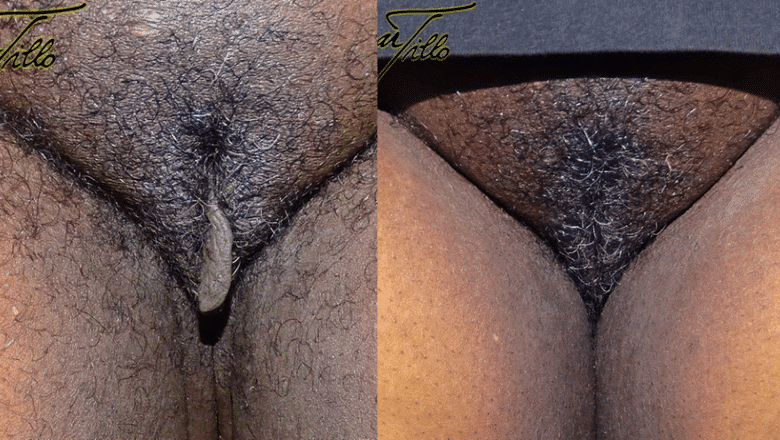
Labia minora reduction using the wedge technique at Centre for Surgery. Photographed at least six months after surgery.
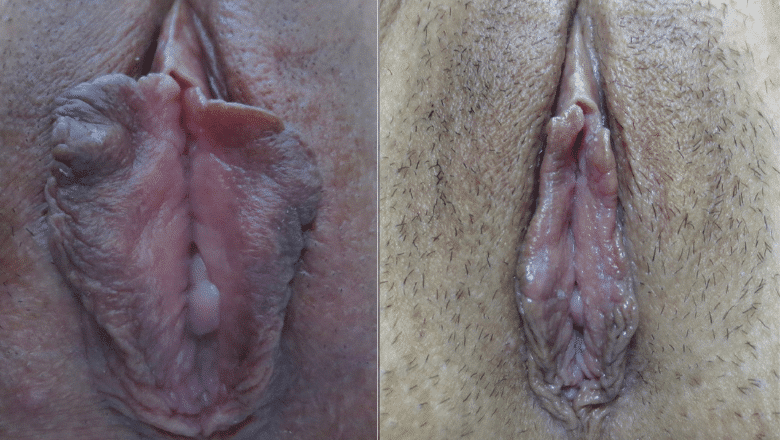
Labia reduction at Centre for Surgery. Photographed at least six months after surgery.
More results are in our labiaplasty before and after photos.
Labiaplasty at Centre for Surgery
At your consultation, your surgeon will ask about your symptoms, including any infections and how they were diagnosed, examine you, and tell you honestly whether labiaplasty is likely to help. If your main problem is recurrent UTIs without other symptoms, your surgeon may advise you to see your GP first.
- Labiaplasty is performed by GMC-registered surgeons at our CQC-regulated hospital on Baker Street, and the surgeon who assesses you performs your surgery.
- Straightforward labiaplasty is a day case under local anaesthetic with sedation. Our guide to local anaesthetic labiaplasty explains what to expect.
- Our labiaplasty nursing team is all-female.
- We treat adults aged 18 and over, and recommend a two-week cooling-off period before surgery.
- The consultation fee is redeemable against treatment, and finance is available, subject to status.
Frequently Asked Questions
Can labiaplasty reduce UTIs?
There is no good evidence that it does for most women. Research has found an association between some labial shapes and recurrent UTIs, but no study has shown that labiaplasty prevents them. It may help if excess tissue makes hygiene difficult, but recurrent UTIs should be investigated by your GP first.
Can having a large labia minora cause infections?
Larger labia minora can trap moisture and cause skin irritation or soreness, which some women experience repeatedly. Whether they cause urinary tract infections is uncertain. Most UTIs are linked to bacteria from the bowel, sex, previous infections and hormonal changes rather than labial size.
What surgery helps with UTI?
Surgery is rarely the answer for recurrent UTIs in women. Occasionally a specialist finds a structural problem in the urinary tract that needs an operation, but most women are helped by self-care measures, treatment of underlying causes and, where appropriate, preventive medication, as set out in NICE guidance.
What causes 80% of UTIs?
Most UTIs are caused by bacteria that normally live in the bowel, particularly E. coli, reaching the urethra and travelling into the bladder. This is why wiping from front to back and peeing after sex are recommended.
What mimics a UTI but isn’t a UTI?
Thrush, bacterial vaginosis, some sexually transmitted infections, skin irritation of the vulva, vaginal dryness after the menopause and bladder pain syndrome can all cause stinging or discomfort that feels like a UTI. A urine test helps tell them apart, so see your GP if symptoms keep returning.
Can a UTI cause labia irritation?
A UTI mainly causes burning inside when you pee, frequency and urgency. Soreness or itching of the labia themselves is more often caused by thrush, skin irritation, friction or reactions to soaps and products.
Is it normal to have long labia?
Yes. Labia vary widely in length, colour and shape, and inner lips that extend beyond the outer lips are more common than not. Long labia only need treatment if they cause you discomfort or distress.
Does labiaplasty help with hygiene?
For women whose labia are long or folded enough to trap sweat, discharge or urine, reducing the tissue can make it easier to keep the area clean and dry. This is one of the functional reasons women give for choosing labiaplasty.
Labiaplasty for Discomfort and Irritation in London
If larger labia are causing you rubbing, soreness or difficulty with hygiene, a consultation at our Baker Street hospital will give you an honest view of whether labiaplasty would help. Read more about labiaplasty at Centre for Surgery.
Phone: 020 7993 4849 | Address: 95–97 Baker Street, Marylebone, London W1U 6RN
Contact us to schedule a consultation
References
- Hooton TM. Clinical practice. Uncomplicated urinary tract infection. New England Journal of Medicine 2012;366(11):1028–1037. doi:10.1056/NEJMcp1104429 ↗
- Aydın A, Atılgan AE, Sönmez MG, Sönmez L, Boğa MS, Balasar M. Do variations in labial anatomy have an effect on recurrent urinary tract infection? International Urogynecology Journal 2020;31(10):2129–2136. doi:10.1007/s00192-020-04310-8 ↗
- Hayes JA, Temple-Smith MJ. What is the anatomical basis of labiaplasty? A review of normative datasets for female genital anatomy. Australian and New Zealand Journal of Obstetrics and Gynaecology 2021;61(3):331–338. doi:10.1111/ajo.13298 ↗
- Wu JA, Braschi EJ, Gulminelli PL, Comiter CV. Labioplasty for hypertrophic labia minora contributing to recurrent urinary tract infections. Female Pelvic Medicine & Reconstructive Surgery 2013;19(2):121–123. doi:10.1097/SPV.0b013e31827de473 ↗
- Gonzalez F, Dass D, Almeida B. Custom flask labiaplasty. Annals of Plastic Surgery 2015;75(3):266–271. doi:10.1097/SAP.0000000000000048 ↗
- Escandón JM, Duarte-Bateman D, Bustos VP, et al. Maximizing safety and optimizing outcomes of labiaplasty: a systematic review and meta-analysis. Plastic and Reconstructive Surgery 2022;150(4):776e–788e. doi:10.1097/PRS.0000000000009552 ↗







