


In this guide11 sections
- Key Points
- Can Breasts Grow Back After Breast Reduction?
- What Makes Breasts Bigger After a Reduction?
- Large Breast Symptoms: Do They Come Back if Breasts Grow?
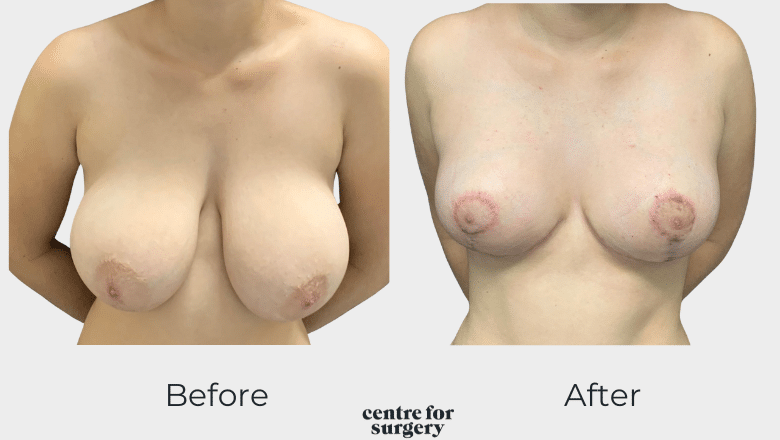
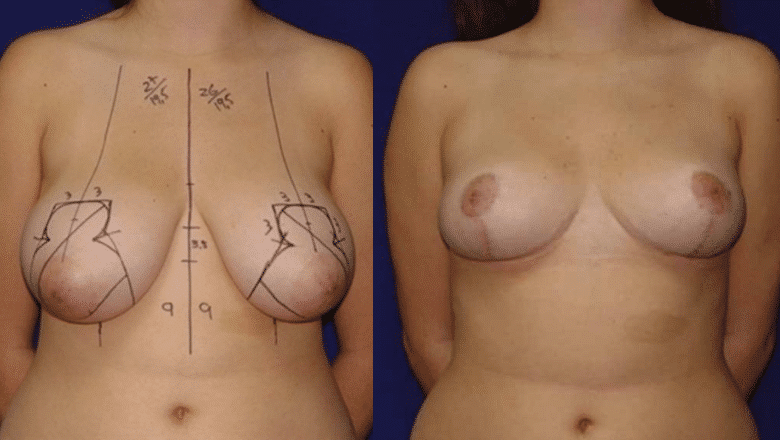
- Breast Reduction Before and After Photos
- Can You Breastfeed After a Breast Reduction?
- How to Keep Your Breasts From Getting Bigger After Reduction
- What If My Breasts Have Grown Back After a Reduction?
- Frequently Asked Questions About Breast Reduction Regrowth
- References
- Breast Reduction at Centre for Surgery
Key Points
- The tissue removed in a breast reduction does not grow back. The reduction is permanent, but the breast tissue that remains can still change in size.
- Weight gain, pregnancy and hormonal change are the usual reasons breasts get bigger again. Each enlarges the tissue and fat that are left, rather than replacing what was removed.
- True regrowth is mainly a risk when surgery is done young. In adolescents, about one in five noticed some regrowth, but only 2.7% needed further surgery. Centre for Surgery treats adults aged 18 and over.
- Symptom relief is usually lasting. Breast reduction reliably eases neck, back and shoulder pain, bra-strap grooves and rashes under the breasts, even when relatively little tissue is removed.
- Keeping your weight stable is the most important thing you can do to protect your result.
- Breastfeeding is often still possible. About 62% of women breastfeed successfully after reduction, depending on the technique.
“Can my breasts grow back after a reduction?” is one of the most common questions women ask before breast reduction surgery. The short answer is that the tissue removed is gone for good, but the breast that remains is still living tissue that responds to weight, hormones and pregnancy. This guide explains why breasts can get bigger after reduction, who is most at risk, what happens to the symptoms that led you to surgery, and what can be done if your breasts do enlarge again.
Can Breasts Grow Back After Breast Reduction?
Not in the sense of regrowing what was removed. During a breast reduction, the surgeon removes glandular tissue, fat and skin, then reshapes the breast and lifts the nipple. That tissue cannot regenerate.
What can happen is that the remaining tissue enlarges. Breasts are made of glandular tissue (which responds to hormones) and fat (which responds to weight). If either changes, the breast can grow, sometimes by a cup size or more. In most women any increase is small, and the breasts remain far smaller than before surgery.
What Makes Breasts Bigger After a Reduction?
Weight gain
This is the most common cause. Fat makes up a large share of most women’s breasts, so gaining weight adds volume to the breast as well as elsewhere. Losing weight after surgery usually makes the breasts smaller.
Pregnancy and breastfeeding
During pregnancy, glandular tissue grows in preparation for breastfeeding, and breasts usually enlarge. Afterwards they often shrink back, but they may not return exactly to their post-surgery size or shape, and the skin may stretch. We recommend waiting at least three months after completely stopping breastfeeding, ideally about six, before breast surgery, and six months after the birth if you are not breastfeeding.
Hormonal changes
Hormonal contraception, hormone replacement therapy (HRT), some other medicines and the menopause can all change breast size. Some women notice their breasts enlarge in the years after a reduction as body fat redistributes with age.
Surgery before the breasts have finished developing
Breasts usually stop growing a few years after puberty. Operating before then carries a higher chance of genuine glandular regrowth. A study of 481 young women found that surgery less than three years after the first period increased the likelihood of regrowth more than seven-fold, and that breast growth in young women with obesity could continue for up to nine years after puberty[2]. A 2021 pooled analysis of 2,926 adolescent patients in Plastic and Reconstructive Surgery ↗ found 18% noticed some regrowth, but only 2.7% needed a second reduction, as the regrowth was usually small[1]. Centre for Surgery treats adults aged 18 and over.
Rare conditions
Very rarely, conditions such as gigantomastia (excessive, rapid breast growth, sometimes linked to pregnancy or medicines) can cause significant enlargement after surgery. These need specialist assessment.
Large Breast Symptoms: Do They Come Back if Breasts Grow?
Most women have a breast reduction for physical symptoms as much as appearance. Very large breasts (macromastia) are associated with:
- Neck, upper back and shoulder pain.
- Deep grooves from bra straps.
- Tingling or numbness in the arms or hands.
- Rashes, chafing and skin infections in the fold under the breasts.
- Poor posture and difficulty exercising.
Breast reduction is effective at relieving these symptoms. A 2021 review in Aesthetic Surgery Journal ↗ confirmed that it eases back, neck and shoulder pain, bra-strap grooving, tingling and rashes, and that women with less than 500 g removed from each breast still gained significant symptom relief and quality-of-life improvement[3]. See our guide to large breasts and neck, shoulder and back pain, and to large breasts and breathing.
If your breasts enlarge again, symptoms can return in proportion to the increase. In the adolescent analysis above, regrowth was usually too small to bring symptoms back, which is why so few needed further surgery[1]. If pain, rashes or strap grooves are returning, it is worth a review.
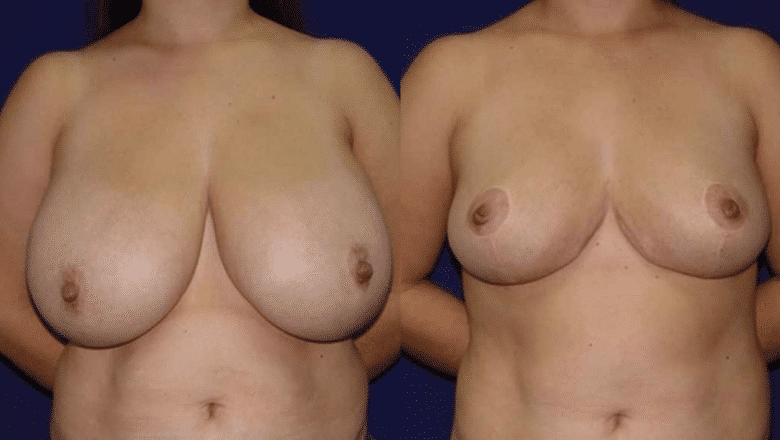
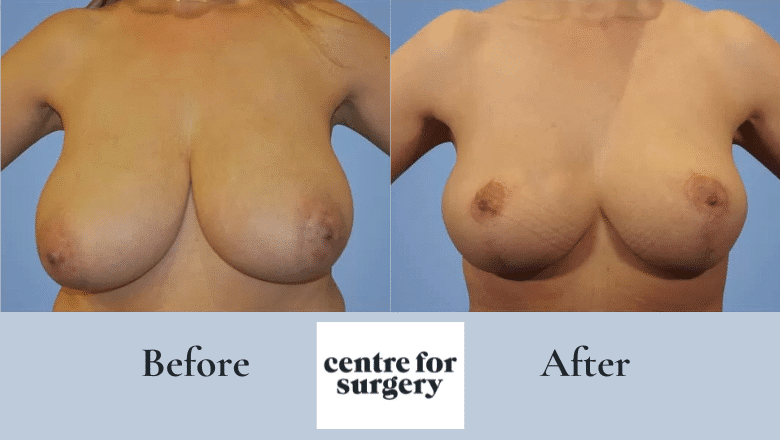
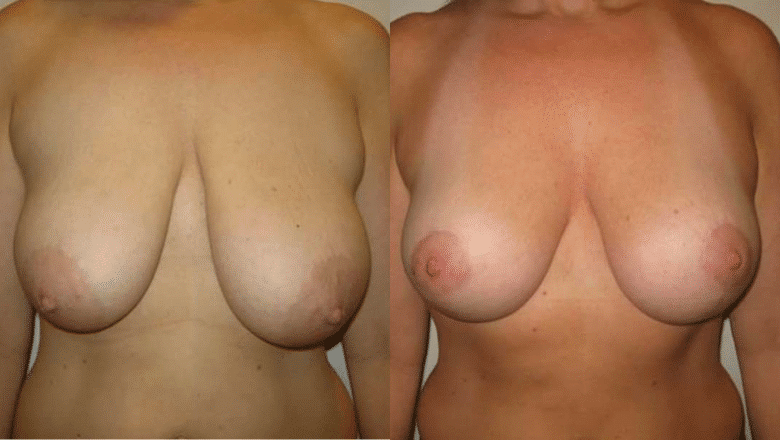
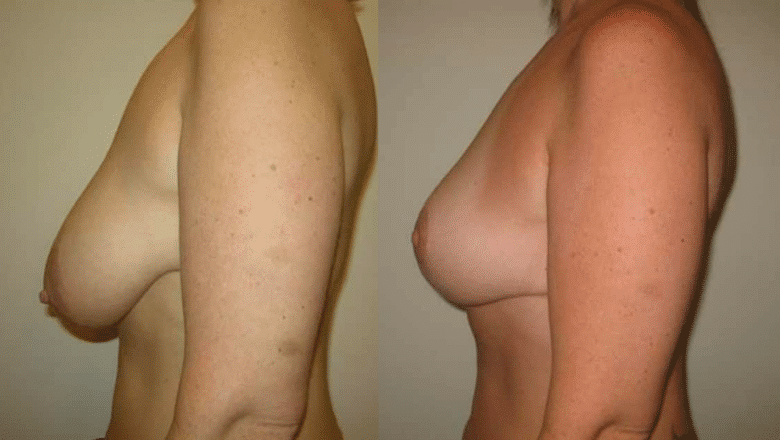
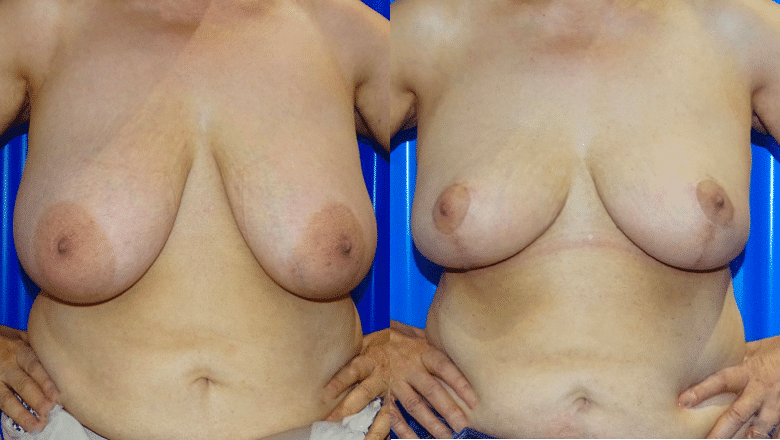
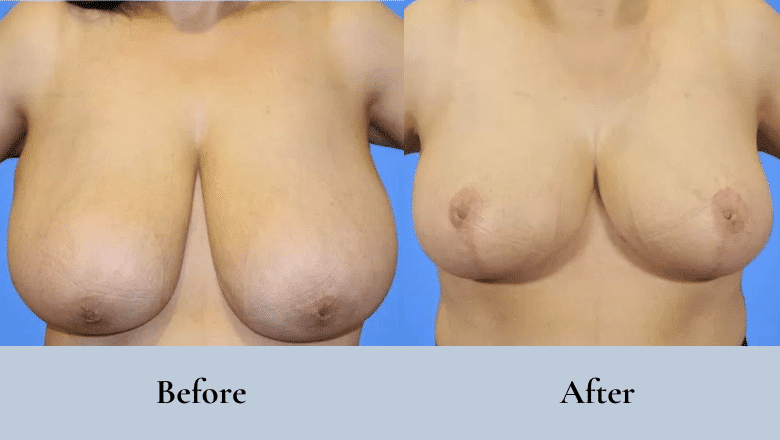
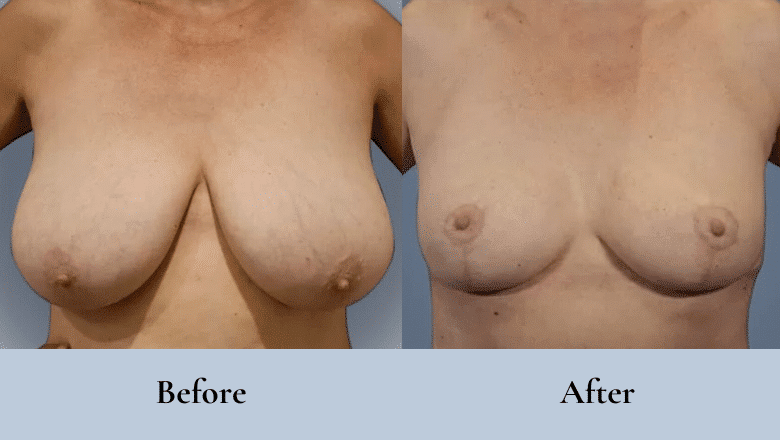
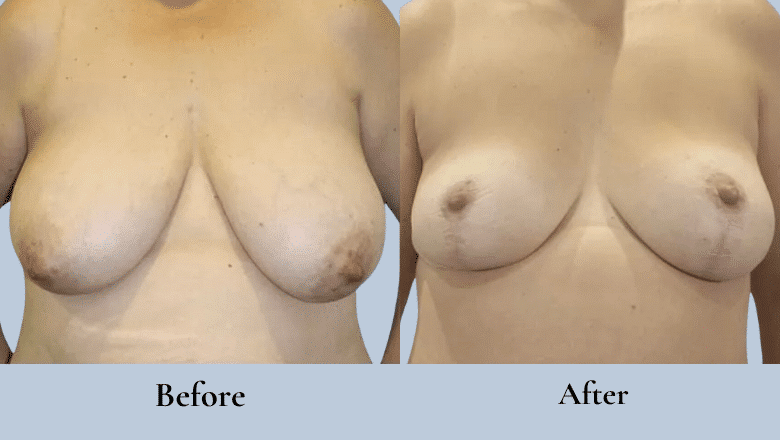
Breast Reduction Before and After Photos
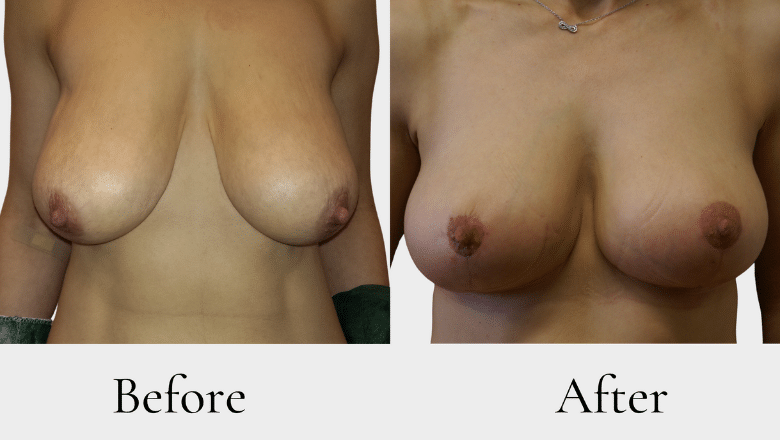
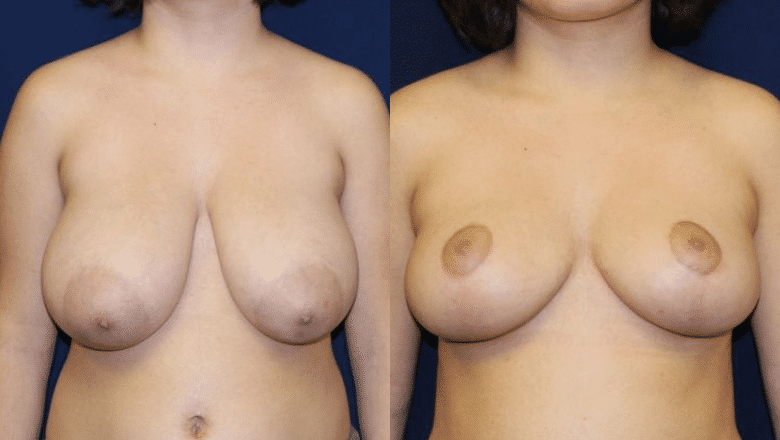
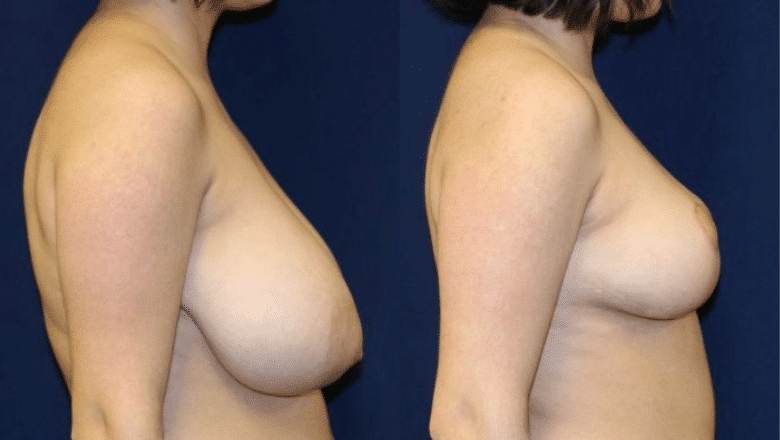
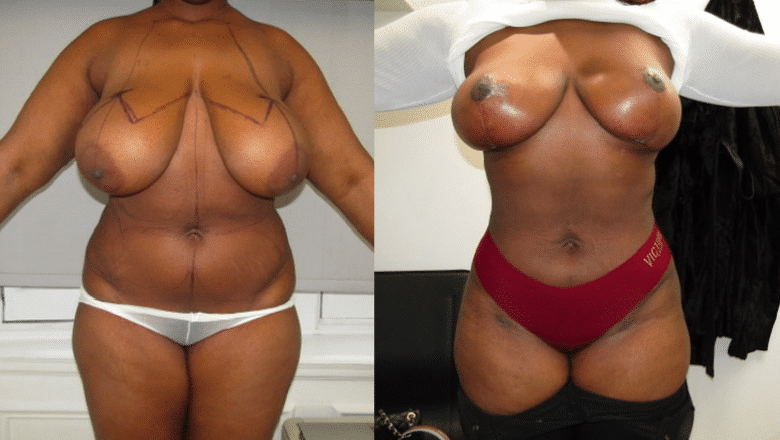
These are real Centre for Surgery patients. All after photographs were taken at least six months after surgery. More results are in our breast reduction before and after gallery.


Can You Breastfeed After a Breast Reduction?
Often, yes, though the chance is lower than for women who have not had surgery. A 2023 meta-analysis of 33 studies in Aesthetic Plastic Surgery ↗ found that 62% of women breastfed successfully after reduction, and that women who had a reduction were 3.5 times more likely to be unable to breastfeed than those who had not[4]. Technique matters: methods that keep the column of breast tissue beneath the nipple attached to the chest wall preserve breastfeeding far better than those that do not[5]. If you hope to breastfeed in future, tell your surgeon at consultation so the technique can be chosen with this in mind.
How to Keep Your Breasts From Getting Bigger After Reduction
- Reach a stable weight before surgery and keep it stable afterwards. This is the single most effective step.
- Time surgery around family plans. If you plan more children soon, you may prefer to wait, though symptom relief can make earlier surgery worthwhile.
- Review hormonal medicines with your GP if you notice enlargement after starting them.
- Wear a well-fitted, supportive bra, especially during pregnancy and exercise, to limit skin stretching.
What If My Breasts Have Grown Back After a Reduction?
Start by looking at the likely cause. If you have gained weight, losing it will often reduce breast size. If the change followed pregnancy, allow time for the breasts to settle after you finish breastfeeding.
If the breasts remain larger than you want, or symptoms have returned, a secondary (revision) reduction is possible. Options include:
- A repeat breast reduction, planned around the previous scars and blood supply to the nipple.
- Liposuction breast reduction, where the increase is mainly fat and the skin and nipple position are acceptable.
- A breast lift, where the main change is sagging rather than size.
A second operation needs careful planning, as the original technique affects which approaches are safe. Bring any records from your first operation to your consultation.
Frequently Asked Questions About Breast Reduction Regrowth
If I get a breast reduction, will my breasts grow back after pregnancy?
They usually enlarge during pregnancy and breastfeeding, then shrink back, though not always to exactly the same size or shape. The tissue removed does not regrow. Waiting at least three months, ideally six, after stopping breastfeeding gives the breasts time to settle before judging the result.
Will my breasts get smaller if I lose weight after a breast reduction?
Usually, yes. Fat makes up much of the breast, so weight loss reduces breast volume. Significant weight loss can also leave looser skin, which may need a lift.
Is it normal for one breast to be bigger after a breast reduction?
Some difference between the breasts is normal, both before and after surgery. Swelling can also settle unevenly in the first months. A noticeable difference that persists beyond six to twelve months can be assessed and sometimes corrected.
Does fat grow back after a breast reduction?
The fat cells removed do not come back, but the fat cells that remain can enlarge if you gain weight, making the breasts bigger.
How long does a breast reduction last?
The reduction itself is permanent. Your breasts will still age, and can change with weight, pregnancy and hormones, but most women stay much smaller than before surgery for life.
What happens if you gain weight after a breast reduction?
The breasts are likely to grow along with the rest of the body, and symptoms such as back pain can return if the gain is large. Keeping your weight stable protects both the shape and the symptom relief.
How big do your breasts have to be to get a reduction?
There is no minimum size for private surgery. What matters is whether your breasts cause symptoms or distress and whether a reduction would help. Studies show women gain symptom relief even when relatively little tissue is removed[3]. See reducing from a D to a B cup.
References
- Hudson AS, Morzycki AD, Guilfoyle R. Reduction mammaplasty for macromastia in adolescents: a systematic review and pooled analysis. Plastic and Reconstructive Surgery 2021;148(1):31–43. doi:10.1097/PRS.0000000000008102 ↗
- Nuzzi LC, Pramanick T, Walsh LR, et al. Optimal timing for reduction mammaplasty in adolescents. Plastic and Reconstructive Surgery 2020;146(6):1213–1220. doi:10.1097/PRS.0000000000007325 ↗
- Kim M, Al Bayati MJ, Mathew PJ, Thaller SR. Reductio ad absurdum: examining the validity of the 500-gram rule in reduction mammaplasty. Aesthetic Surgery Journal 2021;41(6):NP357–NP360. doi:10.1093/asj/sjaa370 ↗
- Koussayer B, Taylor J, Warner J, et al. Breastfeeding ability after breast reductions: what does the literature tell us in 2023? Aesthetic Plastic Surgery 2024;48(6):1142–1155. doi:10.1007/s00266-023-03690-8 ↗
- Kraut RY, Brown E, Korownyk C, et al. The impact of breast reduction surgery on breastfeeding: systematic review of observational studies. PLoS One 2017;12(10):e0186591. doi:10.1371/journal.pone.0186591 ↗
Breast Reduction at Centre for Surgery
Breast reduction is performed at our private hospital at 95–97 Baker Street, Marylebone, by surgeons who specialise in breast surgery. The consultant who assesses you is the consultant who performs your operation, and every surgeon is registered with the General Medical Council. Consultations and treatment are for adults aged 18 and over.
At consultation your surgeon will discuss your symptoms, your plans for pregnancy and breastfeeding, and the technique and scar pattern that suit you; see anchor vs lollipop breast reduction. We recommend a two-week cooling-off period before any surgery. Recovery is covered in our breast reduction recovery guide, and prices in our breast reduction cost guide.
To arrange a consultation, contact us or call 020 7993 4849.

Related Articles
- Breast Reduction Recovery
- Breast Reduction Scars
- Anchor vs Lollipop Breast Reduction
- Reduce Cup Size From D to B






