


In this guide10 sections
- Key Points
- What Are Flat Nipples, and How Common Are They?
- Flat Nipples vs Normal Nipples: What’s the Difference?
- Causes of Flat Nipples
- How to Fix Flat Nipples Without Surgery
- Surgical Solutions for Correcting Flat Nipples
- How Much Does Flat Nipple Correction Cost?
- Frequently Asked Questions
- Why Choose Centre for Surgery for Flat Nipples Correction?
- References
Key Points
- What are flat nipples? Nipples that sit level with the areola instead of projecting. They are a normal variation, not a disease, and can affect one or both sides.
- Flat nipples can affect function as well as appearance. They can make it harder for a baby to latch, and some people feel self-conscious about them in intimate relationships.
- Surgeons grade flat and inverted nipples from 1 to 3 by how easily the nipple pulls out and whether it stays out. The grade guides how the nipple is corrected.
- Hoffman’s exercises and breast shells don’t reliably help. In a randomised trial, neither improved nipple shape compared with no treatment.
- A nipple that has recently become flat or pulled in, especially with itching, flaking or discharge, should be checked promptly by your GP.
- Permanent correction is a short procedure, usually under local anaesthetic, and plans for future breastfeeding are discussed beforehand.
What are flat nipples, and can they be corrected? Breasts vary enormously in size and shape, and many people who are otherwise happy with their breasts are unhappy specifically with the appearance of flat nipples, and want to know if this can be corrected. Many people simply live with flat nipples because they aren’t aware there are effective treatments available, such as inverted nipple correction or nipple reduction. Flat nipples are a normal variation rather than a disease, but they can make it harder for a baby to latch during breastfeeding, and some women find them a source of self-consciousness in intimate relationships. Most people who seek correction do so for appearance, confidence or both.
For many women, breasts and nipples are closely tied to how they feel about their body and their intimate relationships, so any change to nipple appearance can affect confidence in ways that go beyond the purely physical. Some women feel self-conscious around partners or avoid certain clothing that reveals flat nipples. At Centre for Surgery, we offer effective, well-established flat nipples correction at our CQC-regulated Baker Street clinic in London, rated “Good” overall by the Care Quality Commission.
What Are Flat Nipples, and How Common Are They?

Flat and inverted nipples are common, can affect one or both sides, and occur in men as well as women. Many people think of the “normal” nipple as one that protrudes outward from the surrounding skin. Normal nipples do change size in response to temperature or stimulation; flat nipples can show similar behaviour, protruding briefly during stimulation but returning to a flat appearance otherwise.
Flat nipples are only one of several nipple and areola concerns, and our guide to choosing the right nipple or areola correction procedure compares the options.
Compared with inverted nipples, which are typically pulled inward, flat nipples sit flush with the areola and surrounding skin — they don’t protrude and don’t turn inward either. A simple way to check is to apply gentle pressure to the surrounding areola: if the nipple doesn’t protrude, it’s likely flat rather than protruding. If you’d like to explore flat nipples correction, get in touch to book a face-to-face consultation with one of our consultant breast surgeons in London.
Flat Nipples vs Normal Nipples: What’s the Difference?
A typical nipple projects beyond the areola at rest and becomes firmer and more prominent with cold, touch or arousal. A flat nipple sits level with the areola and may only project briefly when stimulated, while an inverted nipple goes further and folds inwards. Surgeons often grade flat and inverted nipples using the system described by Han and Hong in 1999[1]:
- Grade 1: the nipple pulls out easily and stays out, with little or no tethering underneath. Many flat nipples behave like this.
- Grade 2: the nipple can be drawn out but soon retracts, because of moderate fibrous tethering beneath it.
- Grade 3: the nipple can hardly be pulled out at all, and the tethering is so tight that the milk ducts often have to be divided to correct it.
The grade matters for function as well as appearance. A nipple that does not protrude can make it harder for a baby to latch, and the more tightly it is tethered, the more the surgical correction has to release around the milk ducts. Nipple “training” in pregnancy is less helpful than often claimed: in a 1992 randomised controlled trial in the BMJ ↗ of pregnant women with flat (non-protractile) or inverted nipples, neither Hoffman’s exercises nor breast shells improved nipple shape compared with no treatment, and women advised to wear shells were less likely to still be breastfeeding at six weeks[2]. A midwife or lactation consultant can usually help with latching instead. A nipple that used to project normally and has recently become flat or pulled in is different, and should be checked by your GP.
Causes of Flat Nipples
Flat nipples can be present from birth or develop over time. In most cases, they’re simply a natural variation and not something to be concerned about. That said, any sudden, unexplained change in nipple appearance warrants prompt medical assessment to rule out an underlying issue.
Flat Nipples From Birth
Nipple development begins in the womb. For some women, the nipple base forms smaller, or the milk ducts don’t fully develop — these ducts play a role in nipple formation, and underdevelopment can leave the nipple sitting flat rather than protruding.
Ageing
As the body ages, breasts and nipples change too. From around the mid-30s onward, the milk ducts can begin to shorten as menopause approaches, which can cause nipples to become inverted or lie flat — a natural part of the ageing process rather than a cause for concern in itself.
Paget’s Disease
It’s important to be aware of Paget’s disease, a rare but serious condition affecting the nipple and areola, associated with breast cancer. Symptoms beyond a change in nipple protrusion include discomfort, itching, skin flaking on the nipple, and discharge. Any of these symptoms should prompt an immediate consultation with a healthcare professional for assessment.
How to Fix Flat Nipples Without Surgery
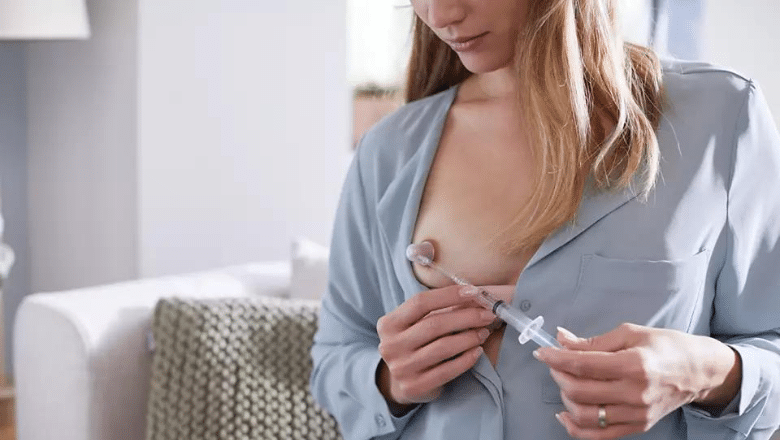
Not everyone with flat nipples wants a surgical solution. The best way to work out what’s right for you is a face-to-face consultation with a consultant breast surgeon, to discuss the full range of options for how to fix flat nipples.
Hoffman Method
The Hoffman method is sometimes suggested for flat nipples or very mild inversion, although a randomised trial found it did not improve nipple shape compared with no treatment[2]. It involves applying pressure to either side of the nipple while drawing your thumbs apart, which can encourage the nipple to protrude outward.
Nipple Inversion Devices
A Niplette-type device is worn beneath the bra for at least six hours a day, positioned over the nipple to apply continuous, gentle suction that encourages it to protrude.
For some women, these non-surgical techniques offer modest improvement, but it’s unclear how long any benefit lasts, and they shouldn’t be seen as a permanent solution. The only way to permanently correct flat nipples is flat nipple surgery — clinically, nipple correction surgery — which can usually be carried out under local anaesthetic alone when performed as a standalone procedure.
Surgical Solutions for Correcting Flat Nipples
For a permanent change, flat nipple surgery is the only definitive solution. It is an elective procedure: most people choose it for appearance and confidence, and some because a flat nipple has made breastfeeding difficult in the past. If you’re considering breastfeeding in the future, this is worth discussing carefully at consultation — breastfeeding usually remains possible after surgery, though the surgical approach may need adjusting to accommodate it. The procedure is more straightforward when future breastfeeding isn’t a consideration.
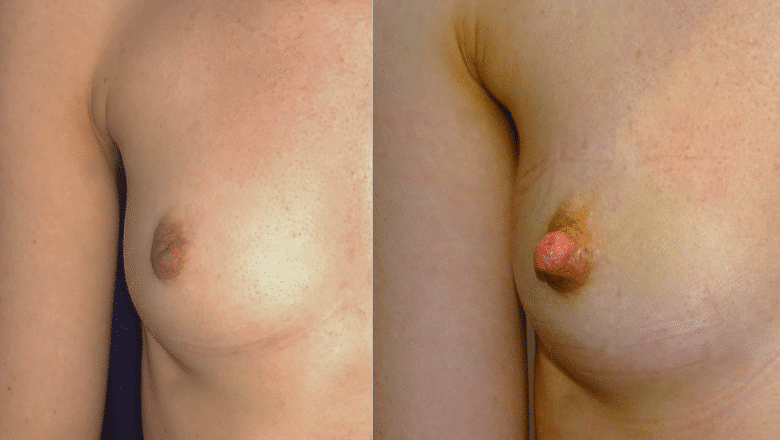
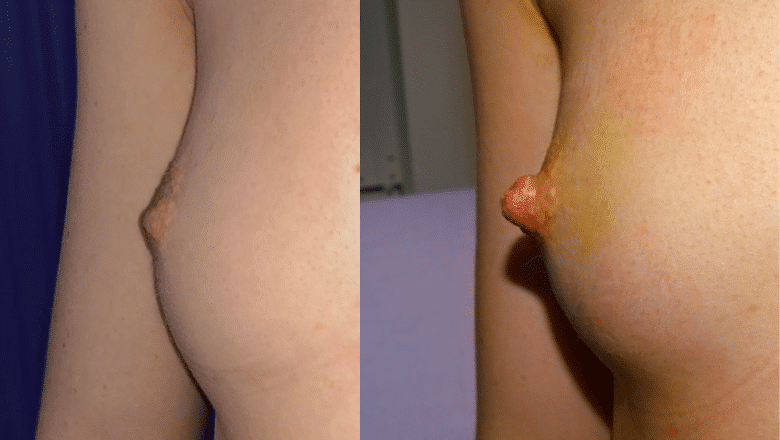
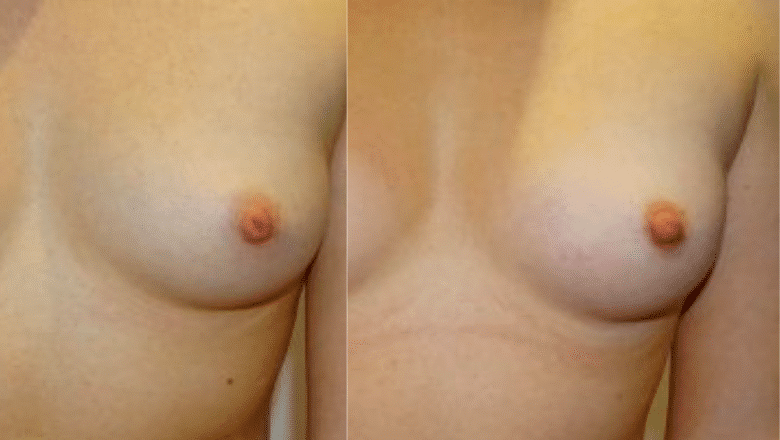
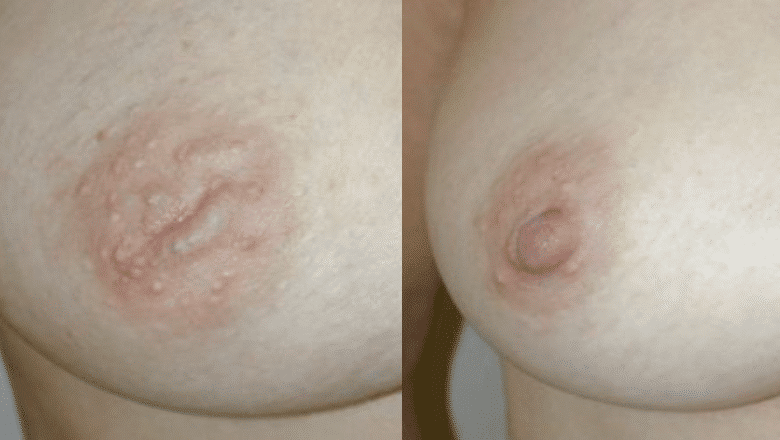
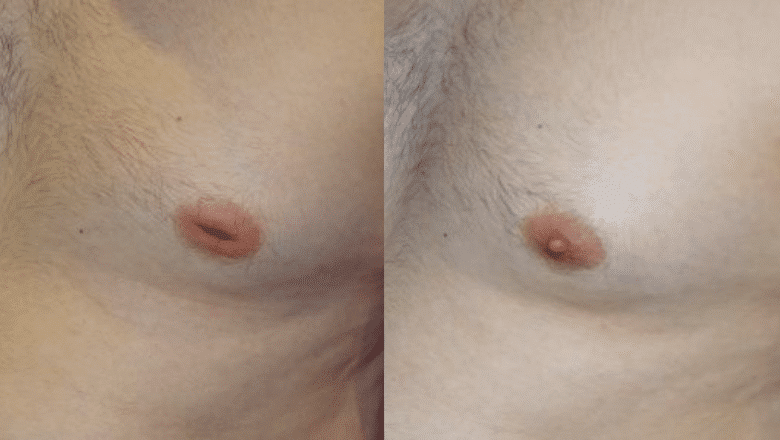
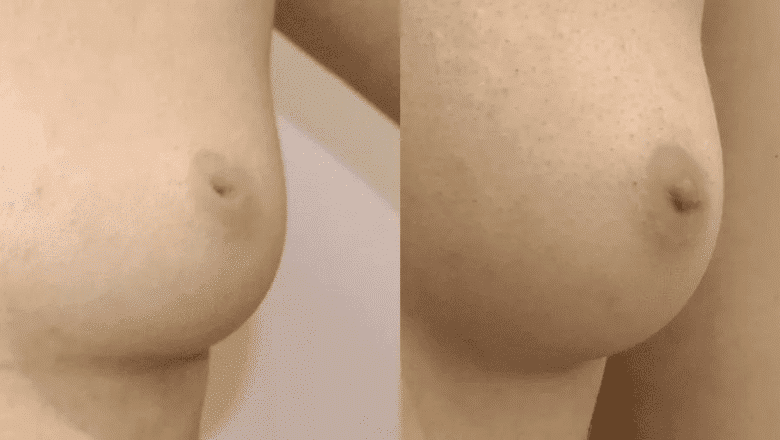
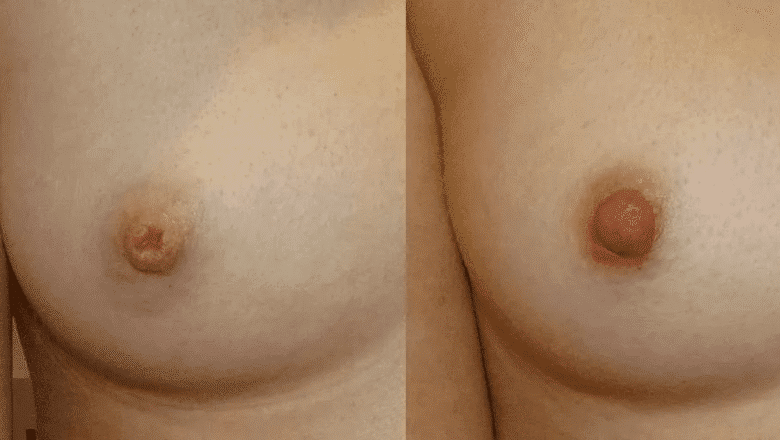
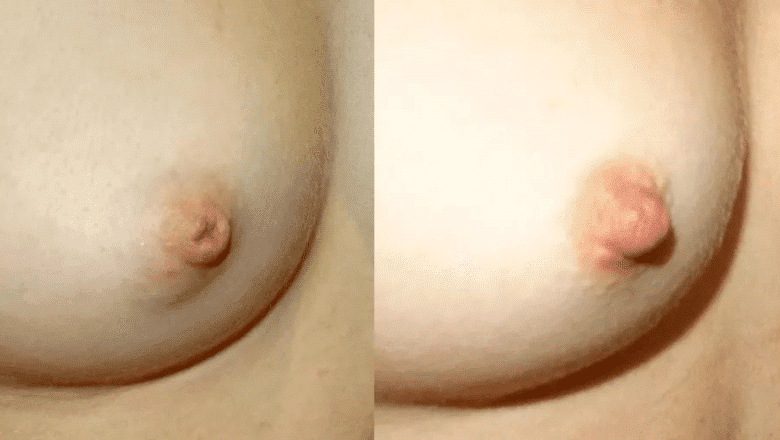
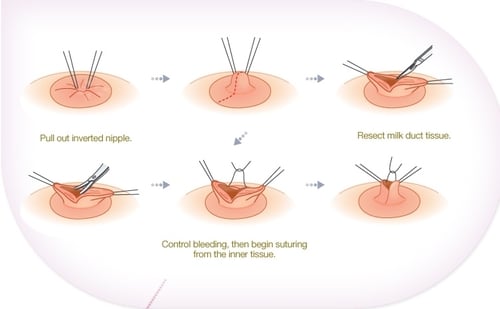
The procedure used for flat nipples correction is nipple correction surgery — sometimes referred to, slightly misleadingly, as nipple reduction surgery, a term that undersells what it actually does. It remodels the nipple, adjusting height and width, and ensures nipple and areola symmetry. As a standalone procedure, it’s performed under local anaesthetic by a GMC-registered plastic surgeon.
It’s common to combine nipple correction with other breast surgery, such as a breast lift or breast reduction — where it’s combined with another breast procedure, it’s typically performed under TIVA (Total Intravenous Anaesthesia) rather than local anaesthetic alone. Combining procedures addresses nipple shape and position alongside overall breast contour in a single session, giving a more proportionate, harmonious result and avoiding a second separate recovery.
How Much Does Flat Nipple Correction Cost?
Flat nipple surgery on its own is quoted at consultation; prices for combining it with areola reduction are in our areola reduction cost guide. Combined with another breast procedure such as a breast lift or reduction, it’s priced as part of that combined package, confirmed at consultation.
All packages include your surgeon’s fee, facility fee at our CQC-regulated Baker Street facility, appropriate anaesthesia, post-operative dressings and medications, your surgeon’s direct number for the first 24 hours, a wound check at 7–10 days, and a surgeon review at 6 weeks. Your initial consultation fee is redeemable against the cost of your procedure if you proceed. Finance is available through Chrysalis Finance, subject to status. Correcting flat nipples is a cosmetic procedure and isn’t available on the NHS or covered by private medical insurance.
Frequently Asked Questions
What are flat nipples and what causes them?
Flat nipples sit flush with the areola rather than protruding outward. They can be present from birth — sometimes linked to underdeveloped milk ducts — or develop later in life, most commonly from the mid-30s onward as milk ducts naturally shorten with age. In most cases it’s a normal anatomical variation rather than a medical concern.
How to fix flat nipples without surgery?
Non-surgical options like the Hoffman method or a nipple inversion device can offer modest, temporary improvement for some women, but neither is a permanent fix. Surgery is the only permanent solution.
Flat nipples breastfeeding — is it a problem?
Flat nipples breastfeeding difficulties are common but usually manageable — a lactation consultant can offer techniques to help many women breastfeed successfully with flat nipples. If you have flat nipples corrected surgically, breastfeeding is usually still possible afterwards, though your surgeon may need to adjust the technique to preserve duct function if future breastfeeding is a priority for you. Discuss this in detail at consultation before deciding on surgery.
Is flat nipple surgery painful?
As a standalone procedure performed under local anaesthetic, discomfort is generally mild and well managed with standard pain relief. Recovery is typically quick with minimal disruption to daily activities.
How much does flat nipple correction cost?
Correction on its own is quoted at consultation; prices for combining it with areola reduction are in our areola reduction cost guide. Combined with another breast procedure, it’s priced as part of that package and confirmed at consultation.
Should I be worried if my flat nipples suddenly change?
A sudden, unexplained change in nipple appearance — particularly alongside discomfort, itching, skin flaking, or discharge — should be assessed promptly by a healthcare professional to rule out Paget’s disease, a rare condition associated with breast cancer.
Why Choose Centre for Surgery for Flat Nipples Correction?
Flat nipple correction at Centre for Surgery is performed by GMC-registered plastic surgeons at our purpose-built, CQC-regulated Baker Street clinic, rated “Good” overall.
Every package includes a thorough pre-operative consultation, a recommended two-week cooling-off period, and structured aftercare through your follow-up review.
Book Your Consultation
Phone: 020 7993 4849
Email: contact@centreforsurgery.com
Address: 95-97 Baker Street, London W1U 6RN
Your initial consultation fee is redeemable against the cost of your procedure if you proceed. Finance is available through Chrysalis Finance — see our Finance Options page for details.

Related Articles
- How To Fix Protruding Nipples
- What Are Puffy Nipples? Causes & Treatments
- Third Nipple Removal — A Complete UK Guide
- Tuberous Breasts — What They Are, Causes, Grades and Correction Options
- What Does A Breast Augmentation Involve?
References
- Han S, Hong YG. The inverted nipple: its grading and surgical correction. Plastic and Reconstructive Surgery 1999;104(2):389–395. doi:10.1097/00006534-199908000-00010 ↗
- Alexander JM, Grant AM, Campbell MJ. Randomised controlled trial of breast shells and Hoffman’s exercises for inverted and non-protractile nipples. BMJ 1992;304(6833):1030–1032. doi:10.1136/bmj.304.6833.1030 ↗






