


In this guide14 sections
- Key Points
- What Are the Causes of Saggy Buttocks?
- Can Saggy Buttocks Cause Chafing, Rashes or Discomfort?
- Can Exercise and Diet Fix Saggy Buttocks?
- How to Get Rid of Saggy Buttocks: Treatment Options
- Combining Buttock Lift Surgery With Other Procedures
- What to Expect at Your Buttock Lift Consultation
- Risks of Buttock Lift Surgery
- Recovery After Buttock Lift Surgery
- Non-Surgical Options for Saggy Buttocks
- How Much Does Buttock Lift Surgery Cost?
- Frequently Asked Questions
- Why Choose Centre for Surgery for Saggy Buttocks Treatment?
- References
Key Points
- Saggy buttocks come from a mix of lost muscle tone, loose skin and lost volume, usually through ageing or weight loss.
- Glute strength training can improve mild sagging but cannot remove excess skin.
- A buttock lift removes loose skin, and a BBL adds volume with your own fat. Many people who have lost a lot of weight benefit from both.
- Before surgery after major weight loss, your weight should usually be stable for around 12 months.
- Non-surgical options such as buttock filler and skin tightening suit mild cases, and their results are temporary.
- Surgery is performed under TIVA by GMC-registered plastic surgeons, and most people return to light activity within 2–3 weeks.
Saggy buttocks — sometimes called a “sagging bum” — is one of the most common changes people notice in their body shape, driven by ageing, weight loss, or simply a sedentary lifestyle. It can affect confidence, clothing choices, and how comfortable you feel in swimwear, but it also responds well to treatment. This guide covers exactly what causes saggy buttocks, how to get rid of saggy buttocks through every available option — from targeted exercise through to buttock lift surgery (sometimes searched as saggy bum surgery) — what to expect at consultation, the risks and recovery involved, and how pricing works.
Saggy buttocks can affect anyone, but occur more commonly in women, largely because women naturally carry a higher percentage of body fat in the buttocks and hips. At Centre for Surgery, our GMC-registered plastic surgeons treat saggy buttocks at our CQC-regulated Baker Street clinic in London, rated “Good” overall by the Care Quality Commission.
What Are the Causes of Saggy Buttocks?

Saggy buttocks develop due to several underlying factors, and understanding which ones apply to you helps determine the most effective treatment.
Ageing
The gluteal muscles, which give the buttocks their shape, naturally lose some size and firmness with age, even in people who exercise regularly. Skin also loses collagen and elastin as we age, reducing its ability to stay taut over the buttock area, which compounds the effect of muscle loss.
Unhealthy Diet and Minimal Exercise
A diet high in refined sugar and calorific processed food, combined with a sedentary lifestyle, tends to reduce gluteal muscle tone and increase fat storage in the buttock area. Weaker underlying muscle provides less structural support, so the skin above it is more likely to sag.
Prolonged Sitting
Jobs or lifestyles that involve sitting for extended periods can compress the gluteal muscles and contribute to a loss of tone over time, exacerbating sagging even in people who are otherwise active.
Significant or Rapid Weight Loss
Sagging buttocks after weight loss is extremely common, and the rise of weight-loss injections has made it more so; our guide to the flatter, saggier bottom some people notice on weight-loss injections explains why it happens and how it is treated. If your bottom is flat rather than droopy, our guide on how to fix a flat bum compares exercise, a liquid BBL and surgery. Carrying excess weight stretches the skin over the buttocks; once that weight is lost — particularly if lost quickly — the skin often cannot retract fully, especially where ageing has already reduced its elasticity. The result is loose, excess skin rather than a firm contour.
Can Saggy Buttocks Cause Chafing, Rashes or Discomfort?
Mild sagging that comes with age is a change in shape rather than a medical problem, and for most people it causes no physical symptoms. It is different when a fold of loose skin hangs over the top of the thighs, which is most common after major weight loss. Skin resting on skin traps heat and moisture, so the crease beneath the buttock can become sore, itchy or chafed when walking or exercising, and a red, moist skin-fold rash (intertrigo) can develop there[1].
Most of the evidence comes from people who have lost a large amount of weight. In a 2013 study of 360 patients after bariatric surgery, published in the Journal of Plastic, Reconstructive & Aesthetic Surgery ↗, 92.8% reported problems with excess skin, most often on the abdomen, upper arms and buttocks, and in half of them it limited daily physical activity[2]. A 2012 survey of 252 gastric bypass patients in Obesity Surgery ↗ found excess skin commonly caused skin-fold dermatitis and itching, and made sport and finding clothes that fit harder[1].
Keeping the crease clean and dry and wearing breathable, close-fitting underwear helps day to day. Where an overhanging fold keeps causing problems once your weight has been stable for at least six months, ideally twelve, a buttock lift or lower body lift removes it. Surgery is elective, and the right choice depends on whether the issue is loose skin, lost volume or both.
Can Exercise and Diet Fix Saggy Buttocks?
A well-balanced diet and consistent exercise — particularly strength training targeting the gluteal muscles — can meaningfully improve muscle tone and firmness, and are genuinely worth pursuing regardless of whether you also consider treatment. Exercises that work the glutes against resistance, such as squats, lunges, bridges, hip thrusts and side-lying leg raises, are the usual starting point. Expect to train consistently for at least a few months before you notice a change in shape. These exercises strengthen the glutes and can also improve tone in the thighs and lower back.
Where honesty matters is in what exercise can’t do: it can’t remove genuinely excess, stretched skin — particularly after significant weight loss — and it can’t reverse the ageing-related loss of skin elasticity. For mild sagging driven mainly by muscle tone, exercise alone may be enough. For sagging that involves real skin excess, surgery is the only treatment that removes it directly.
How to Get Rid of Saggy Buttocks: Treatment Options
Where there is excess skin, surgery is the only treatment that removes it, though non-surgical options have a role in milder cases. The right approach depends on whether your main concern is loose skin, lost volume, or both.
Buttock Lift Surgery
A buttock lift — also known as a gluteal lift, and sometimes searched for as saggy bum surgery — removes excess, sagging skin, typically between the lower back and the upper buttock, and lifts and repositions the remaining tissue for a firmer, more contoured appearance. Unlike a Brazilian Butt Lift, a buttock lift often results in a modest reduction in buttock volume as part of removing the excess skin, so it’s the appropriate procedure where loose skin, rather than lost volume, is the primary concern. Buttock lift surgery is performed under TIVA (Total Intravenous Anaesthesia) — delivered entirely intravenously without inhaled anaesthetic gases, which usually means a smoother, faster recovery — and takes one to two hours when performed alone.
Brazilian Butt Lift (BBL)
Where the main concern is lost volume rather than loose skin, a Brazilian Butt Lift uses fat transferred from another area of the body — commonly the abdomen, flanks, or thighs — to restore volume and improve the firmness and projection of the buttocks. A BBL alone does not remove excess skin, so it isn’t the ideal standalone solution for patients whose sagging is mainly driven by significant weight loss; in these cases, a buttock lift and BBL are often combined. Fat transfer can also fill hip dips in the same session, for a smoother line from waist to thigh. Performed under TIVA by GMC-registered plastic surgeons, using real-time ultrasound-guided fat injection as standard.
Buttock Implants
For patients who want significant, guaranteed volume that doesn’t depend on available donor fat, silicone buttock implants are an alternative to a BBL. They carry a higher complication and revision profile than fat transfer, so they’re generally recommended only where fat transfer isn’t a suitable option, or combined with limited fat transfer to soften the edges around the implant.
Combining Buttock Lift Surgery With Other Procedures

Effective treatment for saggy buttocks often involves combining procedures for a more complete, proportionate result, particularly for patients who have experienced significant weight loss:
- Thigh lift: frequently combined with a buttock lift to address loose skin on the inner or outer thighs, creating a more harmonious result from the waist down to the knees.
- Liposuction: removes excess fat and can be combined with a buttock or thigh lift for a more sculpted, contoured overall appearance.
- Tummy tuck (abdominoplasty): removes excess abdominal skin for a firmer stomach; often combined with buttock and thigh procedures as part of a comprehensive lower-body plan.
- Lower body lift: a single procedure combining an extended tummy tuck, buttock lift, and outer thigh lift through one circumferential incision — appropriate for significant skin laxity following massive weight loss.
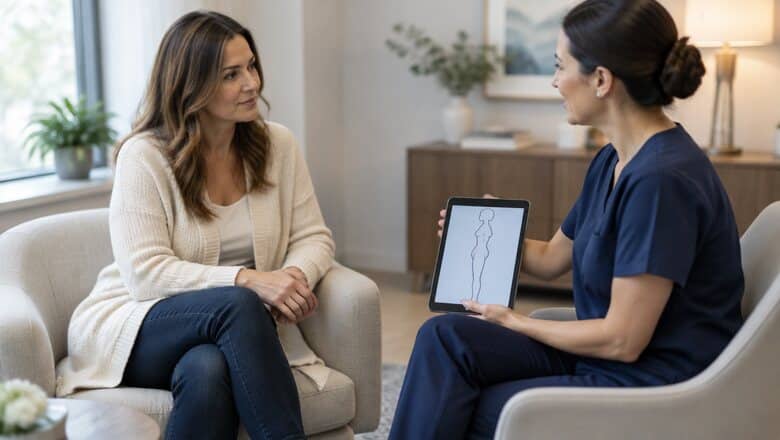
What to Expect at Your Buttock Lift Consultation
Your consultation is where you and your surgeon decide whether buttock lift surgery, a BBL, or a combination is right for you. Expect an honest, thorough conversation covering:
- Your motivation and goals — your surgeon will want to understand what’s driving your interest in surgery and what you realistically hope to achieve, since aligning expectations with what’s surgically achievable is central to patient satisfaction.
- Your medical history — including current medications, smoking status, and any conditions that could affect healing or anaesthesia.
- A physical examination — assessing the size, shape, and skin elasticity of your buttocks, and, if a BBL is being considered, the amount of donor fat available at other sites.
- Risks and realistic outcomes — a proper consultation ensures you’re fully informed about potential complications before any decision is made.
You’re likely a good candidate for buttock lift surgery if you’re at least 18, in good general health, have realistic expectations about the achievable result, have loose or sagging buttock skin that hasn’t responded to non-surgical measures, and have kept a stable weight, usually for around 12 months after major weight loss. For a BBL, you’ll also need sufficient donor fat available for transfer. A face-to-face consultation with one of our surgeons at 95–97 Baker Street will confirm which combination of procedures — if any — is right for you.
Risks of Buttock Lift Surgery
As with any surgical procedure, buttock lift and BBL surgery carry risks that your surgeon will discuss in full before you consent to treatment. These include infection, bruising and swelling, altered or reduced skin sensation, changes in skin pigmentation at the scar, delayed wound healing, and — in rare but serious cases — injury to underlying nerves or blood vessels. Choosing a surgeon on the GMC Specialist Register, operating in a CQC-regulated facility using ultrasound-guided fat transfer where a BBL is involved, lowers these risks.
Recovery After Buttock Lift Surgery

Immediate aftermath: expect localised bruising, swelling, and some discomfort in the first few days, managed with standard pain relief.
Short-term recovery (first 2–3 weeks): pain, swelling, and bruising should reduce significantly. Most patients return to non-strenuous work and light daily activity within this window. Where a BBL is combined, sitting directly on the buttocks should be avoided for the first two weeks to protect the transferred fat, and a compression garment is worn for six weeks.
Long-term recovery (2–3 months): full recovery is generally complete within two to three months, during which the final, settled contour becomes visible as residual swelling resolves.
How long buttock lift results last varies by individual, but skin removed surgically doesn’t return, and results are typically long-lasting — often for many years. For a BBL, fat that successfully integrates (typically the majority of the volume transferred) is permanent; maintaining a stable weight afterwards is the main factor in preserving the result, since further weight gain or loss will still affect buttock volume as it would anywhere else on the body. Our guide to what happens if you gain weight after a BBL explains this in more detail.
Non-Surgical Options for Saggy Buttocks

For patients with mild sagging who aren’t ready for or don’t want surgery, several non-surgical options exist. All are minimally invasive outpatient treatments with little to no downtime, though — unlike surgery — none of them removes excess skin.
Buttock Filler (HYAcorp)
For a non-surgical lift, we use HYAcorp filler for the buttocks, a hyaluronic acid filler made for body contouring. It adds modest volume and lift straight away, with no incisions, and breaks down gradually over time, so top-up treatments are needed to keep the result. Our comparison of butt injections vs a BBL sets out how filler and fat transfer differ. Collagen-stimulating injections such as Sculptra are offered by some clinics; they work more gradually, over several months.
Prices for non-surgical treatments are on our Skin & Aesthetics price list.
Skin Tightening (BodyTite / Morpheus8)
Where mild skin laxity, rather than significant sagging, is the main concern, energy-based skin tightening such as BodyTite or Morpheus8 delivers heat beneath the skin to stimulate collagen and tighten tissue through very small incisions, with minimal downtime. These treatments are a genuine middle ground for patients with early, mild sagging, though, like fillers, they can’t replicate the result of surgical skin removal where laxity is significant.
Non-surgical results are temporary: the body gradually breaks down injected filler, and the effect of skin tightening fades with ageing, so follow-up treatments are needed to sustain results over time.
How Much Does Buttock Lift Surgery Cost?
- Buttock lift (skin removal): priced at consultation, based on the extent of skin excess and whether liposuction or a BBL is combined in the same session.
- Brazilian Butt Lift (BBL): see our BBL cost guide.
- Buttock implants: quoted at consultation.
- HYAcorp buttock filler: priced by the volume used; see our Skin & Aesthetics price list.
All surgical packages include your surgeon’s fee, TIVA anaesthesia, theatre and facility fees at our CQC-regulated Baker Street hospital, pre-operative consultations, and structured aftercare. Your initial consultation fee is redeemable against the cost of your procedure if you proceed. Finance is available for some procedures through Chrysalis Finance, subject to status, but not for BBL, buttock implants or a non-surgical butt lift. Buttock lift and BBL surgery are cosmetic procedures and aren’t available on the NHS or covered by private medical insurance.
Frequently Asked Questions
How do you get rid of saggy buttocks?
It depends on the cause and severity. Mild sagging driven mainly by muscle tone can improve with consistent strength training targeting the glutes. Where genuine excess skin is present — especially after weight loss — buttock lift surgery is the only treatment that removes it directly. Where lost volume is the main concern, a BBL restores fullness through fat transfer. Non-surgical options such as buttock filler and skin tightening suit milder cases.
What is the difference between a buttock lift and a BBL?
A buttock lift removes excess, sagging skin and often slightly reduces buttock volume in the process. A BBL adds volume through fat transfer but doesn’t remove skin. Many patients — particularly after significant weight loss — benefit from combining both.
How much does a buttock lift cost?
Buttock lift surgery is priced individually at consultation based on the extent of skin removal required and whether it’s combined with liposuction or a BBL. If a BBL is combined, current BBL prices are in our BBL cost guide. Buttock implants are priced at consultation.
Does sagging buttocks after weight loss always need surgery?
Not always, but often. Mild cases can improve with targeted exercise and non-surgical treatments. Where significant weight loss has left genuinely excess, stretched skin, surgery is the only treatment that removes it — non-surgical options can’t replicate that result.
Can saggy buttocks exercises alone fix the problem?
Exercise strengthens the gluteal muscles and can meaningfully improve firmness, especially for mild sagging. It cannot remove excess skin or reverse the skin-elasticity changes that come with ageing or significant weight loss — those need surgical or non-surgical skin treatment.
How long does buttock lift surgery take to recover from?
Most patients see a significant reduction in swelling and discomfort within two to three weeks and are back to light activity by then. Full recovery, with the final settled contour visible, typically takes two to three months.
Is saggy buttocks surgery — or saggy bum surgery — permanent?
Skin removed during a buttock lift doesn’t return, so results are long-lasting. For a BBL, fat that successfully integrates is permanent, though ongoing weight changes will still affect buttock volume over time, the same as anywhere else on the body.
How can I tighten saggy skin on my buttocks?
It depends how much loose skin there is. Mild laxity can improve with energy-based skin tightening such as BodyTite or Morpheus8, and strength training fills out the muscle underneath so the skin sits more smoothly. Once skin hangs in a fold, no non-surgical treatment can shrink it enough, and a buttock lift, which removes the excess and lifts what remains, is the realistic option.
How long does it take to tone a saggy bum?
Expect at least two to three months of consistent glute training, two or three sessions a week, before you see a visible change, with improvement continuing for many months as the muscles grow. Exercise firms the muscle and can reduce the fat over it, but it will not remove loose skin, so it works best where sagging is mainly due to lost muscle tone.
Does walking lift your buttocks?
Not much on its own. Walking on the flat works the glutes only lightly, so it helps general fitness and fat loss more than shape. Walking uphill, taking the stairs or raising the treadmill incline works them harder, and resistance exercises such as squats, lunges, hip thrusts and step-ups are what build the muscle that gives the buttocks more lift.
Why Choose Centre for Surgery for Saggy Buttocks Treatment?
Whichever combination of treatments is right for you, it’s performed by a GMC-registered plastic surgeon at our purpose-built, CQC-regulated Baker Street clinic, rated “Good” overall. We offer the full range of relevant options — buttock lift, BBL, buttock implants, HYAcorp buttock filler and skin tightening — so your surgeon recommends the combination that genuinely suits your anatomy and goals, rather than defaulting to a single procedure.
Every package includes unlimited pre-operative consultations, a recommended two-week cooling-off period, full pre-operative medical assessment, a dedicated patient coordinator throughout, and full aftercare through your follow-up reviews.
Book Your Consultation
Phone: 020 7993 4849
95–97 Baker Street, Marylebone, London W1U 6RN
Contact us to schedule your consultation
Your initial in-person consultation fee is redeemable against the cost of surgery if you proceed.
References
- Kitzinger HB, Abayev S, Pittermann A, et al. After massive weight loss: patients’ expectations of body contouring surgery. Obes Surg. 2012;22(4):544–548. doi:10.1007/s11695-011-0551-6 ↗
- Giordano S, Victorzon M, Koskivuo I, Suominen E. Physical discomfort due to redundant skin in post-bariatric surgery patients. J Plast Reconstr Aesthet Surg. 2013;66(7):950–955. doi:10.1016/j.bjps.2013.03.016 ↗







