

In this guide11 sections
- What are breast implants?
- How to Pick the Right Shape for Your Breast Implant
- Round vs Anatomical Implants — Which Is Best?
- Breast Augmentation with Teardrop Implants
- Pros and Cons of Round Implants and Anatomical Implants
- Benefits of Breast Implants for Breast Augmentation
- Choosing Your Implant Shape: A Guide to Making the Right Decision
- Breast Implant Shape FAQs
- Breast Implant Shape — More FAQs
- Why Choose Centre for Surgery?
- Book Your Breast Implants Consultation at Centre for Surgery
Women who choose to have breast implant surgery find they have a wide range of different breast implant options available. Getting the best breast augmentation results is closely linked to selecting the most appropriate implant shape. Breast implants can be either round or teardrop-shaped, and each type has its pros and cons depending on the results you would like to achieve.
What are breast implants?
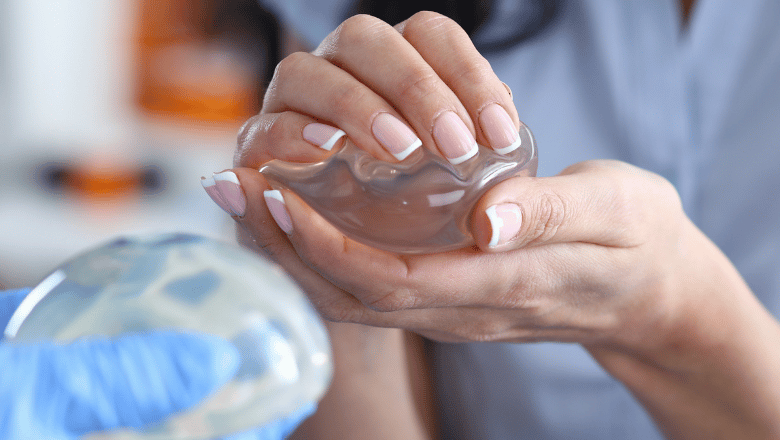
Breast implants are a type of surgical prosthesis that is placed beneath the breast tissue to achieve enhancement in the size, shape and fullness of the breast. Breast implants can also be used as part of breast reconstruction surgery for women who have had a mastectomy for breast cancer, or for correcting certain congenital conditions or chest wall defects such as pectus excavatum or Poland’s syndrome.
Breast implants come in two main varieties depending on the internal filler material. Saline implants contain a sterile saline (salt water) solution, while silicone implants contain a medical-grade cohesive gel. Saline implants are rarely used in the UK today, as silicone implants more closely mimic the natural feel of breast tissue with less risk of rippling or visible implant edges.
How to Pick the Right Shape for Your Breast Implant
Every woman is unique, and so is the shape and size of her breasts. If you’re not sure how to describe your current shape, our guide to breast shapes shows the common types with charts. That’s why various breast implant shapes and sizes are available to cater to each individual’s needs. Some women want a modest increase in bust size with subtle implants, while others want a more dramatic change. There’s also a choice to make between a rounder, more noticeable shape or a more subtly sloped, natural-looking outcome.
When considering breast augmentation with silicone implants, you can opt for either round or teardrop-shaped implants. Your choice will likely be influenced by a few key things:
Your body’s natural build
Think about your body’s overall proportions when choosing an implant. Broader shoulders or a taller frame can generally accommodate larger implants while still looking proportionate; a more petite frame may suit smaller implants better.
Your current breast size
The amount of natural breast tissue you have now will also influence your choice. If you already have a reasonable amount of breast tissue, a larger implant can blend in more easily, giving a seamless and natural appearance.
Your daily life and activities
Round implants are less prone to visible distortion if they rotate within the pocket, which is worth considering if you’re very physically active — running, gym training, or yoga, for example.
Round vs Anatomical Implants — Which Is Best?
When it comes to breast implants, the shape you choose can significantly influence the final look and feel of your breasts after surgery. Here’s a breakdown of the key differences:
Round Implants
As the name suggests, these implants are circular and tend to give the breasts a fuller, more rounded appearance, with volume distributed evenly above and below the nipple. They fit snugly and uniformly in the breast cavity and can enhance the cleavage area. Round implants are the most commonly used shape in primary breast augmentation, since they’re symmetrical — rotation within the pocket doesn’t distort the result the way it can with an anatomical implant.
Teardrop (Anatomical) Implants
Mimicking the natural shape of a breast more closely, teardrop implants — sometimes called anatomical implants, or informally “gummy bear implants” because of their firm, cohesive silicone gel — taper at the top and gradually increase in size towards the base. This creates a more gradually sloped contour, especially beneficial for those wanting a subtler enhancement. Teardrop implants aren’t symmetrical, so they always use a textured surface to help the surrounding tissue grip the shell and minimise the risk of rotation — if a teardrop implant does rotate, the breast shape distorts and may require correction.
The best way to choose the ideal shape of a breast implant is an in-person consultation, allowing your surgeon to assess your chest and existing breast tissue to guide selection.
Breast implants with fat transfer or a breast lift (mastopexy)
For women with significant degrees of breast sagging, implants alone may not be sufficient to correct shape. Optimum correction can often be achieved by combining a breast lift with implants, also known as an augmentation mastopexy.
Breast Augmentation with Teardrop Implants
Teardrop implants are a common choice for patients who want a natural, gradually sloped breast contour rather than a fuller, more rounded upper pole. The implant tapers at the top, so the augmented breast tends to sit with less prominence at the collarbone and more fullness lower down — a look many patients associate with a subtler, less “obviously augmented” result. This makes teardrop implants a frequent choice for patients with limited existing breast tissue who want to avoid excessive upper pole fullness, and for patients specifically requesting a natural slope rather than a rounder profile.
Correct orientation matters more with an anatomical shape, so your surgeon will take particular care with pocket dissection and implant sizing to minimise the risk of rotation. Results are generally assessed at the same milestones as any breast augmentation — initial swelling settles over the first few weeks, with the final shape and slope becoming apparent by around 3 months as the tissue softens around the implant.
Pros and Cons of Round Implants and Anatomical Implants
Women should be clear about what they would like to achieve from breast implant surgery when they have an in-person consultation with a specialist plastic surgeon.
Round implants are technically easier to manufacture, which is generally reflected in a lower cost than anatomical implants. They don’t carry the rotation risk associated with teardrop implants, and are commonly available with a smooth surface, which has not been linked with BIA-ALCL. Round implants also tend to have a slightly softer feel compared with teardrop implants.
Anatomical implants generally cost more than round implants, since they’re more complex to manufacture. They always use a textured surface to minimise rotation risk, and this firmer, textured construction more closely mimics the feel of natural breast tissue. It’s worth being precise here: the higher BIA-ALCL risk associated with some historical implant ranges relates to macro-textured surfaces specifically, not to teardrop shape itself — polyurethane-coated implants (a texture option available on teardrop-shaped implants at Centre for Surgery) have a significantly reduced capsular contracture rate, but they are a textured surface and cases of BIA-ALCL have been reported with them, so the trade-off is one to discuss with your surgeon.
Benefits of Breast Implants for Breast Augmentation
Breast augmentation surgery is designed to enhance the size, shape, or fullness of the breasts. Silicone implants are the most commonly used breast implants in the UK and can be placed either above the breast tissue or beneath the pectoralis muscle. Patient satisfaction rates after breast augmentation are consistently high; our guide to whether a boob job is worth it looks at the common myths.
Choosing Your Implant Shape: A Guide to Making the Right Decision
When considering breast implants, there’s a lot to think about: size, shape, and profile, just to name a few. Here are a few pointers to help you navigate this decision confidently:
Educate Yourself
The more you know about the options available to you, the more empowered you’ll feel to make a choice. Understand the difference between the various implant shapes and what each can offer in terms of results.
Trust in Expertise
Lean on the experience and knowledge of your chosen plastic surgeon. They can offer guidance based on what they’ve seen work best for others with similar body types and goals.
Visualise the Outcome
Think about how you want to look and feel after the procedure. This end goal can help guide your decision-making.
Stay True to Yourself
While it’s helpful to get opinions from friends or loved ones, remember that this is your body and your choice.
Breast Implant Shape FAQs
How do you choose between round or teardrop implants?
Round and teardrop implants each have their benefits and drawbacks. Round implants cost less and enhance fullness in both the lower and upper portions of the breast. Anatomical implants are popular with patients who want a naturally sloped result, though they carry a rotation risk round implants don’t.
Are teardrop implants smaller than round implants?
Anatomical implants often appear slightly smaller than round implants of the same volume, largely because of how round implants distribute fullness across a wider area. Anatomical implants give a more gradually sloped appearance due to their firmer gel, which holds shape more precisely.
Do round implants look natural?
Round implants can produce natural-looking results when placed by an experienced plastic surgeon, and often settle into a natural teardrop-like shape once a patient is standing. Anatomical implants may provide a more consistently natural look both standing and lying down, since round implants can appear more distinctly rounded when lying flat.
Why do teardrop implants cost more than round implants?
Round implants cost less to manufacture, and this saving is generally passed on to the patient.
Are anatomical implants safe?
Yes, when placed by an experienced surgeon. The BIA-ALCL risk sometimes associated with anatomical implants relates specifically to macro-textured surfaces rather than the teardrop shape itself — cases have also been reported with polyurethane-coated anatomical implants, while smooth implants have not been linked with it. Your surgeon will advise on the most appropriate implant for your circumstances.
What is the most natural type of breast implant?
Modern silicone cohesive-gel implants — both round and teardrop — have a very natural feel and consistency. Saline implants are rarely used today as they don’t feel as natural as medical-grade silicone. Our guide to the most natural-looking breast implants goes into more detail.
How to have a natural breast augmentation
There are also alternatives to breast augmentation with implants. Fat transfer breast augmentation involves harvesting fat from another area of the body and injecting it into the breasts to achieve a natural enhancement using your own tissue. We set out the pros and cons of fat transfer breast augmentation separately.
Breast Implant Shape — More FAQs
Are round implants or teardrop implants better?
Neither is universally superior — it comes down to individual preference and desired outcome. Round implants give a fuller appearance, especially at the top of the breast. Teardrop implants mimic the natural slope of the breast for a more gradual profile. Your surgeon can guide you based on your anatomy and aesthetic goals.
Do round implants look bigger than teardrop?
Round implants tend to give a fuller appearance in the upper portion of the breast, so even at the same volume, they can appear more prominent because of how that volume is distributed.
What do anatomical implants look like when lying down?
Teardrop implants retain their structured shape more consistently than round implants, which can spread out somewhat when a patient lies down.
What implants does Centre for Surgery use?
At Centre for Surgery, we use Silimed implants exclusively — chosen for their industry-leading capsular contracture rates and biotype-matched BioDesign sizing across both round and anatomical shapes. Silimed is CE-marked and backed by a Silimed replacement guarantee (rupture from a manufacturing defect, and grade III–IV contracture with textured or polyurethane implants after a first augmentation).
Can round implants look natural?
Yes. The key lies in choosing the right size and projection for the patient’s body type, correct placement, and the expertise of the surgeon.
What’s the most popular breast implant size?
Preferences vary widely, but a common range is between 325 and 375cc, which typically results in a size from a small to large C cup depending on starting breast tissue and chest dimensions.
Is 50 too old to have breast implants?
Age itself isn’t a strict barrier — overall health is what matters. Patients in their 50s and beyond can be good candidates for breast augmentation if they’re in good health, have realistic expectations, and are cleared by their surgeon.
Why Choose Centre for Surgery?
GMC-registered plastic surgeons
All breast implant surgery at Centre for Surgery is performed by GMC-registered plastic surgeons — members of BAPRAS and ISAPS.
Full range of implant shapes, profiles, and placements
Both round and anatomical (teardrop) implants are available in a full range of profiles and placement techniques, so your surgeon can build a genuinely tailored recommendation for your anatomy rather than defaulting to a single approach.
CQC-regulated private hospital
Surgery takes place at our purpose-built private hospital at 95–97 Baker Street, Marylebone, rated “Good” by the Care Quality Commission.
Two-week cooling-off period
We recommend a two-week cooling-off period after every consultation.
Book Your Breast Implants Consultation at Centre for Surgery
- Call Us: 020 7993 4849
- Online: Fill out the contact form below and we’ll confirm your appointment.
Our facility is conveniently located in the heart of Marylebone on Baker Street.