


In this guide11 sections
- Key Points
- Why telling them apart matters
- How to tell if it is fat, loose skin or cellulite
- What works for each — and what does not
- How to treat stubborn fat
- How to treat skin laxity
- How to treat cellulite
- Mixed presentations: when you have more than one
- When to consider doing nothing
- Frequently asked questions
- Speak to a plastic surgeon
Key Points
- Stubborn fat, skin laxity and cellulite look similar and are treated completely differently. Treating the wrong one is the most common reason results disappoint.
- The pinch test separates them. Thick soft tissue that yields is fat; skin that returns slowly is laxity; dimpling that deepens when pinched is cellulite.
- Liposuction on a laxity problem makes laxity worse. Removing volume from skin that cannot retract leaves more loose skin, not less.
- Skin tightening on a fat problem gives tighter skin over the same fat.
- Most people have a mixture rather than one pure presentation, which is why sequencing matters.
- Doing nothing is a legitimate answer for all three. None of them is a medical problem.
Why telling them apart matters
One of the most common reasons a body contouring treatment fails to produce the expected result is that the wrong condition was being treated.
Stubborn fat, skin laxity and cellulite all produce soft, uneven or dimpled contour. In a photograph they can be almost indistinguishable. Underneath, they are three different mechanisms — excess volume, lost elasticity, and fibrous tethering — and each responds to a different intervention. Worse, the treatments are not neutral when misapplied: liposuction performed on a skin laxity problem reliably makes the laxity more obvious.
This guide explains how to identify which you have. For treatment detail on cellulite specifically, see our guide to what causes cellulite and what actually works.
How to tell if it is fat, loose skin or cellulite
Stubborn fat
Subcutaneous fat that persists in specific areas despite good overall body composition. Distribution is genetically determined — some people store preferentially on the lower abdomen, hips, outer thighs, upper arms or under the chin, and those areas stay disproportionately full even at a low body fat percentage.
How to identify it: pinch the area. You feel a thick, soft layer that yields under pressure. The skin over it is normal — smooth, firm, and it snaps back immediately when released. The problem is the volume of fat, not the quality of the skin.
Skin laxity
Loose, redundant skin that has lost elastic recoil. The fat underneath may be normal or already reduced; the contour problem is the skin envelope itself. Common after significant weight loss, after pregnancy, with age, and sometimes after liposuction in patients whose skin could not retract.
How to identify it: pinch the skin and release it. It returns slowly, or stays slightly raised, rather than snapping back. You can see folds, hanging skin or fine surface wrinkling. The area looks empty rather than full.
Cellulite
The dimpled texture — often described as orange peel or cottage cheese skin, and as peau d’orange in medical writing — appearing mainly on the thighs, buttocks and lower abdomen. It affects an estimated 80–90% of post-pubertal women and a much smaller proportion of men (Sadick, 2018 ↗).
It is caused by fibrous bands, or septae, that anchor the skin to the deeper fascia. Fat pushes upward between the bands while the bands hold the skin down at fixed points, producing the dimpled surface.
How to identify it: visible dimpling that becomes more obvious when the skin is pinched or the muscle underneath is tensed. Fat volume may be entirely normal. Cellulite is largely independent of body weight and persists at low body fat percentages.

What works for each — and what does not
| Condition | What works | What doesn’t |
|---|---|---|
| Stubborn fat | Liposuction, non-surgical fat reduction, sustained calorie deficit | Skin tightening (no fat is removed), cellulite treatments |
| Skin laxity | Excisional surgery (abdominoplasty, body lift, brachioplasty), energy-based tightening for mild cases, time after weight stabilises | Liposuction alone (worsens laxity), fat-reduction treatments |
| Cellulite | Septal release, radiofrequency microneedling, realistic expectations | Liposuction (does not reach the septae), weight loss alone, creams |
How to treat stubborn fat
Lifestyle first. A sustained calorie deficit reduces body fat overall, including stubborn areas — but proportionally, following your genetic distribution. Some people reach a low body fat percentage and still have specific areas that will not shift.
Non-surgical fat reduction suits small areas with good skin quality. TightSculpting uses laser energy to destroy a proportion of fat cells, which clear over subsequent weeks. Effective for modest reductions across multiple sessions; not appropriate for larger volumes.
BodyTite combines radiofrequency-assisted lipolysis with simultaneous skin tightening, which suits areas with both stubborn fat and mild laxity. See BodyTite.
Liposuction remains the most reliable method of reducing subcutaneous fat in a defined area. Good skin quality matters, so the skin retracts evenly over the reduced contour. VASER and 360 liposuction suit different patterns and volumes.
How to treat skin laxity
The question is degree. Mild surface laxity can be treated non-surgically; moderate to severe laxity needs excision.
Mild laxity — skin that has lost some firmness but retains reasonable recoil:
- Morpheus8 — radiofrequency microneedling for the face and smaller body areas
- Morpheus8 Body — deeper penetration for the abdomen, arms, thighs and bra line
- FaceTite for facial skin tightening using subdermal radiofrequency
- Fotona 4D for moderate facial laxity with less downtime than Morpheus8
Moderate to severe laxity — visible hanging skin, folds, tissue that does not retract:
- Abdominoplasty for abdominal laxity after pregnancy or weight loss
- Arm lift (brachioplasty) for upper arm laxity
- Thigh lift for inner or outer thigh laxity
- Body lift procedures for major post-weight-loss redundancy
- Facelift or neck lift for facial and neck laxity
The honest position is that energy-based tightening cannot substitute for excisional surgery where there is significant skin redundancy. Patients who work through several non-surgical treatments hoping to avoid an operation usually spend more in total than the operation would have cost, with a worse result.
How to treat cellulite
Cellulite is the hardest of the three to treat, because the cause is anatomical — fibrous tethering — rather than something that can be dieted away or simply tightened.
A 2023 review in Aesthetic Plastic Surgery found no consensus on optimal treatment and proposed an algorithm by severity: lifestyle measures for mild cellulite, non-invasive energy-based treatment for moderate cellulite, and minimally invasive approaches such as subcision for severe cellulite (Menon et al., 2023 ↗).
What has evidence:
- Septal release (subcision) — physically divides the bands producing the dimples. More effective than topical or surface energy treatments for established dimpling.
- CelluTite — our combined procedure of cellulite subcision and argon plasma skin tightening in a single session. Subcision releases the bands; argon plasma contracts the tissue and stimulates collagen so the released skin stays lifted.
- Morpheus8 Body where cellulite is combined with mild skin laxity. Multiple sessions are required.
What does not work meaningfully:
- Liposuction — addresses volume, not septae, and can accentuate dimpling
- Weight loss alone — cellulite persists at low body fat
- Topical creams — no credible evidence of lasting effect; our guide to whether cellulite creams work goes through the trials
- Dry brushing, massage tools, wraps — temporary at best
- Most fat-burning treatments — wrong target entirely
Cellulite treatment improves appearance. It does not eliminate cellulite, and nothing does.
Mixed presentations: when you have more than one
Most patients do not present with one pure problem. Common combinations:
- Stubborn fat with mild laxity after moderate weight loss — often well treated with BodyTite or Morpheus8 Body alongside weight stabilisation. Larger cases may need liposuction with a tightening adjunct.
- Significant fat with significant laxity after major weight loss — usually needs liposuction combined with excisional surgery rather than energy-based tightening.
- Cellulite with stubborn fat on the thighs and buttocks — needs careful planning, because treating the fat first can make the remaining dimpling more visible.
- Cellulite with skin laxity post-pregnancy or post-weight-loss — may need both a texture treatment and an excisional approach, in sequence.
Sequencing is what a consultation is for.
When to consider doing nothing
All three are cosmetic concerns rather than medical problems. Cellulite is close to universal in women. Some skin laxity with age is normal. Stubborn fat distribution is genetic. None of them requires treatment.
The decision to treat is personal, and for many people the right answer is to accept ordinary variation and do nothing. The patients who do best are those with a specific, identifiable concern that genuinely affects their quality of life, and expectations that match what an operation can deliver. The patients who do worst are those treating one of these conditions when the real issue is something else — usually unaddressed body image concerns, which surgery does not resolve and can worsen. Our guide to body dysmorphia and cosmetic surgery covers that honestly.
Frequently asked questions
How do I know if I have cellulite or loose skin?
Pinch and release. Skin that returns slowly or stays raised indicates laxity. Dimpling that becomes more pronounced when you pinch or tense the muscle indicates cellulite. The two frequently coexist.
Can liposuction fix loose skin?
No — it usually makes it worse. Removing volume from skin that has already lost elasticity leaves more redundant skin, not less. Where laxity is significant, excisional surgery is the appropriate option.
Will losing weight fix any of these?
It reduces stubborn fat proportionally. It does not restore skin elasticity, and it does not remove cellulite — dimpling sometimes looks more obvious after weight loss.
Can I have more than one treated at once?
Frequently, yes. Combined procedures under one anaesthetic are common where a patient has both fat and laxity, or both cellulite and fat. Your surgeon will advise on whether to combine or stage.
Is cellulite a sign of being unhealthy?
No. It occurs at every body weight, including in lean, athletic people, and carries no health implication.
Speak to a plastic surgeon
An in-person assessment is the reliable way to establish which of these you actually have, in what combination, and whether treatment would help. Often it establishes that it would not — which is a useful answer in itself.
Call 020 7993 4849 or contact us to arrange a consultation at 95–97 Baker Street, Marylebone, London W1U 6RN.
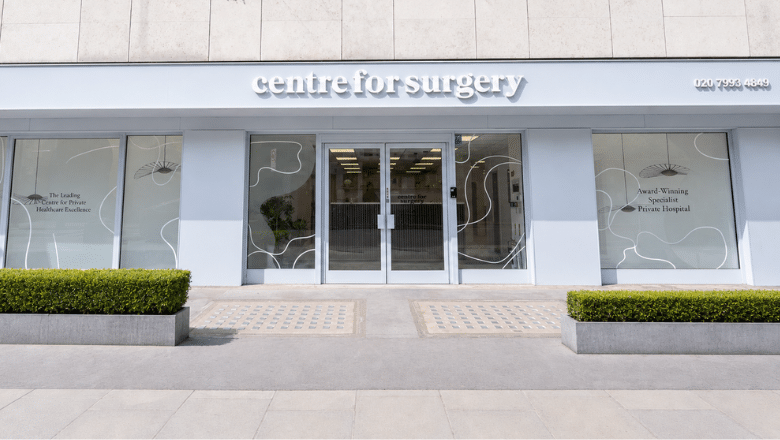
Consultations take place at our CQC-regulated private hospital in Marylebone, with all surgery performed by GMC-registered plastic surgeons. If you are travelling from outside London, our guide to travelling to us for surgery covers timings and accommodation, and finance options explains how treatment can be spread over a fixed term.
Further reading
- Cellulite treatment: what causes cellulite and what actually works
- Can liposuction get rid of cellulite?
- Do cellulite creams, massagers and dry brushing work?
- How to get rid of body fat: what actually works
- How to lose weight before cosmetic surgery
- BMI and cosmetic surgery eligibility