


In this guide14 sections
- Silicone vs Saline: The Two Breast Implant Fill Materials
- Saline Breast Implants
- Silicone Breast Implants
- A Brief History of Breast Implants
- Which Is Safer: Silicone or Saline?
- Implant Rupture: Saline vs Silicone
- Similarities Between Silicone and Saline Implants
- Key Differences Between Silicone and Saline Implants
- Cost Considerations
- Things to Consider Before Choosing Breast Implants
- Choosing the Right Surgeon
- Silicone vs Saline: Summary
- FAQs on Silicone and Saline Implants
- Silicone vs Saline Implants at Centre for Surgery
Silicone vs Saline: The Two Breast Implant Fill Materials
When considering breast augmentation, it’s important to understand there are two main fill materials to choose between: silicone and saline. Both have genuine advantages, though in practice one is now used far more often than the other in the UK.
Saline Breast Implants
Saline implants have a silicone outer shell that’s inserted empty and then filled with sterile salt water during surgery.
Advantages of Saline Implants
Smaller incision
The shell is filled after insertion rather than beforehand, so the incision needed can be smaller.
Adjustable fill
The surgeon can fine-tune the exact fill volume at the time of surgery, which offers slightly more flexibility for minor asymmetry correction between the two sides.
Disadvantages of Saline Implants
Visibility and texture
Saline implants are more prone to visible rippling beneath the skin, particularly in patients with thinner overlying tissue.
Feel
Saline implants tend to feel firmer and less natural than silicone, and some patients notice a subtle rippling sensation — sometimes called the “water hammer” effect — when the implant moves.
Saline is rarely used in UK breast augmentation today, largely for the reasons above — most patients and surgeons prefer the more natural result silicone gives.
Silicone Breast Implants
What Are Silicone Implants?
Silicone implants are filled with cohesive silicone gel, with a silicone outer shell. They’re available across a wide range of sizes, shapes, and profiles.
Advantages of Silicone Implants
- Natural feel: cohesive silicone gel closely resembles the consistency of natural breast tissue — the main reason it’s now the standard choice in the UK.
- Range of options: available across a full range of sizes, shapes, and profiles, allowing a genuinely tailored fit.
Disadvantages of Silicone Implants
- Rupture is less immediately obvious: modern cohesive gel tends to stay largely contained within the capsule if the shell is damaged, but this also means a rupture can go unnoticed for longer than with saline.
- Requires a slightly larger incision: since the implant is pre-filled before insertion.
A Brief History of Breast Implants
Silicone gel implants were first developed in the 1960s, with saline implants gaining wider use from the 1990s onward — largely due to the perceived reassurance of a saltwater fill. Since then, implant design has gone through multiple generations of improvement: modern cohesive gel is significantly more resistant to migration if the shell is damaged, and today’s implants hold their shape and texture more reliably than earlier generations.
Which Is Safer: Silicone or Saline?
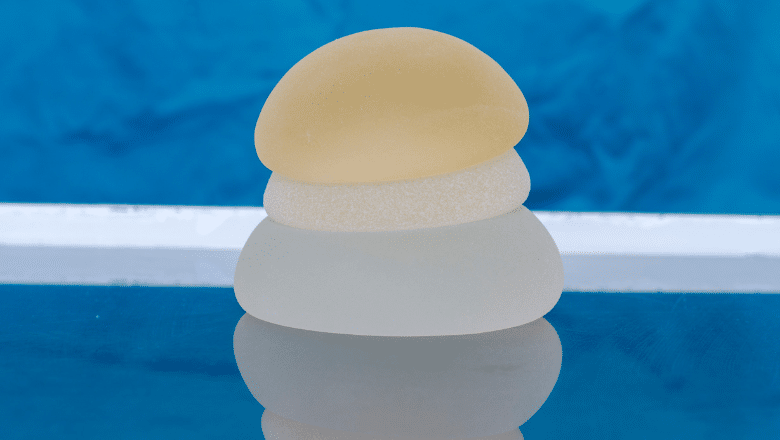
Both saline and silicone implants are considered safe when placed by an appropriately trained surgeon — safety depends far more on surgical skill and appropriate implant selection than on fill material alone. All implants used in the UK, including those used at Centre for Surgery, are MHRA-approved.
Breast Implant Illness (BII): a small proportion of patients report symptoms such as fatigue, persistent headaches, joint or muscle aches, “brain fog,” and gastrointestinal issues, which some attribute to their implants. There is currently no confirmed scientific evidence directly linking breast implants to these symptoms, though some patients report improvement after implant removal — this remains an area of ongoing research rather than settled fact.
Neither material has a fixed expiry date. Implants don’t automatically need replacing at a set point — the Silimed implants used at Centre for Surgery carry a Silimed replacement guarantee (rupture from a manufacturing defect, and grade III–IV contracture with textured or polyurethane implants after a first augmentation), and replacement is guided by your individual circumstances and any symptoms, not a fixed calendar.
Implant Rupture: Saline vs Silicone
Rupture is uncommon with either material, but the two present very differently.
Saline Implant Rupture
Immediately visible
A ruptured saline implant deflates noticeably within a short period, so the change is usually obvious.
Safely absorbed
The sterile saline is absorbed harmlessly by the body — surgical removal of the deflated shell is still needed, and you can choose whether to replace it.
Silicone Implant Rupture
Often silent
A ruptured silicone implant often doesn’t change the visible shape of the breast, since the cohesive gel tends to stay largely contained within the surrounding capsule — this is why it’s sometimes called a “silent rupture.”
Signs to watch for
Gradual changes in breast size, shape, or firmness, or new breast pain, can indicate a rupture and warrant assessment.
Next steps
A ruptured silicone implant needs to be surgically removed; you can choose whether to replace it at the same time.
Similarities Between Silicone and Saline Implants
- Customisable: both can be tailored in size, profile, and placement to suit your anatomy and goals.
- Silicone outer shell: both implant types use a silicone outer shell regardless of the internal fill.
- Regulatory approval: both fill materials are MHRA-approved for use in the UK, reflecting the testing and scrutiny they’ve undergone.
Key Differences Between Silicone and Saline Implants
- Composition: saline implants have a silicone shell filled with sterile salt water; silicone implants have a silicone shell filled with cohesive silicone gel.
- Incision: saline implants can generally use a smaller incision, since they’re filled after insertion; silicone implants require a slightly larger incision as they’re pre-filled.
- Detecting rupture: saline rupture is immediately visible through deflation; silicone rupture is often silent and may require imaging to confirm.
- Feel and appearance: silicone more closely mimics natural breast tissue; saline is more prone to visible rippling, especially with thinner overlying tissue.
Cost Considerations
Most private medical insurance doesn’t cover elective breast augmentation, so cost is worth planning for realistically:
- Initial cost: silicone implants are generally more expensive than saline, reflecting the material and manufacturing involved.
- Ongoing monitoring: if you notice any change in your breasts — size, shape, firmness, or new pain — this should prompt an assessment regardless of implant type. Routine imaging isn’t automatically required for asymptomatic patients, though your surgeon can advise on a monitoring approach suited to your circumstances.
- Hidden costs to plan for: consultation fees, post-operative garments, medications, and follow-up appointments are all worth factoring in alongside the headline procedure cost.
Things to Consider Before Choosing Breast Implants
Ageing and sagging
Implants don’t prevent natural sagging over time — gravity continues to act regardless of implant type. If sagging is a specific concern, a breast lift, potentially combined with augmentation, may be more appropriate.
Longevity
Neither implant type is designed to last a lifetime, but there’s no fixed point at which replacement becomes necessary — it’s guided by your individual circumstances rather than a set schedule. Natural processes like ageing, weight change, and pregnancy will continue to affect your breast shape regardless of implant choice.
Mammograms and implants
Implants can make mammograms somewhat more complex to interpret, so it’s important to tell your radiologist about them beforehand. Ask your radiographer whether Eklund displacement views are being used, as these help ensure breast tissue is properly visualised around the implant.
Insurance and cost
Cosmetic breast augmentation isn’t typically covered by private medical insurance unless there’s a medical indication such as post-mastectomy reconstruction.
If you later choose implant removal
If you decide to have your implants removed in future, a breast lift may also be worth considering to help restore shape.
Choosing the Right Surgeon
Whichever material you choose, the surgeon performing your procedure matters more to your outcome and safety than the fill material itself. At consultation:
- Ask to see before-and-after photos relevant to your goals.
- Discuss your expectations, concerns, and aesthetic goals openly.
- Confirm your surgeon is a GMC-registered plastic surgeon.
Silicone vs Saline: Summary
Safety: both are considered safe when placed by an appropriately trained surgeon; neither is inherently safer than the other in terms of core material risk.
Rupture: saline rupture is immediately obvious through deflation; silicone rupture is often silent and may need imaging to confirm.
Feel and appearance: silicone more closely resembles natural breast tissue; this is the main reason it’s now the standard choice for most UK patients.
Incision: saline generally allows a smaller incision, since it’s filled after placement.
At Centre for Surgery, we use Silimed silicone implants exclusively, reflecting the clinical evidence on natural feel, low rupture rate, and capsular contracture outcomes.
FAQs on Silicone and Saline Implants

Are silicone implants safer than saline?
Both are MHRA-approved and considered safe. The right choice for you depends on your goals and your surgeon’s advice, more than any inherent safety difference between the two materials.
How often should implants be replaced?
There’s no fixed expiry date for either material. Replacement is guided by symptoms or complications rather than a set timeline — the Silimed implants used at Centre for Surgery carry a Silimed replacement guarantee (rupture from a manufacturing defect, and grade III–IV contracture with textured or polyurethane implants after a first augmentation).
What happens if an implant ruptures?
A ruptured saline implant deflates visibly and the saline is safely absorbed by the body. A ruptured silicone implant is often silent, with the gel remaining largely within the surrounding capsule. Both require the ruptured implant to be surgically removed; replacement is your choice.
Can I breastfeed with implants?
Many women with breast implants breastfeed successfully. Incision type can be a factor — the inframammary approach used at Centre for Surgery is generally considered the most breastfeeding-friendly.
Do implants affect mammograms?
They can make mammograms somewhat more complex to interpret, though not impossible. Always tell your radiologist about your implants beforehand.
What does “capsular contracture” mean?
It refers to tightening of the scar tissue capsule that naturally forms around any implant, which can make the breast feel firm or appear distorted. It’s a recognised potential complication with either implant material.
How long is recovery after breast implant surgery?
Most patients return to light activities within a week, with full activity resuming over the following weeks — your surgeon will confirm a timeline specific to your procedure at consultation.
Do implants feel like natural breasts?
Silicone implants generally feel closer to natural breast tissue than saline. Individual experience varies with placement, implant selection, and your own tissue coverage.
How will weight change affect my implants?
The implants themselves don’t change size, but the surrounding breast tissue can, which affects overall appearance over time.
Silicone vs Saline Implants at Centre for Surgery
Breast augmentation at Centre for Surgery is performed by GMC-registered plastic surgeons, at our CQC-regulated Baker Street facility, using Silimed silicone implants exclusively. Every package includes a recommended two-week cooling-off period and full pre-operative assessment.
Book Your Consultation
Phone: 020 7993 4849
95–97 Baker Street, Marylebone, London W1U 6RN
Contact us to schedule your consultation







