


In this guide10 sections
- What Is Nipple Inversion?
- What Causes Inverted Nipples?
- What Are the Grades of Inverted Nipples?
- Should I Consider Nipple Correction Surgery?
- How to Fix an Inverted Nipple
- Inverted Nipple Correction Surgery Procedure
- Recovery After Inverted Nipple Correction Surgery
- How Much Does Inverted Nipple Surgery Cost?
- FAQs on Inverted Nipple Surgery
- Inverted Nipple Correction at Centre for Surgery
Inverted nipples are a condition characterised by the nipple being recessed into the breast instead of protruding outwards. This is one of the most common inverted nipples causes of self-consciousness people bring to a breast consultation, and it’s genuinely common — inverted nipples affect up to one in five people in the UK, regardless of gender. Inverted nipples can occur on one or both sides; some people find that only one nipple is inverted, while others experience it bilaterally. One of the most common questions we hear alongside this — inverted nipples breastfeeding compatibility — is covered in full further down this guide.
What Is Nipple Inversion?
Inverted nipples are a naturally occurring anatomical variation affecting an estimated 20% of both men and women, predominantly present from birth. The condition can be unilateral (one side) or bilateral (both sides).
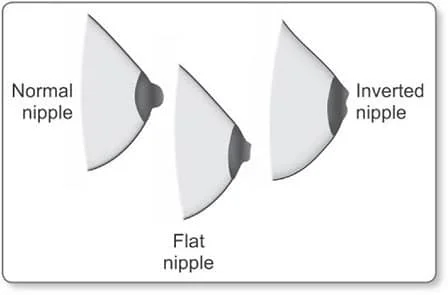
Primarily, inverted nipples are a cosmetic concern rather than a medical issue. They can present practical challenges for some women when it comes to breastfeeding, since the inversion can complicate a newborn’s ability to latch correctly.
The behaviour of inverted nipples varies. Some remain inverted at rest but become everted (protrude outward) in response to cold, arousal, or physical manipulation. Others stay permanently inverted regardless of stimuli. A related but distinct variation is a ‘flat nipple’, where the nipple lies flush against the areola rather than inverting or protruding.
What Causes Inverted Nipples?
Several inverted nipples causes exist. The most common is the physical structure of the milk ducts — when these ducts are shorter and tighter than average, they pull the nipple inward. The natural process of ageing and associated breast sagging (ptosis) can also outpace the ducts’ ability to elongate, leading to inversion as tissue droops.
Inflammation within the breast, from conditions such as breast abscesses or chronic mastitis, can lead to fibrosis — a thickening or scarring of tissue that also contributes to inversion. Physical trauma, extensive breastfeeding, infections, and surgeries such as mastectomy or breast reduction can alter breast structure or damage the nipple area, resulting in inversion. Genetics also plays a role — some people are simply predisposed to inverted nipples as part of their natural anatomy from birth.
It’s crucial to differentiate between congenital inverted nipples and those that invert later in life. A nipple that becomes inverted spontaneously, without an apparent cause, can occasionally be a warning sign of underlying breast cancer — most commonly where a tumour has invaded a milk duct near the nipple. A rarer cause is Paget’s disease of the breast, a form of breast cancer affecting the nipple and areola skin that can present with an inverted nipple alongside a rash, crusting, or inflammation — often initially mistaken for eczema. Such changes should prompt an immediate GP consultation to rule out malignancy.
Can Menopause Cause Inverted Nipples?
Menopause isn’t a direct cause of nipple inversion, but the hormonal changes it brings can affect breast tissue composition and, in some women, contribute to changes in nipple appearance as skin elasticity and glandular tissue shift. If you notice a genuinely new inversion around this time rather than a lifelong pattern, it’s still worth a GP assessment to rule out other causes rather than assuming it’s simply menopausal.
How Is Sudden Nipple Inversion Investigated?
If nipple inversion develops suddenly or changes in adulthood, your GP will typically begin with a physical examination — checking the nipple’s response to stimuli and looking for accompanying lumps, skin changes, or discharge — alongside a review of your medical history. Further investigation may include a mammogram (particularly for women over 40 or with a family history of breast cancer), a breast ultrasound, an MRI, or a needle biopsy. Most people who go through this pathway are found to have a benign, unrelated cause — but the investigation is what confirms this, rather than assuming it.
What Are the Grades of Inverted Nipples?

Inverted nipples are classified according to a grading system that reflects the degree of inversion and the effort required to evert the nipple.
Grade 1 (Mild Inversion)
The nipple exhibits mild inversion but protrudes outward with minimal stimulation or effort. This is the most adaptable grade, and people with Grade 1 inversion generally face fewer challenges with breastfeeding or aesthetics.
Grade 2 (Moderate Inversion)
Everting the nipple requires considerable effort, and although it can be coaxed to protrude, it retracts more readily once stimulation ceases. This grade poses greater challenges to cosmetic appearance and function, including potential breastfeeding difficulties.
Grade 3 (Severe Inversion)
The nipple is deeply inverted and shows marked resistance to eversion, remaining inverted regardless of external stimuli. This grade can have a pronounced impact on self-esteem and considerably complicates breastfeeding.
Nipple inversion can occur unilaterally or bilaterally, with the possibility of differing grades on each side.
Should I Consider Nipple Correction Surgery?
Deciding whether to undergo nipple correction surgery is a decision that warrants careful consideration alongside your surgeon’s recommendation. Several compelling benefits could significantly enhance your quality of life, both aesthetically and functionally.
Enhanced Aesthetic Appearance
Your nipples project outward more naturally after surgery, contributing to a more symmetrical breast appearance.
Psychological and Emotional Well-being
Restoring normal nipple projection can significantly boost self-esteem, body image, and self-perception.
Restoration of Symmetry
Where inversion is unilateral or asymmetric, correction restores balance between the breasts.
Functional Benefits
Some people experience discomfort, sensitivity, or hygiene issues related to inverted nipples, and surgical correction can alleviate these. For women, the procedure may also facilitate breastfeeding by making it easier for a baby to latch.
How to Fix an Inverted Nipple

Surgical intervention remains the most reliable solution for permanent correction, but several non-surgical approaches are worth understanding first:
The Hoffman Technique: manual stimulation to coax the inverted nipple outward. Practised since the 1950s, it can temporarily evert the nipple but isn’t a long-term solution and doesn’t alter the underlying structural cause.
Inverted Nipple Corrector Devices: a Niplette-type inverted nipple corrector uses gentle, continuous suction to draw the nipple out gradually. Some people report temporary or lasting improvement, but results are highly individual and less predictable than surgery for more significant inversion.
Nipple Piercing: anecdotal evidence suggests piercing might help by maintaining the nipple in an everted position, though many find the nipple reverts once the jewellery is removed, and there are risks of infection and scarring associated with piercing.
Inverted nipple correction surgery offers the most reliable, permanent result. This addresses the root cause by releasing or dividing the short milk ducts pulling the nipple inward, depending on the grade of inversion.
Inverted Nipple Correction Surgery Procedure
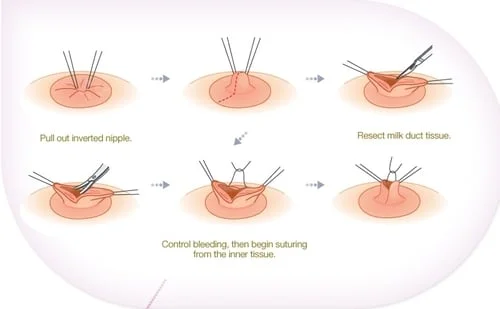
Inverted nipple surgery, or nipple repair surgery, aims to achieve a more natural outward projection, improving breast appearance and potentially aiding functions such as breastfeeding. This is a straightforward procedure, typically performed under local anaesthetic by a GMC-registered plastic surgeon, and completed within an hour when standalone. Where combined with another breast procedure, it’s more commonly carried out under TIVA (Total Intravenous Anaesthesia) — delivered entirely intravenously without inhaled anaesthetic gases, for a smoother, faster recovery than a traditional general anaesthetic.

Duct-Sparing Technique (Grade 1)
For mild, grade 1 inversion, the fibrous tissue tethering the nipple is released while the milk ducts are preserved and gently stretched — this approach maintains breastfeeding potential in the majority of cases.
Duct-Dividing Technique (Grades 2 and 3)
For more significant inversion, both the fibrous tethering tissue and the shortened milk ducts are divided to fully release the nipple, secured in its corrected position with sutures. This is more reliable for severe cases but means breastfeeding won’t be possible afterwards.
Recovery After Inverted Nipple Correction Surgery
This relatively minor procedure is often completed under local anaesthetic within an hour. Despite its brevity, recovery still demands careful attention for optimal healing.
Immediate Postoperative Phase
In the first few days, expect swelling, bruising, and discomfort around the treated area — this is normal. Loose-fitting, comfortable garments that don’t press against the surgical sites are recommended.
Recovery Timeline
- Week 1: most patients resume light daily activities within a day or two, avoiding strenuous exertion or heavy lifting.
- Weeks 2 to 3: swelling and bruising continue to settle, allowing a gradual return to work and regular activities, though vigorous physical movement should still be approached with caution.
How Much Does Inverted Nipple Surgery Cost?
Inverted nipple surgery on its own is quoted at consultation; prices for combining it with areola reduction — a popular combination addressing the complete nipple-areola complex — are in our areola reduction cost guide. Combined with another breast procedure such as breast augmentation or reduction, it’s priced as part of that combined package, confirmed at consultation.
All packages include your surgeon’s fee, facility fee at our CQC-regulated Baker Street facility, appropriate anaesthesia, post-operative dressings and medications, your surgeon’s direct number for the first 24 hours, a wound check at 7–10 days, and a surgeon review at 6 weeks. Your initial consultation is £100, redeemable against the cost of your procedure if you proceed. Finance is available through Chrysalis Finance, subject to status.
FAQs on Inverted Nipple Surgery

What Is the Meaning of an Inverted Nipple? Can It Be Dangerous?
An inverted nipple is a nipple that retracts into the breast rather than protruding outward. For most people, this is simply a variation of normal anatomy, present from birth, and doesn’t imply any serious health concern. On rare occasions, an inverted nipple can signal an underlying condition such as breast cancer or Paget’s disease, especially if the inversion is new or accompanied by other breast changes. Notice sudden alterations in nipple size, shape, or appearance? Consult your GP promptly.
What Percentage of Inverted Nipples Are Due to Breast Cancer?
The occurrence of inverted nipples is predominantly linked to benign causes — genetic predisposition, previous trauma, or breast tissue inflammation. In most instances, an inverted nipple doesn’t signify breast cancer. Vigilance still matters: any sudden or unexplained change to breast or nipple shape should prompt a prompt healthcare consultation.
How Do You Know If You Have Inverted Nipples?
If the nipple retracts into the breast rather than protruding, it may be considered inverted. This isn’t usually a cause for concern if it’s been a consistent feature since childhood or adolescence, or if it developed gradually over many years. Inverted nipples can also emerge during pregnancy and breastfeeding, particularly with first pregnancies. A sudden, unexplained retraction is worth checking with a doctor.
Inverted Nipples Breastfeeding: Should I Consider Surgery If I Want to Breastfeed?
If you’re planning to breastfeed and have concerns about inverted nipples, there’s good news: during pregnancy, many women notice their nipples become more pronounced, which can naturally correct some cases. For less severe cases, an inverted nipple corrector using suction can be worth trying before considering surgery. For more pronounced or persistent inversion, nipple repair surgery is an option — with the right technique and timing, particularly the duct-sparing approach for grade 1 inversion, it can be performed in a way that preserves your ability to breastfeed.
Can I Expect Scars From Inverted Nipple Surgery?
Yes, some scarring is inevitable with any surgical procedure. Scars from this specific surgery are generally small and discreet, sitting at the areola border, and fade significantly over time.
Inverted Nipple Correction at Centre for Surgery
Inverted nipple correction at Centre for Surgery, on Baker Street in central London, is performed by GMC-registered plastic surgeons at our CQC-regulated facility, rated “Good” overall by the Care Quality Commission.
To learn more about inverted nipple correction surgery and book your personalised consultation, please contact us:
- Phone: 020 7993 4849
- Email: contact@centreforsurgery.com
- Clinic Address: 95-97 Baker Street, London W1U 6RN
Finance options are available through our partner Chrysalis Finance — visit our Finance Options page for details.
Related Articles
- Nipple & Areola Surgery – Which Procedure is Right for Me?
- How to Treat an Inverted Nipple Without Surgery