

In this guide12 sections
- What Makes a Face Look Attractive?
- How Do We View Facial Beauty?
- Balance of Facial Features: Symmetry and Harmony
- The Golden Ratio and Facial Beauty
- What Makes a Face Beautiful? A Feature-by-Feature Guide
- Skin Quality and a Healthy Complexion
- Different Face Shapes: Which One is Yours?
- The Science of Beauty: An Evolutionary Perspective
- Surgical or Non-Surgical? Choosing the Right Approach
- Frequently Asked Questions About Facial Beauty
- Refining Facial Harmony at Centre for Surgery
- Book a Consultation
What Makes a Face Look Attractive?
Ask a hundred people what makes a face beautiful and you will get a hundred different answers — which is exactly why the phrase “beauty is in the eye of the beholder” has lasted so long. What one person finds striking, another may not. Yet when researchers study facial attractiveness across large groups of people and across different cultures, a handful of features come up again and again: balance, symmetry, proportion, and visible signs of health and vitality.
This guide looks at what the evidence actually says about facial beauty — from the golden ratio face and facial symmetry to the individual features that draw the eye — and, where a patient wishes to refine a particular feature, the surgical and non-surgical options that can help. At Centre for Surgery in London, our GMC-registered plastic surgeons tailor every treatment to the individual, rather than to a single fixed template of what a face “should” look like.
How Do We View Facial Beauty?
The idea of beauty has always fascinated us. Every culture and ethnic group holds its own view of which physical attributes are considered attractive, and — like cultural practices such as piercing, tattoos or henna art — those standards evolve over time.
It is striking how quickly beauty standards can shift. Current trends favour fuller upper lips and denser eyebrows, features that only a few decades ago were often played down. Once a particular standard gains traction, it tends to spread and be widely embraced, helped today by the globalised, social-media-driven way trends travel. So while the “ideal” changes over time, once established it often achieves a broad, cross-cultural consensus.
There is a further wrinkle worth knowing, because it explains a lot about how people judge their own appearance. Attractiveness is not assessed in isolation — the brain rates a face relative to the other faces visible at the same time. In a series of experiments, the same target face was preferred more strongly when shown alongside a less attractive distractor, an effect consistent with divisive normalisation, the same mechanism the brain uses for other kinds of comparative judgement (Furl, Psychological Science, 2016 ↗). In practical terms, scrolling through curated images changes the reference set against which you are judging your own face, which is one reason self-assessment made on a phone rarely matches how others perceive you.
Balance of Facial Features: Symmetry and Harmony
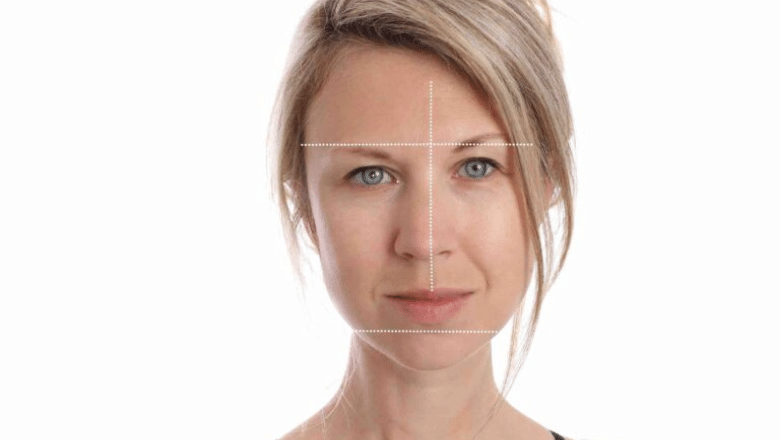
When we think about facial attractiveness, we often focus on individual features — large, expressive eyes, defined cheeks, a well-shaped nose. Yet what truly draws attention is the harmonious relationship between them: how each feature complements the others to create a balanced, cohesive whole. In other words, the beauty of a face rarely rests on any single attribute, but on how those attributes work together.
A profileplasty combines nose and chin surgery to improve balance in the side profile.
Experts often describe this balance in terms of facial symmetry and proportion. It is why many plastic surgeons refer to a guiding principle known as the golden ratio. Though it sounds mystical, the golden ratio is simply a mathematical proportion that has been appreciated in art and architecture for centuries — a particular ratio of lengths that humans tend to find naturally pleasing.
In facial aesthetics, the golden ratio is not a strict rule but a reference point. A skilled facial surgeon understands that every face is unique and applies these principles flexibly, respecting and enhancing each person’s own characteristics rather than forcing a face towards a rigid template.
The Golden Ratio and Facial Beauty
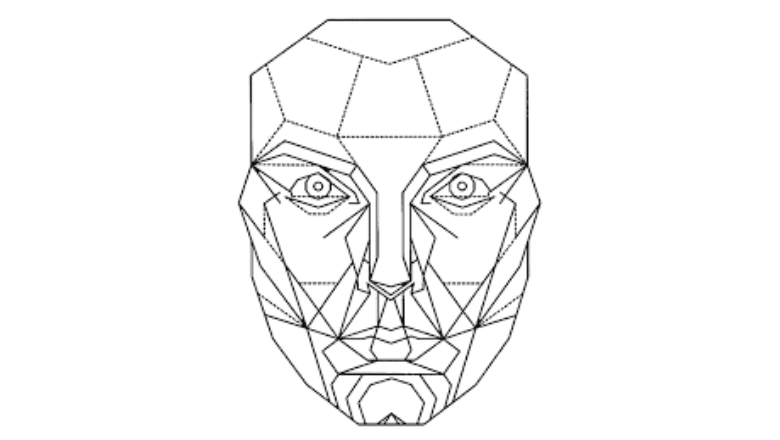
The Golden Ratio — often represented by the Greek letter Phi (Φ), approximately 1.618 — has been recognised for thousands of years, dating back to ancient civilisations such as the Greeks. It appears across art, architecture, nature and, some argue, facial aesthetics.
The Golden Ratio in Facial Proportions
A handful of proportional guidelines are commonly quoted. They are summarised here for context — the full set of measurements, the target numbers, and the research on whether any of them actually predict attractiveness are covered in our dedicated golden ratio face guide:
- Facial thirds: the distance from the hairline to the brow, from the brow to the base of the nose, and from the base of the nose to the chin should be roughly equal.
- Eyes: the width of one eye should ideally equal the distance between the eyes.
- Nose: the width of the nose at its base is ideally close to the distance between the eyes.
- Lips: the width of the lips is often around 1.6 times the width of the nose.
- Cheekbones: well-defined cheekbones, viewed from the front, tend to sit in keeping with these proportions.
- Eyebrows: the arch and endpoints of the brow also follow the ratio in an “ideal” face.
It is worth being clear that most of these specific ratios have not held up well under measurement — a point covered in detail, with the studies, in the golden ratio guide. They are used as loose guidelines in cosmetic practice rather than absolute targets — the aim is to bring a face closer to balanced proportions where a patient wants that, through either surgery or non-surgical treatment. If you are curious how your own features compare, our detailed guide to the golden ratio face test explains how Phi is measured across the face, and what the results do — and do not — actually tell us.
Restoring Proportion With Age
Ageing affects everyone differently. Over time the face loses fat volume, muscle tone and skin elasticity, which gradually shifts these “golden” proportions and can leave the face looking tired, hollow or heavy. A range of treatments — from dermal fillers and anti-wrinkle injections to surgical procedures such as facelifts or eyelid surgery — can help restore proportion and refresh the appearance.
It is worth repeating that the golden ratio is a template, not a rulebook. Not every face fits these precise measurements, nor should it. Beauty is subjective, and personal comfort and self-confidence matter far more than any single number.
What Makes a Face Beautiful? A Feature-by-Feature Guide
Certain features are consistently associated with the perception of beauty. Here is a closer look at each, and at the options available where a patient wishes to refine them.
A Balanced, Symmetrical Nose
Sitting at the centre of the face, the nose has a major influence on overall appearance. When it is symmetrical and in proportion, it acts as a unifying feature that complements the eyes and lips around it.
Our guide to what makes a perfect nose looks at these proportions in more detail.
A nose that is out of proportion can draw attention away from other features, distort the perceived balance of the face, or — if crooked or off-centre — disrupt symmetry. For patients who feel self-conscious about the shape or alignment of their nose, several surgical options are available:
- Rhinoplasty – comprehensive nose reshaping tailored to the individual.
- Septoplasty – correction of a deviated septum to straighten a misaligned nose.
- Alarplasty – a technique to narrow and refine wide nostrils.
- Tip plasty – refinement focused specifically on the nasal tip.
- Nose bridge reduction – removal of bone and cartilage to create a more slender bridge.
Bright, Alert Eyes
The eyes are often the first feature people notice, and bright, symmetrical, alert eyes convey emotion, vitality and youthfulness. With age, changes around the eyes — drooping brows and lids, puffiness or asymmetry — can lend a tired look even when you feel well rested. Excess skin from sagging eyelids can, in some cases, even affect the field of vision.
Eyelid surgery (blepharoplasty) can address excess skin, reposition or reduce fat pockets that cause puffiness or bags under the eyes, and refine the eye area. Many patients feel their eyes look more open and rested afterwards.
A Smooth Forehead
A clear, smooth forehead is often associated with a relaxed, approachable appearance, while deep “worry lines” can unintentionally suggest stress or fatigue. Options for softening the upper face include:
- Facial injectables – fillers and muscle relaxants placed in targeted areas to soften forehead lines. These are effective but temporary and need periodic maintenance.
- Brow lift (upper facelift) – a longer-lasting surgical option that tightens the skin and underlying muscles.
- Full facelift – for those looking to rejuvenate the wider face as well as the forehead.
Full, Youthful Cheeks
Full cheeks are strongly associated with youth and vitality, and they provide a central point that balances the other features. With age, the skin loses elasticity and the cheeks can descend and deflate, which can make the face look tired or gaunt. Options to restore cheek volume and position include:
- Mid facelift – lifts the cheeks to a more youthful position.
- Facial fat grafting – uses the body’s own fat to restore volume naturally.
- Cheek implants – add definition and structure for a fuller appearance.
- Dermal fillers – a non-surgical way to contour the cheeks, with results that are temporary and need topping up.
For those who feel their cheeks look excessively full, buccal fat pad removal removes a portion of cheek fat to create a more sculpted, defined appearance.
Well-Proportioned Lips
The lips are among the most expressive parts of the face and play a central role in its overall appeal. For most people the “ideal” lips are neither too thick nor too thin — plump enough to balance the other features and support a natural smile. With age, lips gradually lose volume and definition. Options include:
- Lip fillers – hyaluronic-acid-based volume enhancement with minimal downtime.
- Lip flip – a subtle option using muscle relaxants to gently roll the upper lip outward.
- Lip lift surgery – a permanent option that shortens the distance between the nose and upper lip.
A Defined Jawline
A sharp, well-defined jawline frames the face and is often associated with strength and youthful vitality. Over time, skin along the jaw can sag and form jowls, softening the contour between the neck and chin. A balanced jawline is neither too broad nor too narrow. Surgical options to define the jaw include:
- Lower facelift – refines the jawline contour and sharpens its edge.
- Neck lift – tightens the neck skin and muscles to re-establish the angle between neck and chin.
- Jaw reshaping (orthognathic surgery) – surgical modification of the jawbone itself to refine or rebalance its shape.
Combined, a lower facelift and neck lift can produce a jawline that is both defined and youthful. Our surgeons tailor each procedure to the individual, sculpting a jawline that harmonises with the rest of the face.
A Balanced Chin
The chin anchors the lower face and contributes a sense of completion and balance to the profile. A receding chin can throw off facial balance and make features such as the nose appear more prominent, while an overly pointed or rounded chin can affect the perceived length of the face.
Where the chin is too prominent instead, chin reduction surgery can restore balance.
Options for reshaping the chin include genioplasty, which can enlarge the chin using implants or reduce chin size, as well as cleft chin surgery to create, reduce or remove a chin dimple.
A Smooth, Defined Neck
Often overlooked, the neck bridges the face and body and has a real influence on overall appearance. Like the face, it can show signs of ageing — sagging skin, fat deposits or horizontal “necklace lines”. Common concerns include turkey neck, a double chin and neck bands.
Neck lift surgery tightens loose skin, reduces the appearance of a double chin and smooths neck bands, producing a neck that blends seamlessly with the jawline for a more youthful look.
Proportional Ears
Ears may seem a minor detail, but they frame and balance the face. Prominent ears that stick out, asymmetrical ears, or disproportionately large ears can all draw attention away from the rest of the face. Otoplasty (ear reshaping surgery) can reposition the ears closer to the head, reshape or reduce their size, and correct asymmetry for a more balanced appearance.
Skin Quality and a Healthy Complexion
Beyond the shape and proportion of individual features, the quality of the skin itself has a strong influence on how attractive a face is perceived to be. Clear, even-toned skin is one of the most consistent markers of health and youth across cultures — which is why texture, tone and radiance matter just as much as bone structure.
As we age, sun exposure, pigmentation, fine lines and a loss of firmness can all affect the complexion. Non-surgical skin treatments such as laser skin resurfacing and Morpheus8 can improve tone, texture and firmness, complementing any surgical work by refreshing the surface of the skin as well as the underlying structure. For many patients, improving skin quality delivers a noticeable lift in overall appearance without any surgery at all.
Different Face Shapes: Which One is Yours?
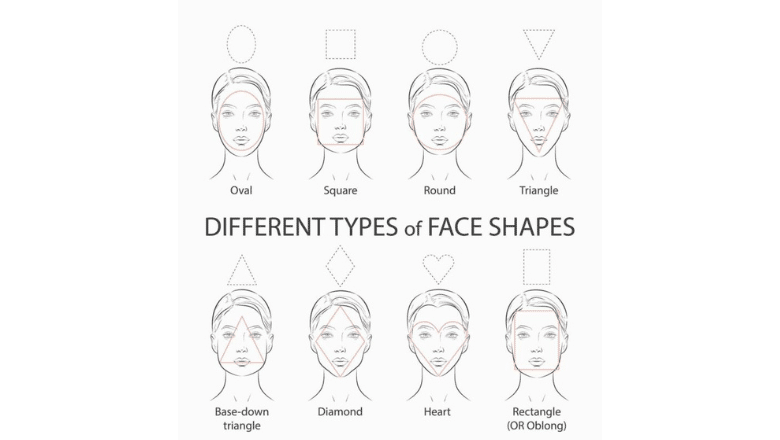
Face shape influences everything from the hairstyles that suit us to how we apply make-up. The main shapes are:
- Oval: often called the “universal” shape, with balanced proportions — the length is around one and a half times the width, and the forehead is slightly wider than a gently rounded jawline.
- Round: width and length are roughly equal, with a wide hairline and fullness below the cheekbones.
- Square: a strong, angular jawline roughly the same width as the forehead, with straight sides.
- Diamond: narrow at the forehead and jaw, with the cheekbones the widest point and an often pointed chin.
- Heart: a broad forehead tapering to a small, often pointed chin, with high, prominent cheekbones.
- Pear: also called triangular — narrow at the forehead and wider at the jawline.
- Oblong: longer than it is wide, often with a longer cheek line.
These categories can guide choices about hair, make-up and treatment, but every face combines elements of several shapes. The goal is never to force a face into one category — it is the individual blend of features that makes each person distinctive.
The Science of Beauty: An Evolutionary Perspective
Scientists have added a further dimension to our understanding of beauty by drawing on biology, evolution and psychology. Evolutionary psychology suggests that many of the traits we find attractive are those that signal health, vitality and fertility — desirable, in evolutionary terms, as indicators of a good potential mate.
What the Research Points To
- Facial symmetry: long interpreted as a sign of genetic health and stable development. The evidence is weaker than the popular version suggests — in one study of 565 adults, every participant was measurably asymmetric and attractiveness ratings showed no correlation with the degree of asymmetry in either sex (Farrera et al., American Journal of Human Biology, 2015 ↗). See our guide to facial asymmetry for what is and is not normal.
- Averageness: counter-intuitively, this is the best-supported finding in the field. When a composite image was built by averaging 40 real faces and then rated alongside them by more than 870 people, the composite was rated more attractive than every one of the individual faces it was made from — in both the male and female cohorts, and across all ages, genders and countries of residence (Amaya et al., Aesthetic Surgery Journal, 2023 ↗). The likely explanation is that averageness signals genetic diversity and developmental health. It is worth noting that a data-driven study modelling individual preferences found attractiveness to be distinct from averageness alone, and to draw on culture-specific features that differ between Western European and East Asian observers (Zhan et al., Current Biology, 2021 ↗) — so averageness is a strong signal rather than a complete explanation.
- Secondary sexual characteristics: features such as a strong jawline or fuller lips can signal maturity and hormonal health.
- Signs of good health: clear skin, even tone and bright eyes are frequently associated with attractiveness across very different cultures.
It is important to keep this in perspective. Science can describe broad patterns, but cultural, societal and personal factors play just as large a role. What is considered beautiful in one culture or era may not be in another, and individual preference always has the final word.
Surgical or Non-Surgical? Choosing the Right Approach
There is rarely a single “right” way to refine a feature. Non-surgical treatments — such as dermal fillers, anti-wrinkle injections and skin resurfacing — tend to offer subtle change with little or no downtime, though results are temporary and need maintaining. Surgical procedures such as a facelift, rhinoplasty or eyelid surgery offer more definitive, longer-lasting change, but involve recovery time and carry the risks that come with any operation.
The best approach depends on your anatomy, the degree of change you are looking for, your recovery expectations and your budget. In many cases a combination works well — for example, surgery to reposition tissue and restore structure, alongside non-surgical treatment to refine the skin. The only reliable way to know which route suits you is a face-to-face assessment with a qualified surgeon.
Frequently Asked Questions About Facial Beauty

How can we characterise a beautiful face?
Beauty is inherently subjective, and different cultures and individuals perceive it differently. That said, some attributes — such as facial symmetry, averageness and balanced proportion — feature consistently in descriptions of an attractive face.
Is there such a thing as a perfect face?
Not really. The idea of a “perfect” face leans heavily on symmetry and balance, and features such as clear skin, bright eyes and harmonious proportions are commonly rated as attractive. But no face is perfectly symmetrical, standards shift over time, and much of what makes a face appealing is individual character rather than conformity to a formula.
What is the ideal face shape?
Oval and heart-shaped faces are frequently described as the most flattering in aesthetic writing, though this is a convention of the field rather than a finding with strong evidence behind it. But attractiveness is influenced by many factors, including cultural preference, and no single shape is objectively “best”.
Can you explain the golden ratio in the context of beauty?
The Golden Ratio, represented by the Greek letter Phi (Φ), is approximately 1.618. Applied to the face, it is used as a guideline for “ideal” proportions — for example, a face that is around 1.618 times longer than it is wide, with individual features sitting in related proportions. You can read more in our full guide to the golden ratio face.
How significant is facial symmetry?
Symmetry means that, if you drew a line down the centre of the face, both halves would look almost identical. Symmetrical faces have historically been linked with genetic fitness, but the measured evidence is mixed: in a study of 565 adults, every participant showed some asymmetry and attractiveness ratings did not correlate with how asymmetric a face was (Farrera et al., 2015 ↗). Mild asymmetry is universal and generally goes unnoticed by others — our guide to facial asymmetry covers how much is normal.
Can cosmetic treatment make me look more attractive?
Cosmetic surgery and non-surgical treatments can refine specific features and improve facial balance where a patient wishes to change something. What they cannot do is guarantee a particular reaction from other people, and no ethical surgeon would promise that. The healthiest reason to seek treatment is your own comfort and confidence, not an external standard.
How can I enhance my facial appearance naturally?
For a natural approach, the fundamentals help most: a balanced, nutrient-rich diet, good hydration, a consistent skincare routine, regular gentle exfoliation and well-groomed, symmetrical eyebrows. Confident posture and a genuine smile also make a considerable difference.
Refining Facial Harmony at Centre for Surgery
Facial beauty is personal, and there is no single “correct” face. Where a patient feels a particular feature is out of balance with the rest, a range of surgical and non-surgical options can help refine proportion and harmony — while keeping the face recognisably their own.
Our surgeons are GMC-registered specialists who carry out facial procedures at our CQC-registered clinic at 95–97 Baker Street in central London. Every treatment begins with a face-to-face consultation, because the right option depends entirely on your anatomy, your goals and what is realistic for you.
What to Expect at Your Consultation
- A thorough assessment of your facial proportions, skin quality and anatomy.
- A discussion of both surgical and non-surgical options, with the pros and cons of each.
- Honest advice on suitability — including when a treatment may not be right for you.
- Time to ask questions, with no pressure to proceed.
We treat adults aged 18 and over.
Financing Your Treatment
You can pay in full or spread the cost with finance through Chrysalis Finance, subject to status. Plans and a representative example are on our finance options page, and a patient coordinator can talk you through them on 020 7993 4849.
Book a Consultation
To arrange a consultation, call us on 020 7993 4849 or visit us at 95–97 Baker Street, London W1U 6RN. Alternatively, complete the contact form below and our team will be in touch.

Related Articles
- Golden Ratio Face: Facial Beauty & Proportions
- How to Maintain a Youthful Appearance with a Facelift
- Benefits of a Deep Plane Facelift