


In this guide12 sections
- Key Points
- Does Labiaplasty Cause Loss of Sensation?
- Where the Nerves Are: Labia Minora and Clitoris Anatomy
- Labiaplasty and Sex: Can You Still Feel Pleasure After Labiaplasty?
- Labiaplasty Sexual Function: What Are the Risks to Sensation?
- Trim vs Wedge Labiaplasty: Does Technique Change Sensation?
- Does Clitoral Hood Reduction Affect Sensitivity?
- When Does Sensation Return After Labiaplasty?
- Labiaplasty at Centre for Surgery
- Frequently Asked Questions
- Labiaplasty in London
- References
Key Points
- Does labiaplasty cause loss of sensation? Not usually. Studies that measured sensitivity before and after surgery found no loss of feeling in the labia or clitoral hood, and most women report the same or better sexual function afterwards.
- Labiaplasty and sex: a 2025 meta-analysis of 11 studies found Female Sexual Function Index scores rose by about 19% after labiaplasty, although most studies were small and uncontrolled.
- Can you still feel pleasure after labiaplasty? Yes. The clitoris, the main source of sexual pleasure, is not cut during labia minora reduction, and the remaining labial tissue keeps its nerve endings.
- Does labiaplasty affect orgasm? In a prospective study of 37 women, about a third reported more frequent or stronger orgasms six months after surgery, and sensitivity at the clitoral hood was unchanged.
- Labiaplasty sensation risks: temporary numbness, tingling or oversensitivity are common while swelling settles. Lasting loss of feeling, scar tenderness or painful sex are uncommon and are linked mainly to removing too much tissue.
- Clitoral hood reduction needs particular care, as the clitoral nerves run beneath the hood. Done conservatively, studies have not shown reduced clitoral sensitivity.
Worrying about sensation is the most common reason women hesitate before a labiaplasty. The labia minora are sensitive, they swell during arousal, and they sit close to the clitoris, so it is natural to ask whether surgery could take something away. The question we hear most is simple: does labiaplasty cause loss of sensation? For the large majority of women the answer is no, and many find that sex becomes more comfortable and more enjoyable once enlarged or uneven labia no longer catch, twist or rub.
This guide sets out what the research actually measures about labiaplasty sensation, sexual function and orgasm, where the nerves sit, why some women feel more pleasure afterwards, and what can go wrong. If you are also thinking about the clitoral hood, our page on clitoral hood reduction explains that procedure, and our guide to different labia shapes is a good reminder of how wide normal variation is. Questions about timing belong to recovery rather than sensation, so we cover them in how soon can I have sex after labiaplasty.
Does Labiaplasty Cause Loss of Sensation?
Most women do not lose sensation after labiaplasty. That is the consistent finding from studies that asked women about their sexual function before and after surgery, and from the small number that tested sensitivity directly.
The largest pooled analysis to date is a 2025 systematic review and meta-analysis in Aesthetic Plastic Surgery ↗, which identified 11 studies involving 671 women who completed validated sexual function questionnaires after labia minora surgery. Across the six studies that used the Female Sexual Function Index (FSFI), scores improved by 18.8% after labiaplasty[1]. The authors were careful to add that none of the studies was rated strong in quality, and that women should be told the evidence on sexual function is still limited.
A separate review published the same year in the European Journal of Obstetrics, Gynecology and Reproductive Biology reached a similar conclusion: a moderate improvement in sexual function, uncommon and mostly minor complications, and no clear difference between surgical techniques. It also noted that the certainty of the evidence is low, since most studies compared women only with themselves before surgery[2].
Has anyone actually measured sensitivity after labiaplasty?
Yes. Questionnaires tell you how sex feels, but they do not test nerve function. The study that did was a 2015 prospective study in Plastic and Reconstructive Surgery ↗. Thirty-seven women having labia minora reduction with clitoral hood reduction were tested with fine monofilaments, a standard way of measuring light-touch sensitivity, at the clitoral hood and at four points on the labia, before surgery and at intervals up to a year afterwards. Sensitivity did not fall at any site. At six months the labial edges were, if anything, slightly more sensitive than before, and sensitivity at the clitoral hood was unchanged[3].
The same women also completed a sexual function questionnaire. At six months, 44% reported having sex more often, and around 35% reported more frequent or stronger orgasms[3]. It is one study from one surgeon using one technique, so it cannot promise the same result for everyone, but it is the most direct evidence available that a well-performed labiaplasty does not dull feeling.
Where the Nerves Are: Labia Minora and Clitoris Anatomy
Understanding the anatomy explains both why labiaplasty is usually safe for sensation and why technique matters.
The labia minora are thin folds of skin with a rich blood supply and many nerve endings. They fill with blood during arousal and contribute to sexual response. Older patient leaflets sometimes claimed the nerves run only deep inside the labia and never reach the edge. That is not accurate. A study of labial tissue found nerve fibres along the entire edge of the labia minora, most densely on the inner surface near the vaginal opening[4], and a later cadaver study found the nerve density was spread fairly evenly across the labia rather than concentrated in one zone[5].
So labiaplasty does remove some nerve endings along with the excess tissue. The reason sensation is usually preserved is that the remaining labia keep the same even spread of nerves, the nerves reach the labia from their base, and the clitoris is untouched. The clitoris, with its glans, body and internal bulbs, is the principal organ of sexual pleasure. Its sensory supply, the dorsal nerve of the clitoris, runs beneath the clitoral hood, not through the labia minora. That is why clitoral hood reduction is planned more conservatively than labia minora reduction: the surgeon removes only excess skin at the sides of the hood and stays in the superficial layer above the nerve.
Labiaplasty and Sex: Can You Still Feel Pleasure After Labiaplasty?
Yes. Labiaplasty does not remove the structures responsible for arousal and orgasm, and in the published studies, women who reported a change in sexual pleasure were far more likely to describe an improvement than a loss.

Does labiaplasty affect orgasm?
Labiaplasty does not usually affect the ability to orgasm. In the prospective sensitivity study, around a third of women reported more frequent or stronger orgasms six months after surgery, and sensitivity at the clitoral hood did not change[3]. The pooled questionnaire studies also show overall sexual function scores rising rather than falling[1]. Where orgasm improves, the likeliest explanation is not new nerve function but fewer distractions: less pulling, pinching and self-consciousness during sex.
Why some women say sex feels better after labiaplasty
Enlarged labia minora, sometimes called labial hypertrophy, can be drawn inwards during penetration, twisted or pinched, which is uncomfortable and makes it harder to relax. Removing that excess tissue takes away a physical source of pain.
There is also a psychological side. A 2023 meta-analysis of 16 studies covering more than 13,000 women found a consistent link between how women feel about the appearance of their genitals and their sexual function[6]. Women who are anxious about how they look during intimacy often find it difficult to stay present. In a controlled study that followed women for six months, labiaplasty produced a large reduction in dissatisfaction with genital appearance, but it did not change overall relationship quality or general wellbeing[7]. In other words, labiaplasty can remove a specific worry; it is not a treatment for wider relationship or sexual difficulties, and a good surgeon will say so.
These are real patient photographs. They are blurred because they show intimate anatomy. Tap or click an image to reveal it.
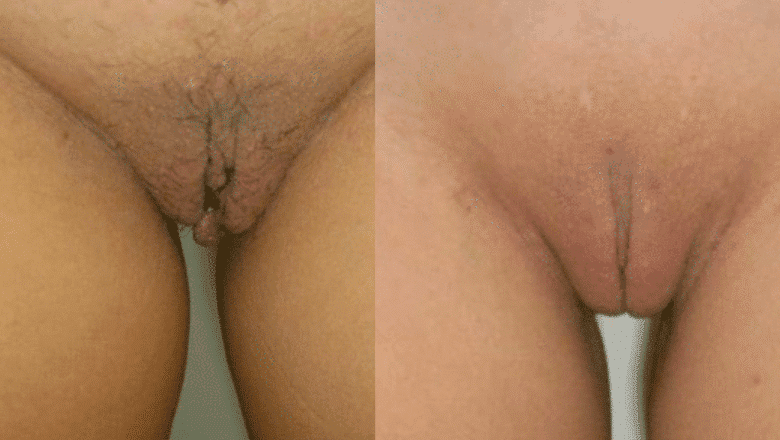
Labiaplasty with clitoral hood reduction before and after at Centre for Surgery. Individual results vary.
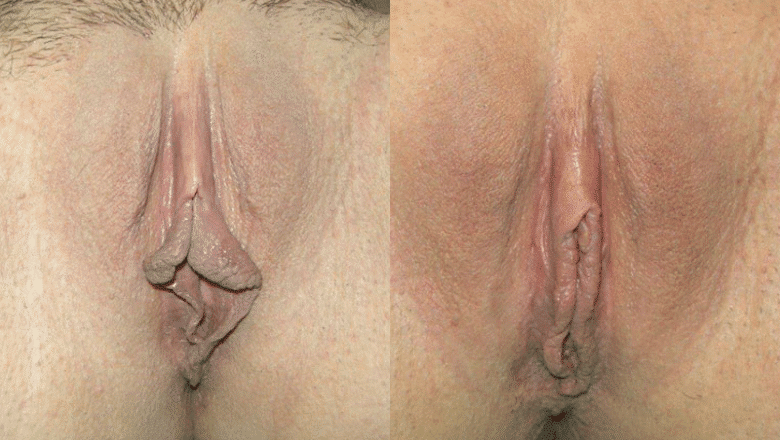
Combined labiaplasty and clitoral hood reduction before and after at Centre for Surgery. Individual results vary.
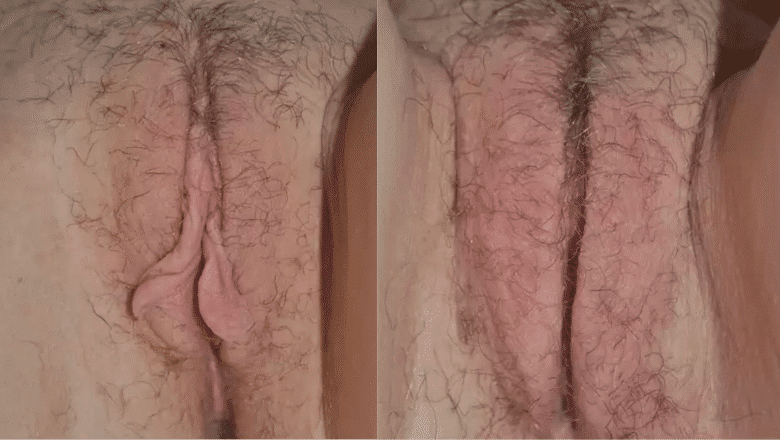
Labiaplasty before and after at Centre for Surgery. Individual results vary.
More results are in our labiaplasty before and after gallery.

Labiaplasty Sexual Function: What Are the Risks to Sensation?
Labiaplasty is surgery, and an honest answer about sensation has to include what can go wrong. A 2022 meta-analysis of 46 studies and 3,804 women reported a pooled satisfaction rate of 99%, but it also recorded wound breakdown, bleeding, haematoma and, in a small number of cases, revision surgery, most often for wound separation or appearance[8].
The problems that affect sexual sensation and comfort are:
- Temporary altered sensation. Numbness, tingling, burning or oversensitivity in the first weeks is common and usually reflects swelling and healing nerve endings.
- Scar sensitivity. A firm or tender scar can be uncomfortable during sex for a few months. This usually softens with time.
- Over-resection. Removing too much tissue can leave the vaginal opening exposed and dry, cause discomfort during sex, or change the appearance in a way the patient did not want. This is the most important avoidable cause of a poor result, and it is why we favour a conservative approach. Our page on revision labiaplasty explains how this is assessed and repaired.
- Clitoral hood injury. Very rarely, aggressive surgery on the hood can affect the nerve beneath it. Careful, superficial technique is the protection.
Is numbness after labiaplasty normal?
Yes, in the early weeks. The labia are swollen and bruised after surgery, and that swelling presses on small nerve endings, so parts of the area can feel numb while others feel oversensitive. Feeling usually returns progressively over the first six to twelve weeks as swelling settles, and occasionally takes a few months to feel fully normal. Our guide on how to reduce labiaplasty swelling covers what helps.
Can labiaplasty cause nerve damage?
It can, but permanent nerve damage is uncommon. Every labiaplasty divides some small nerve endings in the tissue that is removed; what matters is that enough well-innervated tissue remains and that the clitoral nerve is not injured. In the study that measured sensitivity directly, no loss was found after trim labiaplasty with clitoral hood reduction[3]. If numbness or pain persists beyond about three months, your surgeon should review you.
Trim vs Wedge Labiaplasty: Does Technique Change Sensation?
The two techniques used most often are the trim (edge) method, which removes excess tissue along the free border, and the wedge method, which removes a V-shaped section and brings the natural edge together. Both are explained in detail in our guide to trim labiaplasty vs wedge labiaplasty.
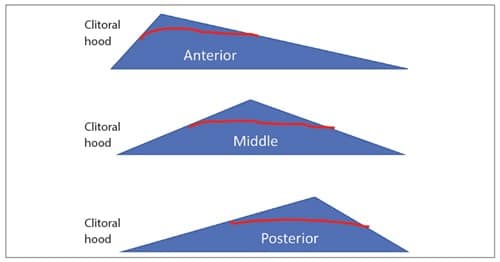
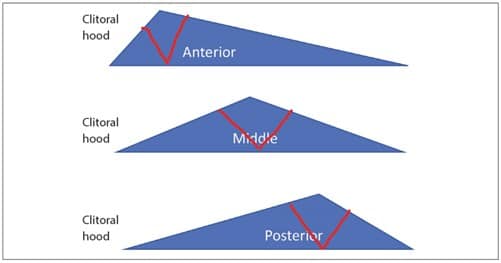
Some patients assume the wedge method must be gentler on sensation because it keeps the natural edge. The evidence does not show a clear difference. The 2025 review that grouped studies by technique found sexual function improved to a similar degree with trim, wedge and composite methods, and no technique was clearly superior[2]. The 2022 meta-analysis did find differences in complications, with wound separation reported more often after wedge resection[8]. For sensation, the amount of tissue removed and the care taken matter more than the name of the technique. Your surgeon will recommend the method that suits your anatomy.
Does Clitoral Hood Reduction Affect Sensitivity?
Many women who have enlarged labia minora also have extra folds of skin at the sides of the clitoral hood, and treating the labia alone can leave the hood looking bulky. Clitoral hood reduction removes that excess. It does not involve cutting the clitoris itself.
When it is done conservatively, the evidence is reassuring. In the monofilament study, every woman had a clitoral hood reduction alongside her labiaplasty, and sensitivity at the hood was unchanged a year later[3]. The 2025 review highlighted the same study as the only one with standardised sensory testing and noted it found no reduction in clitoral or labial sensitivity[2].
You may read claims that hood reduction “exposes the clitoris” and makes orgasm easier. Some women do describe that, but it is not a reliable outcome, and over-reducing the hood can leave the clitoris uncomfortably exposed. We treat the hood to improve proportion and comfort, not to promise a change in orgasm.
When Does Sensation Return After Labiaplasty?
Sensation and timing are linked, since the first weeks are when the area feels most different. At Centre for Surgery we advise no sexual intercourse, tampons or tight clothing for six weeks, and only once your surgeon has checked the wound at your review. Starting too early risks reopening the wound, and an area that is still swollen will not feel normal anyway. Our dedicated guide on sex after labiaplasty covers the stages in detail, and our labiaplasty recovery guide covers the rest of the healing timeline.
Many women find the first few times feel slightly different, partly from residual swelling and partly from nervousness. Using a water-based lubricant, going gently and giving it time is usually all that is needed. If sex is painful beyond three months, tell your surgeon.
Labiaplasty at Centre for Surgery
At Centre for Surgery, labiaplasty is performed by GMC-registered surgeons at our CQC-regulated hospital on Baker Street in central London. The surgeon who assesses you at consultation is the surgeon who performs your operation. Straightforward labiaplasty is usually carried out under local anaesthetic with sedation, so you are relaxed and the area is completely numb, and TIVA (total intravenous anaesthesia) is used for complex or combined procedures. Our local anaesthetic labiaplasty guide explains the difference. Our labiaplasty nursing team is all-female, and the minimum age for labiaplasty at Centre for Surgery is 18.
At your consultation your surgeon will examine you, ask what is bothering you and why, and explain how much tissue can safely be removed while protecting sensation. If your labia are within the normal range and the main concern is anxiety rather than discomfort, we will say so. You can read more about choosing a surgeon in how to choose the best labiaplasty surgeon.
Frequently Asked Questions
Do you lose sensation with a labiaplasty?
Most women do not. Studies that tested sensitivity before and after surgery found no loss, and most women report the same or better sexual function afterwards. Temporary numbness or oversensitivity while the area heals is common and usually settles within a few months.
Does labiaplasty damage nerves?
Labiaplasty divides small nerve endings in the tissue that is removed, but the remaining labia keep their nerve supply and the clitoris is not cut. Lasting nerve damage is uncommon and is mostly linked to removing too much tissue or operating too deeply around the clitoral hood.
Can you still feel pleasure after labiaplasty?
Yes. The clitoris, the main source of sexual pleasure, is untouched by labia minora reduction. In published studies, women were much more likely to report improved sexual function after surgery than a reduction in pleasure, often because sex became more comfortable.
Does labiaplasty change sensitivity?
It can change how the area feels for the first few weeks, with numbness, tingling or oversensitivity while swelling settles. Long term, the one study that measured light-touch sensitivity found it unchanged at the clitoral hood and slightly increased at the labial edges six months after surgery.
What are the downsides of labiaplasty?
Labiaplasty involves six weeks of restrictions on sex, tampons, exercise and tight clothing, and carries risks of bleeding, infection, wound separation, asymmetry and, rarely, painful sex or the need for revision. Removing too much tissue is the most important avoidable problem. Results are permanent, so a careful decision matters.
What are the potential side effects of labiaplasty surgery?
Common, short-lived side effects are swelling, bruising, soreness and altered sensation. Less common complications include haematoma, infection, wound breakdown, scar tenderness and uneven healing. Most settle with time or simple treatment, and revision surgery is needed in a small minority of patients.
How do I know if my labiaplasty is botched?
Signs of a poor result include an exposed or dry vaginal opening, notches or uneven edges, a wound that has come apart, ongoing pain during sex, or an over-reduced clitoral hood. Wait for swelling to settle, usually three months, before judging, then seek review from a surgeon experienced in revision.
What can I do instead of labiaplasty?
If discomfort is mild, seamless underwear, looser clothing and lubricant during sex can help. Fillers or fat can improve the appearance of thin outer labia but do not reduce the inner labia. For anxiety about appearance with normal anatomy, information about normal variation and, where helpful, psychological support may be the better first step.
Labiaplasty in London
If concern about sensation has been holding you back, a consultation is the place to ask every question, look at your own anatomy with a surgeon and decide whether labiaplasty is right for you. Find out more about labiaplasty at Centre for Surgery.
Phone: 020 7993 4849 | Address: 95–97 Baker Street, Marylebone, London W1U 6RN
Contact us to schedule a consultation
References
- Nahidi F, Goodman MP, Alavi-Arjas F, Simbar M, Majd HA, Rastegar F. Female sexual function after labiaplasty: a systematic review and meta-analysis. Aesthetic Plastic Surgery 2025;50(1):447–460. doi:10.1007/s00266-025-04946-1 ↗
- Zulfikaroglu E, Kurban D. Sexual function after female genital cosmetic surgery: a systematic review and meta-analysis. European Journal of Obstetrics, Gynecology, and Reproductive Biology 2025;318:114894. doi:10.1016/j.ejogrb.2025.114894 ↗
- Placik OJ, Arkins JP. A prospective evaluation of female external genitalia sensitivity to pressure following labia minora reduction and clitoral hood reduction. Plastic and Reconstructive Surgery 2015;136(4):442e–452e. doi:10.1097/PRS.0000000000001573 ↗
- Schober J, Cooney T, Pfaff D, Mayoglou L, Martin-Alguacil N. Innervation of the labia minora of prepubertal girls. Journal of Pediatric and Adolescent Gynecology 2010;23(6):352–357. doi:10.1016/j.jpag.2010.03.009 ↗
- Kelishadi SS, Omar R, Herring N, et al. The safe labiaplasty: a study of nerve density in labia minora and its implications. Aesthetic Surgery Journal 2016;36(6):705–709. doi:10.1093/asj/sjw002 ↗
- Alavi-Arjas F, Goodman MP, Simbar M, Alavi Majd H, Nahidi F. The strength of correlation between female genital self-image and sexual function: a systematic review and meta-analysis. Journal of Sexual Medicine 2023;20(12):1376–1383. doi:10.1093/jsxmed/qdad118 ↗
- Sharp G, Tiggemann M, Mattiske J. Psychological outcomes of labiaplasty: a prospective study. Plastic and Reconstructive Surgery 2016;138(6):1202–1209. doi:10.1097/PRS.0000000000002751 ↗
- Escandón JM, Duarte-Bateman D, Bustos VP, et al. Maximizing safety and optimizing outcomes of labiaplasty: a systematic review and meta-analysis. Plastic and Reconstructive Surgery 2022;150(4):776e–788e. doi:10.1097/PRS.0000000000009552 ↗







