

In this guide17 sections
- Key Points
- What Is a Liquid BBL?
- How Does a Non-Surgical BBL Work?
- How Much Volume Can a Liquid BBL Add?
- How Long Does a Liquid BBL Last?
- Is Liquid BBL Safe?
- What Are the Side Effects of a Liquid BBL?
- Why Are Silicone and “Hydrogel” Butt Injections So Dangerous?
- What Are the Warning Signs That Bum Filler Has Gone Wrong?
- Is Liquid BBL Legal in the UK?
- How Much Does a Liquid BBL Cost in the UK?
- Liquid BBL vs Surgical BBL: Which Is Right for You?
- Who Is a Good Candidate for a Non-Surgical BBL?
- How to Choose a Safe Liquid BBL Provider in London
- Frequently Asked Questions
- Liquid BBL in London
- References
Key Points
- A liquid BBL is a non-surgical BBL using injected filler, not your own fat. In legitimate medical practice this is a hyaluronic acid (HA) body filler, such as HYAcorp, placed under the skin of the buttocks and hips.
- The change is modest. Published studies inject roughly 40 to 360 ml of filler in total, against 1,600 to 2,000 ml of fat in a full surgical BBL.
- A liquid BBL lasts about 12 to 18 months. HA filler is slowly absorbed, so repeat sessions keep the result. “Permanent” butt injections are a warning sign.
- Is liquid BBL safe? It depends on the product, the injector and the setting. Sepsis, tissue death and fatal embolism have mostly followed large volumes injected by non-medical practitioners, or illegal silicone and “hydrogel”.
- Liquid BBL is legal in the UK today, but that is changing. On 21 October 2026 the government proposed that filler injected anywhere other than the face, including the liquid BBL, becomes a cosmetic surgical procedure only doctors may perform.
- A surgical BBL gives a bigger, permanent result. A liquid BBL suits subtle change, hip dips, trialling a shape or people too slim for fat transfer.
A liquid BBL, also called a non-surgical BBL, bum filler or BBL filler, is a treatment in which hyaluronic acid filler is injected into the buttocks and hips to add projection and smooth out hip dips, without liposuction or surgery. The result is immediate but modest and temporary, lasting around 12 to 18 months. It can be a reasonable option when a doctor injects a recognised HA body filler in sterile conditions, ideally with ultrasound guidance. It becomes dangerous when large volumes, unknown products or permanent substances such as silicone are injected by people without medical training.
This guide covers what a liquid BBL is, realistic volume, how long it lasts, side effects, the UK law after the government’s October 2026 announcement, cost, and how it compares with a surgical Brazilian butt lift. For how we perform it, see our liquid BBL (non-surgical BBL) treatment page.
What Is a Liquid BBL?
“Liquid BBL” is a marketing name, not a medical term. It borrows the BBL label from the surgical Brazilian butt lift, where fat is moved from your tummy, flanks or back into the buttocks, but in a liquid BBL nothing is removed and no fat is transferred. Instead, a gel filler is injected under the skin to lift and round the buttocks or fill a hip dip. The same treatment is advertised as a non-surgical BBL, non-surgical bum lift, liquid butt lift, bum filler, butt filler or butt injections.
What is injected matters more than anything else:
- Hyaluronic acid (HA) body filler. HA occurs naturally in skin and connective tissue. Body fillers such as HYAcorp use a thicker, cross-linked HA gel made for larger areas. It is gradually absorbed and can be dissolved with an enzyme called hyaluronidase. This is the only filler we use in the buttocks; our guide to HYAcorp fillers for buttocks explains the product range.
- Collagen-stimulating fillers, such as poly-L-lactic acid, work gradually over several sessions and cannot be dissolved.
- Permanent or illegal substances. Liquid silicone, polyacrylamide “hydrogel” (sometimes sold as “bio gel”) and unlabelled “permanent” products are still injected in unregulated settings and cause many of the worst outcomes reported worldwide.
If a provider cannot name the product, show you the sealed box and confirm it can be dissolved, do not let them inject it.
How Does a Non-Surgical BBL Work?
A non-surgical BBL adds volume to specific zones: usually the upper outer buttock for projection and the side of the hip for hip dips. Unlike surgery, it takes nothing away, so the waist and lower back are not slimmed.
At Centre for Surgery, a liquid BBL follows the same safety principles as surgery:
- A surgeon injects every treatment, in a sterile operating theatre rather than a treatment room.
- Real-time ultrasound guidance is used throughout, so your surgeon can see the needle tip and keep the filler in the fat under the skin, away from the large blood vessels deeper in the buttock.
- Local anaesthetic is used. You stay awake, and the session takes around 45 to 60 minutes.
- One to three sessions are planned, usually four to six weeks apart, so the shape is built gradually.
There are no incisions and no compression garment. You can return to normal activity the same day, but avoid sitting directly on the treated area and strenuous exercise for 24 to 48 hours. Mild swelling and bruising settle in two to five days, and a review with your surgeon at two to four weeks is included.
How Much Volume Can a Liquid BBL Add?
Many social media “liquid BBL” results would need far more filler than can sensibly be injected. A 2023 systematic review in Aesthetic Plastic Surgery ↗ found only ten studies of HA gluteal augmentation, covering 168 patients, with an average of about 207 ml injected[1]. More recent studies have used less:
- Around 40 ml: a 2025 prospective multicentre study in the Journal of Cosmetic Dermatology ↗ injected a mean of 43.6 ml per patient[2].
- Around 85 ml: a 2025 multicentre study of HYAcorp MLF2 averaged 85.1 ml per person[3].
- 200 to 360 ml: a 2026 Korean study at the upper end of practice used a blunt cannula and avoided high-risk zones[4].
A full surgical BBL at Centre for Surgery transfers around 1,600 to 2,000 ml of fat, and even a mini BBL moves 800 to 1,000 ml. A liquid BBL can lift the upper buttock, improve projection, correct mild asymmetry and fill hip dips, but it will not create a dramatically larger bottom. Very large volumes in one sitting add risk without a matching gain. Your surgeon plans the number of vials at consultation and will tell you if the shape you want needs fat transfer instead.
How Long Does a Liquid BBL Last?
A liquid BBL with HA body filler typically lasts 12 to 18 months. The systematic review estimated an average duration of about 16 months[1]. In the prospective study, patient satisfaction peaked at 90% one month after treatment and fell to 62% at 12 months as the filler was absorbed[2].
The product, volume, metabolism, weight changes and activity levels all affect duration, and many people have a maintenance session at 12 to 18 months. Our guide to how long butt filler lasts covers these factors in detail.
Is liquid BBL permanent? No, and it should not be. Anything sold as a “permanent liquid BBL” is either non-absorbable, such as silicone or polyacrylamide gel, or misdescribed. Permanent fillers cannot be dissolved, and their complications can appear years later. For a permanent change, fat transfer is the route: transferred fat that survives is permanent from around six months.

Is Liquid BBL Safe?
Is liquid BBL safe? It depends on four things: what is injected, how much, by whom and where. “Is bum filler safe” has very different answers depending on those conditions.
Where doctors used recognised HA body fillers at moderate volumes, serious complications were rare. A 2024 multicentre study followed 91 people treated with HYAcorp for up to four years and seven months and reported no serious adverse events, with most side effects settling within a week[5]. Several authors of the HYAcorp studies work for the manufacturer, and no gluteal HA study so far is a randomised controlled trial, which the systematic review called for[1].
Even in medical hands the buttock is not a forgiving area. It contains large blood vessels, and the systematic review recorded that HA gluteal augmentation can still cause bleeding into the lungs and death[1]. A 2023 review concluded that buttock filler is “not as simple and innocuous as advertised”, and that serious complications become close to inevitable when injections are given illegally by unqualified practitioners in unaccredited premises[6]. A 2025 case series described four patients with acute lung complications after HA filler, one of whom had buttock injections; one patient died[7].
UK data show where most harm comes from. The government-approved register Save Face ↗ reports supporting more than 500 women with complications after liquid BBLs, almost all performed by non-medical practitioners, with 39% needing corrective surgery. Of over 2,000 registered healthcare professionals it surveyed, 99% said they do not offer the treatment. The 2024 death of a mother after a liquid BBL at a Gloucester salon helped prompt Parliament and the government to act.
So is liquid BBL safer than a BBL? Not automatically. It avoids liposuction and anaesthesia, but injecting filler blindly into a vascular area carries its own serious risks. A modern surgical BBL, with fat placed only above the muscle under ultrasound guidance, is very different from the technique behind historical BBL deaths. Our guide to ultrasound-guided BBL explains the safe surgical approach, and our BBL death rate and safety statistics set out the numbers.
What Are the Side Effects of a Liquid BBL?
Liquid BBL side effects range from expected and short-lived to rare but life-threatening:
- Common (days): swelling, tenderness, bruising, temporary firmness and discomfort when sitting. In the HYAcorp MLF2 study these usually resolved within two to seven days[3].
- Lumps and nodules: from uneven placement, or later inflammatory nodules and granulomas that may need hyaluronidase, antibiotics or drainage.
- Migration and asymmetry: filler can shift. A case report from UK radiologists described HA injected into the buttock migrating to the inner thigh, presenting as a soft lump[8].
- Infection, abscess and cellulitis: far more likely in non-sterile settings, and can progress to sepsis.
- Vascular occlusion: filler blocking a blood vessel causes severe pain and pale, mottled or dusky skin, and can lead to tissue death (necrosis).
- Embolism: filler, or illegal silicone, reaching the lungs can cause breathlessness, lung inflammation and bleeding, and can be fatal.
Speed matters with vascular occlusion. A 2026 systematic review in Aesthetic Plastic Surgery ↗ found early-stage ischaemia was reversible in up to 80% of cases treated within four to six hours, with high-dose hyaluronidase as the main treatment, and that ultrasound guidance cut the dose needed by up to tenfold[9]. That only works if the filler is HA, the injector recognises the problem straight away and hyaluronidase is on site. Permanent fillers have no antidote.
Why Are Silicone and “Hydrogel” Butt Injections So Dangerous?
Some of the most harmful “liquid BBLs” are not HA filler at all. Liquid silicone, polyacrylamide hydrogel and unlabelled “bio gel” products are sold as cheap, permanent butt injections, abroad and by unqualified injectors in the UK. They are dangerous for three reasons:
- They cannot be dissolved. Removal means surgery, and it is often impossible to remove it all.
- Silicone embolism syndrome. Silicone entering the bloodstream can reach the lungs within hours or days, causing pneumonitis, bleeding into the lungs and respiratory failure, as emergency physicians have reported after gluteal silicone injections from unlicensed providers[10].
- Late complications. Hard lumps, granulomas, chronic inflammation, skin breakdown and migration down the thighs can develop years later.
If you have had injections of an unknown or permanent substance, tell any doctor who treats you and have the area scanned before further treatment. The 2024 HYAcorp study found side effects were more frequent in people previously injected with other substances in the same area[5].
What Are the Warning Signs That Bum Filler Has Gone Wrong?
Some swelling and bruising is normal. These are not, and need urgent help. Do not wait to contact the person who injected you first.
- Call 999 for breathlessness, chest pain, coughing up blood, confusion or collapse.
- Go to A&E for severe or worsening pain, or skin that turns white, mottled, purple or blistered.
- Get same-day advice from your clinic, or NHS 111 out of hours, for fever, spreading redness, a hot, hard or growing swelling, or discharge.
Tell the treating team exactly what was injected, how much and when. At Centre for Surgery you have your surgeon’s direct number for the first 24 hours, our nursing team keeps in contact over the first two weeks, and our phone line, 020 7993 4849, is open 9am to 6pm Monday to Saturday.
Is Liquid BBL Legal in the UK?
Yes. As of October 2026 a liquid BBL is legal in the UK, but the rules are changing:
- Today: in England anyone can legally inject dermal filler into an adult, with no medical qualification required. Cosmetic fillers have been banned for under-18s since 2021.
- 2025: the Advertising Standards Authority ruled against liquid BBL adverts from six UK providers, and in August the government announced plans to restrict the highest-risk procedures ↗ to qualified healthcare professionals in CQC-registered settings.
- February 2026: the Women and Equalities Committee recommended that liquid BBLs be restricted immediately to qualified medical professionals, in effect a near-total ban, with licensing for lower-risk treatments[11].
- 21 October 2026: the Department of Health and Social Care opened a consultation proposing that fillers used anywhere other than the face, including liquid BBLs, be legally defined as cosmetic surgical procedures that only doctors may perform. The CQC would enforce the rules, and breaches would be a criminal offence with an unlimited fine or a fixed penalty. The consultation closes on 13 January 2027, with the regulations planned to go through Parliament in spring 2027[12].
Until then, checking who is injecting you is down to you. At Centre for Surgery, a CQC-registered hospital, every liquid BBL is already performed by a surgeon in an operating theatre.
Are BBLs legal in the UK? Yes. A surgical BBL is regulated as surgery: in England it must be performed by a doctor at a CQC-registered hospital. Fears that BBLs are illegal usually stem from older deaths linked to fat injected into the muscle, a technique UK surgeons following BAAPS guidance no longer use.
How Much Does a Liquid BBL Cost in the UK?
Liquid BBL cost in the UK varies widely, and the cheapest price is rarely the cheapest outcome. The main cost drivers are:
- Volume, charged by the vial. Hip dips alone need less than full upper-buttock projection.
- Number of sessions, usually one to three.
- The product. A recognised, traceable HA body filler costs more than an unbranded gel.
- Who injects and where. A surgeon in a sterile theatre with ultrasound costs more than an injector in a salon.
- Maintenance every 12 to 18 months, unlike the single cost of a surgical BBL.
Very low prices and time-limited discounts are warning signs, and treating complications can cost far more than any saving. Your price is confirmed in writing after consultation, and current prices are on our Skin & Aesthetics price list. Finance isn’t available for a non-surgical butt lift, so it is self-funded. To compare the long-term cost with surgery, see our guide to BBL cost in London.
Liquid BBL vs Surgical BBL: Which Is Right for You?
They are often compared, but they are different treatments for different goals:
- Material: HA filler versus your own fat, harvested by liposuction.
- Volume: tens to a few hundred millilitres of filler versus around 1,600 to 2,000 ml of fat in a full BBL.
- Waist and hips: filler only adds; surgery also slims the donor areas, which creates much of the hourglass shape.
- Duration: 12 to 18 months versus permanent fat that changes with your weight.
- Downtime: same-day return to normal activity under local anaesthetic, versus a day case under TIVA (total intravenous anaesthesia), two weeks of not sitting directly on the buttocks, six weeks of compression and one to two weeks off work.
- Reversibility: HA filler can be dissolved; a BBL cannot be fully reversed, though it can be revised.
- Cost pattern: lower per session but recurring, versus a single, higher cost.
For a clearly fuller, rounder bottom, if you have enough spare fat, a surgical BBL gives the better, longer-lasting result. A liquid BBL makes more sense for a subtle lift, hip dips, a trial of shape before surgery, or topping up an earlier BBL. If you lack donor fat, buttock implants are another option, and our comparison of butt injections vs BBL sets out each route side by side.
Who Is a Good Candidate for a Non-Surgical BBL?
A non-surgical BBL tends to suit adults who want a subtle improvement in shape or projection, want to soften hip dips (which reflect bone structure, so exercise cannot change them), are too slim for fat transfer or prefer to avoid surgery, or want to try a shape before committing to a BBL. Our guide to hip dip surgery compares filler with fat transfer.
It is not suitable if you are pregnant or breastfeeding, have an infection near the area or are allergic to hyaluronic acid, and you should tell us if you take blood thinners. Filler cannot tighten loose skin; if sagging is the main concern, a buttock lift removes excess skin instead.
How to Choose a Safe Liquid BBL Provider in London
Whichever clinic you consider for a liquid BBL in London or elsewhere in the UK, ask:
- Who will inject me? Get their full name and check the GMC register ↗.
- Where? A CQC-registered clinic or hospital, never a home, hotel room or salon.
- What exactly is the product? Confirm it is an HA body filler and see the sealed packaging.
- How much, over how many sessions? Be wary of very large volumes in one sitting.
- Do you use ultrasound, and is hyaluronidase on site? Both help prevent and treat complications.
- What happens if something goes wrong? Expect a clear aftercare plan and an out-of-hours contact, with no pressure to book.
If you decide surgery is the better route, our guide to BBL risks explains what to ask a surgeon.
Frequently Asked Questions
What is a liquid BBL procedure?
A liquid BBL is a non-surgical buttock enhancement in which hyaluronic acid filler is injected under the skin of the buttocks and hips to add projection and smooth hip dips. There is no liposuction and no fat transfer. It takes around 45 to 60 minutes under local anaesthetic, the change is visible straight away, and it lasts around 12 to 18 months.
Is it worth getting a liquid BBL?
It can be, if your goal is modest: a subtle lift, fuller upper buttocks, smoother hip dips or a trial of shape. It is not worth it for a dramatic or permanent change, as the volume is limited and repeat sessions are needed. Only consider it with a doctor, a recognised HA filler and a sterile, regulated setting.
Is liquid BBL safer than BBL?
Not necessarily. A liquid BBL avoids surgery and anaesthesia, but buttock filler carries risks of infection, vascular occlusion and, rarely, fatal embolism, especially with large volumes or non-medical injectors. A surgical BBL with fat placed only above the muscle under ultrasound guidance is very different from older techniques. Both carry risks, and the setting matters for each.
Is liquid BBL permanent?
No. Hyaluronic acid filler is gradually absorbed over around 12 to 18 months, so a maintenance session keeps the result. A “permanent liquid BBL” is likely to be silicone, polyacrylamide gel or another non-absorbable substance, which cannot be dissolved and can cause serious complications years later.
Does a liquid BBL hurt?
Most people find it uncomfortable rather than very painful. Numbing cream and local anaesthetic are used, and treatment takes about 45 to 60 minutes. The area may be sore, swollen or bruised for two to five days. Severe or worsening pain, or skin that changes colour, is not normal and needs urgent assessment.
Can you sit after a liquid BBL?
Yes, but avoid sitting directly on or pressing the treated area for the first 24 to 48 hours, and avoid strenuous exercise for the same period. After that you can sit normally, unlike a surgical BBL, where you avoid sitting directly on your buttocks for two weeks.
Can a liquid BBL be dissolved?
Yes, if hyaluronic acid filler was used. The enzyme hyaluronidase breaks HA down within hours to days and is the main emergency treatment for vascular occlusion. Collagen-stimulating fillers, silicone and polyacrylamide gels cannot be dissolved, which is one reason we use HA body filler only.
Is it possible to get a buttock lift without surgery?
You can improve buttock shape without surgery using HA filler, which adds projection and lifts the upper buttock, and glute exercise builds the muscle beneath. Neither removes loose or sagging skin. If laxity is the main problem, a surgical buttock lift or a BBL is usually needed for a meaningful change.
Liquid BBL in London
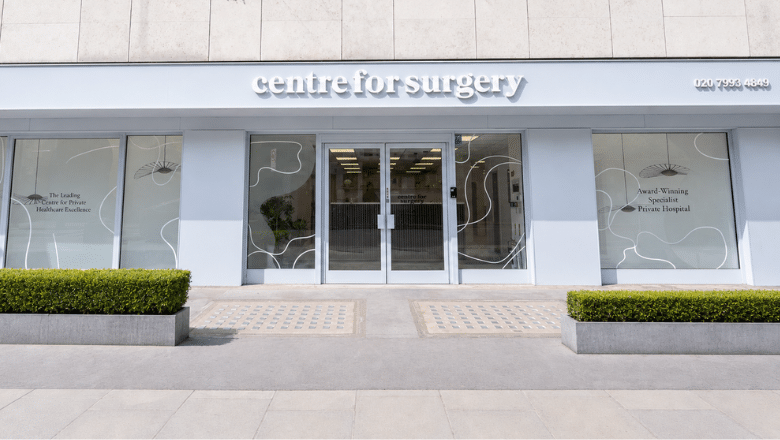
At Centre for Surgery, liquid BBL (non-surgical BBL) treatment is performed by GMC-registered surgeons at our CQC-regulated Baker Street hospital, rated Good overall by the CQC. We use HYAcorp hyaluronic acid body filler only, injected in a sterile operating theatre under real-time ultrasound guidance, so it can be dissolved with hyaluronidase if ever needed. Your consultation is face to face, and your surgeon will tell you honestly whether filler, a surgical BBL or another option suits the shape you want. If filler is right for you, treatment can go ahead at the same appointment, with no pressure to book. Your initial consultation is £100, redeemable against the cost of treatment if you go ahead. Finance isn’t available for a non-surgical butt lift, so treatment is self-funded.
Phone: 020 7993 4849 | Address: 95–97 Baker Street, Marylebone, London W1U 6RN
Contact us to schedule a consultation
References
- Mortada H, Alkadi D, Saqr H, et al. Effectiveness and role of using hyaluronic acid injections for gluteal augmentation: a comprehensive systematic review of techniques and outcomes. Aesthetic Plastic Surgery 2023;47(6):2719–2733. doi:10.1007/s00266-023-03458-0 ↗
- Bussade M, Faria G, Barros M, et al. Assessment of hyaluronic acid filler in gluteal augmentation and contouring: a 1-year prospective study. Journal of Cosmetic Dermatology 2025;24(12):e70600. doi:10.1111/jocd.70600 ↗
- Crabai P, Campos-Martínez L, Marchetti F, et al. Evaluating the safety and satisfaction of HYAcorp MLF2 for noninvasive buttock augmentation: a multicenter study. Plastic and Reconstructive Surgery Global Open 2025;13(1):e6415. doi:10.1097/GOX.0000000000006415 ↗
- Hur JH, Cho YK, Song JK, et al. Clinical evaluation of hyaluronic acid filler for gluteal augmentation: a retrospective study. Plastic and Reconstructive Surgery Global Open 2026;14(7):e7962. doi:10.1097/GOX.0000000000007962 ↗
- Crabai P, Marchetti F, Santacatterina F, et al. Nonsurgical gluteal volume correction with hyaluronic acid: a retrospective study to assess long-term safety and efficacy. Plastic and Reconstructive Surgery Global Open 2024;12(5):e5792. doi:10.1097/GOX.0000000000005792 ↗
- Atiyeh B, Ghieh F, Oneisi A. Safety and efficiency of minimally invasive buttock augmentation: a review. Aesthetic Plastic Surgery 2023;47(1):245–259. doi:10.1007/s00266-022-03049-5 ↗
- Tan SN, Huan NC, Hairudin KA, et al. Acute pulmonary complications following cosmetic hyaluronic acid dermal filler injections. Respirology Case Reports 2025;13(6):e70227. doi:10.1002/rcr2.70227 ↗
- Saad A, Iyengar KP, Davies AM, Botchu R. A rare case of migration of hyaluronic acid gluteal injection to the medial thigh presenting as a soft lump. Indian Journal of Radiology and Imaging 2023;33(2):253–256. doi:10.1055/s-0042-1760364 ↗
- Madero-Pérez J, Gil-Martinez M, Muñoz-Gonzalez C, et al. Guide for managing vascular occlusion caused by fillers with exclusive cutaneous involvement: a review of diagnosis, classification, and treatment. Aesthetic Plastic Surgery 2026;50(5):2068–2082. doi:10.1007/s00266-025-05104-3 ↗
- Blanco J, Gaines S, Arshad J, Sheele JM. Silicone pneumonitis, diffuse alveolar hemorrhage and acute respiratory distress syndrome from gluteal silicone injections. American Journal of Emergency Medicine 2018;36(12):2340.e3–2340.e4. doi:10.1016/j.ajem.2018.09.022 ↗
- UK Parliament, Women and Equalities Committee. Ban liquid BBLs and “high harm” procedures. 18 February 2026. committees.parliament.uk ↗
- GOV.UK, Department of Health and Social Care. Restrictions on the performance of high-risk cosmetic and wellbeing procedures in England (consultation). Published 21 October 2026. gov.uk ↗
Related Articles
- HYAcorp Fillers for Buttocks
- How Long Does Butt Filler Last?
- Safe BBL: What Is an Ultrasound-Guided BBL and Is It Safer?
- Butt Injections vs BBL: Filler, Booty Shots and Surgery Compared