

In this guide18 sections
- Key Points
- Is a BBL Safe in the UK?
- Why Did BBLs Have Such a High Death Rate?
- What Is the BBL Danger Zone?
- What Is Superficial Gluteal Lipofilling?
- What Is an Ultrasound-Guided BBL?
- Is Ultrasound BBL Safe? What the Evidence Shows
- What Is EVL (Expansion Vibration Lipofilling)?
- What Do BAAPS, ASERF and ISAPS Recommend?
- How Is a Safe BBL Performed at Centre for Surgery?
- Who Is a Good Candidate for a Safe BBL?
- Is a Liquid BBL Safer Than Surgery?
- Is It Safe to Get a BBL Abroad or in Turkey?
- What Should You Ask a Surgeon Before a BBL?
- What Are the Warning Signs After a BBL?
- Frequently Asked Questions
- Safe BBL in London
- References
Key Points
- The safest BBL places fat only under the skin. Fat goes into the subcutaneous layer above the gluteal muscle, never into or beneath it. This is called superficial gluteal lipofilling (SGL), or a subcutaneous BBL.
- Almost every BBL death has been caused by fat embolism. Fat injected into the buttock muscle can enter the large gluteal veins and travel to the lungs. One survey found the risk of death was 16 times higher with intramuscular injection.
- An ultrasound-guided BBL lets the surgeon see the cannula tip. Real-time ultrasound shows the fat layer and the muscle beneath it, confirming the fat goes into the safe plane.
- The evidence for ultrasound BBL is encouraging but observational. Pooled studies of more than 6,000 ultrasound-guided cases reported no deaths or fat embolism, although no randomised trials exist yet.
- UK guidance is clear. BAAPS recommends subcutaneous-only injection, intraoperative ultrasound, blunt cannulas of 4 mm or more and no more than three cases a day for a surgeon.
- Where you have surgery matters as much as how. In one large autopsy review, most deaths followed operations at high-volume budget clinics.
A safe BBL is a Brazilian butt lift in which fat is injected only into the subcutaneous fat layer above the gluteal muscle, under real-time ultrasound guidance, with a blunt cannula, in a regulated hospital. That combination removes the main route by which BBLs used to kill patients: fat entering the large veins inside and beneath the buttock muscle. A BBL performed this way is still a significant operation with real risks, but it is a very different procedure from the one that earned the BBL its reputation.
This guide explains why the BBL had the highest death rate in cosmetic surgery, what the gluteal “danger zone” is, how superficial gluteal lipofilling and ultrasound-guided BBL work, what the evidence shows, and the questions and red flags that separate a safe BBL from a dangerous one. Our Brazilian butt lift page explains how the operation is planned at Centre for Surgery, and our guide to BBL risks covers every complication in detail.
Is a BBL Safe in the UK?
A BBL can be performed safely in the UK when it follows current guidance, but it is not a minor procedure. In 2022 the British Association of Aesthetic Plastic Surgeons (BAAPS) published new gluteal fat grafting recommendations, summed up as “no to BBL, yes to SGL”: the traditional technique, which allowed fat into the muscle, should not be used, while superficial gluteal lipofilling, with fat kept strictly above the muscle and its covering fascia, can be offered under real-time ultrasound guidance[1].
International data show why that shift matters. In a 2020 survey of ASAPS and ISAPS surgeons published in the Aesthetic Surgery Journal ↗, the proportion injecting into deep muscle fell from 13.1% to 0.8% after the 2017 safety recommendations, and pulmonary fat embolism fell from 1 in 1,030 to 1 in 2,492 cases. Mortality trended down from around 1 in 3,448 to 1 in 14,952[2]. Our BBL death rate statistics page tracks the figures year by year.
Why Did BBLs Have Such a High Death Rate?
The cause is almost always pulmonary fat embolism. If the cannula tip enters the gluteus maximus muscle, or passes beneath it, fat can be forced into the large veins there, carried to the heart and lodged in the arteries of the lungs, often during the operation or within hours of it.
The 2017 ASERF Gluteal Fat Grafting Task Force surveyed 692 plastic surgeons covering 198,857 cases. They reported 32 deaths and 103 non-fatal fat emboli, with significantly higher rates among surgeons who injected into deep muscle. The task force concluded that gluteal fat grafting appeared to carry a higher mortality rate than any other aesthetic operation, and advised against deep muscle injection, cannulas smaller than 4 mm and angling the cannula downwards[3].
A 2019 expert survey of 853 board-certified Brazilian plastic surgeons in Plastic and Reconstructive Surgery ↗ found the risk of death was 16 times greater when fat was injected intramuscularly. With subcutaneous grafting as the most common technique among respondents, estimated mortality was 1 in 20,117[4].
Autopsy evidence confirms the mechanism. A review of BBL deaths in South Florida examined 22 buttocks from 11 post-mortem examinations and found fat in the gluteal muscle at multiple levels in every fat embolism death. In that series, 92% of those who died had surgery at high-volume budget clinics, often with operating times of around 90 minutes[5]. Technique and setting go together: a rushed operation leaves little margin for the precision safe gluteal fat grafting demands.
What Is the BBL Danger Zone?
Surgeons call the gluteal muscle and the space beneath it the “danger zone”. From the surface inwards, the buttock has:
- Skin, through which 3 to 4 mm incisions are made.
- Superficial subcutaneous fat, divided into small compartments by fibrous strands.
- Deep subcutaneous fat, a looser layer that can expand to accept grafted fat. Most of the projection in a safe BBL comes from here.
- Deep gluteal fascia, a tough sheet covering the muscle. It shows as a bright line on ultrasound and marks the floor of the safe zone.
- Gluteus maximus muscle, with the superior and inferior gluteal veins running within and beneath it.
The gluteal veins are wide and tethered within the muscle, so a vein torn by a cannula tends to stay open rather than collapse, and fat injected under pressure nearby can be drawn straight into the circulation. Above the fascia the veins are small and there is no direct path to the deep venous system. That is why subcutaneous-only injection is the most important safety principle in BBL surgery, and why a cannula angled downwards towards the muscle, particularly in the lower and inner buttock, is dangerous.
What Is Superficial Gluteal Lipofilling?
Superficial gluteal lipofilling, or SGL, also called a subcutaneous BBL, is the BAAPS name for buttock fat transfer performed entirely in the subcutaneous fat. Fat is harvested by liposuction from areas such as the abdomen, flanks and back, processed, and grafted into the superficial and deep fat layers of the buttocks and hips without breaching the gluteal fascia[1].
In practice, SGL is what a modern safe BBL is. Some surgeons once injected into muscle believing the fat would survive better, but that has not held up. Real-time ultrasound has shown that fat placed in the deep subcutaneous space spreads through that layer while staying above the deep gluteal fascia, giving projection without entering the muscle[6].
The subcutaneous layer can only hold so much fat while giving each graft enough blood supply to survive. BAAPS advises limiting the volume to the capacity of the tissue, and staging a second procedure rather than injecting deeper if you want more volume[1].
What Is an Ultrasound-Guided BBL?
An ultrasound-guided BBL, sometimes called an ultrasound BBL or ultra BBL, is a subcutaneous BBL in which the surgeon uses intraoperative ultrasound to watch the cannula while the fat is placed. It does not change what the operation achieves. It changes how certain the surgeon can be about where the fat is going:
- A sterile ultrasound probe sits on the skin next to where the cannula is working, often a compact wireless probe.
- The screen shows the layers in real time: skin, superficial fat, deep fat, the bright line of the deep gluteal fascia and the muscle beneath.
- The cannula appears as a bright line, so the surgeon can confirm its tip sits above the fascia before and during injection.
- The fat can be seen spreading as the deep layer thickens, which helps distribute it evenly.
The largest published series reported 4,150 BBLs performed with real-time intraoperative ultrasound. The authors could confirm consistent subcutaneous placement, target specific gluteal compartments and see grafted fat migrate through the deep subcutaneous space while remaining above the fascia[6].

“Ultrasound-assisted” is not the same thing. Ultrasound-assisted liposuction, such as VASER liposuction, uses ultrasound energy to loosen fat at the donor sites, whereas ultrasound-guided fat transfer uses imaging to see where fat goes in the buttocks. A clinic advertising an “ultrasound BBL” should be able to tell you which it means.
Is Ultrasound BBL Safe? What the Evidence Shows
The published evidence on ultrasound-guided BBL is reassuring and growing:
- No deaths in pooled ultrasound cases. A 2026 systematic review and meta-analysis in the Aesthetic Surgery Journal ↗ pooled four studies covering 6,235 women and found no reported deaths or fat embolism. Minor complications occurred in 6.32 per 100 patients, most often seroma (a fluid collection), with infection in 0.23 and fat necrosis in 0.09 per 100[7].
- Fewer complications than non-ultrasound techniques. A meta-analysis of 38 studies and 22,151 patients found ultrasound guidance was associated with fewer major (0.02% vs 0.08%) and minor (2.82% vs 3.70%) complications, and subcutaneous-only injection had the lowest complication rates of any plane[8].
- The honest caveat. A 2026 scoping review found the evidence consists mainly of observational case series, with no randomised or high-quality comparative studies, and called ultrasound a useful safety adjunct that still needs comparative research[9].
So is ultrasound BBL safe? It is the safest way currently described to perform gluteal fat grafting, and UK guidance treats it as a requirement, not an extra. It is not a guarantee: it only helps if the surgeon is trained to read the image and keeps the probe on the cannula throughout. A BBL also carries the other risks of liposuction and fat grafting, including seroma, infection, fat necrosis, contour irregularity and blood clots in the legs.
What Is EVL (Expansion Vibration Lipofilling)?
Expansion vibration lipofilling, or EVL, places fat through a power-assisted cannula that vibrates while fat is pumped through it in a continuous flow, rather than through hand-held syringes. The vibration gently expands the tissue spaces and the fat fills them as the cannula moves.
A 2018 study of 2,419 consecutive EVL gluteal fat transfers, averaging around 1,000 ml of fat and 1 hour 40 minutes of operating time, recorded no fat embolism or deaths. The authors argued that stiffer, larger cannulas and less physical effort for the surgeon help with the one thing that prevents fatal fat embolism: knowing exactly where the cannula tip is at all times[10]. EVL also avoids high-pressure bolus injection from a syringe, which BAAPS warns against: fat should be injected only while the cannula is moving[1].
What Do BAAPS, ASERF and ISAPS Recommend?
UK and international recommendations now point the same way. The BAAPS 2022 gluteal lipofilling safety document recommends[1]:
- Subcutaneous injection only, never into or under the muscle.
- Intraoperative ultrasound to confirm the cannula position, with images saved, by surgeons able to show competence in using it.
- Blunt, thick cannulas of 4 mm or more, which are less likely to bend or pierce the fascia.
- Volume limited by tissue capacity, with staged surgery rather than deeper injection.
- No more than three cases a day for a surgeon, to avoid fatigue.
- A strictly regulated healthcare setting with an operating theatre and sterile conditions.
The 2017 ASERF task force recommendations, which 94% of ASAPS and ISAPS surgeons surveyed in 2020 were aware of, made the same core points: avoid deep muscle, avoid cannulas under 4 mm and do not angle the cannula downwards[3]. Florida introduced a “subcutaneous-only” rule in 2019, yet the South Florida review found deaths continued at budget clinics afterwards[5]. Guidance only protects patients when it is followed.
How Is a Safe BBL Performed at Centre for Surgery?
Every BBL at Centre for Surgery is a subcutaneous BBL performed under real-time ultrasound guidance, and fat is never injected into or beneath the gluteal muscle:
- Consultation and planning. Your surgeon assesses your donor fat, skin and buttock shape and plans a volume your tissues can safely hold. The consultant who assesses you performs your surgery.
- Anaesthesia. Surgery is carried out under TIVA (total intravenous anaesthesia) as a day case and takes 3 to 4 hours, towards the longer end with 360 liposuction.
- Fat harvest. Fat is taken through 3 to 4 mm incisions in natural creases using power-assisted liposuction (PAL) or VASER, as your surgeon recommends.
- Fat transfer. Processed fat is placed with a blunt cannula using EVL, into the subcutaneous layer only, with ultrasound confirming the plane throughout.
- Going home. You are monitored for 1 to 3 hours and go home the same day with a responsible adult, who stays with you for 24 hours.
Afterwards, you avoid sitting directly on your buttocks for 2 weeks, using a BBL cushion if sitting cannot be avoided, and sleep on your front or side. You wear a compression garment day and night for 6 weeks, walk from day 1 to lower the risk of blood clots, and return to full exercise from 6 weeks. Around 50 to 70% of transferred fat survives, which your surgeon plans for, and the final shape shows at 3 to 6 months. Our BBL recovery guide covers each week.

Real Centre for Surgery patient, photographed at least six months after BBL surgery.
More real results are in our BBL before and after photos gallery.
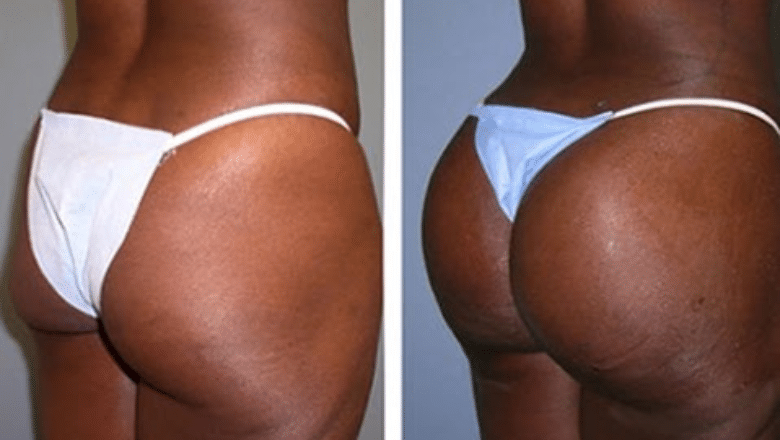
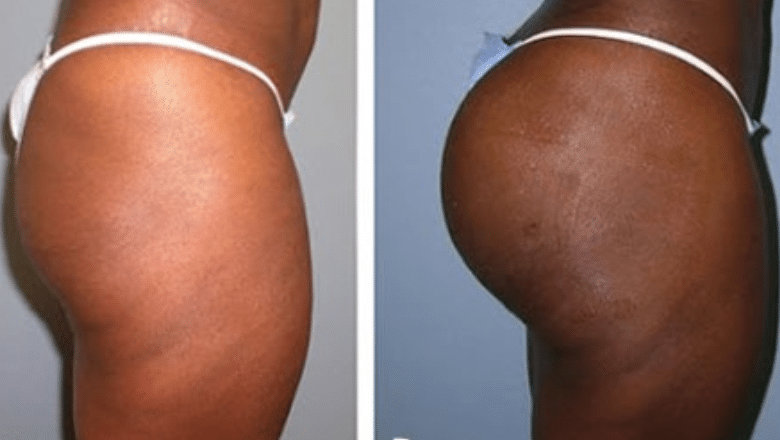
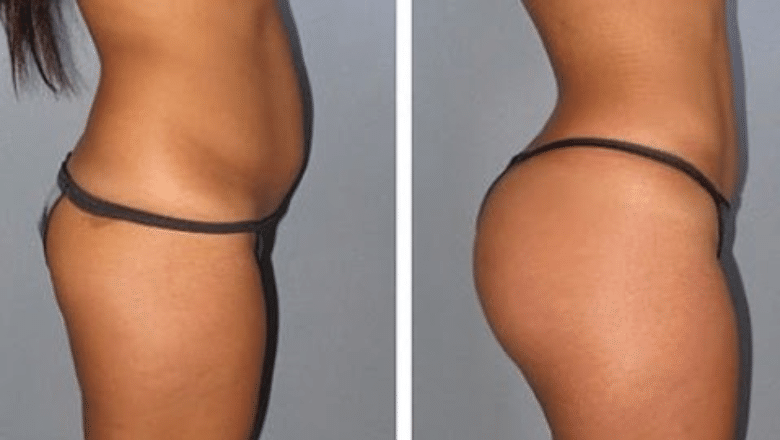
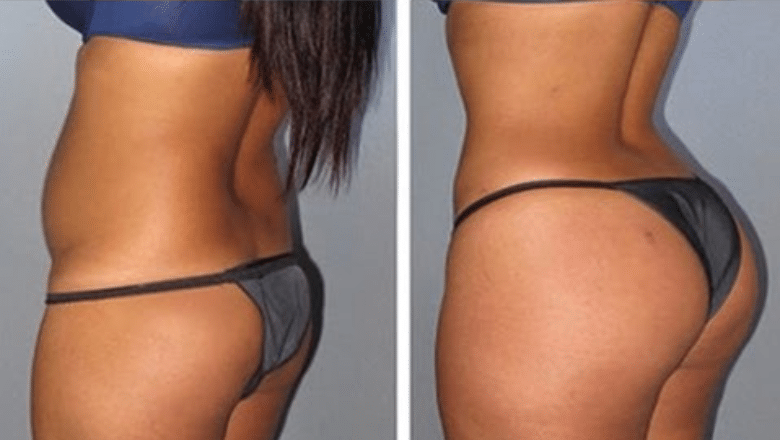
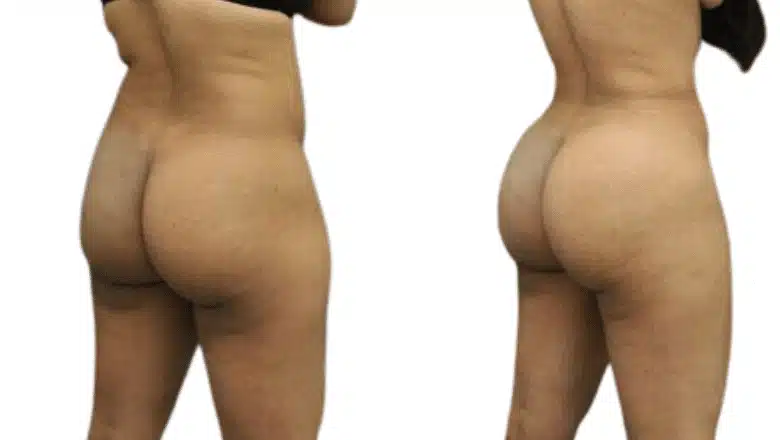
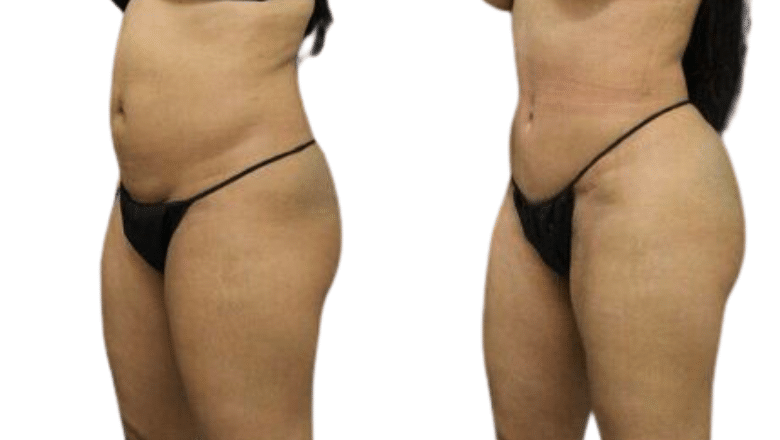
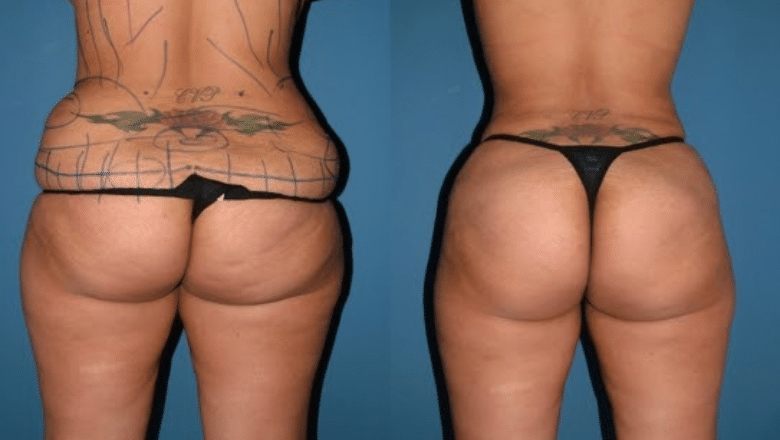
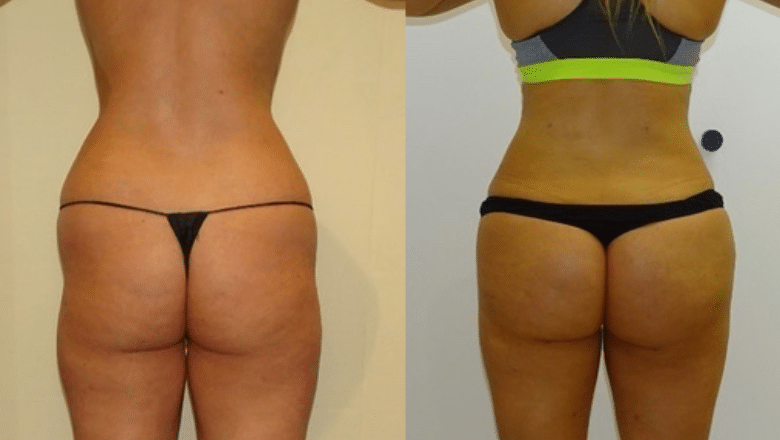
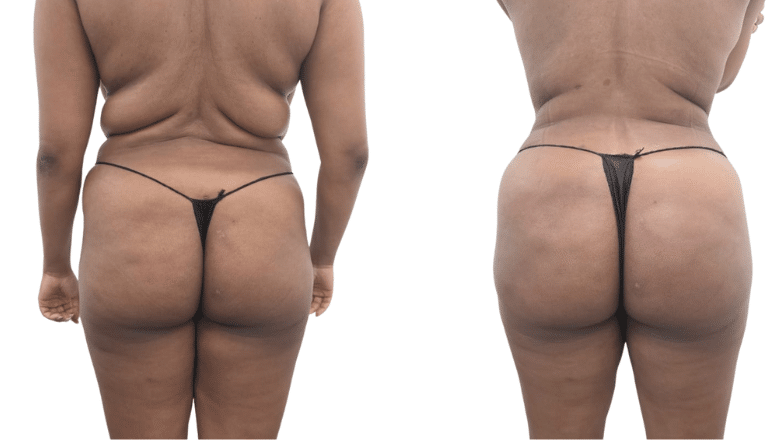
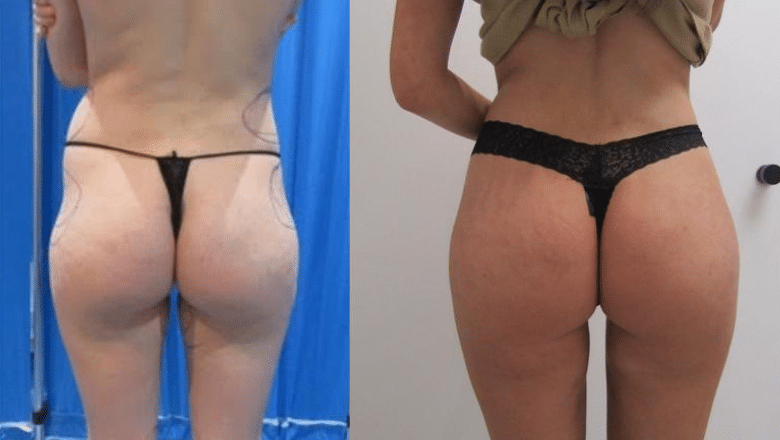
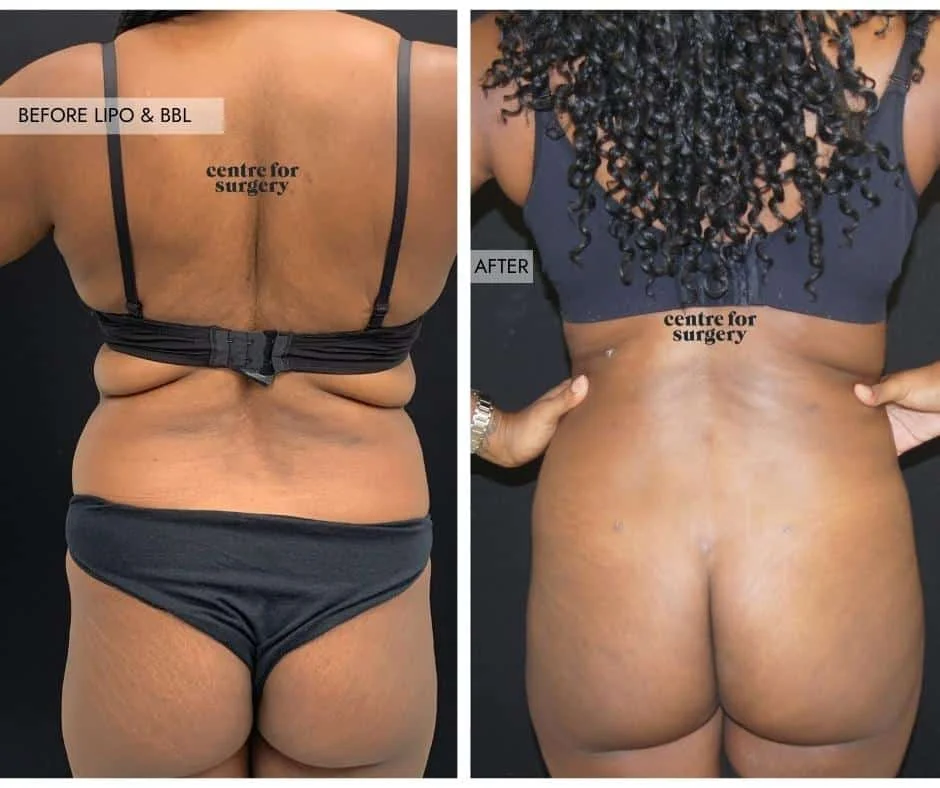
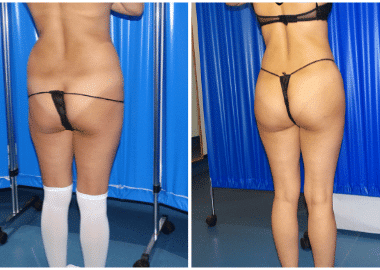
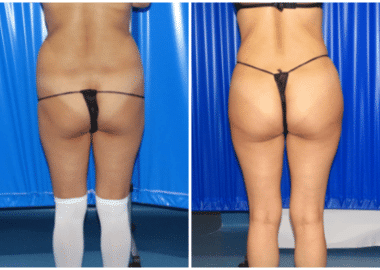
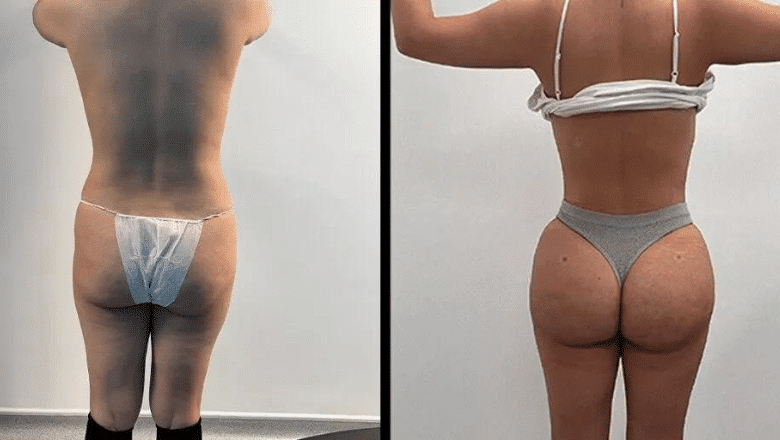
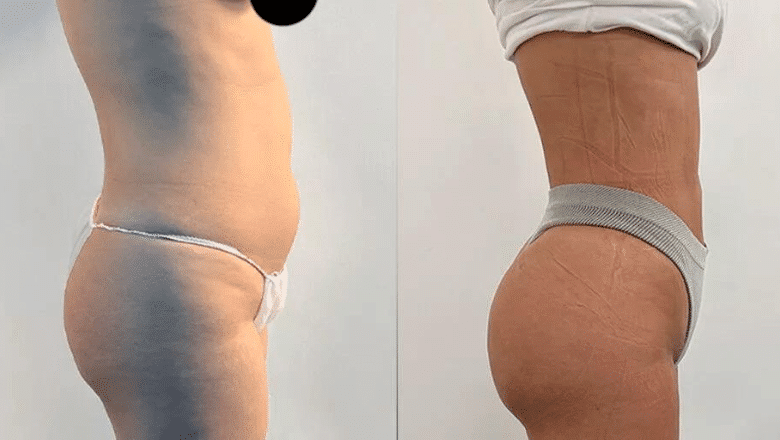
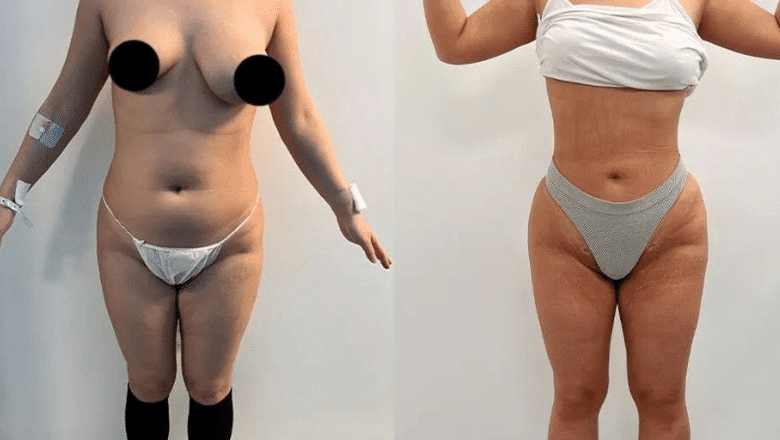
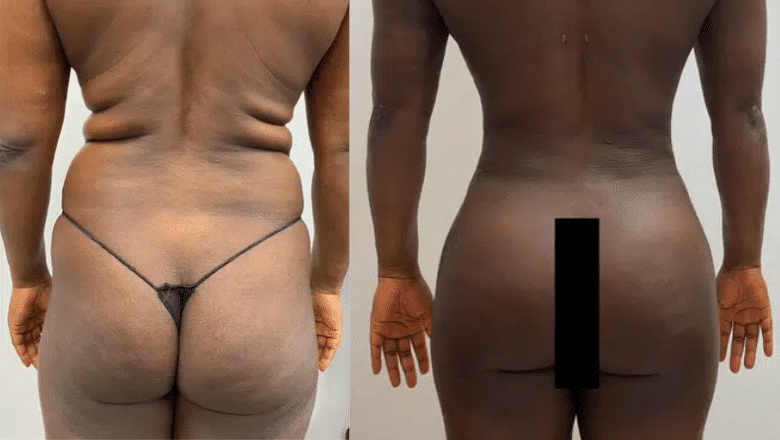
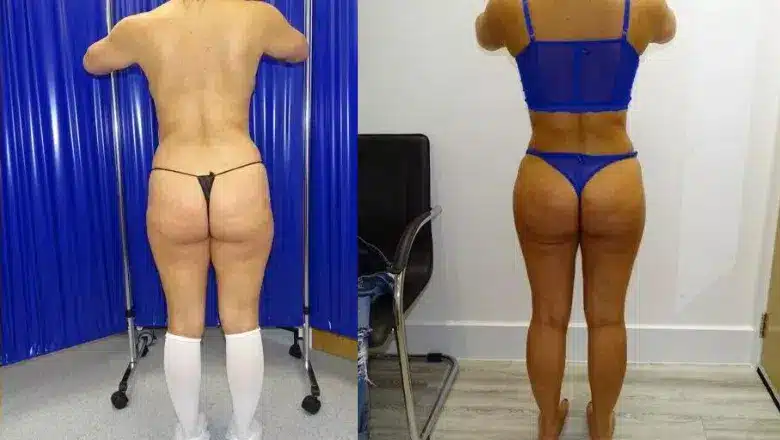
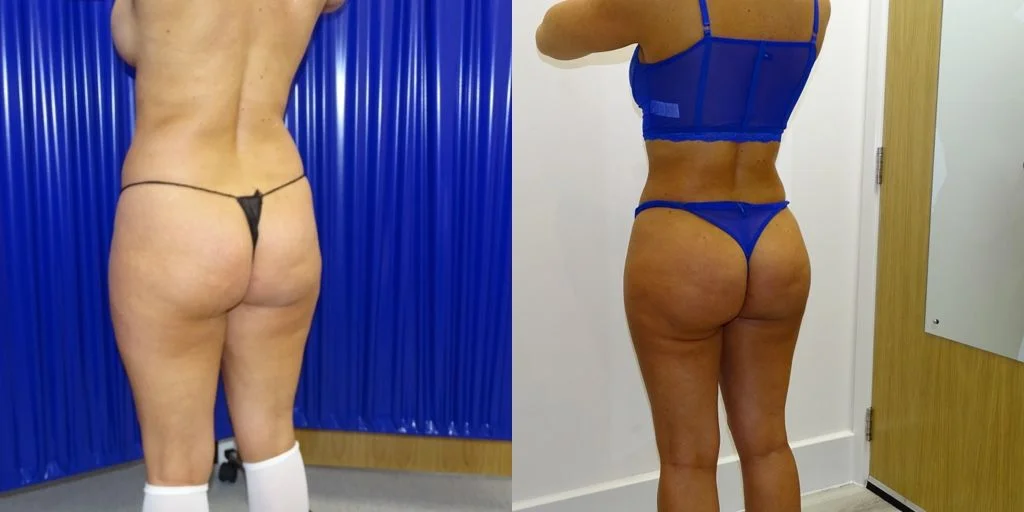
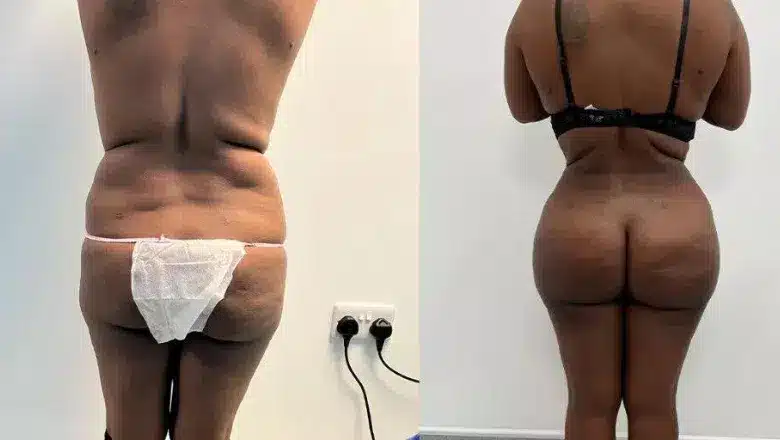
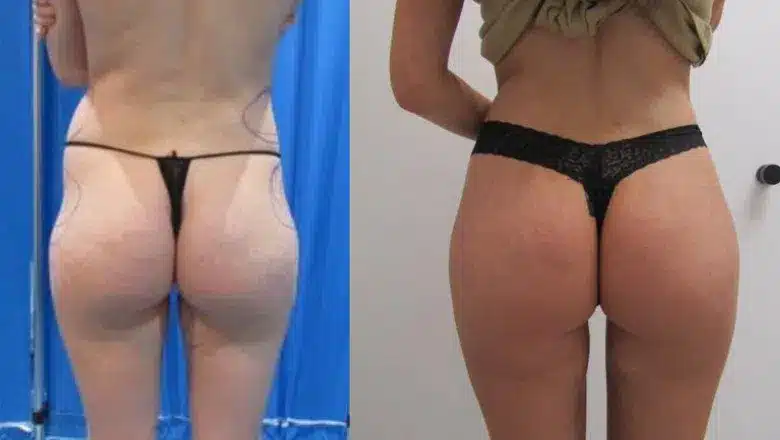
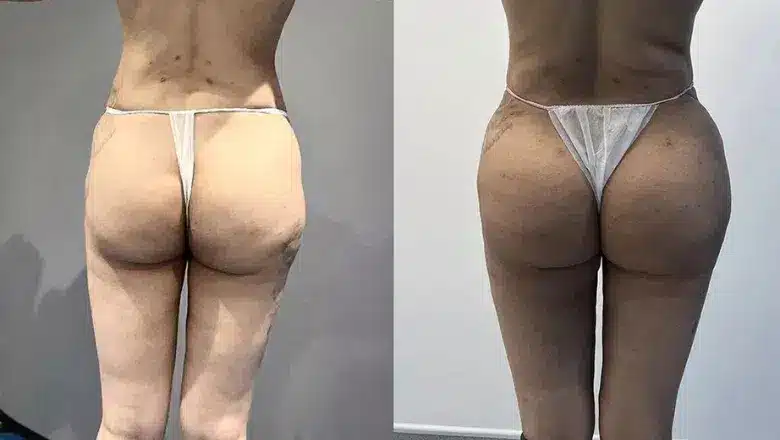
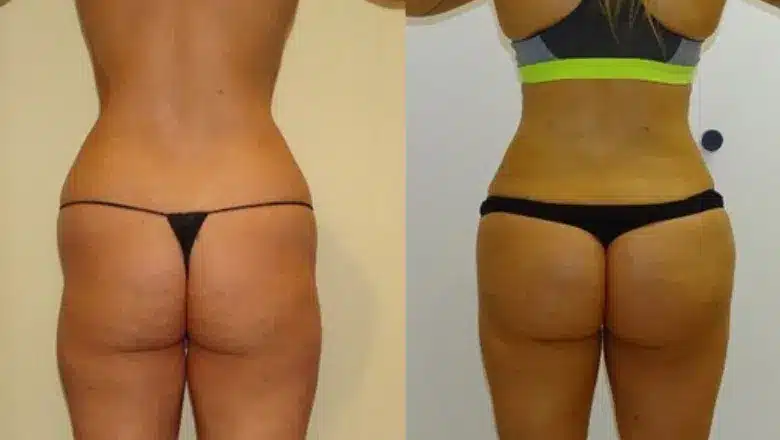
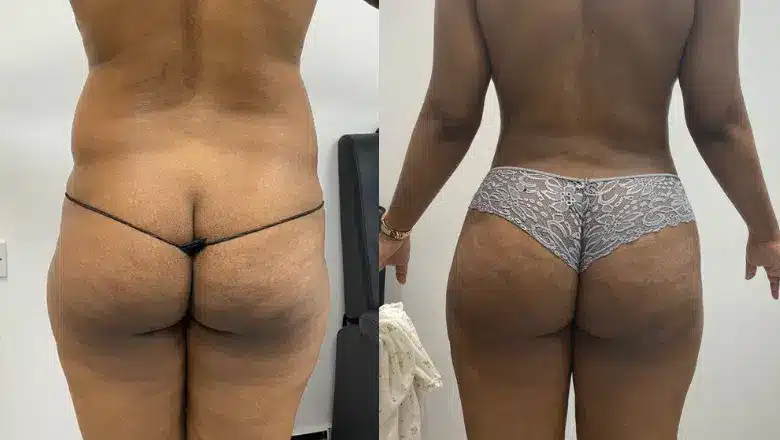
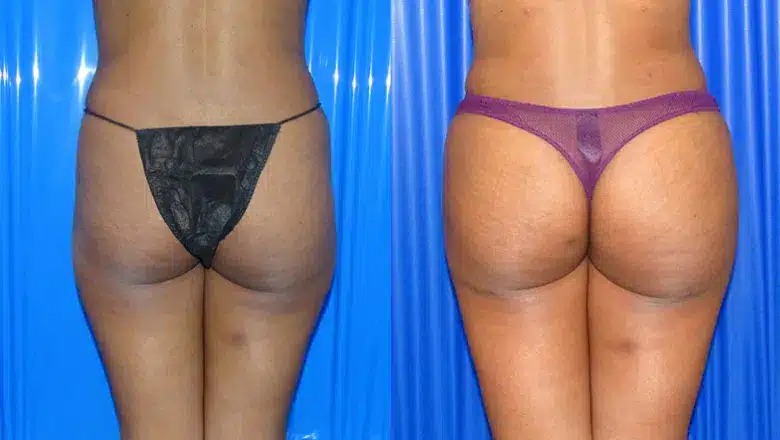
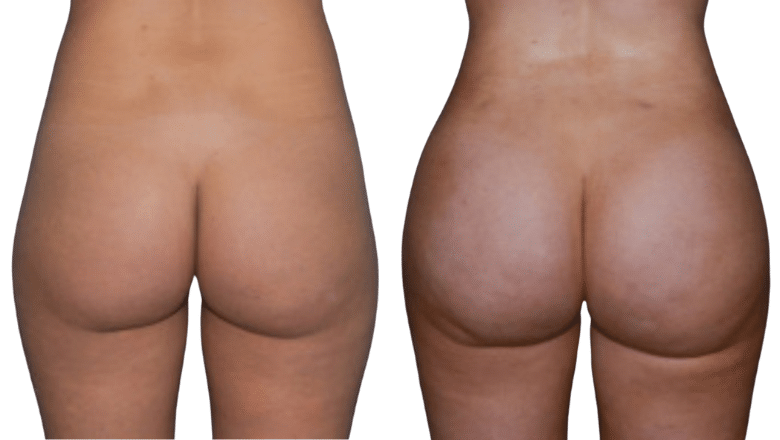
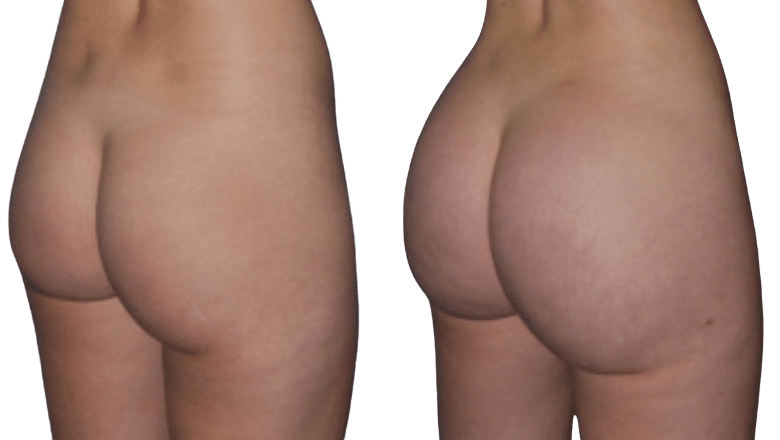
You can also watch BBL and 360 lipo before and after results on the Centre for Surgery YouTube channel ↗.
Who Is a Good Candidate for a Safe BBL?
A safe BBL starts with choosing the right patient. You are more likely to be suitable if:
- You have enough donor fat. A BMI of about 23 to 28 usually provides enough, and our guide on whether weight matters for a BBL explains why.
- Your weight is stable for at least 3 months, or 6 to 12 months after major weight loss.
- You are 18 or over, not pregnant or breastfeeding, and in good general health.
- You can stop nicotine, including vaping, for 4 weeks before and after surgery, as smoking reduces fat survival.
- Your goals fit your tissues. A dramatic result may need more than one session, and a safe surgeon will say so.
If you are slim, a skinny BBL uses several smaller donor areas for a modest, proportionate change. Aspirin is stopped 2 weeks before surgery, and an oestrogen-containing pill or HRT may need pausing for 4 weeks to lower the risk of blood clots.
Is a Liquid BBL Safer Than Surgery?
Not necessarily. A liquid BBL, or non-surgical BBL, uses injectable body filler instead of your own fat. It avoids liposuction and anaesthesia, but large-volume buttock filler carries its own risks, including infection, abscess and tissue damage, especially when performed by non-medical practitioners in unregulated settings. Our article on whether liquid BBL is safe covers the regulation, risks and evidence. At Centre for Surgery, the non-surgical butt lift uses a hyaluronic acid body filler injected by surgeons in a sterile theatre under ultrasound guidance. It gives a modest change, lasts around 12 to 18 months and can be dissolved, but it does not slim donor areas.
Is It Safe to Get a BBL Abroad or in Turkey?
Many clinics abroad, including in Istanbul and Antalya, advertise “ultrasound-guided” or “safe BBL” packages, but you cannot check from home whether ultrasound is used throughout, which plane the fat goes into or how many operations the surgeon performs that day. NHS England has warned that BBLs have the highest death rate of any cosmetic procedure, and that NHS teams often treat the complications of cheap surgery abroad[11]. Flying soon after surgery also raises the risk of blood clots and clashes with the 2-week no-sitting rule, and if a complication develops at home, the doctors treating you did not perform the operation. Red flags include:
- Package prices bundled with flights and hotels, or offers that expire within days.
- Very large volumes promised in one session.
- No consultation with the operating surgeon before you travel.
- Vague answers about the injection plane, ultrasound or cannula size.
- Several BBLs booked for one surgeon on the same day, or short operating times.
- No plan for aftercare once you are back in the UK.
Our guide to BBL in Turkey sets out the risks and the real cost once revision and travel are included.
What Should You Ask a Surgeon Before a BBL?
A safe BBL surgeon will welcome these questions:
- Will fat be placed only in the subcutaneous layer, never into or under the muscle?
- Will you use real-time ultrasound throughout the fat transfer, and are you trained in it?
- How many BBLs will you operate on that day?
- How much fat will you transfer, and will I need a second stage?
- Is the hospital CQC-registered, and what happens if I have a complication at night?
Check that your surgeon is registered with the GMC and has specialist training in plastic surgery. Our article on choosing your BBL surgeon explains how.
What Are the Warning Signs After a BBL?
Major fat embolism usually happens during surgery or soon after it, but blood clots and infection can develop days or weeks later. Call 999 if you have sudden breathlessness, chest pain or cough up blood. Contact your clinic, or NHS 111 out of hours, if you develop pain or swelling in one calf, a fever, or an incision that becomes red and hot. At Centre for Surgery you have your surgeon’s direct number for the first 24 hours, then the clinic on 020 7993 4849 (9am to 6pm, Monday to Saturday), and the nursing team stays in contact over the first 2 weeks.
Frequently Asked Questions
Is ultrasound BBL safe?
Ultrasound-guided BBL is the safest way currently described to perform gluteal fat grafting. A 2026 meta-analysis of 6,235 ultrasound-guided cases found no reported deaths or fat embolism, and UK guidance recommends ultrasound for every gluteal fat transfer. It reduces risk rather than removing it: seroma, infection, fat necrosis and blood clots can still occur.
What is the safest BBL?
The safest BBL is a subcutaneous BBL, also called superficial gluteal lipofilling, with fat placed only under the skin and above the gluteal muscle. It should be performed under real-time ultrasound with a blunt cannula, by a GMC-registered surgeon in a CQC-registered hospital, using a volume your tissues can safely hold.
What is superficial gluteal lipofilling?
Superficial gluteal lipofilling (SGL) is the BAAPS term for buttock fat transfer performed entirely in the subcutaneous fat, above the deep gluteal fascia. Fat is harvested by liposuction, processed and grafted into the fat layers of the buttocks and hips. It is what a modern safe BBL is, renamed to separate it from older techniques that allowed fat into the muscle.
Can you get a BBL in the UK?
Yes. BBL surgery is available in the UK, but BAAPS advises it should be performed only as superficial gluteal lipofilling with ultrasound guidance. When choosing a clinic, ask whether fat is placed only above the muscle, whether ultrasound is used throughout, and whether the hospital is CQC-registered.
What is the death rate for a BBL?
A 2020 follow-up survey of ASAPS and ISAPS surgeons put BBL mortality at around 1 in 3,448 in 2017, trending down to about 1 in 14,952 by 2019 as surgeons stopped injecting into muscle. Ultrasound-guided series published since have reported no deaths, although they are observational studies.
What is the complication rate of a BBL procedure?
A 2026 meta-analysis of 22,151 patients found minor complications in about 3.6% of gluteal fat grafting cases, most often seroma and contour irregularities, with pulmonary embolism in 0.04%. Ultrasound-guided grafting had fewer major and minor complications, and subcutaneous-only injection had the lowest rates.
Does a subcutaneous BBL give smaller results?
Not usually. Most of the projection in a BBL comes from the deep subcutaneous fat layer, which can expand to take a substantial volume. Injecting into the muscle has not been shown to improve results, and it greatly increases the risk of death. If you want more volume than one session can safely hold, a staged second procedure is the safe way to achieve it.
Safe BBL in London
Every BBL at Centre for Surgery is a subcutaneous BBL performed under real-time ultrasound guidance, with fat placed only above the gluteal muscle using a blunt cannula and EVL. Surgery is performed by GMC-registered surgeons at our CQC-regulated Baker Street hospital, rated Good overall by the CQC, under TIVA as a day case. The consultant who assesses you performs your surgery, further consultations before surgery are free, and follow-up appointments are included. We recommend a two-week cooling-off period before you go ahead. Your initial consultation is £100, redeemable against the cost of surgery if you go ahead. Finance isn’t available for BBL at Centre for Surgery, so the procedure is self-funded, and our guide to BBL cost in London explains what is included.
Phone: 020 7993 4849 | Address: 95–97 Baker Street, Marylebone, London W1U 6RN
Contact us to schedule a consultation
References
- British Association of Aesthetic Plastic Surgeons. Gluteal lipofilling safety and recommendations. 30 September 2022. baaps.org.uk ↗
- Rios L, Gupta V. Improvement in Brazilian butt lift (BBL) safety with the current recommendations from ASERF, ASAPS, and ISAPS. Aesthetic Surgery Journal 2020;40(8):864–870. doi:10.1093/asj/sjaa098 ↗
- Mofid MM, Teitelbaum S, Suissa D, et al. Report on mortality from gluteal fat grafting: recommendations from the ASERF Task Force. Aesthetic Surgery Journal 2017;37(7):796–806. doi:10.1093/asj/sjx004 ↗
- Cansancao AL, Condé-Green A, Gouvea Rosique R, et al. “Brazilian butt lift” performed by board-certified Brazilian plastic surgeons: reports of an expert opinion survey. Plastic and Reconstructive Surgery 2019;144(3):601–609. doi:10.1097/PRS.0000000000006020 ↗
- Pazmiño P, Garcia O. Brazilian butt lift-associated mortality: the South Florida experience. Aesthetic Surgery Journal 2023;43(2):162–178. doi:10.1093/asj/sjac224 ↗
- Pazmiño P, Del Vecchio D. Static injection, migration, and equalization (SIME): a new paradigm for safe ultrasound-guided Brazilian butt lift: safer, faster, better. Aesthetic Surgery Journal 2023;43(11):1295–1306. doi:10.1093/asj/sjad142 ↗
- Milani Reis A, Roca Mora MM, Bicudo Bregion P, et al. Ultrasound-guided gluteal fat grafting: what is the evidence? A systematic review and meta-analysis. Aesthetic Surgery Journal 2026;46(1):57–62. doi:10.1093/asj/sjaf059 ↗
- Elsaftawy A, Bonczar M, Jagosz M, et al. Gluteal augmentation with fat grafting: a systematic review and meta-analysis of complications and procedural factors. Plastic and Reconstructive Surgery 2026;157(3):381e–393e. doi:10.1097/PRS.0000000000012437 ↗
- Vázquez-Guerra XC, Alvarez-Lozada LA, Altuzar-Abadía JJ, et al. Ultrasound in gluteal fat grafting: safety tool, standard of care, or emerging evidence? A scoping review. Aesthetic Surgery Journal 2026. doi:10.1093/asj/sjag120 ↗
- Del Vecchio D, Wall S. Expansion vibration lipofilling: a new technique in large-volume fat transplantation. Plastic and Reconstructive Surgery 2018;141(5):639e–649e. doi:10.1097/PRS.0000000000004338 ↗
- NHS England. NHS warns of “bargain-basement” BBLs in run-up to Christmas. December 2024. england.nhs.uk ↗

Related Articles
- BBL Risks: Is a Brazilian Butt Lift Safe?
- BBL Death Rate and Safety Statistics 2026
- 9 Essential Questions To Consider When Choosing Your Brazilian Butt Lift Surgeon
- BBL in Turkey: The Risk Nobody Explains and What It Actually Costs