


In this guide15 sections
- What Is Macromastia?
- How Do Large or Heavy Breasts Cause Back, Neck, and Shoulder Pain?
- Can Breast Reduction Actually Relieve Back Pain?
- The Impact on Daily Life
- Should You Get a Breast Reduction?
- Medical Reasons for Breast Reduction
- Can I Get Breast Reduction Surgery for Back Pain on the NHS?
- How Is Breast Reduction Surgery Done?
- What to Expect During Recovery
- Can You Still Have Back Pain After Breast Reduction?
- Does Breast Reduction Leave a Scar?
- What Are the Risks and Complications of Breast Reduction?
- Can Breast Reduction Be Combined With Other Procedures?
- Frequently Asked Questions
- Breast Reduction Surgery at Centre for Surgery
Back, neck, and shoulder pain caused by large or heavy breasts is one of the most common — and most treatable — problems we see at consultation. If you’re wondering whether breast reduction surgery can genuinely relieve this kind of pain, the short answer is yes: for the right candidate, it’s one of the most reliably effective procedures in cosmetic surgery for resolving pain that’s directly caused by breast weight. This guide covers exactly how heavy breasts cause pain, what breast reduction involves, what the evidence and patient experience show about pain relief, and everything else you need to know before making a decision.
What Is Macromastia?
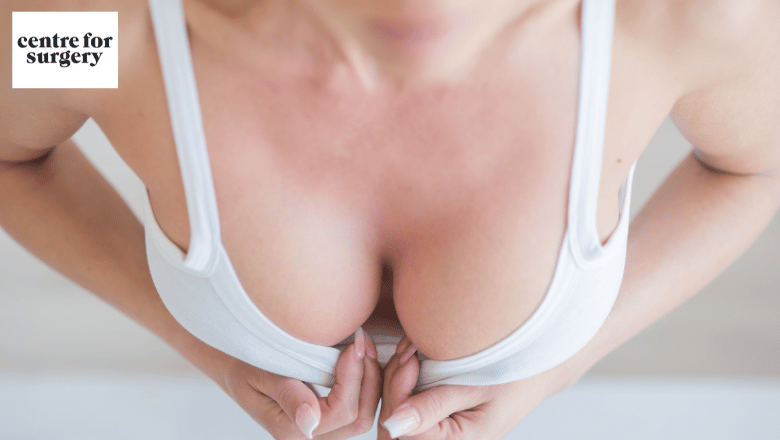
Macromastia is the medical term for having very large and heavy breasts, disproportionate to the rest of the body frame. It can cause physical problems like back, neck, and shoulder pain, skin irritation, and bra strap marks — and it can also affect emotional wellbeing, making women feel self-conscious or struggle to find clothes that fit comfortably.
The exact cause of macromastia isn’t fully understood, but genetics, hormonal factors, and weight gain are all thought to play a role.
For many women, breast reduction surgery is the most effective way to relieve the pain and discomfort associated with macromastia. It can be performed on its own or combined with a breast lift or implants to achieve the best overall result. Other measures — supportive bras, physiotherapy, and maintaining a healthy weight — can help manage symptoms, but surgery remains the only way to fully and permanently relieve severe symptoms.
How Do Large or Heavy Breasts Cause Back, Neck, and Shoulder Pain?

Having large, heavy breasts places extra, continuous weight on your neck, back, and shoulders, and this happens through several distinct mechanisms working together:
- Poor posture — the extra weight pulls the upper body forward, causing many women to unconsciously hunch or round their shoulders to compensate. Over time, this strains the neck, back, and shoulders continuously.
- Muscle strain — your back and neck muscles, particularly the trapezius, have to work significantly harder to support the additional weight, leading to soreness, fatigue, and chronic tension.
- Joint and spinal strain — the extra weight places more pressure on the joints of the spine, which can contribute to discomfort and, over the long term, changes in spinal alignment.
- Nerve compression — bra straps digging into the shoulders under sustained weight can compress nerve fibres running over the collarbone, sometimes causing numbness, tingling, or pain that radiates down into the hands.
- Bra limitations — a bra that doesn’t fit well, or isn’t supportive enough for the weight it’s carrying, can dig into the shoulders and fail to properly distribute breast weight, worsening all of the above.
- Skin irritation — large breasts can rub against the skin, particularly during exercise, causing chafing and irritation that compounds overall discomfort.
To reduce discomfort in the short term, good posture, a well-fitting supportive bra, and regular exercises to strengthen the back and neck can genuinely help. But in more significant, persistent cases, breast reduction surgery is often needed to properly and permanently relieve pain.
Can Breast Reduction Actually Relieve Back Pain?
This is the question we’re asked most often, and the evidence — both clinical and from patient experience — is genuinely reassuring. When the underlying cause of your back, neck, or shoulder pain is confirmed to be the size and weight of your breasts, breast reduction is considered one of the most reliably effective treatments available, surgical or otherwise. Once breast weight is reduced, several mechanisms combine to relieve pain:
- Improved posture — less force acting on the spine reduces the risk of ongoing postural strain and abnormal spinal curvature.
- Reduced strap pressure — bra straps carry significantly less weight, easing shoulder and nerve compression.
- Easier physical activity — many patients find they can comfortably do aerobic exercise without the pain or breathlessness that previously limited them.
- Better spinal loading — with less force acting on the spine over time, nerve root entrapment and associated pain often reduce meaningfully.
- Greater mobility and energy — patients frequently describe feeling more mobile and energetic, with a renewed ability to enjoy sport and physical activity they’d previously given up.
Breast reduction consistently has some of the highest patient satisfaction rates of any procedure we perform, and pain relief is one of the most significant, most reliably reported benefits.
The Impact on Daily Life
It’s worth naming the full scope of what heavy breasts can affect, beyond the purely physical. Alongside back, neck, and shoulder pain, women commonly describe:
- Difficulty finding clothing that fits comfortably, and limited wardrobe options generally
- Avoiding certain sports or physical activities altogether because of pain or self-consciousness
- Unwanted attention that affects confidence and social comfort
- Practical day-to-day challenges — from exercise to simply moving through a busy day comfortably
- A cumulative emotional and psychological toll from managing all of the above, often for years
These emotional and quality-of-life factors are just as legitimate a reason to consider breast reduction as the physical symptoms — you don’t need to justify the decision on medical grounds alone.
Should You Get a Breast Reduction?
Choosing to have a breast reduction (reduction mammoplasty) is a personal decision, depending on your physical comfort, emotional wellbeing, goals, and the size and weight of your breasts. A few things worth thinking through:
- Physical discomfort — if large breasts cause neck, back, or shoulder pain, skin irritation, or deep bra strap marks, a reduction can meaningfully relieve these issues.
- Emotional impact — if you feel self-conscious or unhappy about your breast size, surgery can improve both confidence and emotional wellbeing.
- Physical activity — if your breasts make exercise or comfortable movement difficult, a reduction can make daily activity considerably easier.
- Body proportion — if your breasts feel disproportionate to the rest of your body, surgery can help achieve a more balanced overall appearance.
It’s important to discuss your specific situation with a qualified plastic surgeon, who will review your health, medical history, and breast size to assess your candidacy. Breast reduction is major surgery, so it carries risks and possible complications, which your surgeon will talk you through in detail alongside what to expect during recovery.
Medical Reasons for Breast Reduction
A breast reduction is considered medically necessary, rather than purely cosmetic, when the size and weight of the breasts cause physical symptoms that have not settled with simpler measures. The medical reasons surgeons and GPs most often see are:
- Chronic back, neck and shoulder pain that persists despite a professionally fitted bra, physiotherapy and pain relief.
- Deep bra strap grooves in the shoulders, sometimes with numbness or tingling in the arms or hands from pressure on the nerves.
- Recurrent rashes and skin infections under the breast (intertrigo), where skin rubs against skin and stays moist, and which keep coming back despite good skin care and treatment.
- Headaches linked to tension in the neck and upper back muscles.
- Being unable to exercise comfortably, which can make it harder to keep weight down and so worsen the problem.
- Psychological distress, such as anxiety or low mood about breast size, which is a legitimate reason in its own right.
Whether these symptoms qualify for NHS funding is a separate question, covered below. Privately, you do not need to show that surgery is medically necessary: if your breasts cause you physical or emotional problems, that is enough reason to talk to a surgeon. If you are unsure how large your breasts need to be, our guide to cup size after breast reduction explains how surgeons plan the amount of tissue removed.
Can I Get Breast Reduction Surgery for Back Pain on the NHS?
In a limited number of cases, patients may be eligible for breast reduction surgery on the NHS. You’d need to consult your GP first, as local Integrated Care Boards (formerly CCGs) determine treatment eligibility, and this varies by region — in some parts of the UK, breast reduction isn’t NHS-funded at all.
NHS eligibility criteria are generally rigorous and depend on several factors, including the severity of your physical and psychological symptoms, whether you’ve already tried non-surgical treatment options, your age, your BMI, and whether you smoke. You’ll need a referral letter from your GP, and waiting times can be long — sometimes many months, only to be told you don’t meet the eligibility threshold.
The main alternative to navigating NHS waiting lists is having breast reduction at a specialist private cosmetic surgery clinic such as Centre for Surgery, where treatment isn’t subject to the same eligibility criteria or waiting times.
How Is Breast Reduction Surgery Done?

Breast reduction surgery removes excess fat, breast tissue, and skin to make the breasts smaller and lighter, with the goal of creating breasts that are proportionate to your body and easier to carry. Surgery at Centre for Surgery is performed under TIVA (Total Intravenous Anaesthesia) and typically takes two to four hours, depending on complexity. The technique used depends on breast size and shape, and how much tissue needs to be removed:
- Inverted T (Anchor) Technique — often used for very large breasts. The surgeon makes an incision around the areola, down the front of the breast, and along the natural crease underneath, forming an anchor shape. This allows for the most extensive reshaping and tissue removal.
- Vertical (Lollipop) Technique — usually suited to moderate or smaller reductions. The incision goes around the areola and straight down to the breast crease, avoiding the horizontal scar of the anchor technique.
- Liposuction Technique — fat is removed using liposuction rather than surgical excision. This suits women whose breasts are predominantly fatty tissue with minimal excess skin.
After the incisions are made, the surgeon removes excess fat, glandular tissue, and skin, then lifts and reshapes the remaining breast tissue into a smaller, lighter, more proportionate shape. Incisions are closed with dissolvable stitches, and the breasts are supported with a specially fitted surgical bra before you leave theatre.
What to Expect During Recovery

Recovery typically takes a few weeks, and following your surgeon’s instructions and attending all follow-up appointments matters for a smooth outcome. Here’s what to expect:
- Pain and discomfort — some soreness in the first few days, managed with prescribed pain medication.
- Swelling and bruising — normal after surgery, typically lasting around four weeks. A cold compress in the first two days can help reduce this.
- Surgical dressings — waterproof dressings are used, meaning you can shower normally from the day after surgery. Drains are not typically used for breast reduction at Centre for Surgery.
- Surgical bra — worn continuously to support your breasts and reduce swelling during early healing.
- Rest and activity — avoid heavy lifting and strenuous physical activity, including exercise, for at least six weeks. Most patients are ready to return to desk-based work within five to seven days, sometimes sooner depending on the technique used.
- Follow-up appointments — typically scheduled at around 10 days, 3 weeks, and 6 weeks after surgery, to check healing, monitor progress, and address any concerns.
- Final results — the breasts continue to settle into their final shape over several months as swelling fully resolves, typically becoming apparent between six months and a year after surgery. Factors like overall health, smoking, and nutrition can all influence this timeline.
Can You Still Have Back Pain After Breast Reduction?
While some women experience temporary back discomfort after surgery, this is uncommon and, when it happens, usually resolves within one to two weeks. The most frequent cause is simply your positioning on the operating table for several hours while under anaesthesia — not the reduction itself. You may also notice some back discomfort as your posture changes or adjusts to how you now carry yourself, or in how you lift and move objects during recovery. In both cases, this settles quickly.
If back pain persists beyond the first couple of weeks, it’s worth considering other possible causes unrelated to the surgery itself, including:
- Wearing an ill-fitting or unsupportive bra
- A pre-existing prolapsed intervertebral disc causing nerve root pain
- Being overweight or obese
- Underlying spinal conditions such as osteoporosis
- Poor posture or limited mobility unrelated to breast size
Does Breast Reduction Leave a Scar?
Yes — breast reduction surgery leaves scars, and the size and visibility depend on the technique used and how much tissue is removed. Common patterns include the inverted-T (anchor) scar, circling the areola and following the breast crease; the vertical scar, circling the areola and running straight down to the crease; and, with the liposuction technique, minimal scarring from small incision points rather than larger cuts.
Most incisions are closed with dissolvable stitches, and scars fade significantly over time — though they never disappear completely. How they ultimately look depends on skin type, age, and genetics, and your surgeon may recommend silicone sheets or gel to support scar appearance during healing.
What Are the Risks and Complications of Breast Reduction?
Breast reduction is a common, well-established procedure that relieves both physical and emotional discomfort for the large majority of patients. Like any surgery, though, it carries some risks, which your surgeon will discuss with you in detail before proceeding:
- Anaesthesia risks — a small risk of medication-related reactions or changes in heart rate or blood pressure, minimised by the use of TIVA and thorough pre-operative assessment.
- Infection — signs include redness, warmth, swelling around the incision, or fever.
- Bleeding — occasionally requires further treatment or, rarely, a return to theatre.
- Scarring — unavoidable, though it typically fades significantly, with final appearance influenced by skin type, age, and genetics.
- Changes in sensation — numbness, tingling, or increased sensitivity in the breast or nipple, usually temporary but occasionally permanent.
- Unsatisfactory results — the final outcome may not fully match expectations, and some patients opt for further surgery to refine results.
- Recurrence of sagging — with ageing or future weight changes, breasts may begin to sag again over time, occasionally warranting a further procedure.
Can Breast Reduction Be Combined With Other Procedures?

Yes — breast reduction is often performed alongside other cosmetic procedures. Common combinations include:
- Breast lift (mastopexy) — lifts sagging breasts, improves nipple position, and reduces size in a single procedure.
- Liposuction — removes excess fat from areas such as the back, hips, and waist to improve overall body proportion alongside the breast reduction.
- Tummy tuck (abdominoplasty) — tightens abdominal muscles and removes loose skin and fat from the stomach.
- Arm lift (brachioplasty) — removes excess skin and fat from the upper arms.
Combining procedures can be more convenient and may reduce overall costs, since everything happens within a single surgery and recovery period. That said, recovery from combined procedures is generally longer and more demanding than a single procedure alone, so this is worth discussing carefully with your surgeon.
Frequently Asked Questions
Does losing weight reduce breast size?
Losing weight can make breasts smaller to some degree, since they’re composed of both fat and glandular tissue — losing fat through weight loss can reduce overall breast volume. How much they shrink varies considerably from person to person, depending on starting size, how much weight is lost, and body type. Weight loss can also make breasts appear less firm or saggier; a supportive bra and good posture can help manage this.
What is the best way to treat heavy breast problems?
The best approach depends on your specific symptoms and how much they affect daily life. Options include lifestyle changes (diet and exercise, which may reduce breast size slightly), a well-fitted supportive bra, physiotherapy to improve posture and strengthen supporting muscles, over-the-counter pain relief for flare-ups, and — for more significant, persistent symptoms — breast reduction surgery, which offers the most reliable, long-term relief.
How big do your breasts have to be to get a reduction?
There’s no specific size requirement — it isn’t about cup size alone. The decision depends on whether you’re experiencing neck, back, or shoulder pain, bra straps digging into your shoulders, skin irritation, difficulty exercising or finding clothes that fit, and how much your breast size affects your confidence and daily life. If your breasts are causing physical or emotional discomfort, you may be a good candidate regardless of your exact size — this is best assessed by a qualified plastic surgeon at consultation.
Will breast reduction definitely fix my back pain?
For the majority of women whose back pain is genuinely caused by breast weight, breast reduction provides substantial, often near-complete relief. However, if your back pain has other contributing causes — such as a pre-existing spinal condition, general posture issues unrelated to breast size, or being significantly overweight — surgery may improve but not entirely resolve your symptoms. Your surgeon will assess your specific situation at consultation to give you a realistic picture of what to expect.
Breast Reduction Surgery at Centre for Surgery
Centre for Surgery is a specialist cosmetic surgery clinic in London, with GMC-registered plastic surgeons performing breast reduction regularly at our CQC-regulated Baker Street facility in Marylebone, under TIVA (Total Intravenous Anaesthesia) as a day case. Our postoperative aftercare programme is backed by our CQC “Good” rating overall.
If persistent back, neck, or shoulder pain from large or heavy breasts is affecting your daily life, call 020 7993 4849 or complete the contact form below to book an in-person consultation with a specialist breast reduction surgeon.
Related Articles
- What Are The Causes Of Heavy Breasts?
- What Are The Causes Of Large Breasts?
- Tips For Sleeping After Breast Reduction Surgery