


In this guide16 sections
- Key Points
- What Is a Neck Lift?
- What Causes a Sagging Neck?
- Types of Neck Lift
- Which Type of Neck Lift Is Best?
- Neck Lift vs Facelift
- Can You Have a Neck Lift Without a Facelift?
- Neck Tightening Procedures Without Surgery
- Neck Lift Recovery
- What Are the Downsides of a Neck Lift?
- Is 60 Too Old for a Neck Lift?
- How Long Does a Neck Lift Last?
- How Much Does a Neck Lift Cost?
- Frequently Asked Questions
- Neck Lift Surgery at Centre for Surgery
- References
Key Points
- There are two main types of neck lift. Cervicoplasty removes excess skin, and platysmaplasty tightens the neck muscle. Most full neck lifts combine the two, often with removal of fat.
- Other options target one problem. A mini neck lift treats milder laxity through shorter incisions, submentoplasty works through a small cut under the chin, and neck liposuction removes fat alone.
- A deep neck lift goes beneath the muscle. It can reduce deep fat and prominent glands, but it adds time and risk, so it is reserved for necks that genuinely need it.
- Jowls change the choice. If the jawline has softened as well as the neck, a lower facelift treats both together.
- Non-surgical neck tightening suits mild laxity. Radiofrequency, plasma and anti-wrinkle injections can improve skin quality or soften bands, but none of them removes loose skin.
- Health matters more than age. In a study of 11,300 facelift patients the average age was 59, and major complications occurred in 1.8%.
A neck lift is surgery to tighten loose skin and muscle in the neck and remove excess fat, giving a sharper angle between the chin and the neck. There is no single operation called “a neck lift”. The types of neck lift range from a skin-only lift to a deep neck lift that works beneath the muscle, and which one suits you depends on what is causing your neck to sag. At Centre for Surgery the main options are a full neck lift, a mini neck lift, chin and neck liposuction and, when the jowls have dropped too, a lower facelift.
This guide explains each type of neck lift surgery, what it treats, how the options compare with a facelift and with non-surgical neck tightening procedures, and how to work out which is right for you. If your main concern is fat under the chin rather than loose skin, start with our guide on how to get rid of a double chin.
What Is a Neck Lift?
A neck lift, sometimes called neck lifting surgery or a lower rhytidectomy, improves the signs of ageing below the jawline. Depending on the technique, it can remove excess skin, tighten the platysma (the thin sheet of muscle across the front of the neck), remove fat above or beneath that muscle and redefine the jawline. Incisions are hidden in the crease under the chin and around and behind the ears.
Surgeons still judge neck results against criteria first described in 1980. A youthful neck has a clean jawline from chin to ear, a slight hollow just below the hyoid bone, a visible thyroid cartilage, a visible front border of the long muscle at the side of the neck, and an angle between the chin and neck of roughly 105 to 120 degrees.[1] Each type of neck lift restores some or all of these features. The right one for you is the one that fixes whatever your neck is missing.
What Causes a Sagging Neck?
Most sagging necks have more than one cause. Working out which apply to you is the most useful step, because it decides which type of neck lift will help.
Loose Skin
From the late 30s onwards, skin makes less collagen and elastin and loses its spring. Sun damage, smoking and large changes in weight speed this up. When loose skin hangs in a fold down the front of the neck, people call it a turkey neck. Loose skin cannot be tightened enough by liposuction or creams, which is why it usually needs a neck lift.
Fat Above and Beneath the Muscle
Neck fat sits in two layers, above and beneath the platysma. A cadaver study that weighed every fat compartment in the neck found that only about 45% of the fat lies above the muscle, just under the skin, while about 31% lies beneath it.[2] Liposuction can only reach the upper layer. When most of the fullness is deep, the neck needs an open procedure such as submentoplasty or a deep neck lift. Our guide on how to get rid of a fat neck explains the difference.
Neck Muscle Bands
The two halves of the platysma meet in the middle of the neck, and how they meet varies from person to person. In a 1980 study of 50 cadavers in Plastic and Reconstructive Surgery, the two halves crossed over and interlaced just below the chin in 75% of people, joined lower down near the thyroid cartilage in 15%, and stayed separate in 10%.[3] Where the edges are free, they can loosen with age and form vertical cords down the front of the neck. Our guide to platysmal bands covers how they form and how they are treated.
Jaw and Hyoid Shape
A small or receding chin gives less support to the tissue in front of the neck, and a low-set hyoid bone makes the angle under the chin naturally softer. Neither is caused by ageing, but both limit how sharp a neck can become. A weak chin is often improved by adding chin augmentation to a neck procedure.
Types of Neck Lift

The two main types of neck lift are cervicoplasty, which removes excess skin, and platysmaplasty, which tightens the neck muscles. Most people need elements of both, and surgeons tailor the operation to the neck in front of them. These are the options you are most likely to hear about.
Cervicoplasty (Skin-Only Neck Lift)
Cervicoplasty removes and tightens excess skin through incisions around and behind the ears. It does not tighten the muscle or remove fat beneath it, so on its own it suits a neck where loose skin is the only real problem. Skin stretches over time, so a skin-only lift tends to relax sooner than one that also supports the deeper layers, and most surgeons combine it with some muscle tightening.
Platysmaplasty
Platysmaplasty tightens the platysma muscle to remove visible bands and firm the angle under the chin. The surgeon works through a small incision under the chin, stitching the inner edges of the muscle together, and often through the incisions behind the ears as well, pulling the outer edge back.
One widely used technique is corset platysmaplasty, described in a 1990 series of 75 patients in Plastic and Reconstructive Surgery. The muscle edges are stitched together down almost the full height of the neck, creating a smooth seam that leaves no free edges to return as bands, with most patients followed for one to three years.[4] Other surgeons suspend the back edge of the muscle to firm tissue near the earlobe, which defines the jawline and tightens the side of the neck.[5] Our guide to platysmal bands and platysmaplasty compares the approaches in more detail.
Combined Neck Lift (Full Neck Lift)
Most people asking about neck lift surgery have loose skin, some fat and some muscle laxity at the same time. A combined neck lift treats all three: fat is removed or sculpted, the platysma is tightened through the chin and the sides of the neck, and excess skin is lifted back and trimmed behind the ears. It is the most complete and longest-lasting type of neck lift for moderate to advanced ageing, and it is what most surgeons mean by a neck lift.


Mini Neck Lift
A mini neck lift uses shorter incisions, mainly behind the ears and sometimes under the chin, to tighten mild to moderate loose skin and early bands. Recovery is quicker than after a full neck lift, and it suits people in their 40s and 50s whose necks have only started to soften. It is less effective for heavy necks, deep fat or a large amount of loose skin.
Submentoplasty
Submentoplasty is performed entirely through a small incision in the crease under the chin. The surgeon removes fat, often with liposuction, and tightens the inner edges of the platysma, without removing any skin. It suits younger patients with fullness under the chin, early bands and skin that still has good elasticity. Careful patient selection matters, because skin that cannot shrink back after fat removal is the main reason results disappoint.[6]
Deep Neck Lift
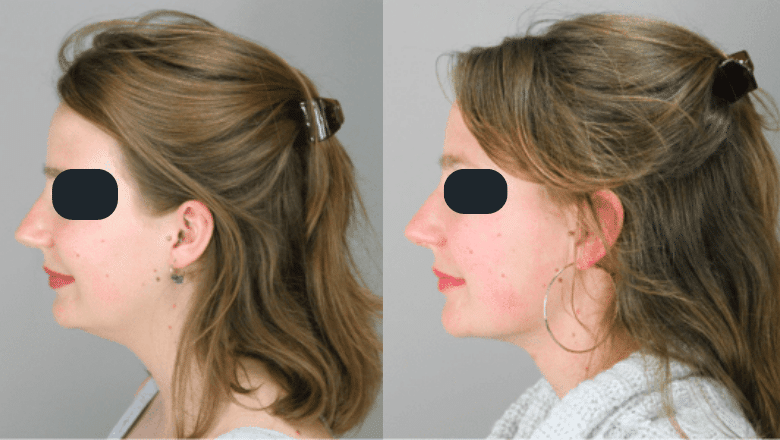
A deep neck lift goes beneath the platysma to treat the structures that a standard lift cannot reach: fat beneath the muscle, bulky digastric muscles under the chin and, in some necks, submandibular glands that hang below the jawline. It can transform a heavy or obtuse neck that has not responded to other approaches.
The trade-off is a longer operation and additional risks, including bleeding, a collection of saliva and, if too much is removed, an over-hollowed or skeletal look. Most necks do not need it. Your surgeon will only recommend deeper work if your examination shows that fat or glands beneath the muscle are what is holding your neck back.
Neck Liposuction
Neck liposuction removes fat above the platysma through two or three tiny incisions, under the chin and sometimes behind the earlobes. It is not strictly a neck lift because it does not remove skin or tighten muscle, but for someone with a full neck and good skin it may be all that is needed. Most people return to work within 7 to 10 days; our guide to chin liposuction recovery explains what to expect. See submental liposuction for more.
Neck Lift With a Facelift
The neck and the lower face age together. When the jowls have dropped and the jawline has lost its line, a neck lift alone can leave a step at the jaw. A lower facelift treats the jowls, jawline and upper neck in one operation, and a full facelift or deep plane facelift can be combined with a neck lift when the cheeks have descended too. Our guide to the types of facelift explains how these fit together.
Which Type of Neck Lift Is Best?
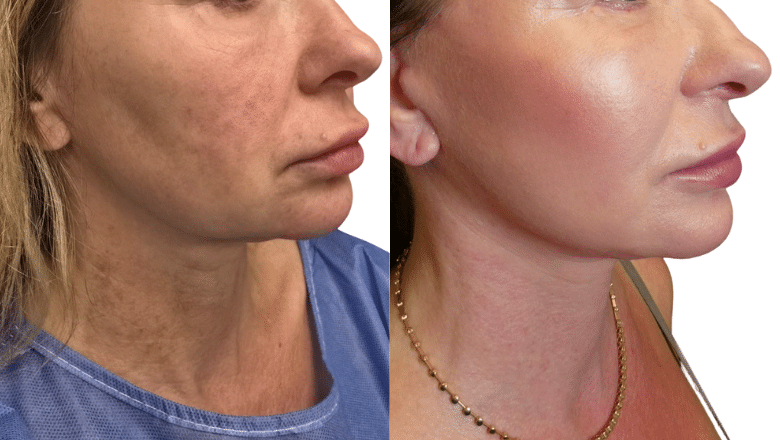
There is no single best type of neck lift. The best one is the procedure that matches what is causing your neck to sag:
- Fat with good skin: neck liposuction.
- Fat and early bands with good skin: submentoplasty.
- Mild loose skin and early bands: a mini neck lift.
- Moderate or advanced loose skin, bands and fat: a full (combined) neck lift.
- A heavy neck with deep fat or prominent glands: a deep neck lift.
- Jowls as well as a sagging neck: a lower facelift, or a facelift with a neck lift.
- A receding chin: any of the above with a chin implant.
A simple self-check helps. Look straight ahead and gently pinch the skin under your chin. A thick fold suggests fat. Thin, loose skin that hangs suggests skin laxity. Cords that appear when you clench your teeth are platysmal bands. Most people have a mix, which is why an examination by a surgeon matters more than any online checklist.
Neck Lift vs Facelift
A facelift lifts and repositions the cheeks, jowls and jawline. A neck lift treats the area below the jawline: loose skin, muscle bands and fat under the chin. The incisions overlap, running around and behind the ears, which is why the two are so often combined. If you are deciding between them, look at your jawline in profile. If it is still clean and the problem starts below it, a neck lift may be enough. If the jawline itself has softened into jowls, a facelift or lower facelift will usually be needed. Our facelift vs mini facelift guide covers the face side of the decision.
Can You Have a Neck Lift Without a Facelift?
Yes. Many people have a neck lift on its own, particularly when the jowls are mild and the main concern is loose skin or bands under the chin. It works less well when the jowls are pronounced, because tightening the neck without lifting the jawline can make the jowls look heavier by contrast. Your surgeon will look at the face and neck together and tell you honestly whether a neck lift alone will give the result you want.
Neck Tightening Procedures Without Surgery
You can tighten a mildly saggy neck without surgery, but non-surgical treatments improve skin quality and firmness rather than removing loose skin. They suit early changes, people who are not ready for surgery, and maintenance after a neck lift. The main options are:
- Morpheus8: radiofrequency microneedling that heats the deeper skin to stimulate collagen and tighten mild laxity over several months.
- Argo plasma skin tightening: plasma energy that contracts and tightens crepey skin on the neck.
- 4D laser: layered laser treatment to improve skin texture and firmness.
- Anti-wrinkle injections: relax the platysma to soften visible bands for about three to four months.
- Fat-dissolving injections: reduce a small pocket of fat under the chin over several sessions. In a placebo-controlled trial of 506 adults, 70% of treated patients improved by one grade against 19% given placebo.[7]
- FaceTite: a minimally invasive option that heats the tissue from underneath through a tiny incision, often alongside liposuction.
There is no single newest non-surgical neck lift that replaces surgery. If you have a fold of loose skin, the honest answer is that only a neck lift will remove it. Our guide to the non-surgical neck lift explains who these treatments suit.
Neck Lift Recovery
A full neck lift takes about two to three hours and is carried out while you are asleep. Most patients go home the same day. Expect swelling, bruising and a feeling of tightness under the chin for the first one to two weeks. You will wear a supportive chin garment as your surgeon advises and sleep with your head raised. Stitches under the chin usually come out at around one week, and those behind the ears a little later.
Most people return to desk-based work after about two weeks, start light exercise from three to four weeks and resume full exercise at around six weeks. Numbness of the neck skin is common and settles over several months. Most swelling has gone by six weeks, with the final result at three to six months. Recovery is quicker after a mini neck lift, submentoplasty or liposuction alone. Our guide to neck lift recovery sets out the timeline week by week.

What Are the Downsides of a Neck Lift?
A neck lift is a safe operation in the hands of a properly trained surgeon, but it is still surgery. In a 2016 analysis of 11,300 facelift patients in Aesthetic Surgery Journal, 1.8% had a major complication within 30 days. The most common was a haematoma (a collection of blood under the skin) in 1.1%, and men were almost four times as likely as women to have one. Complications were more frequent when several procedures were combined, 3.7% compared with 1.5% for a facelift alone.[8]
Other downsides to weigh up include:
- Scars: under the chin and around and behind the ears. They are usually well hidden and fade over 12 to 18 months.
- Numbness and tightness: common for several months while the nerves in the skin recover.
- Nerve weakness: temporary weakness of the lower lip can occur and usually recovers. Permanent injury is rare.
- Contour irregularities: unevenness or over-hollowing, more of a risk after deep neck work.
- Recurrence: the neck keeps ageing, and a skin-only or mini lift relaxes sooner than a full lift.
Our guide to the risks of neck lift surgery covers each in detail, including how to reduce them.
Is 60 Too Old for a Neck Lift?
No. Age on its own is not a barrier. In the large study above, the average facelift patient was 59. What matters is your general health, whether you smoke, how well controlled your blood pressure is, and the quality of your skin. Older skin is less elastic, so a full neck lift that removes skin usually gives a better result than liposuction or a mini lift. Many patients in their 60s and 70s have excellent results.
How Long Does a Neck Lift Last?
A full neck lift that tightens the muscle as well as the skin gives a long-lasting result, and most patients enjoy the improvement for many years. Your neck will continue to age from its new starting point, so you will always look younger than you would have without surgery. Fat removed by liposuction does not come back as long as your weight stays stable. A skin-only or mini neck lift tends to relax sooner, and non-surgical treatments last months rather than years.
How Much Does a Neck Lift Cost?
The cost depends on the type of neck lift. Liposuction and submentoplasty cost less than a mini neck lift, and a full or deep neck lift costs more, particularly when combined with a facelift or chin implant. Your surgeon will give you a fixed, itemised quote after your consultation. Our neck lift cost guide explains what is included and what affects the price. Finance is available through Chrysalis Finance, subject to status.
Frequently Asked Questions
What is the least invasive type of neck lift?
Neck liposuction is the least invasive surgical option, followed by submentoplasty, which works through a single small incision under the chin. A mini neck lift is the least invasive option that removes loose skin. Non-surgical treatments are less invasive still, but cannot remove skin.
What is the difference between a neck lift and platysmaplasty?
Platysmaplasty is one part of a neck lift: it tightens the platysma muscle to remove bands. A full neck lift usually includes platysmaplasty, plus removal of excess skin and fat. If you have bands but very little loose skin, platysmaplasty alone through an incision under the chin may be enough.
What is cervicoplasty?
Cervicoplasty is the skin-removal part of a neck lift. Excess skin is lifted back and trimmed through incisions around and behind the ears. It is rarely done on its own, because tightening the muscle beneath gives a firmer and longer-lasting result.
Can a neck lift get rid of a double chin?
Yes, when the double chin is caused by loose skin, fat beneath the muscle or bands. If it is caused by fat alone and your skin is firm, chin liposuction is simpler. Our guide on how to get rid of a double chin explains how to tell which you have.
Does a neck lift leave scars?
Yes, but they are placed where they are hard to see: in the natural crease under the chin and around and behind the ears, within or along the hairline. Most fade to fine lines over 12 to 18 months.
Will I need a facelift as well as a neck lift?
Only if your jowls and cheeks have also dropped. If your jawline is still well defined, a neck lift alone is usually enough. If you have jowls, a lower facelift treats the jawline and neck together.
Can men have a neck lift?
Yes, and the neck is one of the most common concerns for men considering facial surgery. Men have a higher risk of haematoma after surgery, so blood pressure control before and after the operation is particularly important. Surgeons also take care with incision placement around the beard line. See our male facelift page for more.
Do neck lift results look natural?
They should. A good neck lift restores the angle and definition you had when you were younger rather than creating a tight or pulled look. Choosing the right type of neck lift for your anatomy is the most important part of getting a natural result.
Neck Lift Surgery at Centre for Surgery
At Centre for Surgery, neck lift surgery starts with a consultation with a GMC-registered plastic surgeon, who examines your neck to work out whether the cause is skin, fat, muscle, bone or a combination. The surgeon who assesses you is the surgeon who performs your surgery. We offer neck lift, mini neck lift, chin and neck liposuction, lower facelift, facelift and chin augmentation, so your surgeon can recommend what your anatomy needs rather than what a single clinic happens to offer. We recommend a two-week cooling-off period before any surgery.
Surgery takes place at our CQC-regulated hospital at 95–97 Baker Street, London, which is rated Good overall and has been caring for patients for over 10 years. We publish our clinical outcomes and patient safety data, and finance is available through Chrysalis Finance, subject to status (see our finance options).
Phone: 020 7993 4849 | Address: 95–97 Baker Street, Marylebone, London W1U 6RN
Contact us to schedule a consultation
References
- Ellenbogen R, Karlin JV. Visual criteria for success in restoring the youthful neck. Plastic and Reconstructive Surgery 1980;66(6):826–837. doi:10.1097/00006534-198012000-00003
- Larson JD, Tierney WS, Ozturk CN, Zins JE. Defining the fat compartments in the neck: a cadaver study. Aesthetic Surgery Journal 2014;34(4):499–506. doi:10.1177/1090820X14526406
- de Castro CC. The anatomy of the platysma muscle. Plastic and Reconstructive Surgery 1980;66(5):680–683. doi:10.1097/00006534-198011000-00002
- Feldman JJ. Corset platysmaplasty. Plastic and Reconstructive Surgery 1990;85(3):333–343. doi:10.1097/00006534-199003000-00001
- Labbé D, Franco RG, Nicolas J. Platysma suspension and platysmaplasty during neck lift: anatomical study and analysis of 30 cases. Plastic and Reconstructive Surgery 2006;117(6):2001–2007. doi:10.1097/01.prs.0000218972.75144.9c
- Koehler J. Complications of neck liposuction and submentoplasty. Oral and Maxillofacial Surgery Clinics of North America 2009;21(1):43–52. doi:10.1016/j.coms.2008.10.008
- Jones DH, Carruthers J, Joseph JH, et al. REFINE-1, a multicenter, randomized, double-blind, placebo-controlled, phase 3 trial with ATX-101, an injectable drug for submental fat reduction. Dermatologic Surgery 2016;42(1):38–49. doi:10.1097/DSS.0000000000000578
- Gupta V, Winocour J, Shi H, Shack RB, Grotting JC, Higdon KK. Preoperative risk factors and complication rates in facelift: analysis of 11,300 patients. Aesthetic Surgery Journal 2016;36(1):1–13. doi:10.1093/asj/sjv162



