


In this guide15 sections
- Key Points
- Can You Feel Your Nipples After Top Surgery?
- Why Does Top Surgery Affect Nipple Sensation?
- Which Top Surgery Keeps Nipple Sensation?
- How Long Does It Take for Nipple Sensation to Come Back After Top Surgery?
- Do You Lose Feeling in Your Nipples After Top Surgery for Good?
- Will I Have Erogenous Nipple Sensation After Top Surgery?
- Can Your Nipples Get Hard After Top Surgery?
- What Is Targeted Nipple Reinnervation?
- Is It Normal for Nipples to Be Sensitive or Painful After Top Surgery?
- How Can I Protect Nipple Sensation After Top Surgery?
- Does Losing Nipple Sensation Affect Satisfaction With Top Surgery?
- Frequently Asked Questions
- FTM Top Surgery in London
- References
Key Points
- Most people can still feel their nipples after top surgery, but usually less than before. How much feeling you keep depends mainly on whether the nipple stays attached to its nerves and blood supply.
- Technique matters most. Keyhole, periareolar and nipple-sparing double incision keep the nipple attached and give the best chance of keeping sensation. Double incision with free nipple grafts divides the nerves, so feeling is reduced.
- Numbness is normal at first. Tingling, itching or brief “electric” twinges in the first few months are usually a sign that nerves are recovering.
- Feeling returns slowly. Most recovery happens in the first 6 to 12 months, and it can keep improving for up to 18 months or longer.
- Erogenous sensation is less predictable than touch, especially after free nipple grafts. Smoking, diabetes and tension on the wounds all raise the risk of poor healing.
- Your priorities shape the plan. If keeping sensation matters a lot to you, say so at your consultation, as it can change which technique your surgeon recommends.
Yes, most people can feel their nipples after top surgery, but the feeling is usually different from before and is often reduced. How much sensation you keep depends far more on the surgical technique than on anything else. When the nipple stays attached to the tissue that carries its nerves, as in keyhole top surgery, there is a good chance of keeping much of the feeling. When the nipple is removed and replaced as a graft, as in standard double incision top surgery, the nerves are divided and sensation is reduced, although some often comes back over the following year.
For many trans men and non-binary people, nipple sensation is one of the most important questions to settle before choosing a technique. This guide explains why FTM top surgery affects nipple feeling, what to expect from each of the five techniques we offer, how long sensation takes to come back, what the research says about erogenous sensation, and what you can do to protect healing.
Can You Feel Your Nipples After Top Surgery?
Usually, yes, at least to some degree. Most people have some light-touch or pressure sensation in the nipple and areola once they have healed, even after free nipple grafts. What varies is how much feeling returns, how long it takes, and whether the nipple responds in the same way as before, for example to cold or to sexual touch.
A useful way to think about it is in three layers:
- Protective sensation: feeling touch, pressure, heat and cold. This is the most likely to return.
- Fine sensation: telling two close points apart or feeling a light stroke. This is more variable.
- Erogenous sensation: the nipple contributing to sexual arousal. This is the least predictable, particularly when the nipples have been grafted.
In a 2024 prospective study in the Journal of Plastic, Reconstructive and Aesthetic Surgery ↗, which measured nipple sensation with monofilaments before and after gender-affirming chest surgery in 51 patients, nipple sensation was preserved with the techniques that kept the nipple attached (a semicircular approach and an inferior pedicle double incision), while free nipple grafting was associated with greater loss[1]. Patients whose nipples were kept on a pedicle also rated their satisfaction with their nipples and their sexual wellbeing more highly.
Why Does Top Surgery Affect Nipple Sensation?
The nipple and areola get most of their feeling from small branches of the intercostal nerves, which run between the ribs and curve forwards around the side of the chest. The main supply usually comes from the fourth intercostal nerve, with contributions from the third and fifth. These branches travel through the breast tissue towards the nipple.
Top surgery removes most of that breast tissue to create a flat chest, so some of these nerve branches are inevitably stretched, bruised or cut. What happens next depends on what is done with the nipple itself:
- If the nipple stays attached to a layer or bridge of tissue (a pedicle), some of its nerve supply travels with it, so feeling is more likely to be kept.
- If the nipple is removed and re-applied as a free graft, every nerve connection to it is divided. The graft first survives by picking up a new blood supply from the chest wall, and any feeling that returns depends on nerves slowly growing back into it.
Swelling, bruising and the pressure of the compression binder also affect the nerves in the first weeks, which is why almost everyone feels some numbness early on, whatever the technique.
Which Top Surgery Keeps Nipple Sensation?
The techniques that keep the nipple attached give the best chance of keeping sensation. The catch is that they are not suitable for every chest. Your surgeon will recommend a technique based on your chest size, how much the chest droops, the quality and elasticity of your skin and the size and position of your nipples, as well as your own priorities[2]. We cover the full range in our guide to FTM top surgery options.

Keyhole top surgery
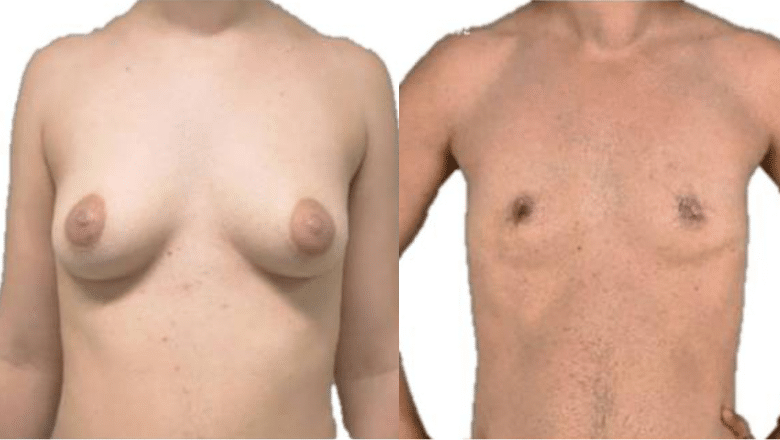
In keyhole top surgery the breast tissue is removed through a small cut along the lower edge of the areola, often with the help of liposuction. The nipple is never detached, so it keeps much of its nerve and blood supply. Of all the techniques, keyhole gives the best chance of keeping nipple sensation. It suits small chests (roughly A cup or smaller) with firm, elastic skin, as no skin is removed.
Periareolar top surgery
Periareolar top surgery is sometimes confused with keyhole, but it is a different operation. A ring of skin is removed around the areola, which tightens the chest skin and allows the areola to be made smaller. The nipple stays on a pedicle, so most people keep partial to full nipple sensation. It suits small to moderate chests with good skin elasticity.
Nipple-sparing double incision
Nipple-sparing double incision top surgery uses the same horizontal scars under the chest as standard double incision, but the nipple and areola are kept attached to a pedicle of tissue rather than grafted. It allows more tissue and skin to be removed than keyhole or periareolar while still giving a better chance of keeping sensation. It suits moderate chests with reasonable skin quality. For larger chests or looser skin, an inverted T (anchor) pattern can sometimes keep the nipple attached in a similar way. A 2025 surgical technique paper from Toronto ↗ describes how nipple preservation is possible for most chest sizes when the technique is matched to chest volume, droop and nipple position[3].
Double incision with free nipple grafts
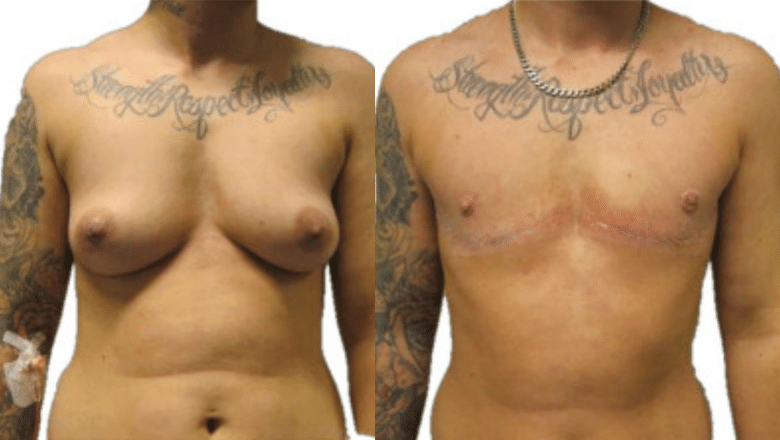
Standard double incision top surgery removes the breast tissue and excess skin through two horizontal incisions, and the nipples are taken off, resized and placed back in a more masculine position as free grafts. It gives the most control over chest shape, nipple size and nipple position, and it suits any chest size, including larger chests with significant droop. The trade-off is sensation: the nerves to the nipple are divided, so feeling is reduced. Many people regain some protective sensation over the following months, but the nipple rarely feels the same as before, and erogenous sensation is often reduced or lost.
Top surgery without nipples
Some people choose to have no nipples at all, for a smooth, flat chest. In that case the question of nipple sensation does not apply, although the chest skin itself will still be numb in places at first. In a 2024 study in the Annals of Plastic Surgery ↗, 13% of 536 people having gender-affirming mastectomy chose not to have nipple grafts, and 98% of those surveyed were satisfied[4]. Our non-binary top surgery page covers this and other flexible options.
How Long Does It Take for Nipple Sensation to Come Back After Top Surgery?
Nerves recover slowly, typically at around a millimetre a day, so feeling returns over months rather than weeks. A typical pattern looks like this:
- First 2 to 6 weeks: the chest and nipples feel numb or “dead” in patches. Swelling and the compression binder add to this. Numbness at this stage says very little about the final result.
- Around 1 to 3 months: many people notice tingling, itching, prickling or short “electric” twinges. This can be uncomfortable but is usually a sign that nerves are regrowing.
- Around 3 to 12 months: sensation gradually returns, often from the edges of the chest inwards. Most of the recovery you will get happens in this period.
- 12 to 18 months and beyond: improvement can continue more slowly. Areas that are still numb at around 18 months to two years are less likely to change.
With nipple-sparing techniques, feeling in the nipple itself often returns sooner. With free nipple grafts, the graft first needs to heal and settle, and any return of feeling is slower and less complete. Our FTM top surgery recovery guide covers the rest of the healing timeline week by week.
Do You Lose Feeling in Your Nipples After Top Surgery for Good?
Permanent complete loss of nipple feeling is uncommon with the nipple-sparing techniques, but some reduction is common after all types of top surgery, and it is more likely after free nipple grafts. The research comparing techniques is consistent on this point. In the 2025 study by Alston and colleagues in Plastic and Reconstructive Surgery, only 17.5% of patients who had a standard gender-affirming mastectomy without nerve repair had light-touch sensation at the nipple back to their pre-operative level at 12 months[5]. Most of the others still had some feeling, but less than before.
The risk of losing feeling is higher if the nipple graft does not heal well. Partial or complete graft loss is uncommon, but it is more likely in people who smoke or vape nicotine, people with diabetes, and when a large amount of tissue is removed. We explain this in our guide to the risk of losing a nipple after top surgery. We ask everyone to stop smoking and nicotine products for four weeks before and four weeks after surgery.
Will I Have Erogenous Nipple Sensation After Top Surgery?
Erogenous sensation, the nipple contributing to sexual arousal, is the part of nipple feeling that is hardest to predict. It is more likely to be kept when the nipple stays attached, as in keyhole, periareolar and nipple-sparing double incision surgery. After free nipple grafts it is often reduced or lost, although some people do report it returning over time.
Patients’ own reports reflect this. In the same 2025 study, only 38% of people who had a standard mastectomy without nerve repair reported any erogenous nipple sensation a year after surgery[5]. If this matters to you, it is worth saying so plainly at your consultation, as it may tip the balance towards a nipple-sparing technique if your chest is suitable. Our guide on sex after top surgery covers when it is safe to be intimate and how to protect the healing chest.
Can Your Nipples Get Hard After Top Surgery?
Sometimes. Nipple erection depends on tiny muscle fibres in the nipple and the nerves that control them. When the nipple stays attached, it often keeps the ability to become erect in response to cold or touch. Grafted nipples are thinner and flatter, and they are less likely to respond in the same way, although some do.
Research on newer nerve-repair techniques gives a sense of the difference. A 2026 systematic review and meta-analysis ↗ reported nipple erection in 73% of nipples where the nerves had been reconnected, compared with 39% where they had not[6]. These figures come from small studies, so they are a guide rather than a promise.
What Is Targeted Nipple Reinnervation?
Targeted nipple reinnervation (TNR) is a newer technique in which the surgeon preserves one of the intercostal nerve branches during the mastectomy and connects it to the underside of the nipple graft, either directly or with a short nerve graft. The aim is to restore feeling to grafted nipples.
The early results are promising. In a 2024 prospective matched study published in JAMA Network Open ↗, 25 patients who had nerve repair during gender-affirming mastectomy had nipple sensation back to their pre-operative baseline at 12 months, and reported better nipple, chest and erogenous sensation than 25 matched patients who did not[7]. Temporary nipple over-sensitivity was more common in the nerve repair group in the first three months.
TNR is still mainly reported from a small number of specialist centres in the United States, and the evidence comes from observational studies with relatively few patients[2][6]. It is not yet a routine part of top surgery in the UK. For most people, the most reliable way to protect nipple sensation remains choosing a nipple-sparing technique where the chest is suitable.
Is It Normal for Nipples to Be Sensitive or Painful After Top Surgery?
Yes. As nerves recover, the nipples and chest can go through a phase of feeling over-sensitive, itchy, burning or zinging, especially between about one and four months. Clothing rubbing against the chest can feel unpleasant during this phase. It usually settles as nerve recovery matures.
Once the wounds have fully healed and your surgeon is happy, gentle desensitisation can help: lightly touching or massaging the area with different textures, such as a soft cloth or your fingertips, for a few minutes several times a day. Most people find that the over-sensitivity eases within a few months. Persistent, severe or worsening pain, a hot or red area, or any discharge from the wounds should be reported to the clinic straight away. Our article on pain after top surgery explains what is normal during recovery.
How Can I Protect Nipple Sensation After Top Surgery?
Skin that is numb cannot warn you about heat, cold or pressure, so it needs a little extra care in the first year:
- Avoid direct heat. Do not use hot water bottles, heat pads or very hot showers on numb areas, as burns can happen without you noticing.
- Protect your scars and nipples from the sun. Use a high-factor sunscreen or keep the chest covered for at least three months. Our guide to top surgery scars explains scar care in detail.
- Wear your compression binder as advised, usually for six weeks, but tell us if it causes pressure marks on the nipples or areolas.
- Stay off nicotine for at least four weeks after surgery, as it reduces blood flow to healing nipples and grafts.
- Leave nipple piercings out until you are fully healed and your surgeon has said it is safe.
Does Losing Nipple Sensation Affect Satisfaction With Top Surgery?
Top surgery is about creating a chest that feels right for you, and for most people a flat chest matters far more than a change in nipple feeling. Even so, the technique that suits your chest best for shape is not always the one that keeps the most sensation, and the best decisions come from weighing both. A 2025 long-term follow-up study ↗ of patients operated on over 20 years found that how well patients felt informed before surgery was closely linked with their satisfaction with the chest and their wellbeing years later[8]. That is why we talk through sensation, scars and nipple position in detail at consultation.
Frequently Asked Questions
Can you feel your nipples after keyhole top surgery?
Usually, yes. In keyhole top surgery the nipple is never detached, so it keeps much of its nerve supply. Most people keep a good degree of nipple feeling, although there is often a period of numbness or tingling while swelling settles. Keyhole surgery is suitable only for small chests with firm skin.
Does nipple sensation come back after free nipple grafts?
Some sensation often returns, but it is usually reduced. Grafted nipples lose all their nerve connections, and any feeling that comes back depends on nerves slowly growing into the graft over 6 to 18 months. Many people regain some light touch and temperature sensation; erogenous sensation is less likely to return.
Is numbness after top surgery permanent?
Most numbness improves over the first year. Patches of numbness on the chest are very common in the early weeks and gradually shrink as nerves recover. Some areas, often around the scars and the nipples after grafting, may stay less sensitive in the long term.
How long after top surgery do nipples look normal?
Grafted nipples usually look dark, scabbed or patchy for the first few weeks and lighten as they heal. They tend to look more settled by about three months and continue to mature for up to a year. Nipples that stay attached usually look normal sooner, once bruising and swelling have gone.
Do your nipples get smaller after top surgery?
Often, yes. With double incision and free nipple grafts, the nipples and areolas are resized to suit a masculine chest. Periareolar surgery also reduces the areola. With keyhole surgery the nipple and areola are not usually resized.
Do you have nipples after top surgery?
Yes, in most cases. Your nipples are either kept attached or removed and replaced as grafts. Some people choose top surgery without nipples for a smooth, flat chest, which is a recognised option you can discuss at your consultation.
Can nipples feel ticklish or “zappy” after top surgery?
Yes. Tingling, itching and brief electric-shock feelings are common between one and four months after surgery as nerves regrow. They usually settle with time. Tell the clinic if the pain is severe or getting worse.
Which top surgery technique is best for keeping sensation?
Keyhole, periareolar and nipple-sparing double incision surgery give the best chance of keeping nipple sensation, as the nipple stays attached. The right choice depends on your chest size and skin, so your surgeon will recommend the technique that balances chest shape and sensation for you.
FTM Top Surgery in London
FTM top surgery at Centre for Surgery is performed by GMC-registered surgeons at our CQC-regulated Baker Street hospital, rated Good overall by the CQC, for trans men and non-binary people. We offer double incision with free nipple grafts, nipple-sparing double incision, inverted T, keyhole and periareolar top surgery, and your surgeon will recommend the technique that suits your chest and your priorities, including nipple sensation. No diagnosis or referral letter is needed. The consultant who assesses you at consultation is the consultant who performs your surgery. Your initial consultation fee is redeemable against the cost of surgery if you go ahead; our FTM top surgery cost guide explains what the price includes, and you can see real results in our top surgery before and after photos.
Phone: 020 7993 4849 | Address: 95–97 Baker Street, Marylebone, London W1U 6RN
Contact us to schedule a consultation
References
- Kanlagna A, Oillic J, Verdier J, et al. Prospective assessment of the quality of life and nipple sensation after gender-affirming chest surgery. Journal of Plastic, Reconstructive and Aesthetic Surgery 2024. doi:10.1016/j.bjps.2024.05.022 ↗
- Singh A, Charipova K, Del Corral GA. Indications and surgical techniques for gender affirming mastectomy. Clinics in Plastic Surgery 2025. doi:10.1016/j.cps.2025.07.001 ↗
- Tse T, Potter E, Armstrong K. Techniques for preserving the nipple areolar complex in chest masculinization for all chest sizes. Cureus 2025;17(3):e80757. doi:10.7759/cureus.80757 ↗
- Ferrin PC, Pua E, Isbester K, Peters BR. Factors affecting the choice to forgo nipple grafts in gender-affirming chest surgery. Annals of Plastic Surgery 2024;93(2):189–193. doi:10.1097/SAP.0000000000004004 ↗
- Alston CC, Remy K, Kochheiser M, et al. Learning curve for sensory preservation after transgender mastectomy using targeted nipple reinnervation with direct nerve coaptation. Plastic and Reconstructive Surgery 2025. doi:10.1097/PRS.0000000000012171 ↗
- Gundlach C, Rahman R, Martinez M, et al. Sensory outcomes after targeted nipple-areola complex reinnervation: a systematic review and meta-analysis. Journal of Plastic, Reconstructive and Aesthetic Surgery 2026. doi:10.1016/j.bjps.2026.04.020 ↗
- Remy K, Alston C, Gonzales E, et al. Targeted reinnervation during gender-affirming mastectomy and restoration of sensation. JAMA Network Open 2024;7(11):e2446782. doi:10.1001/jamanetworkopen.2024.46782 ↗
- Kwartin S, Skorochod R, Shapira E, et al. Long-term follow-up of gender-affirming chest masculinization: what have we learned about patient satisfaction and psychological well-being? Journal of Clinical Medicine 2025;14(4):1249. doi:10.3390/jcm14041249 ↗

Related Articles
- Can Your Nipples Fall Off After Top Surgery? Nipple Graft Loss Explained
- FTM Top Surgery Recovery and Aftercare
- Top Surgery Scars: How They Heal, Fade and Can Be Treated
- Does MTF Top Surgery Affect Nipple Sensitivity?






