

In this guide16 sections
- Key Points
- Can Top Surgery Be Reversed?
- Do Breasts Grow Back After Top Surgery?
- What Is the Regret Rate for Top Surgery?
- Top Surgery Revision vs Top Surgery Reversal: What Is the Difference?
- How Is Top Surgery Reversed?
- Does the Type of Top Surgery You Had Affect Reversal?
- What Happens to the Nipples in Top Surgery Reversal?
- How Long After Top Surgery Can You Have a Reversal or Revision?
- Can Hormones Reverse Top Surgery?
- What Are the Risks of Breast Reconstruction After Top Surgery?
- What Is Recovery Like After Top Surgery Reversal?
- Getting Emotional Support Before Top Surgery Reversal
- Frequently Asked Questions
- Top Surgery Reversal and Revision in London
- References
Key Points
- Top surgery cannot be undone in the literal sense. Removed breast tissue does not grow back, but a breast shape can be rebuilt.
- Reconstruction uses implants, fat transfer or both. Implants give the most volume; fat transfer is softer but usually needs more than one session.
- Your original operation shapes what is possible. After double incision surgery the skin is tight and a tissue expander may be needed; after keyhole surgery more skin remains.
- Regret after top surgery is rare. Large reviews put it at around 1% or less, and many people asking about reversal actually want a revision for scars, dog ears or symmetry.
- Timing matters. Wait at least 12 months for scars to mature and until your decision feels settled.
- Non-surgical options exist. External breast forms change your chest shape straight away; hormones alone have only a limited effect.
Top surgery cannot be fully reversed, as the breast tissue removed during a mastectomy does not grow back. What is possible is breast reconstruction: rebuilding a breast shape using breast implants, your own fat, or a combination of the two. The result can look and feel natural, but it will not be identical to your chest before top surgery, and the nipples, scars and amount of skin left by your original operation all affect what can be achieved.
People ask whether FTM top surgery can be reversed for different reasons: some are researching before their first operation, a small number want breasts again, and many more want a revision of part of their result. This guide explains why tissue cannot regrow, what the research says about how common regret is after top surgery, how reconstruction with breast implants or fat transfer to the breasts works, and what to think about before you decide.
Can Top Surgery Be Reversed?
Not in the sense of putting back what was taken away. Top surgery, also called chest masculinisation or gender-affirming mastectomy, removes most of the breast gland and fat, and often some skin. The nipples are either kept attached or removed and replaced as grafts in a more masculine position. These changes are permanent.
What surgery can do is rebuild a breast mound. Top surgery reversal is, in practice, a form of breast reconstruction, similar in many ways to reconstruction after a mastectomy for breast cancer. At Centre for Surgery we offer both top surgery reversal (breast reconstruction) and top surgery revision. The aim of reversal is a breast shape that suits your body and how you want to present, not a recreation of your chest exactly as it was.
Surgeons increasingly separate three ideas that are often blurred together: surgical reversal, detransition and regret. A 2026 case report in the Annals of Plastic Surgery described a patient who had their gender-affirming mastectomy reversed with staged fat grafting, without regretting the original operation[5]. Someone’s needs can change over time without the first decision having been wrong, and good care respects that.
Do Breasts Grow Back After Top Surgery?
No. Once the breast gland has been surgically removed, the body has no way of regenerating it. A thin layer of tissue is usually left under the skin to keep the chest contour smooth and protect its blood supply, so a small amount of breast tissue remains, but it does not regrow into a breast.
Fullness that appears months or years later is usually weight gain, residual tissue or swelling rather than new breast tissue. We explain this in our article on whether breasts can grow back after top surgery.
What Is the Regret Rate for Top Surgery?
Regret after top surgery is uncommon. The best evidence comes from pooled studies and from surveys using validated questionnaires:
- A 2021 systematic review and meta-analysis in Plastic and Reconstructive Surgery Global Open ↗ pooled 27 studies and 7,928 patients who had gender-affirming surgery. The overall prevalence of regret was 1%, and among people who had transmasculine procedures it was less than 1%[1].
- A 2023 cross-sectional survey in JAMA Surgery ↗ followed up people who had gender-affirming mastectomy over three decades. Among the 139 who responded, the median decision regret score was 0 out of 100, and no responder or non-responder had requested or undergone a reversal[2].
- In a 2026 cohort of 100 mostly young adults having gender-affirming mastectomy, no patient reported regret at the 3-month and 12-month follow-up visits and none had reversal surgery[3].
These figures are reassuring, but they are not zero. Studies differ in follow-up and in how they define regret, and people who change their transition may not return to their original surgeon to be counted. Detransition is also more varied than the word suggests. In a 2023 Canadian interview study of 28 people who had stopped, shifted or reversed a gender transition, 60% had moved from a binary trans identity to a non-binary identity, rather than returning to the gender they were assigned at birth[7]. For some, that means wanting a different chest rather than the one they had before.
Top Surgery Revision vs Top Surgery Reversal: What Is the Difference?
A reversal rebuilds breasts. A revision improves the result of top surgery while keeping the chest flat or masculine, and it is far more common. Typical reasons include:
- Dog ears: small folds of skin and fat at the outer ends of the scars, near the armpits. Our guide to dog ears after surgery explains why they form and how they are corrected.
- Asymmetry or contour problems: one side fuller than the other, residual fullness, or hollowing in the centre.
- Nipple size or position: nipples that sit too high, too low, too far apart, or have lost pigment.
- Scars: stretched, raised or uneven scars.
These issues are not rare. In a 2025 study of 92 people who had double incision top surgery with free nipple grafts, adverse aesthetic outcomes such as scar widening and standing cone (dog ear) deformity occurred in 32.6%, and the risk rose with body mass index[4]. Many are small and can be corrected under local anaesthetic once the chest has settled[3]. If your concern is scarring rather than shape, non-surgical scar treatments are usually worth trying first.
How Is Top Surgery Reversed?
Reconstruction after top surgery uses the same tools as reconstruction after other mastectomies. Your surgeon will recommend an approach based on your skin, the tissue over your chest, how much spare fat you have, and the size you would like.

Breast reconstruction with implants
Implants are the most direct way to restore breast volume. At Centre for Surgery we use Silimed silicone implants. After top surgery the layer of tissue over the chest is thin, so implants may be placed partly or fully beneath the chest muscle to give them more cover and a more natural edge. Implant width, profile and volume are chosen to fit your chest, and they give a predictable increase in size if there is enough skin to hold them.
Tissue expanders
Where the skin is too tight to hold an implant of the size you want, a tissue expander may be used where clinically indicated. This is a temporary, adjustable implant placed under the skin and muscle. Over the following weeks it is gradually filled through a small port, stretching the skin a little at a time. Once the skin has expanded enough, a second operation swaps the expander for a permanent silicone implant. Expansion adds time and a further operation, but it avoids forcing a large implant into a tight space. Reconstruction is often staged for this reason, and also when fat transfer is used or the nipples need work once the shape has settled; your surgeon will set out the likely number of stages before you commit.
Fat transfer
Fat transfer, also called fat grafting or lipofilling, uses liposuction to take fat from areas such as the tummy, flanks or thighs, which is then purified and injected in small amounts into the chest. It gives a soft, natural feel and has no implant to maintain, but not all of the fat survives. A 2023 meta-analysis of 25 studies in the Journal of Plastic, Reconstructive and Aesthetic Surgery ↗ found that, on average, about 54% of the fat volume grafted to the breast was retained[6]. After top surgery the skin envelope is tight, so building a breast with fat alone usually takes two or more sessions several months apart. It suits people who want a modest size, have enough fat to spare, and would rather avoid implants[5].
Implants and fat transfer together
A hybrid approach combines a silicone implant for volume with fat transfer to soften the edges, thicken the thin tissue over the implant and smooth the transition onto the chest wall. For many people having reconstruction after top surgery, this combination gives the most natural shape.
Tissue flap reconstruction
In flap reconstruction, skin and fat are moved from another part of the body, such as the lower tummy or back, to build a breast. It is a major operation, often involving microsurgery to reconnect blood vessels, and it is offered by specialist reconstructive units. It is rarely needed after top surgery.
Does the Type of Top Surgery You Had Affect Reversal?
Yes, considerably. The most important factor is how much skin was removed during your original operation, as that skin envelope is what has to hold the new breast.
- Double incision top surgery: excess skin is cut away to create a flat, tight chest, leaving two long scars. There is little spare skin, so reconstruction often needs a tissue expander, a smaller implant, staged fat transfer, or a combination.
- Keyhole top surgery: tissue is removed through a small cut at the lower edge of the areola and no skin is taken away. More of the original skin envelope remains, so reconstruction with an implant in a single stage is often more straightforward.
- Periareolar top surgery: a ring of skin is removed around the areola, so it usually falls between keyhole and double incision in what reconstruction needs.
- Nipple-sparing techniques: a nipple kept on its blood supply may have better sensation and appearance, which helps the final result.
Skin elasticity, weight and previous complications matter too, so bring your operation notes to your consultation if you can.
What Happens to the Nipples in Top Surgery Reversal?
Nipples are often the hardest part to change. With free nipple grafts, the nipples are made smaller and placed to suit a masculine chest, so once a breast is rebuilt they may not sit in the centre of it. Options include:
- Keeping the existing nipples if their position works with the new breast shape.
- Repositioning or resizing the areola using local skin adjustments, although grafted nipples are thin and have limited spare tissue.
- Nipple reconstruction, building a small nipple from local skin, usually as a later, minor procedure.
- Areola tattooing, often three-dimensional, alone or after nipple reconstruction.
Grafted nipples often have reduced feeling, and reconstructed nipples generally have little erogenous sensation. Our guide to nipple sensation after top surgery explains why. Breastfeeding is not usually possible after top surgery, and reconstruction does not restore it.
How Long After Top Surgery Can You Have a Reversal or Revision?
We advise waiting at least 12 months after top surgery before any reversal or major revision. Scars mature for 12 to 18 months, and operating on immature scar tissue raises the risk of poor healing and makes the result harder to predict.
Just as important is waiting until your decision feels settled, as reconstruction cannot be undone cleanly either. If you are changing hormone treatment, let your weight and body shape stabilise first. We recommend a two-week reflection period between your consultation and booking any surgery, and you can take longer if you need it.
Can Hormones Reverse Top Surgery?
Not on their own. Stopping testosterone or starting oestrogen can change how fat is distributed, and any small amount of breast tissue left under the skin may respond a little. But the glandular tissue removed at top surgery does not return, so hormones alone will not rebuild a breast.
If you would like a fuller chest without surgery, or while you take time to decide, there are reversible options:
- External breast forms: silicone forms worn in a bra or attached with adhesive.
- Padded or pocketed bras: designed to hold forms or add shape under clothing.
Trying these first can also help you decide what size and shape you want.
What Are the Risks of Breast Reconstruction After Top Surgery?
Reconstruction carries the usual risks of surgery, plus some specific to a previously operated chest:
- Wound healing problems: scar tissue has a poorer blood supply, so wounds can heal slowly or open, especially under tension.
- Capsular contracture: scar tissue forming around an implant can tighten and harden it. Thin tissue cover may make this more noticeable. Our guide to capsular contracture explains the signs and treatment.
- Implant problems: rippling where tissue is thin, implant movement, rupture, and future replacement.
- Fat transfer problems: fat that does not survive, lumps of fat necrosis or oil cysts, and the need for further sessions.
- Asymmetry and shape: differences between the two sides, and nipples that do not sit perfectly on the new breast.
- Bleeding, infection and blood clots: as with any surgery.
Smoking and nicotine products sharply increase the risk of wound problems. We ask everyone to stop for four weeks before and four weeks after surgery. Aspirin should be stopped two weeks before surgery unless your doctor has told you otherwise.
What Is Recovery Like After Top Surgery Reversal?
Recovery is broadly similar to breast augmentation, with longer timelines if you have expanders or several stages. Surgery is carried out under TIVA (total intravenous anaesthesia), and you will need a responsible adult with you for the first 24 hours afterwards.
- First 1 to 2 weeks: rest, short walks and a supportive post-surgical bra as advised. Your first wound check is usually at day 7 to 10.
- Weeks 2 to 6: gradually return to normal daily activity and desk-based work, but avoid heavy lifting and lifting your arms above your head.
- From 6 weeks: most people can return to strenuous exercise and heavy lifting. Your surgeon reviews you at around six weeks.
- 3 months and beyond: you have a further assessment at around three months. Scars keep maturing for a year or more.
In the first 24 hours after surgery you have your surgeon’s direct number; after that you can call us on 020 7993 4849, 9am to 6pm, Monday to Saturday. Out of hours, call NHS 111, or 999 in an emergency. Our breast augmentation recovery guide covers the implant recovery period in more detail.
Getting Emotional Support Before Top Surgery Reversal
Considering a reversal can bring up mixed feelings, from relief to grief or uncertainty. People who detransition often describe unmet support needs[7], and clinicians in NHS gender services recommend patient-centred care that includes psychological support alongside any medical or surgical treatment[8].
You do not need a referral, diagnosis or letter to see us, but a counsellor experienced in gender identity can help you clarify what you want. At your consultation, your surgeon will ask about your reasons and expectations without judgement, so that you have the information and time to make the right decision for you.
Frequently Asked Questions
Is top surgery reversible?
Top surgery is not reversible in the sense of restoring your original breast tissue, which does not grow back once removed. A breast shape can be rebuilt with breast reconstruction using silicone implants, fat transfer or both. The result can look natural, but it will differ from your chest before top surgery, particularly around the nipples and scars.
Do breasts come back after top surgery?
No. The breast gland removed during top surgery does not regenerate. Some people notice slight fullness later, but that is usually weight gain, swelling or a small amount of tissue deliberately left under the skin, not new breast growth. A revision can usually correct it if it bothers you.
What is the regret rate for top surgery?
Regret after top surgery is rare. A 2021 meta-analysis of nearly 8,000 people found regret in less than 1% of those who had transmasculine procedures, and a 2023 JAMA Surgery survey found median regret scores of zero after gender-affirming mastectomy. Many people asking about reversal are actually seeking a revision for scars, dog ears or symmetry.
Can gender-affirming surgery be reversed?
It depends on the operation. Top surgery can be followed by breast reconstruction, and implants placed for MTF top surgery can be removed. Most gender-affirming operations change tissue permanently, so “reversal” usually means reconstruction rather than a return to how things were.
Can you get top surgery revision in the UK?
Yes. Top surgery revision is offered privately in the UK, including at Centre for Surgery in London. Common revisions correct dog ears, asymmetry, residual fullness, nipple size or position and stretched scars. Your surgeon will advise whether a revision can be done under local anaesthetic or needs TIVA, usually once at least 12 months have passed since your original surgery.
How long after top surgery can you have a revision?
We usually advise waiting at least 12 months. Swelling takes months to settle and scars keep maturing for 12 to 18 months, so the final result is not clear before then. Operating on immature scar tissue also increases the risk of poor healing. Early problems, such as a wound that opens, are treated sooner as part of aftercare.
What are the chances of top surgery going wrong?
Serious complications after top surgery are uncommon. Minor issues are more frequent: in one 2026 study of 100 patients, about a quarter had a complication or later cosmetic concern, most often fluid collection (seroma) or scars that needed revising, and nearly all were managed as outpatients. Choosing an experienced surgeon and following aftercare advice reduces the risk.
Top Surgery Reversal and Revision in London
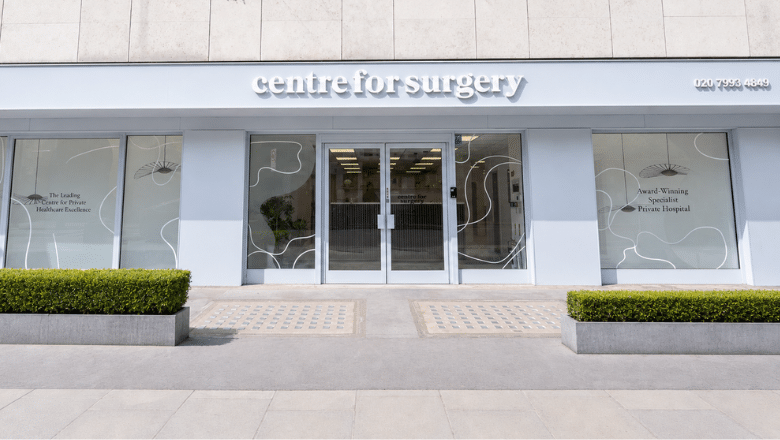
Top surgery reversal (breast reconstruction) and top surgery revision at Centre for Surgery are performed by GMC-registered surgeons at our CQC-regulated Baker Street hospital, rated Good overall by the CQC. Reconstruction is carried out with Silimed silicone implants, with tissue expanders where clinically indicated, with fat transfer, or with a combination, and your surgeon will plan the approach around the type of top surgery you had and the result you want. No diagnosis or referral letter is needed, and the consultant who assesses you is the consultant who performs your surgery. Your initial consultation is £100, redeemable against the cost of surgery if you go ahead. Finance is available, subject to status: see our finance options. If you are thinking about top surgery for the first time, our guide to FTM top surgery options explains each technique.
Phone: 020 7993 4849 | Address: 95–97 Baker Street, Marylebone, London W1U 6RN
Contact us to schedule a consultation
References
- Bustos VP, Bustos SS, Mascaro A, et al. Regret after gender-affirmation surgery: a systematic review and meta-analysis of prevalence. Plastic and Reconstructive Surgery Global Open 2021;9(3):e3477. doi:10.1097/GOX.0000000000003477 ↗
- Bruce L, Khouri AN, Bolze A, et al. Long-term regret and satisfaction with decision following gender-affirming mastectomy. JAMA Surgery 2023;158(10):1070–1077. doi:10.1001/jamasurg.2023.3352 ↗
- Libondi K, Libondi G, Sobieszek KA, Wysocki WM. Early and late surgical complications after gender-affirming mastectomy in predominantly young adults: a single-center cohort study. Plastic and Reconstructive Surgery Global Open 2026;14(8):e7995. doi:10.1097/GOX.0000000000007995 ↗
- Blackman C, Wang M, Hassan B, et al. Association of body mass index with postoperative complications after chest masculinization surgery: an updated analysis. Annals of Plastic Surgery 2025;95(5):543–552. doi:10.1097/SAP.0000000000004493 ↗
- Haley C, Roblee C, Lane M, Hsu J, Olinger T. Patient-centered care in gender-affirming surgical reversal: a case report of breast reconstruction using autologous fat grafting and discussion on reversal, detransition, and regret. Annals of Plastic Surgery 2026;97(5):490–493. doi:10.1097/SAP.0000000000004837 ↗
- Hu S, Xu H. Volume retention rate after breast autogenous fat grafting and related influencing factors: a systematic review and meta-analysis. Journal of Plastic, Reconstructive and Aesthetic Surgery 2023;89:105–116. doi:10.1016/j.bjps.2023.12.003 ↗
- MacKinnon KR, Gould WA, Enxuga G, et al. Exploring the gender care experiences and perspectives of individuals who discontinued their transition or detransitioned in Canada. PLoS One 2023;18(11):e0293868. doi:10.1371/journal.pone.0293868 ↗
- Charlton L, Bond R. Clinical considerations and endocrinological implications in the detransition process. Best Practice and Research Clinical Endocrinology and Metabolism 2024;38(5):101932. doi:10.1016/j.beem.2024.101932 ↗
Related Articles
- How Common Is Regret After Top Surgery? What the Research Shows
- Can Breasts Grow Back After Top Surgery?
- Dog Ears After Surgery: Causes, Symptoms and Treatment
- Breast Implants vs Fat Transfer