

In this guide12 sections
- First: Is This a Complication or a Result?
- Why Twelve Months Matters
- What Counts as a Nose Job Gone Wrong? Botched Rhinoplasty Explained
- What Is Revision Rhinoplasty, and What Can It Fix?
- Where Replacement Cartilage Comes From
- When the Answer Is Not More Surgery
- Choosing a Revision Rhinoplasty Specialist
- Is Revision Rhinoplasty Worth It?
- Cost
- Nose Job Gone Wrong: FAQs
- Revision Consultation at Centre for Surgery
- Related Reading
If you have had a nose job and are unhappy with it, the first thing worth saying is that most people who feel this way in the early months do not have a bad result. They have a healing nose that is still settling — see rhinoplasty recovery. That is not a brush-off — it is the single most useful piece of information at this stage, and it is why rushing into a second operation is usually the wrong move.
There are exceptions, and they matter. A nose job that has genuinely gone wrong is a different situation from one that is simply still healing, and this page separates the two. A nose job that has genuinely gone wrong is a different situation from one that is simply still healing, and this page separates the two. Some problems are genuine complications needing attention now. Some results are genuinely poor and correctable. And occasionally the honest answer is that more surgery would make things worse.
This page separates those three situations, explains what a bad nose job actually looks like, when revision is appropriate, what it can and cannot fix, and how to choose a surgeon if you decide to go ahead. If you are still within the first year, how long swelling lasts after rhinoplasty is the more useful starting point. If you are still within the first year, how long swelling lasts after rhinoplasty is the more useful starting point.
First: Is This a Complication or a Result?

Before anything about appearance, rule this out.
Contact your surgeon straight away if you have:
- Skin turning white, mottled, dusky or blue anywhere on or around the nose
- Pain that is getting worse rather than settling
- Spreading redness, warmth, discharge or fever — possible infection
- Heavy or persistent bleeding
- Any change in vision
These are complications, they are time-critical — the same warning signs apply after nose filler — and they and they need your operating surgeon or an emergency department rather than a second opinion in six months.
What is not urgent: asymmetry in the early weeks, a tip that still looks full, a nose that looks bigger than before, numbness, or a bump you can feel but not see — see dorsal hump if the bump persists past twelve months. These are ordinary features of a healing nose and reviewing them takes patience rather than action.
Why Twelve Months Matters

Rhinoplasty swelling does not resolve evenly, and the tip is always last — particularly after tip rhinoplasty or work on a bulbous nose.
- Weeks 1 to 6 — heavy swelling. The nose can look wider, longer or more bulbous than before surgery. Judging anything now is judging fluid.
- Months 3 to 6 — roughly 80 to 85% of swelling has gone. The shape emerges, but the tip stays full.
- Months 6 to 12 — most remaining swelling resolves and definition appears.
- Month 12 — the earliest sensible point to assess whether revision is needed.
- Months 12 to 18 — the true final result, longer still in thick skin.
Two things follow from this.
Operating early makes revision harder. Tissue that is still inflamed is more difficult to dissect, planes are less distinct, and the surgeon is working toward a target that has not settled. It also risks correcting something that would have corrected itself.
Thick skin extends every stage. If your skin is thick, the tip may look unrefined at nine months and perfectly acceptable at eighteen. See rhinoplasty with thick skin.
What Counts as a Nose Job Gone Wrong? Botched Rhinoplasty Explained
“Botched rhinoplasty” is the phrase most people search, but it is a blunt one. A poor result is one that is worse than what you started with, or substantially different from what was agreed — and that is a narrower category than the internet suggests. A great deal of what gets described online as rhinoplasty gone wrong is a nose at four months that will look materially different at twelve.
Genuine nose surgery gone wrong falls into recognisable patterns. Six come up repeatedly.
Over-reduction
Too much bone or cartilage removed, leaving the nose pinched, scooped or too small for the face. It is the commonest serious problem in rhinoplasty and the hardest to correct, because tissue that is gone has to be replaced rather than reshaped. Over-reduction also causes functional problems by removing structural support.
Asymmetry
Everyone is somewhat asymmetric and perfect symmetry is not achievable. A genuinely crooked result — a deviated bridge, a twisted tip, uneven nostrils — that was not present before, and persists past twelve months, is a real problem.
Polly beak deformity
Fullness just above the tip giving a rounded, beak-like profile. It happens either from inadequate reduction of the cartilaginous dorsum or from scar tissue filling the supratip space during healing. The second type sometimes responds to steroid injection without surgery. See polly beak deformity.
Breathing problems
The most important category, and the most under-recognised. Aggressive narrowing or over-resection weakens the sidewall and can cause nasal valve collapse — breathing that is worse after surgery than before. This is not a cosmetic disappointment; it is a functional injury, and it is the strongest indication for revision.
Alar retraction and a pinched tip
Over-resected tip cartilage lets the nostril rims pull upward, showing too much nostril and giving an operated look. See alar rim retraction.
The “done” look
A nose that reads as surgical — scooped bridge, over-rotated tip, too narrow for the face. Usually from over-aggressive reduction or a result imposed rather than tailored.
What Is Revision Rhinoplasty, and What Can It Fix?

Usually correctable
- A residual hump — among the more straightforward revisions.
- Asymmetry, where enough structure remains to work with.
- Polly beak deformity.
- Breathing obstruction — often the most rewarding revision, because the improvement is functional and unmistakable.
- An over-rotated or under-projected tip, with grafting.
Harder, or not possible
- Severely thinned skin. Skin over-thinned during previous surgery shows every underlying irregularity and cannot be thickened.
- Depleted cartilage. If the septum has already been harvested, replacement must come from ear or rib — possible, but a bigger operation.
- Heavy scarring from multiple previous surgeries, which makes tissue behaviour unpredictable.
- A nose already too small. Rebuilding is far harder than reducing, and the result is rarely as clean as a well-judged first operation.
- Unrealistic expectations. Where the issue is a gap between the nose and an idealised image rather than a surgical fault, more surgery will not close it.
Where Replacement Cartilage Comes From

Most revisions need cartilage to rebuild support, and where it comes from shapes the whole operation.
- Septum — first choice. Straight, strong, already in the surgical field, no extra incision. Often partly used by the first surgery.
- Ear — second choice. Naturally curved, so it suits tip grafts better than support. Adds a small incision behind the ear.
- Rib — last resort. Plentiful and strong, but requires a separate incision and scar on the chest, adds hours to the operation, and brings its own recovery. Usually reserved for major reconstruction.
This is the strongest practical argument for getting the first operation right, and for waiting rather than rushing into a second one. Each procedure consumes cartilage that may be needed later. See cartilage graft nose job.
When the Answer Is Not More Surgery
This section exists because most clinics leave it out.
When you are still healing. Under twelve months, the answer is almost always to wait.
When the problem is small and the risk is not. Revision is more complex, less predictable and carries a higher dissatisfaction rate than primary surgery. Trading a minor irregularity for that risk is not always sensible.
When the concern is disproportionate to the anatomy. If people close to you cannot see what you are describing, and you find yourself checking mirrors repeatedly or avoiding photographs, that warrants assessment in its own right before any operation. See body dysmorphia and cosmetic surgery.
When you have had several revisions already. Each adds scar tissue and depletes cartilage. There comes a point where further surgery is more likely to worsen than improve.
When a non-surgical option would do. A small residual irregularity can sometimes be camouflaged with filler after twelve months — not a substitute for real revision, but occasionally enough. See non-surgical vs surgical rhinoplasty.
Choosing a Revision Rhinoplasty Specialist
Revision is a different skill from primary rhinoplasty, and revision rhinoplasty specialists are a smaller group than rhinoplasty surgeons generally. The verification steps are the same as for any first operation — our guide to choosing a nose job surgeon in London covers how to check the GMC Specialist Register and what a proper consultation should include, and it applies with more force second time round.
Worth asking: how many revisions they perform annually; whether they harvest rib cartilage themselves; how many operations they think your nose might need; and what they think is not achievable in your case.
Warning signs: a surgeon who guarantees a result, who does not mention skin thickness, who is willing to operate before twelve months without a functional reason, or who does not raise the possibility that further surgery may not help. Verify the specialty as well as the individual — our guide to the difference between a plastic surgeon and a cosmetic surgeon explains why those job titles are not equivalent, and how to avoid botched cosmetic surgery covers the warning signs that tend to precede a poor outcome generally.
On returning to your original surgeon: there is no obligation either way. Some will revise their own work at reduced or no cost, and if you trust them and understand what went wrong, that is reasonable. If trust has gone, a second opinion is entirely appropriate and most surgeons expect it.
At Centre for Surgery our own revision rate, based on eight years of outcomes data, is approximately 5 to 10%, against a UK figure of around 15 to 20%.
Is Revision Rhinoplasty Worth It?
For the right problem in the right hands, yes — particularly where breathing has been compromised, where structure needs rebuilding, or where a specific correctable feature is causing genuine distress.
It is less often worth it for very minor irregularities, for results that are simply different from what was imagined rather than poor, and where scarring and cartilage depletion mean the achievable improvement is small.
The useful question is not “can this be improved?” but “how much improvement is realistically available, and does that justify a second operation?” A good revision surgeon will answer both.
See is revision rhinoplasty more expensive and is revision rhinoplasty more painful.
Cost
Revision rhinoplasty costs more than primary surgery — it takes longer, demands more expertise, and frequently requires cartilage grafting from a second site. Your exact cost is confirmed in writing after in-person consultation. See rhinoplasty cost.
Finance is available through Chrysalis Finance, subject to status — see our finance options.
Where the original surgery caused a functional problem, some insurers may consider partial cover; check directly with yours. NHS funding for revision of private cosmetic surgery is generally not available — see NHS rhinoplasty.
Nose Job Gone Wrong: FAQs
What is considered a bad nose job?
A result worse than the starting point, or substantially different from what was agreed — over-reduction, persistent asymmetry, polly beak deformity, an operated look, or breathing that is worse than before surgery.
What is revision rhinoplasty?
Surgery to correct or improve the result of a previous rhinoplasty. It is technically harder than primary surgery because scar tissue alters the anatomy and cartilage may already have been used.
Can a non-surgical nose job go wrong?
Yes. Filler placed poorly can look lumpy, asymmetric or over-filled, and it carries a small risk of vascular occlusion. Unlike surgery it can be dissolved with hyaluronidase, which is the main advantage of the treatment.
Can revision tip rhinoplasty correct a pinched tip?
Often yes, using grafts to rebuild the support that was removed. How much can be restored depends on how much cartilage remains and how thin the skin has become.
My nose looks worse than before. Is it ruined?
Probably not, especially in the first six months. Swelling routinely makes a nose look wider, longer or more bulbous than it did pre-operatively, and the tip is always the last part to settle.
How do I know if it is swelling or a bad result?
Time is the only reliable test. Take standardised photographs monthly in the same light and position. Genuine structural problems remain unchanged as swelling resolves; swelling improves steadily.
How long should I wait before revision rhinoplasty?
At least twelve months, unless there is a functional problem such as obstructed breathing or a complication requiring earlier attention.
Can all bad nose jobs be fixed?
Most can be improved. Not all can be fully corrected — severely thinned skin, depleted cartilage and heavy scarring all limit what is achievable, and a nose already reduced too far is harder to rebuild than one that was never operated on.
Can a bad nose job cause breathing problems?
Yes, and it is one of the more serious consequences. Over-resection can cause nasal valve collapse, leaving breathing worse than before surgery. This is a functional problem and a strong indication for revision.
Should I go back to the surgeon who did it?
There is no obligation either way. Some surgeons revise their own work at reduced cost and that can be reasonable if trust remains. Seeking a second opinion is entirely appropriate and is not something to feel awkward about.
How many revision rhinoplasties can I have?
There is no fixed limit, but each one adds scar tissue and uses up cartilage. After two or three, the achievable improvement narrows considerably and the risk of making things worse increases.
Is revision rhinoplasty more painful?
Not necessarily. It depends on extent. A minor revision is often more comfortable than the original operation; a reconstruction with rib cartilage is more demanding, mostly because of the chest donor site.
Can filler fix a bad nose job?
Sometimes, for small residual irregularities and only after twelve months. It cannot correct over-reduction, breathing problems or significant asymmetry, and injecting into operated tissue carries higher risk than a virgin nose.
What is polly beak deformity?
Fullness just above the tip creating a rounded profile. It results either from inadequate reduction of the cartilaginous dorsum or from scar tissue filling the supratip during healing — the second sometimes responds to steroid injection without surgery.
Will I need rib cartilage?
Only if the septum and ear cannot supply enough. It is reserved for major reconstruction, adds a chest incision and scar, and lengthens both the operation and recovery.
Can I claim compensation for a bad nose job?
A poor cosmetic outcome is not in itself negligence — surgery carries inherent unpredictability. Where care fell below an acceptable standard or consent was inadequate, that is a legal question, and independent legal advice is the right route rather than a clinic’s opinion.
How long does revision rhinoplasty take to heal?
The early recovery resembles primary surgery — splint at a week, bruising settling over two to three. The final result takes twelve months or longer, and often longer than a first operation because scarred tissue settles more slowly.
Revision Consultation at Centre for Surgery
A revision consultation begins with establishing what actually happened. That means reviewing your original operation notes where available, examining the nose and the airway, assessing skin thickness and remaining cartilage, and being clear about which of your concerns are structural and which are still resolving.
Our ENT surgeon and rhinologist assesses breathing alongside appearance, because a substantial proportion of revision cases involve a functional problem the patient has not connected to their surgery.
Where we think revision would produce less improvement than you are hoping for, or that waiting longer is the better course, we will say so. We decline revision surgery where we do not believe it is in the patient’s interest.
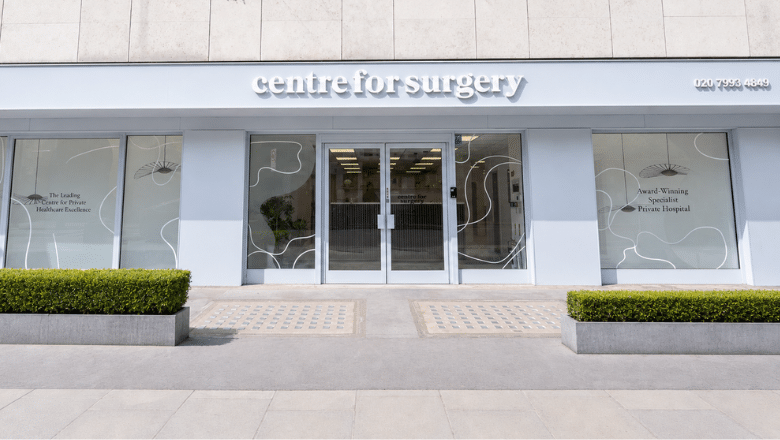
All surgery is performed by GMC-registered surgeons at our own day-surgery facility at 95–97 Baker Street, Marylebone. We are regulated by the Care Quality Commission and rated Good overall. We recommend a two-week cooling-off period before any surgery is booked.
Patient reviews
You can read our reviews in full on Google Reviews, or on our own patient reviews page. We are rated 4.6 on Google.
Book a consultation
Phone: 020 7993 4849
Email: contact@centreforsurgery.com
Address: 95–97 Baker Street, Marylebone, London W1U 6RN
Contact us to schedule your consultation
As a revision consultation, your initial in-person consultation is £250, and this fee isn’t redeemable against the cost of surgery.
Related Reading
- Revision rhinoplasty
- Is revision rhinoplasty more expensive?
- Is revision rhinoplasty more painful?
- Polly beak deformity
- Nasal valve collapse
- Alar rim retraction
- Cartilage graft nose job
- Rhinoplasty with thick skin
- Rhinoplasty recovery
- How long swelling lasts after rhinoplasty
- Open vs closed rhinoplasty
- Rhinoplasty (nose job)