


In this guide16 sections
- Key Points
- How Long Is Chin Liposuction Recovery?
- How to Prepare for a Smooth Chin Liposuction Recovery
- Chin Liposuction Recovery Timeline: Day by Day and Week by Week
- Chin Lipo Swelling and Bruising: What’s Normal?
- How Long Do I Wear a Chin Strap After Chin Lipo?
- Is Chin Liposuction Recovery Painful?
- When Can I Exercise After Chin Liposuction?
- Sleeping, Eating, Work and Travel After Chin Lipo
- Chin Liposuction vs Neck Lift Recovery
- Chin Liposuction Scars
- Chin Liposuction Aftercare: Dos and Don’ts
- When to Contact Your Surgeon After Chin Liposuction
- Frequently Asked Questions: Chin Liposuction Recovery
- Chin Liposuction in London
- References

Key Points
- How long is chin liposuction recovery? Most people return to desk work in about a week (7–10 days), go back to full exercise from around four weeks, and see the final jawline at three to six months.
- How long do swelling and bruising last? Both peak in the first two to three days. Most visible bruising and swelling settles by 10–14 days; a little firmness and fullness under the chin can take a few months to go.
- How long do I wear a chin strap? Usually day and night for the first week, then mostly at night for a further one to three weeks, as your surgeon advises.
- Is chin lipo recovery painful? Most people describe tightness, soreness and numbness rather than real pain, controlled with simple painkillers.
- When can I exercise after chin liposuction? Walking from day one, gentle cardio from week two, and strenuous exercise and weights from about week four.
- How should I sleep after chin lipo? On your back with your head raised for the first one to two weeks.
A clean aftercare sheet with our number and when to call us.
Chin liposuction recovery is one of the gentler recoveries in facial surgery. Swelling and bruising are most noticeable in the first few days, most people are back at desk work within about a week, and full exercise usually resumes at around four weeks. The new jaw-to-neck line shows early but keeps sharpening for three to six months as the last of the swelling settles and the skin tightens onto the new contour.
Chin liposuction (also called submental or double chin liposuction) removes fat from under the chin and along the jawline through a few tiny incisions. At Centre for Surgery it is a day case, usually under local anaesthetic with sedation, or TIVA (total intravenous anaesthesia) when it is combined with other procedures; our guide to anaesthesia for cosmetic surgery explains the options. This guide covers the chin lipo recovery timeline day by day and week by week, swelling, the chin strap, exercise, sleeping and the warning signs to look out for. For advice that applies to every operation, see our recovery after cosmetic surgery hub, and to see how jawlines look once healed, browse our chin and neck liposuction before and after photos.
How Long Is Chin Liposuction Recovery?
It depends on which milestone you mean. Chin liposuction recovery time has three stages: back to work and seeing people at around one week, back to strenuous exercise at around four weeks, and the final, settled contour at three to six months. The visible signs of surgery go quickly because no skin is cut away or repositioned; the slower part is the small amount of swelling and firmness that lingers under the skin.
The NHS guidance on liposuction ↗ notes that swelling after liposuction can take up to six months to settle fully and that results are not always clear until it has gone. Under the chin the treated area is small, so most people find the change is obvious much sooner, but it is worth knowing that the jawline at six weeks is not yet the finished result. Our general liposuction recovery guide covers how this compares with body areas.
How to Prepare for a Smooth Chin Liposuction Recovery
A smooth recovery starts before surgery. Stop smoking and vaping, including nicotine replacement, at least four weeks before surgery and for four weeks afterwards. Nicotine narrows blood vessels, and a 2012 meta-analysis of 140 studies found that smokers had roughly twice the rate of delayed wound healing and more wound infections than non-smokers[1].
- Alcohol: stop at least 48 hours beforehand, because it can increase bruising and swelling.
- Blood thinners: stop aspirin two weeks before surgery, and blood-thinning supplements such as turmeric and fish oil as your surgeon directs. Only stop prescribed medicines on medical advice.
- Getting home: arrange for a responsible adult to take you home and stay with you for 24 hours. You cannot drive yourself home.
- At home: have extra pillows or a wedge ready, soft easy-to-chew food in the fridge, and a button-up or zip top so you do not have to pull clothes over your chin.
Your chin liposuction recovery dates
Add your operation date to see the milestones in this guide as dates, then save them to your phone's calendar.
Chin Liposuction Recovery Timeline: Day by Day and Week by Week
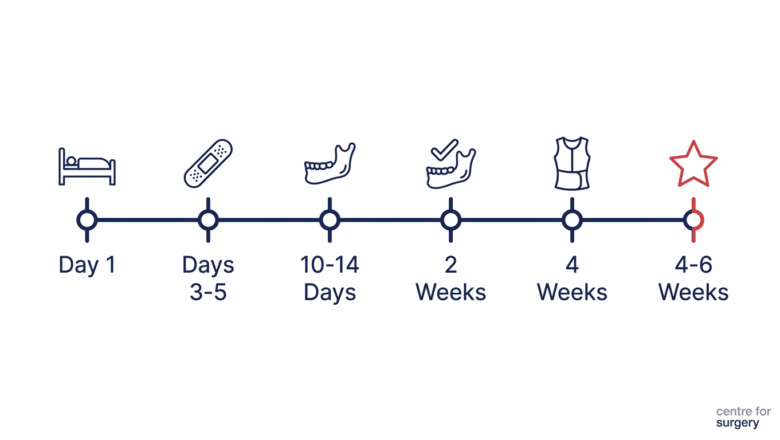
Every recovery is slightly different, depending on how much fat was removed, whether skin tightening was added and how your skin responds. Use this timeline as a guide and follow your own surgeon’s instructions.
Day of surgery
You go home the same day from our CQC-regulated Baker Street hospital once you are comfortable. Chin liposuction under tumescent local anaesthesia has a long safety record; in one surgeon’s series of 3,240 liposuction procedures under local anaesthesia alone, none needed a hospital admission[2]. If you have had sedation or TIVA, the responsible adult who takes you home should stay with you for 24 hours; the Royal College of Anaesthetists’ advice for the person looking after you ↗ explains what that involves. You leave wearing a chin strap or compression wrap, and you are given your surgeon’s direct number for the first 24 hours on your discharge summary.
Days 1–3
Expect swelling, bruising and a tight, sore feeling under the chin and along the jaw. A little blood-stained fluid may leak from the tiny incisions for the first day or two; this is the local anaesthetic fluid draining and is normal. Numbness or tingling in the treated area is common and temporary. Swelling usually peaks on day 2 or 3. Keep your head raised, rest, take short walks around the house and keep the compression garment on as directed.
Days 4–7
Swelling and bruising start to improve, although some yellow or green discolouration is normal, and it can track down the neck towards the collarbones. Discomfort is easing. Many people working from home are back at their desk from around day 3–5, and most people return to office work at around one week. Any stitches that need removing are usually taken out at your first review.
Week 2 (10–14 days)
Most of the visible bruising and swelling has gone, and the jawline starts to look sharper. The chin strap is usually reduced to night-time wear. Light activity such as brisk walking is fine, and most people are back to their normal daily routine.
Weeks 3–4
The area under the chin can feel firm or slightly lumpy as it heals. This is normal and softens over the following weeks. Compression usually stops by about four weeks, and most people are cleared for strenuous exercise once their surgeon is happy with healing.
Weeks 4–6
Most people consider themselves fully recovered and back to all normal activities. Numbness is usually improving, and the new contour is clear to others.
3–6 months
The last of the swelling settles and the skin finishes tightening onto the new contour. This is when the final result of chin liposuction can be judged.
Chin Lipo Swelling and Bruising: What’s Normal?
Swelling and bruising are expected parts of healing after chin liposuction, not complications. Both appear within the first day, are most noticeable in the first three to four days, and then ease steadily. Most has settled within 10–14 days, much faster than after procedures that lift or cut skin. A small amount of hidden swelling remains for longer, which is why the jawline keeps improving for months.
Firmness, lumps and numbness
As the treated layer heals, it often feels firm, tight or slightly lumpy, especially in weeks two to six. This usually softens on its own. Your surgeon may suggest gentle massage from a few weeks after surgery; only do this if you are told to. Numbness or tingling under the chin is common and typically improves over a few weeks, occasionally a few months.
How to reduce bruising and swelling
- Keep your head raised, especially in the first few days, whether sitting or sleeping.
- Wear your compression garment as directed. It helps control swelling and supports the skin as it settles.
- Stay well hydrated and keep salty, processed food to a minimum, because salt encourages fluid retention.
- Avoid aspirin and anti-inflammatory painkillers unless your surgeon advises them; take the painkillers you are prescribed or recommended.
- Avoid alcohol, smoking, heat and direct sun in the first weeks, all of which can worsen swelling.

How Long Do I Wear a Chin Strap After Chin Lipo?
After chin liposuction you wear a compression garment, often called a chin strap or face and neck wrap. A typical schedule is:
- First week: day and night, removed only briefly to wash.
- Weeks 2–4: usually at night only, or for part of the day, as your surgeon advises.
The garment helps control swelling and supports the skin as it re-drapes over the new contour, so wear it consistently rather than only when convenient. Schedules vary between surgeons and with whether skin tightening was added, so follow the instructions you are given. Compression garments and prescribed medications are bought separately, and we confirm what you need before your surgery.
Is Chin Liposuction Recovery Painful?
Most people find chin liposuction recovery uncomfortable rather than painful. The usual sensations are tightness, soreness when you turn your head or chew, and numbness, at their worst in the first two to three days. In a 2026 study of 435 patients having neck liposuction under local anaesthetic ↗, about two-thirds reported only mild pain, around 6% reported severe pain, and 82% were satisfied with the procedure[3]. Simple painkillers, taken as directed, are usually enough. Pain that is getting worse rather than better after the first few days should be checked.
When Can I Exercise After Chin Liposuction?

- Week 1: rest, with short gentle walks. Avoid anything that raises your heart rate or blood pressure.
- Week 2: longer walks and gentle cardio such as an easy static bike.
- Week 3: gradually increase activity, still avoiding heavy lifting, straining and high-intensity training.
- Week 4 onwards: most people are cleared for strenuous exercise and weights once healing is on track.
Exercising too soon raises blood pressure, which can worsen swelling or cause bleeding under the skin. Avoid contact sports and anything that could knock the jaw until your surgeon is happy. Our guide to exercising after cosmetic surgery explains how to build back up safely.
Sleeping, Eating, Work and Travel After Chin Lipo
Sleeping after chin liposuction
Sleep on your back with your head raised on two or three pillows or a wedge for the first one to two weeks. This keeps swelling down and stops the garment and healing tissues being pressed unevenly. Most people can sleep on their side again after about two weeks, once swelling has settled and your surgeon agrees. Our guide on how to sleep after chin liposuction covers positions and pillows in more detail.
What to eat
Your jaw and chin may feel tight and sore when you chew for the first few days, so soft food such as eggs, soup, yoghurt and fish is easiest. Lean protein, fruit and vegetables support healing. Drink plenty of water and keep salt low, because salt makes swelling under the chin last longer.
Going back to work
Most people return to office work at around 7–10 days; some working from home start again from day 3–5. Jobs involving heavy lifting or a risk of knocks to the face may need two weeks or more. Some people prefer to wait until the bruising has faded enough to cover with make-up.
Driving
Do not drive for at least 24 hours after sedation or an anaesthetic. After that, drive only when you can turn your head comfortably to check blind spots, are off painkillers that cause drowsiness, and could do an emergency stop. Check your insurance policy.
Flying
Short-haul flights are usually fine from around one to two weeks, once the early swelling has settled. Discuss longer flights with your surgeon, because sitting still on a long journey raises the risk of a blood clot.
Chin Liposuction vs Neck Lift Recovery

People considering a sharper jawline often ask how chin liposuction compares with a neck lift. Chin liposuction removes fat through a thin cannula and leaves the skin to shrink on its own, so recovery is quicker: back at work in about a week and fully recovered by four to six weeks. A neck lift removes or tightens loose skin and often tightens the platysma muscle, so recovery takes longer, typically six weeks or more; our neck lift recovery guide sets out that timeline.
The choice depends on what is causing the fullness, not on which recovery is shorter. In a 2014 cadaver study in Aesthetic Surgery Journal ↗, only about 45% of the fat in the neck sat above the platysma muscle, where liposuction can reach it; around 31% lay beneath the muscle[4]. That is one reason chin liposuction transforms some necks and only partly improves others, as our guide on how to get rid of a double chin explains. Where there is mild loose skin, FaceTite skin tightening can be added through the same incisions, which may add a little swelling but does not usually change the timeline much. If a weak chin is part of the problem, our chin implant and genioplasty recovery guide covers recovery when the two are combined.
Chin Liposuction Scars
Chin liposuction is done through a few incisions of only a few millimetres, usually in the crease under the chin and sometimes behind the earlobes. They may look pink for a few weeks, then fade to small marks that are very hard to see once healed. Keep them clean and dry as instructed, and protect them from the sun for the first few months. If you tend to form raised or keloid scars, mention it at consultation. Our guide to liposuction scars explains how they heal over time.
Chin Liposuction Aftercare: Dos and Don’ts
Do
- Keep your head raised, particularly in the first few days.
- Sleep on your back for the first one to two weeks.
- Wear your compression garment exactly as directed.
- Walk little and often from the first day to help circulation.
- Take painkillers as directed; simple painkillers are usually enough.
- Keep a stable weight afterwards. The fat cells removed do not come back, but remaining fat cells can still grow with weight gain.
Don’t
- Smoke, vape or use nicotine for four weeks after surgery.
- Drink alcohol in the first week or while taking strong painkillers, as it can worsen swelling.
- Do strenuous exercise before your surgeon confirms it is safe, even if swelling has settled.
- Skip the chin strap, as inconsistent wear can affect how smoothly the skin settles.
- Use saunas, steam rooms or hot baths, or sit in strong sun, for the first few weeks.
- Judge the result too early. A jawline that looks full or feels firm at three weeks usually keeps improving for months.
When to Contact Your Surgeon After Chin Liposuction
Serious problems after chin liposuction are uncommon, and most side effects are minor and treatable. A 2026 systematic review of 2,085 submental liposuction procedures ↗ found that around three-quarters of reported adverse events were minor, most often a collection of fluid (seroma), surface irregularity or asymmetry, or visible neck bands, and most could be managed in clinic[5]. Temporary weakness of the lower lip on one side, from bruising of a small nerve branch near the jaw, is uncommon; in the 435-patient study it affected under 1% and all recovered[3]. Contact your surgical team straight away if you have:
- sudden or increasing swelling on one side, especially if it is tense or painful
- bleeding that does not stop with gentle pressure
- a temperature, or spreading redness, heat or discharge around the incisions
- pain that is getting worse rather than better after the first three days
- difficulty swallowing or breathing (call 999)
- a painful, swollen calf or breathlessness (call 999 for chest pain or difficulty breathing)
For the first 24 hours, call your surgeon on the direct number on your discharge summary. After that, call the clinic on 020 7993 4849, 9am–6pm Monday to Saturday, and NHS 111 out of hours, or 999 in an emergency. Our guide to cosmetic surgery risks explains which problems are expected and which are rare, and if you are unhappy with a result from surgery elsewhere, see whether botched chin liposuction can be corrected.
Frequently Asked Questions: Chin Liposuction Recovery
What does chin lipo look like after 1 week?
At one week most of the bruising is fading and the swelling is going down, but the area under the chin still looks a little full and may feel firm. The new jaw-to-neck angle is usually starting to show. It keeps improving over the next few weeks and months.
How long is double chin liposuction recovery?
Double chin liposuction is the same operation as chin or submental liposuction, so recovery is the same: about a week before returning to desk work, around four weeks before strenuous exercise, and three to six months for the final result.
Can I sleep on my side 2 weeks after chin liposuction?
Often, yes. Most surgeons advise sleeping on your back with your head raised for the first one to two weeks, and many people can turn on to their side after that once swelling has settled. Check with your surgeon at your review.
How long after chin liposuction can I drink alcohol?
Avoid alcohol for at least the first week, and for as long as you are taking strong painkillers. Alcohol widens blood vessels and can increase swelling and bruising while your body is doing its most active healing.
Does chin lipo fat grow back?
The fat cells removed by liposuction do not grow back, so the result is long-lasting. The fat cells left behind can still get bigger if you gain a significant amount of weight, so keeping a stable weight protects the result. Our guide on whether liposuction is permanent explains this in more detail.
Why does my chin feel hard or lumpy after liposuction?
Firmness and small lumps are part of normal healing in the treated layer and are most noticeable two to six weeks after surgery. They usually soften gradually over the following months. Tell your surgeon if an area is getting bigger, hot or painful, or if the firmness is not improving.
When will I see my final chin liposuction results?
You will see a clear improvement once the early swelling has gone at four to six weeks, but the final contour shows at three to six months, when the last of the swelling has settled and the skin has tightened.
Can chin liposuction be done under local anaesthetic?
Yes. Chin liposuction is one of the procedures most often done under local anaesthetic with sedation, and TIVA is used when it is combined with other surgery or where it suits you better. Your surgeon and anaesthetist decide which is right for you. Our guide on whether liposuction can be performed under local anaesthetic explains what to expect.
Can I combine chin liposuction with other procedures?
Yes. It is often combined with a neck lift, facelift or chin augmentation where fat, loose skin and chin projection all play a part, giving one recovery rather than two. The combined recovery follows the longer of the two procedures.
How much fat is removed during chin liposuction?
The amount is small compared with body liposuction and varies with your anatomy. Your surgeon leaves a thin layer of fat under the skin so the neck looks smooth and natural rather than hollow, and plans the treatment area with you at consultation.
Will chin liposuction leave visible scars?
Rarely. The incisions are a few millimetres long and sit in the crease under the chin or behind the earlobes, and they are very hard to see once healed.
Chin Liposuction in London
Chin liposuction at Centre for Surgery is performed by GMC-registered surgeons at our CQC-regulated Baker Street hospital, rated Good overall by the CQC. The consultant who assesses you at consultation is the consultant who performs your surgery, and they will check whether fat, loose skin, the neck muscle or the chin itself is driving your jawline concern before recommending liposuction, a neck lift or a combination. You have follow-up reviews as you heal. Your initial consultation fee is redeemable against the cost of surgery if you go ahead; our chin liposuction cost guide explains what the price includes, and finance is available, subject to status.
Phone: 020 7993 4849 | Address: 95–97 Baker Street, Marylebone, London W1U 6RN
Contact us to schedule a consultation
References
- Sørensen LT. Wound healing and infection in surgery: the clinical impact of smoking and smoking cessation: a systematic review and meta-analysis. Archives of Surgery 2012;147(4):373–383. doi:10.1001/archsurg.2012.5 ↗
- Habbema L. Safety of liposuction using exclusively tumescent local anesthesia in 3,240 consecutive cases. Dermatologic Surgery 2009;35(11):1728–1735. doi:10.1111/j.1524-4725.2009.01284.x ↗
- AlQhtani A, AlSahabi A. Five steps for effective office-based neck ultrasound-assisted liposuction under local anesthesia: patient outcomes. Aesthetic Plastic Surgery 2026;50(9):3185–3192. doi:10.1007/s00266-025-05602-4 ↗
- Larson JD, Tierney WS, Ozturk CN, et al. Defining the fat compartments in the neck: a cadaver study. Aesthetic Surgery Journal 2014;34(4):499–506. doi:10.1177/1090820X14526406 ↗
- Girão YRG, Soares AC, Costa FWG, et al. Adverse events related to submental aesthetic liposuction: a systematic review. Journal of Oral and Maxillofacial Surgery 2026 (online ahead of print). doi:10.1016/j.joms.2026.05.061 ↗





