



In this guide14 sections
- How Liposuction Works
- Is Liposuction Permanent? Does Liposuction Last Forever?
- How Long Does Liposuction Last?
- Does Fat Come Back After Liposuction? Will Liposuction Fat Come Back?
- VASER Liposuction at Centre for Surgery
- Who Is a Good Candidate for Liposuction?
- When Will I See My Final Results?
- Recovery and Aftercare
- Maintaining Liposuction Results
- Can Liposuction Tighten Loose Skin?
- Combining Liposuction with Other Procedures
- How Liposuction Differs from Non-Surgical Fat Reduction
- Frequently Asked Questions
- Liposuction at Centre for Surgery
Liposuction remains one of the most popular cosmetic surgery options for people in the UK seeking lasting body contouring results — especially suited for those with stubborn fat that doesn’t respond to diet or exercise. One of the most common questions patients ask during a liposuction consultation in London is simple: is liposuction permanent? This guide gives you the honest, complete answer — how liposuction actually achieves permanent fat removal, why “permanent” doesn’t mean “unaffected by weight change,” how long does liposuction last in practice, whether fat can genuinely come back, and what to expect at every stage from consultation through to your final result.
At Centre for Surgery in London, our plastic surgeons specialise in power-assisted liposuction (PAL) and VASER lipo, performed safely at our CQC-regulated Baker Street facility, rated Good overall.
How Liposuction Works
Liposuction is a cosmetic surgery designed to remove excess fat deposits and reshape targeted areas of the body. It’s not a substitute for healthy living, but an enhancement that helps achieve smoother, more balanced contours.
During the procedure, small incisions are made in discreet areas, and a fine cannula is inserted beneath the skin. The surgeon uses controlled suction to extract unwanted fat cells, with the cannula moved to sculpt the area precisely. Common treatment areas include the abdomen, thighs, flanks, back, arms, chin, and neck. Liposuction can also be performed alongside other body contouring procedures for more comprehensive reshaping.
Is Liposuction Permanent? Does Liposuction Last Forever?
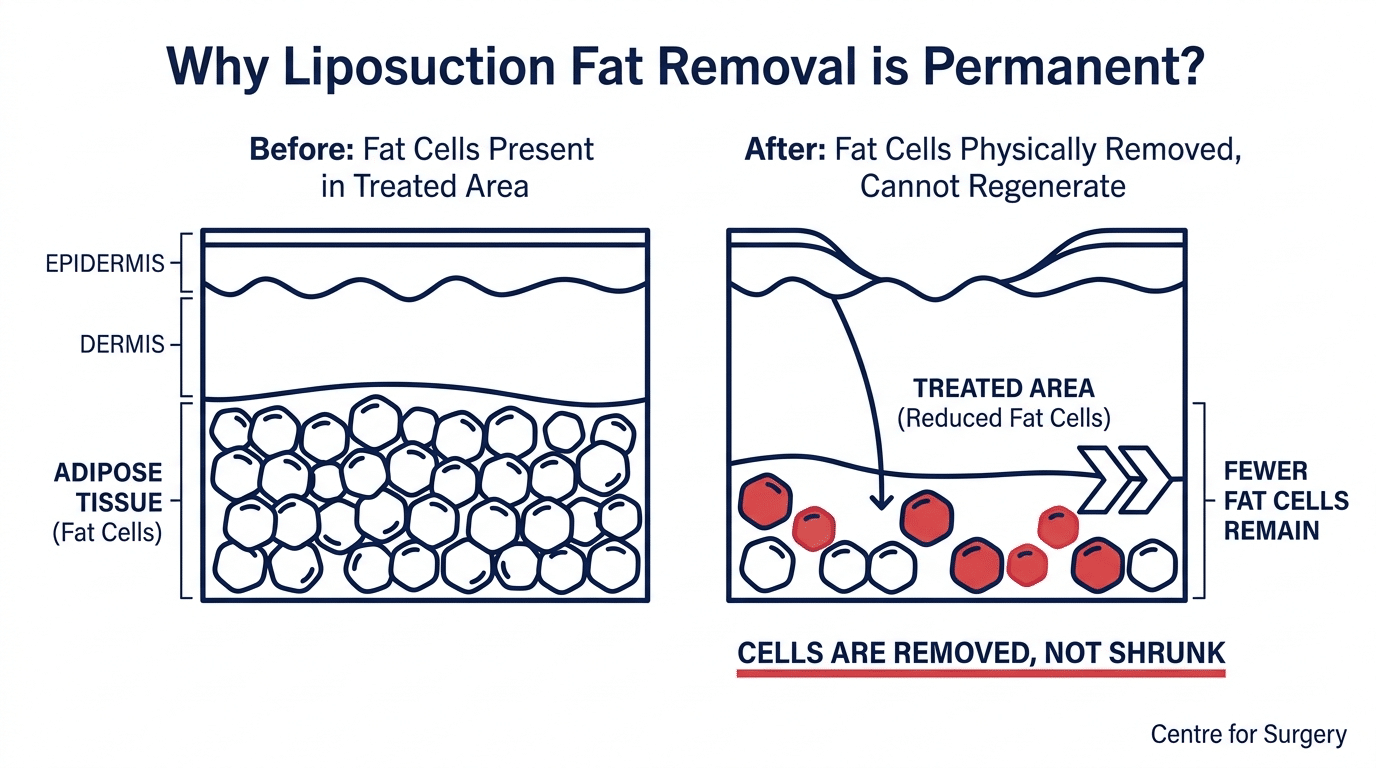
Yes — liposuction permanently removes fat cells from the treated area. Once these cells are physically extracted, they don’t regenerate. That’s the fundamental mechanism that makes the results permanent, and it’s genuinely different from non-surgical fat reduction, which shrinks fat cells rather than removing them.
It’s worth being precise about one thing: it isn’t possible, or safe, to remove every single fat cell from a treated area. A thin layer of fat is left in place deliberately, since some fat is needed to protect and support the underlying muscle and maintain a natural contour — completely stripping an area would leave an unnatural, overly hollow result. What “permanent” actually means is that the fat cells removed are gone for good, and the contour your surgeon has created is a genuinely long-term change to your body’s fat distribution.
The long-term permanence of your specific result still depends on maintaining a stable weight and healthy lifestyle afterwards. If you maintain your weight, the results can last indefinitely. If you gain a significant amount of weight, the fat cells that remain — both in the treated area and elsewhere in the body — can still expand, which may affect your overall body shape even though the treated area retains its relative definition.
How Long Does Liposuction Last?
So while liposuction is a permanent fat reduction procedure, how long liposuction results last in practice depends on the balance you strike afterwards — healthy eating, exercise, and weight maintenance. With proper lifestyle habits, results genuinely can last a lifetime; many patients enjoy their contour for decades. The removed fat itself never returns, which is the part patients most want reassurance on, but “permanent” always means permanent removal of the fat that was treated, not permanent immunity from future weight changes.
Does Fat Come Back After Liposuction? Will Liposuction Fat Come Back?
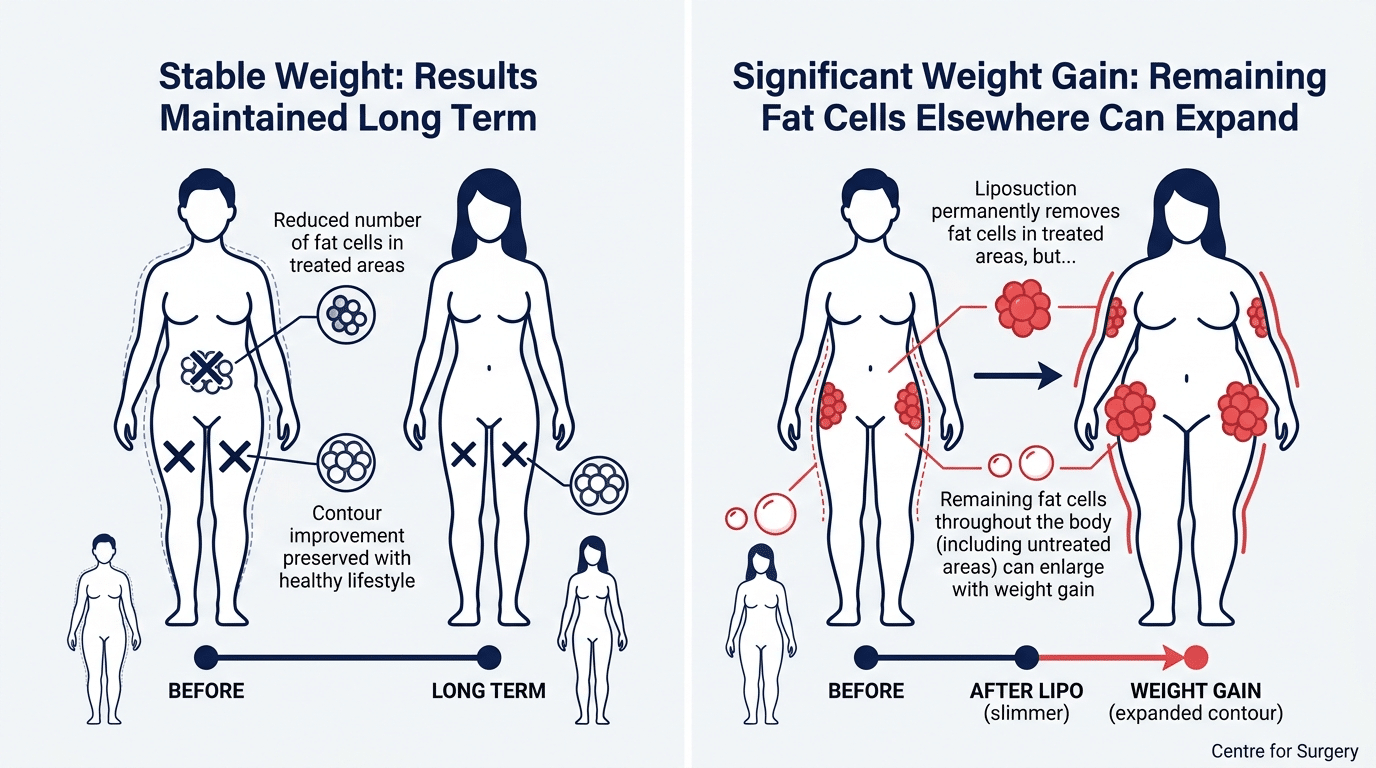
The honest, precise answer: the specific fat cells removed during your procedure cannot come back — physically removing a cell is different from anything a diet or lifestyle change could reverse. What can happen is that the fat cells left behind, in the treated area and elsewhere in the body, can expand if you gain significant weight afterwards. This is a genuinely important distinction, and one worth understanding clearly rather than a simple yes-or-no answer.
Minor weight fluctuations are normal and won’t drastically alter your shape. Substantial weight gain, however, can cause remaining fat cells to enlarge — someone who had abdominal liposuction, for instance, may notice fat building up more easily in the thighs or arms if they gain a significant amount of weight, since the body’s remaining fat storage capacity simply redistributes elsewhere. To maintain your results long-term, staying within a stable weight range and following an active, balanced lifestyle is genuinely the deciding factor — more so than which specific liposuction technique you choose.
VASER Liposuction at Centre for Surgery
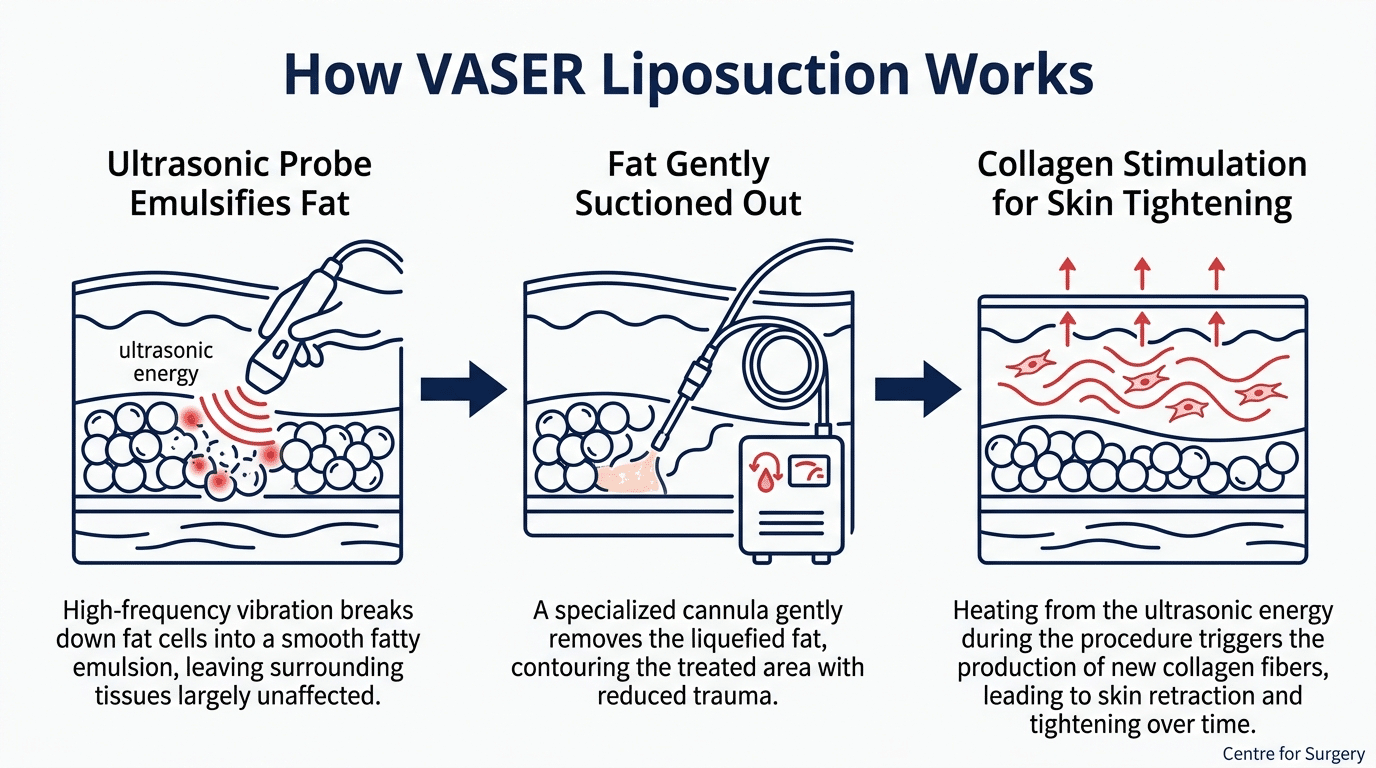
VASER liposuction — Vibration Amplification of Sound Energy at Resonance — is an ultrasound-assisted fat removal technique available at Centre for Surgery, using ultrasonic waves to emulsify fat before it’s gently suctioned out. This allows surgeons to target fat cells with precision while minimising trauma to surrounding tissue, resulting in less swelling, bruising, and downtime compared with older, purely mechanical liposuction techniques.
VASER also stimulates collagen production, providing a mild skin-tightening effect alongside the fat removal itself. It’s often the preferred technique where fat is denser or more fibrous — common at the waist, flanks, and male chest — and is priced identically to standard power-assisted liposuction for the same treatment area, with your surgeon recommending it based on your tissue quality rather than cost.
A note on technique choice: you may see other clinics offering laser-assisted liposuction (sometimes marketed as SmartLipo). We don’t offer this at Centre for Surgery — VASER and BodyTite now achieve comparable or better skin-tightening results with a more established safety profile, which is why we’ve moved away from laser-based techniques in favour of these more current alternatives. Whichever technique is used, the core mechanism behind permanence is identical: fat cells are physically removed and cannot regenerate.
Who Is a Good Candidate for Liposuction?
Ideal candidates for liposuction are close to their ideal body weight but have stubborn fat deposits that don’t respond to diet or exercise. It’s suitable for men and women seeking body refinement rather than significant weight loss. Good skin elasticity is important for achieving smooth, even results — during your consultation, your surgeon will assess your anatomy, discuss your goals, and confirm whether power-assisted lipo (PAL) or VASER is the better fit for your tissue.
When Will I See My Final Results?
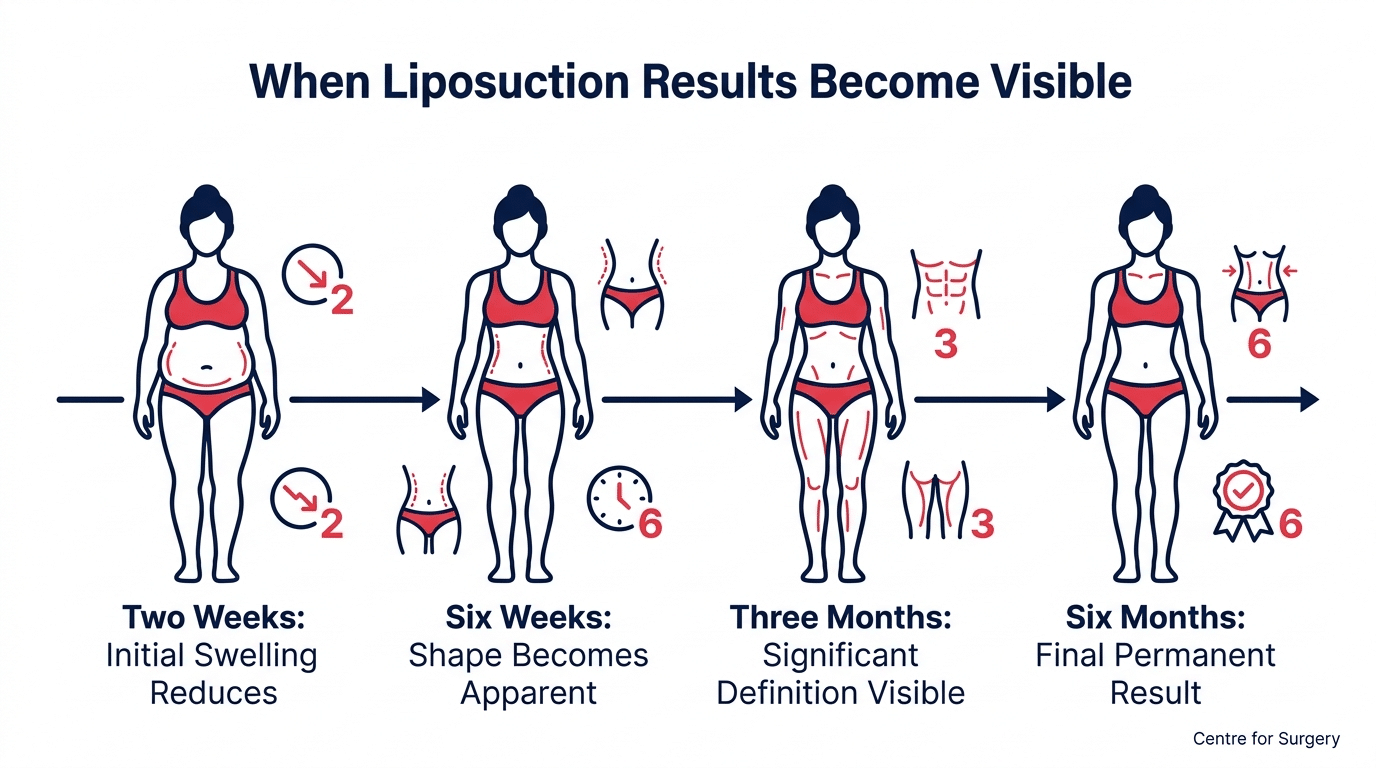
Initial swelling reduces meaningfully within the first two weeks, with your underlying shape becoming apparent from around six weeks. Significant definition is usually visible by three months, with your final, fully-settled result typically visible between three and six months as the last of the swelling resolves and the skin fully retracts over the new contour. This is also the point at which the “permanent” nature of your result becomes genuinely clear — what you see at six months, provided your weight stays stable, is what you can expect to see for years to come.
Recovery and Aftercare

Recovery from liposuction varies depending on the extent of treatment and the technique used. Most patients return to work within a few days, with swelling and bruising subsiding gradually over several weeks. You’ll wear a compression garment to support healing and help the skin retract evenly. Light walking is encouraged soon after surgery to promote circulation, while strenuous activity should be avoided until your surgeon confirms you’re ready.
Maintaining Liposuction Results
The key to maintaining your results is consistency, not perfection. The fat cells removed during surgery will never return, but the ones that remain can still enlarge with significant weight gain. A healthy diet, regular exercise, and a stable body weight are what genuinely preserve your contour long-term — and many patients find that having invested in the procedure becomes real motivation to maintain a healthier lifestyle afterwards, which reinforces the result rather than undermining it.
Can Liposuction Tighten Loose Skin?
Liposuction primarily targets fat, not skin. VASER provides a mild collagen-stimulating tightening effect as a secondary benefit, and more dedicated energy-assisted techniques such as Argo Plasma or BodyTite can be combined for more meaningful skin tightening where laxity is a genuine concern. Where significant skin laxity exists, your surgeon may instead recommend combining liposuction with a tummy tuck or body lift for a smoother, firmer outcome — each plan is tailored to your anatomy and desired result, not a one-size-fits-all answer.
Combining Liposuction with Other Procedures
Liposuction can complement other cosmetic surgeries for more comprehensive enhancement. Popular combinations include tummy tuck surgery, BBL, and breast reduction. Combining treatments in one session can reduce overall recovery time and produce a more harmonious body contouring result — your surgeon will explain the safest and most effective plan for your specific goals at consultation.
How Liposuction Differs from Non-Surgical Fat Reduction
Non-surgical fat reduction treatments can help reduce small pockets of fat but cannot match the precision or permanence of surgical liposuction, since most non-surgical approaches shrink fat cells rather than physically removing them — meaning the fat-storing capacity remains and can be refilled far more easily than with surgical removal. Patients seeking noticeable, consistent contouring across multiple areas are usually considerably more satisfied with liposuction than with non-invasive alternatives.
Frequently Asked Questions
Is liposuction permanent?
Yes — the fat cells physically removed during liposuction cannot regenerate, making the fat reduction itself permanent. The overall shape you end up with long-term does still depend on maintaining a stable weight afterwards, since remaining fat cells elsewhere can still expand.
How long does liposuction last?
Liposuction results are permanent as long as your weight remains reasonably stable. Many patients enjoy their results for decades when following balanced diet and exercise habits — there’s no inherent expiry date on the fat cells that were removed.
Does fat come back after liposuction?
The specific fat cells removed do not come back — that’s not physiologically possible. What can happen is that remaining fat cells, in the treated area or elsewhere in the body, can expand if you gain significant weight, which is a different phenomenon from “fat returning.”
Will liposuction fat come back if I get pregnant or gain weight?
The removed fat cells themselves won’t return, but pregnancy and significant weight gain can cause remaining fat cells to expand and may shift your proportions. Most surgeons recommend completing your family, or reaching a stable long-term weight, before liposuction for this reason.
How much fat can be safely removed in one liposuction session?
The safe amount varies by body type and is assessed individually by your surgeon — removing too much in one session increases risk without improving the result. Your surgeon will confirm a safe, appropriate volume for your anatomy at consultation; see our dedicated guide for more detail.
Is VASER liposuction better than traditional liposuction?
VASER offers more precise fat removal for denser or more fibrous fat, along with a modest skin-tightening effect, and is often preferred at the waist, flanks, or male chest. Power-assisted liposuction (PAL) remains an excellent, equally safe choice for many areas — your surgeon will recommend the right technique for your tissue, not simply the newest one.
Does liposuction help with cellulite?
Liposuction does not directly treat cellulite, though some patients notice a mild improvement in skin texture. Dedicated treatments target cellulite more effectively.
Liposuction at Centre for Surgery
All liposuction techniques at Centre for Surgery, power-assisted (PAL) and VASER, are performed by GMC-registered plastic surgeons, at our CQC-regulated Baker Street facility, rated Good overall, under TIVA (Total Intravenous Anaesthesia). Our medical content is reviewed by Specialist Plastic Surgeon Dr Spyridon Vlachos (GMC 7522950).
Book your consultation today by calling 020 7993 4849 or emailing contact@centreforsurgery.com. You can also visit our clinic at 95–97 Baker Street, London W1U 6RN.

Related Articles
- What Are the Different Types of Liposuction?
- Can Fat Come Back After Liposuction?
- Can Liposuction Get Rid of Cellulite? What Lipo Can and Cannot Do


