


In this guide16 sections
- Key Points
- What Are Fat-Dissolving Injections?
- How Do Fat-Dissolving Injections Work?
- Do Fat-Dissolving Injections Work? What the Evidence Shows
- Kybella, Belkyra, Aqualyx and Lemon Bottle: What Is the Difference?
- Do Fat-Dissolving Injections Work on the Stomach?
- Fat-Dissolving Injections for a Double Chin and Neck
- Fat-Dissolving Injections for the Face, Arms and Legs
- Fat-Dissolving Injections Side Effects and Risks
- Are Fat-Dissolving Injections Safe and Regulated in the UK?
- Fat-Dissolving Injections Before and After: What Results to Expect
- Fat-Dissolving Injections vs Liposuction
- Why We Don’t Offer Fat-Dissolving Injections at Centre for Surgery
- Frequently Asked Questions
- References
- Talk to Us About Removing Stubborn Fat
Key Points
- Fat-dissolving injections (injection lipolysis) use a detergent-like substance, usually deoxycholic acid, to break open fat cells in a small area. The body then clears the fat over several weeks.
- Only one product has strong evidence: injectable deoxycholic acid (sold as Kybella in the US and Belkyra in Europe), and only for fat under the chin. In large placebo-controlled trials, around two-thirds of patients improved by at least one grade, compared with around one in five on placebo.
- Results under the chin held up for three years in most patients who responded. Evidence for the stomach, thighs, arms and other areas is limited to small studies and case series.
- Aqualyx is sold as a medical device rather than a licensed medicine, with little controlled trial evidence for body fat. Lemon Bottle has been the subject of official warnings, and a Swiss laboratory could not find its declared ingredients in tested samples.
- Swelling, bruising, pain and numbness are common. Nerve injury, skin damage, infection and lumps are less common but well documented, especially when untrained people inject.
- Each session treats a small volume of fat, so most people need several sessions. Liposuction removes far more fat in one procedure, with a more predictable result.
- Centre for Surgery does not offer fat-dissolving injections. We focus on treatments with proven results, such as liposuction, VASER and chin and neck liposuction under local anaesthetic.
Fat-dissolving injections, also sold as fat-dissolving shots or a fat-dissolving treatment, are one of the most heavily promoted “non-surgical liposuction” treatments in the UK, and fat-dissolving injections in London are offered by everyone from doctors to beauty salons. Search for them and you will find Aqualyx, Lemon Bottle, Kybella and a long list of other brand names, all promising to melt a double chin or a stubborn tummy without surgery. The truth is more mixed. One product has good evidence for one small area. Most of the rest have very little, and some have none at all.
This guide explains how fat-dissolving injections work, what the research actually shows, the side effects, how the main brands differ and how they compare with liposuction. It is a companion to our wider guide on non-surgical liposuction and body contouring, and to our article on whether fat freezing works. If your main concern is fat under the chin, our page on chin and neck liposuction covers the surgical alternative in detail.
What Are Fat-Dissolving Injections?
Fat-dissolving injections, also called lipolysis injections, injection lipolysis, lipodissolve or “fat-dissolving jabs”, are a series of small injections into a pocket of fat just under the skin. The aim is to destroy some of the fat cells in that area so that it looks flatter.
The idea grew out of mesotherapy in the early 2000s, when practitioners began injecting a mixture of phosphatidylcholine and sodium deoxycholate to reduce fat. It was assumed that phosphatidylcholine did the work. Later laboratory and clinical research showed that the fat-destroying effect actually came from the deoxycholate, which had been added only to keep the phosphatidylcholine in solution[1]. That finding led to a purified deoxycholic acid injection being developed and tested properly in clinical trials.
Today, the products on the UK market fall into three broad groups:
- Licensed medicines. Injectable deoxycholic acid (Kybella, Belkyra), which went through full phase 3 trials and was licensed for fat under the chin.
- Medical devices. Products such as Aqualyx, which contain deoxycholate in a gel and are sold in Europe as CE-marked devices rather than licensed medicines[2].
- Unlicensed “cosmetic” products. Products such as Lemon Bottle, which are sold online and on social media with claims that have not been tested in published clinical trials.
How Do Fat-Dissolving Injections Work?

Deoxycholic acid is a bile acid, the same kind of substance your body uses to break down fat in the gut. Injected into fat under the skin, it acts like a detergent and breaks open the membranes of the fat cells it touches. This is called adipocytolysis.
The broken cells set off a local inflammatory reaction. Over the following weeks, white blood cells clear the released fat and cell debris, and the area slowly flattens. In the trials, skin laxity under the chin generally did not get worse after treatment. The swelling in the first few days is part of this process, which is why most people look bigger before they look smaller.
Two points matter for what you can expect:
- Deoxycholic acid is not selective. It damages any cell it comes into contact with, not just fat. That is why it has to be placed carefully into the fat layer, and why injecting too shallowly or into the wrong structure can damage skin, muscle or nerves.
- Each session treats a small volume. The licensed product for the chin allows a maximum of 10 ml per session, given as up to 50 tiny injections, with at least four weeks between sessions[3]. That is suitable for a small pocket of fat, not for a whole abdomen.
Do Fat-Dissolving Injections Work? What the Evidence Shows
For fat under the chin, yes, injectable deoxycholic acid works for most people. It is one of the most thoroughly tested non-surgical fat treatments available.
In the REFINE-1 trial, a 2016 randomised, placebo-controlled phase 3 study in Dermatologic Surgery ↗, 70% of the 256 people treated with deoxycholic acid improved by at least one grade on both the clinician’s and their own rating of under-chin fat, compared with 18.6% of those given a placebo. On MRI scans, measurable volume loss was more than eight times as common in the treated group (46.3% against 5.3%)[4]. A second phase 3 trial, REFINE-2, found very similar results, with 66.5% responding compared with 22.2% on placebo[5], and a European phase 3 trial reported the same pattern[6].
The results also appear to last. A 2021 follow-up of the REFINE trials in Aesthetic Surgery Journal ↗ found that 82.4% of people who responded to treatment still had at least a one-grade improvement three years later[7]. Fat cells that have been destroyed do not grow back, although the cells that remain can still enlarge if you gain weight.
There are important limits to this evidence:
- It applies to one product and one area. The trials tested purified deoxycholic acid under the chin. They do not show that other brands, or other parts of the body, give the same result.
- Most improvements were modest. Only 13 to 19% of treated patients improved by two grades or more. For most people the change is noticeable but not dramatic.
- Several sessions are usually needed. In REFINE-1, 55% of people had improved after two treatments and 75% after four.
Outside the chin, the evidence is much thinner. A 2019 systematic review of injectable deoxycholic acid used elsewhere on the body found only ten relevant published articles, covering areas such as the bra line, the jowls and the outer thigh, mostly in small numbers of patients[8]. That is not enough to say how reliable it is for the stomach, arms or thighs.
Kybella, Belkyra, Aqualyx and Lemon Bottle: What Is the Difference?
Many clinics use “fat-dissolving injections” as a catch-all term, but the products behind it are very different.
Kybella and Belkyra (deoxycholic acid)
Kybella (US) and Belkyra (UK, Europe and Australia) are the same licensed medicine: a purified, synthetic deoxycholic acid. It is the product tested in the trials above, and its UK licence covered moderate to severe fullness under the chin in adults[3]. As a prescription-only medicine, it should only be prescribed after a face-to-face assessment. Since 2025, Belkyra has been withdrawn or discontinued in several countries for commercial reasons, including Ireland and Australia, so it has become much harder to obtain. Many clinics now offering “fat-dissolving injections” are using other products instead.
Aqualyx Fat-Dissolving Injections
Aqualyx contains sodium deoxycholate in a slow-release gel. It is sold in Europe as a CE-marked medical device, which is a different approval route from a licensed medicine and does not require the same large placebo-controlled trials[2]. It is widely used for the stomach, flanks, thighs and chin, but the published evidence consists mainly of small, uncontrolled case series. Aqualyx fat-dissolving injections before and after photos can look convincing, but without a comparison group it is hard to know how much of the change is down to the injections.
Lemon Bottle Fat Dissolving: Does It Work?
Lemon Bottle is marketed as a “fat-dissolving” solution made from plant extracts and vitamins. It is not a licensed medicine. In March 2024, the Swiss medicines regulator, Swissmedic, classified it as an unauthorised medicinal product and warned against its use ↗, reporting that its laboratory could not detect any of the declared ingredients in samples it tested, and that no medicinal effect had been scientifically proven[9]. In the UK, the General Pharmaceutical Council has warned pharmacies about supplying unregulated, unlicensed fat-dissolving products such as Lemon Bottle, stating that they “can potentially cause serious harm”[10]. Lemon Bottle fat dissolving reviews and before and after photos on social media are not a substitute for clinical trials, and we are not aware of any published controlled trial showing that it works.
“Lipodissolve” and phosphatidylcholine mixtures
Older phosphatidylcholine and deoxycholate mixtures are still offered under names such as lipodissolve or lipolysis injections. These are often compounded mixtures of varying strength, and there is no good-quality trial evidence for them. Other brands, such as Lipo Lab, Deso and Lipomax, are also widely sold online and through social media; we are not aware of large published placebo-controlled trials for any of them.
The practical rule is simple: if a clinic cannot tell you exactly what product is being injected, who makes it and what approval it has, do not have it.
Do Fat-Dissolving Injections Work on the Stomach?
Fat-dissolving injections for belly fat are one of the most popular requests, and one of the least likely to give a satisfying result. There are three reasons.
- Volume. Even a modest lower tummy holds far more fat than a double chin. With a small amount treated per session, it can take many sessions to make a visible difference, and the result is often patchy.
- Evidence. There are no large placebo-controlled trials showing that injections reliably flatten the stomach.
- The type of fat. Injections, like liposuction, only reach the fat just under the skin. They do nothing for the fat stored around the organs, which is often a large part of a firm, rounded belly. Our guide to visceral vs subcutaneous fat explains how to tell which you have.
If you have a pocket of pinchable fat on the stomach that has not responded to diet and exercise, stomach liposuction removes it in a single procedure with a far more predictable outcome. For a broader look at the options, see how to get rid of belly fat.
Fat-Dissolving Injections for a Double Chin and Neck
Double chin fat-dissolving injections are the one use with strong evidence behind them. Fat dissolving under the chin is where the licensed product was tested, and where it makes most sense. Fat-dissolving injections for the chin can be a reasonable option for someone with a small to moderate pocket of fat, good skin elasticity and a preference to avoid any procedure involving a cut.
There are trade-offs to weigh against chin liposuction:
- Injections usually need two to four sessions, sometimes up to six, a month or more apart. The full result is judged around three months after the last session.
- Swelling under the chin after each session can be marked for several days, so the overall “downtime” across a course is not small.
- Injections do not tighten loose skin or treat muscle bands in the neck. If the fullness is partly skin or muscle, injections will not solve it.
- Chin and neck liposuction is usually a single session, often under local anaesthetic, through tiny incisions, and removes more fat with more control over the final shape.
Our guide on how to get rid of a double chin compares every option by cause, and our chin liposuction cost guide sets out what surgery involves.
Fat-Dissolving Injections for the Face, Arms and Legs
Fat-dissolving injections for the face are often marketed for the jowls, cheeks and jawline. The evidence for facial fat-dissolving injections outside the chin is thin: the 2019 systematic review found only small studies in areas such as the jowls[8]. The face also carries extra risk, as nerves and blood vessels run close to the surface. Fullness along the jawline is often caused by loose skin rather than excess fat, and removing fat from an ageing face can make it look more hollow. Our guide to sagging jowls explains the causes, and buccal fat removal is the surgical option for fuller cheeks where it is appropriate.
Fat-dissolving injections for the arms and legs run into the same problem as the stomach: a larger volume of fat and no large controlled trials. For the upper arms and thighs, arm liposuction and thigh liposuction remove fat in a single procedure.
Fat-Dissolving Injections Side Effects and Risks
Most side effects are local and settle within days to weeks, but the injections are not trivial. In the trials of the licensed product, the most common effects were:
- pain, burning or stinging during and after injection
- swelling, which can be marked for several days
- bruising
- numbness of the treated skin, which can last for several weeks
- firmness or small lumps under the skin
- redness and itching
Less common but more serious risks include:
- Nerve injury. Under the chin, the injections can affect the marginal mandibular nerve, which controls the corner of the mouth, causing a temporary uneven smile. In REFINE-1 this happened in 4.3% of treated patients. It was usually mild and resolved without lasting effects[4]. Difficulty swallowing has also been reported.
- Skin damage and ulceration. If the product is injected too close to the surface or into a blood vessel, it can damage skin and cause areas of tissue death (necrosis).
- Infection and chronic lumps. A 2022 case report from a UK plastic surgery unit in Archives of Plastic Surgery ↗ described a patient who developed severe pain, skin necrosis and painful, infected nodules that broke through the skin after a product advertised as Aqualyx was injected too superficially by someone who was not a trained health professional[11].
- Unknown contents. With unlicensed products bought online, there is no guarantee of what is in the vial, how it was made or whether it is sterile.
People who are pregnant or breastfeeding, have an infection in the area, a bleeding disorder or previous surgery or radiotherapy to the area should not have these injections.
Are Fat-Dissolving Injections Safe and Regulated in the UK?
In the hands of a trained doctor using a licensed product in the right area, the injections have an acceptable safety record. The problem in the UK is that much of the market does not look like that.
At present, there is no licensing scheme in England that controls who can give fat-dissolving injections. Prescription-only medicines such as deoxycholic acid need a prescriber, but devices and unlicensed products can be bought and injected by people with no medical training. The government’s proposed licensing scheme for non-surgical cosmetic procedures placed injection lipolysis in its higher-risk “amber” tier, and its August 2025 consultation response recorded calls to move it higher still[12]. These proposals are not yet law.
If you are searching for fat-dissolving injections near me, or comparing clinics anywhere in the UK, ask:
- Is the person injecting a doctor, dentist or nurse prescriber registered with their professional body?
- What is the exact product, and is it a licensed medicine, a CE-marked device or neither?
- Has the area been examined to confirm the fullness is fat, not loose skin, muscle or a lump such as a lipoma?
- Who will see you if something goes wrong, and how quickly?
Fat-Dissolving Injections Before and After: What Results to Expect
Before and after photos of fat-dissolving injections are widely shared online, but they need to be read with care. Lighting, posture, weight change and the timing of the “after” photo can all make a small change look large.
Realistically, if you are a good candidate and have a proven product in the right area, you can expect:
- swelling for the first few days after each session, so the area looks fuller before it looks smaller
- gradual change over four to eight weeks after each session
- a final result around 12 weeks after the last session
- a modest, natural-looking reduction rather than a dramatic one, with most people improving by one grade on a five-point scale
If you are hoping to lose a dress size, reshape a whole area or deal with loose skin, injections are unlikely to meet your expectations.
Fat-Dissolving Injections vs Liposuction
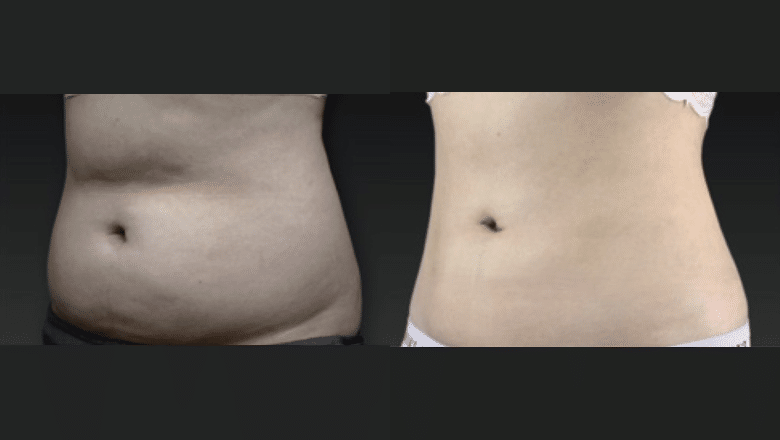
Both treatments permanently remove fat cells from the treated area. The difference is in how much fat, how precisely and how predictably.
- Amount of fat. Injections treat a small volume per session. Liposuction can remove a much larger volume in one procedure. See how much fat can be removed with liposuction.
- Number of treatments. Injections usually need two to six sessions. Liposuction is normally a single procedure.
- Control over shape. A surgeon sculpts the area directly during liposuction. With injections, the result depends on how the body responds to each round.
- Evidence. Liposuction has decades of evidence across the body. Injections have strong evidence only under the chin.
- Recovery. Injections avoid incisions, but each session brings several days of swelling. Small-area liposuction, such as the chin, is often done under local anaesthetic with a short recovery.
- Permanence. In both cases the remaining fat cells can grow with weight gain. Our guide to whether liposuction is permanent explains why.
For most people with a pocket of fat that is bothering them, liposuction is the more reliable choice. You can see real patient results on our liposuction before and after page.
Why We Don’t Offer Fat-Dissolving Injections at Centre for Surgery
We don’t offer fat-dissolving injections, Aqualyx or Lemon Bottle. Our approach is to offer treatments with proven, predictable results and to be clear about what they can and can’t do.
For stubborn fat, that means:
- Liposuction, including power-assisted techniques, for the stomach, flanks, thighs, arms, back and other areas.
- VASER liposuction, which uses ultrasound to loosen fat before it is removed, useful for firmer or fibrous areas.
- Chin and neck liposuction under local anaesthetic, the surgical alternative to injections for a double chin.
- BodyTite and FaceTite, which combine fat removal with skin tightening where looseness is part of the problem.
If liposuction isn’t right for you, we will tell you, and explain why. For some people, the honest answer is weight loss first, then a reassessment.
Frequently Asked Questions
Does fat dissolving actually work?
Injectable deoxycholic acid does work for fat under the chin. In large placebo-controlled trials, around two-thirds of treated patients improved by at least one grade, compared with about one in five on placebo, and most kept the improvement for three years. For other areas, and for other products such as Aqualyx and Lemon Bottle, there is little good-quality evidence.
How risky is Kybella?
Most side effects of Kybella (deoxycholic acid) are local and temporary: swelling, pain, bruising, numbness and firmness under the chin. In the main trial, about 4% of patients had a temporary uneven smile from irritation of a nerve near the jaw, which resolved. Rarer risks include difficulty swallowing, skin damage and infection. Risks rise considerably when it is injected by someone without medical training.
What is the strongest fat dissolver?
Purified deoxycholic acid, the licensed medicine sold as Kybella or Belkyra, is the fat-dissolving injection with the strongest clinical evidence. If you are looking for the best fat-dissolving injections, this is the one with proven results, but only under the chin. “Stronger” is not necessarily better, though. All of these products damage tissue, and a higher dose or a more aggressive product increases the risk of swelling, nerve injury and skin damage without guaranteeing a better result.
How long do lipolytic injections last?
The fat cells that are destroyed do not come back, so the result is long-lasting as long as your weight stays stable. In the follow-up of the main trials, 82% of people who responded still had their improvement three years later. If you gain weight, the remaining fat cells in the area can grow.
Does fat come back after fat dissolving injections?
The destroyed fat cells do not regrow, but the area is not protected from weight gain. The fat cells that remain, in the treated area and elsewhere, can enlarge if you put on weight. This is the same with liposuction, which is why a stable weight before and after treatment matters.
How many lipolysis injections do I need for belly fat?
There is no reliable answer, as there are no large trials of injections on the stomach. Clinics commonly quote three to six or more sessions, and the result is often patchy because of the volume of fat involved. For a defined pocket of belly fat, stomach liposuction is usually a single procedure with a more predictable result.
Is lipodissolve worth it?
For most people, no. Older lipodissolve mixtures of phosphatidylcholine and deoxycholate have no good-quality trial evidence, vary in strength and can cause painful swelling and lumps. If you want an injectable treatment for a small double chin, licensed deoxycholic acid from a doctor is the evidence-based option. For anywhere else, liposuction is more reliable.
How much do fat dissolving injections cost in the UK?
Prices vary widely between clinics and products, and the total depends on how many sessions you need, which is often more than first expected. When comparing with liposuction, look at the cost of the whole course, not a single session. A consultation will show whether liposuction would achieve the result in one procedure. Our liposuction cost guide sets out what surgery involves.
Can I get fat dissolving injections on the NHS?
No. Fat-dissolving injections are cosmetic treatments and are not available on the NHS. The same applies to cosmetic liposuction, although liposuction is occasionally funded for specific medical reasons.
References
- Chen DL, Cohen JL, Green JB. Injectable agents affecting subcutaneous fats. Semin Cutan Med Surg. 2015;34(3):134-137. doi:10.12788/j.sder.2015.0166 ↗
- Mlosek RK, Malinowska S, Woźniak W. Lipoma removal using a high-frequency ultrasound-guided injection of a Class III CE-marked device: empirical findings. J Cosmet Dermatol. 2019;18(2):469-473. doi:10.1111/jocd.12681 ↗
- Belkyra 10 mg/ml solution for injection: Summary of Product Characteristics (AbbVie Ltd, PL 41042/0055; text revised April 2023). Electronic Medicines Compendium. Licence status: withdrawn in Ireland, 30 June 2025 (HPRA ↗); discontinued in Australia, 31 December 2025 (TGA ↗).
- Jones DH, Carruthers J, Joseph JH, et al. REFINE-1, a multicenter, randomized, double-blind, placebo-controlled, phase 3 trial with ATX-101, an injectable drug for submental fat reduction. Dermatol Surg. 2016;42(1):38-49. doi:10.1097/DSS.0000000000000578 ↗
- Humphrey S, Sykes J, Kantor J, et al. ATX-101 for reduction of submental fat: a phase III randomized controlled trial. J Am Acad Dermatol. 2016;75(4):788-797.e7. doi:10.1016/j.jaad.2016.04.028 ↗
- Rzany B, Griffiths T, Walker P, et al. Reduction of unwanted submental fat with ATX-101 (deoxycholic acid), an adipocytolytic injectable treatment: results from a phase III, randomized, placebo-controlled study. Br J Dermatol. 2014;170(2):445-453. doi:10.1111/bjd.12695 ↗
- Humphrey S, Cohen JL, Bhatia AC, et al. Improvements in submental contour up to 3 years after ATX-101: efficacy and safety follow-up of the phase 3 REFINE trials. Aesthet Surg J. 2021;41(11):NP1532-NP1539. doi:10.1093/asj/sjab100 ↗
- Sung CT, Lee A, Choi F, Juhasz M, Mesinkovska NA. Non-submental applications of injectable deoxycholic acid: a systematic review. J Drugs Dermatol. 2019;18(7):675-680. PMID 31334926 ↗
- Swissmedic. Swissmedic issues warning about the illegal medicinal product “Lemon Bottle” lipolysis solution. 26 March 2024. admin.ch ↗
- General Pharmaceutical Council. GPhC highlights concerns about supply of unregulated products. pharmacyregulation.org ↗
- Shahid S, Al-Hassani F. Chronic infection and nodule formation following deoxycholate injection. Arch Plast Surg. 2022;49(3):315-318. doi:10.1055/s-0042-1748644 ↗
- Department of Health and Social Care. The licensing of non-surgical cosmetic procedures in England: consultation response. 7 August 2025. gov.uk ↗
Talk to Us About Removing Stubborn Fat
If a pocket of fat under your chin, on your stomach or elsewhere hasn’t shifted with diet and exercise, our GMC-registered surgeons can examine the area, confirm whether it is fat, loose skin or something else, and explain which treatment will actually work. Consultations take place at our CQC-regulated hospital on Baker Street. Call us on 020 7993 4849 or use the form below.
You can spread the cost of surgery with Chrysalis Finance, subject to status. Visit our Finance Options page for details.

Related Articles
- Does Non-Surgical Body Contouring Work?
- Does Fat Freezing Work?
- Laser Lipo: What It Actually Is and Does It Work?
- How to Get Rid of a Double Chin




