

In this guide14 sections
- Key Points
- Do I Need Top Surgery to Complete My Transition?
- Why Do I Want Top Surgery?
- Can You Be FTM Without Top Surgery?
- Can You Get Top Surgery Without Testosterone?
- What Are the Benefits of Top Surgery?
- Do You Need Top Surgery to Legally Change Gender in the UK?
- Should I Get Top Surgery? How to Decide
- What Are the Top Surgery Options for Non-Binary People?
- How Do You Get Top Surgery in the UK?
- What If You Are Not Sure About Top Surgery?
- Frequently Asked Questions
- FTM Top Surgery in London
- References
Key Points
- You do not need top surgery to complete your transition. There is no single finish line, and many trans men and non-binary people never have chest surgery.
- Wanting top surgery is a good enough reason. Chest dysphoria, the strain of daily binding, clothing, swimming and intimacy are all common and valid reasons.
- Non-surgical options exist, but they have limits. Binding, packing, clothing and testosterone can all help, but none of them removes breast tissue.
- The evidence on benefits is strong. Prospective studies show large improvements in chest satisfaction, body image and quality of life after top surgery, and surgery ends the need to bind.
- UK legal recognition does not depend on surgery. You can apply for a Gender Recognition Certificate without having had any surgery, and you can change the gender on your passport with a doctor’s letter.
- The result can be flat, reduced or without nipples. Non-binary people in particular can plan a chest that fits them rather than a default masculine result.
No, you do not need top surgery to complete your transition. There is no single “complete” transition, and no medical, legal or social rule says a trans man or non-binary person must have chest surgery to be valid. Top surgery is one option among many. For people with strong chest dysphoria it can be life-changing, and the research on its benefits is consistent, but plenty of people live happily without it, decide on it later, or choose a different kind of result.
This guide is for anyone asking “do I need top surgery?” or “why do I want top surgery?”. It covers what transition can involve, the non-surgical ways to manage your chest, what the evidence says about the benefits of FTM top surgery, how UK law treats gender recognition, and how to decide. It also covers non-binary top surgery options, such as a reduced chest or a flat chest without nipples. If your main worry is whether you might regret surgery, our guide to regret after top surgery sets out the research in full.
Do I Need Top Surgery to Complete My Transition?
Transition is not a checklist with a final box marked “surgery”. It usually involves some mix of three things, in whatever order and to whatever extent feels right to you:
- Social transition: your name, pronouns, clothes, hair and how you present to friends, family, work and the world.
- Medical transition: for some people, testosterone; for some, one or more operations, such as top surgery or body masculinisation surgery.
- Legal transition: changing your name by deed poll, updating your passport and records, and, if you choose, applying for a Gender Recognition Certificate.
Some people do all of these; others change their name and pronouns and nothing else. Some take testosterone and never want surgery, and some have top surgery without ever taking hormones. No path is more “complete” than another.
What matters is whether your body feels like your own. If your chest causes you distress every day, top surgery may be the change that makes the biggest difference. If it does not bother you much, there is no reason to have an operation just because it seems expected.
Why Do I Want Top Surgery?
People come to top surgery for many reasons, and you do not need to justify your reasons to anyone. The most common ones are:
- Chest dysphoria: distress or discomfort when you see or feel your chest, notice it in clothes or are reminded of it by other people.
- Being tired of binding: the heat, pain, breathlessness, skin problems and simple daily effort of keeping your chest flat.
- Freedom in clothes and activities: wearing a T-shirt without layers, swimming, going to the gym or the beach, or taking your top off on a hot day.
- Being seen as you are: being read correctly by strangers, which many people describe as a weight lifted.
- Intimacy: feeling present during sex and touch rather than avoiding contact with your chest.
Some people ask whether they “need” top surgery or only “want” it. That distinction is less important than it sounds. You do not have to reach a certain level of suffering to be eligible, and wanting a flat chest because it feels right is a perfectly good reason in itself. Equally, if you feel mostly neutral about your chest, it is fine to wait or to decide surgery is not for you.
It can help to notice when the wish for top surgery shows up. If it is there most days, has been there for a long time and does not depend on what other people think, that is a strong sign it is something you want for yourself. If it comes and goes, or feels tied mainly to pressure from others, it may be worth giving yourself more time.
Can You Be FTM Without Top Surgery?
Yes. Many trans men and non-binary people do not have top surgery, either because they do not want it, because they are waiting, or because surgery is not right for them for health or practical reasons. There are several non-surgical ways to change how your chest looks and feels.
Binding safely
A binder compresses the chest to give a flatter outline. For many people binding brings real relief, but it also has physical costs. A 2025 systematic review in the International Journal of Sexual Health ↗, which pooled 11 studies on chest binding, found that skin problems, pain and breathing difficulties were frequently reported, alongside real benefits for dysphoria and mental health[1]. To bind more safely:
- use a purpose-made binder in the right size, not bandages, duct tape or cling film;
- limit binding to around eight hours a day where you can, and take days off;
- never sleep or exercise hard in a binder;
- take it off if you feel pain, breathlessness or numbness, and see your GP if symptoms persist.
Our guide to binding safely before top surgery covers sizing, how long to bind and how to protect your skin. If you plan to have surgery later, healthy skin with good elasticity also helps your surgeon.
Packing, clothing and posture
Clothes can do a lot. Layering a shirt over a T-shirt, choosing patterns and darker colours, structured jackets and slightly looser fits all reduce how much the chest shows. Standing tall with your shoulders relaxed rather than hunched also changes the outline. Packing, using a packer to create a bulge in your underwear, does not affect the chest, but for many people it is part of feeling right in their body and in their clothes.
Does testosterone shrink your chest?
Not in any way that replaces surgery. Testosterone changes fat distribution, builds muscle and can make the chest look slightly different over time, but it does not remove breast tissue. Many people who take testosterone still have much the same chest shape, and many still bind. Top surgery is the only way to remove breast tissue.

Can You Get Top Surgery Without Testosterone?
Yes. You do not need to be taking testosterone to have top surgery, and taking it is not a sign that you are “further along”. Many people have top surgery first, some start hormones afterwards, and some never take them at all. In a 2024 US series of 865 people having gender-affirming mastectomy or chest reduction, about four in five were taking testosterone at the time of surgery and about one in five were not[2].
If you are already on testosterone, you do not usually need to stop it before surgery. Your surgeon will confirm any changes to your medicines at your pre-operative assessment.
What Are the Benefits of Top Surgery?
The research on top surgery is unusually consistent, and the strongest studies are prospective: they measure the same people before and after surgery rather than asking them to remember how they felt.
- Chest satisfaction and quality of life: in a 2018 prospective study in the Journal of Plastic, Reconstructive and Aesthetic Surgery ↗, 42 trans men completed validated questionnaires before and six months after chest surgery. They reported significant improvements in chest satisfaction, psychosocial wellbeing, sexual wellbeing and physical wellbeing, and in body image, including less avoidance and less checking of their bodies[3].
- Body image beyond the chest: a Dutch prospective study found that mastectomy improved body satisfaction most strongly, but also reduced dysphoria when looking in the mirror and improved self-worth and body-related quality of life[4].
- Gender-specific quality of life: a prospective study using a questionnaire designed for trans men found large improvements in quality of life at six weeks and at one year after surgery[5].
- No more binding: once the chest has been reshaped, there is no need to bind, and the skin, breathing and pain problems linked with long-term binding stop[1].
These studies have limits. They are small, and not everyone returns their questionnaires. Even so, they all point in the same direction. Regret is rare; we cover the figures and longer-term follow-up in our guide to how common regret is after top surgery.
Top surgery is still a major operation with risks, including bleeding, fluid collection, wound healing problems, changes in sensation and scarring. Your surgeon will go through these in detail. You can see how results and scars typically look in our top surgery before and after photos.
Do You Need Top Surgery to Legally Change Gender in the UK?
No. Under the Gender Recognition Act 2004, you can be legally recognised in your gender without having any surgery. The government’s guidance on who can apply for a Gender Recognition Certificate ↗ states: “You can apply even if you have not had any gender affirming surgery or treatments, or you do not plan to have any.”
On the standard route, you need to be 18 or over, to have been diagnosed with gender dysphoria in the UK, to have lived in your affirmed gender for at least two years and to intend to live in it for the rest of your life. You also send two medical reports. The guidance on what documents you need ↗ says one report must include details of any gender-affirming treatment, or explain why you have had none and do not plan any. Having no surgery is not a reason for refusal.
You do not need a Gender Recognition Certificate to change your name, and you can update your passport without one. The passport guidance ↗ accepts a letter from your doctor or medical consultant confirming that your change of gender is likely to be permanent. Surgery is not part of that requirement either.
Guidance can change, so check gov.uk before you apply.
Should I Get Top Surgery? How to Decide
There is no test that tells you whether top surgery is right for you, but these questions help many people:
- How much does my chest affect my daily life, my mood and what I do or avoid?
- Has the wish for a flat chest been steady over time, or does it come and go?
- What exactly do I want: completely flat, smaller, with nipples or without?
- How would I feel about permanent scars and possible changes in nipple sensation?
- Am I hoping surgery will fix things it cannot, such as other people’s reactions?
- Who will support me during recovery, and can I take around two weeks off desk work?
Talking it through with people you trust or a counsellor can help. A formal psychological report is not required at Centre for Surgery, but we recommend one if you are early in exploring your options. Reading about the different FTM top surgery options before your consultation also helps you ask sharper questions.
It is also fine to decide not yet. Top surgery can be done at any point in adult life, and waiting does not close the door.
What Are the Top Surgery Options for Non-Binary People?
Top surgery is not only for trans men, and it does not have to produce a traditionally masculine chest. A 2024 survey study in Plastic and Reconstructive Surgery Global Open ↗ of 108 people having top surgery found that 71 of them identified as non-binary. Binary trans patients more often wanted a “masculine chest” and to stop binding, while non-binary patients more often wanted a “smaller chest” and had a wider range of goals[6]. The authors concluded that surgeons should discuss options beyond the standard double incision with nipple grafts.
At Centre for Surgery, non-binary chest surgery uses the same five techniques as FTM top surgery, chosen for your chest and your goal rather than your gender:
- A flat chest with nipples: double incision with free nipple grafts, nipple-sparing double incision or inverted T for medium to larger chests; keyhole or periareolar surgery for smaller chests with firm skin.
- A flat chest without nipples: the nipples and areolas are removed and not replaced, for a smooth chest. This is permanent, so it is discussed carefully first.
- A reduced rather than flat chest: some tissue is left for a softer, androgynous shape. How much remains, and where the nipples sit, are planned with you.
Surgical technique is highly customisable, and the right approach depends on your chest size, skin elasticity and droop as much as on the look you want[7]. Our non-binary surgery page explains these options in more detail.
How Do You Get Top Surgery in the UK?
There are two main routes. On the NHS, you are referred to a gender identity clinic, assessed and then referred to an NHS-funded surgeon; waiting times are long. Privately, you can book directly with a surgeon. Our comparison of NHS and private top surgery sets out the routes and waits side by side.
At Centre for Surgery:
- you need to be 18 or over;
- you do not need a diagnosis, a GP referral or a WPATH letter;
- the consultant who assesses you at consultation is the consultant who performs your surgery;
- your surgeon assesses your chest and health, recommends a technique and gives you a written quote;
- we recommend a cooling-off period of at least two weeks between your consultation and confirming your date;
- all pre-operative consultations and follow-ups are included, so you can come back with more questions before deciding.
Top surgery takes around two to three hours under total intravenous anaesthesia (TIVA), and you need a responsible adult to stay with you for the first 24 hours afterwards. You wear a compression binder for six weeks, most people return to desk work within about two weeks, and strenuous exercise and heavy lifting wait until about six weeks. Our FTM top surgery recovery guide covers the full timeline. If you smoke or vape nicotine, you need to stop for four weeks before and four weeks after surgery.
What If You Are Not Sure About Top Surgery?
Uncertainty is normal, and it does not mean you are not trans or that top surgery is wrong for you. It may simply mean you need more time or more information. Some things that help:
- Book a consultation without committing. A consultation is a chance to ask questions and see what is possible for your chest; it does not oblige you to go ahead.
- Think about the kind of result, not only yes or no. Some people who are unsure about a fully flat chest feel much clearer once they learn that a reduced chest is possible.
- Know what can and cannot be undone. Top surgery is permanent. A breast shape can be rebuilt later, but the original tissue cannot be replaced. Our guide on whether top surgery can be reversed explains what reconstruction involves.
Frequently Asked Questions
Can you be a trans man without top surgery?
Yes. Being a trans man does not depend on surgery, hormones or any medical treatment. Many trans men never have top surgery, some delay it for years and some decide it is not for them. Your gender is not more or less valid because of the operations you have or do not have.
Do you have to be on testosterone to get top surgery?
No. You do not need to take testosterone before top surgery at Centre for Surgery, and many people have top surgery first or never take hormones at all. If you are already on testosterone, you do not usually need to stop it before surgery; your surgeon will confirm this at your pre-operative assessment.
Do you need top surgery to change your gender legally in the UK?
No. Under the Gender Recognition Act 2004 you can apply for a Gender Recognition Certificate without having had any surgery or treatment. You can also change the gender on your passport with a letter from your doctor confirming your change of gender is likely to be permanent.
How do I know if I want top surgery?
Notice how often your chest affects your mood, clothes and activities, and whether the wish for a flat chest has been steady over time. Picture the specific result you want. Talking to people you trust, a counsellor or a surgeon can help. You do not need to be certain before a consultation; it is a chance to find out more.
What disqualifies you from top surgery?
At Centre for Surgery you need to be 18 or over and well enough for surgery under TIVA. Smoking or vaping nicotine close to surgery, uncontrolled medical conditions or a BMI outside a safe range may mean waiting or preparing first. Your surgeon will assess your health and chest at consultation and explain anything that needs to change.
What is the best age to get top surgery?
There is no single best age. At Centre for Surgery you need to be 18 or over. Some people have top surgery in their early twenties and others in their forties or later. The best time is when you feel sure about the result you want, your health is good and you have support and time to recover.
FTM Top Surgery in London
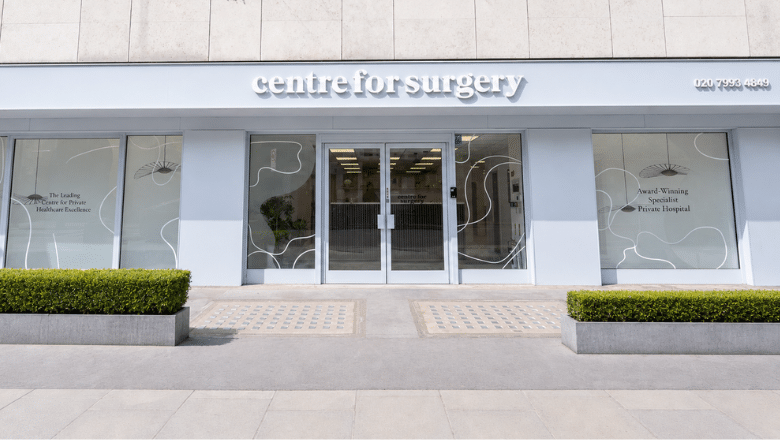
FTM top surgery at Centre for Surgery is performed by GMC-registered surgeons at our CQC-regulated Baker Street hospital, rated Good overall by the CQC, for trans men and non-binary people aged 18 and over. We offer double incision with free nipple grafts, nipple-sparing double incision, inverted T, keyhole and periareolar top surgery, as well as top surgery without nipples and reduced-chest options. No diagnosis, GP referral or WPATH letter is needed, and you do not need to be taking testosterone. The consultant who assesses you at consultation is the consultant who performs your surgery, and we recommend a two-week cooling-off period before you go ahead. Your initial consultation is £100, redeemable against the cost of surgery if you go ahead; our FTM top surgery cost guide explains what the price includes. Finance is available, subject to status.
Phone: 020 7993 4849 | Address: 95–97 Baker Street, Marylebone, London W1U 6RN
Contact us to schedule a consultation
References
- Bumphenkiatikul T, Sakpetch T, Sungnuch P, et al. Non-medical gender affirming practices among transgender individuals: a systematic review on the health implications of chest binding and genital tucking. International Journal of Sexual Health 2025;38(1):15–29. doi:10.1080/19317611.2025.2560416 ↗
- McCaffrey RL, James AJ, Torres-Guzman RA, et al. Incidence of high risk and malignant pathological findings in transgender and gender diverse individuals undergoing gender-affirming mastectomy. Annals of Surgical Oncology 2024;31(12):8086–8092. doi:10.1245/s10434-024-16005-1 ↗
- Agarwal CA, Scheefer MF, Wright LN, Walzer NK, Rivera A. Quality of life improvement after chest wall masculinization in female-to-male transgender patients: a prospective study using the BREAST-Q and Body Uneasiness Test. Journal of Plastic, Reconstructive and Aesthetic Surgery 2018;71(5):651–657. doi:10.1016/j.bjps.2018.01.003 ↗
- van de Grift TC, Kreukels BP, Elfering L, et al. Body image in transmen: multidimensional measurement and the effects of mastectomy. Journal of Sexual Medicine 2016;13(11):1778–1786. doi:10.1016/j.jsxm.2016.09.003 ↗
- Alcon A, Kennedy A, Wang E, et al. Quantifying the psychosocial benefits of masculinizing mastectomy in trans male patients with patient-reported outcomes: the University of California, San Francisco, Gender Quality of Life Survey. Plastic and Reconstructive Surgery 2021;147(5):731e–740e. doi:10.1097/PRS.0000000000007883 ↗
- Raner GA, Shapiro JS, Tse T, Armstrong K, Potter E. Binary and nonbinary transgender patient experiences accessing gender-affirming top surgery. Plastic and Reconstructive Surgery Global Open 2024;12(10):e6198. doi:10.1097/GOX.0000000000006198 ↗
- Singh A, Charipova K, Del Corral GA. Indications and surgical techniques for gender affirming mastectomy. Clinics in Plastic Surgery 2025;52(4):411–421. doi:10.1016/j.cps.2025.07.001 ↗
Related Articles
- How Common Is Regret After Top Surgery? What the Research Shows
- What Are My Options for FTM Top Surgery?
- Safe Chest Binding Before Top Surgery: A Practical Guide
- NHS vs Private FTM Top Surgery in the UK — Routes, Waiting Times and Costs Compared