

In this guide11 sections
- Key Points
- What Counts as a Large Breast Implant?
- Large Breast Implants: The Pros
- Large Breast Implants: The Cons and Risks
- How Surgeons Decide What Implant Size You Can Have
- Going Bigger Later: Revision for Larger Implants
- Large Breast Implants Before and After
- Breast Augmentation at Centre for Surgery
- Frequently Asked Questions
- References
- Talk to a Surgeon About Implant Size
Key Points
- There is no single cut-off for “large” or “XL” breast implants. Whether an implant is very large depends on your height, chest width and the amount of breast tissue and skin you already have, not just its volume in cc.
- Most surgeons choose implant size from measurements of your breast width and tissue thickness. In a 2006 study of 1,664 augmentations planned this way, the reoperation rate was 3% and only 0.2% needed a size change.
- Implants that are too big for your tissue stretch and thin it over time. That raises the chance of a visible or palpable implant edge, rippling, sagging, bottoming out, changes in nipple feeling and further surgery.
- Bigger is not automatically better or worse for satisfaction: some women regret going too small and later want larger implants, which is why careful planning matters.
- Very heavy implants add weight to the chest, which can contribute to neck, shoulder and back strain in the same way as naturally large breasts.
- At Centre for Surgery, your implant size is planned with a breast surgeon from your measurements and goals, and the consultant you see is the one who operates.
Many people considering a breast augmentation want a noticeable change, and some are drawn to large or extra-large (XL) breast implants. This guide explains what counts as a large breast implant, the pros and cons of very big implants, how surgeons decide what size your body can support, and what can go wrong when an implant is too large for your tissue.
If you are still working out your options, our guides to breast implant sizes and how implant cc relates to bra cup size are a good place to start.
What Counts as a Large Breast Implant?
Implant size is measured in cubic centimetres (cc), the volume of the implant. There is no official definition of large or XL, because the same implant looks very different on different bodies. An implant that gives a natural, full result on a tall woman with a broad chest can look very large on a petite woman with a narrow chest and little breast tissue of her own.
Surgeons therefore judge size relative to your body rather than by a fixed number. In practice, an implant is “large” for you when its width approaches or exceeds the natural width of your breast, or when its volume is more than your skin and breast tissue can comfortably cover.
XL breast implants and 800cc and above
People searching for XL breast implants, 800cc or 1,000cc implants are usually looking at sizes well beyond what most UK surgeons place in a first operation. Very high volumes are generally only considered where the chest is broad, the skin is already stretched, for example after pregnancy or weight loss, or as part of a staged plan. For most women, implants of this size are larger than their tissue can support safely over the long term.
What is the largest size of breast implants?
Standard ranges from mainstream manufacturers stop at a defined maximum volume, and the extreme sizes reported in the media are custom-made implants or the result of repeated operations and tissue expansion. Those are not results a responsible UK surgeon would aim for. Your surgeon will show you the size range that suits your measurements.
Large Breast Implants: The Pros
For the right person, a larger implant can be a good choice:
- A clear change in size and shape. If you want a fuller, more obvious result, a larger implant delivers that more than a subtle one.
- Balance for a broader frame. On a tall woman or someone with wider shoulders or hips, a larger implant may look proportionate rather than oversized.
- Filling stretched skin. After pregnancy, breastfeeding or weight loss, some women have loose skin that a small implant would not fill.
- Satisfaction. Patients who choose implants that are too small can be disappointed. In a 2024 prospective study of 131 women, those with implants under 300cc and less than two bra sizes of increase reported lower satisfaction than women with a larger augmentation[5].
Large Breast Implants: The Cons and Risks
All breast implants carry risks, including infection, bleeding, capsular contracture, rupture and changes in sensation. Our guide to breast implant problems covers them in full. With very large implants, some of these become more likely, mainly because the implant asks more of your skin and tissue.

Thinner tissue, visible edges and rippling
A large implant stretches the overlying skin and breast tissue. Over the years that tissue can thin, so the edge of the implant becomes easier to see or feel and folds in the implant shell can show through as rippling, particularly in slim women. Surgeons who use small implants with fat grafting describe larger-volume implants as linked to longer incisions, implant palpability, thinning of the soft tissue and later sagging[3].
Sagging and bottoming out
The weight of a heavy implant pulls on the lower part of the breast. Over time this can stretch the skin below the nipple and let the implant drop below the breast crease, a problem called bottoming out, which leaves the nipple pointing upwards and needs surgery to correct.
Changes in nipple and breast sensation
In a prospective study of 37 women, the larger the implant relative to the natural breast, the more likely sensation in the breast was to change after augmentation[2]. For most people feeling returns over months, but it can be permanently altered.
Neck, shoulder and back strain
Implants add weight to the front of the chest, and very large implants add a lot. That can cause the same kind of neck, shoulder and back discomfort that leads women with naturally large breasts to have a reduction. Our articles on how much breast implants weigh and whether breast implants can cause back pain explain this in more detail.
More chance of further surgery
The problems above are among the commonest reasons for revision surgery. Large implants also limit future options: if tissue has been stretched and thinned, it is harder to get a good result with a smaller implant later. Our guide on whether you can reduce your breast implant size explains what is involved.
How Surgeons Decide What Implant Size You Can Have
The most reliable way to choose an implant is to start from your tissue rather than a target cup size. Surgeons measure your breast base width (how wide your breast is across the chest), the thickness of the tissue above and below the nipple (often with a pinch test), how much the skin stretches, and the distance from the nipple to the breast crease. The implant width is then matched to the breast width, and the volume to what your skin can accommodate.
This tissue-based approach has a strong track record. In a 2006 study of 1,664 breast augmentations in Plastic and Reconstructive Surgery ↗[1], implants chosen from five key measurements led to a 3% reoperation rate over up to seven years, and only 0.2% of women had their implants changed for size.
Within the range your body can support, your preferences matter. Bring photographs of results you like and dislike, try sizers in a bra at your consultation, and be honest about how you want to look in clothes and when exercising. Our guide on avoiding boob greed covers the urge to go bigger, and the opposite regret of going too small.
Implant placement for larger implants
Where the implant sits makes a difference to how large it looks and how well it is covered. Placing the implant partly under the chest muscle adds a layer of cover in the upper breast, which can help hide the edge of a larger implant in a slim woman. Our article on implants under vs over the muscle explains the trade-offs.
If you want a bigger result than your tissue allows
If you have very little breast tissue but want a large change, a surgeon may suggest a more moderate implant now, or combining a smaller implant with fat transfer in a hybrid breast augmentation to add cover. If your breasts have dropped, a breast lift may be needed with or instead of a larger implant, because an implant on its own does not lift a sagging breast.
Going Bigger Later: Revision for Larger Implants
Wanting bigger implants is one of the most common reasons women have a second augmentation. In a 2018 study of 110 revision augmentations in Aesthetic Plastic Surgery ↗[4], 38% of women had revision surgery purely because they wanted larger implants, and 86% of all the women ended up with bigger implants than before. Those who wanted to go bigger tended to be younger and came back sooner.
The lesson is not that everyone should choose a large implant first time, but that size is worth getting right at the start: carefully, with sizers, measurements and a frank discussion of what your tissue can carry. Our breast implant replacement cost guide explains what a later change involves.
Large Breast Implants Before and After
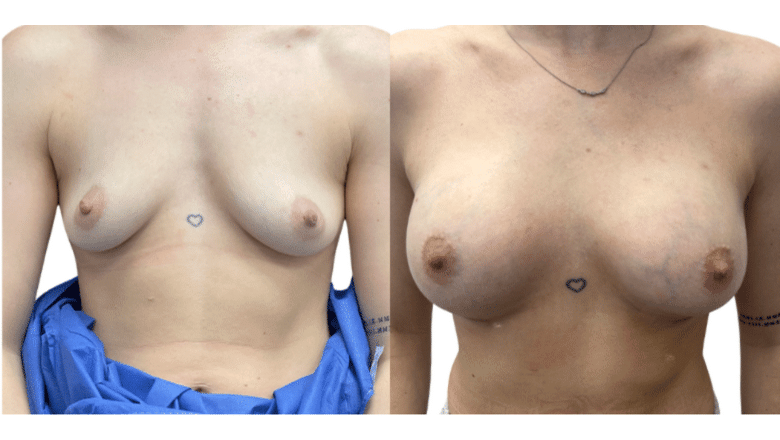
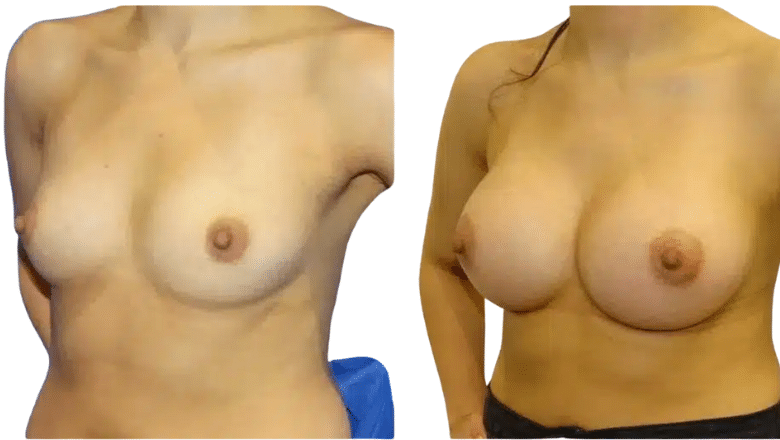


Real Centre for Surgery patients, photographed at least six months after surgery. See more results in our breast augmentation before and after photos.
Breast Augmentation at Centre for Surgery
All of our breast surgeons specialise in breast surgery, and the consultant who assesses you at consultation is the consultant who performs your operation. Further consultations before surgery are free, so you can come back to try sizers again or ask more questions before deciding.
We use Silimed implants, inserted with a Keller funnel (a no-touch technique), and they come with a 10-year warranty covering rupture and grade III–IV capsular contracture. Every breast implant operation is submitted to the national breast implant registry. Your follow-up includes a wound check at 7–10 days, a surgeon review at six weeks and an assessment at three months. Our breast augmentation recovery guide explains the first weeks in detail.
Frequently Asked Questions
What size are XL breast implants?
There is no standard definition. Implants described as XL are usually much larger than the woman’s natural breast width and tissue cover would comfortably allow, often well above the volumes most UK surgeons use in a first augmentation. The right size for you depends on your measurements, not a number.
What size is a 1000cc breast?
There is no fixed cup size for a 1000cc implant, because the result depends on your chest width, your own breast tissue and the bra brand. 1000cc is a very large volume: more than three times the 300cc threshold one 2024 study used to separate smaller from larger augmentations[5], and far more than most women’s skin and tissue can support. Our guide to implant cc and bra cup size explains the conversion.
Who has the biggest breast implants ever?
The record-breaking cases reported in the media involve custom-made implants or repeated operations to stretch the tissue, often abroad. They are not a result any responsible surgeon would plan, and they carry a high risk of complications such as skin breakdown, infection and implant exposure.
References
- Tebbetts JB, Adams WP. Five critical decisions in breast augmentation using five measurements in 5 minutes: the high five decision support process. Plast Reconstr Surg. 2006;118(7 Suppl):35S-45S. doi:10.1097/01.prs.0000191163.19379.63 ↗
- Pitanguy I, Vaena M, Radwanski HN, et al. Relative implant volume and sensibility alterations after breast augmentation. Aesthetic Plast Surg. 2007;31(3):238-243. doi:10.1007/s00266-006-0173-x ↗
- Munhoz AM, de Azevedo Marques Neto A, Maximiliano J. Optimizing surgical outcomes with small-volume silicone implants associated with autogenous fat grafting in primary and revision breast augmentation surgery: soft weight hybrid (SWEH) concept. Aesthetic Plast Surg. 2022;46(3):1087-1103. doi:10.1007/s00266-021-02653-1 ↗
- Montemurro P, Fischer S, Hager S, Hedén P. Secondary breast augmentation: is there a trend for bigger implants? Aesthetic Plast Surg. 2019;43(1):59-69. doi:10.1007/s00266-018-1244-5 ↗
- Marangi GF, Savani L, Gratteri M, et al. Main factors influencing patient satisfaction after primary breast augmentation: a prospective study based on patient-reported outcome measures. Aesthet Surg J. 2024;44(4):375-382. doi:10.1093/asj/sjad372 ↗
Talk to a Surgeon About Implant Size
If you are considering large breast implants and want an honest view of what your body can support, you can book a consultation at our Baker Street clinic by calling 020 7993 4849 or using the form below. Our breast augmentation cost guide explains what is included in the price.