


In this guide13 sections
- Key Points
- Tummy Tuck and Weight Loss
- Differences Between a Tummy Tuck and Liposuction
- How does weight loss occur after a tummy tuck?
- How can a tummy tuck help with weight loss?
- Will I need a tummy tuck after weight loss?
- Will I need a tummy tuck after liposuction?
- Is a tummy tuck permanent?
- How to maintain your tummy tuck results
- Do You Lose More Weight After a Tummy Tuck?
- FAQs
- Thinking about getting a Tummy Tuck in London?
- References
Key Points
- A tummy tuck shapes the body; it is not a weight-loss operation. The skin and fat removed usually weigh only a couple of kilograms.
- It treats what exercise cannot. The operation removes loose skin and fat from the lower abdomen and can repair stretched or separated stomach muscles.
- After major weight loss, it may help you keep weight off. A 2025 meta-analysis of 7,339 patients linked body contouring with greater long-term weight loss and better physical function[1].
- Loose abdominal skin causes physical symptoms, not just cosmetic concerns, and a hanging apron of skin can itself get in the way of further weight loss[2].
- BMI matters for safety. Many surgeons prefer a BMI under 30, and complications such as bleeding are more common above it[2].
- It is not usually available on the NHS, which regards abdominoplasty as cosmetic surgery[3].
Tummy Tuck and Weight Loss
Tummy tuck or abdominoplasty surgery can truly transform patients’ lives and is one of the most effective methods to improve the appearance of the midsection. The surgery involves the removal of excess skin and fat to restore the appearance of the abdomen, leading to a smoother-looking, firmer, and more youthful body shape.
We are commonly asked whether a tummy tuck is suitable for weight loss. Here at Centre for Surgery, our surgeons recommend that you view a tummy tuck as a procedure for improving the shape of your body and not as a method of losing weight.
Exploring the Goals of Abdominoplasty: Beyond Weight Loss

Abdominoplasty is often misunderstood as a procedure aimed at weight loss. The procedure is designed to address several key areas of concern within the abdominal region. Firstly, it effectively removes excess skin. Moreover, abdominoplasty targets the abdominal muscles, which may become overstretched or separated over time.
Another significant benefit includes the reduction of stretch marks, especially those located on the lower abdomen. An unexpected advantage of abdominoplasty is the potential improvement in posture. While some individuals may experience a slight reduction in weight following the procedure, it is important to understand that a tummy tuck is not a weight loss solution.
Differences Between a Tummy Tuck and Liposuction
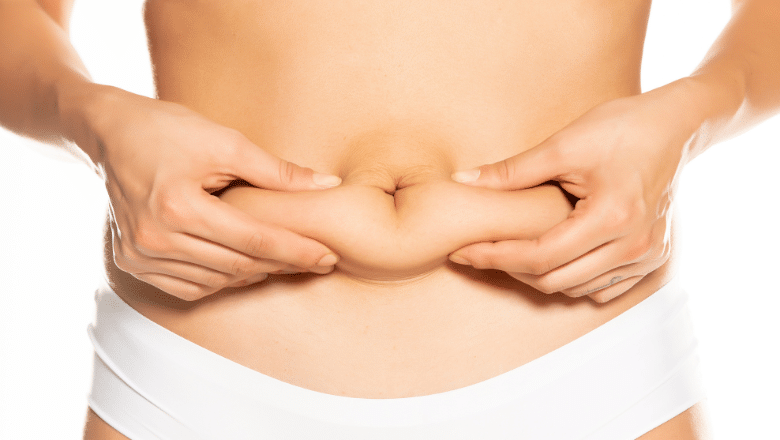
Tummy tucks and liposuction are distinct procedures that can be used individually or in combination to enhance body contouring. Liposuction is a quick and safe surgical procedure designed to remove stubborn or unwanted fat deposits, resulting in a more sculpted body appearance.
During liposuction, fat cells are liquefied using a speciality designed vibrating handpiece called MicroAire, and a cannula is inserted to extract the liquid. Patients who are at a healthy weight, have elastic skin, and possess firm abdominal muscles are ideal candidates for liposuction.
In contrast, a tummy tuck focuses on tightening the abdominal muscles and removing excess, sagging skin. Women who have been through pregnancy and C-sections, which often lead to extra skin and weakened abdominal muscles, are common candidates for tummy tuck surgery.
A tummy tuck primarily targets excess skin and lax muscles; it does not address additional fat and is not intended for substantial weight loss. However, an abdominoplasty can be combined with liposuction to remove excess fat. This is known as a Brazilian abdominoplasty.
SEE ALSO: What is the difference between liposuction and a tummy tuck?
How does weight loss occur after a tummy tuck?
Potential weight loss occurs during the abdominoplasty procedure itself, resulting from the surgical removal of excess skin and fat. The removal of this extra tissue is permanent and does not come back. A tummy tuck in itself should not be viewed as a primary method of losing weight.
The ideal patients for tummy tucks are those who have maintained a healthy diet and exercised regularly over a long period of time, with no success in improving the appearance of the middle section.
SEE ALSO: 5 Tummy Tuck Myths
How much weight is usually lost with a tummy tuck?
A tummy tuck, also known as abdominoplasty, typically results in a weight loss of 1.4 to 2.3 kg (3 to 5 pounds). If you opt for a mini tuck, you can expect to shed approximately 0.8kg (1.8 pounds) of surplus skin and fat. In the case of an extended tuck, the expected weight loss from excess skin and fat is approximately 2.3 kg (5 pounds).
How can a tummy tuck help with weight loss?
We recommend that patients view a tummy tuck as a supplementary procedure to achieving overall improved health and potential for weight loss. Eating healthily and exercising regularly both before and after the procedure will help maintain your tummy tuck results, preventing weight gain after surgery.
Many patients who have undergone a tummy tuck with us at Centre for Surgery often report achieving long-term weight loss, as they frequently find that their appetite has decreased after the procedure.
Will I need a tummy tuck after weight loss?
After reaching your weight loss goal, you may be dissatisfied with the loose or sagging skin on your abdomen, which, unfortunately, cannot be addressed solely through diet and exercise. In such cases, a tummy tuck can effectively contour the body and enhance its shape. However, it is important to understand that a tummy tuck is not a substitute for weight loss.
Will I need a tummy tuck after liposuction?
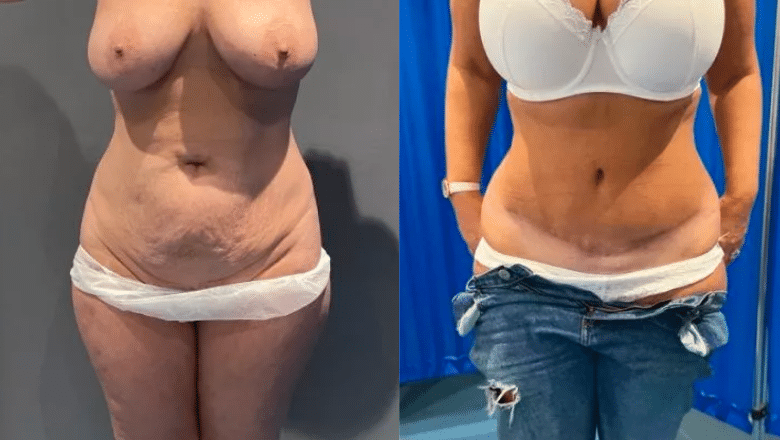
The need for a tummy tuck after liposuction depends on your circumstances and aesthetic goals. For some patients, a combination of liposuction and tummy tuck, often referred to as a Brazilian tummy tuck, could be the most suitable approach.
Is a tummy tuck permanent?
Tummy tuck results are generally considered permanent, and patients can expect to see visible improvements immediately after surgery, with a noticeable enhancement in body shape and a flatter, more toned stomach. The long-term results of a tummy tuck will depend on several factors, including how well you can maintain a stable weight over time.
How long does a tummy tuck last?
The outcomes of a tummy tuck are generally considered permanent, as the skin and fat cells removed during the procedure do not regrow. However, substantial weight fluctuations can impact the longevity of tummy tuck results. To maintain the results of your tummy tuck, it is essential to adopt a healthy lifestyle.
How to maintain your tummy tuck results
By maintaining a stable weight over the long term, you can look forward to enjoying the incredible results of a tummy tuck for many years. The best way to make sure your tummy tuck results last is to follow all of your surgeon’s post-operative instructions in full.
SEE ALSO: Tummy Tuck (Abdominoplasty) Before And After Photos
Will I need a revision tummy tuck?
The necessity of tummy tuck revision depends on several factors and individual circumstances. However, maintaining a healthy lifestyle through regular exercise, a balanced diet, and stable weight management generally reduces the likelihood of needing a revision.
Do You Lose More Weight After a Tummy Tuck?
A tummy tuck is not a weight-loss operation, but there is growing evidence that removing loose abdominal skin can help people who have already lost a lot of weight keep it off. A 2025 systematic review and meta-analysis of 15 studies and 7,339 patients in Plastic and Reconstructive Surgery ↗[1] found that people who had body contouring after weight-loss surgery went on to achieve a greater total weight loss (about 4.4 percentage points more) than those who had weight-loss surgery alone, along with better scores for physical function, body image and social life.
Loose skin on the abdomen is not only about appearance. In patients who have lost a lot of weight it causes physical as well as psychological symptoms, and Swedish plastic surgeons have reported that a hanging apron of skin (an abdominal pannus) can itself get in the way of further weight loss (Journal of Plastic Surgery and Hand Surgery, 2026 ↗)[2]. Removing it fits with the better physical-function scores reported after surgery.
These studies are observational, so they show an association rather than proof that surgery causes extra weight loss, and the weight removed in theatre is still small. Where the main problem is a heavy overhang, an apronectomy (panniculectomy) or an extended tummy tuck may suit better than a standard tummy tuck, and our guide to the ideal weight for a tummy tuck explains how to time surgery around weight loss.
FAQs
How Much Weight Can I Lose From Tummy Tuck Surgery?
If you’re contemplating a tummy tuck, you may find that up to 2 kilograms of excess skin could be removed during the surgery. The primary aim of a tummy tuck is to restore the stomach’s shape rather than to serve as a weight loss solution.
Will Undergoing a Tummy Tuck Reduce My Waist Size?
It can. Removing loose skin and fat from the lower abdomen and tightening separated stomach muscles gives a flatter, firmer front and often a slimmer-looking waist. How much it changes depends on how much loose skin and muscle separation you start with, so your surgeon will tell you at consultation what to expect in your case. Liposuction to the flanks can be added where your surgeon recommends it.
Will I Have a Scar After a Tummy Tuck?
After a tummy tuck, you will have a scar situated below the bikini line, initially appearing as a smooth, pale pink linear incision. Around two to three months after your surgery, the scar may become reddened and slightly raised due to the natural formation of collagen within the scar tissue.
How Much Weight Can You Lose in a Month?
Pre-surgical rapid weight loss can be achieved through specific diet plans, such as the Very Low-Calorie Diet (VLCD) or the Low-Calorie Diet (LCD). The rate of weight loss with these plans can vary, with the VLCD potentially leading to a weekly loss of 1.5 to 2 kilograms over several weeks.
Is There a Weight Restriction for Undergoing Anaesthesia?
Anaesthesia can present particular challenges in obese patients. Patients with a Body Mass Index (BMI) over 30 are at a higher risk of complications related to both surgery and anaesthesia. It is advisable for such patients to lose weight before surgery or to adhere to a pre-surgery diet plan.
Can You Have Surgery if You Are Overweight?
Being above your ideal weight does not automatically rule out surgery, but it does affect safety and results. Many surgeons prefer a BMI below 30 for a tummy tuck: in Sweden, abdominoplasty after weight-loss surgery is offered at a BMI under 30, and a 2026 study found more bleeding needing further treatment in patients with a BMI of 30 to 40[2]. If your weight is still falling, it is best to reach a stable weight first; our guide to the ideal weight for a tummy tuck explains how surgeons assess this.
How Much Fat Can Be Removed With Lipo and a Tummy Tuck?
A tummy tuck on its own removes the loose skin and the fat attached to it below the belly button, which usually weighs only a couple of kilograms. Liposuction is not included as standard, but it can be added where your surgeon recommends it to slim the waist, flanks or upper abdomen. At Centre for Surgery up to five litres of fat can be removed in a single liposuction session, although how much is safe alongside a tummy tuck is decided by your surgeon for you individually. Our guide to combining liposuction with a tummy tuck explains how the two work together.
Can I Get a Tummy Tuck on the NHS?
Rarely. The NHS regards abdominoplasty as cosmetic surgery, so it is not usually available on the NHS ↗[3], and any exception is decided by your local NHS funding body. Centre for Surgery does not currently treat NHS-funded patients. If you are hoping to use private health insurance, check with your insurer first; our guide on whether private health insurance covers a tummy tuck explains what to ask.
Thinking about getting a Tummy Tuck in London?
A tummy tuck, also known as abdominoplasty, is an excellent solution for eliminating excess weight and sagging skin in the abdominal area. The procedure can be combined with liposuction for those seeking additional fat removal.
Your surgeon will discuss the different tummy tuck options (Full, Mini, and Extended) with you and help you choose the procedure that best suits your needs. If you are considering any of the mentioned procedures, contact us today at 020 7993 4849 to schedule a consultation with an experienced surgeon at our conveniently located clinic.
References
- Mokhtar J, Akbarpoor F, Hadi M, et al. Patient-reported outcome measures following postbariatric body contouring: a systematic review and meta-analysis. Plastic and Reconstructive Surgery 2026;157(5):698e–711e. doi:10.1097/PRS.0000000000012544 ↗
- Ockell J, Biörserud C, Fagevik Olsén M, Elander A. Evaluation of modified abdominoplasty for excess skin in post-bariatric surgery patients with residual obesity. Journal of Plastic Surgery and Hand Surgery 2026;61:24–34. doi:10.2340/jphs.v61.45541 ↗
- NHS. Tummy tuck (abdominoplasty). nhs.uk ↗

Related Articles
- Liposuction vs non-surgical fat reduction
- Hip Dip Surgery — What It Is, How It Works and What to Expect
- How Long Does It Take to Recover After Liposuction?
- Medical Benefits of a Tummy Tuck
- Should I Add Liposuction to a Tummy Tuck?
- Tummy Tuck Recovery and Aftercare
- What Are the Signs of a Bad Tummy Tuck Procedure?
- How Much Does a Tummy Tuck Cost in London? (2026 Prices)






