

In this guide10 sections
- Summary
- How Long Does a Facelift Last, by Technique?
- Are Facelift Results Permanent?
- What Actually Happens Over Ten Years
- What Makes a Facelift Last Longer
- How Long Do Non-Surgical Alternatives Last?
- When Is a Second Facelift Appropriate?
- Does Age at Surgery Affect How Long It Lasts?
- Facelift Surgery at Centre for Surgery
- How Long Does a Facelift Last: Frequently Asked Questions
Summary
- There is no single answer — it depends entirely on the technique. A SMAS facelift typically lasts 10 years or more; a one stitch facelift lasts 3–5.
- The deeper the layer repositioned, the longer it holds. Skin-only techniques relapse quickly because skin stretches; repositioning the SMAS layer and its ligaments does not.
- A facelift does not stop ageing. It resets the starting point. You continue to age from the new baseline, which is why the improvement remains visible long after the “duration” has passed.
- “Permanent” is the wrong word, and any clinic using it about a facelift is overselling. The structural change is permanent; the face carrying it is not.
- Technique matters more than anything you do afterwards — though sun, smoking and weight stability genuinely influence how a result holds.
How Long Does a Facelift Last, by Technique?
The question people usually mean is “how many years before I look like I did beforehand?” — and the honest answer is that for a well-performed deep-layer facelift, you never quite do. But the durations below are what we tell patients at consultation, and they come from the procedures as we perform them. If you are comparing surgery with a non-surgical liquid facelift in London, we cover how long filler lasts further down.
| Technique | Typical duration | What it repositions |
|---|---|---|
| Deep plane facelift | 10–15 years or more | SMAS released with its retaining ligaments |
| SMAS facelift | 10 years or more | The SMAS layer, repositioned and fixed |
| Endoscopic facelift | 8–12 years | Deep tissue, via keyhole access |
| Mini facelift | 8–10 years | Skin plus limited SMAS |
| One stitch facelift | 3–5 years | A single deep suture; relies on existing elasticity |
| Thread lift | 12–18 months | Nothing structurally — not offered here |
For male facelift patients the figures differ slightly by technique, typically 7–12 years for a full SMAS approach, 5–8 for a mini and 3–5 for one stitch — thicker skin and stronger soft tissue behave differently.
Why the difference is so large
Skin stretches. Deep tissue, once repositioned and fixed, does not.
The facelifts performed in the 1970s and 80s pulled skin alone. Results typically didn’t last more than 2–3 years, and the tension on the skin produced the swept-back look that gave facelifts their reputation. Modern technique addresses the SMAS — the superficial musculo-aponeurotic system, a fibrous layer beneath the skin that carries the facial muscles. Lift and fix that, and the skin is simply redraped over it without tension.
A deep plane facelift goes further, releasing the retaining ligaments that anchor the SMAS to bone, which allows the whole midface to be repositioned as one unit. Those anchor points are deep and fixed, so the lift is durable — that is where the 10–15 year figure comes from.
Are Facelift Results Permanent?
No, and you should be sceptical of anyone who says otherwise.
Two things are true at once, and conflating them is where the confusion starts.
The structural change is permanent. Repositioned SMAS does not fall back to where it was. The tissue is fixed in its new position and stays there.
The face continues to age. Collagen continues to decline, fat pads continue to descend, bone continues to resorb. Ten years after surgery you have ten more years of ageing — but applied to a face that started from a better position.
This is why the honest framing is that surgery resets the clock rather than stopping it. Most patients at ten years still look considerably better than they would have without surgery, even though they no longer look exactly as they did at six months.
What Actually Happens Over Ten Years

Year one. Swelling has fully settled by around three to six months and the final result is visible. Scars continue maturing through the first year.
Years two to five. The result holds. Ageing continues in the background but is not usually noticeable against the improvement.
Years five to ten. Gradual softening. Skin quality changes, some volume is lost, and the jawline may lose a little definition. Most people are still clearly ahead of where they would have been.
Ten years and beyond. Our guide to what happens to your face 10 years after a facelift covers this in detail. Some patients consider a secondary facelift at this point; many do not.
What Makes a Facelift Last Longer
Technique and surgical execution account for most of the variation. But several things genuinely influence how a result holds, and they are worth knowing before rather than after.
Sun protection
The single highest-impact thing you control. UV exposure degrades collagen and elastin, which is what the result depends on. Daily broad-spectrum SPF matters more than any cosmetic product you can buy.
Not smoking
Smoking impairs healing in the short term and accelerates collagen breakdown permanently. It also raises the risk of wound-healing complications, which is why we ask patients to stop well before surgery.
Stable weight
Significant fluctuation stretches and deflates the tissue that has just been repositioned. Substantial weight loss after facial surgery can undo some of the benefit, which is why we generally advise reaching a stable weight first.
Skin quality and maintenance
A facelift repositions tissue; it does not change skin texture, pigmentation or fine lines. Topical retinoids, and periodic treatments such as Morpheus8 or Fotona 4D, address the surface while surgery addresses the structure. See facial skin tightening treatments for how these compare.
Volume, where it has been lost
Lifting descended tissue does not replace lost volume. Where the midface has deflated, facial fat transfer at the time of surgery or afterwards addresses what a lift alone cannot.
Sensible use of injectables
Anti-wrinkle injections for dynamic lines and conservative filler for volume both have a place alongside surgery. What does not help is chasing every change with more product — the overfilled midface ages a face more than the original laxity did.
None of this substitutes for the right operation. A well-performed SMAS facelift by an experienced surgeon will look better and last longer than a poorly performed deep plane facelift, regardless of what either patient does afterwards.
How Long Do Non-Surgical Alternatives Last?
Worth being direct about, because the marketing frequently is not.
- Thread lift: 12–18 months. We don’t offer thread lifts — the durability doesn’t justify the cost or the risk profile.
- Radiofrequency skin tightening such as FaceTite: 1–2 years, and better suited to mild laxity than to established descent. See how long FaceTite lasts.
- Liquid or 8-point “facelift” with dermal filler: how long it lasts varies by area, with the cheek areas lasting longest and the areas around the mouth fading sooner. It restores volume and can give a lifting effect, but it does not tighten skin or reposition tissue.
- PRP and stem cell “facelifts”: these are skin treatments marketed with surgical names. They do not reposition tissue and should not be compared with surgery on duration.
Our guide to facelift alternatives that don’t require surgery sets out where each genuinely helps.
When Is a Second Facelift Appropriate?
Most patients who have a secondary procedure do so 10 or more years after the primary, when ageing has progressed far enough to justify further surgery. There is no upper limit — some have a second facelift 15 or 20 years later.
A secondary procedure is not an admission that the first one failed. It is the same decision made again from a new starting point. Revision facelift is technically more demanding than a primary, because the tissue planes have been operated on before and the scars are already placed.
Where a previous SMAS facelift has relaxed over 10+ years, a deep plane revision often produces a better and more durable result than repeating the original technique.
Does Age at Surgery Affect How Long It Lasts?
Less than people expect. What matters more is skin quality and the degree of laxity at the time of surgery than the number itself. Someone operated on at 50 with good elasticity may hold a result longer than someone operated on at 45 with significant sun damage.
Having surgery very early, before there is meaningful laxity to correct, tends to produce a modest result that relapses sooner — there was less to lift. See facelift age for how suitability is actually assessed.
Facelift Surgery at Centre for Surgery
We perform SMAS, deep plane, mini, endoscopic and one stitch facelifts, and we will tell you plainly which is appropriate for your anatomy — including where a less extensive procedure would serve you better, or where nothing needs doing yet.
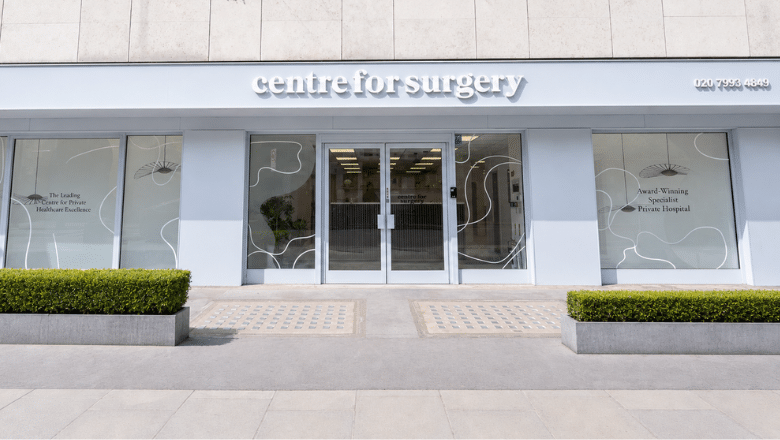
Surgery is performed at our CQC-registered facility on Baker Street, rated Good overall, by GMC-registered plastic surgeons.
- Phone: 020 7993 4849
- Email: contact@centreforsurgery.com
- Address: 95-97 Baker Street, London W1U 6RN
See facelift cost for pricing by technique, and finance options through Chrysalis Finance.
How Long Does a Facelift Last: Frequently Asked Questions
How long does a facelift last?
Between 3 and 15 years depending entirely on technique. A one stitch facelift lasts 3–5 years, a mini facelift 8–10, an endoscopic facelift 8–12, a SMAS facelift 10 or more, and a deep plane facelift 10–15 or more.
How many years does a facelift take off?
We deliberately avoid promising a number of years, because it is not something that can be guaranteed and it sets an expectation surgery cannot be measured against. What a facelift does is reposition descended tissue — how that reads on any individual face varies considerably.
Are facelift results permanent?
The structural change is permanent, but the face continues to age from the new baseline. Any clinic describing a facelift as permanent is overselling it.
Does a facelift last forever?
No. It resets the starting point rather than stopping the process. Most patients at ten years still look better than they would have without surgery, which is a more useful way to think about it than a fixed expiry date.
How long does a mini facelift last?
Typically 8–10 years, which is considerably longer than any non-surgical alternative. It addresses the skin plus a limited amount of SMAS, so it holds well but not as long as a full SMAS or deep plane procedure.
How long does a SMAS facelift last?
10 years or more. The SMAS layer is repositioned and fixed rather than the skin being pulled, which is what produces both the natural appearance and the durability.
How long does a deep plane facelift last?
10–15 years or more, making it the most durable surgical option currently available. The retaining ligaments are released so the midface moves as one unit, and the anchor points are deep and fixed.
How long does a one stitch facelift last?
3–5 years. It produces modest correction using a single deep suture and relies on your existing skin elasticity, so it suits early laxity rather than established descent.
How long does a non-surgical facelift last?
It depends what is meant by the term. Thread lifts last 12–18 months, radiofrequency tightening 1–2 years, and filler-based “liquid facelifts” vary by area: the cheeks last longest and the areas around the mouth fade sooner. None reposition tissue the way surgery does.
Will my face look worse after a facelift wears off?
No. The deep tissue stays where it was fixed, so you age forward from the new position rather than falling back past the old one. The concern that a facelift leaves you worse off than never having had one is a myth.
What makes a facelift last longer?
Technique and surgical execution first. After that, sun protection, not smoking, stable weight, and looking after skin quality. These influence the result meaningfully but cannot compensate for the wrong operation.
Can I have a second facelift?
Yes. Most secondary procedures happen 10 or more years after the primary, and there is no upper time limit. Revision surgery is more technically demanding, so surgeon selection matters even more than for a first procedure.
Related Articles
- What Happens to Your Face 10 Years After a Facelift?
- Deep Plane vs SMAS Facelift
- Facelift Age: What’s the Best Age for a Facelift?
- Facelift Cost in London
- Facelift Alternatives That Don’t Require Surgery
- Revision Facelift