

In this guide11 sections
- Macromastia vs Gigantomastia: What’s the Difference?
- What Are the Symptoms of Macromastia and Gigantomastia?
- Large Breasts or Gigantomastia: How Can You Tell?
- The Four Types of Gigantomastia
- Is Gigantomastia a Dangerous Condition?
- Can Gigantomastia Affect Breastfeeding?
- How Is Macromastia and Gigantomastia Treated?
- What to Expect After Breast Reduction Surgery
- How Much Does Breast Reduction for Macromastia Cost?
- Frequently Asked Questions About Gigantomastia
- Why Choose Centre for Surgery for Gigantomastia Treatment?
Gigantomastia, also known as breast hypertrophy or macromastia, is a rare medical condition where breast tissue grows far beyond what’s typical, causing significant physical and emotional impact. It’s important to note that gigantomastia is benign, not cancerous. While it can occur at any stage of life, it’s most often first noticed during periods of hormonal change such as puberty or pregnancy. Genuinely rare cases have been reported in the medical literature — most sources put the number at under a few hundred worldwide — making gigantomastia one of the less common reasons people seek breast reduction surgery.
Macromastia vs Gigantomastia: What’s the Difference?
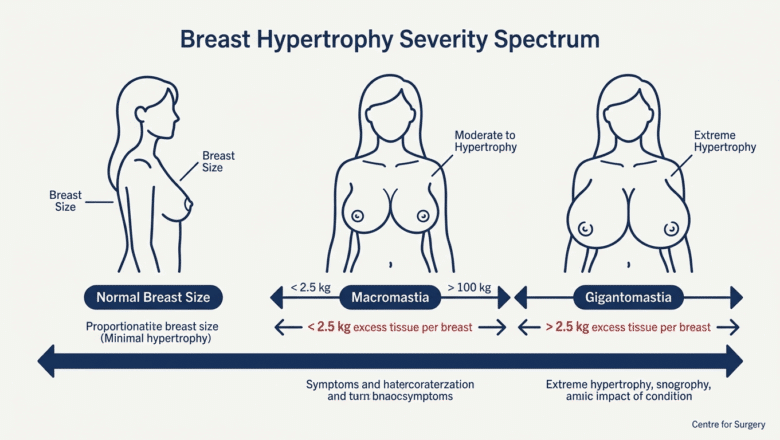
These two terms are often used interchangeably, but there’s a meaningful clinical distinction. Both describe excessive breast tissue growth beyond typical proportions relative to body size, but they sit at different points on the same severity spectrum: macromastia generally refers to excess breast tissue under roughly 2.5kg per breast, while gigantomastia refers to more extreme cases exceeding this threshold — some clinicians define it as breast tissue exceeding 3% of total body weight. There’s no single universally agreed definition, since normal breast size itself varies enormously between individuals, but this weight-based framework is the most widely used in clinical practice.
Having extremely large breasts can be more than just an inconvenience; it can lead to a variety of genuine health issues, including:
- Pain in the neck and back from the sustained weight of the breasts
- Skin rashes and irritation under and around the breasts
- Bacterial infections in the skin folds beneath the breasts
- Difficulty breastfeeding effectively
- Breast pain (mastalgia)
- Skin ulcers in extreme, longstanding cases
- Nipple numbness from sustained nerve compression
Treatment approach depends on how severe your symptoms are and what type of gigantomastia you have. Options range from medication to control growth, through to breast reduction surgery to remove excess tissue. Each case is genuinely unique, so a consultation with a surgeon at Centre for Surgery is the starting point for an accurate diagnosis and personalised treatment plan.


What Are the Symptoms of Macromastia and Gigantomastia?
Gigantomastia involves extreme growth in breast tissue, and the growth rate and eventual size can differ significantly between individuals. For some, growth happens slowly over several years; for others, it can occur within weeks. This condition can also lead to breast asymmetry, where one breast grows larger than the other.
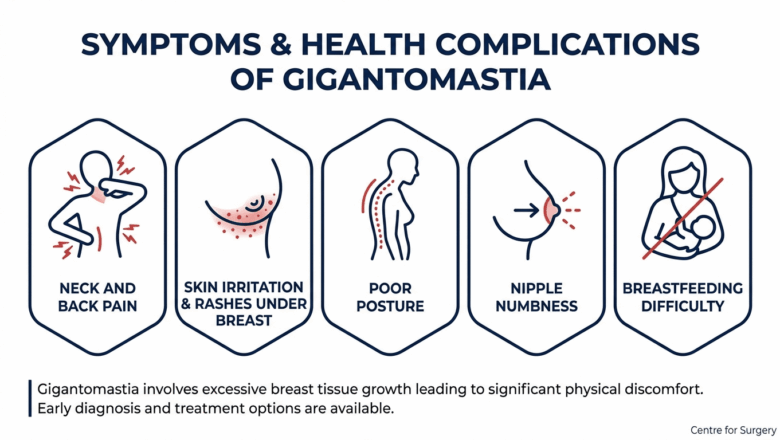
Gigantomastia symptoms can be both physically and emotionally significant:
- Neck and Back Pain: the constant weight of large breasts creates persistent strain on the upper body.
- Breast Pain (Mastalgia): often described as a constant ache, sometimes with sharp pains.
- Posture Problems: the additional weight makes maintaining good posture difficult, leading to further back and shoulder issues.
- Skin Issues: inflammation and itchiness, particularly under the breasts, commonly caused by moisture and friction.
- Skin Ulcers and Abrasions: in severe, longstanding cases, the skin may develop genuine tissue damage.
- Infections and Abscesses: the skin folds under large breasts are prone to bacterial infection.
- Nipple Numbness: sustained pressure on the chest can cause nerve compression and reduced sensation.
- Sagging Breasts: skin stretches under the sustained weight, causing significant sagging.
Beyond the physical symptoms, there are real lifestyle and emotional impacts too — difficulty finding clothes and bras that fit well, sports and exercise becoming difficult or impossible, and social embarrassment that can contribute to anxiety, low mood, and negative body image.
Large Breasts or Gigantomastia: How Can You Tell?
Most large breasts are not gigantomastia. Breast size is largely inherited: in a 2010 study of more than 1,000 Australian female twins, bra cup size was 56% heritable ↗, and only about a third of that genetic influence was shared with the genes that affect body weight. A later genome-wide study of 16,175 women found seven gene variants linked to cup size, several near genes involved in oestrogen signalling and breast development (Eriksson et al., 2012 ↗). Weight gain, pregnancy, breastfeeding and the menopause change size further, as our guide to what causes large breasts explains.
The medical term for breasts large enough to cause symptoms is macromastia, also called hypermastia. Gigantomastia describes the far rarer extreme. Signs that breast size has become a medical problem rather than normal variation include:
- rapid growth over weeks or months, especially during puberty or pregnancy
- one breast growing much faster than the other
- growth that starts after a new medication
- pain, skin breakdown under the breast or bra-strap grooves that do not settle
Any of these deserves an assessment by your GP. Where the symptoms come from size alone, a breast reduction is the treatment most likely to help.
The Four Types of Gigantomastia
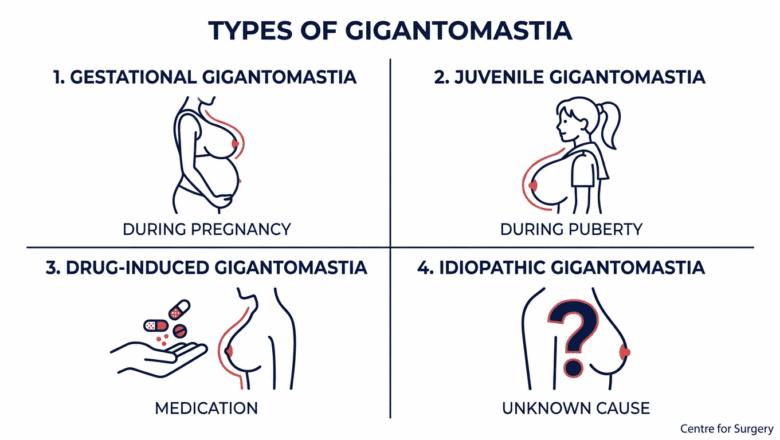
Medical professionals typically categorise gigantomastia into four main types based on the trigger and timing of the excessive growth:
Gestational Gigantomastia
Occurs specifically during pregnancy, believed to be triggered by hormonal changes as the body prepares for childbirth. Increased oestrogen and progesterone are thought to stimulate abnormal tissue growth, though the exact mechanism isn’t fully understood. In many cases, gestational gigantomastia partially or fully resolves after childbirth once hormone levels stabilise.
Juvenile Gigantomastia
Develops during puberty, another life stage with significant hormonal changes. As oestrogen production increases during normal development, the breast growth process becomes excessive rather than following the typical pattern — the specific reasons why remain unclear.
Drug-Induced Gigantomastia
Some medications carry the potential to cause excessive breast tissue growth, including certain hormone therapies and some other medication classes. The precise relationship between specific drugs and this growth pattern varies between individuals and isn’t fully understood.
Idiopathic Gigantomastia
The most common form, occurring when there’s no identifiable cause or trigger. This makes it particularly challenging for healthcare professionals to understand and predict.
Even with these classifications, much remains unknown about why hormonal changes and certain medications cause excessive breast tissue growth in some people and not others. More research is needed to understand the underlying mechanisms.
Is Gigantomastia a Dangerous Condition?
Gigantomastia is generally considered a benign, non-cancerous condition. It varies greatly in how it manifests and in symptom severity — for some, symptoms are mild and progress slowly, more of an inconvenience than a serious health threat.
For others, symptoms can be severe and develop quickly. Even in less severe cases, the ongoing issues — breast and back pain, minor skin abrasions, infections — shouldn’t be dismissed. Over time these can compound: persistent back pain can lead to posture issues and further musculoskeletal problems, and frequent skin abrasions and infections carry a risk of more serious skin conditions.
In rare instances, rapid breast tissue growth can create acute complications requiring urgent medical attention, including breast reduction surgery. In genuinely severe cases, the excessive weight can strain the heart and lungs or contribute to skeletal deformity, and constant skin irritation can lead to harder-to-treat skin conditions. The emotional and psychological toll shouldn’t be overlooked either — gigantomastia can contribute to social stigmatisation, body image issues, and mental health conditions such as anxiety or low mood.
So while gigantomastia isn’t “dangerous” in the conventional sense for most people, it’s a condition that can significantly affect both physical and emotional wellbeing, and typically benefits from careful assessment by a specialist.
Can Gigantomastia Affect Breastfeeding?
Gigantomastia can create real complications for women who wish to breastfeed, stemming from both physical and functional aspects of having extremely large breasts:
- Breast Infection (Mastitis): larger breasts have greater surface area susceptible to bacterial growth, particularly in the skin folds.
- Reduced Milk Production: the abnormal tissue growth in gigantomastia may not be functional glandular tissue capable of milk production, so some women experience low supply.
- Breast Pain: the added weight of milk-filled breasts can increase discomfort during breastfeeding.
- Blistering and Skin Irritation: friction and moisture around the nipples and under the breast can cause painful blistering.
- Difficulty Latching: the large size can make it harder for a baby to latch properly, potentially causing nipple pain and reducing milk transfer.
- Positioning Challenges: finding a comfortable position that works for both mother and baby is more difficult, often requiring props or adjustments.
- Psychological Barriers: stress related to the condition can itself adversely affect milk production, creating a difficult cycle.
These challenges don’t make breastfeeding impossible for every woman with gigantomastia. Medical support — antibiotics for infections, topical treatments for skin issues, and lactation consulting for latching and positioning — can make a genuine difference.
How Is Macromastia and Gigantomastia Treated?
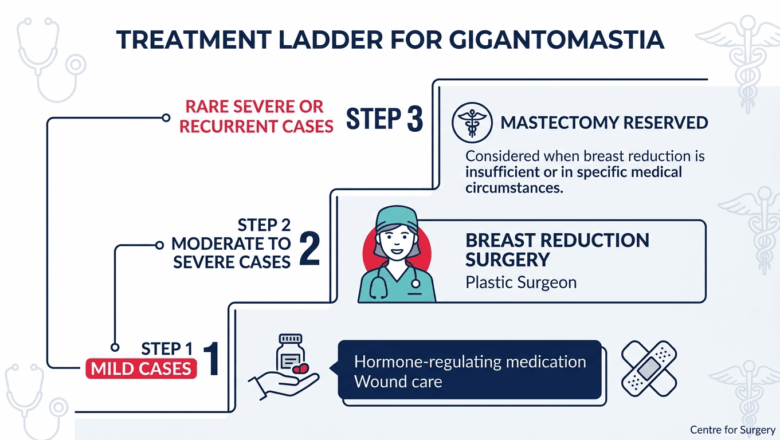
Gigantomastia treatment varies depending on symptom severity, the specific type involved, and how quickly breast tissue is growing.
Addressing Infections and Skin Issues
Where complications such as mastitis or ulcers are present, a healthcare provider may prescribe antibiotics and recommend proper wound care to promote healing before any further treatment is planned.
Hormonal Treatments for Gestational Gigantomastia
For gigantomastia that develops during pregnancy, a “wait-and-see” approach is often advised, since the condition frequently resolves at least partially once hormone levels stabilise after childbirth.
Hormone-Regulating Medications
Some providers prescribe medications that regulate hormone levels as a conservative first step, aiming to control or reduce excessive growth without surgical intervention.
Surgical Breast Reduction
Breast reduction surgery is generally considered the most effective treatment for gigantomastia. Your surgeon removes excess fat, glandular tissue, and skin to reduce breast size to a more manageable, comfortable level, repositioning the nipple and areola as needed. Where oversized breasts have caused significant sagging, a breast lift is often performed alongside the reduction to correct shape as well as size.
Mastectomy (Rare, Severe Cases)
In rare instances of severe or recurrent gigantomastia — particularly where the condition has returned after a previous breast reduction, which can happen with pregnancy- or puberty-driven cases — a mastectomy may occasionally be considered as a more definitive treatment. This is genuinely uncommon and reserved for cases where standard breast reduction hasn’t provided lasting resolution; it’s a decision made jointly between patient and surgeon after breast reduction and other options have been fully explored.
Breast reduction alleviates many of the physical symptoms of gigantomastia — neck and back pain, posture problems — while also mitigating skin irritation and infection risk, making it a comprehensive solution for the substantial majority of cases.
Does breast reduction actually relieve back pain?
This is the question most patients with macromastia arrive with, and it deserves an evidence-based answer rather than reassurance.
A systematic review and meta-analysis in the European Spine Journal ↗ pooled eight studies covering 1,008 patients and found improvement in back pain following reduction mammoplasty across all studies included.
The authors are notably careful about what that does and does not show, and it is worth repeating their caveats rather than just the headline. Heterogeneity between studies was very high. They describe the literature in this area as sparse, and conclude that the evidence is insufficient to recommend breast reduction as a treatment specifically aimed at back pain — calling instead for prospective studies that measure back pain as a defined outcome before and after surgery.
The practical reading: back pain relief is consistently reported after breast reduction and is one of the most common things patients tell us afterwards, but it should be understood as a likely benefit of reducing breast weight rather than as a guaranteed treatment for a spinal problem. If you have back pain from a separate cause — disc disease, for instance — reducing breast volume will not address it. Our guide to large heavy breasts and back pain covers this distinction in more detail.
What to Expect After Breast Reduction Surgery
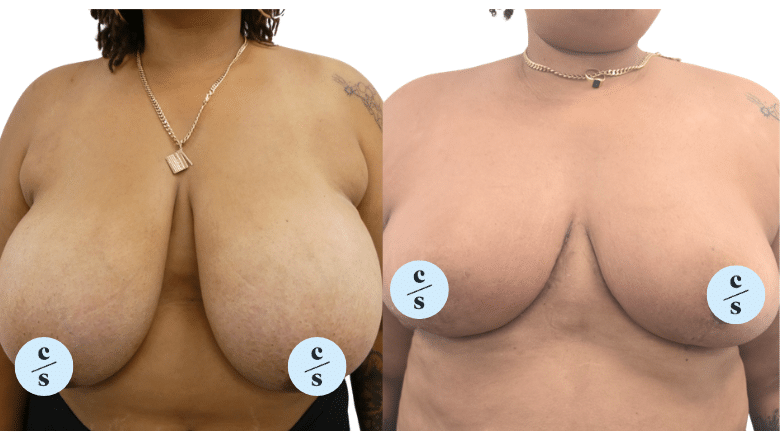
Breast reduction surgery for gigantomastia is performed by GMC-registered plastic surgeons at our CQC-regulated Baker Street facility, rated “Good” overall by the Care Quality Commission. It’s carried out under TIVA (Total Intravenous Anaesthesia) — delivered entirely intravenously without inhaled anaesthetic gases, for a smoother, faster recovery than a traditional general anaesthetic.
Immediate Recovery Period
- Pain and Discomfort: some pain or discomfort immediately after surgery is normal and usually well managed with prescription painkillers.
- Bruising and Swelling: common in the surgical area, generally beginning to subside after the first week.
- Bleeding: some wound oozing is expected; contact your care team immediately if bleeding is excessive.
Medications and Wound Care
- Antibiotics: typically prescribed to prevent infection.
- Pain Management: prescription or over-the-counter painkillers as advised.
- Wound Dressing: you’ll be guided on changing dressings at home; follow this guidance carefully.
Follow-Up Appointments
- Stitch Removal: usually within one to two weeks post-surgery.
- Monitoring: your care team assesses healing progress at each review.
Activity Levels and Recovery Timeline
Light activities are usually possible within a few days, though full recovery takes several weeks — listen to your body and avoid overexertion. Strenuous physical activity is generally avoidable for around six weeks; always confirm your personal timeline with your surgeon.
Noticeable Changes
- Immediate Size Reduction: visible right after surgery, though final size is only evident once swelling fully resolves, over several weeks.
- Pain Relief: reduced breast weight often brings immediate relief from back and neck pain, with posture improving over the following days.
- Clothing: many patients find it far easier to find well-fitting clothes.
- Emotional Wellbeing: alongside the physical benefits, many patients report a significant improvement in emotional and psychological wellbeing.
How Much Does Breast Reduction for Macromastia Cost?
Cost depends on the extent of tissue removal required, and gigantomastia cases are usually priced individually given the greater complexity involved compared with a standard reduction.
Current pricing is set out in full in our breast reduction cost guide, which covers every technique and what each package includes. Your exact quote is confirmed in writing after your consultation, once your surgeon has assessed your anatomy and planned the procedure. All packages include your surgeon’s fee, TIVA anaesthesia, theatre time at our CQC-regulated Baker Street facility, post-operative surgical bra, your surgeon’s direct number for the first 24 hours, wound checks, and follow-up reviews. Finance is available through Chrysalis Finance, subject to status.
Frequently Asked Questions About Gigantomastia
What is gigantomastia?
Gigantomastia is a rare condition involving excessive growth of breast tissue, occurring at any time but most commonly noticed during hormonal change such as puberty or pregnancy. It’s closely related to macromastia, with gigantomastia describing the more severe end of the same spectrum.
What’s the difference between macromastia and gigantomastia?
They describe the same underlying process at different severity levels — macromastia generally refers to excess breast tissue under roughly 2.5kg per breast, gigantomastia to more extreme cases beyond this threshold.
Is gigantomastia dangerous?
Generally benign, but gigantomastia can lead to a range of physical issues — back and neck pain, skin issues, breastfeeding complications. In rare, severe cases, urgent breast reduction surgery may be required.
What are gigantomastia symptoms?
Symptoms vary between individuals but commonly include back and neck pain, posture problems, skin issues such as rashes or ulcers, nipple numbness, and difficulties with breastfeeding.
Can it affect breastfeeding?
Yes, gigantomastia can make breastfeeding difficult or, in some cases, not possible, due to complications like breast infections, reduced milk production, and significant pain.
How is gigantomastia diagnosed?
Usually through a combination of medical history, physical examination, and imaging such as mammograms or ultrasounds. Your provider may also carry out hormonal blood tests to investigate an underlying cause.
What is gigantomastia treatment?
Treatment varies by severity and specific symptoms, ranging from hormone-regulating medication through to breast reduction surgery — the most effective treatment for the substantial majority of cases — with mastectomy reserved for rare, severe, or recurrent cases.
What is the medical term for large breasts?
The medical term for large breasts is macromastia, also called hypermastia or breast hypertrophy. Doctors usually use it for breasts heavy enough to cause symptoms such as neck, shoulder and back pain, rashes under the breast or bra-strap grooves. Gigantomastia is the rare, extreme form, with very rapid or excessive growth. Large breasts without symptoms are simply normal variation, not a medical condition.
Can large breasts be reduced without surgery?
Only partly. Losing weight can make large breasts smaller where much of their volume is fat, but it does not shrink glandular tissue, and no cream, supplement or exercise reliably reduces breast size. A professionally fitted bra, physiotherapy and good skin care under the breasts can ease the symptoms. For lasting relief from breast weight, surgery is the only dependable option; our guide on how to reduce breast size compares the choices.
Does breast reduction surgery leave a scar?
Breast reduction surgery does result in some scarring, an important consideration for anyone considering the procedure. Scars are commonly located on the underside of the breast and possibly around the areola, depending on technique. At Centre for Surgery, our surgeons use precise technique to minimise scar visibility as much as possible, though it isn’t possible to perform the surgery without leaving some scarring.
Scars typically appear red and slightly raised initially, fading into the surrounding skin over months, with the final appearance usually settling around one year post-surgery. Silicone gel or sheets and vitamin E ointment can help support scar fading.
Is breast reduction surgery effective for gigantomastia?
Yes — breast reduction is usually the most effective treatment for gigantomastia and can dramatically improve quality of life by alleviating physical symptoms.
How long is the recovery after surgery?
Recovery time varies, but most patients resume regular activities within a couple of weeks, with full recovery over several weeks. Your surgeon provides personalised post-operative guidance.
Why Choose Centre for Surgery for Gigantomastia Treatment?
Gigantomastia breast reduction at Centre for Surgery is performed by GMC-registered plastic surgeons at our purpose-built, CQC-regulated Baker Street clinic, rated “Good” overall.
Every package includes a thorough pre-operative consultation, a recommended two-week cooling-off period, full pre-operative medical assessment, a dedicated patient coordinator throughout, and structured aftercare through your follow-up reviews.
Book Your Consultation
📞 Phone: 020 7993 4849
📧 Email: contact@centreforsurgery.com
📍 Address: 95-97 Baker Street, London W1U 6RN
Your initial consultation is £100, redeemable against the cost of your procedure if you proceed. Finance is available through Chrysalis Finance — see our Finance Options page for details.

Related Articles
- When Do Breasts Stop Growing? Age, Stages and Options
- Saggy Boobs: What Causes Them and How to Fix Them
- Breast Reduction Recovery and Aftercare