

In this guide10 sections
- How to Reduce Breast Size: An Honest Guide
- Factors That Influence Breast Size
- What Issues Are Large Breasts Associated With?
- What Are the Best Treatments for Reducing Breast Size?
- How to Reduce Breast Size With Breast Reduction Surgery
- What Happens During Surgery for Breast Reduction?
- Benefits of Breast Reduction Surgery
- Is Breast Reduction Surgery the Best Solution for Large, Heavy Breasts?
- Breast Reduction Surgery FAQs
- How to Reduce Breast Size at Centre for Surgery
How to Reduce Breast Size: An Honest Guide
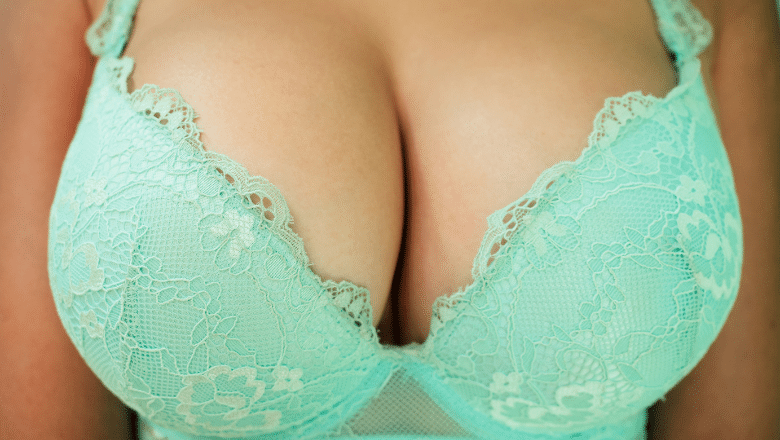
Having very large breasts can be a real pain, both physically and emotionally. For a lot of women in the UK, big breasts can make daily activities like walking, getting dressed, or even lifting things much more difficult. They can also cause soreness or discomfort in the back, neck, and shoulders. Clinically, this is sometimes referred to as macromastia — some research uses a cup size of D or larger as a rough proxy, though in practice surgeons define it more by breast volume and the degree of disproportion to the rest of the body than by cup size alone. Beyond the physical toll, it can also affect how you feel about yourself, and it might stop you from wearing the clothes you like.
This is why a lot of women look into how to reduce breast size — or, put more simply, how to make breasts smaller. This guide covers what genuinely works, including where breast reduction surgery fits in, and where lifestyle and non-surgical measures can and can’t help, with an honest account of the evidence behind each.
Factors That Influence Breast Size
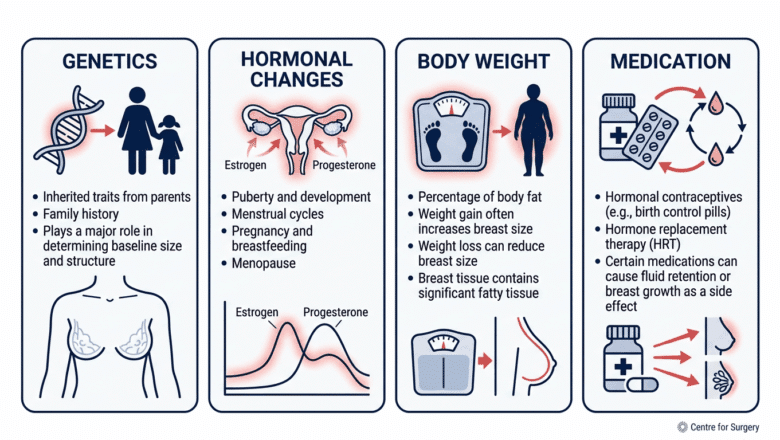
Breast size among women is influenced by genetics, hormones, and body weight. Genetics determine the fundamental aspects of breast tissue and size, inherited from one’s parents. Hormonal changes, influenced by stages like puberty, pregnancy, or menopause, can cause fluctuations in breast size due to the role of oestrogen. Body weight also affects breast size since breasts contain fatty tissue, meaning weight changes can lead to size variations.
Certain medications can impact breast size by affecting hormonal balance, particularly those related to oestrogen. Understanding these factors is essential for anyone looking to manage their breast size, whether through lifestyle changes or medical guidance — it helps set realistic expectations.
Genetics
Your genes play a role in many aspects of your physical appearance, including the size of your breasts. It’s not a guarantee that you’ll have the same breast size as other women in your family, but it does make it more likely.
Pregnancy and Breastfeeding
When you’re pregnant or breastfeeding, your body undergoes major hormonal shifts to support your baby, including enlargement of your breasts to prepare for milk production. Even after you’ve stopped breastfeeding, your breasts may remain larger than before, which can alter your body’s proportions.
Obesity
Your overall body fat can have a significant impact on your breast size. Women with a higher body fat percentage often have larger breasts due to increased fatty tissue, which can further contribute to back and spine strain from the added weight.
Medication
Some medicines can lead to an increase in breast size, most commonly hormonal birth control. Contraceptive pills, injections, and hormonal IUDs can cause breasts to enlarge due to hormones like oestrogen and progesterone, often via water retention, which is generally temporary. When you stop taking these medications, you may notice a reduction, typically from the loss of retained water and fat.
Understanding these factors can help you manage your breast size more effectively and make informed choices for your health and well-being.


What Issues Are Large Breasts Associated With?
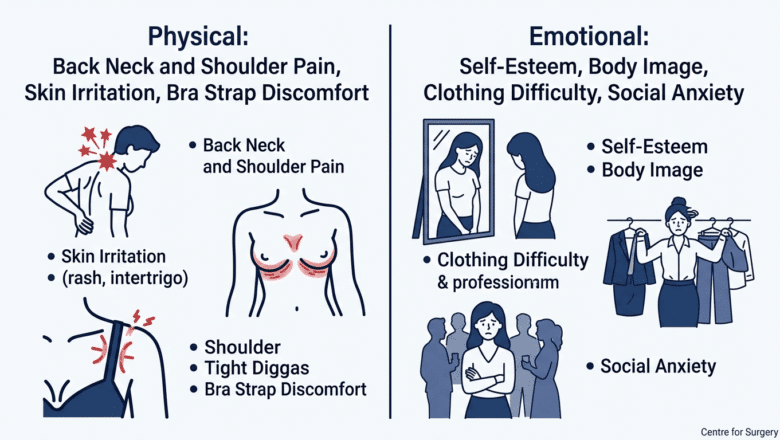
Living with large breasts brings challenges that extend beyond aesthetics, touching on both physical and emotional aspects of life.
Physical Discomfort and Health Concerns
A significant concern for many women with large breasts is the physical discomfort and health issues that can arise from the additional weight. This can lead to persistent pain in the back, neck, and shoulders, as the extra breast tissue exerts pressure on the spine, potentially affecting alignment and causing long-term discomfort.
Skin irritation underneath the breasts is another frequent issue, as moisture and friction against clothing creates an environment prone to rashes under the breast and fungal infections, particularly in hot weather.
The challenge of finding well-fitting bras is another obstacle. Large breasts require substantial support, and when bras fail to provide this, it can result in painful indentations from the straps digging into the skin. This can also limit physical activity, as the lack of proper support makes exercise uncomfortable.
Emotional and Social Impact
The emotional toll of living with large breasts can be just as significant as the physical issues. Many women experience a hit to their self-esteem and body confidence, feeling self-conscious about their appearance. The struggle to find flattering, well-fitting clothes can exacerbate these feelings.
Societal perceptions and the sexualisation of large breasts add another layer of complexity. Unwanted attention can affect social interactions and personal relationships, and the objectification some women experience can lead to social withdrawal, impacting mental wellbeing.
What Are the Best Treatments for Reducing Breast Size?
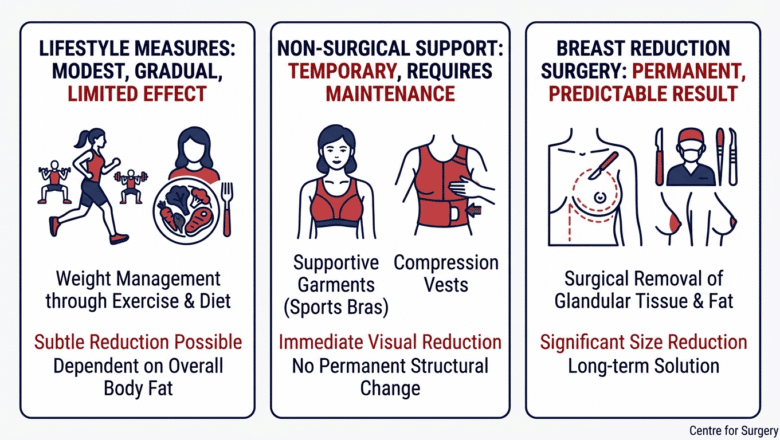
The journey to managing breast size encompasses a spectrum of approaches, from surgery to lifestyle measures. It’s worth being upfront: these approaches are not equally effective, and it’s important to have realistic expectations about what each can genuinely achieve.
Lifestyle Measures Worth Considering
While surgical intervention is the only way to achieve a definitive, predictable reduction in breast size, some lifestyle measures can make a modest difference — mainly by supporting general weight management, which has a knock-on effect on breast size since breasts contain fatty tissue.
Balanced Diet
What you eat affects your body fat generally, and by extension your breast size to some degree. A diet built around lean protein, fish, fruits, and vegetables, with less processed food, can support weight loss — but it won’t target breast tissue specifically over any other part of the body.
Regular Exercise
Exercise can help reduce overall body fat and tone the muscles beneath the breasts. Cardio exercise (power walking, cycling, stair climbing) supports fat loss, and strength training can improve chest muscle tone and posture, which can make breasts appear a little firmer and higher — though it does not reduce breast tissue volume directly. Aim for at least 30 minutes of exercise, four times a week, for the best supporting effect.
Supportive, Well-Fitted Clothing
A well-fitted bra provides proper support and can genuinely change how your breasts appear day-to-day. Darker colours and certain necklines can also visually minimise the appearance of bust size. This is a real, immediate option — but it changes appearance, not the underlying tissue.
A Note on Other “Natural Remedy” Claims
You’ll often see claims online that specific foods or supplements — flaxseed, green tea, ginger, egg white masks, and similar — can shrink breast tissue directly, usually via vague references to “hormone balance” or “skin tightening.” We’d rather be straightforward with you: there is no good evidence that any of these have a meaningful, targeted effect on breast size, and we don’t think it’s responsible to present them as though they do. A balanced diet and regular exercise support general health and can modestly affect body fat (including in the breast area, incidentally, not specifically), but none of these more specific remedies have been shown to reduce breast tissue in any predictable or lasting way.
Breast Binding as a Temporary Measure
Binding your breasts with wraps or tight-fitting compression garments can serve as a genuine short-term measure to reduce their apparent size and volume day-to-day, and can offer temporary relief from discomfort. It is not, however, a long-term solution, and prolonged or overly tight binding is not something we’d recommend without discussing it with your surgeon first.
For a permanent change, breast reduction surgery, performed by a specialist plastic surgeon, is the only option that reliably and predictably achieves it.
How to Reduce Breast Size With Breast Reduction Surgery

Breast Reduction Surgery is a medical procedure aimed at reducing the size, weight, and volume of the breasts. This surgery involves removing excess fat, glandular tissue, and skin. Alongside this, it often includes a lift of the breast tissue and repositioning of the nipple-areola complex to improve overall shape.
While the healing process and scarring can vary among patients, the primary reasons for undergoing breast reduction surgery are often medical, rather than solely cosmetic. These medical reasons can include:
- Back and neck pain related to posture issues
- Shoulder pain due to the weight of heavy breast tissue on the upper torso
- Indentations on the skin from bra straps
- Skin issues such as chafing or infections caused by large breasts
Our guide to relieving neck, shoulder and back pain from large breasts explains how reduction helps.
It’s crucial for patients to be fully informed about the risks associated with any surgical procedure, as outcomes can differ from person to person. Always consult with a plastic surgeon for a thorough understanding of what the surgery involves, the associated risks, and whether it’s the right option for you.
What Happens During Surgery for Breast Reduction?
During a breast reduction procedure at Centre for Surgery in London, several key steps are involved to ensure a successful outcome tailored to your specific goals. The operation is performed under TIVA (Total Intravenous Anaesthesia), as a day case.
The procedure generally takes between two to three hours, although exact duration varies by individual circumstances. The main objectives are removal of excess breast tissue, reshaping of the breasts, and repositioning of the nipples to achieve a balanced, proportionate appearance.
Once surgery commences, your surgeon carefully excises the excess breast tissue using specialised techniques, then reshapes the breasts and elevates the nipple-areola complex for an enhanced aesthetic result, in line with your pre-discussed goals.
After surgery, you’ll be fitted with a supportive bra to assist healing and comfort, along with guidance on wearing it as advised for optimal recovery. Once your medical team is satisfied with your immediate post-surgical condition, you’ll return home the same day.
You can see real results in our breast reduction before and after photos.
Benefits of Breast Reduction Surgery
Breast reduction surgery offers a range of aesthetic and functional benefits that can significantly improve quality of life.
Aesthetic Improvements:
- More Proportionate Breasts: Following the procedure, your breasts will be more shapely and less droopy, resulting in more balanced proportions.
- Breast Contouring: Lighter, more rounded or teardrop-shaped breasts, which can improve how clothing sits.
- Nipple Reshaping: The surgery includes the possibility of resizing and repositioning the nipples.
- Improved Nipple Positioning: The procedure inherently uplifts the breasts and relocates the nipples to a more central position.
Functional Benefits:
- Increased Mobility: Smaller, lighter breasts make it easier to move, lift objects, and engage in physical activity.
- Expanded Wardrobe Options: A wider range of clothing styles and sizes will suit you well.
- Enhanced Physical Exercise: Reduced breast size means less bouncing and discomfort during activity.
- Improved Posture: Smaller breasts can alleviate back and neck strain, improving posture.
Comfort and Quality of Life:
- Reduced Physical Discomfort: Less weight on the chest reduces back pain, shoulder pain, and bra strap indentations.
- Less Skin Issues: Reduced breast volume minimises chafing and infections from skin-on-skin contact.
- Improved Bra Comfort: Smaller breasts make it easier to find well-fitting, comfortable, supportive bras.
Psychological Benefits:
- Enhanced Self-Esteem: Many patients report feeling more confident and comfortable in their own skin post-surgery.
- High Satisfaction Rates: Breast reduction is often cited as one of the most positively life-changing cosmetic procedures.
Is Breast Reduction Surgery the Best Solution for Large, Heavy Breasts?
Breast reduction surgery can be a highly effective solution for those with large, heavy breasts causing discomfort, pain, or other health-related issues. Here are some honest points to weigh up:
Weight Loss Limitations:
Weight loss can sometimes reduce breast size, but it doesn’t guarantee a proportional reduction and may not yield the results you want. For patients with denser, more glandular breast tissue rather than predominantly fatty tissue, weight loss may have limited impact on breast size specifically.
Temporary Measures:
Breast binding or compression garments can offer real, temporary relief, but they don’t address the underlying tissue volume and aren’t a long-term fix.
Professional Evaluation:
A specialist plastic surgeon can provide a comprehensive evaluation to determine whether you’re a good candidate for breast reduction surgery, discussing the procedure, risks, and expected outcomes in detail.
Tailored Solutions:
Surgery can be customised to your specific needs and body composition, allowing for reshaping and lifting alongside the size reduction.
Long-term Relief:
Breast reduction offers a genuinely permanent solution to the physical discomfort caused by large breasts, unlike lifestyle or temporary measures.
Emotional Well-being:
The emotional and psychological benefits shouldn’t be underestimated — many patients report increased self-esteem and wellbeing after the procedure.
So if non-surgical methods haven’t given you satisfactory results, or if your breast size is causing significant physical or emotional distress, breast reduction surgery may well be the most appropriate option.
Breast Reduction Surgery Can Correct Large, Asymmetric Breasts
Breast reduction surgery can offer a multifaceted approach, making breasts smaller and lighter while also addressing asymmetry and misshapen or elongated nipples.
Where one breast is noticeably larger, breast asymmetry correction can be planned as part of the reduction.
No two breasts are identical, and while slight differences are common, some individuals experience more significant asymmetry affecting appearance and comfort. Your surgeon can plan the operation to adjust for these differences, aiming for more evenly matched breasts in size, weight, shape, and position.
Breast tissue removed during the procedure is also sent for histological examination as standard practice.
Breast Reduction Surgery FAQs
What is breast reduction surgery?
Breast reduction surgery removes excess fat, glandular tissue, and skin from the breasts to make them smaller, lighter, and more proportionate to the rest of your body. It often includes a breast lift.
Can You Have a Breast Reduction and Breast Lift at the Same Time?
Yes. This dual procedure decreases the size and weight of the breasts while simultaneously lifting and reshaping them, resulting in a more balanced, proportionate profile — a comprehensive approach for those seeking relief from physical discomfort alongside a more youthful contour.
Will Losing Weight Result in Smaller Breasts?
The impact of weight loss on breast size varies between individuals, depending on body composition. As the body sheds fat, breasts (partly composed of fatty tissue) may decrease in size too, but the degree varies and isn’t guaranteed to be proportional.
Who is an ideal candidate for breast reduction?
Ideal candidates are those experiencing physical or emotional discomfort due to overly large breasts, including back or neck pain, skin irritation, poor posture, or limited physical activity due to breast size and weight.
Is breast reduction surgery painful?
Some discomfort is expected immediately after surgery, but pain is managed effectively with medications prescribed by your surgeon. Most patients find discomfort subsides within a week.
How long is the recovery period?
The recovery period after breast reduction generally ranges from two to six weeks. You’ll be advised to take time off work and avoid strenuous activity during this time.
Will I have scars after breast reduction?
Scarring is an inevitable part of any surgical procedure. Our surgeons use techniques to minimise scarring and place incisions in less visible areas where possible.
Our guide to what breast reduction scars look like shows how they change over time.
Are the results permanent?
Results are generally long-lasting, but weight gain, pregnancy, and ageing can affect breast size and shape in the future.
Will my ability to breastfeed be affected?
This varies between individuals and depends largely on the surgical technique used. Discuss this with your surgeon if you plan to breastfeed in future.
Is breast reduction covered by private health insurance in the UK?
It may be covered if deemed medically necessary. If the procedure is purely cosmetic, it’s unlikely to be covered.
How to reduce breast size naturally?
A combination of weight management and regular exercise can support modest, gradual change as part of overall body composition — but as covered above, there’s no reliable “natural” method that reduces breast tissue specifically or dramatically. See our honest breakdown above for what lifestyle measures can and can’t realistically achieve.
How to make breasts smaller?
Beyond surgery, there’s no reliable way to make breasts smaller quickly or dramatically. A noticeable reduction in breast size within a week, without surgery, isn’t realistic — natural and non-invasive methods take time and consistent effort, and their effect is modest at best. For an immediate, temporary appearance change, a well-fitted minimiser bra can compress and redistribute breast tissue for a sleeker silhouette under clothing — a genuine quick option for a specific outfit or occasion, though not a lasting change.
How to Reduce Breast Size at Centre for Surgery
At Centre for Surgery, breast reduction is performed by GMC-registered plastic surgeons, at our CQC-regulated Baker Street facility, rated Good overall, under TIVA as a day case. Our medical content is reviewed by Specialist Plastic Surgeon Dr Spyridon Vlachos (GMC 7522950).
If you’re considering a breast reduction and want to know more, we invite you to book a consultation with one of our surgeons.
Phone: 020 7993 4849
Email: contact@centreforsurgery.com
Address: 95-97 Baker Street, London W1U 6RN