


In this guide16 sections
- Key Points
- Does a Facelift Improve Mental Health and Self-Esteem?
- Are People Happy After a Facelift? What FACE-Q Studies Show
- Does a Facelift Boost Confidence? The Self-Esteem Evidence
- Why Do People Have a Facelift? Common Motivations
- How Do Other People See You After a Facelift?
- Can a Facelift Cause Depression? Emotions During Recovery
- Do People Regret Having a Facelift? Who Is at Risk of Dissatisfaction?
- Body Dysmorphic Disorder and Facelift Surgery
- How Are Patients Assessed Before a Facelift?
- What Are Realistic Expectations for a Facelift?
- How Long Do the Benefits of a Facelift Last?
- How to Prepare Emotionally for a Facelift
- Frequently Asked Questions: Facelift and Mental Health
- Facelift in London
- References
Key Points
- Do people feel better after a facelift? Most studies that ask patients report high satisfaction with their appearance and their decision. The evidence is mostly short-term and often from small studies, so it supports modest, realistic expectations rather than promises.
- Does a facelift raise self-esteem? Not for everyone. In one prospective study, average self-esteem scores barely changed six months after surgery, even though patients felt about nine years younger. Those who started with low self-esteem gained most.
- How do other people see you? In observer studies, people shown photographs rated patients as younger, more attractive and healthier after a facelift, by a few years of apparent age.
- Is low mood normal during recovery? Yes. Swelling, bruising and a face that looks unfamiliar can cause anxiety and doubt in the first one to two weeks. For most people it passes as the swelling settles.
- Who is at risk of being unhappy afterwards? Studies link dissatisfaction to unrealistic expectations and body dysmorphic disorder (BDD), which affects roughly one in five people seeking cosmetic surgery in pooled studies. Screening and an honest consultation matter.
- How long do the benefits last? A facelift does not stop ageing, so the face keeps ageing from its new starting point. Satisfaction data beyond five years are limited.
Few operations are as closely tied to how a person feels about themselves as a facelift. People rarely ask only about scars and recovery. They ask whether they will feel more like themselves, whether others will notice, and whether they might regret it. This guide sets out what research says about the psychological impact of facelift surgery, where the evidence is strong and where it is thin, and how to judge whether the timing is right for you.
It is written to inform rather than to persuade. A facelift is an elective operation, and the right decision may be to wait, to choose a smaller treatment, or not to proceed. If you are still weighing up your options, our guide to facial rejuvenation treatment options compares surgical and non-surgical routes, and four things worth knowing before a facelift covers the practical side that this article leaves out.
Does a Facelift Improve Mental Health and Self-Esteem?
The honest answer is that facelifts reliably change how people feel about their appearance, but the effect on wider mental health is much less certain. A 2025 systematic review in the Journal of Plastic, Reconstructive & Aesthetic Surgery looked only at prospective studies with a control group. It found short-term improvements after cosmetic surgery in satisfaction with the treated area, self-esteem, and sexual and physical wellbeing, but limited and inconclusive evidence for mental health, overall body image, quality of life and social functioning. The authors rated the quality of the studies as poor and noted that very few followed patients beyond six months[1].
That does not mean patients are wrong when they say they feel better. It means the research tools are still catching up with the experience. Most facelift studies are small, come from a single surgeon’s practice, and rely on questionnaires that only some patients return. The sections below take the strongest of that evidence and say plainly what each study can and cannot tell you.
Are People Happy After a Facelift? What FACE-Q Studies Show
Most of what we know about satisfaction comes from the FACE-Q, a validated questionnaire that asks patients to score their appearance, their quality of life and their experience of care from 0 to 100, with higher scores meaning greater satisfaction. A 2022 narrative review in Aesthetic Plastic Surgery found 70 studies that had used the FACE-Q Aesthetic module, with a growing body of evidence on facelift surgery[2].
In a 2015 FACE-Q study of 53 facelift patients in Plastic and Reconstructive Surgery ↗, average scores were high for facial appearance (80.7), social confidence (90.4), psychological wellbeing (92.8) and satisfaction with the decision to have surgery (90.5). On average, patients felt 6.9 years younger than their real age[3]. A larger series published in 2017 asked 200 patients who had had a high SMAS facelift between 2005 and 2015 to complete eight FACE-Q scales. Satisfaction was high, and patients whose facelift was combined with other facial rejuvenation procedures reported higher satisfaction than those who had a facelift alone[4].
Both studies have limits that matter. Only half (53 of 105) and 38% of invited patients responded, and people who are pleased with their result are more likely to reply. Both were run by surgeons evaluating their own patients. Taken together they suggest that satisfaction is common, not that it is guaranteed.
Does a Facelift Boost Confidence? The Self-Esteem Evidence
Confidence and self-esteem are related but not the same, and the research treats them differently. A prospective study of 59 facelift patients in JAMA Facial Plastic Surgery ↗ used the Rosenberg Self-Esteem Scale before surgery and six months afterwards. Across the group, scores barely moved (24.3 before, 24.6 after), even though patients believed they looked an average of 8.9 years younger. The pattern underneath was more interesting. People who began with low self-esteem improved significantly, people with average self-esteem did not change, and people who began with high self-esteem scored slightly lower afterwards. The authors concluded that patients show a wide range of psychological reactions to a facelift[5].
It is a small study from one practice, so it should not be over-read. But it fits a sensible reading of the wider evidence: a facelift can change how you feel about your face without changing how you feel about yourself. People who are already comfortable in themselves tend to describe the result as a pleasant refinement. Those hoping the operation will settle deeper unhappiness are the most likely to be disappointed.
Why Do People Have a Facelift? Common Motivations
Reasons for having a facelift are rarely only about vanity. Motivations vary, but several themes recur:
- A mismatch between how you feel and how you look. Many people are fit, active and working well into their sixties, yet see a tired or stern expression in photographs that does not match their energy.
- A life transition. Divorce, bereavement, children leaving home or a change of career are common moments when people reassess their appearance. Surgery during a period of acute grief or distress is a situation where a pause is often wise.
- Work and social visibility. Video calls and photographs make some people more aware of jowls and neck laxity than they were before.
- Wanting to look rested rather than younger. Many people say they want a refreshed version of themselves, not a different face.
Women and men often approach this differently: women commonly report noticing changes earlier, while men often wait longer. Our male facelift page explains how the operation is adapted for men. Our guide to facial ageing at 30, 40 and 50 explains which changes surgery can and cannot address, and the right age for a facelift covers timing.
A useful test is whether your motivation is internal or external. Wanting your appearance to match how you feel is a very different starting point from wanting to change how a partner, an employer or a stranger treats you.
How Do Other People See You After a Facelift?
Social perception is one of the better-studied areas, because it can be tested objectively. In a 2017 web-based survey of 483 people in JAMA Facial Plastic Surgery ↗, observers who had no idea what the study was about were shown before or after photographs of 13 women. Those shown after photographs rated the women as about 3.7 years younger and as more attractive, successful and healthy on 100-point scales[6]. A second experiment from the same group, with 504 participants, found a comparable shift in estimated age (4.6 years younger) and in ratings of attractiveness, success and health for facelift and upper facial rejuvenation surgery[7].
A 2021 systematic review of 24 observer studies across facial procedures also found that the most reproducible effects were on perceived age, attractiveness, sociability, relationship success and competence at work[8].
Two points are worth keeping in mind. The apparent age difference is a few years, not a decade, and it is smaller than patients usually estimate themselves. In a 2021 study of 50 facelift patients, algorithms estimated an age reduction of 4.3 years, while the patients’ own estimate was 6.7 years. The same study found that higher patient satisfaction went with a larger measured age reduction[9]. In other words, the change people feel is usually larger than the change others see, which is not a problem as long as you know to expect it.
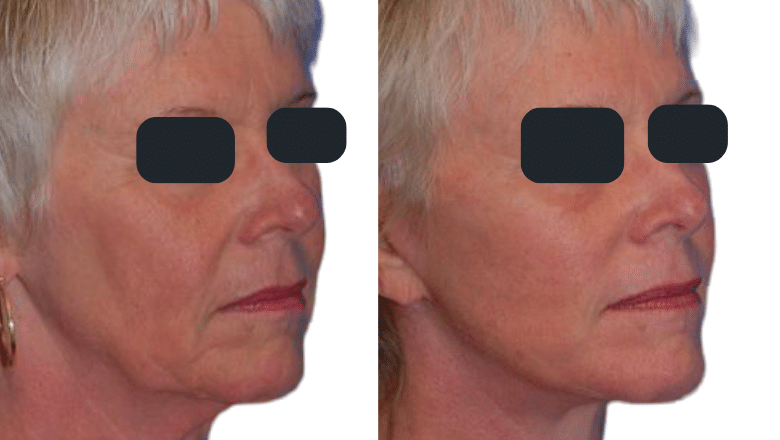
Before and after photographs can help you judge whether the degree of change looks like what you want. Our gallery of facelift before and after photos shows results from our own patients, and our guide to the natural looking facelift result explains what separates a refreshed look from an overdone one.
Can a Facelift Cause Depression? Emotions During Recovery
Feeling low, anxious or doubtful at some point after a facelift is common, and it is usually temporary. This is sometimes called the post-operative blues, and it has understandable causes:
- Your face looks worse before it looks better. Swelling, bruising, tightness and unevenness peak at around days two to three. A face that does not look like yours can be unsettling even when you were well prepared.
- Disbelief and second thoughts. Many people describe a stage, often in the first fortnight, when they question the decision. It tends to ease as the swelling settles.
- Tiredness, limited activity and social withdrawal. Resting for a week or two, sleeping propped up and avoiding company can all lower mood.
- Anaesthesia, pain relief and disturbed sleep. These can affect mood in the first days.
There is little published research that follows facelift patients’ mood day by day, so the timings above come from general recovery experience rather than from studies, and they vary. What helps is knowing what is normal. Our guide to facelift recovery sets out the timeline in detail, and how to prepare for facelift surgery covers practical steps such as arranging company, planning the first week and agreeing in advance who will reassure you.
Low mood that is persistent, deepening or accompanied by hopelessness is different from the blues. If you feel this way after surgery, contact the clinic, speak to your GP, or use NHS 111. If you ever have thoughts of harming yourself, call 999 or go to A&E. Mood problems after surgery are treatable, and you should not wait for them to pass on their own.
Do People Regret Having a Facelift? Who Is at Risk of Dissatisfaction?
Regret is not the typical finding in the facelift studies above, where satisfaction with the decision to have surgery was high. But no study can say that nobody is disappointed, and the research on what predicts dissatisfaction across aesthetic surgery is fairly consistent. A 2026 comprehensive review in Aesthetic Plastic Surgery concluded that body dysmorphic disorder is a consistent negative predictor of satisfaction and is often a contraindication to surgery. Body image dissatisfaction, unrealistic expectations and certain personality traits such as high neuroticism also went with lower satisfaction, and the gap between expectation and reality was a core mediator[10].
In practical terms, the factors that raise the chance of disappointment include:
- expecting the operation to fix a relationship, job or low mood
- wanting to look like a particular person or a much younger age than your bone structure allows
- having surgery in the middle of a crisis, such as a recent bereavement or separation
- being preoccupied with a small feature that other people do not notice
- pressure from someone else to change
None of these rules anyone out, and plenty of people in difficult periods go on to be pleased with their result. They are reasons to slow down, talk it through and, sometimes, wait.
Body Dysmorphic Disorder and Facelift Surgery
Body dysmorphic disorder, or BDD, is a mental health condition in which a person becomes intensely preoccupied with a perceived flaw in their appearance. The flaw is usually minor or invisible to others, but it causes real distress and can take up hours of the day. It is not vanity, and it is treatable.
BDD is more common among people who seek cosmetic surgery than in the general population. A 2022 meta-analysis of 48 studies and 14,913 people requesting cosmetic surgery estimated a prevalence of 19.2%[11], and a 2024 meta-analysis of 65 studies and 17,107 plastic surgery patients estimated 18.6%[12]. These figures cover all cosmetic procedures, with many studies in rhinoplasty candidates, so they should not be read as the rate for facelift patients. They are a reason why screening is a standard part of responsible practice.
Surgery is not a treatment for BDD, and the concern often shifts to another feature or persists after the change. The usual treatment is psychological, most often cognitive behavioural therapy, sometimes with medication. If you recognise the pattern, for example checking mirrors for hours, avoiding photographs, or feeling no relief however many times a feature is changed, the first step is to speak to your GP. The BDD Foundation’s guide to NHS services for BDD ↗ explains how to get a referral. A good surgeon will take that conversation seriously rather than operating.
How Are Patients Assessed Before a Facelift?
A responsible consultation covers more than anatomy. The same 2026 review recommends standardised screening, expectation management and psychological support around the time of surgery, using validated tools such as the BDD questionnaire and the FACE-Q[10]. In practice, a thorough facelift consultation covers:
- Your reasons. Why now, what is bothering you, and what you hope will be different.
- Your history. Previous or current anxiety, depression, eating disorders, or treatment for body image concerns. Being open about this is a safety measure, not a barrier.
- Your expectations. Looking at your own photographs, discussing what a facelift can and cannot change, and agreeing what a good result would look like for you.
- Your circumstances. Recent life events, support at home, and whether you have the time to recover without pressure.
- Time to reflect. Cosmetic surgery should never be rushed. Taking time between consultation and decision is good practice, and a second consultation is reasonable.
Our guide to the questions to ask before getting a facelift lists what to ask the surgeon, and it is equally acceptable to ask yourself the harder questions in this article.
What Are Realistic Expectations for a Facelift?
A facelift is designed to reposition sagging tissue in the lower face, jawline and neck. It does not change the shape of your nose, the colour of your skin, or the way you naturally smile, and it does not stop further ageing. Realistic goals are a refreshed, rested version of yourself, a better-defined jawline and softer jowls.
Depending on your anatomy, your surgeon may suggest a different technique or a combination. Our guides to the types of facelift and deep plane vs SMAS facelift explain the choices, and our neck lift and mini facelift pages cover common alternatives and add-ons. Every operation carries risks, which are set out in our guide to facelift complications. Knowing the full picture, including the less likely outcomes, is part of being emotionally ready.
How Long Do the Benefits of a Facelift Last?
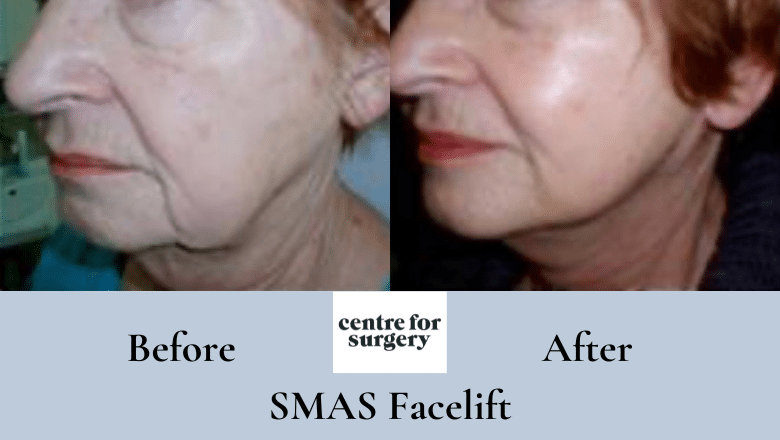
A facelift turns the clock back from the day you have it, but it does not stop it. Your face continues to age from its new starting point, so a person who looks refreshed at 55 will still look their age at 65, though usually better than they would have without surgery. How long the difference is visible depends on technique, skin quality, genetics, smoking, weight changes and sun exposure.
The evidence on how long the effects last is thinner than many people assume. In a review of 25 years and 1,089 facial surgery patients, surgeons at one centre reported that long-term follow-up was difficult beyond three years, and that results lasted better in some patients than others, with fuller necks relapsing more often[13]. In the psychology literature, the picture is similar. The 2025 systematic review noted that very few studies follow patients beyond six months[1]. Our guide to how long a facelift lasts gives typical durations by technique.
Patients who have had a facelift sometimes find that the satisfaction they feel after the first year gives way to a more matter-of-fact view as the result becomes normal. That is not disappointment. It is what happens when a change becomes familiar.
How to Prepare Emotionally for a Facelift
Preparation helps recovery. Practical steps that many patients find useful include:
- Be clear on your reasons. Write down why you want a facelift and what you hope it will change. If the list includes things surgery cannot do, discuss them with your surgeon.
- Choose your timing. Avoid scheduling surgery during a period of major stress or loss, or just before an important event.
- Plan your recovery. Arrange a friend or family member to stay, and agree in advance that you may feel low or doubtful for a while.
- Keep your own before photographs. The face you see in the mirror at week one is not the final result, and earlier photographs help you judge progress honestly.
- Ask for support. If anxiety or low mood is already part of your life, tell your surgeon and your GP before surgery so that support is in place.
Our guide to recovery after cosmetic surgery covers advice that applies to every operation.
Frequently Asked Questions: Facelift and Mental Health
Do people feel happier after a facelift?
Most studies that ask patients report high satisfaction with their appearance and with their decision to have surgery. In one FACE-Q study, patients scored psychological wellbeing at an average of 92.8 out of 100, though only half of those invited responded[3]. Wider reviews find the evidence for lasting mental health benefits limited[1].
Can a facelift cause depression?
A facelift is not known to cause clinical depression, but low mood and anxiety in the first one to two weeks are common as swelling and bruising settle. Persistent or worsening low mood, or any thoughts of self-harm, need prompt medical help from your GP, NHS 111 or, in an emergency, 999.
Do most people regret plastic surgery?
Studies of facelift patients report high satisfaction with the decision, so regret is not the usual finding. Disappointment is more likely when expectations are unrealistic or when body dysmorphic disorder is present[10]. Responders to satisfaction surveys may also be happier than non-responders.
What should I do if I am unhappy with my plastic surgery results?
Wait until swelling has settled, which can take three to six months, because early appearance is not the final result. Then speak to your surgeon about what bothers you. If you are distressed or preoccupied, speak to your GP as well. Our facelift recovery guide explains the timeline.
Are cosmetic procedures addictive?
Cosmetic surgery is not an addiction in the clinical sense. However, a constant urge to have more procedures, or no lasting relief after each one, can be a sign of body dysmorphic disorder. That is a treatable condition, and a GP is the right first step[11].
How can you tell if someone has had a facelift?
Signs of an overdone or older-style lift include skin pulled tightly across the cheeks, a surprised or windswept look, and distorted ears or hairline. Modern techniques reposition deeper tissue rather than only pulling skin, to look natural. Our guide to the natural looking facelift result explains how.
How long does a facelift last?
A facelift does not stop ageing, so the face keeps ageing from its new starting point. Longer-term follow-up data are limited, and results vary with technique, skin quality and lifestyle[13]. Our guide to how long a facelift lasts gives typical durations.
Facelift in London
If you are considering a facelift in London, a consultation at our CQC-regulated Baker Street hospital is a chance to talk through your reasons, your history and your expectations before any decision is made. The NHS guidance on facelift surgery ↗ is also a useful independent starting point.
Phone: 020 7993 4849 | Address: 95–97 Baker Street, Marylebone, London W1U 6RN
Contact us to schedule a consultation
References
- Garbett KM, Paraskeva N, White P, et al. The psychosocial outcomes following cosmetic surgery are largely unknown: a systematic review. Journal of Plastic, Reconstructive & Aesthetic Surgery 2025;104:282–297. doi:10.1016/j.bjps.2025.03.013 ↗
- Ottenhof MJ, Veldhuizen IJ, Hensbergen LJV, Blankensteijn LL. The use of the FACE-Q Aesthetic: a narrative review. Aesthetic Plastic Surgery 2022;46(6):2769–2780. doi:10.1007/s00266-022-02974-9 ↗
- Sinno S, Schwitzer J, Anzai L, Thorne CH. Face-lift satisfaction using the FACE-Q. Plastic and Reconstructive Surgery 2015;136(2):239–242. doi:10.1097/PRS.0000000000001412 ↗
- Kappos EA, Temp M, Schaefer DJ, et al. Validating facial aesthetic surgery results with the FACE-Q. Plastic and Reconstructive Surgery 2017;139(4):839–845. doi:10.1097/PRS.0000000000003164 ↗
- Jacono A, Chastant RP, Dibelius G. Association of patient self-esteem with perceived outcome after face-lift surgery. JAMA Facial Plastic Surgery 2016;18(1):42–46. doi:10.1001/jamafacial.2015.1460 ↗
- Nellis JC, Ishii M, Papel ID, et al. Association of face-lift surgery with social perception, age, attractiveness, health, and success. JAMA Facial Plastic Surgery 2017;19(4):311–317. doi:10.1001/jamafacial.2016.2206 ↗
- Bater KL, Ishii LE, Papel ID, et al. Association between facial rejuvenation and observer ratings of youth, attractiveness, success, and health. JAMA Facial Plastic Surgery 2017;19(5):360–367. doi:10.1001/jamafacial.2017.0126 ↗
- Shah P, Rieder EA. Observer-reported outcomes and cosmetic procedures: a systematic review. Dermatologic Surgery 2021;47(1):65–69. doi:10.1097/DSS.0000000000002496 ↗
- Zhang BH, Chen K, Lu SM, et al. Turning back the clock: artificial intelligence recognition of age reduction after face-lift surgery correlates with patient satisfaction. Plastic and Reconstructive Surgery 2021;148(1):45–54. doi:10.1097/PRS.0000000000008020 ↗
- Li X, Wang X, Zhao H, Yi K. The correlation between preoperative psychological state and postoperative satisfaction in aesthetic surgery: a comprehensive review. Aesthetic Plastic Surgery 2026;50(19):8121–8130. doi:10.1007/s00266-026-05964-3 ↗
- Salari N, Kazeminia M, Heydari M, et al. Body dysmorphic disorder in individuals requesting cosmetic surgery: a systematic review and meta-analysis. Journal of Plastic, Reconstructive & Aesthetic Surgery 2022;75(7):2325–2336. doi:10.1016/j.bjps.2022.04.098 ↗
- Kaleeny JD, Janis JE. Body dysmorphic disorder in aesthetic and reconstructive plastic surgery: a systematic review and meta-analysis. Healthcare (Basel) 2024;12(13):1333. doi:10.3390/healthcare12131333 ↗
- Rohrich RJ, Narasimhan K. Long-term results in face lifting: observational results and evolution of technique. Plastic and Reconstructive Surgery 2016;138(1):97–108. doi:10.1097/PRS.0000000000002318 ↗
Related Articles
- What is a Deep Plane Facelift?
- What Signs of Ageing Can a Facelift and Necklift Correct?
- What Lifestyle Factors Can Affect Signs of Facial Ageing?
- What Causes Nasolabial Folds?
- Weak Chin: What Is It And How Can it Be Fixed







