

In this guide17 sections
- Key Points
- How Do I Prepare for Facelift Surgery?
- What Should I Do Before a Facelift Consultation?
- How Long Before a Facelift Should I Stop Smoking?
- What Medicines and Supplements Should I Stop Before a Facelift?
- Can I Drink Alcohol Before a Facelift?
- How Do I Get Healthy Before a Facelift?
- Does the Type of Facelift Change How I Prepare?
- How Do I Prepare Mentally for a Facelift?
- Facelift Before and After: What Results Can I Realistically Expect?
- What Are the Risks I Should Know About Before a Facelift?
- How Do I Get My Home Ready for Facelift Recovery?
- What Should I Do the Week and Night Before a Facelift?
- What Happens on the Day of Facelift Surgery?
- Frequently Asked Questions
- Facelift Surgery in London
- References
Key Points
- How to prepare for facelift surgery: stop all nicotine four weeks before and four weeks after, stop aspirin, anti-inflammatories and blood-thinning supplements two weeks before (only where your doctor agrees), avoid alcohol for a week, and arrange a responsible adult to stay with you for 24 hours.
- Nicotine is a major preventable risk. Smoking restricts blood flow to the skin that is lifted, and it is a well-documented cause of skin loss after a facelift.[1]
- Bleeding under the skin (haematoma) is the commonest facelift complication. Raised blood pressure, aspirin and anti-inflammatory use and smoking all increase the risk.[4]
- Get your home ready before surgery: extra pillows, soft meals, front-fastening tops and a helper, because you will sleep with your head raised for about two weeks.
- Allow two weeks off work and from driving and flying. A mini facelift or one-stitch facelift recovers faster than a full facelift.
- Your surgical team’s written instructions come first. This guide explains the reasons behind the usual advice so that you can ask better questions at your consultation.
If you are planning a facelift, the weeks before surgery matter almost as much as the operation itself. Good preparation lowers the chance of bleeding, skin healing problems and a difficult first fortnight at home. This guide sets out how to prepare for facelift surgery step by step: what to stop and when, how to get healthy, how to set up your home and what happens on the day.
The advice applies to a full facelift with a neck lift and, with small differences, to a mini facelift. Our wider guide to preparing for cosmetic surgery covers the general points, and our facelift recovery guide picks up where this one ends. If you are still deciding whether surgery is right for you, start with what to expect from a facelift.
How Do I Prepare for Facelift Surgery?
Preparation falls into four areas: your health, your medicines, your home and your expectations. The health and medicine steps lower surgical risk. The home and expectation steps make the recovery easier to cope with. None of it is complicated, but some of it needs weeks of lead time, which is why it is worth reading this guide well before your surgery date.
A typical timeline looks like this:
- At your consultation: a full medical history, a review of every medicine and supplement you take, and a discussion of the technique that suits your face.
- Two weeks after consent: a cooling-off period, so that you can reflect before committing.
- Four weeks before: stop all nicotine, including vaping, patches and gum.
- Two weeks before: stop aspirin, anti-inflammatories and blood-thinning supplements, where your doctor agrees.
- One week before: avoid alcohol and finish setting up your home.
- The night before: wash your hair, lay out your clothes and follow your fasting instructions.
What Should I Do Before a Facelift Consultation?
The consultation is where preparation starts. Bring an accurate list of everything you take, including prescribed medicines, over-the-counter painkillers, vitamins, herbal products and any dermal fillers or anti-wrinkle injections you have had. Note any history of high blood pressure, bleeding or clotting problems, previous facial surgery, scarring problems and allergies.
It also helps to arrive with a clear idea of what bothers you. Jowls, a heavy jawline and loose neck skin point towards a facelift with a neck lift, while early jowling alone may suit a mini facelift. Our guides to the types of facelift and to facelift vs mini facelift explain how the choice is made, and the six questions to ask before getting a facelift make a useful checklist for the appointment. If you are unsure about timing, our guide to facelift age explains why age matters less than the degree of skin laxity.
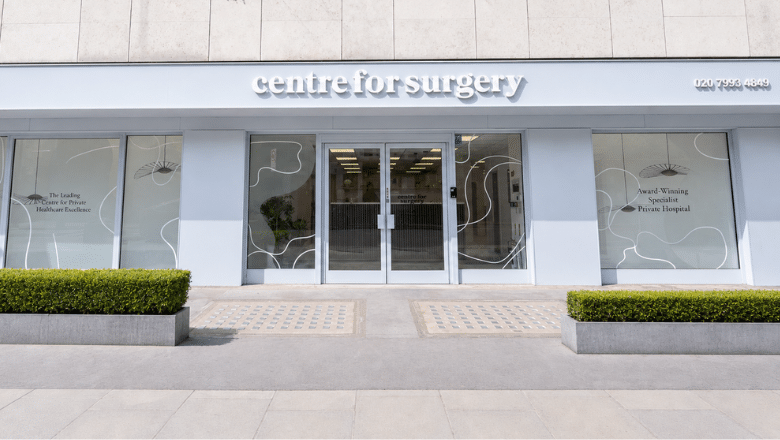
At Centre for Surgery, the surgeon who assesses you at consultation is the surgeon who performs your operation. Facelift surgery is carried out by GMC-registered plastic surgeons at our CQC-regulated hospital on Baker Street, and finance options are available. Costs are confirmed in writing after your consultation.
How Long Before a Facelift Should I Stop Smoking?
Stop all nicotine at least four weeks before your facelift and keep it stopped for four weeks afterwards. That includes cigarettes, cigars, vaping, nicotine patches, gum and lozenges, because nicotine itself, rather than the smoke, narrows the small blood vessels that feed the skin.
The reason is specific to facelift surgery. The operation lifts the skin and underlying tissue away from the face and depends on a thin blood supply to keep the edges alive. In a 1984 retrospective study in Plastic and Reconstructive Surgery ↗, Rees and colleagues found that a significant proportion of skin sloughs after facelift surgery were due to patients’ cigarette smoking[1]. A later review reported that smokers carry roughly a 13-fold higher risk of skin necrosis after a facelift, and that four weeks of abstinence reduces smoking-related complications[2]. Across surgical specialties, a meta-analysis of 140 cohort studies found that smokers had around 3.6 times the odds of tissue necrosis, although quitting around the time of surgery lowered infection rather than every type of healing problem[3].
The skin behind the ear is the usual place for a problem, and it can leave a wider or darker scar that takes longer to settle. Our guide to smoking and cosmetic surgery explains what to expect if you are struggling to stop. Be honest with your surgeon: if nicotine cannot be avoided, surgery is usually postponed rather than risked. Your GP or local stop-smoking service can help you quit in time.
What Medicines and Supplements Should I Stop Before a Facelift?
Aspirin, anti-inflammatory painkillers such as ibuprofen and blood-thinning supplements are normally stopped two weeks before a facelift, because they make bleeding more likely. If you take aspirin or a blood thinner for a medical condition, do not stop it on your own: your surgeon will agree any change with your GP or specialist.
The reason is the risk of haematoma, a collection of blood under the skin that can raise the skin flap, increase swelling and damage the skin. In a 2001 review of 1,078 consecutive facelifts in the British Journal of Plastic Surgery ↗, 4.2% of patients developed a haematoma. The independent risk factors were higher systolic blood pressure, male sex, aspirin or anti-inflammatory use, smoking and an anterior platysmaplasty (a neck-tightening step)[4].
Which supplements and herbal products cause bleeding?
Natural does not mean harmless. A review of bleeding risks in plastic surgery identified 19 herbs, several herbal formulas and other supplements that can increase bleeding around the time of surgery[5]. Commonly named examples include ginkgo, garlic, ginseng, fish oil and high-dose vitamin E, but the list is long, so show your surgeon the actual bottles. A wider review of medicines in elective plastic surgery concluded that each patient needs a case-by-case plan and that careful medication reconciliation reduces avoidable problems[6].
Also tell the team about hormone treatment, antidepressants, blood pressure tablets and any fillers or anti-wrinkle injections you have had. Our guide on whether fillers need to be dissolved before a facelift covers the filler question, and if you use dermal fillers or anti-wrinkle injections, your surgeon will advise on timing around surgery. Ask which painkillers you may take instead of aspirin and ibuprofen, and have them at home before the operation.
Can I Drink Alcohol Before a Facelift?
Avoid alcohol for a week before surgery. Alcohol thins the blood slightly, interacts with some medicines and can dehydrate you, none of which helps a smooth anaesthetic or recovery. It is also worth avoiding for at least two weeks afterwards, as it worsens swelling and should not be mixed with some painkillers. If you drink heavily, tell your surgeon and anaesthetist, because suddenly stopping needs medical advice.
How Do I Get Healthy Before a Facelift?
You do not need a perfect lifestyle, but a few steady habits make a difference:
- Keep your weight stable. Large changes in weight after a facelift can alter the way the face and neck sit. Aim to be at a steady weight for several months before surgery.
- Eat well. Protein, vitamins and minerals support healing. A varied, nutritious diet is more useful than any supplement.
- Control your blood pressure. Higher systolic pressure was linked with haematoma in the large facelift series above[4]. If yours runs high, see your GP before your pre-operative assessment.
- Protect your skin from the sun. Sunburn and fresh tans make skin harder to treat and scars harder to settle.
- Sleep and manage stress. Surgery is easier to cope with when you are rested.
At Centre for Surgery, a pre-operative medical assessment is part of the process, so any health issue is picked up before the day rather than on it. If you have a long-term condition such as diabetes, heart disease or a clotting disorder, mention it early, because it may need input from your GP or a specialist first.
Does the Type of Facelift Change How I Prepare?
The core steps are the same for every technique, but the practical details differ:
- Full facelift with neck lift: the longest operation, at around three to four hours, usually under TIVA (total intravenous anaesthesia). Plan for the longest recovery. Our TIVA guide explains what the anaesthetic involves.
- Deep plane facelift: prepared for in the same way, but the final swelling takes longer to settle. See our guide to the deep plane facelift.
- Mini facelift and one-stitch facelift: shorter operations, often under local anaesthetic with or without sedation, with a quicker recovery. You still need a helper if you are sedated.
- Male facelift: the same preparation, with extra planning around the beard-bearing skin and hairline. Our male facelift page explains the differences.
- Combined procedures: a facelift is often combined with eyelid surgery or a brow lift, which adds a little to the recovery.
How Do I Prepare Mentally for a Facelift?
Emotional preparation is part of the process. A facelift is a significant operation with a recovery period in which your face may look swollen, bruised and uneven for a while, and many people feel low or anxious in the first week. That is normal and passes as swelling settles.
The evidence suggests that preparation pays off. In a 2011 prospective outcome study of 93 deep plane facelift patients in Plastic and Reconstructive Surgery ↗, 96.7% reported a more youthful appearance and 82.8% reported improved self-esteem, even though the recovery was significant. The author concluded that, with proper patient preparation and education, facelift surgery meets patient expectations[8]. A separate study of 200 high-SMAS facelift patients found higher satisfaction when a facelift was combined with other rejuvenation procedures, although only 38% of patients responded to the questionnaire[9].
A facelift restores structure and balance. It does not stop ageing, and it will not change who you are, so our guides to the psychological impact of facelift surgery and to how long a facelift lasts are worth reading before you commit. Our two-week cooling-off period exists so that you have time to think it over.
Facelift Before and After: What Results Can I Realistically Expect?
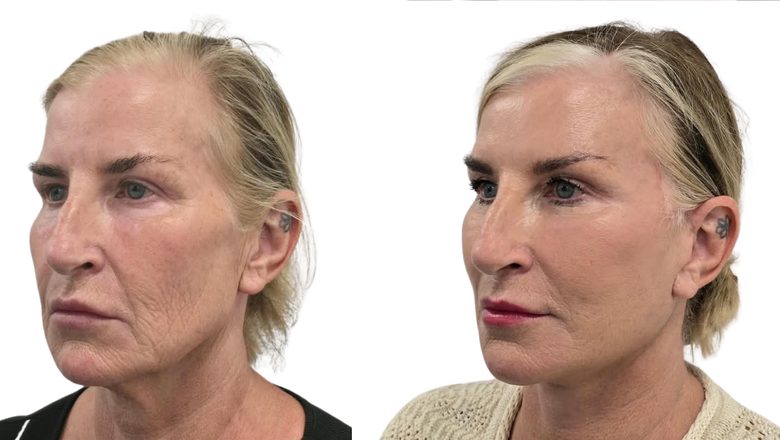
Looking at genuine facelift before and after photos helps you set realistic expectations. The two examples below are from the same Centre for Surgery patient. Swelling and scars continue to settle for months after surgery, so results at six weeks are a stage rather than a final outcome. More cases are on our facelift before and after photos page.

What Are the Risks I Should Know About Before a Facelift?
Knowing the risks is part of being prepared. The main ones are haematoma, skin healing problems (more likely in smokers), infection, temporary or, rarely, lasting numbness or nerve weakness, visible or widened scars and a result that you feel looks unnatural or asymmetric. Most are uncommon and most can be managed, and the steps in this guide are aimed at the ones you can influence. Our guides to facelift complications and facelift scars go into each in detail.
Some surgeons also give tranexamic acid, a medicine that reduces bleeding. A 2024 systematic review of facelift studies found it reduced drain output and minor haematomas without increasing major complications, although larger trials are still needed[7]. Ask your surgeon what is planned for your operation.
How Do I Get My Home Ready for Facelift Recovery?
Set up your home a week or two before surgery, while you are still full of energy. For the first couple of weeks you will sleep with your head raised, wear a supportive garment, eat soft food and avoid bending and lifting.

- Pillows or a reclining chair. Keep your head raised on two or three pillows. Our guide to sleeping after facelift surgery has practical tips.
- Soft, easy meals. Stock the freezer and fridge with food you can eat without chewing hard.
- Front-fastening tops. You should avoid pulling clothing over your face for the first week or two.
- Your compression garment. A chin support garment is worn for about two weeks. Garments are bought separately and confirmed with you in advance.
- Prescribed painkillers and cold packs. Ask your team what they advise and have it at home.
- A helper. A responsible adult must take you home and stay with you for 24 hours after TIVA or sedation. Ongoing help with meals, pets and children makes the first week far easier.
Plan your diary as well. As a guide, most people take 10 to 14 days off work, do not drive for two weeks, avoid flying for at least two weeks, start gentle cardio from week three and return to full exercise at about week six. Makeup is usually possible from two weeks, once stitches are out. Our facelift recovery and aftercare guide gives the full week-by-week picture.
What Should I Do the Week and Night Before a Facelift?
The last week is about finishing the list. Confirm your helper and your transport home, collect your prescriptions and fill the freezer. Avoid alcohol, and carry on with the medicine plan agreed with your surgeon. Many people colour their hair beforehand, as hair dye is normally avoided for several weeks after surgery.

The night before, wash your hair, because it will be a couple of days before you can wash it afterwards. Lay out loose, front-fastening clothes and follow the written fasting instructions you were given, as eating or drinking when you should not can mean your operation has to be postponed. Try to rest, although many people sleep poorly the night before surgery, and that is expected.

What Happens on the Day of Facelift Surgery?
You arrive at the hospital at your agreed time, meet your surgeon and anaesthetist and have your face marked while you are sitting upright, which shows the natural contours better than lying down. Anaesthesia is usually TIVA for a full facelift. A full facelift with neck lift takes around three to four hours, and a mini facelift one to two hours.
Afterwards you wake with a supportive dressing and sometimes a small drain, which is usually removed within a day or two. A facelift is a day-case operation, so you go home the same day with your helper. You are given your surgeon’s direct number for the first 24 hours. Our anaesthesia guide explains the options in more detail, and our Baker Street hospital page shows where it takes place.
Swelling and bruising usually peak at around days two to three, stitches in front of the ear are usually removed at about one week, and visible bruising has largely gone by about two weeks. The NHS page on facelift surgery ↗ is a useful independent overview of the procedure.
Frequently Asked Questions
How to prepare for face lift surgery?
Stop all nicotine four weeks before, stop aspirin, anti-inflammatories and blood-thinning supplements two weeks before where your doctor agrees, and avoid alcohol for a week. Keep your weight stable, arrange a helper for 24 hours, set up pillows and soft meals at home, and follow your written fasting instructions.
What should I do two weeks before a facelift to prepare for surgery and healing?
Stop aspirin, ibuprofen and supplements that increase bleeding, once your surgeon and GP agree. Confirm your helper and transport, buy your garment, stock soft food, organise time off work, and keep nicotine and alcohol out of your routine.
What not to say to a plastic surgeon?
The mistake is not a particular phrase but holding information back. Do not play down smoking or vaping, supplements, alcohol, blood pressure, previous surgery or injectables, because each affects your risk. Avoid asking for a result that cannot be delivered, such as looking decades younger. Describe what bothers you and ask what is realistic.
How do you know when you’re ready for a facelift?
You are ready when your main concerns are structural, such as jowls, a softening jawline or a loose neck, when you are in good general health, free of nicotine, and have realistic expectations and the time to recover. Your surgeon will assess this at consultation, and the two-week cooling-off period gives you time to reflect.
How soon after a facelift can I wash my hair?
You can usually wash your hair from about 48 hours after surgery, once any dressing has been removed, using a mild shampoo and a cool dryer setting. Wash your hair the night before surgery, and avoid hair dye for at least four to six weeks afterwards.
What’s the worst day after a facelift?
Swelling, tightness and bruising usually peak around days two to three. The face can look uneven at this point, which is normal. Most people feel noticeably better by the end of the first week, when stitches are removed, and ready to be seen socially at about two weeks.
At what age is it most effective to get a facelift?
There is no single age. Most patients are in their 40s to 70s, when jowls and neck laxity develop. A mini facelift can suit early changes from the late 30s to 50s. What matters is skin laxity, general health and expectations. Our guide to facelift age covers this.
What can be done instead of a facelift?
Early changes may respond to dermal fillers or anti-wrinkle injections, which we offer, or to energy-based skin tightening. None of these lifts deeper tissue the way surgery does, so they suit mild to moderate changes. Our guide to facelift alternatives without surgery compares them.
Facelift Surgery in London
If you are considering a facelift, a consultation with one of our GMC-registered plastic surgeons will establish which technique suits your face and what preparation you need. Read more about Centre for Surgery and our finance options.
Phone: 020 7993 4849 | Address: 95–97 Baker Street, Marylebone, London W1U 6RN
Contact us to schedule a consultation
References
- Rees TD, Liverett DM, Guy CL. The effect of cigarette smoking on skin-flap survival in the face lift patient. Plastic and Reconstructive Surgery 1984;73(6):911–915. doi:10.1097/00006534-198406000-00009 ↗
- Knobloch K, Gohritz A, Reuss E, Vogt PM. Nicotine in plastic surgery: a review. Der Chirurg 2008;79(10):956–962. doi:10.1007/s00104-008-1561-3 ↗
- Sørensen LT. Wound healing and infection in surgery: the clinical impact of smoking and smoking cessation: a systematic review and meta-analysis. Archives of Surgery 2012;147(4):373–383. doi:10.1001/archsurg.2012.5 ↗
- Grover R, Jones BM, Waterhouse N. The prevention of haematoma following rhytidectomy: a review of 1078 consecutive facelifts. British Journal of Plastic Surgery 2001;54(6):481–486. doi:10.1054/bjps.2001.3623 ↗
- Wong WW, Gabriel A, Maxwell GP, Gupta SC. Bleeding risks of herbal, homeopathic, and dietary supplements: a hidden nightmare for plastic surgeons? Aesthetic Surgery Journal 2012;32(3):332–346. doi:10.1177/1090820X12438913 ↗
- Chaya BF, Rodriguez Colon R, Boczar D, et al. Perioperative medication management in elective plastic surgery procedures. Journal of Craniofacial Surgery 2023;34(3):1131–1136. doi:10.1097/SCS.0000000000009183 ↗
- Alenazi AS, Obeid AA, Alderaywsh A, et al. Impact of tranexamic acid on bleeding outcomes and complication rates in facelift: a systematic review and meta-analysis. Aesthetic Surgery Journal 2024;44(11):NP749–NP761. doi:10.1093/asj/sjae156 ↗
- Swanson E. Outcome analysis in 93 facial rejuvenation patients treated with a deep-plane face lift. Plastic and Reconstructive Surgery 2011;127(2):823–834. doi:10.1097/PRS.0b013e3181fed81f ↗
- Kappos EA, Temp M, Schaefer DJ, Haug M, Kalbermatten DF, Toth BA. Validating facial aesthetic surgery results with the FACE-Q. Plastic and Reconstructive Surgery 2017;139(4):839–845. doi:10.1097/PRS.0000000000003164 ↗