


In this guide16 sections
- Key Points
- What Happens at a Facelift Consultation?
- Which Type of Facelift Will Be Recommended?
- How Do I Prepare for Facelift Surgery?
- What Happens on the Day of a Facelift?
- What Are the First 48 Hours After a Facelift Like?
- What Happens in the First Week After a Facelift?
- How Long Does It Take to Look Normal After a Facelift?
- When Will I See the Final Results of My Facelift?
- What Do Facelift Scars Look Like and When Do They Fade?
- What Results Can I Realistically Expect From a Facelift?
- What Are the Risks and Downsides of a Facelift?
- When Should I Call My Surgeon After a Facelift?
- Frequently Asked Questions: What to Expect From a Facelift
- Facelift in London
- References
Key Points
- What happens before a facelift? A consultation and medical assessment decide the technique, the anaesthetic and whether surgery is right for you, followed by a few weeks of preparation that includes stopping smoking and certain medicines.
- What happens on the day? Most facelifts take about two to four hours, usually under TIVA (total intravenous anaesthesia) or local anaesthetic with sedation, and most people go home the same day with a supportive dressing.
- What are the worst days? Swelling, tightness and bruising usually peak at around days 2 to 3, then ease steadily.
- When do I look presentable? Many people feel ready for work and social contact at around two to three weeks, although the NHS says recovery can take two to four weeks.
- When is the final result? The shape shows from about six weeks, but the last of the swelling takes three to six months to settle, and scars keep maturing for up to a year.
- What can go wrong? Serious problems are uncommon, but a haematoma (a collection of blood under the skin) needs urgent attention, so know the warning signs and who to call.
Asking what to expect from a facelift is really asking what the whole journey looks like, from the first conversation to the day you stop noticing the scars. This guide follows that journey in order: the consultation, what is decided, preparation, the day of surgery, the first 48 hours, week one, weeks two to six, the months that follow, and what can go wrong. It gives honest ranges rather than promises, because healing varies from person to person and technique to technique. If you want a detailed day-by-day recovery plan, our facelift recovery and aftercare guide covers it. For the operation itself, see our facelift page, and for a comparison of the techniques, our guide to the types of facelift.
What Happens at a Facelift Consultation?
The consultation is where expectations are set, so it is worth treating it as the most important appointment of the whole process. You meet your surgeon, explain what bothers you (jowls, a heavy neck, a tired midface, or a combination) and have your face examined at rest and in movement. Photographs are taken, and the surgeon looks at your skin quality, the position of the facial fat, the neck, and the way your face has aged so far.
A medical assessment follows. Expect questions about your general health, blood pressure, previous operations, scarring tendency, smoking and nicotine use, alcohol, and every medicine and supplement you take. This matters because some of these factors change your risk. In a review of 1,078 facelifts, haematoma was associated with higher systolic blood pressure, male sex, taking aspirin or anti-inflammatory medicines, and smoking[2].
The consultation should also be a conversation about what a facelift cannot do. It lifts and repositions sagging tissue in the lower face and neck; it does not stop ageing, change the quality of sun-damaged skin or replace the effect of volume loss and skin texture treatments. Surgeons are alert to unrealistic expectations, and it is reasonable to be asked about your motivation. One multicentre study of 597 facial plastic and oculoplastic surgery patients found that 9.7% screened positive for body dysmorphic disorder on a questionnaire, while surgeons clinically suspected it in only 4.0%[1]. That is one reason structured questions about how you feel about your appearance are a normal, caring part of a good assessment. Our article on the psychological impact of facelift surgery explores this side in more detail, and our list of questions to ask before getting a facelift helps you prepare for the appointment.
Which Type of Facelift Will Be Recommended?
At the end of the assessment, your surgeon recommends a technique and a plan. The main options are a one-stitch (micro) facelift, a mini facelift, a SMAS facelift and a deep plane facelift, with an endoscopic facelift suited to some younger patients. The more tissue that is lifted, the more extensive the recovery and, generally, the longer the result lasts. In a 2025 meta-analysis comparing deep plane and SMAS facelifts, the two techniques had broadly similar complication profiles[7], so the choice rests on your anatomy and goals rather than on safety alone. Our guides to facelift vs mini facelift and deep plane vs SMAS facelift set out the trade-offs.
This is also the point at which it is decided whether other procedures are combined with the lift. A neck lift is commonly added, and eyelid surgery or fat grafting sometimes is too, as our guide to procedures that complement a facelift explains. Combining procedures means one anaesthetic and one recovery, but it also lengthens the operation, and larger registry data have linked longer operations and combined procedures with higher odds of complications[3]. You should leave the consultation knowing the technique, the anaesthetic, where the scars will sit, the likely recovery range for your plan, and who to contact afterwards.
How Do I Prepare for Facelift Surgery?
Preparation starts weeks before the operation date. Our dedicated guide on how to prepare for facelift surgery has the full checklist; the essentials are below.
- Stop smoking and nicotine. Smoking was one of the factors linked with haematoma in the 1,078-facelift review[2], and nicotine reduces blood flow to the lifted skin. Many surgeons ask for several weeks without nicotine before and after surgery.
- Review your medicines. Aspirin and anti-inflammatory painkillers such as ibuprofen were also linked with haematoma[2]. Never stop a prescribed medicine yourself; your surgeon and doctor decide what to pause and when.
- Have blood pressure checked. High blood pressure around the time of surgery is a recognised haematoma risk, and surgeons often use a blood pressure protocol during recovery[4].
- Plan the first week at home. Arrange a responsible adult to take you home and stay for the first night, extra pillows, soft easy meals, front-fastening tops and time away from work.
- Prepare your diary. Block out social events for at least three weeks, and longer for important occasions, so you are not working to a deadline.
What Happens on the Day of a Facelift?
On the day, you arrive at the hospital, meet your surgeon and anaesthetist again, and have the plan confirmed. Your surgeon marks the incisions while you are upright, and you sign the consent form if you are still happy to proceed.
Most facelifts are carried out under TIVA (total intravenous anaesthesia), while some smaller lifts can be done under local anaesthetic with sedation; your surgeon and anaesthetist decide which suits you. A facelift usually takes about two to four hours, depending on the technique and whether a neck lift or other procedure is combined. The incisions are placed in the hairline at the temple, in front of and behind the ear, and the tissues are lifted, repositioned and secured before the skin is closed.
When you wake, expect a soft supportive dressing around the face and head, and sometimes small drains that are usually removed within a day or two. You will feel drowsy, tight and a little nauseous, and you will probably be offered something light to eat and drink once you are fully awake. Most facelifts are day cases, so you go home when you are comfortable, although overnight nursing can be arranged if you are staying locally. A responsible adult must take you home and stay with you for 24 hours; the Royal College of Anaesthetists’ advice for the person looking after you ↗ explains what that involves. Where and how your operation is done matters, and the large US registry above linked longer operations and combined procedures with higher odds of adverse events[3].
What Are the First 48 Hours After a Facelift Like?
The first two days are the most uncomfortable, and they are also the days your team is watching most closely. Expect a feeling of tightness and pressure, aching around the ears and neck, and swelling that builds steadily. Many people describe the experience as stiffness and tightness rather than sharp pain, and it is usually controlled with the painkillers you are prescribed. Pain that is severe, one-sided or getting worse is not routine and needs a call.
Your job is to rest with your head raised, walk gently around the house, drink plenty of fluids and avoid bending, lifting and turning your head sharply. Cold compresses, wrapped in a cloth and used only on skin that still has feeling, can be soothing in the first couple of days. Sleeping on your back with your head elevated reduces swelling; our guide on how to sleep better after facelift surgery has practical tips.
The main risk in this window is a haematoma, a collection of blood under the skin that causes sudden, painful or lopsided swelling. It is the most common early complication of a facelift, and it matters because it can compromise the skin if it is not dealt with quickly. Surgeons use several strategies to lower the risk, including blood pressure control[4] and, in some cases, tranexamic acid, a medicine that reduces bleeding. A 2024 systematic review and meta-analysis of tranexamic acid in facelift surgery found reduced bleeding outcomes without an increase in complications[5]. Whatever you notice, contact your surgical team straight away rather than waiting to see how things look in the morning.
What Happens in the First Week After a Facelift?
By day three or four, swelling and bruising are at or near their peak, and your face may look uneven or puffy, with bruising spreading down the neck and sometimes the chest. This is normal and not a sign that the result has gone wrong. From here, things improve gradually.
Your dressing is usually replaced by a compression garment within the first day or two, which you wear as your surgeon advises. At about one week you have a review, the incisions are checked, and stitches in front of the ear are usually removed, with any stitches in the hair sometimes taken out a few days later. Bruising turns from purple to green and yellow. Many people no longer need regular painkillers by the end of the week, although tiredness is common and feeling emotional is too. A low mood or a flicker of regret around days five to ten, when you look swollen and are still tired, is something many patients describe, and it passes as the swelling goes down.
Numbness of the cheeks and around the ears is expected, and tingling or itching often follows as sensation returns, as the BAAPS guidance on facelift and neck lift ↗ explains. Keep activity gentle, avoid heat, alcohol and anything strenuous, and follow our wider advice on recovery after cosmetic surgery.
How Long Does It Take to Look Normal After a Facelift?
Between weeks two and six, you move from looking like someone who has had surgery to looking like yourself again. Bruising fades through the second week, and by weeks two to three many people feel comfortable seeing friends and going back to work, perhaps with a scarf or light make-up to cover residual yellowing. This fits with the NHS guidance on facelift recovery ↗, which says recovery takes about two to four weeks. A two-week estimate is the optimistic end for a full facelift, so plan for three and treat anything sooner as a bonus.
By weeks three and four, most obvious bruising has gone. The face can still feel firm, tight and slightly numb, and swelling is often worse in the morning or along the jawline. Light exercise such as walking continues, with heavier activity waiting for your surgeon’s agreement. At about six weeks you usually have another review, and if healing is on track you can return to full exercise and most normal activities. A smaller operation such as a mini or one-stitch lift generally moves through these stages faster, and a deep plane lift often takes a little longer, so use these ranges as a guide rather than a deadline. Our facelift recovery guide gives the timings by technique.
When Will I See the Final Results of My Facelift?
The final result takes longer than most people expect. You will see a clear change in the mirror within the first weeks, but it is partly hidden by swelling, and the finer outline of the jaw and neck keeps improving as the last swelling settles over roughly three to six months. Feeling continues to return and the tissues soften over the same period.
What do patients make of the result? In a prospective multicentre study from 2018 in Aesthetic Plastic Surgery, 36 patients completed the FACE-Q questionnaires before surgery and again at 3, 6 and 12 months ↗. Scores for facial appearance and quality of life were significantly higher at three months, and on average patients considered themselves about six years younger, a result that remained constant at six and twelve months[6]. The study was small, and 75% of the patients also had an additional procedure such as eyelid surgery, so it is a useful guide to how satisfied people tend to be rather than a promise about your own result.
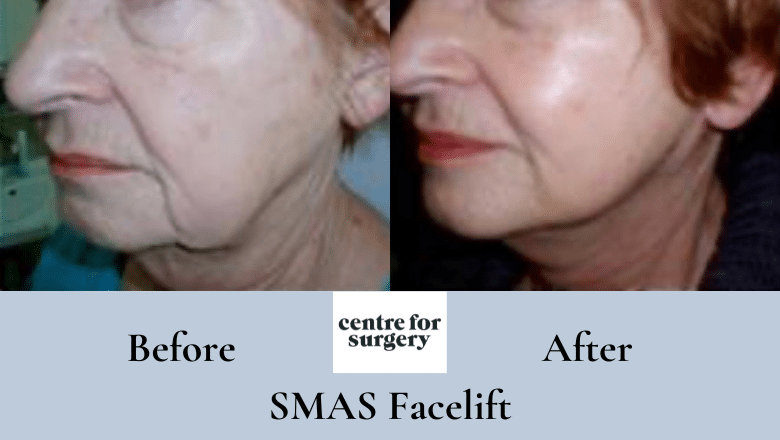
A facelift does not stop the clock. The face keeps ageing from its new starting point, and how long the result lasts depends on the technique, your skin, your lifestyle and genetics. Our guides on how long a facelift lasts, how to maintain your facelift results and whether you can have a facelift twice cover the long term, and you can compare real outcomes in our facelift before and after photos.
What Do Facelift Scars Look Like and When Do They Fade?
Facelift scars are permanent, but they are usually placed where they are easiest to hide. Incisions run in the hairline at the temple, along the natural crease in front of the ear (or just inside the cartilage at the tragus), around the earlobe and behind the ear into the hairline. A mini or one-stitch facelift uses shorter incisions concentrated around the ear.
The stages are broadly predictable, though individual healing is not. In the first weeks the scars are pink or red and slightly raised, and the skin around them can feel numb or lumpy. Over the next few months they flatten and fade, and they continue to soften for up to a year or more. Most scars end up as fine, pale lines that blend into the hairline and ear creases, but how well you scar depends on your skin type, your genetics, tension on the wound, smoking and sun exposure, and a minority of people form wider or thicker scars. It is unrealistic to promise that a scar will be invisible. What a good result looks like is a scar that other people do not notice in normal conversation.
Protect your scars from the sun, avoid pulling on the skin, and use any silicone gel your surgeon recommends once the wounds have closed. Our article on facelift scars and what to expect after surgery goes into placement, healing and scar care in depth.
What Results Can I Realistically Expect From a Facelift?
A facelift can soften jowls, tighten the jawline, reduce loose skin and folds in the lower face, and improve the neck contour when it is combined with a neck lift. Done well, the aim is a refreshed, natural look in which friends say you look rested rather than operated on. Our article on getting a natural-looking facelift result explains how that is approached.
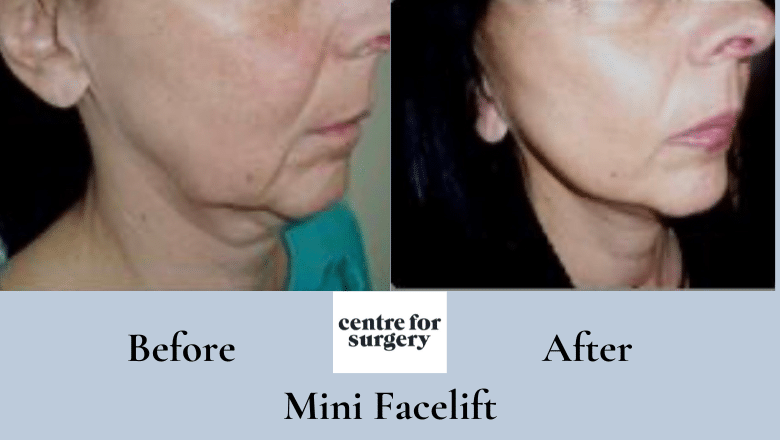
It is just as important to know what a facelift does not do. It does not change your bone structure or fundamental appearance, it does not replace skin treatments for sun damage or fine lines, and it does not fix volume loss in the temples or cheeks unless fat grafting or fillers are added. If the eyes, brow or lips are your main concern, a different or additional operation may be better suited, and our guide to facelift alternatives that do not require surgery compares the options. For some people, a smaller procedure is a better match. Satisfaction depends on matching the operation to the problem, and the evidence on perceived age reduction and patient-reported outcomes is promising but based on modest studies, as the FACE-Q data above show[6].
What Are the Risks and Downsides of a Facelift?
Serious problems after a facelift are uncommon, but they are real, and you should hear the numbers before you decide.
- Overall risk. In a 2020 analysis of 13,346 rhytidectomy patients in the TOPS database, published in Plastic and Reconstructive Surgery ↗, the incidence of adverse events was 5.1%, with haematomas and infections the most frequent surgical complications[3].
- Major complications. In a 2016 study of 11,300 facelifts ↗, 1.8% of patients had a major complication needing an emergency visit, hospital admission or return to theatre within 30 days. Haematoma (1.1%) and infection (0.3%) were the most common, and men were about four times more likely to have a haematoma[8].
- Smaller lifts. A 2024 review of 4,451 limited incision facelifts reported an overall complication rate of 3.2%, with haematoma the most common at 2%[10].
- Nerve problems. Facial weakness is uncommon and usually temporary. A 2026 meta-analysis of 10,784 deep plane facelifts reported temporary facial nerve weakness in 1.2% of patients and no permanent injury[9].
- Other downsides. Numbness that takes months to resolve, scars that heal wider than hoped, hair thinning near the incisions, asymmetry, wound healing problems (especially in smokers) and a result that is less dramatic than you imagined.
These figures come from different populations, definitions and follow-up periods, so they cannot be compared directly, and your own risk depends on your health, your technique and your surgeon. Our guide to facelift complications explains each one and how it is managed, and the botched facelift article explains what can be corrected if a result disappoints.
When Should I Call My Surgeon After a Facelift?
Know the warning signs before you go home, and keep the numbers where you can find them. Contact your surgical team straight away if you have:
- swelling that is sudden, painful or much worse on one side of the face or neck
- bleeding that does not stop with gentle pressure, or a dressing that becomes very tight
- pain that is getting worse rather than better
- a temperature above 38°C, or spreading redness, heat or discharge from an incision
- dark or blistered skin near the incisions, or new weakness of the face
- a painful, swollen calf or breathlessness (call 999 for chest pain or difficulty breathing)
For the first 24 hours, call your surgeon on the direct number on your discharge summary. After that, call the clinic on 020 7993 4849, 9am–6pm Monday to Saturday, and NHS 111 out of hours, or 999 in an emergency. A phone call that turns out to be nothing is always better than a delay that turns out to matter.
Frequently Asked Questions: What to Expect From a Facelift
What are the worst days after a facelift?
For most people, the worst days are days 2 to 4. Swelling, tightness and bruising peak, you are tired, and your face looks at its least settled. It then improves steadily through the first and second weeks. Pain that is severe, one-sided or getting worse is not part of the normal pattern and should be reported.
When does a facelift look natural and settled?
A facelift usually looks natural to other people at about three weeks, and the shape is clear by about six weeks. The final result, with the last swelling gone and the scars softening, takes three to six months, and the scars keep maturing for up to a year.
Is a facelift very painful?
Many people describe tightness, stiffness and aching rather than severe pain, and it is usually controlled with prescribed painkillers. Discomfort is generally greatest in the first few days and eases quickly. Deeper or combined operations tend to be more uncomfortable than a mini or one-stitch lift. Severe or worsening pain needs checking straight away.
Do people regret facelifts?
Most patient-reported outcome studies describe high satisfaction, but they are small and rarely measure regret directly. Dissatisfaction is more likely when expectations are unrealistic or the operation does not match the problem, which is why the consultation matters so much[1]. Low mood in the first fortnight is common and usually passes.
How long should I take off work after a facelift?
Many people return to work after two to three weeks, and the NHS says recovery can take two to four weeks. You may need longer if your job is physical, public-facing or you want bruising to have fully faded. A mini or one-stitch facelift often allows a quicker return.
Will I be put to sleep for a facelift?
Most facelifts are carried out under TIVA (total intravenous anaesthesia), which keeps you asleep, while some smaller lifts can be done under local anaesthetic with sedation. Your surgeon and anaesthetist recommend the option that suits you at your consultation.
Do I have to stay overnight after a facelift?
Most facelifts are day cases, so you go home once you are comfortable, but overnight nursing can be arranged if you are staying locally. Either way, a responsible adult should stay with you for the first 24 hours.
How should I sleep after a facelift?
On your back with your head raised on pillows or in a recliner, for at least the first two to three weeks, until your surgeon says you can change position. Our guide on sleeping after a facelift explains how to make this comfortable.
Facelift in London
We perform over 100 facelift and neck lift procedures each year at our CQC-regulated Baker Street hospital, which is rated Good overall by the CQC. Your consultation, operation and follow-up reviews all take place at the same hospital, and your surgeon explains the technique, the anaesthetic and the recovery range for your plan before you decide. Our facelift page explains the operation in full, and our facelift cost guide explains how pricing works.
Phone: 020 7993 4849 | Address: 95–97 Baker Street, Marylebone, London W1U 6RN
Contact us to schedule a consultation
References
- Joseph AW, Ishii L, Joseph SS, et al. Prevalence of body dysmorphic disorder and surgeon diagnostic accuracy in facial plastic and oculoplastic surgery clinics. JAMA Facial Plastic Surgery 2017. doi:10.1001/jamafacial.2016.1535 ↗
- Grover R, Jones BM, Waterhouse N. The prevention of haematoma following rhytidectomy: a review of 1078 consecutive facelifts. British Journal of Plastic Surgery 2001. doi:10.1054/bjps.2001.3623 ↗
- Chopan M, Samant S, Mast BA. Contemporary analysis of rhytidectomy using the Tracking Operations and Outcomes for Plastic Surgeons database with 13,346 patients. Plastic and Reconstructive Surgery 2020. doi:10.1097/PRS.0000000000006813 ↗
- Wan D, Dayan E, Rohrich RJ. Safety and adjuncts in face lifting. Plastic and Reconstructive Surgery 2019. doi:10.1097/PRS.0000000000005898 ↗
- Alenazi AS, Obeid AA, Alderaywsh A, et al. Impact of tranexamic acid on bleeding outcomes and complication rates in facelift: a systematic review and meta-analysis. Aesthetic Surgery Journal 2024;44(11):NP749–NP761. doi:10.1093/asj/sjae156 ↗
- Berger M, Weigert R, Pascal E, et al. Assessing improvement of patient satisfaction following facelift surgery using the FACE-Q scales: a prospective and multicenter study. Aesthetic Plastic Surgery 2018. doi:10.1007/s00266-018-1277-9 ↗
- Vayalapra S, Guerero DN, Sandhu V, et al. Comparing the safety and efficacy of superficial musculoaponeurotic system and deep plane facelift techniques: a systematic review and meta-analysis. Annals of Plastic Surgery 2025;95(5):582–589. doi:10.1097/SAP.0000000000004454 ↗
- Gupta V, Winocour J, Shi H, et al. Preoperative risk factors and complication rates in facelift: analysis of 11,300 patients. Aesthetic Surgery Journal 2016;36(1):1–13. doi:10.1093/asj/sjv162 ↗
- Koroma P, Reji N, Burridge I, et al. Deep plane facelifts: a systematic review and meta-analysis of outcomes. Aesthetic Plastic Surgery 2026;50(17):6874–6896. doi:10.1007/s00266-026-06138-x ↗
- Amador RO, Hamaguchi R, Bartlett RA, et al. Limited incision facelifts: a contemporary review of approaches and complications. Aesthetic Surgery Journal 2024;44(3):NP218–NP224. doi:10.1093/asj/sjad344 ↗







