




Morpheus8 London: RF microneedling skin tightening
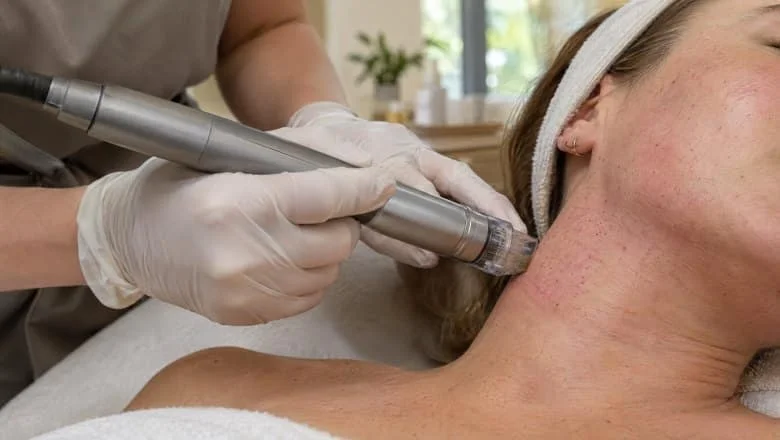
Morpheus8 is RF microneedling: a non-surgical skin tightening treatment that combines microneedling with radiofrequency energy to remodel collagen in the deeper layers of the skin. Fine insulated needles carry the heat up to 4 mm beneath the surface, so the skin is tightened from within rather than resurfaced from the top down. It is one of the skin tightening and rejuvenation treatments available at our Baker Street clinic.
Most people searching for Morpheus 8, RF microneedling or radiofrequency microneedling in London want the same things: firmer skin where laxity is mild to moderate, softer acne scars and stretch marks, and smoother texture, pores and fine lines. It is used on the face, neck and décolletage, and on the abdomen, thighs, arms, knees and buttocks. Our guide to Morpheus8 on the face looks at facial treatment in more detail.
At Centre for Surgery, Morpheus8 is delivered by Ida Bafende, an NMC-registered aesthetic practitioner, usually as a course of three sessions four to six weeks apart. Needle depth and energy are set for your skin type and for each area, with conservative settings over the leaner parts of the face.
Morpheus8 has a clear place in the treatment ladder. It does more for skin quality and tightening than standalone microneedling, with less downtime than ablative laser resurfacing, but it cannot reposition tissue the way a facelift can. Where laxity is beyond what microneedling alone can treat, it is often combined with FaceTite on the face and neck, or BodyTite on the body.
Morpheus8 at a Glance
Morpheus8 is not suitable during pregnancy or breastfeeding, with an active skin infection, or with a pacemaker or metal implants in the treatment area, and your suitability is always confirmed at consultation.
Considering Morpheus8?Book an assessment to find out whether your skin is suited to RF microneedling and how many sessions you would need. No obligation, and no pressure to book.
Morpheus8 RF microneedling before and after photos
These are real Morpheus8 results from patients treated at Centre for Surgery, published with their written consent. More cases can be viewed at your consultation, and our Morpheus8 before and after gallery shows further faces and body areas.
Expect gradual, moderate change: firmer skin, smoother texture and softer scars that build over months, not the lift of surgery. Results vary with your skin, your age and the number of sessions.
What is Morpheus8 and how does RF microneedling work?
Watch a Morpheus8 body treatment

Morpheus8, often searched as Morpheus 8, is a fractional radiofrequency microneedling device made by InMode. RF microneedling (radiofrequency microneedling, or microneedling with RF) is the treatment category it belongs to: an array of insulated microneedles enters the skin to a controlled depth, adjustable up to 4 mm on the face, and releases radiofrequency energy from the needle tips for a fraction of a second.
That energy heats the dermis and the upper layer of fat beneath it. The skin responds to this controlled injury by laying down new collagen and elastin over the following weeks and months, which is what firms and thickens it. The needles are insulated along their shafts, so the heat is concentrated at the tips and the skin surface is largely spared.
The combination is what sets Morpheus8 apart from a standard microneedling pen. Needling alone causes a mechanical injury near the surface and a more limited collagen response, while ablative lasers work from the surface down. The British College of Aesthetic Medicine describes RF microneedling as a treatment for fine lines and wrinkles, large pores, scars, poor skin texture and sagging skin, and says it should ideally be performed by trained aesthetic practitioners.
Is Morpheus8 just radiofrequency microneedling?
Yes, in the sense that Morpheus8 is one brand of RF microneedling device. The name has become a generic label for the whole category, much as people say Hoover for any vacuum cleaner, so a clinic advertising Morpheus8 is not always using it. Devices differ in how well the needles are insulated, the depths they reach and how precisely the energy is controlled.
A full-face session is sometimes called a Morpheus8 facial, although it is a clinical treatment with numbing cream rather than a facial in the beauty-salon sense.
Is it the genuine Morpheus8 machine?

It is worth asking. Some clinics advertise Morpheus8 while treating with a different radiofrequency microneedling machine, sometimes a reputable alternative and sometimes a cheaper import with less precise depth and energy control. Heating of the skin surface is exactly what produces burns and pigmentation problems, so if one quote is markedly lower than the rest, ask which machine will be used and who makes it.
Centre for Surgery uses the InMode Morpheus8 platform, including the Morpheus8 Body handpiece for larger areas, with a new single-use sterile tip for every session.
What can Morpheus8 and RF microneedling treat?

People choose Morpheus8 for three broad reasons: skin that has started to loosen but does not yet need surgery, scarring or texture they would like to soften, and crepey skin on the body after weight loss, pregnancy or simply time. It is used for:
- Fine lines and wrinkles, including lines around the mouth
- Mild to moderate laxity on the face, neck and décolletage
- Mild jowling and a softening jawline
- Acne scarring, and surgical or traumatic scars
- Stretch marks
- Enlarged pores, uneven tone and texture, and sun-damaged skin
- Loose or crepey skin on the abdomen, thighs, upper arms, knees and buttocks
- Excessive underarm sweating (see Morpheus8 for underarm sweating)
Needle depth and energy are adjusted for every region, so the same platform can treat a thin-skinned area of the face and a larger body area in different ways. Our guide to the areas Morpheus8 can treat goes through each one in turn.
Can Morpheus8 help acne scars and stretch marks?
It can soften them, but it does not erase them. An independent 2025 systematic review of 16 studies and 481 patients concluded that fractional RF microneedling is likely to be effective for acne scarring when used on its own, while calling for more randomised trials to define treatment settings[1]. The improvement in surface texture and evenness is often enough that people no longer feel they need to cover the scars.
Our guide to Morpheus8 for acne scars explains what to expect, and deeper or mixed scarring is often treated with a combined acne scar treatment plan. For stretch marks, Morpheus8 improves texture and tone, and laser stretch mark removal is an alternative we can compare with you at consultation.
Does Morpheus8 work? What the research on RF microneedling shows
For the right concerns, yes, but the effect is real rather than dramatic. A recent summary of the evidence, a 2026 systematic review of 41 studies in Aesthetic Plastic Surgery (Kumar et al.), found that RF microneedling consistently reduced acne scar scores, with results comparable to fractional lasers, and improved wrinkle scores and skin density in loose and sun-damaged skin[2]. The lead author works for a company that makes RF microneedling devices, and the reviewers noted that studies reported device settings inconsistently, so the evidence is encouraging rather than conclusive.
Controlled trials are small. In a 2024 randomised split-face trial, 21 patients had three sessions a month apart on one side of the face only, and the treated side had significantly fewer wrinkles than the untreated side at three and six months[3]. That trial used a different, vacuum-assisted RF microneedling device rather than Morpheus8.
Morpheus8 after 1 treatment: what to expect
Morpheus 8 works, but not in the way a single dramatic photograph suggests. What you see in the days after one treatment is mostly swelling, which settles within about a fortnight, plus some early improvement in texture. The change people actually want, firmer and better-quality skin, comes from collagen laid down over three to six months, and it builds across a course rather than arriving after one session. Anyone promising a transformation from a single appointment is overselling it.
Why Morpheus8 is given as a course
A standard course is three sessions, four to six weeks apart, and some people with more pronounced concerns benefit from a fourth. Published guidance varies, and the British College of Aesthetic Medicine says a course of at least four to six treatments is usually recommended, so treat three as a typical starting point rather than a fixed number. Our guide to how many Morpheus8 sessions you may need covers this in more detail.
RF microneedling vs microneedling, HIFU and laser

Morpheus8 is one of several ways to improve loose or tired skin. The right choice depends on how much laxity you have, whether texture and scarring matter as much as tightening, your skin type and how much downtime you can take.
| Treatment | How it works | Treatment depth | Typical downtime | Suited to |
|---|---|---|---|---|
| Morpheus8 (RF microneedling) | Insulated microneedles deliver radiofrequency heat into the deep dermis | Up to 4 mm on the face; deeper on the body | 24–48 hours | Mild to moderate laxity, texture and acne scarring, on a wide range of skin types |
| Standalone microneedling | Fine needles create micro-channels, with no radiofrequency heat | 0.5–2.5 mm | 1–2 days | Superficial texture and fine scarring only |
| HIFU (focused ultrasound) | Focused ultrasound heats small points beneath an intact skin surface, with no needles | Fixed depths, down to the deeper support layer (SMAS) | Little or none | Mild laxity where texture and scarring are not the main concern |
| Ablative laser resurfacing | Removes surface skin layers with laser energy | Epidermis and upper dermis | 5–7 days; higher pigmentation risk on darker skin | Surface pigmentation and fine lines, mainly on lighter skin types |
| FaceTite / BodyTite | Bipolar radiofrequency delivered under the skin through a fine cannula, under local anaesthetic | Subdermal | Several days | More pronounced laxity than microneedling alone can treat |
| Surgical facelift or neck lift | Repositions and removes excess skin and tissue | Surgical | 2–3 weeks | Significant laxity, jowling and neck banding |
RF microneedling vs microneedling
Standard microneedling uses fine needles to create tiny channels in the skin, which triggers a collagen response close to the surface. RF microneedling adds heat from the needle tips in the deeper dermis, which drives a stronger collagen and elastin response and some tightening. Plain microneedling suits superficial texture; Morpheus8 suits texture plus early laxity and scarring.
Morpheus8 vs HIFU
HIFU (high-intensity focused ultrasound, also called microfocused ultrasound) heats small points beneath an intact skin surface at fixed depths, including the deeper support layer known as the SMAS, with no needles and little visible downtime. It is aimed at tightening and lifting and does little for surface texture or scars. Morpheus8 works through the skin itself, so it improves texture, pores and scarring as well as firmness, at the cost of a day or two of redness. Our comparison of Morpheus8 vs Ultherapy, a microfocused ultrasound device, sets out the differences in more detail.
Morpheus8 vs laser, Argo Plasma and FaceTite
Lasers such as the Fotona 4D laser use light energy with no needles, which suits people who want gentler rejuvenation with little or no downtime. Argo Plasma skin tightening is a surgical option in which argon plasma energy is applied beneath the skin through a thin cannula. For laxity beyond the reach of any treatment that works through the skin surface, FaceTite treats the deeper tissues through a fine cannula, and our article on whether to choose Morpheus8 or FaceTite compares the two.
Who is Morpheus8 suitable for?

Morpheus8 suits adults aged 18 and over with mild to moderate laxity, scarring or texture concerns who want gradual improvement without surgery, can commit to a course of sessions, and will protect their skin from the sun afterwards. It is a skin-quality and tightening treatment, so realistic expectations matter as much as the treatment itself.
Is Morpheus8 suitable for darker skin?
Morpheus8 can be used on a wide range of skin types, including darker skin, with settings adjusted after assessment. The heat is delivered beneath the surface, so the risk of post-inflammatory hyperpigmentation is lower than with ablative lasers, but it is not zero. A 2023 systematic review of 35 studies in Fitzpatrick skin types III to VI, published in Dermatologic Surgery (Syder et al.), found a low risk of scarring or pigment change; seven studies recorded temporary darkening of the skin, and the authors noted that many of the studies were of limited quality[4].
Who should not have Morpheus8?
We will not go ahead with Morpheus8 in any of these situations:
- Pregnancy or breastfeeding
- An active skin infection or cold sore at the treatment site
- An autoimmune condition that impairs healing
- A tendency to bleed excessively, or medication that significantly affects clotting
- A history of keloid scarring
- A pacemaker, or metal implants in the treatment area
- Recently tanned or sunburnt skin on the area, until it has settled
When surgery is the better answer
For marked laxity, such as heavy jowls, neck banding or hooded eyelids, a facelift, neck lift or blepharoplasty will give a more durable result. Morpheus8 improves the skin envelope but cannot reposition deeper tissue, and we will tell you at consultation if surgery would be the more sensible option.
There is a second reason to be honest about this. A 2026 review of 180 neck lifts by one surgeon found that previous non-surgical treatments, including RF devices such as Morpheus8, were associated with scar tissue and loss of normal tissue planes that made later surgery more complex[5]. The study pooled many different treatments, so it does not single out Morpheus8, but it is a good reason not to use repeated non-surgical sessions to put off surgery you clearly need.
Can Morpheus8 ruin your skin? Burns, fat loss and other risks
“Morpheus8 ruined my skin” is a common search from people considering the treatment, usually after reading an account online. It deserves a straight answer rather than reassurance.
Most people have only short-lived effects: redness, swelling, a sandpaper feel and pinpoint marks for a few days. Across the published studies these are the most common reactions, and post-inflammatory hyperpigmentation is infrequent and usually settles on its own[2].
What can go wrong with RF microneedling
Morpheus8 delivers heat into the dermis through insulated needles. Applied correctly, that heat stays at the intended depth. Applied at excessive energy, at the wrong depth, or by someone without the training to judge either, it can cause:
- Burns and blistering
- Post-inflammatory hyperpigmentation, a risk that is higher in darker skin
- Grid or tracking marks where passes overlap
- Prolonged redness
- Loss of facial fat at excessive depth, producing a hollowed look
Fat loss is behind many of the “ruined my skin” stories, and it is slow to appear and difficult to reverse. It is not only a matter of poor technique: in the 2024 split-face trial described above, RF microneedling measurably reduced midface volume on the treated side[3]. That is why we use conservative settings over lean areas of the face and treat the facial fat compartments individually rather than as uniform tissue.

Our guide to Morpheus8 side effects covers each of these in more detail.
How to lower the risk
Choose who treats you carefully. In England there is not yet a licensing scheme for non-surgical cosmetic treatments (the government has set out plans to license non-surgical cosmetic procedures), so RF microneedling can be offered by people with no medical or nursing registration. The NHS advice before a cosmetic procedure is to choose someone trained and experienced in the treatment, and to ask what could go wrong.
At Centre for Surgery, Morpheus8 is delivered by an NMC-registered aesthetic practitioner, with energy and depth chosen for your skin type and for each area. If any provider cannot tell you what energy and depth they intend to use, and why, that is the point to ask more questions.
What happens during a Morpheus 8 treatment?

Morpheus8 is carried out in a treatment room at our Baker Street clinic. There are no incisions and you are awake throughout. Treatment takes 30–45 minutes for a localised area of the face, around 90 minutes for the full face and neck, and longer for body areas, plus time for numbing cream beforehand.
How to prepare for Morpheus8
Two weeks before: avoid sunbathing, sunbeds and fake tan on the area, as tanned or sunburnt skin cannot be treated. Postpone peels, laser or microdermabrasion in the same area, and tell us if you get cold sores and your face is being treated, as antiviral medication may be advised before and after treatment.
One week before: stop retinoids (retinol or tretinoin) and strong actives such as AHAs, BHAs and vitamin C on the area. Where it is safe to do so, avoid anti-inflammatory painkillers and blood-thinning supplements such as fish oil, vitamin E and ginkgo, but never stop prescribed medication without checking with your GP. Avoid waxing, threading or hair-removal creams on the area.
On the day: arrive with clean skin, free of makeup, SPF and skincare, and shave the area if it carries hair. Eat normally and stay hydrated.
We recommend a two-week cooling-off period between your consultation and your first session, which also leaves time to prepare.
Numbing and comfort during treatment
Numbing cream is applied for 45–60 minutes before treatment begins, and most people describe each pulse as a brief prickle followed by warmth. Local anaesthetic injections are used only in doctor-led treatments. If you are worried about discomfort at higher settings, your practitioner will talk you through the options at consultation.
Step by step
Your skin is cleansed and the numbing cream removed. The handpiece is placed against the skin and activated: the microneedles enter to a set depth, between 0.5 mm and 4 mm depending on the area, and release radiofrequency energy from the tips for a fraction of a second. It is then moved and fired again, working across the area in a grid pattern.
Afterwards the skin is cooled and a soothing serum applied. Your practitioner goes through your aftercare in person and books your next session, usually four to six weeks later.
Morpheus8 recovery and aftercare, day by day

Downtime is limited. Most people are back at work and everyday activities within 24–48 hours, and knowing what is normal day by day saves unnecessary worry. Our guide to Morpheus8 healing time looks at each stage in more detail.
The day after Morpheus8
Expect redness, mild swelling and a sandpaper-like texture across the treated area. The skin may feel warm and tight, much like mild sunburn. Avoid touching or scrubbing it, use no active skincare, drink plenty of water and avoid alcohol on the day of treatment.
Days 2 to 5
The redness fades to a pink flush. Tiny pinpoint marks where the needles entered may be visible and usually clear within 3–5 days. Some people get fine flaking as the surface sheds, but there is no peeling phase of the kind that follows ablative laser resurfacing.
Aftercare: what you can and can’t do
- Skincare: a gentle cleanser and a basic moisturiser only for 5 days; no retinol, AHAs, BHAs or vitamin C until day 7.
- Sun protection: SPF 30 or higher every day for at least four weeks, as UV exposure on healing skin raises the risk of pigment change.
- Exercise: no intense exercise, saunas or steam rooms for 5 days.
- Makeup: mineral makeup from 24 hours, full makeup from 48 hours.
- Combined treatments: if Morpheus8 was combined with FaceTite, BodyTite or anti-wrinkle injections, follow the more cautious aftercare for those treatments.
When will you see results?
Texture and tone usually start to improve within 2–3 weeks. Tightening develops over 3–6 months as new collagen and elastin are laid down, and the full result of a course is typically seen 6–8 months after your final session, with collagen remodelling continuing for up to 12 months.
Combining Morpheus8 with FaceTite, laser and other treatments
Morpheus8 treats the skin, and some concerns need more than that. For more pronounced laxity of the lower face and neck, it is often combined with FaceTite, which one of our surgeons performs under local anaesthetic to tighten the deeper tissues through a fine cannula. A 2020 multicentre retrospective study of 247 patients in Plastic and Reconstructive Surgery Global Open (Dayan et al.) that combined FaceTite with fractional RF, an earlier version of Morpheus8, reported an average improvement of 1.4 points on a face and neck laxity scale, with 93% of patients pleased with their results[6]. Complications such as prolonged swelling were uncommon and resolved, and the authors were clear that the combination does not replace a facelift or neck lift for people who need one.
On the body, BodyTite plays the same role for loose skin and small areas of fat on the abdomen, flanks and thighs, as several of the cases in our gallery show. Morpheus8 also pairs with Erbium laser resurfacing in hybrid protocols for layered rejuvenation of the surface and deeper skin, and with anti-wrinkle injections, given by our surgeons, for lines caused by muscle movement.
Combinations, their order and the gaps between them are planned at consultation, and aftercare follows the more cautious of the treatments involved.
What affects the cost of a Morpheus8 course?
The cost of Morpheus8 depends on the areas treated and their size, the number of sessions in your course, and whether it is combined with another treatment such as FaceTite or BodyTite. Your price is confirmed in writing after your consultation, once your practitioner has assessed your skin and agreed a plan with you.
Every Morpheus8 option and course price is listed in our Skin & Aesthetics price list, and the Morpheus8 cost guide explains in more detail what shapes the price of a course.
Finance is available through Chrysalis Finance, subject to status; see our finance options page. M Sarwar Limited, trading as Centre for Surgery, is a credit broker, not a lender.
Why choose Centre for Surgery for Morpheus8
Delivered by an NMC-registered practitioner
Morpheus8 at Centre for Surgery is delivered by Ida Bafende, an NMC-registered aesthetic practitioner working within her declared scope of practice. We do not delegate Morpheus8 to unregulated staff: energy settings, needle depth and treatment planning are clinical decisions made by a clinician accountable to a professional regulator. You can check a practitioner’s registration on the Nursing and Midwifery Council register.
Centre for Surgery is rated Good overall by the CQC.
Honest advice, no pressure
We will tell you at consultation if Morpheus8 is not the right treatment for you. For significant laxity, surgery will give a more durable result; for very mild concerns, a less involved treatment may be enough. You will not be pressured to book.
Our clinic on Baker Street

The clinic is at 95–97 Baker Street, London W1U 6RN, a short walk from Baker Street tube station (Jubilee, Metropolitan, Circle, Hammersmith & City and Bakerloo lines).
Book a Morpheus8 consultation
A face-to-face consultation comes before any Morpheus8 treatment.
- Call: 020 7993 4849
- Email: contact@centreforsurgery.com
- Address: 95–97 Baker Street, London W1U 6RN
- Online: book a consultation via our contact form
Morpheus8 research and references
The studies cited on this page:
- Niaz G, Ajeebi Y, et al. Fractional radiofrequency microneedling as a monotherapy in acne scar management: a systematic review of current evidence. Clinical, Cosmetic and Investigational Dermatology. 2025;18:19-29. doi:10.2147/CCID.S502295
- Kumar N, Kim HM, et al. Effectiveness of radiofrequency microneedling in the treatment of dermatological conditions: a systematic review. Aesthetic Plastic Surgery. 2026;50(13):5282-5317. doi:10.1007/s00266-026-05834-y
- Liu Y, Yu W, et al. Facial tightening using a novel vacuum-assisted microneedle fractional radiofrequency system: a prospective, randomized, split-face study. Journal of Cosmetic Dermatology. 2024;23(10):3248-3255. doi:10.1111/jocd.16414
- Syder NC, Chen A, Elbuluk N. Radiofrequency and radiofrequency microneedling in skin of color: a review of usage, safety, and efficacy. Dermatologic Surgery. 2023;49(5):489-493. doi:10.1097/DSS.0000000000003733
- O’Daniel TG, Patton S. Neck lift after nonsurgical treatments: fibrosis, fat loss, and surgical complexity. Aesthetic Surgery Journal. 2026;46(4):372-383. doi:10.1093/asj/sjaf149
- Dayan E, Rovatti P, et al. Multimodal radiofrequency application for lower face and neck laxity. Plastic and Reconstructive Surgery Global Open. 2020;8(8):e2862. doi:10.1097/GOX.0000000000002862
What To Expect
Your Morpheus8 consultation
A 30–45 minute appointment at Baker Street with our aesthetic practitioner, who examines your skin, takes your medical history and photographs the areas for comparison at later sessions.
You will hear honestly whether Morpheus8 suits you, or whether surgery or a gentler treatment would serve you better. If it is right for you, you leave with a plan, usually three sessions four to six weeks apart, with settings matched to your skin.
We recommend a two-week cooling-off period before your first session.
On the day of your treatment
Numbing: cream is applied to the area for 45–60 minutes before treatment starts.
Treatment: 30–45 minutes for a small area of the face, around 90 minutes for the full face and neck, and longer for the body. Each pulse feels like a brief prickle followed by warmth.
Afterwards: the skin is cooled, a soothing serum is applied and your aftercare is explained before you go home.
After your treatment
First 48 hours: redness, mild swelling and a sandpaper feel. Mineral makeup from 24 hours, full makeup from 48 hours.
First week: pinpoint marks fade within 3–5 days, sometimes with fine flaking. Gentle skincare and no intense exercise, saunas or steam rooms for 5 days, with retinol, acids and vitamin C back from day 7.
Next 4 weeks: SPF 30+ every day. Your next session follows 4–6 weeks later. Possible side effects are covered in a separate guide.
Your results
2–3 weeks: texture and tone begin to improve.
3–6 months: tightening develops as new collagen forms, and the full result of a course shows 6–8 months after your final session.
Morpheus8 improves skin quality and gives modest tightening; it does not replicate a surgical lift. A yearly maintenance session helps keep the result. See real outcomes in our before and after photos.
FAQs
-
For mild to moderate laxity, acne scarring and uneven texture, Morpheus8 is worth it for most people who go in with realistic expectations. It gives gradual, moderate improvement over a course of sessions and several months, with a day or two of downtime each time. It is less likely to feel worth it if you are hoping for the lift of a facelift, or if you only plan to have one session. Our honest look at the pros and cons of Morpheus8 can help you decide.
-
It depends on what you want to change. For skin quality, scarring and early laxity, Morpheus8 is a sound non-surgical option. For more pronounced laxity, minimally invasive treatments that work beneath the skin, such as FaceTite or BodyTite, go further, and for heavy jowls or neck banding a facelift or neck lift gives a more durable result than any device. Our overview of facial skin tightening treatments looks at the main options.
-
The main downsides are downtime, discomfort and time. Expect redness and swelling for a day or two and pinpoint marks for a few days after each session, and you will usually need a course of three, with the full result taking several months to appear. Results vary between people, and when settings are wrong there are real risks, including burns, pigment change, grid marks and loss of facial fat. It also cannot replace surgery where laxity is significant.
-
For most people, no. Two sessions usually give some improvement, but collagen builds across a course, and a standard plan for laxity or acne scarring is three sessions four to six weeks apart, sometimes with a fourth. Stopping early generally means a smaller result rather than a faster one. Your practitioner will recommend a number at consultation, and our guide to how many Morpheus8 sessions you need explains how that is decided.
-
For tightening and established scarring, generally yes. Morpheus8 is microneedling with radiofrequency energy added at the needle tips, so it heats the deeper dermis and produces a stronger collagen response than needles alone. Standard microneedling is simpler and gentler, and can be enough for mild surface texture. Morpheus8 suits people who also want firmer skin or have deeper acne scars, and it comes with a little more downtime.
-
They do different jobs, so one is not better than the other. Anti-wrinkle injections relax the muscles that cause expression lines, such as frown lines and crow’s feet, and take effect within days. Morpheus8 improves the skin itself, its firmness, texture and scarring, over a period of months. Many people combine the two for a more complete result, and at Centre for Surgery the injections are given by our surgeons.
-
It can. Heat at deeper settings can reduce fat, which is why deeper settings are used deliberately on some body areas. On the face, unwanted fat loss can make lean areas look hollow, and a 2024 randomised split-face trial found that RF microneedling measurably reduced midface volume on the treated side[3]. We assess your facial fat before choosing settings and use conservative depth and energy over lean areas, aiming to tighten the skin rather than reduce volume.
-
Mainly because it is sometimes sold for laxity that only surgery can fix, and because repeated treatments may make later surgery harder. Its tightening effect is modest, so heavy jowls or neck banding rarely improve enough. A 2026 review of 180 neck lifts found that previous non-surgical treatments, including RF devices, were linked to scar tissue that made surgery more complex[5]. Used for the right concerns it remains a useful skin treatment, but it is not a substitute for surgery.
-
Results typically last 12 to 18 months before a top-up is worth considering. The new collagen is your own, but the skin keeps ageing, so a maintenance session about once a year helps preserve the result. Daily SPF and not smoking help it last longer, while unprotected sun exposure shortens it. Our guide to how long Morpheus8 results last explains the factors in more detail.
-
It is uncomfortable rather than very painful for most people. Numbing cream is applied for 45 to 60 minutes first, and each pulse then feels like a brief prickle followed by warmth. Local anaesthetic injections are used only in doctor-led treatments. Afterwards the skin can feel hot and tight, like mild sunburn, for the rest of the day. If you are anxious about discomfort, mention it at consultation, and read our guide to how painful Morpheus8 is for more on what it feels like.
-
No. Morpheus8 is used for adults of any age from 18, and many people first consider it in their 40s or 50s, when early laxity and texture changes appear. How much laxity you have matters more than your age: Morpheus8 suits mild to moderate changes, while heavier jowls and loose neck skin usually need FaceTite or surgery. If you are noticing sagging jowls, an assessment will show which approach suits you.
-
The price depends on the areas treated, how many sessions your course needs and whether Morpheus8 is combined with another treatment. Our prices are set out in our Skin & Aesthetics price list, and your own price is confirmed in writing after consultation. Our Morpheus8 cost guide explains what drives the price of a course, and finance is available through Chrysalis Finance, subject to status.


