

In this guide14 sections
- Key Points
- Breast Augmentation for Bodybuilders and Athletes: What’s Different?
- Do Female Bodybuilders Get Breast Implants, and Why?
- Over or Under the Muscle for Bodybuilders?
- Will Breast Implants Affect My Bench Press or Chest Strength?
- Lifting Weights With Breast Implants Under the Muscle
- When Can I Go Back to the Gym After Breast Augmentation?
- Which Exercises Should You Avoid After Breast Augmentation?
- Competing, Cutting and Bulking With Implants
- Rippling and Implant Edges in Lean Athletes
- Breast Augmentation for Athletic Women at Centre for Surgery
- Frequently Asked Questions
- References
- Talk to Us About Breast Augmentation for Athletes
Key Points
- Breast augmentation for bodybuilders and athletes is planned around your training: the lifts you do, how lean you are and whether you compete.
- In a survey of 81 fitness competitors with implants, most said their chest strength stayed the same or improved, and 92.6% were satisfied with how their breasts looked at rest.
- Implants placed under the muscle look more natural on a lean chest but can move when you flex. In the same survey, movement during chest exercises was 2.5 times more likely with under-the-muscle implants.
- A small randomised trial found a measurable drop in one type of chest strength 12 months after under-the-muscle augmentation, so the choice of plane matters more for women who lift.
- Gentle exercise usually restarts at around two weeks, with heavy chest work such as bench press among the last movements cleared, typically from four to six weeks.
This guide is for women who train seriously and are thinking about breast augmentation: weightlifters, bodybuilders, fitness and bikini competitors, CrossFit athletes and anyone carrying significant upper-body muscle. Your needs differ from those of less active patients. Where the implant sits, how it behaves when you press, how long you are off heavy lifts and how your result changes through cutting and bulking all work differently on a lean, muscular frame. Below we cover what the research says about strength and implant movement, how to choose between over and under the muscle, and a realistic timeline for getting back to the gym.
Breast Augmentation for Bodybuilders and Athletes: What’s Different?
Three things set athletic patients apart. First, there is usually less body fat and breast tissue to cover an implant, which affects how natural it looks and whether its edges can be seen or felt. Second, the pectoralis major is strong and trained hard, so an implant placed beneath it is squeezed every time you press. Third, your body changes through the year if you compete, and an implant does not shrink or grow with you.
None of this rules surgery out. It means the plan should be built around your actual training rather than a standard recovery leaflet. Tell your surgeon exactly what you do: not “I go to the gym”, but “I bench three times a week, I’m 15% body fat and I compete in May”. That detail shapes the implant size, the pocket it sits in and when you can load your chest again.
Do Female Bodybuilders Get Breast Implants, and Why?
Many do. Breast tissue is mostly fat, so when body fat drops low for training or a show, breast volume often drops with it. Some women feel their chest no longer matches the physique they have built, and an implant restores volume that dieting takes away. Others want better proportion on stage or simply want to feel more like themselves in and out of the gym.
It is a personal decision and it does not need justifying. What matters is that you go in with accurate expectations about how an implant behaves with your training, which is what the rest of this guide covers.
Over or Under the Muscle for Bodybuilders?
This is the biggest decision for an athletic patient, and there is no single right answer. Our full guide to implants over vs under the muscle goes into each option in depth; here is how they compare for women who lift.
Under the muscle (submuscular or dual plane)
The implant sits partly beneath the pectoralis major. The muscle adds a layer of cover over the upper part of the implant, which gives a softer slope and hides the implant edge, an advantage when you have little natural breast tissue. A meta-analysis comparing the two planes found lower rates of capsular contracture and haematoma under the muscle, but higher rates of implant displacement and animation deformity.[1]
Over the muscle (subglandular)
The implant sits in front of the muscle, behind the breast tissue. The muscle does not move it, so there is no animation deformity and no muscle is divided, which appeals to women who press heavy. The trade-off is that it needs enough breast tissue and fat over it to look and feel natural. On a very lean chest, the edges of the implant and rippling are more likely to show, particularly when you diet down.
What is animation deformity?
Animation deformity is visible movement or distortion of the breast when the chest muscle contracts with an implant underneath it. It is a cosmetic issue, not a safety one, but it can be very noticeable in a muscular woman who poses or presses heavy. A systematic review described it as likely under-recognised and found it could be corrected, most often by moving the implant in front of the muscle (Alnaif et al., 2019 ↗).[2] That correction is a second operation, so it is far better to weigh the risk before your first one.
Will Breast Implants Affect My Bench Press or Chest Strength?
For most women, not noticeably. The strongest evidence in athletes comes from a 2022 survey of 81 female fitness competitors with implants, nearly three-quarters of whom had them placed under the muscle. Most reported that their bench press, push-up and chest fly strength was unaffected or even better after surgery, regardless of which plane was used. Pain, rippling and firmness during training did not differ between the groups. Implant movement during chest exercises, however, was 2.5 times more likely with under-the-muscle placement. Overall, 92.6% were satisfied with their breasts at rest and 79% during training (Jurat and Wenzel, 2022 ↗).[3]
That survey relied on women’s own reports. A small randomised trial that measured strength directly found that under-the-muscle augmentation reduced chest adduction strength (the movement of a chest fly) 12 months after surgery, while other movements were unaffected.[4] In practice, recreational lifters are unlikely to notice the difference, but if maximal pressing strength matters to you, for example in powerlifting, raise it with your surgeon when choosing the plane.
Lifting Weights With Breast Implants Under the Muscle
Once you have healed, you can lift with implants under the muscle. The things to expect are:
- Movement when you contract your chest. The implant may shift up or out as you press or fly. Some women barely notice it; others find it distracting in a mirror or on stage.
- A different feel at the bottom of a press. A deep stretch on dumbbell press or flyes can feel unusual for the first few months.
- The need for a good sports bra. Support reduces bounce during running, jumping and Olympic lifts, both for comfort and to protect the result while the pocket heals.
Many athletes adapt their programme slightly, for example favouring presses with a neutral grip or controlling the stretch on flyes, but most return to their full routine.
When Can I Go Back to the Gym After Breast Augmentation?
At Centre for Surgery, gentle exercise can usually begin at around two weeks. A full return to intense upper-body training, running and other high-impact work is generally from around four weeks, and heavy pectoral loading such as bench press is typically cleared from four to six weeks, depending on how you heal. Competitive lifters returning to maximal loads may need longer. A typical sequence looks like this:
- Week 1: walking only. No lifting anything heavier than a kettle, and no raising your arms above shoulder height for long periods.
- Weeks 2 to 4: walking, static bike and light lower-body work with no bracing through the chest.
- Weeks 4 to 6: running, lower-body loading, then light pulling movements, building up gradually.
- From around 6 weeks: pressing and chest work, starting light, once your surgeon is happy with healing.
Our guide to breast augmentation recovery covers the rest of the recovery period, from dressings to sleeping position.
Which Exercises Should You Avoid After Breast Augmentation?
Movements that load the pectoral muscle are the last to come back: bench press, chest press, push-ups, dips, flyes and heavy overhead pressing. They place direct strain on the tissue around and over the implant. Pulling movements and lower-body training usually carry less risk and return earlier, though always on your surgeon’s advice.
This is about more than discomfort. Loading the chest before the pocket has healed is a real risk factor for implant displacement, where the implant sits too low or too far to the side. It is one of the most avoidable problems for women who train, and a few extra weeks off heavy pressing is a small price for protecting the result.
Competing, Cutting and Bulking With Implants
If you compete, your body may change a lot through the year. As you cut, the fat over the implant thins and the implant becomes more visible; as you bulk, your chest fills out again. An implant that looks natural in the off-season can look more obvious on stage, and the reverse.
It helps to plan with this in mind: choose a size that suits your frame at both ends of the cycle rather than at its extremes, and time surgery so you are not cutting for a show while you are still healing. A moderate implant usually works better for athletes than a large one, as it puts less load on thin tissue and is less likely to interfere with training. Our article on ideal breast size explains how surgeons match implant size to your build.
Rippling and Implant Edges in Lean Athletes
Rippling is visible or palpable wrinkling of the implant through the skin. It is more common when there is little tissue over the implant, which is why very lean women are more prone to it and why many surgeons favour placing the implant at least partly under the muscle in athletes. Your choice of implant type and shape also plays a part. If you are lean year-round and want to avoid both rippling and animation, discuss the options carefully at consultation. There is a balance to strike rather than a perfect choice.
Breast Augmentation for Athletic Women at Centre for Surgery
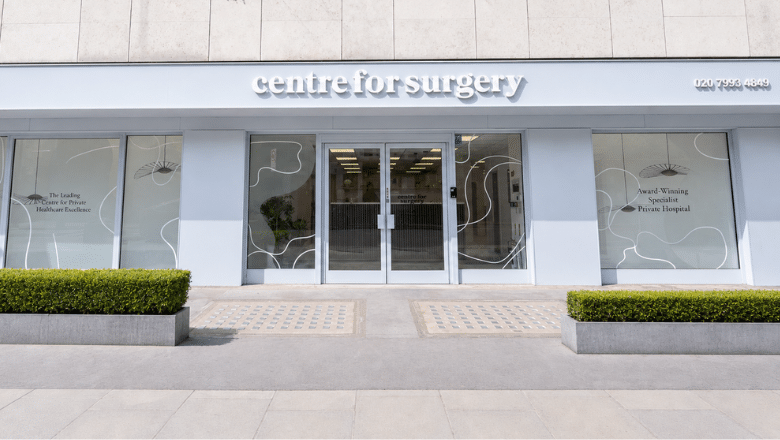
Our plastic surgeons are registered with the General Medical Council and have experience treating bodybuilders, fitness competitors and athletic women whose training needs a tailored approach to placement and recovery. Breast augmentation is performed under TIVA (Total Intravenous Anaesthesia) at our CQC-regulated Baker Street facility, rated “Good” overall by the Care Quality Commission. We use Silimed silicone implants, and every patient has a face-to-face consultation with their surgeon before surgery.
Frequently Asked Questions
How soon can I go back to bench pressing after breast augmentation?
Heavy pectoral exercises like bench press are usually among the last movements cleared, often from around four to six weeks after surgery, depending on how you heal and your surgeon’s assessment. Start light and build up. Returning too early raises the risk of implant displacement.
Will breast implants move when I flex my chest muscles?
If they are placed under the muscle, some movement when you contract your chest is common. This is called animation deformity. It is a cosmetic effect, not a danger. Implants placed over the muscle do not move with the muscle, though they need enough natural tissue over them to look natural.
Do breast implants make you weaker?
Most athletes report no loss of chest strength. In a survey of 81 fitness competitors, most said their strength was the same or better after surgery.[3] A small trial did measure a reduction in chest adduction strength a year after under-the-muscle augmentation,[4] so the effect is real but usually small.
Can I still compete in bodybuilding or powerlifting after breast augmentation?
Yes. Many athletes return to full competitive training once healed. The main points are allowing enough time before maximal pressing, timing surgery away from competition prep, and choosing a placement that suits your sport.
Can I do push-ups with breast implants?
Yes, once your surgeon has cleared you for chest work, usually from around six weeks. Push-ups load the pectoral muscle much like a bench press, so treat them as a pressing movement and build up gradually.
What size implant suits an athletic build?
There is no single right size, but moderate implants generally suit athletes better than large ones. They sit more naturally on a muscular frame, put less strain on thin tissue and are less likely to get in the way of training. Your surgeon will measure your chest and talk through the look you want.
References
- Li S, Mu D, Liu C, et al. Complications following subpectoral versus prepectoral breast augmentation: a meta-analysis. Aesthetic Plast Surg. 2019;43(4):890-898. doi:10.1007/s00266-019-01404-7 ↗
- Alnaif N, Safran T, Viezel-Mathieu A, Alhalabi B, Dionisopoulos T. Treatment of breast animation deformity: a systematic review. J Plast Reconstr Aesthet Surg. 2019;72(5):781-788. doi:10.1016/j.bjps.2019.02.025 ↗
- Jurat D, Wenzel D. Breast augmentation in athletic women: a retrospective survey assessing pectoral muscle function and implant aesthetics post-augmentation. Aesthetic Plast Surg. 2022;46(3):1075-1081. doi:10.1007/s00266-021-02692-8 ↗
- Roxo AC, Nahas FX, Pinheiro Rodrigues NC, et al. Functional and volumetric analysis of the pectoralis major muscle after submuscular breast augmentation. Aesthet Surg J. 2017;37(6):654-661. doi:10.1093/asj/sjw239 ↗
Talk to Us About Breast Augmentation for Athletes
If you train seriously and are considering breast augmentation, bring your training programme and competition dates to your consultation so your surgeon can plan placement, size and recovery around them. Call 020 7993 4849 to speak with one of our patient coordinators, email contact@centreforsurgery.com, or complete the contact form below.
You can spread the cost of surgery with Chrysalis Finance, subject to status. Visit our Finance Options page for details.
Related Articles
- Can Breast Implants Cause Back Pain?
- Can Breast Reduction Help Prevent Breast Cancer?
- Can You Get Breast Implants Under Local Anaesthetic?
- How to Avoid Boob Greed with Breast Augmentation
- Breast Augmentation Recovery and Aftercare
- Over Muscle vs Under Muscle: Best Placement for Breast Implants
- Breast Implant Options