


In this guide15 sections
- Key Points
- How Long Do Facelift Results Last?
- Does a Facelift Stop You Ageing? What Ages After a Facelift and What Doesn’t
- Does Smoking Affect Facelift Results?
- How to Protect Your Facelift From the Sun
- Does Skincare Help? Retinol, Retinoids and Moisturisers After a Facelift
- Does Weight Gain or Loss Affect a Facelift?
- How Should You Sleep to Protect Your Facelift Results?
- Can Fillers, Anti-Wrinkle Injections and Skin Tightening Top Up a Facelift?
- Does Diet, Hydration and Exercise Help a Facelift Last?
- Do You Need Follow-Up Appointments After a Facelift?
- When Should You Consider a Second Facelift?
- Frequently Asked Questions: Maintaining Facelift Results
- Facelift in London
- References
Key Points
- Does a facelift stop you ageing? No. A facelift repositions and tightens tissue that has descended, so your face ages from a younger starting point. It does not switch ageing off, and nothing you do afterwards will either.
- How do you maintain facelift results? Protect your skin from the sun every day, never smoke, keep your weight steady, use a sensible skincare routine once you are healed, and go to your follow-up reviews. The evidence is strongest for sun protection and not smoking.
- What ages and what doesn’t? Ultraviolet light is linked to most of the visible skin changes of facial ageing, such as wrinkles and pigmentation, while sagging (ptosis) is driven mainly by time and gravity. A facelift corrects sagging; your daily habits mostly protect skin quality.
- Do injectables and skin tightening help? They can top up volume, lines and skin quality once you have healed, usually from about six weeks, but they are an addition to a facelift and not a replacement for one.
- When is a second facelift worth considering? Usually after many years, when sagging has returned enough to bother you. Studies of long-term outcomes show that only a small proportion of patients ask for revision in the first few years.
- The honest answer on “permanent”: no facelift is permanent. Results last for years and the face still looks younger than it would have done, but the evidence does not support a promise that they last for ever.
Knowing how to maintain your facelift results starts with an honest picture of what the operation does. A facelift lifts and repositions the deeper tissues of the cheeks, jowls and neck and removes excess skin, which turns the clock back by years. What it cannot do is stop the clock. Your face goes on ageing afterwards, and the choices you make about sun, smoking, weight and skincare influence how well the improvement holds.
This guide covers what the research says about how long facelift results last, which parts of your face go on ageing and which do not, the habits that make a measurable difference, and when a top-up or a second facelift becomes worth discussing. We deal with the finer questions in their own guides, including how long a facelift lasts by technique, what happens to your face 10 years after a facelift and whether you can get a facelift twice, so here we focus on what you can do day to day.
How Long Do Facelift Results Last?
Most surgeons describe the benefit of a full facelift in terms of years rather than as a fixed number, and the honest range depends on the technique, your tissues and your habits. Deeper lifts tend to hold for longer than smaller ones, which is why our guide to types of facelift and the page on mini facelift surgery set out different expectations for each.
Long-term data are surprisingly thin. Much of the published evidence comes from single surgeons reporting their own patients, with different ways of measuring the result. One of the better objective studies, a 2019 retrospective review in JAMA Facial Plastic Surgery ↗, followed 143 patients after an endoscopic midface lift and measured the height of the midface directly. The lift reduced the measurement by a median of 3.4 mm, and at five to 15 years a decrease of about 2.1 mm was still present. Cheek fullness, however, tended to drift back towards where it started after five years[1]. That is a midface lift rather than a full facelift, but it illustrates the pattern: part of the correction lasts well beyond a decade, while part of the soft tissue change fades.
Relapse in the first two years is rarer than many people fear, but it is also poorly reported. A systematic review of the facelift literature found that only 4.4% of papers reported relapse outcomes at all, with rates ranging from 0.2% to 50% and a weighted median of 2.4%, and the authors concluded that agreed definitions were needed[2]. A ten-year prospective series of 54 limited-incision facelifts found that three in every hundred patients asked for revision surgery, at a median of three and a half years after the first operation[3]. Small studies like these cannot predict your own result, but they support the realistic message: expect many good years, not a guarantee.
Does a Facelift Stop You Ageing? What Ages After a Facelift and What Doesn’t
It helps to separate the different processes that make a face look older. In a 2013 clinical study of 298 women in Clinical, Cosmetic and Investigational Dermatology ↗, experts graded 22 facial signs in women who had either sought or avoided the sun. Pigmentation changes were strongly linked to ultraviolet exposure, wrinkles and texture were affected by both sun and time, and signs of sagging (ptosis) were linked more to chronological ageing, with no difference between the two groups. The authors estimated that ultraviolet exposure accounted for about 80% of visible facial ageing signs[4].
That split explains a lot about life after a facelift:
- Sagging and descent are what a facelift mostly corrects. The tissues keep ageing from their new position, so gravity and time will eventually do some of the work again.
- Skin quality, meaning fine lines, texture, sun spots and redness, is not rebuilt by a facelift. It is where your daily habits matter most, and it is why pigmentation treatment and sun protection belong in any maintenance plan.
- Volume in the cheeks, temples and under the eyes continues to change as you age. A facelift repositions fat but does not replace what is lost, which is where fillers or fat transfer can help.
- Expression lines from muscle movement, such as frown lines and crow’s feet, are not treated by a facelift and respond to anti-wrinkle injections instead.
Understanding that division stops disappointment. If sagging has been corrected but skin texture and volume are changing, that is the expected course rather than a failed facelift. Our guide to lifestyle factors that affect signs of ageing on your face goes through each of these influences in more detail.
Does Smoking Affect Facelift Results?
Yes, both in the weeks around surgery and for the years that follow. Smoking is the single habit most clearly linked with worse outcomes, and it is the one you can stop completely.
Around the operation, nicotine narrows the small blood vessels that supply the lifted skin. A German review of the plastic surgery literature reported that smokers had around a 13-fold higher risk of skin necrosis after facelift surgery than non-smokers, and that stopping for four weeks reduced smoking-related complications[5]. That is why we ask patients to stop smoking and avoid nicotine in every form for at least four weeks before and four weeks after surgery. Our guide to smoking and cosmetic surgery explains the rules.
In the long term, smoking ages facial skin. In a 2002 study of 350 people in the International Journal of Dermatology ↗, current smokers were around 2.7 times more likely than non-smokers to have moderate to severe facial wrinkling after adjusting for age, and heavier smoking was linked to more wrinkling. Past smokers who had smoked heavily when younger showed less wrinkling than current smokers[6]. That final finding is encouraging, because it suggests stopping still helps. If you want support, the NHS guide to quitting smoking ↗ is a good place to start.
How to Protect Your Facelift From the Sun
Daily sun protection is the least glamorous and best-supported habit on this page. A facelift moves tissue, but it leaves your skin exposed to the same ultraviolet light as before, and if sun exposure accounts for most visible skin ageing, then protecting your skin protects the investment.
The strongest evidence comes from a randomised trial published in Annals of Internal Medicine in 2013 ↗. It followed 903 adults under 55 in Queensland for four and a half years. People told to apply broad-spectrum sunscreen every day showed no detectable increase in skin ageing over the period, and had 24% less skin ageing than people who used sunscreen only when they chose to[7]. A later review of randomised trials reached a similar conclusion, while noting that the evidence is limited[8]. The trial was in a sunnier country than ours, but UV light reaches us through cloud and in winter too.
Practical points:
- Choose a broad-spectrum sunscreen of SPF 30 or higher with a UVA rating, as the NHS advice on sunscreen and sun safety ↗ recommends, and apply it to the face, neck and ears every morning.
- Reapply if you are outdoors for long, and wear a hat and sunglasses in strong sun.
- In the first months, protect your scars as well. Healing scars can darken in the sun, and we advise keeping them out of direct sunlight until they have matured.
- Do not use sunbeds.
If years of sun have already left marks, our guide to the five signs of sun damage on your face explains what can be treated.
Does Skincare Help? Retinol, Retinoids and Moisturisers After a Facelift
A facelift does not make a skincare routine redundant. It makes the skin quality side of the equation more visible, because the structure now looks tighter. Good routines are simple: gentle cleansing, a moisturiser, daily sunscreen, and one active ingredient if your skin tolerates it.
Retinoids have the best evidence. A systematic review of seven randomised trials found that topical tretinoin improved wrinkling, mottled pigmentation and sallowness from as early as one month, with benefits lasting up to 24 months in the trials that followed people for that long[9]. A 2025 network meta-analysis of 23 trials involving 3,905 people found that tretinoin, retinol and isotretinoin all improved fine wrinkles, and that tretinoin and retinol were better for pigmentation, although irritation limits use for some people[10]. In the UK, tretinoin is a prescription medicine, while retinol is available over the counter at lower strengths.
Two cautions apply after a facelift. First, wait until your surgeon confirms that the incisions are fully healed before starting or restarting any retinoid, acid or peel, since these can irritate healing skin. Second, retinoids make the skin more sensitive to the sun, so they go with, not instead of, daily sunscreen. Over-the-counter creams that promise to tighten the face have much weaker evidence than retinoids. Our guide to facial skin tightening treatments explains which devices and creams are worth considering.
Does Weight Gain or Loss Affect a Facelift?
It can. A facelift is planned around the face you have on the day of surgery, including the fat beneath the skin. Changes in weight alter that fat and the way the skin drapes over it. A review of neck rejuvenation lists weight gain, weight loss and sun damage among the reasons people become dissatisfied with the look of the face and neck over time[11].
We are not aware of good trial data on how much weight change alters a facelift, so this is guidance based on how the tissues behave rather than a measured figure:
- Losing a lot of weight after a facelift can leave the cheeks looking hollower and the skin looser, particularly in the neck and jawline.
- Gaining weight can fill out the jowls and under the chin again, and may make a neck look heavier.
- Repeated gain and loss stretches the skin and tends to make both effects more noticeable.
If you are planning significant weight loss, whether through diet, surgery or medication, it is generally better to reach a stable weight before having a facelift. If you have already had one, aim for a steady weight rather than swings, and tell your surgeon if your weight changes by a large amount.

How Should You Sleep to Protect Your Facelift Results?
Sleeping position matters most in the early weeks. In the first two to three weeks you sleep on your back with your head raised, which limits swelling and keeps pressure off the incisions, and side sleeping is usually avoided until your surgeon agrees, from around four weeks. Our guide to sleeping after a facelift covers pillows, travel pillows and how to stop rolling over.
For the long term, we are not aware of evidence that sleeping on your side, or on a particular pillowcase, changes how long a facelift lasts. Sleep creases can deepen the lines on the cheek you sleep on, and some people choose to sleep on their back or use a silk or satin pillowcase for comfort. Treat these as optional preferences rather than proven maintenance steps.
Can Fillers, Anti-Wrinkle Injections and Skin Tightening Top Up a Facelift?
Yes, and many people combine them. A facelift is very good at lifting and removing excess skin but does not replace lost volume, relax expression lines or treat skin texture. Non-surgical treatments fill those gaps. In a 2026 retrospective pilot study in the Journal of Cosmetic Dermatology ↗ of 20 facelift patients, all had used neurotoxin before surgery and resumed it afterwards, and 60% had filler within the first postoperative year, with no significant complications attributed to the injectables. The authors were clear that the sample was too small to define safety[12].
How the options fit together:
- Anti-wrinkle injections soften frown lines, forehead lines and crow’s feet, which a facelift does not touch.
- Dermal fillers restore volume in the cheeks, temples and around the mouth, which can look flatter again as fat is lost with age.
- Energy-based skin tightening such as Morpheus8 aims to improve skin texture and firmness, and is covered in our guide to facial skin tightening. Results are modest compared with surgery.
- Fat transfer can replace volume in a longer-lasting way than most fillers and is sometimes done at the same time as a facelift.
Timing matters. We ask patients not to have injectables until the surgeon is satisfied that healing is complete, which is usually at least six weeks after a facelift. Tell any clinician who injects you that you have had a facelift, so they can avoid the areas that are still numb or healing. Our neck lift page explains the options if your neck is the part of the face that is changing most.
Does Diet, Hydration and Exercise Help a Facelift Last?
A healthy lifestyle is good for you, and good skin health is easier to maintain with a balanced diet, enough protein, regular activity and enough sleep. However, we are not aware of trial evidence showing that any particular food, supplement or amount of water makes a facelift last longer, so beware of anyone who claims it does. Eating well matters most in the weeks after surgery, when your body needs protein and nutrients to heal.
Exercise is fine for your face once you have healed. Most people return to the gym at about six weeks, building up gradually, as our guides to facelift recovery and exercising after cosmetic surgery explain. Facial exercises and “face yoga” are often advertised as a way to maintain a lift. There is no good evidence that they preserve a facelift, and repeatedly exaggerated expressions are not helpful for fine lines, so we would not rely on them.
Do You Need Follow-Up Appointments After a Facelift?
Yes. Reviews are part of looking after your result. At Centre for Surgery you are seen at about one week, when stitches are checked and removed, and again at about six weeks, when your surgeon reviews your healing and agrees when you can return to full exercise and injectables. Scars keep maturing for up to a year, so a later review lets us check how they are settling and whether a scar treatment would help.
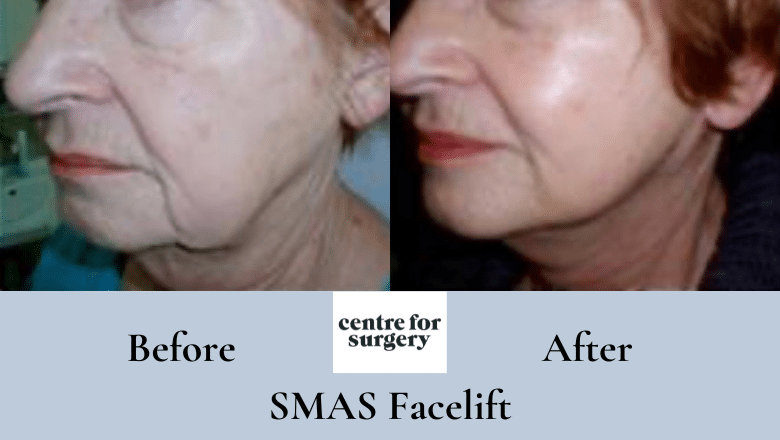
After the first year, it is sensible to come back if you notice a change you are unhappy about, rather than waiting. A review also records where you are in relation to your original photographs. Keeping your own photographs taken in the same light every year is a simple way to judge change objectively, and it makes any discussion about a top-up more concrete. Our facelift before and after photos show how results look once they have settled.
When Should You Consider a Second Facelift?
A second facelift, or a revision, is a decision to take slowly. There is no set interval, and many people never need one. In the ten-year series mentioned earlier, only 3% asked for revision at a median of three and a half years[3], which suggests that early repeat surgery is uncommon.
People tend to start thinking about a second facelift when:
- jowls or neck laxity have returned to a level that bothers them, often many years after the first operation
- the first operation was a smaller lift, such as a mini facelift, and they now want deeper correction
- they have had a significant change in weight
- they notice a specific problem with the first result, such as scar position or earlobe shape
Before a second operation your surgeon will assess how much lift remains, how much skin there is to work with and the condition of the tissues, because scarring from the first operation changes the surgery. We explain the considerations in our guide to getting a facelift twice, and the facelift complications guide describes the issues that can affect a result. If you are thinking about timing in relation to your age, our facelift age guide may help.
Not every change needs surgery. Injectables, skin treatments or a neck lift may address what bothers you at lower risk, and a clear conversation at consultation helps you choose.
“A facelift gives you a younger starting point, not a different clock. The patients who are happiest years later tend to be those who protect their skin from the sun every day, do not smoke, keep their weight steady and come back to talk early if something changes. Those are small habits, but the evidence supports them more than it supports any expensive product.” — Dr Spyridon Vlachos, Specialist Plastic Surgeon (GMC: 7522950)
Frequently Asked Questions: Maintaining Facelift Results
How long do facelift results last?
It depends on the technique and on you. Deeper lifts such as SMAS and deep plane facelifts commonly hold for ten years or more, while smaller lifts usually last for a shorter time. The face keeps ageing from its new starting point, so the improvement is gradual rather than sudden. Our guide to how long a facelift lasts gives typical durations by technique.
What happens to your face 20 years after a facelift?
Your face will have aged, but usually looks younger than it would have without surgery. Sagging returns gradually, and skin quality and volume continue to change. Some people have a second procedure, others do not. Long-term follow-up data beyond 15 years are limited, so any figure for 20 years is an estimate rather than a measurement.
Are facelift revisions common?
Not in the first few years. A ten-year prospective series reported that 3% of patients asked for revision, at a median of three and a half years[3]. Later revision becomes more likely as time passes and the face continues to age. Rates differ between studies and techniques, and reporting is inconsistent.
Can you use retinol after a facelift?
Usually yes, but only once your surgeon confirms the incisions have fully healed. Retinol and prescription retinoids can irritate healing skin and increase sun sensitivity, so start with a low strength, use it a few evenings a week and wear sunscreen every morning.
Does weight gain ruin a facelift?
A modest change will not undo it. Large gains can fill out the jowls and neck and make the result look less defined, and large losses can leave the face hollower. Keeping a steady weight is the best way to protect the result, and your surgeon can advise you if your weight changes.
Is there anything that makes a facelift last longer?
Not smoking, daily sun protection and a stable weight are the best-supported steps. Technique and your tissues matter more than any habit. There is no good evidence that supplements, facial exercises or special pillowcases extend the life of a facelift.
Can you have injectables after a facelift?
Yes, once healing is complete, usually at least six weeks after surgery. Injectables can top up volume and soften expression lines. Tell your injector you have had a facelift, and ideally have treatment in a clinic that works alongside your surgeon.
How many years younger does a facelift make you look?
There is no single figure, because it depends on your starting point, the technique and how age is measured. A facelift improves sagging, jowls and neck contour but does not change skin quality or lines, so the effect is a more rested, natural look rather than a set number of years. Your surgeon can show you results from similar patients.
What is the most effective facelift technique?
There is no single answer. The right technique depends on your anatomy, how much sagging you have and how long you want the result to last. Our guides to types of facelift and deep plane vs SMAS facelift explain the differences.
Facelift in London
If you want to talk through how a facelift would age with you, or you are thinking about a top-up or second operation, a consultation with a GMC-registered surgeon at our CQC-regulated Baker Street hospital is the place to start. We offer SMAS, deep plane, mini, one-stitch and endoscopic facelift techniques, and the consultant who assesses you is the consultant who performs your surgery. Our facelift page explains the operation in full, and our facelift cost guide explains what an inclusive quote covers.
Phone: 020 7993 4849 | Address: 95–97 Baker Street, Marylebone, London W1U 6RN
Contact us to schedule a consultation
References
- Shtraks JP, Fundakowski C, Yu D, et al. Investigation of the longevity of the endoscopic midface lift. JAMA Facial Plastic Surgery 2019;21(6):535–541. doi:10.1001/jamafacial.2019.1015 ↗
- Kucukguven A, Galandarova A, Bitik O. A systematic review and meta-analysis of early relapse after facelift. Aesthetic Plastic Surgery 2023;47(1):144–155. doi:10.1007/s00266-022-02894-8 ↗
- Citarella ER, Sterodimas A, Condé-Green A. Endoscopically assisted limited-incision rhytidectomy: a 10-year prospective study. Journal of Plastic, Reconstructive and Aesthetic Surgery 2010;63(11):1842–1848. doi:10.1016/j.bjps.2009.11.021 ↗
- Flament F, Bazin R, Laquieze S, Rubert V, Simonpietri E, Piot B. Effect of the sun on visible clinical signs of aging in Caucasian skin. Clinical, Cosmetic and Investigational Dermatology 2013;6:221–232. doi:10.2147/CCID.S44686 ↗
- Knobloch K, Gohritz A, Reuss E, Vogt PM. Nicotine in plastic surgery: a review. Der Chirurg 2008;79(10):956–962. doi:10.1007/s00104-008-1561-3 ↗
- Koh JS, Kang H, Choi SW, Kim HO. Cigarette smoking associated with premature facial wrinkling: image analysis of facial skin replicas. International Journal of Dermatology 2002;41(1):21–27. doi:10.1046/j.1365-4362.2002.01352.x ↗
- Hughes MC, Williams GM, Baker P, Green AC. Sunscreen and prevention of skin aging: a randomized trial. Annals of Internal Medicine 2013;158(11):781–790. doi:10.7326/0003-4819-158-11-201306040-00002 ↗
- Iannacone MR, Hughes MCB, Green AC. Effects of sunscreen on skin cancer and photoaging. Photodermatology, Photoimmunology and Photomedicine 2014;30(2–3):55–61. doi:10.1111/phpp.12109 ↗
- Sitohang IBS, Makes WI, Sandora N, Suryanegara J. Topical tretinoin for treating photoaging: a systematic review of randomized controlled trials. International Journal of Women’s Dermatology 2022;8(1):e003. doi:10.1097/JW9.0000000000000003 ↗
- Lin L, Chen X, Liu C, et al. Comparative efficacy of topical interventions for facial photoaging: a network meta-analysis. Scientific Reports 2025;15(1):26889. doi:10.1038/s41598-025-12597-0 ↗
- Caplin DA, Perlyn CA. Rejuvenation of the aging neck: current principles, techniques, and newer modifications. Facial Plastic Surgery Clinics of North America 2009;17(4):589–601. doi:10.1016/j.fsc.2009.07.001 ↗
- Myers B, Firsowicz M, Kamrani P, Dayan S, Fabi S. Injectables and facelifts: can we coexist? A retrospective chart review assessing injectable treatments preceding and following rhytidectomy. Journal of Cosmetic Dermatology 2026;25(2):e70690. doi:10.1111/jocd.70690 ↗

Related Articles
- Facelift Age: What’s the Best Age for a Facelift?
- How Much Does a Facelift Cost in London? (2026 Prices)






