



In this guide9 sections
- What Is an Apronectomy (Panniculectomy)?
- What Is Abdominoplasty (Tummy Tuck)?
- The Four Types of Abdominoplasty
- Abdominoplasty vs Apronectomy: Key Differences
- Recovery: Abdominoplasty vs Apronectomy
- How Much Does Apronectomy or Abdominoplasty Cost?
- Which Procedure Is Right for You?
- Frequently Asked Questions
- Why Choose Centre for Surgery for Abdominoplasty or Apronectomy
Abdominoplasty and apronectomy — also known as panniculectomy — are both types of abdominal surgery that address loose, excess skin, but they’re genuinely different procedures with different goals, different candidates, and different results. If you’re weighing up abdominoplasty vs apronectomy, understanding exactly what separates them is the first step to knowing which one is actually right for you.
This guide covers what each procedure involves, the four techniques used for abdominoplasty specifically, how results and recovery genuinely differ, cost, and how to know which one applies to your situation.
What Is an Apronectomy (Panniculectomy)?
Apronectomy — also called panniculectomy — is a functional surgical procedure that removes a hanging “apron” of excess skin and tissue from the lower abdomen, known medically as a pannus. It’s most commonly needed after substantial weight loss, whether through bariatric surgery or significant lifestyle-driven weight loss, though it can also follow multiple pregnancies.
When you gain a significant amount of weight, your skin stretches and its elastin and collagen structure is damaged. Unlike fat, which the body naturally metabolises during weight loss, stretched skin doesn’t shrink back on its own — the result is often a heavy, hanging fold of skin over the lower abdomen and, in more pronounced cases, over the groin.
Most patients considering panniculectomy have lost a substantial amount of weight — often 5 to 6 stone or more — and it’s important to be at or near a stable target weight before proceeding, generally with a BMI below 30. Further significant weight loss after the procedure can cause new skin laxity, which undermines the result.
Panniculectomy is performed under TIVA (Total Intravenous Anaesthesia), delivered entirely intravenously without inhaled anaesthetic gases, for a smoother, faster recovery than a traditional general anaesthetic, and typically takes 2 to 3 hours depending on the extent of skin removal required.
What Is Abdominoplasty (Tummy Tuck)?
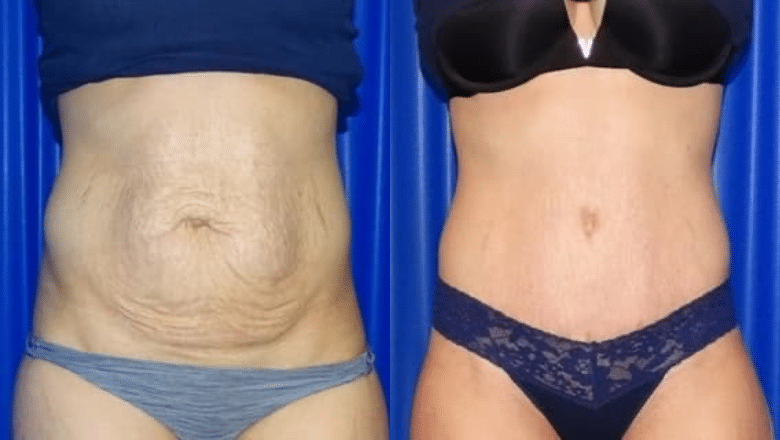
Abdominoplasty, more commonly known as a tummy tuck, is a more comprehensive cosmetic and functional procedure. While it also removes excess skin, it goes further than panniculectomy in two key ways: it repairs and tightens separated or weakened abdominal muscles (a condition called diastasis recti, common after pregnancy), and it repositions the belly button to sit naturally within the newly contoured abdomen.
Abdominoplasty is suited to patients dealing with the classic post-pregnancy or post-weight-loss “pooch” — a persistent bulge that doesn’t respond to diet and exercise because it’s driven by separated muscle and loose skin rather than fat alone. It’s performed under TIVA and typically takes up to 4 hours depending on the technique used. If you don’t have enough excess skin to justify a full abdominoplasty, a mini tummy tuck may be more appropriate.
The Four Types of Abdominoplasty

Unlike panniculectomy, which follows a fairly standard approach, abdominoplasty has several distinct techniques depending on your anatomy and goals:
Standard Abdominoplasty
Addresses the lower and mid-abdomen through a single horizontal incision along the bikini line, combined with muscle repair and belly button repositioning. This is the most commonly performed technique.
Extended Abdominoplasty
Uses a longer horizontal incision extending further around the hips and lower back, for patients with excess skin and laxity extending beyond the central abdomen — often relevant after major weight loss.
Fleur-de-Lis Abdominoplasty
Combines a horizontal incision with an additional vertical incision up the centre of the abdomen, allowing correction of both horizontal and vertical skin excess. This technique is often used for patients with very significant skin laxity following massive weight loss, where a horizontal incision alone wouldn’t achieve adequate tightening.
Lipoabdominoplasty
Combines liposuction with standard abdominoplasty technique to refine and contour the surrounding areas — flanks, hips, and upper abdomen — at the same time as the tummy tuck itself, for a more complete overall result.
Abdominoplasty vs Apronectomy: Key Differences

While both procedures address loose abdominal skin, they serve genuinely different purposes and suit different patient profiles.
Panniculectomy is generally recommended for patients who’ve lost substantial weight and have a hanging apron of skin causing physical discomfort, skin irritation, hygiene difficulties, or restricted mobility — concerns that are often functional and medical rather than purely cosmetic. For this reason, panniculectomy may sometimes be covered by health insurance where medical necessity criteria are met, though this varies by provider and should always be confirmed directly with your insurer beforehand.
Abdominoplasty is generally suited to patients with somewhat less excess skin and a greater focus on cosmetic contouring, muscle repair, and navel repositioning. It’s considered a cosmetic procedure and is not typically covered by insurance or the NHS.
Results: What Each Procedure Actually Achieves
Panniculectomy results typically include reduced hanging skin, improved mobility, resolution of chronic skin irritation and rashes beneath the pannus, easier hygiene, and improved overall body proportion — but panniculectomy does not tighten the remaining skin or repair separated abdominal muscles.
Abdominoplasty results typically include reduced skin laxity, tightened and repaired abdominal muscles, improved overall body proportion, and a natural-looking, repositioned belly button — a more comprehensive result, but a more involved procedure.
Recovery: Abdominoplasty vs Apronectomy

Abdominoplasty involves deeper work on the muscle layer, so its recovery is generally somewhat longer and more involved than panniculectomy’s, which addresses skin alone.
Abdominoplasty recovery
Swelling and bruising typically resolve within 2–3 weeks. You’ll need to sleep on your back, slightly elevated, for at least 3 weeks to protect your incisions and reduce tension on the repaired muscle. A compression garment is worn continuously for at least 6 weeks, and strenuous exercise or heavy lifting should be avoided for 6–8 weeks. Full recovery typically takes 6–8 weeks.
Apronectomy (panniculectomy) recovery
Swelling and bruising in the lower abdomen typically resolve within around 2 weeks. Sleeping on your back is recommended for around 2 weeks to protect the incision. A compression garment covering the lower abdomen is generally worn for 4–6 weeks, with strenuous activity avoided for at least 4 weeks. Full recovery is generally achieved within around 6 weeks.
Both procedures are performed as part of a comprehensive aftercare programme, with follow-up appointments to monitor healing and confirm your results are progressing as expected.
How Much Does Apronectomy or Abdominoplasty Cost?
The cost of panniculectomy depends on the amount of excess skin involved and whether it’s combined with other procedures, and is confirmed at consultation. Abdominoplasty pricing varies similarly depending on the technique used — standard, extended, fleur-de-lis, or lipoabdominoplasty — with more extensive techniques generally costing more due to increased surgical time and complexity. An accurate quote for either procedure is always confirmed in writing following a face-to-face consultation and physical assessment.
If panniculectomy is being considered on medical grounds, it’s worth checking with your health insurance provider directly, since some policies do cover it where genuine medical necessity criteria are met — this is far less common for abdominoplasty, which is generally treated as a cosmetic procedure. Finance options are available through our partner Chrysalis Finance for procedures over £1,500.
Which Procedure Is Right for You?
If your primary concern is a hanging apron of skin following major weight loss — particularly where it’s causing physical discomfort, skin irritation, or restricted mobility — panniculectomy is usually the more appropriate, and often more medically justified, option.
If you’re dealing with a persistent abdominal bulge driven by separated muscle as much as excess skin — common after pregnancy — and you want a more comprehensive cosmetic result including navel repositioning, abdominoplasty is generally the better fit.
Some patients pursue panniculectomy first to address the functional concern, then consider abdominoplasty later as a follow-up procedure for further cosmetic refinement — though the two are not typically performed together in a single operation. The best way to determine which applies to you is a face-to-face consultation, where your surgeon can properly assess your skin, muscle condition, and overall goals.
Frequently Asked Questions
What’s the difference between abdominoplasty and apronectomy?
Apronectomy (panniculectomy) removes a hanging apron of excess skin but doesn’t tighten remaining skin or repair abdominal muscles. Abdominoplasty removes excess skin, tightens the muscles, and repositions the belly button — a more comprehensive procedure.
Can you have a panniculectomy without a tummy tuck?
Yes — panniculectomy and abdominoplasty are distinct procedures and aren’t usually performed together in the same operation. Many patients have panniculectomy alone to resolve functional concerns, with abdominoplasty considered separately afterwards if further cosmetic refinement is wanted.
Is apronectomy the same as panniculectomy?
Yes — apronectomy and panniculectomy are two names for the same procedure: removal of the hanging apron of excess abdominal skin, most often following significant weight loss.
Will my insurance cover an apronectomy?
Possibly, where clear medical necessity criteria are met — such as chronic skin irritation, infection risk, or restricted mobility caused by the excess skin. This varies significantly by provider, so it’s essential to confirm directly with your insurer before proceeding. Abdominoplasty, being generally considered cosmetic, is far less commonly covered.
Which has a shorter recovery, abdominoplasty or apronectomy?
Apronectomy generally has a somewhat shorter, more straightforward recovery, since it addresses skin only. Abdominoplasty involves the deeper muscle layer as well, which typically means a longer recovery period of 6–8 weeks compared to around 6 weeks for panniculectomy.
Do I need to reach my target weight before either procedure?
Yes, for both. Being at or near a stable weight — generally a BMI below 30 — before surgery is important, since further significant weight loss afterwards can cause new skin laxity and undermine your results.
Why Choose Centre for Surgery for Abdominoplasty or Apronectomy
Our plastic surgeons are registered with the General Medical Council, with genuine experience across the full range of abdominal contouring techniques — from panniculectomy through to fleur-de-lis abdominoplasty for more extensive post-weight-loss cases. Both procedures are performed under TIVA at our CQC-regulated Baker Street facility, rated “Good” overall by the Care Quality Commission.
Book Your Consultation
Phone: 020 7993 4849
95–97 Baker Street, Marylebone, London W1U 6RN
Contact us to schedule your consultation
Your initial in-person consultation is £100, redeemable against the cost of surgery if you proceed.

Related Articles
- Tummy Tuck Cost
- Tummy Tuck Recovery and Aftercare
- Excess Skin Removal Surgery
- Panniculectomy (Apronectomy)
- Medical Benefits of a Tummy Tuck
- How Much Weight Can Be Lost from a Tummy Tuck?
- Liposuction vs Tummy Tuck
- What Are the Signs of a Bad Tummy Tuck Procedure?






