


In this guide17 sections
- Key Points
- What Does a Compression Garment Do After a Tummy Tuck?
- Do Compression Garments Actually Work? What the Evidence Says
- Abdominal Binder vs Compression Garment: What Is the Difference?
- Stage 1 vs Stage 2 Compression Garments
- How to Choose the Best Compression Garment After a Tummy Tuck
- How Tight Should a Compression Garment Be After a Tummy Tuck?
- How Long Do You Wear a Compression Garment After a Tummy Tuck?
- Sleeping in Your Compression Garment
- How to Wash and Care for a Compression Garment
- Compression Garment Problems: Too Tight, Skin Marks, Numbness and Rashes
- What Happens If You Don’t Wear a Compression Garment After a Tummy Tuck?
- Lymphatic Drainage Massage and Compression
- Tummy Tuck Results
- Frequently Asked Questions
- References
- Talk to a Surgeon About Tummy Tuck Recovery
Key Points
- After a tummy tuck you wear an abdominal binder or compression garment to support the healing tissues, limit swelling and make moving about more comfortable. Most surgeons ask you to wear it day and night for the first few weeks.
- The evidence is weaker than many people assume. A 2024 systematic review found only a non-significant trend towards less seroma with garments[1], and a 2023 review found the clearest benefit is less pain after abdominal surgery[2].
- A typical plan is a firmer stage 1 garment or binder for the first two to three weeks, then a lighter stage 2 garment until around six weeks. A 2026 randomised trial found one month of compression was as good as three or five months for abdominal wall stability[3]. Your surgeon sets your own plan.
- The garment should feel firm but not painful. You should be able to take a deep breath, with no numbness, blisters or deep grooves in the skin. Garments that are too tight raise pressure inside the abdomen and slow blood flow in the leg veins[5][6].
- Choose a medical-grade, high-waisted garment that covers the whole scar and opens at the front, and have two so one can be washed. Ordinary shapewear and waist trainers are not a substitute in the early weeks.
Almost everyone who has a tummy tuck leaves theatre wearing some form of compression around the abdomen. Patients then have plenty of questions about it: which type to buy, how tight it should be, whether to sleep in it, how long to keep it on and what to do if it rubs or leaves marks. This guide answers those questions as a plastic surgeon would in clinic, including an honest look at what the research does and does not show.
Compression is one part of recovery. For the wider picture, including pain, drains, walking and returning to work, see our tummy tuck recovery guide. If you are wondering why you cannot stand up straight in the first week, our article on being hunched over after a tummy tuck explains it.
What Does a Compression Garment Do After a Tummy Tuck?
During a tummy tuck (abdominoplasty), the surgeon lifts the skin and fat of the abdomen off the muscle, usually tightens the separated muscles, removes the excess skin and closes the wound low on the abdomen. That leaves a large raw surface underneath the skin that needs to stick back down. A compression garment, also called a binder, girdle or faja, is designed to help with this in several ways.
Controlling swelling
Swelling (oedema) is normal after any tummy tuck and is usually worst in the lower abdomen, above the scar. Even, gentle pressure is intended to limit how much fluid collects in the tissues and to help it settle more evenly.
Reducing the space where fluid can collect
A seroma is a pocket of clear fluid that gathers between the skin flap and the muscle. It is the most common early complication after a tummy tuck. Garments are worn partly in the hope of holding the skin against the muscle so there is less dead space for fluid to fill. Surgeons also use drains or internal quilting stitches for the same reason; our article on the no-drain tummy tuck explains these stitches, and our guide to tummy tuck seroma covers symptoms and treatment.
Support and comfort
This is the benefit patients notice most. After muscle repair the abdomen feels tight and sore, and many people say the garment makes coughing, getting out of bed and walking feel more secure. It also acts as a reminder not to stretch or lift too early.
Helping the skin settle smoothly
Where liposuction has been done at the same time, for example to the flanks, a garment helps the treated areas settle evenly. That is one reason a combined liposuction and tummy tuck often needs a longer garment that covers the hips and thighs too.
Do Compression Garments Actually Work? What the Evidence Says
Compression after a tummy tuck is so routine that most people assume it is backed by strong evidence. It is not, and you should know that.
- Seroma. A 2024 systematic review in JPRAS Open ↗[1] found only five trials with 130 patients in total. Garments showed a non-significant trend towards less seroma, and the review rated the evidence as low quality.
- Pain. A 2023 practical review in Plastic and Reconstructive Surgery Global Open[2] found that the best-supported reason for compression after abdominal and breast surgery is less pain, with no clear effect on seroma.
- Swelling. In a 2023 randomised trial in the Aesthetic Surgery Journal ↗[4], 32 women were allocated to a garment or no garment after abdominoplasty. Both groups also had lymphatic drainage massage, and the no-garment group actually had less swelling around the waist from about the fourth to fifth week onwards.
- Breathing and blood flow. Garments raise the pressure inside the abdomen. One study found more restriction of breathing in patients wearing a garment in the early weeks after surgery[5], and another found that both a garment and a Velcro binder slowed blood flow in the main leg vein[6].
So why do surgeons still use them? The trials are small, patients consistently say a garment feels more comfortable and secure, and the risks are low when the garment fits well and is not worn too tight or for too long. The sensible reading of the evidence is not “garments are useless” but “the right garment, at the right pressure, for the right length of time”. That is where your surgeon’s advice matters more than any product claim.
Abdominal Binder vs Compression Garment: What Is the Difference?
The two terms are often used as if they mean the same thing, but they are different products.
Abdominal binder
A binder is a wide elastic band, usually with Velcro panels, that wraps around the abdomen from the lower ribs to the hips. It is easy to adjust as swelling changes and easy to put on lying down, which is why many surgeons place one at the end of the operation. It does not cover the hips or thighs and can roll or ride up when you sit.
Compression girdle or faja
A compression girdle is a shaped garment, either high-waisted shorts or a full bodysuit, made from firm medical-grade stretch fabric. “Faja” is the Spanish word for girdle; the term is widely used for post-surgical garments, especially styles designed for liposuction. A girdle gives more even pressure than a binder, stays in place better and covers areas treated with liposuction. Most have a front hook-and-eye or zip opening and an open gusset so you can use the toilet without taking it off.
Foam pads and abdominal boards
Some surgeons ask patients to wear a soft foam sheet or a flexible abdominal board under the garment, to spread pressure more evenly and reduce creases. Others do not use them. Only use one if your surgeon recommends it, as a board in the wrong place can press on the wound or belly button.
Stage 1 vs Stage 2 Compression Garments
Many post-surgical garments are sold as stage 1 or stage 2. The terms are not formal medical categories, but they describe a useful progression.

Stage 1 compression garment
A stage 1 garment is worn from the day of surgery for roughly the first two to three weeks. It usually has:
- a front opening with hooks or a zip, so you can put it on without bending or stepping into it
- firm, even compression across the whole abdomen and the full length of the scar
- adjustable panels or a separate binder to allow for swelling going up and down
- an open crotch for using the toilet
Stage 2 compression garment
Once the wound has healed well, swelling has started to settle and drains (if used) are out, many surgeons move patients to a stage 2 garment until around six weeks. It is usually softer and smoother, often pull-on without fastenings, and less visible under clothes. It still needs to be a proper medical compression garment rather than fashion shapewear.
How to Choose the Best Compression Garment After a Tummy Tuck
There is no single best tummy tuck compression garment for everyone. The right one depends on your shape, whether you had liposuction too, and what your surgeon prefers. These are the points that matter:
- Medical grade. Look for a garment sold as post-surgical, with stated firm or medium compression, rather than everyday shapewear.
- Coverage. It should sit above the belly button and well below the scar, with no seam or band crossing the incision. If you had liposuction to the flanks or thighs, those areas need covering too.
- Front opening. Hooks or a zip at the front make stage 1 garments far easier to manage while you cannot bend.
- Soft, flat seams and breathable fabric. Seams and edges are where marks and rubbing start.
- Correct size. Measure your waist and hips before surgery and follow the sizing chart. Too small causes pain, marks and numbness; too big gives no compression and creases. If you are between sizes, ask your surgical team.
- Two garments. Having a second one lets you wear one while the other is washed and dried.
At Centre for Surgery, garments are bought separately; your surgical team will tell you the type and size to get before your operation. Try it on before surgery so you know how the fastenings work.
How Tight Should a Compression Garment Be After a Tummy Tuck?
Snug and firm, but not painful. A useful set of checks:
- You can slide a flat hand under the edge of the garment.
- You can take a slow, deep breath into your chest.
- It does not cause numbness, tingling, throbbing or a sense of pressure building up.
- It leaves light marks, not deep grooves, blisters or broken skin.
- The fabric lies flat, without folds or rolls pressing into the skin.
More pressure is not better. The 2023 swelling trial[4] and the venous flow study[6] both suggest that excessive compression can work against you. Swelling also changes over the first fortnight, so a garment that fitted on day two can feel tight by day five, and loose by week three. Adjust the panels as needed, and tell your surgical team if it never feels right.
How Long Do You Wear a Compression Garment After a Tummy Tuck?
Most surgeons ask for compression for four to six weeks, and some for up to eight, particularly after muscle repair or combined liposuction. The usual pattern is:
- Weeks 0 to 2–3: stage 1 garment or binder, day and night, off only to shower once your surgeon allows it.
- Weeks 3 to 6: stage 2 garment for most of the day and night.
- After 6 weeks: wean off gradually, or stop, as your surgeon advises at review.

Recent evidence supports shorter rather than longer. In a 2026 randomised controlled trial in Aesthetic Plastic Surgery ↗[3], 120 patients who had a tummy tuck with repair of the stomach muscles wore a class II garment for one, three or five months. One month was as good as the longer periods for keeping the muscle repair stable. Longer wear was linked to slower settling of swelling, reduced blood flow in the leg veins, higher abdominal pressure and less comfort, while seroma and wound problems were similar in all groups. This is one well-run trial rather than the final word, but it is a good reason not to keep a garment on for months “just in case”.
There is no fixed Centre for Surgery protocol that applies to everyone. Your surgeon will tell you how long to wear yours based on the operation you had, whether drains were used, and how you are healing. After a mini tummy tuck the period is often shorter; after a tummy tuck with muscle repair or extended tummy tuck it may be longer.
Should you wear it day and night?
In the first two to three weeks, yes, usually around the clock apart from showering. During stage 2, some surgeons allow short breaks during the day, or wearing it mainly in the daytime when you are upright and swelling tends to build. Follow the instructions you were given rather than a general rule.
When can you stop wearing it?
Most people stop at their six-week review, once swelling is settling and the scar is well healed. Some patients like to keep wearing a lighter garment or firm shapewear for a few more weeks for comfort, which is fine if it does not dig in. Swelling around the lower abdomen can take several months to settle completely, and that is normal; it is not a sign you stopped too early.
Sleeping in Your Compression Garment
In the early weeks you will usually sleep in your garment. Sleep on your back, propped up with pillows and with your knees bent over a pillow, so there is less tension on the scar. Check the garment before you settle: smooth out any rolls or creases at the waist and groin, as a fold that presses into the skin for eight hours is a common cause of marks.
Lying semi-upright for long periods can slow blood flow from the legs[6], so move your feet and ankles regularly and walk a little whenever you get up. Our guide on how to sleep after a tummy tuck covers positions, pillows and when you can sleep on your side.
How to Wash and Care for a Compression Garment
- Wash it every day or two, or sooner if it gets wet or soiled.
- Hand wash or use a cool, gentle machine cycle in a laundry bag, with mild detergent.
- Do not use fabric softener or bleach, which break down the elastic fibres.
- Do not tumble dry or put it on a radiator. Lay it flat or hang it to dry.
- Fasten hooks and zips before washing so they do not snag.
- Replace it if it has stretched and no longer gives firm compression.
Having two garments makes this much easier, as you are never left without one while the other dries.
Compression Garment Problems: Too Tight, Skin Marks, Numbness and Rashes
Most problems come from a poor fit, folds in the fabric or wearing the same garment for too long without a break to wash and check the skin.
Skin marks and blisters
Light lines from seams and edges are common and fade within hours. Deep red grooves, blisters or broken skin are not normal. A 2026 case report described a second-degree friction burn on the abdomen from long-term garment use[7]. Check your skin each time you take the garment off, keep it dry, and some surgeons suggest a thin, seamless cotton layer underneath to reduce rubbing.
Numbness and tingling
Some numbness of the lower abdominal skin is expected after any tummy tuck, as small skin nerves are cut, and it improves slowly over months. Numbness or tingling that spreads into the thighs, or that eases when you loosen the garment, suggests it is pressing on a nerve, often at the groin or hip. Loosen it and ask your surgical team about the size or style.
Rashes and itching
Sweat trapped under synthetic fabric can cause a heat rash or irritation, especially in skin creases. Keep the skin clean and dry, wash the garment regularly and let your team know if the rash spreads, blisters or the skin near the wound becomes red, hot or painful, as that can be a sign of infection.
Difficulty breathing
Many people find it harder to take a full breath in the first week after a tummy tuck, mainly from the muscle repair and the tightness of the abdomen. A 2024 study found a garment adds to this restriction[5]. Practise slow, deep breaths into the chest several times an hour. If the garment stops you breathing comfortably, loosen it. Sudden breathlessness, chest pain or coughing up blood are different: call 999, as these can be signs of a blood clot in the lungs.
Signs to act on
Contact your surgical team if you notice increasing swelling or a fluid-filled bulge, wound redness or discharge, or a garment you cannot get comfortable. Pain, swelling or warmth in one calf needs urgent assessment. At Centre for Surgery you have your surgeon’s direct number for the first 24 hours, then the clinic line from 9am to 6pm, Monday to Saturday; out of hours call NHS 111, or 999 in an emergency.
What Happens If You Don’t Wear a Compression Garment After a Tummy Tuck?
On current evidence, not wearing a garment is unlikely to cause a disaster, and the randomised trials did not show that garments clearly prevent seroma[1][4]. Most patients who stop early feel less supported and more sore when moving, and some notice more swelling around the hips and flanks, especially after liposuction. Your surgeon may also have reasons specific to your operation, such as a large muscle repair or a lot of liposuction. If the garment is causing you problems, do not simply stop wearing it: speak to your team about a different size or style.
Lymphatic Drainage Massage and Compression
Manual lymphatic drainage (MLD) is a gentle massage sometimes used alongside compression to help swelling settle, particularly after combined liposuction. It is not essential for everyone. Centre for Surgery does not provide MLD in-house; if your surgeon thinks it would help, they can refer you to a therapist. Do not start massage over the abdomen until your surgeon is happy with the wound.
Tummy Tuck Results
Compression is a short-term part of recovery; the shape of the result comes from the operation itself. These are real Centre for Surgery patients before and after tummy tuck surgery. For more, see our tummy tuck before and after photos.
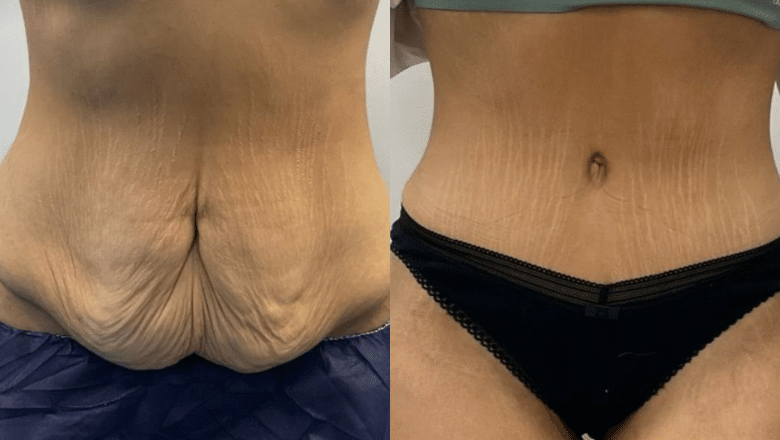
Real Centre for Surgery patient before and after tummy tuck surgery.
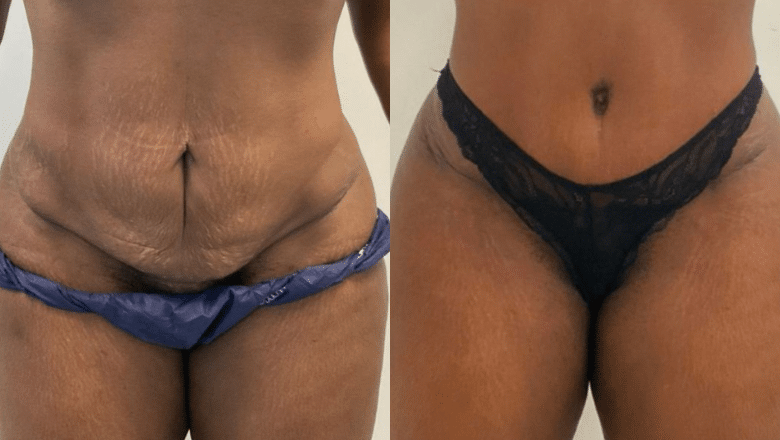
Real Centre for Surgery patient before and after tummy tuck surgery.
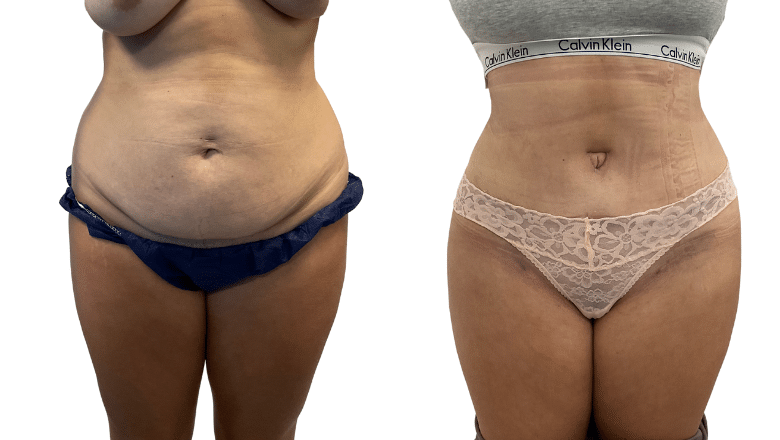
Real Centre for Surgery patient before and after tummy tuck with liposuction.
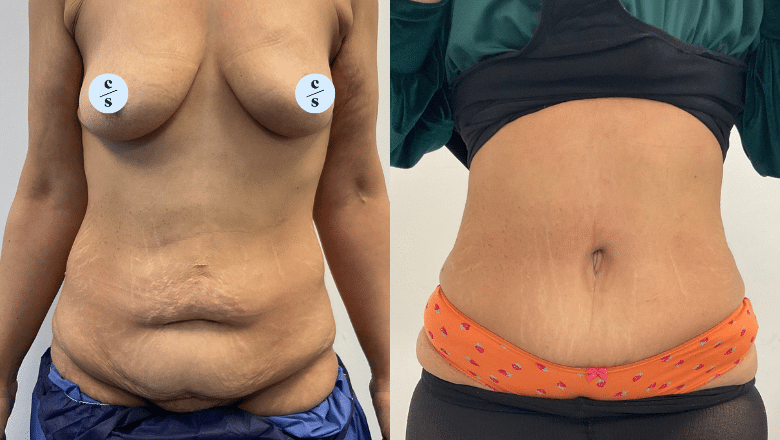
Real Centre for Surgery patient before and after a full tummy tuck.
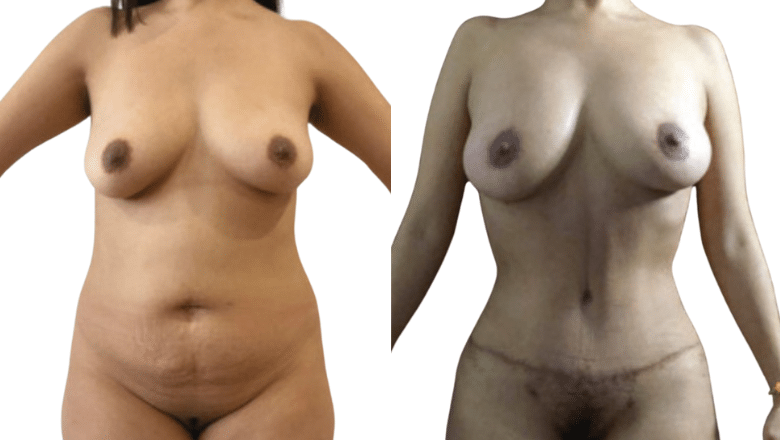
Real Centre for Surgery patient before and after a mummy makeover (tummy tuck and breast lift).
For what the operation involves and costs, see our tummy tuck cost guide. Finance is available, subject to status; see our finance options.
Frequently Asked Questions
Can I take my compression garment off to shower?
Usually yes, once your surgeon allows you to shower, which is often after the first couple of days or once drains are out. Take it off just before showering, pat the wound dry and put a clean garment straight back on. Sit down to put it on if you feel lightheaded, and have someone help you in the first week.
Do I need two compression garments?
It is strongly advisable. You will be wearing it almost constantly for several weeks, and a garment needs washing every day or two. With two, you can always wear a clean, dry one, which also helps protect your skin.
Can I wear normal shapewear after a tummy tuck?
Not in the first few weeks. Everyday shapewear does not give the even, predictable pressure of a medical garment, and its seams may cross the scar. Later on, once your surgeon says you can stop medical compression, comfortable shapewear is fine if you like the support. Waist trainers are a different matter; our article on whether waist trainers work explains why we do not recommend them.
Will wearing a compression garment for longer give a flatter stomach?
No. The result comes from the skin removal and muscle repair. A garment helps with comfort and swelling while you heal, but wearing it for months does not tighten the abdomen further, and the 2026 trial found no extra benefit in contour or satisfaction from wearing one beyond the first month[3].
Can I sleep on my side two weeks after a tummy tuck?
Most people stay on their back, slightly flexed, for the first two weeks. Many can start turning partly onto their side, supported by pillows, from around two to three weeks, as long as it does not pull on the scar. Keep the garment on and smooth when you change position.
Can I exercise in my compression garment?
Gentle walking from the first day is encouraged, and you should wear your garment while you do it. Our guide on how to walk after a tummy tuck has more detail. Gym work and abdominal exercise wait until your surgeon clears you, usually from around six weeks, and some people like to wear a light garment for support when they first return.
Why does my scar look worse after taking the garment off?
Pressure from the garment flattens swelling temporarily, so the scar and abdomen can look puffier for an hour or two after you take it off. It is usually normal. Persistent redness, a raised area, or fluid that feels like a water balloon should be checked; our guide to tummy tuck scars explains what to expect as the scar matures.
References
- Arkoubi AY. Effect of compression garments on post-abdominoplasty outcomes: a systematic review of the current evidence. JPRAS Open 2024;41:128-137. doi:10.1016/j.jpra.2024.05.014 ↗
- Ormseth BH, Livermore NR, Schoenbrunner AR, Janis JE. The use of postoperative compression garments in plastic surgery: necessary or not? A practical review. Plast Reconstr Surg Glob Open 2023;11(9):e5293. doi:10.1097/GOX.0000000000005293 ↗
- Bruno A, Saccoccio V. Is longer better? Revisiting compression duration after abdominoplasty with diastasis repair. Aesthetic Plast Surg 2026;50(7):2633-2646. doi:10.1007/s00266-026-05616-6 ↗
- Fontes de Moraes BZ, Ferreira LM, Martins MRC, Rostom L, Castro HAS, Nahas FX. Do compression garments prevent subcutaneous edema after abdominoplasty? Aesthet Surg J 2023;43(3):329-336. doi:10.1093/asj/sjac273 ↗
- Kosloski FR, Barbosa MVJ, Rodrigues MA, Martins MRC, Ferreira LM, Nahas FX. Effect of compression garments on the ventilatory function after abdominoplasty. Aesthet Surg J 2024;44(2):174-182. doi:10.1093/asj/sjad231 ↗
- Berjeaut RH, Nahas FX, Dos Santos LKIL, Filho JDP, Ferreira LM. Does the use of compression garments increase venous stasis in the common femoral vein? Plast Reconstr Surg 2015;135(1):85e-91e. doi:10.1097/PRS.0000000000000770 ↗
- Sanchez Meza MC. Improvement of post-inflammatory hyperpigmentation in a second-degree burn scar following the NewMelan depigmentation protocol: a case report. Cureus 2026;18(8):e114890. doi:10.7759/cureus.114890 ↗
Talk to a Surgeon About Tummy Tuck Recovery
If you are planning a tummy tuck and want to know exactly what your recovery and garment plan would look like, you can book a consultation with the surgeon who would operate at our Baker Street clinic by calling 020 7993 4849 or using the form below. Follow-up appointments after surgery are included.







