


In this guide8 sections
Quick answer: Liposuction can safely remove up to 5 litres of fat in a single procedure — approximately 5kg, or 11lbs. That said, liposuction is a body contouring procedure, not a weight-loss treatment, and shouldn’t be chosen with the scales as your main measure of success. The goal is a more defined, proportionate shape — how much fat is removed matters less than where it’s removed from and how the results look.
What Is Liposuction?
Liposuction is a surgical procedure that removes excess pockets of fat from beneath the skin, creating smoother, more defined body contours. It remains one of the most sought-after body contouring procedures in the UK, consistently ranking among the most popular surgical treatments performed each year.
Liposuction can be performed across most areas of the body, though the most commonly treated areas are the abdomen, waist, hips, back, thighs, and arms. It’s also frequently combined with other procedures — most commonly a tummy tuck or arm lift — to enhance overall body contouring results. Fat removed during liposuction can also be used for fat transfer elsewhere on the body, including to the buttocks or breasts.
How Much Weight Can You Lose With Liposuction?
At Centre for Surgery, we adhere to strict safety guidelines that limit fat removal to a maximum of 5 litres per procedure — approximately 5kg, or 11lbs. This limit exists for genuine safety reasons, not as an arbitrary cap: removing larger volumes in a single session significantly increases the risk of complications, including fluid shifts and blood clots.
The exact amount of fat removed in your own procedure depends on several factors:
- Your personal concerns and treatment goals
- The specific area or areas being treated
- Your desired aesthetic outcome
- Whether liposuction is being combined with another procedure in the same session
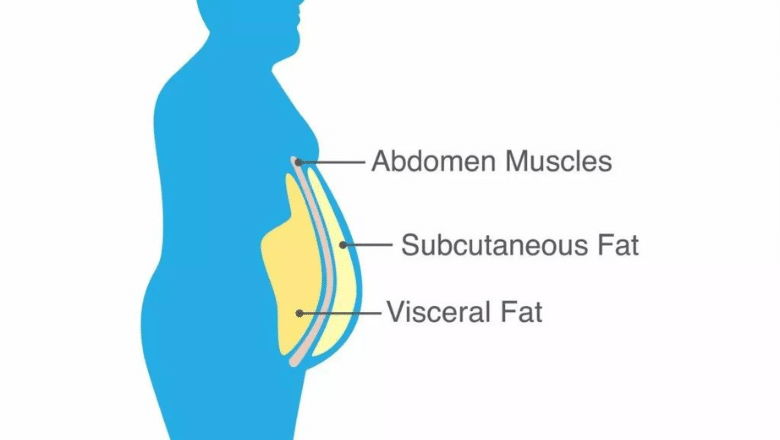
It’s also worth understanding what liposuction can’t reach. The procedure only removes subcutaneous fat — the fat located beneath the skin and above the muscle, which is often the stubborn layer that persists despite diet and exercise. It cannot remove visceral fat, the fat surrounding your internal organs, which only responds to sustained lifestyle changes. Our full guide to visceral vs subcutaneous fat explains how to tell which type you’re carrying, what a healthy visceral fat level looks like, and why that distinction decides whether surgery will help you at all.
Does the Technique Used Change How Much Fat Can Be Removed?
No — this is worth being direct about, since it’s a common assumption. Whether your surgeon uses standard power-assisted liposuction (PAL) or an ultrasound-assisted technique like VASER lipo, the same 5-litre safety limit applies. This is a systemic safety threshold related to fluid shifts and blood loss risk, not something that changes based on which technology is used to break down the fat.
Where VASER genuinely differs is in how fat is removed, not how much: it uses ultrasonic energy to emulsify fat before aspiration, which is particularly effective in dense or fibrous areas (like the male chest or back) and tends to produce less bruising than mechanical techniques alone. It isn’t a way to safely exceed the standard volume limit, and it isn’t a weight-loss upgrade — the same body-contouring principles apply regardless of which technique your surgeon recommends for your anatomy.
Can Liposuction Be Used for Weight Loss?
Although patients may notice a modest degree of weight loss following liposuction, this isn’t the primary purpose of the procedure — and the idea of “weight loss liposuction” is something of a misconception worth correcting directly.
Liposuction is a body contouring procedure, designed to define and smooth specific areas by removing fat deposits that are causing an uneven or disproportionate appearance — not a method for substantial overall weight loss. The areas typically treated account for only a relatively small portion of your total body fat, so even thorough treatment across several areas won’t produce a dramatic change on the scales.
If your primary goal is significant weight loss rather than body contouring, it’s worth having an honest conversation with your surgeon at consultation about whether liposuction is really the right tool for what you’re trying to achieve — in many cases, it isn’t, and a good surgeon will tell you this directly.
What Makes a Good Liposuction Result?
Good liposuction results aren’t measured in kilograms lost. What actually defines a successful outcome includes:
- Balanced, proportionate body contours
- Symmetry between treated areas
- Smooth skin tone and texture over the treated area
At consultation, your surgeon will show you before-and-after examples from patients with similar concerns to yours, and will help set expectations around contour and shape rather than a specific number on the scales.
What Is the Optimal BMI for Liposuction?
Patients should have a BMI below 35 to qualify for liposuction at Centre for Surgery. This threshold is strictly applied due to the increased risk of serious complications — including blood clots (DVT/PE) — in patients with a higher BMI.
While a BMI under 35 is the safety threshold, it isn’t necessarily the ideal range for the best contouring results — a BMI below 30 is generally recommended for optimal sculpting outcomes. A normal BMI does not always mean a healthy body composition, though: if you are slim but soft with little muscle, you may be skinny fat, which strength training improves more than liposuction. If you’ve recently lost weight or been through a life change such as pregnancy, you’ll also need to have maintained a stable weight for a period before proceeding — our separate guide on liposuction after weight loss covers the specific timing recommendations in full.
What If I’m Not a Suitable Candidate for Liposuction?
For patients whose primary goal is genuine weight loss rather than body contouring — or who don’t currently meet the BMI threshold for liposuction — there are other routes worth exploring first.
If you have any concerns about dramatic or unexplained weight changes, it’s worth speaking to your GP to rule out an underlying medical cause before considering any of the options below.
Diet and Exercise
For most people, diet and exercise remain the first and most sustainable route to weight loss:
- Diet — reducing regular calorie intake encourages the body to draw on stored fat reserves, gradually reducing overall body fat.
- Exercise — particularly cardiovascular activity and resistance training, increases the amount of energy the body uses, supporting fat loss alongside dietary changes.
Diet and exercise tend to be most effective when combined rather than relied on individually. If you’re not sure where to start, speaking with your GP can help you put together a realistic, sustainable plan, get referred to appropriate specialist support, and build in accountability along the way.
Weight Loss Medication
For patients who haven’t achieved their goals through diet and exercise alone, prescription weight loss medication has become an increasingly common and genuinely effective option for appropriately selected patients. Broadly, the medication options available fall into a few categories:
- GLP-1 receptor agonists — injectable medications that lower blood sugar and slow the rate food moves through the stomach, resulting in appetite suppression.
- Dual GIP/GLP-1 receptor agonists — a newer class working via a similar mechanism, with emerging evidence suggesting they may be particularly effective for weight-focused outcomes specifically.
- Orlistat — an oral medication that works differently, by reducing the proportion of dietary fat absorbed by the body.
Weight loss medication should only ever be prescribed and monitored by a qualified medical professional who can properly assess your suitability, considering factors including your BMI (these medications are generally most appropriate for patients with a BMI over 35), your broader medical history, any weight-related health risks, and whether you’ve already tried other approaches. Your GP is the right first point of contact to discuss whether this route is appropriate for you.
Is Liposuction Permanent?
Liposuction permanently removes fat cells from the treated areas — those specific cells will not regenerate. Results can last indefinitely provided you maintain a broadly healthy, stable lifestyle afterwards.
It’s worth being clear about what “permanent” does and doesn’t mean here: while the treated areas will have fewer fat cells long-term, the remaining fat cells — in both treated and untreated areas — can still expand if you gain significant weight afterwards. Maintaining a stable weight is what preserves the aesthetic benefit of the procedure. Our dedicated guide on preventing weight gain after liposuction covers this in more depth if it’s a concern for you.
Frequently Asked Questions
How much weight can you lose with liposuction?
Up to approximately 5kg (5 litres of fat, or around 11lbs) can be safely removed in a single procedure at Centre for Surgery. This limit exists for patient safety, not as a target — the actual amount removed for your procedure depends on your treatment areas and goals.
How much fat can be removed with liposuction?
The same 5-litre safety limit applies to fat volume as to approximate weight, since fat is the substance being removed. Larger volumes in a single session carry meaningfully higher surgical risk, which is why this limit is strictly applied — and it applies regardless of whether standard PAL or an ultrasound-assisted technique like VASER is used.
Is there such a thing as “weight loss liposuction”?
Not as a distinct, legitimate procedure — this is a common misconception. Standard liposuction may result in a small amount of weight loss as a side effect, but it’s fundamentally a body contouring procedure, not a weight-loss treatment, and shouldn’t be chosen for that purpose.
Do you have to be a certain weight for liposuction?
There’s no single “ideal” weight, but your surgeon will assess your BMI as part of determining your suitability — Centre for Surgery requires a BMI below 35 for safety, with a BMI below 30 generally producing the best contouring results. You’ll also need to have maintained a stable weight for a period beforehand.
Will liposuction reduce my visceral fat?
No. Liposuction only removes subcutaneous fat, the layer sitting above the abdominal muscle wall. Visceral fat sits behind that wall around your organs and can’t be reached surgically — it responds to sustained diet, exercise and lifestyle change instead. Our guide to visceral vs subcutaneous fat covers how to work out which type is driving your shape before you consider surgery.
Liposuction at Centre for Surgery
Centre for Surgery in London is known for its expertise in liposuction, offering advanced body contouring performed by experienced plastic surgeons at our CQC-regulated Baker Street facility, rated “Good” overall.
Expert Team
Our surgeons have extensive experience performing targeted liposuction to sculpt and refine specific body areas, tailored to each patient’s individual needs and goals — including VASER for patients with dense or fibrous fat.
Safety First
We adhere to strict safety guidelines, limiting fat removal to 5 litres per procedure — across every technique we offer — to ensure optimal outcomes and patient safety.
Personalised Care
Every patient receives a tailored treatment plan following a detailed consultation, ensuring you’re fully informed that liposuction is a body-contouring tool — not a weight-loss solution — before you proceed.
Sustained Results
We emphasise the importance of maintaining a healthy, stable lifestyle after your procedure to preserve and support your results long-term.
For more information or to book a consultation, call us on 020 7993 4849 or complete the contact form below.